Jesus went up to the mountain to pray, and he spent the night in prayer to God (Lk 6-12).
Jesus spent the whole night in prayer to God. When his disciples asked Jesus to teach them to pray he taught them what we call the Our Father or Lord’s Prayer. What is prayer? All of us as human beings seek meaning and to belong. We desire security and stability, as well as direction and adventure. We want to be accepted, to love and to be loved: to be in relationship. These are very primary yearnings that can operate consciously or unconsciously. The key is to be aware of our needs and desires, and resist the temptations of filling and appeasing our wants such that we aspire to achieve apparent goods, that ultimately leave us unsatisfied and more important ignoring what will truly fulfill us: developing a relationship with God through prayer.
If you want to pray, you have already begun. The desire in and of itself to pray is prayer. The danger of reading about prayer in learning to pray, is that we think we are praying, but only imagining we are doing so because as we turn each page, complete each chapter, we feel as if we are accomplishing something. Peter Kreeft wrote: “It is tempting to remain in the comfortable theater of the imagination instead of the real world, to fall in love with the idea of becoming a saint and loving God and neighbor instead of doing the actual work, because the idea makes no demands on you” (Prayer for Beginners, 12).
There are a myriad of ways to pray and each practice will match each of our unique personalities. The key to prayer is to make a commitment to a time and a place to pray each day. Start with five minutes and build to ten. Depending on the discipline of prayer you practice, your schedule, you may go to twenty minutes or spend the night in prayer! The amount of time is not important. What is important is the commitment to pray each day. Over the past few days I have been sharing a prayer practice that helps with becoming aware of God in our everyday lives. This is called the Examen. I will post the five steps of the Examen tonight or tomorrow if you would like to experience it.
A good way to approach prayer is as did St John Damascene who wrote: “Prayer is the raising of one’s mind and heart to God or the requesting of the good things from God” or similarly, St Therese of Lisieux who wrote, “For me, prayer is a surge of the heart; it is a simple look turned toward heaven, it is a cry of recognition and of love, embracing both trial and joy” (CCC, 2559). Both acclamations are good starting points. As we pray our goal is that our life is conformed to Jesus, we encounter and build a relationship, such that our experience of prayer matches St Augustine’s: “True, whole prayer is nothing but love” (Foster, 1).
As we pray, may we experience and participate in the Trinitarian communion of love. We are all beginners at prayer. It is the healthiest attitude to have. Let us begin to pray today.
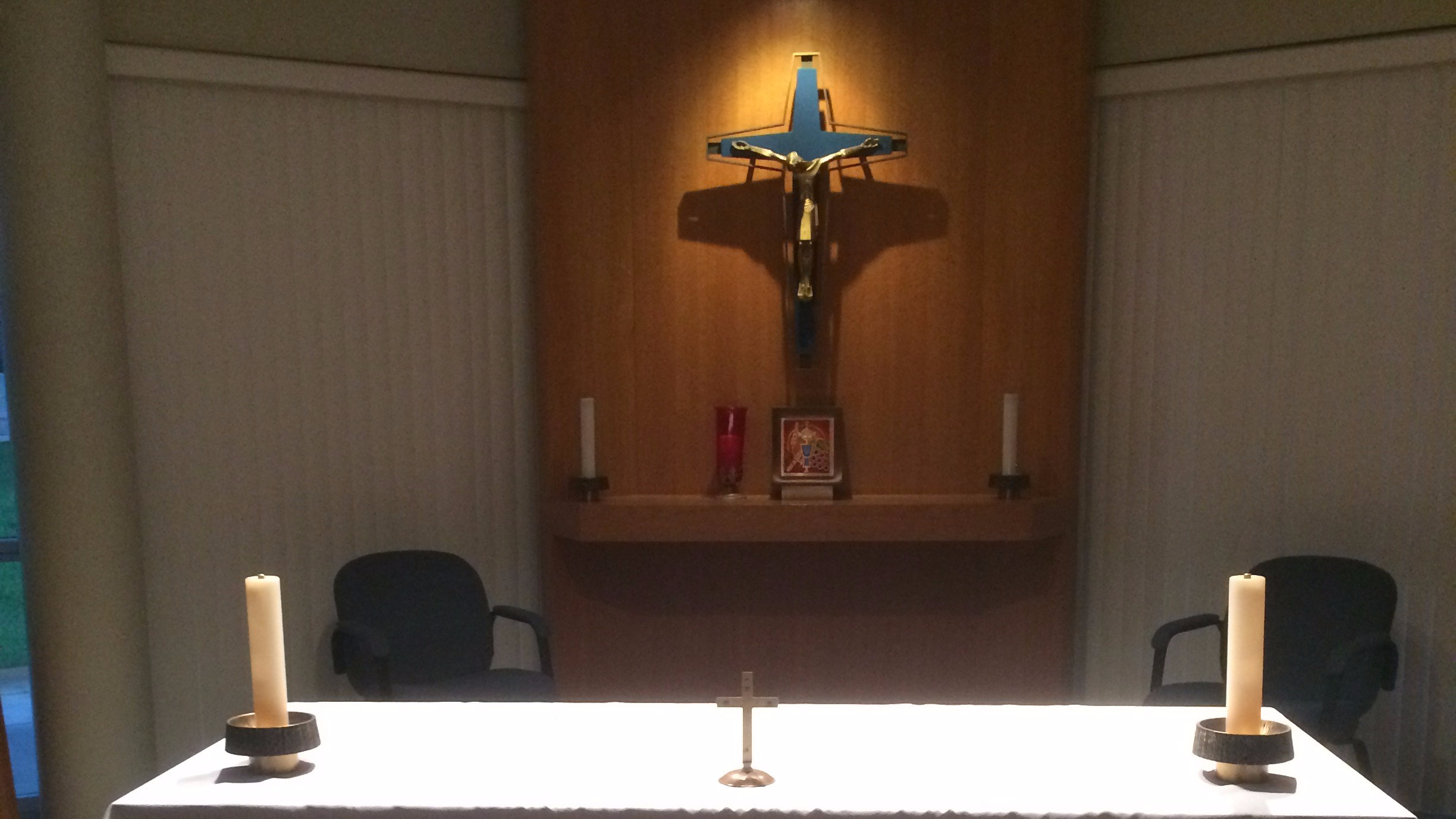
Photo: Small Chapel at Our Lady of Florida Spiritual Center, a great place to pray!
Link for today’s Mass readings:
http://www.usccb.org/bible/readings/102817.cfm
Catholic Church. Catechism of the Catholic Church: Revised in Accordance with the Official Latin Text Promulgated by Pope John Paul II. Vatican City: Libreria Editrice Vaticana, 1997.
Foster, Richard J. Prayer: Finding the Heart’s True Home. NY: HarperCollins, 1992.
Kreeft, Peter. Prayer for Beginners. San Francisco: Ignatius Press, 2000.
 Spiritual Stepping Stones