“Can the wedding guests fast while the bridegroom is with them? As long as they have the bridegroom with them they cannot fast. But the days will come when the bridegroom is taken away from them, and then they will fast on that day” (Mk 2:19-20).
The conflict that Jesus is responding to is that Jesus is witnessed eating and drinking, practicing table fellowship with his disciples, as well as tax collectors and sinners. There is no evidence that he and his disciples practice fasting. His critics were probably not aware that Jesus spent forty days fasting in the desert to prepare for his public ministry.
Jesus’ response utilizes the image of a wedding banquet, which for the people of his time would often last at least a week. Fasting certainly was not a practice during the wedding feast. Now that Jesus has begun his public ministry, it is a time of celebration, because Jesus has been proclaiming the good news that the kingdom of God is at hand, the bridegroom is with his people. As Donahue and Harrington write: “People are summoned to hear the good news of the victory of God over evil, illness, and sin. Even those thought to be habitually outside the pale of God’s forgiveness are welcomed to the banquet” (p. 108). This is indeed a time to rejoice!
People are being healed of chronic conditions, having demons exorcised from them, coming to be able to see, to hear, and are being restored to the community that they had been separated from. These are causes of celebration, why wouldn’t those receiving the gift of new life not celebrate? We have and will continue to see the reality of celebrating the preaching, healing, and restoration of God’s kingdom played out in our daily readings. That is one of the gifts of reading the Gospels.
Jesus also references his death, when he will be taken away, and the people will fast on that day. This day will be his crucifixion. So we, like the community of Mark, live in between the time when Jesus walked the earth and proclaimed his message of the good news, and after his Crucifixion, Resurrection, and Ascension, until the time when he will return. We are living in a time of both/and. If we look at the course of a week as a model, we may contemplate the opportunity to fast on Fridays in remembrance of the day he gave his life for us, and to feast on Sundays, the Lord’s Day, when we celebrate his Resurrection.
The course of our life follows an ebb and flow of sorrow and joy, sickness and healing, conflict and resolution, sin and reconciliation. In the midst of our every day, may we seek to take the hand of Jesus, the union of the human and divine, yoke our lives to his, and seek to live a life of balance. Let us resist the temptations of overindulgence and gluttony while at the same time resisting the polar opposite of a hyper asceticism. We are both spirit and body, so we need to attend to and take care of both our spiritual and physical needs.
I invite you to make a list of three things you can do for yourself this week to take care of your self. Three things to take care of the spirit, such as go to Mass or church, spend five minutes a day in quiet prayer, read from the Gospel of Mark, a spiritual book, sit in comfortable chair and listen to some music. Three things to take care of the physical, such as plan your meals so they are little healthier, fast with smaller meals on Friday, make something for yourself and family this Sunday that is a special family meal and fellowship together, add some exercises that include a combination of stretching, cardio, and weight bearing, take a walk outside, breath in some fresh clean air.
Life goes fast, let us commit this week to seek Jesus’ help to better take care of ourselves and each other.
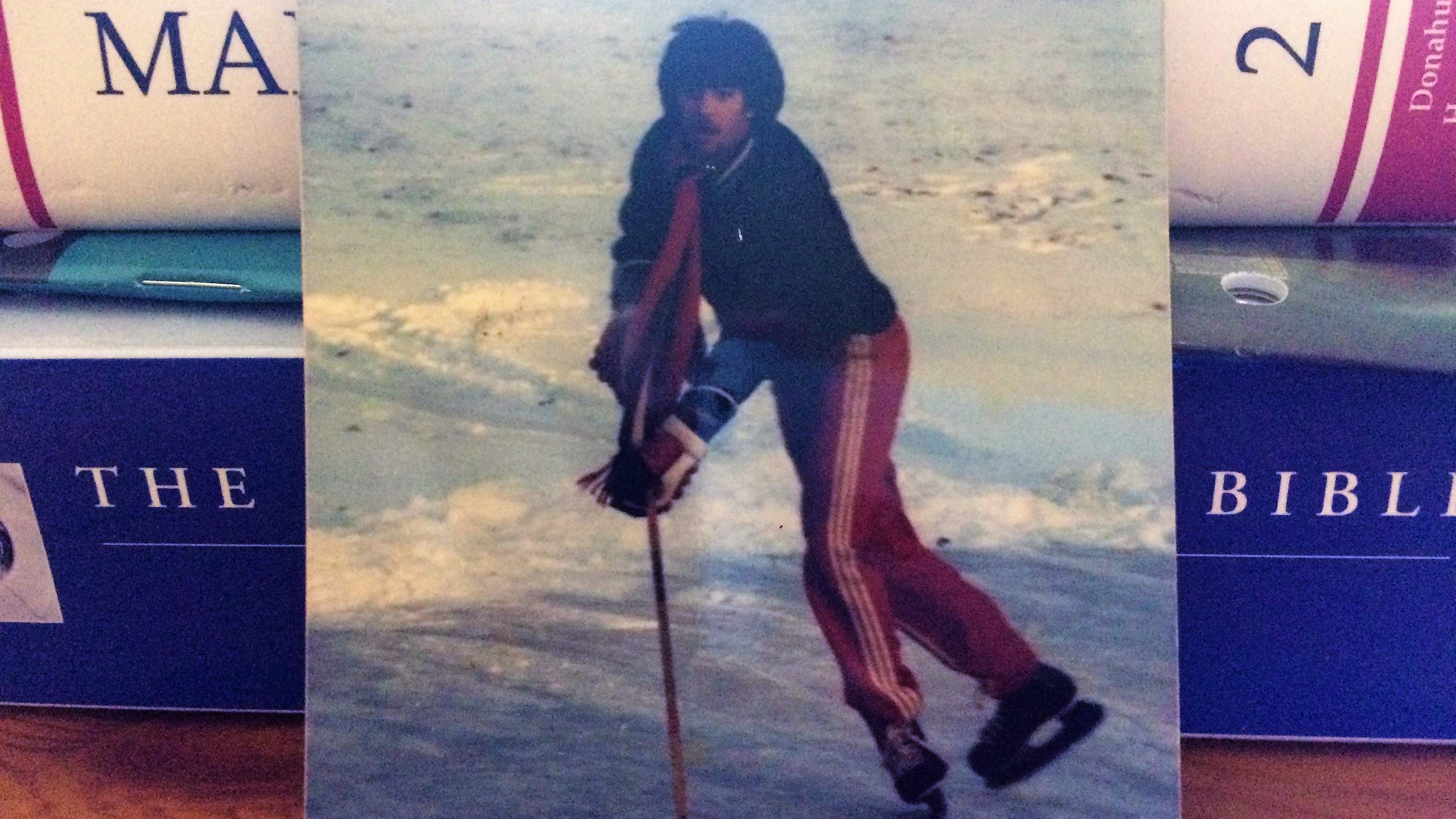
Photo: Playing hockey (around 1982) and reading the Bible, an ideal balance!
Donahue, S.J., John R., and Daniel J. Harrington, S.J. The Gospel of Mark in Sacra in Sacra Pagina Series, vol. 2. Collegeville, MN: Liturgical Press, 2002.
Link for today’s Mass readings for Monday, January 15, 2018:
http://www.usccb.org/bible/readings/011518.cfm
 Spiritual Stepping Stones