In today’s scene, Jesus enters the synagogue and sees a man with a withered hand. The eyes of the Pharisees are on him to see if, yet again, Jesus will heal on the Sabbath. Jesus is clear in his mind what he is going to do, though before doing so, he calls the man up and asks the Pharisees, “Is it lawful to do good on the sabbath rather than to do evil, to save life rather than to destroy it” (Mk 3:4)?
Jesus here is giving them a no brainer of a question. Of course, one is to do good rather than evil on the Sabbath, to save life rather than destroy it! Yet, the Pharisees remain silent. Jesus expresses anger and grief “at their hardness of heart”. Imagine yourself present in the synagogue and witnessing Jesus looking at the Pharisees and the Pharisees looking back at him. We have all been present when tensions rise and there is dead silence. Can you imagine what was going through the mind of the guy standing in between them with the withered hand?
The anger rising in Jesus may have to do with the unwillingness of the Pharisees to show any compassion, their outright refusal to acknowledge the need of this man. That they would hold so tightly to their self righteous stance to refuse to even have a discussion about the matter. Not even to say in effect, “Yes, Jesus of course, it is lawful to do good, to save life, but what you are doing is unorthodox.” No. They refuse to dialogue. Their faces are set like flint, they are digging in their heels, and even though Jesus is inviting them to move toward empathy, they instead harden their hearts. In their silence, they are choosing evil over good, destroying life rather than saving it. Pride has reared its grotesque head.
Jesus acts, and says to the man, “Stretch out your hand.”
The man is healed, but instead of rejoicing, and sharing the good news as Andrew did with his brother Simon, the Pharisees leave immediately to find the Herodians and plot the death of Jesus. We have witnessed in this scene evil incarnate. We have witnessed the mercy of God presented and rejected. As is stated in the Catechism of the Catholic Church: “There are no limits to the mercy of God, but anyone who deliberately refuses to accept his mercy by repenting, rejects the forgiveness of his sins and the salvation offered by the Holy Spirit” (1864). That is what Jesus is angry at. Not only do the Pharisees resist any move in the slightest direction toward compassion, or their own repentance, they further separate themselves from the love of God. They walk out with the intent to now to kill Jesus, and on the Sabbath! Their hypocrisy is on full display.
We walk on the slippery slope of pride when we feed it, because with each choice of putting self over another, pride grows and wants more. Its appetite is insatiable. Pride is known as the mother of all sins because of its disordered focus on self at the expense of all others and all else. The attention sought is to be directed solely to one self. The height of which is a direct opposition to God. We have witnessed this today in today’s reading.
We need to pray daily for God to reveal to us those dark tendrils of pride that are rooted within us, and for the courage to repent, to seek his mercy and forgiveness so we can be healed. The way to starve pride is to, remember that God is God and we are not, to open ourselves to his love so that we love, will the good of the other. Let us surrender before God in prayer, focus on him and his will for us, and be open for ways in which we can be present to others for their sake and not our own. With each interaction we have a choice to scowl or smile.
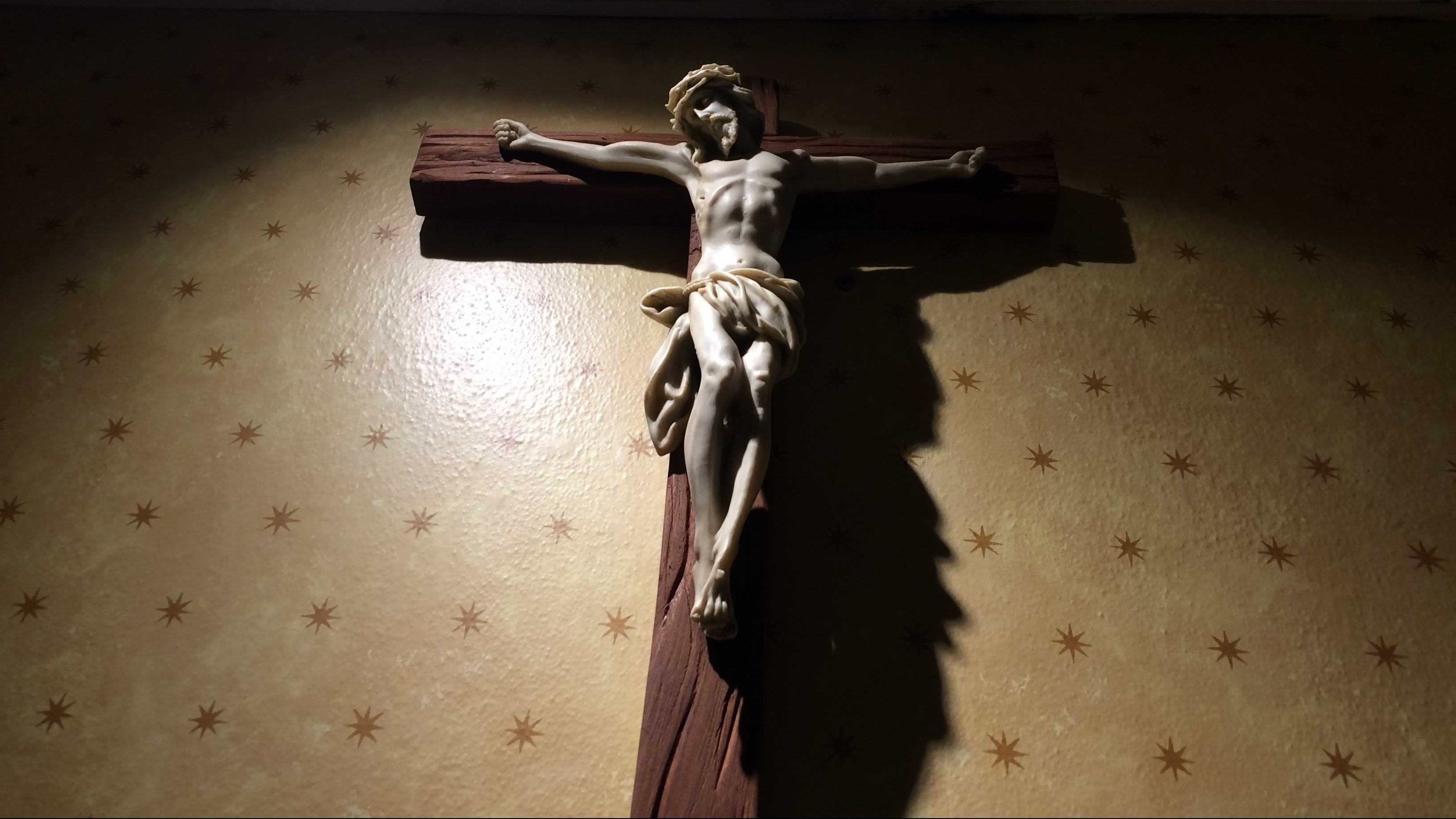
Photo: Crucifix in the chapel of Cardinal Newman High School, WPB, FL
Catholic Church. “Article 8: Sin,” in the Catechism of the Catholic Church, 2nd ed. Vatican: Libreria Editrice Vaticana, 2012.
Link for today’s Mass readings for Wednesday, January 17, 2018:
http://www.usccb.org/bible/readings/011718.cfm
 Spiritual Stepping Stones