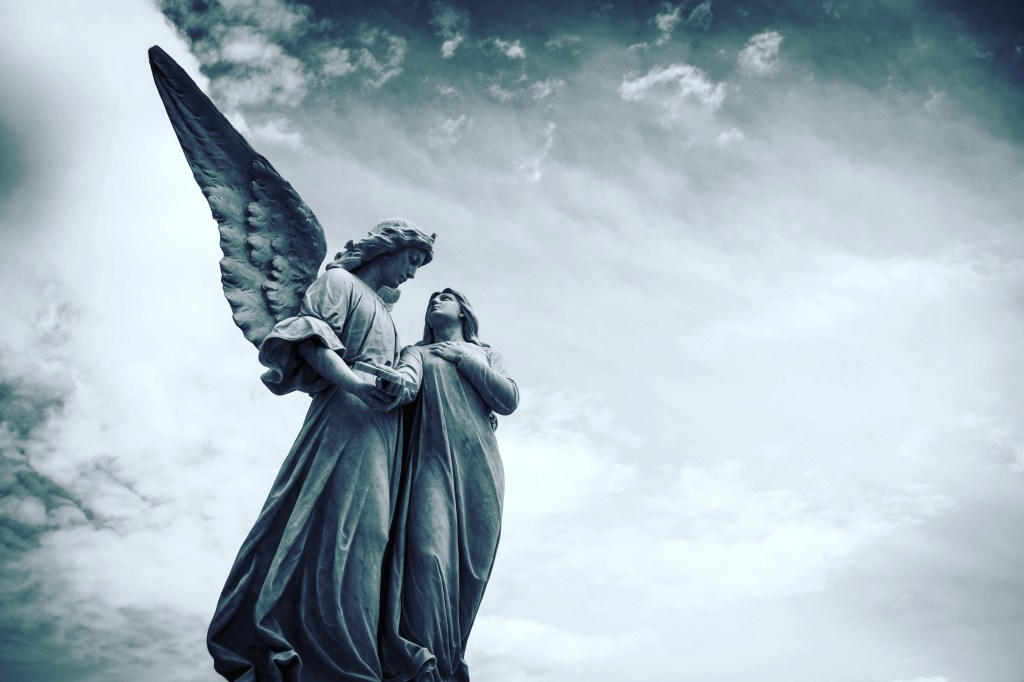
Our guardian angels will lead us to a greater awareness of our dependency on God.
“Whoever humbles himself like this child is the greatest in the Kingdom of heaven. And whoever receives one child such as this in my name receives me” (Mt 18:4-5).
Children during the time of Jesus were seen if at all, to have little worth. They were vulnerable, had little if any status in society. They were under the radar, nothings, nobodies, and thus completely dependent on their parents for survival. Jesus invites a child to come to him, identifying himself with the child, as a response to the disciples’ question as to who would be considered the greatest in the Kingdom of heaven.
Jesus taught his disciples and he teaches us today that we need to be completely dependent on God our Father, as a small child is totally dependent on his or her parents. What leads us to greatness in the Kingdom of heaven is our turning away from the temptation to curve in within ourselves, resisting the urge to feed our ego, and as St Thomas Aquinas taught, resisting the cultural lures and substitutes for God: power, pleasure, honor, and wealth. We are to reject the image that we are supermen and women that need no one as we strive for complete autonomy and self-sufficiency. We are to place our complete dependency and trust in God and rely on him for everything.
Participating in the reign of God is not one of lordship over another, but instead of assuming the humility to accompany and walk along with each other along our journey in this life. We see this in the reality of Jesus, who as the Son of God entered into our human condition. While remaining fully divine, he became human when through the power of the Holy Spirit was conceived in the womb of Mary, developed through his period of gestation, and was born into our world. As an infant and child, he was completely dependent on Mary and Joseph and God his Father.
As Jesus continued to grow as a young child, he experienced the fullness of the human condition. He laughed, he cried, he got sick, he was tempted, he felt pain, he experienced heartache and joy. Throughout his life, and especially during his public ministry, he met people where they were and as they were. He understood their suffering and weakness from his own experience of being human and so accompanied them and loved them by willing their good and pointing the way for them to rely wholeheartedly on his Father.
Jesus invites us to relate to God as Father, as Abba, in the best sense of that intimacy of dependence. As St Therese of Lisieux wrote, “Jesus has chosen to show me the only way which leads to the Divine Furnace of love; it is the way of childlike self-surrender, the way of a child who sleeps, afraid of nothing, in its father’s arms.” Acknowledging our dependence on God and others and that we are not self-sufficient will help us to recognize not only our interconnectedness but our interdependence so as to be humble enough to offer and ask for help when needed.
Our guardian angels, whose memorial we celebrate today, are at the ready awaiting our call. When we realize that we are not alone, and experience some supernatural support, we will be more aware of, be more present, and accompany others in their need. We can be a shoulder to lean on, an ear to hear, we can offer a smile, a hug, a voice that speaks for the voiceless, a soul open to praying with others, and the courage to stand up for the dignity of others.
St Mother Teresa embodied the discipleship Jesus calls us to when she picked up that first dying man in the street. She did not ask his religion, was not concerned if he was of a different race or nationality, was not afraid to risk illness or injury by attending to him. She knelt down and was present to him in his time of dire need. We are at our best when we follow Jesus and St Mother Teresa, the saints, and our guardian angels, by placing our dependency in God’s hands and accompanying others in doing little things with great love.
Photo: accessed from pexels.com
Mass readings for Saturday, October 2, 2021
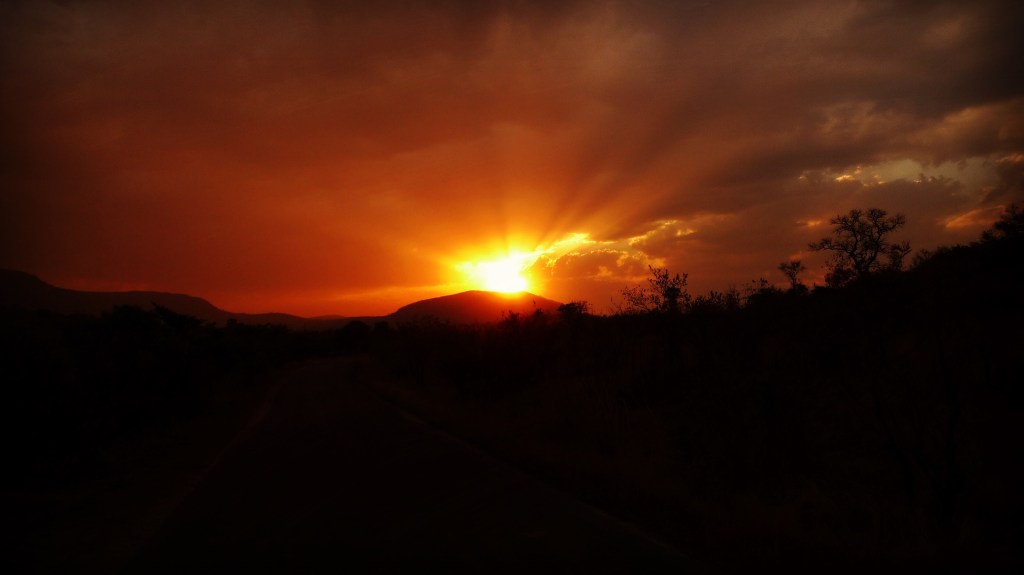
May we reflect the gentle light of Jesus like the rays of dawn and invite others to come from the shadows.
Whoever listens to you listens to me. Whoever rejects you rejects me. And whoever rejects me rejects the one who sent me (Lk 10:16).
On the surface, today’s Gospel may sound like a Debbie Downer of a message, but it is actually the road map, the passage that will lead us from the darkness of slavery steeped in our own sin to the light of truth and freedom found in dedicating our life to Christ. Jesus is continuing to prepare the 72 that are about to go out to proclaim his message of repentance. This echoes Mark’s recording of Jesus’ mission statement: “This is the time of fulfillment. The kingdom of God is at hand. Repent, and believe in the gospel” (Mk 1:15).
Sin is any actively contemplated thought, word, or action that we knowingly know goes against the will of God and we freely choose to act on it anyway. This is why many of us prefer the darkness to the light because we do not have to see and name our sins. We hold on to apparent goods or substitutes that we believe will make us happy and fulfill us, otherwise we would not hold on to them. In actuality, they are empty promises. After experiencing the lack of satisfaction, once the emotion or passion of the moment or experience wanes, we either seek more to fill the void or hopefully, recognize the false lure.
If we choose to seek more, we continue along a slippery slope of ensnarement and addiction. But if we repent, allow the light and truth of Jesus into our darkness, trust that he truly wills our good, we can begin to see our sin, name it, let it go, be forgiven, be healed, and fulfilled by receiving the love of God and deepening of our relationship with him for whom we have been created.
As servants of the Lord, we are invited to repent, to realign ourselves in such a way that we are saying yes to building a relationship with God, recognizing that this is a daily, lifetime task of examining our conscience to continue to see and confess our sins. This process is not just for ourselves.
We are called to bring the light of truth to those we meet. This does not mean we are perfect. Through the awareness and confession of our sins, we are incrementally more open to receiving the love and light of Jesus within us, such that he can shine his light through us into another’s darkness and gently guide them to come out of the shadows.
We need to resist the temptation to go forth and wag thy finger of judgment. For then we are only a darker storm cloud approaching those we seek to provide healing. They will either draw deeper into their own shell or come out fighting seeking to dispel us from their midst. Jesus sends us to instead encounter one another with understanding, mercy, patience, understanding, and love. We also need to remember that in the beginning, our light needs to be soft, like the morning dawn, so as not to blind those we seek to offer an invitation.
May we embody the Canticle of Zechariah: “In the tender compassion of our God, the dawn from on high shall break upon us, to shine on those who dwell in darkness and the shadow of death, and to guide our feet into the way of peace” (Lk 1:76-79). Let us no longer be barriers preventing access to Jesus and instead help to prepare the way for others to encounter him.
Jesus, this day and each day going forward, please dwell within us. Help us to be open to those you place on our path that we may be present to them with your warmth, welcome, and joy. May we respect each person we encounter, accept, be present and accompany them, so that they may know that they are not alone, that they, in fact, do exist, that they matter, that they are loved as you love us. May we be like the first light of the dawn to help awaken those in the darkness of their pain, suffering, and sin, so to be a lamp unto their feet and a light unto their path, that leads to an encounter and embrace with you; our Truth, our Way, and our Life. Amen.
———————————————————
Image: Photo by Amy Chung from Pexels.com
Link to the Mass readings for Friday, October 1, 2019
Some quiet time in meditation, prayer, and outside is good nourishment for the soul.
Jesus appointed seventy-two other disciples and said to them, “Go on your way; behold, I am sending you like lambs among wolves. Carry no money bag, no sack, no sandals” (Lk 10:3-4).
The opening of today’s Gospel continues the same theme of the past few days and that is the call of a radical dependence on God. Jesus sent his disciples out with no money, no credit cards, no sack, no luggage, no sandals, no Crocs. They were to rely solely on divine providence. They were taught by Jesus to believe and trust in the Father, and now they would put both to the test.
How well could we fare today? Do we even leave the house without our cell phones?
Jesus meets us and accepts as we are and where we are but calls us to go deeper, to expand beyond our present understanding and practices. We may say to ourselves that we are not capable of being a great saint but that would miss the point of who a saint is. A saint is not one who was great but one who chose to release that which kept him or her from receiving more of God in their life. They accepted and put into practice what God invited them to do.
We are lured by distractions, diversions, demands, and many material enticements. It is good to assess from time to time how much of what we have, what we think, and how we spend our time, is getting in the way of trusting in God and allowing him to expand us so as to receive more of him in our lives.
A periodic extended time of letting go is a wonderful practice. About two to three weeks before JoAnn died, we stopped watching TV because it was too uncomfortable for her. She needed quiet and stillness as much as possible. Even two years later, the only TV I watch is an NCIS episode on DVD while I eat supper, a rerun of an old show now and then or a few minutes of news once in a while. NCIS was JoAnn and my favorite show, so it is like having supper with her each night.
During the school year, I do not have that much free time anyway. The anchor points of my personal time are devoted to praying, meditating, and writing. I also enjoy walking but have only been able to return to about a twenty minute walk each evening the past few nights since I became sick in January. It is not only good but important to carve out some time in our day to be still and to spend time in the wondrous, beauty of God’s creation. As St. Mother Teresa taught, “God speaks in the silence of the heart.”
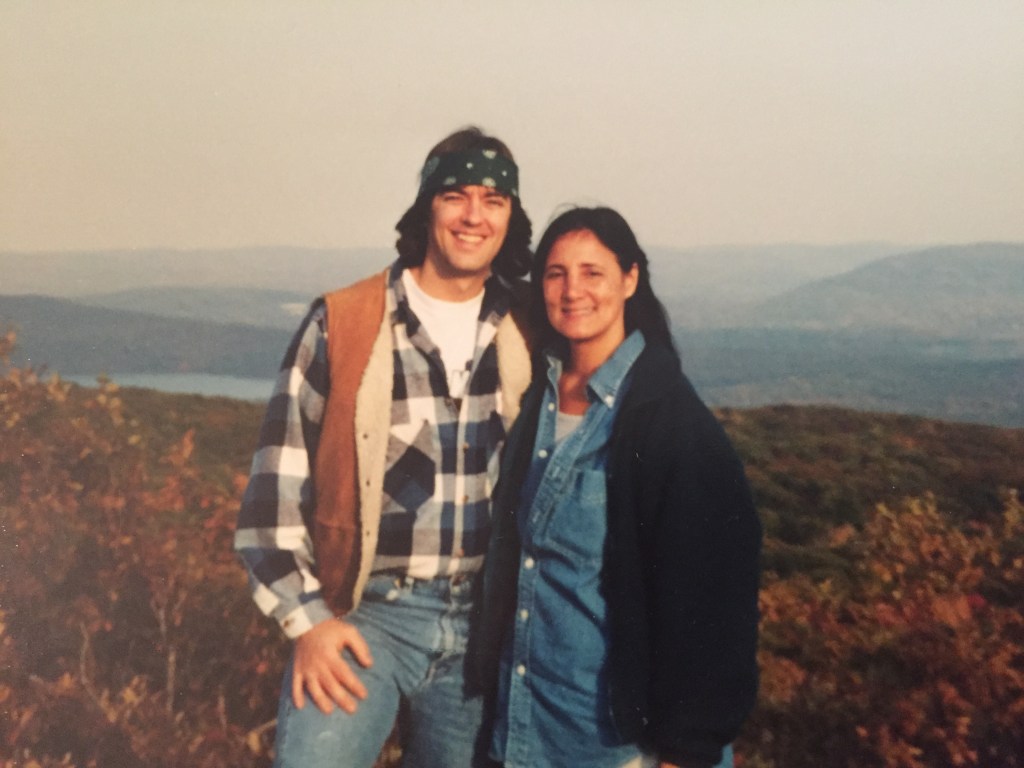
Photo: JoAnn and I spending some time together in the open air of the NW corner of CT before our move to Florida in the summer of 1997.
Mass readings for Thursday, September 30, 2021
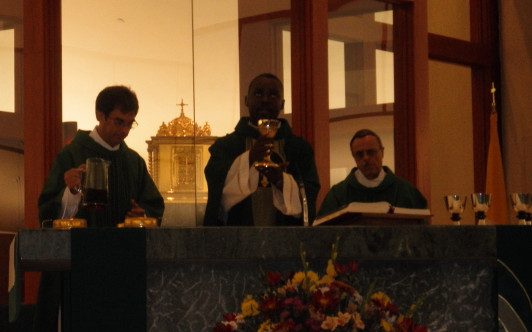
A way to experience angels among us.
And he said to him, “Amen, amen, I say to you, you will see heaven opened and the angels of God ascending and descending on the Son of Man” (Jn 1:51).
Jesus, in making this comment to Nathaniel, was referring to the incident where the patriarch Jacob had a dream in which he saw angels ascending and descending on a ladder from heaven to earth. Jacob was in awe from the experience and believed that he was at “the gate of heaven” (cf. Genesis 28:12-17). Looking carefully at Jesus’ comment, we see again the image of the angels ascending and descending, as with Jacob, but the difference here is that that ladder coming down from heaven is not seated upon the earth, but “on the Son of Man”. This is a title Jesus used for himself often.
Jesus is the gate between heaven and earth. Jesus will state later in John 14:6 that he is “the way and the truth and the life” and that no one comes to the Father except through him. The glorious moment when the Son of God took on flesh and became a man, the Son of God became one with us. This was not just so that thirty years later he could lead, model, teach, and perform exorcisms and miracles for their own sake. It was as St Irenaeus taught, that Jesus became one with us in our humanity so that we could become one with him in his divinity and in so doing opened up heaven for us in the humanity he assumed.
Heaven and earth are joined in the presence of Jesus. This is a mystery of the glory and wonder that we can partake in at each celebration of the Mass. We do not attend just to take up space and fulfill an obligation but to experience again in the sacrificial offering of Jesus “on earth as it is in heaven.” We share in the heavenly banquet. We participate in the divine communal dance of Love between the Father and the Son and the Holy Spirit. We pray for our needs and for others, we intercede for the salvation of the whole world. We receive his Body and Blood and filled from this glorious feast we are then sent forth to be Jesus’ hands and feet to minister to his broken and wounded Body present among us.
I invite you to attend Mass and if you already do, please invite someone to join you. If you don’t have a parish home or have been away for a while there’s no time like the present to begin again. If you are not Catholic, are curious, and seeking a place to worship, join us as well. Just introduce yourself when you come into the sanctuary at the front entrance and our greeters will help to get someone to sit with you to accompany and guide you. For times, directions, and if you are unable to attend in person you may click on the picture link that says Livestream for our live online streaming of the Mass. Here is the address to our homepage: https://www.stpeterjupiter.com .
Come and experience angels ascending and descending on the Son of God!
Photo: My first Mass about eight years ago with Fr. Jean and Deacon Stephen
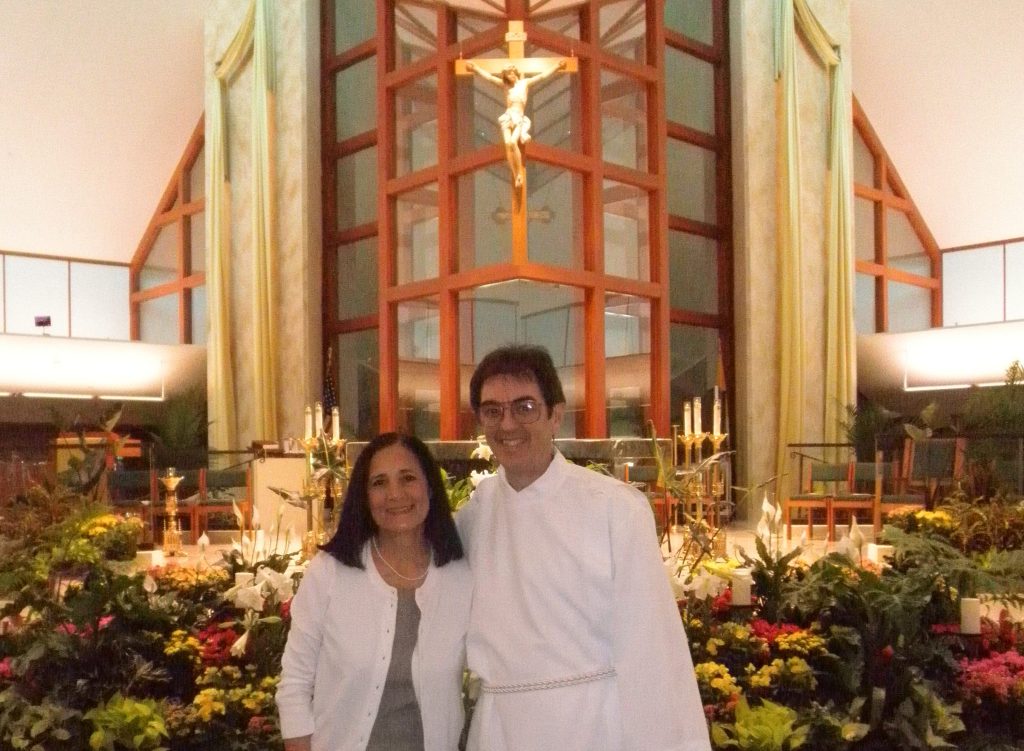
Fight or flight are not the only responses to conflict with another.
“Lord, do you want us to call down fire from heaven to consume them?” Jesus turned and rebuked them, and they journeyed to another village (Lk 9:54-56).
James and John’s request of Jesus ought to be recognizable to many, if not all of us. How many times when feeling slighted or disrespected do we want to act in kind or offer some retribution to our perceived offender? Many times we do not even think, we just react overtly back or we engage in our own tumultuous internal maelstrom.
Jesus rebuked James and John’s request immediately and moved on. He did not allow the rejection of the Samaritans to deter his course for even one second.
The most helpful response to today’s Gospel is to affirm that Jesus’ response to the Samaritan’s lack of hospitality is a healthier than that of James and John. If we can agree with that as our starting point, then we can seek to understand what Jesus can teach us when encountering others.
First, our approach to others extending unkind behavior is to be one of understanding. We are all dealing with a lot, and much of what others are dealing with are unknown to us. If we approach another’s unkind or disrespectful action from a place of understanding instead of seeking revenge, we will have a better chance of not reacting in kind and also possibly being able to help another to get in touch and reveal something they are struggling with.
Often a negative response may come from misunderstandings. Our first response ought to be one of giving the person the benefit of the doubt to explain their understanding of what happened in a given situation. We are not mind-readers and we also are not the best of communicators so resisting jumping to rash conclusions is a better course of action.
A third approach is to receive a critique with humility. Maybe, we have done something to cause hurt toward another, intentionally or unintentionally. By taking responsibility for that which we have done and apologizing for it, we create a better bridge for reconciliation.
We are only responsible for our actions. We cannot dictate or change the behaviors of others nor are we to be doormats for another’s abuse. We will experience healthier interactions when we approach conflicts and obstacles with patience, understanding, and humility for acknowledging what we have done and what we have failed to do. Even with a more understanding approach, we need to respect that sometimes there are those who will not be open and give them the space they need.
We are to pray for and respect the dignity of each person in our lives whether we agree or disagree. When we are offended or hurt we are to also communicate how we experienced another’s words or actions. There is a path between agressive reaction and passive submission. Jesus is very clear that we are to love in all situations. We are to will each other’s good by clearly communicating our experience, be willing to forgive and to love each other through our mistakes and sins.
None of these steps are easy. Human relationships are difficult in the best of scenarios, but still well worth the effort. Neither JoAnn nor I were perfect, but we put into practice some of these principles as well as others, such that our conflicts became opportunities that helped us to grow closer together rather than pulled us further apart. Above all, we need to seek and rely on the guidance of Jesus and those who we trust and are willing to hold us accountable such that we can grow and mature in our relationships because life is too short to do anything less.
—————————————————
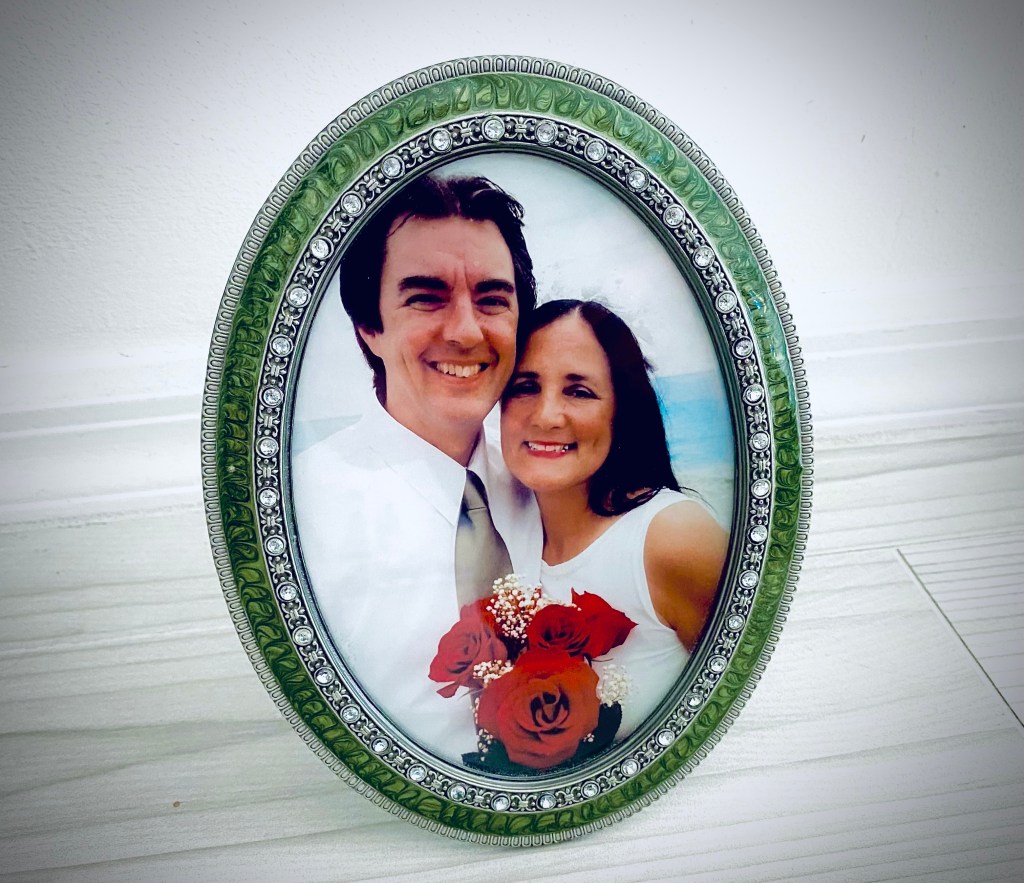
Jesus brought JoAnn and me together and putting him first in our lives helped us to grow in our relationship with him and each other.
Link for the Mass readings for Tuesday, September 28, 2021
It really is ok to work together.
The Apostle John attempted to prevent someone from casting out demons in Jesus’ name because he was not one in their “company”, he was not one of those handpicked by Jesus as one of the Twelve. This person casting out demons in Jesus’ name was not like Simon the Magician (see Acts 8:9-25) who sought to buy the power of God from the Apostles to perform feats to boost his own fame and ego, this person was doing what the apostles were doing and in the proper way, by invoking the name of Jesus.
Jesus said to him, “Do not prevent him, for whoever is not against you is for you” (Lk 9:50). The important part about being a disciple is surrendering ourselves to the will of God. This was a consistent point Jesus pointed out to his followers time and time again. Being a disciple of Jesus had nothing to do with whether or not someone was in or out of their company, or whether or not they were related to Jesus, as is recorded just in the last chapter of Luke 8:21, “My mother and my brothers are those who hear the word of God and do it.”
Jesus, in today’s Gospel, is pointing out the danger of groupthink for its own sake. This is something we desperately need to get in our present-day and age. What is important is not putting our self, our family, our tribe, our party, our nation first. What is important is putting God first.
The man in today’s Gospel did not rely on his own strength or willpower but called on the name of Jesus to cast out demons. John was getting hung up that this man wasn’t one of them, wasn’t in their company, and he was doing what they were called to do. John may have also been a bit miffed that this man was doing a better job of it as well.
I say the more the merrier! There is much that needs to be done, there is too much pain and suffering in the world, and we are losing precious resources and hours by fighting amongst ourselves, instead of actualizing the unique and diverse gifts each of us has. We have much more in common with one another than we have differences.
There are ways to diminish the growing polarization and division within and without of the Church and the best way to begin is to be willing to cast aside our protective and defensive postures, make a commitment to respect the dignity of each person we encounter and strive ourselves to be people of virtue, integrity, and holiness. Paraphrasing Jesus, whoever is not against us is for us.
Photo by burak kostak from Pexels
Mass readings for Friday, September 27, 2021

How we think, speak and act matters.
What we think, say, do or do not do, has consequences for ourselves and others. The smallest act of kindness, like suggesting, as Jesus did in today’s Gospel, of giving someone a drink of water goes a long way. That may seem like a small and insignificant gesture, but according to Water.org, 785 million people do not have access to safe drinking water. That is equivalent to one out of every nine people on earth not having ready access to a drink of clean water. Women and girls are especially affected as they can spend up to six hours a day seeking and returning home with water.
Mni Wiconi is a Lakota phrase that means water is life. The phrase is a recognition of the sacredness of water and that water is the life blood for creation and those of us who walk on this earth. Pipelines carry oil with the promise of jobs and the illusion of self sufficiency for a time. Yet fossil fuels are a finite source. Oil leaks and spills threaten sacred land and water resources coming not only from the Missouri River but any oil leakage could also dramatically impact the The Mni Wiconi Rural Water Supply System. This water resource covers a 150-mile area that begins at the Oahe Reservoir and ends at the Pine Ridge Indian Reservation. Drinking water is provided by this system for some 25,000 plus tribal members as well as non-reservation communities.
Prior to the installation of the Mni Wiconi system in 2008, many suffered from health problems caused by contaminated water. The reality that there are people who do not have access to just the basic needs of survival, such as access to clean water or that it is threatened, or not corrected in a timely manner like those residents who have suffered in Flint, Michigan, is a unacceptable.
The most serious of sins in this regard is not bothering to care. Jesus shared clearly, as is recorded in Matthew (cf. chapter 25), that what we do to the least of our brothers and sisters, we do to him. He also shared with Saul on the road to Damascus (cf. Acts 9), “Saul, Saul, why are you persecuting me?”
God has created us such that we are interconnected with one another. How one thinks, speaks, and acts ripples out to touch all people and all creation. This is why Jesus uses such graphic, hyberbolic words in today’s Gospel, such as “If your hand causes you to sin, cut it off. It is better for you to enter into life maimed than with two hands to go into Gehenna, into the unquenchable fire” (Mk 9:41-50). Jesus does not literally mean that we are to cut off our hand or foot, or pluck out our eye, if we sin, but he is showing us the seriousness of our sin.
We can see the horrific affects at play in our fallen world. Life is hard, too many suffer from the effects of selfishness, pride, greed, abuse of power, and violence. May we resist contributing to or shutting ourselves off from the reality of abuse that is committed to the dignity of any person or our mother earth. When we engage in thoughts, words, and actions that are demeaning or dehumanizing; when we rationalize and justify behavior that goes against our Gospel values and our conscience; when we remain silent, we play a part in contributing to the condition of original sin that plagues our world, and we are going against God’s plan for what we pray for in the Our Father, “May your kingdom come, may your will be done on earth as it is in heaven.”
We need to take a deep breath, slow down enough to sit still so that we can hear God in the silence of our hearts and be willing to allow Jesus to shine his light, that we may better see with the eyes of our conscience, better see the lies, the half-truths, and apparent goods that we have been allowing to have free reign in our life. As they are revealed, may we pluck them out, even the smallest of sins, and dash them on the rock of Christ.
No one is justified in belittling, demeaning, dehumanizing, or abusing anyone, for “it would be better for him if a great millstone were put around his neck and he were thrown into the sea” (Mk 9:42). May we follow Jesus today and give someone in need some water to drink, literally as needed, and figuratively in the sense of being aware of the needs of others, by praying for and being present with concrete and practical support, while at the same time, holding those accountable who have harmed others in any way. Let us be better stewards and caretakers of each other, our water, our land, and natural resources. Mni Wiconi! Water is Life!
———————————————————————
Photo accessed from: Quotemaster.org quote from and picture of Sitting Bull
Link for the Mass readings for Sunday, September 26, 2021

What is our ultimate horizon?
The term horizon is often defined as where the earth and sky meet. This is actually an apparent horizon or sensible horizon because we see an apparent plane based on our observation point. If we are able to broaden our viewpoint and look beyond the present location we are standing at on the earth, say from the space shuttle, we could then experience a rational or celestial horizon: where the great circle of the celestial sphere whose plane passes through the center of the earth is parallel to the celestial horizon of a given position. Journeying deeper into space we could discuss event horizons, the boundaries marking the limits of black holes.
Before delving any deeper and getting lost in space, let’s return to earth and today’s Gospel where Jesus stated: “Pay attention to what I am telling you. The Son of Man is to be handed over to men” (Lk 9:44). What Jesus is doing with this statement is presenting the horizon of the cross, the place where heaven and earth meet, where the physical and the spiritual, where the finite and infinite meet.
Many of Jesus’ followers were and are still confounded by the cross. As Paul wrote to the Church at Corinth: “For Jews demand signs and Greeks look for wisdom, but we proclaim Christ crucified, a stumbling block to Jews and foolishness to Gentiles, but to those who are called, Jews and Greeks alike, Christ the power of God and the wisdom of God” (1 Cor 22-23).
Paul echoes what Jesus was talking about in today’s Gospel and that was his imminent fate and our ultimate horizon, death. None of us will be able to avoid the final result of our mortality. Jesus taught both through his words and in his death that to be truly free we need to be willing to lose our life to gain it. We have to face and walk through our deepest fears to grow. Our life is not lived until we give it away.
I have come to experience that the more willing we are to face the reality of our own death, the less likely we are to take the time we have for granted, and the better we can live our lives here and now. During our final four months together, JoAnn and I experienced God’s grace because we faced the reality that her time was near, we embraced the gift of the time we had together, and through the prayers of so many, we experienced the infinite presence of the love of God in our midst.
There is so much we can experience and enjoy through the world around us, but if we only limit ourselves to the merely empirical, only to that which we can experience with our physical senses, we limit ourselves. We are transcendental beings and what makes us fully human, alive, and fulfilled is an embrace of both the physical and the spiritual, of both reason and faith, the horizon where the finite and infinite meet, where earth and heaven are one. This union happens in Jesus Christ, fully human and fully divine, and those who die with him will also rise with him.
Photo: by Josh Sorenson from Pexels
Mass readings for Saturday, September 25, 2021
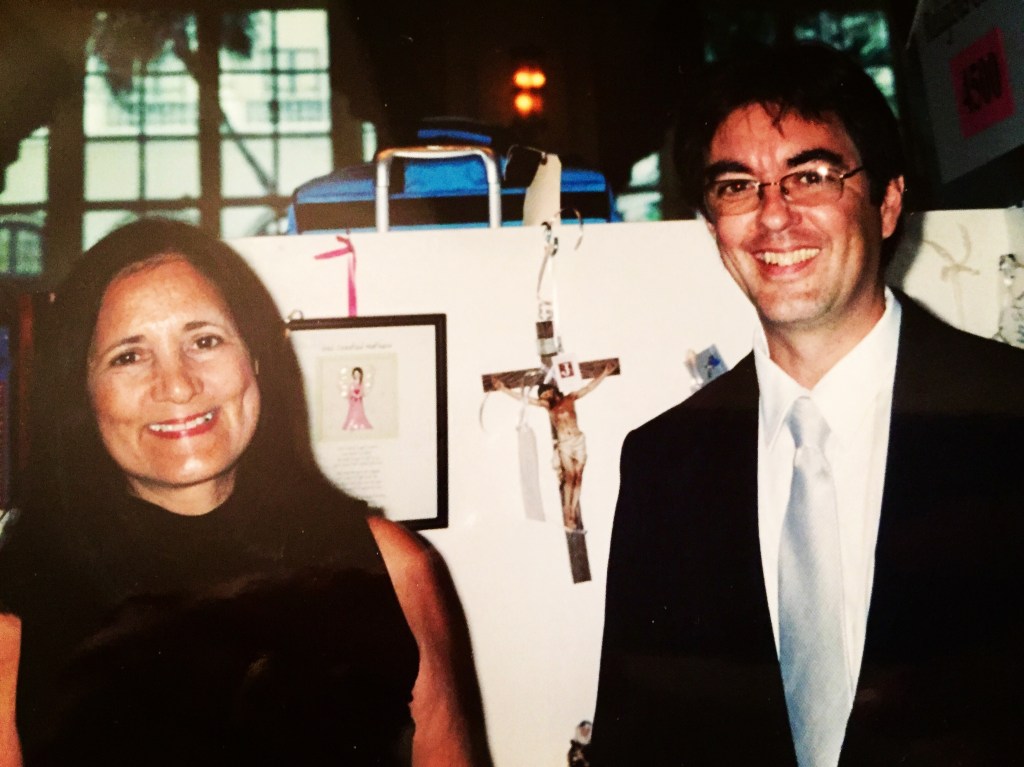
 Spiritual Stepping Stones