Give yourself some time to rest with Jesus for awhile.
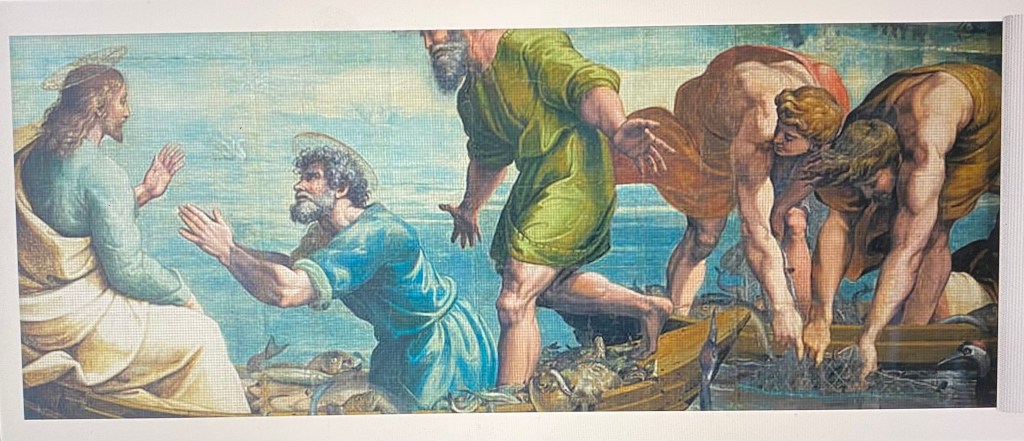
After hearing the accounts of the missionary trip, Jesus invited his apostles to step away from the crowds “to a deserted place [to] rest awhile” (Mk 6:31). Jesus is showing the apostles the importance of balance. There are times to serve and times to recharge, to reconnect, and spend some quiet and reflective time with him. Jesus is our model, our guide and teacher, but he is at the same time more than that. Jesus is the source and sustenance of who we are as a living craving, hunger, and desire to be one with God and each another. As the deer longs to refresh itself from the waters of a running stream, we long to be nourished by the living water, Jesus, and this is true for the atheist as well as the mystic alike, for each and every one of us, whether we are aware of this reality or not.
Our thirst for communion can be stifled because it is so easy to be caught up in our day to day schedule, life’s demands, and even sometimes survival. There is so much that needs to be done, and at the same time, there are so many distractions and diversions that vie for our energy and attention. In today’s Gospel, the intent of Jesus is to get away with his apostles for some rest and renewal. They get in a boat to do just that, yet the crowd that they thought they had left behind has arrived on the other side before they did! “When Jesus disembarked and saw the vast crowd, his heart was moved with pity for them, for they were like sheep without a shepherd; and he began to teach them many things” (Mk 6:34). So much for being able to “rest away for awhile”! Or maybe the boat ride across was that moment of rest.
I continue to be challenged, as I am still recovering from pneumonia a year later, not overextending myself during the school week. By the time Friday comes, I feel pretty wiped out. One of the practices that sustains me is making time daily to pray and meditate.
Choosing five to ten minutes to be still, to rest in the Lord, may not seem like much but it can make a huge difference. Our challenge is to be able to discern and develop a healthy balance that becomes fruitful through aligning our will with Jesus’. When we intentionally put God first and make the time each day to spend with him, often there is a serendipitous alignment that we experience throughout the day that we did not think possible at the outset. This is especially true during moments when we may have felt that we did not have the time.
I invite you to give yourself a five-minute retreat. Read today’s Gospel slowly and reflectively. Then step into and sit in the boat with Jesus and his disciples. Breathe in deep, let your head fall back to feel the breeze of the Sea of Galilee, feel the warmth of the sun on your face, and experience the rhythm of the boat on the water. Does Jesus remain silent and rest with you? Does he begin to teach, and if so, what does he share? In your time of quiet, do you have questions for him, what do you ask, and what is his answer?
Enter into the experience, and when the boat comes to shore, go forth into the day renewed such that your heart and Jesus’ heart beat as one. You too will be moved with compassion to serve others. From such periods of renewal, we can better embrace interruptions in our days with the heart and compassion of Jesus, such that each encounter becomes an opportunity to serve.
—————————————————————-
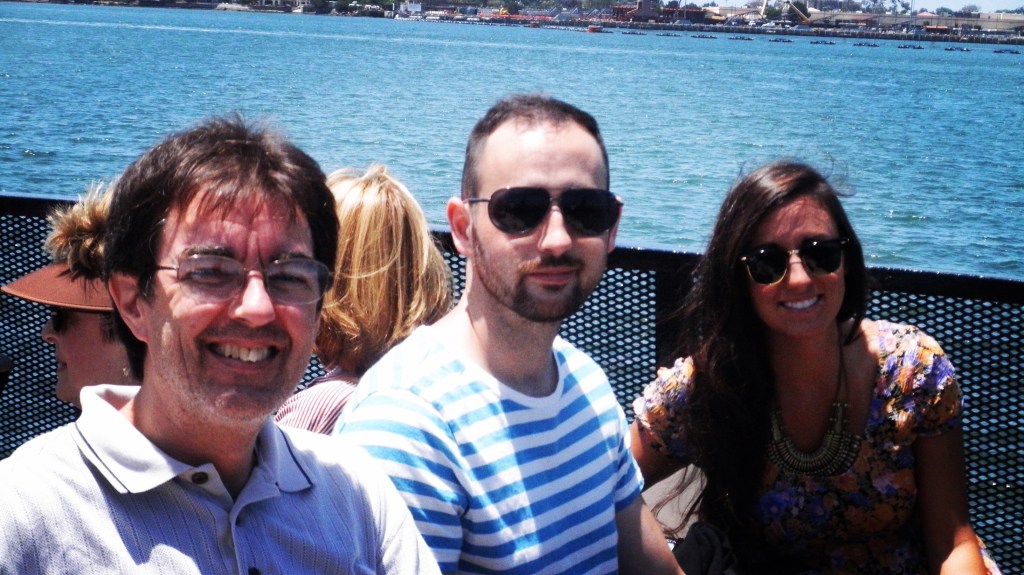
Photo: On the ferry to Coronado Island, CA, June 2014. Enjoying a little downtime.
Link for the Mass readings for Saturday, February 5, 2022
Jesus has consistently shown moral courage and we would do well to follow his lead.
The king was deeply distressed, but because of his oaths and the guests he did not wish to break his word to her (Mk 6:26).
The king referenced in today’s Gospel is the tetrarch, Herod Antipas, one of the sons of Herod the Great. He reveals the weakness of his character when he calls for the beheading of John the Baptist. He made a decision regarding the life of another person to protect an oath that he should never have made to the daughter of his wife, and ought to have stood up and shared that the dignity of the life of John the Baptist was worth more than his foolish promise.
We, unfortunately, have seen too much of this kind of leadership on the secular as well as the religious stage. Too many people who are in positions of power from the smallest to the highest levels of governance have made choices that are not in the best interest of the people they are to serve nor have they sought to stand up for and empower the dignity of the person but instead have chosen to protect self-interest, seek self-preservation, or sell out to immediate expediency.
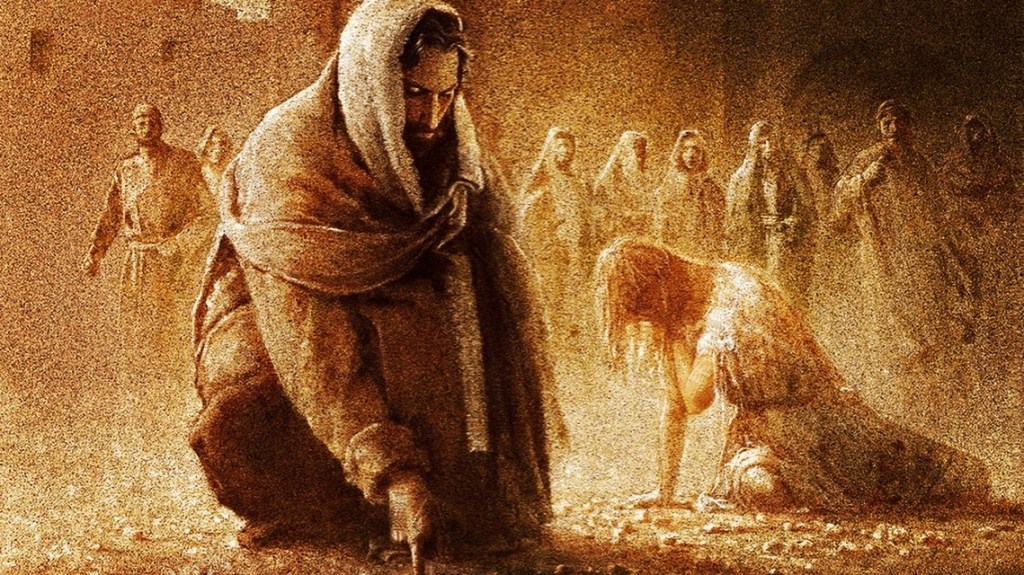
Too many are ready to protect their ego, institutions, party, tribe, at the expense of the dignity of the unborn, children, immigrants, those of a different gender, race, ethnicity, and/or class. Jesus did the opposite. Jesus called children, who were being prevented to come to him to be healed, he raised the daughter of Jairus back to life, Jesus offered hospitality to the tax collectors, Matthew and Zacchaeus, Jesus acknowledged the faith of the Canaanite woman, the woman with a hemorrhage, and stood up for the woman caught in adultery.
Time and again, Jesus showed the moral courage to stand up for and empower those who were considered as other, those on the peripheries, those considered somehow less. He ultimately did so again for all of humanity, when he was willing to be nailed to the Cross for each one of us, to die and conquer death, that each one of us might have life, and have it to the full. May Jesus empower us to grow in moral courage so we too will stand up for the dignity of the person at all stages of development from the womb to the tomb, and implore that our leaders do the same.
Painting: “Forgiven” by Yongsung Kim, Jesus showing his moral courage in standing up for the woman caught in adultery.
Link for the Mass readings for Friday, February 4, 2022
Jesus calls and sends us to serve one another.
The rejection of Jesus by those in his hometown did not slow down his mission. We can imagine that Jesus knew what he was going to do already, but en route wanted to stop by to see if any from his “native land” would like to participate in his public outreach. Apparently, no one did, so without missing a beat, Jesus went ahead and, “summoned the Twelve and began to send them out two by two and gave them authority over unclean spirits” (Mk 6:7). Jesus summons us and sends us out as well.
At the end of each Mass, we are sent, just as the Apostles, to proclaim the Good News! All of us as the Body of Christ, believers in Jesus the Christ, the baptized, are to live as his disciples and bear witness to how Jesus has transformed our lives. This is best done by acknowledging that God is the center of our lives and recognizing, empowering, and standing up for the dignity of each person that we have been given the grace to encounter. This is to be foundational in the way we think, speak about, speak to and act toward one another. Our call of evangelization is also unique, for each one of us has a particular charism and gift that the Holy Spirit imparts within us.
Jesus is the one who calls, sends, and empowers us for mission. We are sanctified, made holy, when we say yes to his will, participate in the sacramental life and in his life of service. Jesus not only teaches with authority, but he also calls and sends us with that same authority. We are to rely on the divine providence of our Father, meaning he will prepare us and provide that which we need to accomplish the task he has given us, and he will also send the Holy Spirit and others to provide help, aid, guidance, and support. We see this over and over again in the lives of the saints.
At first sight, we may not agree with God’s choosing, his choosing us, or the others he sends to help us! Yet, we only need to recall what he accomplished with the Apostles, remembering the simple beginnings they came from and the wonders they accomplished in Jesus’ name. We also need to remember that God does not see as we do, for we are often misled by appearances “or lofty stature” but God sees into the depths of the heart. He sees the character and potential of each of us (cf 1 Samuel 16:7).
Let us be about building up the reign of God, be willing to be empowered by Jesus and those he brings into our lives, as well as be willing to empower, encourage, and support others. May we pray and be open to what God is calling us to do to serve him, to be willing to encounter others and will their good without seeking anything in return.
—————————————————————————
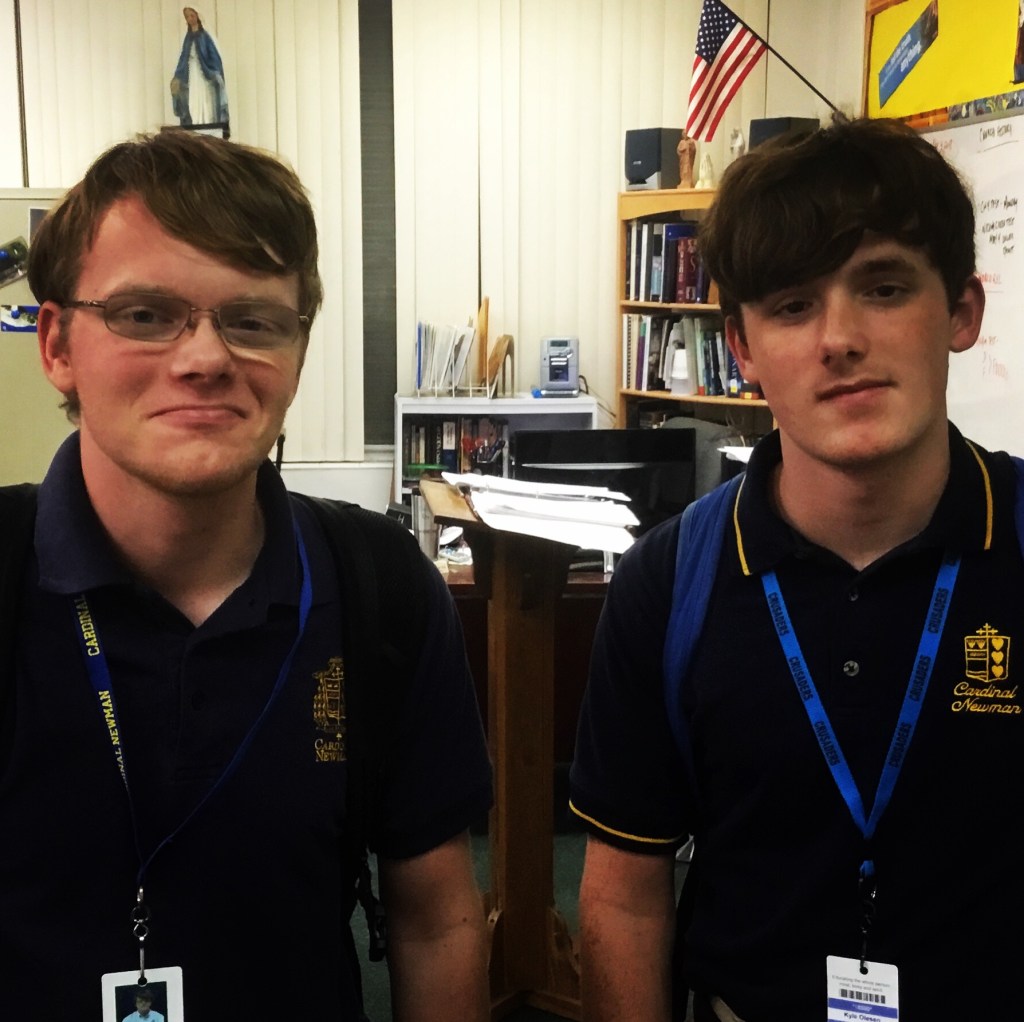
Photo: Two fine young Crusaders of integrity just before graduation a few years back!
Link for Mass readings for Thursday, February 3, 2022
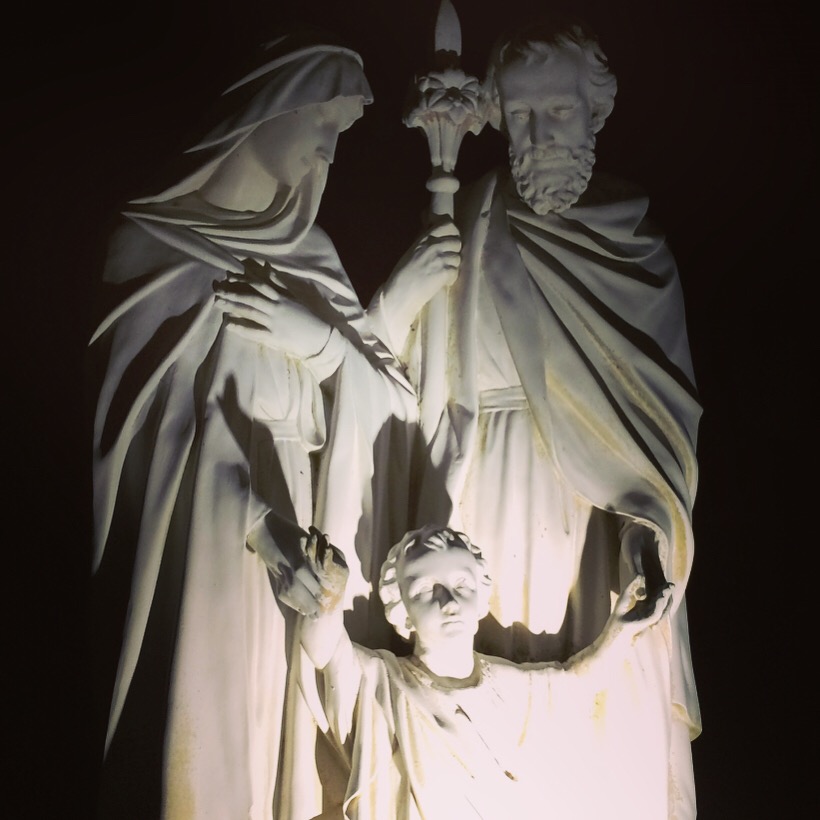
Jesus has come among us to lead us “out of darkness into his wonderful light.”
Simeon, a righteous and devout man of Israel, had received a revelation from the Holy Spirit that before his death he would behold the Messiah, “the Christ of the Lord” (Lk 2:26). We do not know how long Simeon was waiting, we do not know how old he was when Mary and Joseph brought Jesus to the temple. How many people had crossed his path, how many times must he have turned his head wondering when a family brought a male child to be presented to the Lord, “Is this the one?”
Today we recall the presentation of Jesus in the temple, the day in which Simeon’s waiting, his growing anticipation, comes to fulfillment. “Lord, now you let your servant go in peace; your word has been fulfilled: my own eyes have seen the salvation which you have prepared in the sight of every people: a light to reveal you to the nations and the glory of your people Israel” (cf. Lk 2:29-32). He can now go to his eternal rest in peace.
We can see in the presentation of Jesus more than a pious act though. In this event, the glory of God had returned to the Temple in the presence of this infant. What Simeon said and experienced as he held up this baby, is still true for us today. Jesus the Christ has come to us, to lead us “out of darkness into his wonderful light” (1 Peter 2:9), for, Jesus is the Temple, the embodiment of the Living God, where heaven and earth meet, where the divine and human are one.
May we spend some time in prayer today imagining ourselves holding the infant Jesus in our arms, as did Simeon, looking into his eyes, and allowing his smile, his giggle, to fill us with his unconditional love and mercy. As we adjust and cradle him in the crook of our arm and reach a hand to him, allow him to grasp our finger. In that simple touch, may we experience a warmth that radiates through our entire being melting all anxiety, doubt, and/or fear away. May anything that keeps us bound to darkness and sin be loosed such that we may feel the freedom of forgiveness and reconciliation. From this moment of experiencing Jesus in our time and place, may we give our life to him so that we too may radiate the light we have received so as to forgive and love those whom Jesus sends us to encounter today.
Photo: Holy Family at St Peter Catholic Church
Link for the Mass readings for Tuesday, February 2, 2022

Jesus is with us no matter how dark it gets.
“Jesus, aware at once that power had gone out from him, turned around in the crowd and asked, ‘Who has touched my clothes'” (Mk 5:30)? The woman could have slipped away, she could have stood still and said nothing, no one knew. His disciples were bewildered that Jesus asked such a question with so many pressing about him. But the woman approached with “fear and trembling” and told him the truth. Jesus did not admonish her for breaking a social taboo, but publicly acknowledged her faith.
All the while as this scene transpired, Jairus must have been in agony. He knew how close his daughter was to death, and every second counted. Jesus took that limited precious time and engaged with this woman. Just as they were about to resume their journey, and Jairus probably took a breath and began to breathe again, but then terrible news came that his daughter had died.
What might have flashed through his mind in that moment? The time Jesus took to talk with the woman, could that have made the difference? He was a synagogue official and would have known the taboos she crossed to reach out and touch Jesus in public, he knew that in doing so she would make Jesus unclean, she was a woman considered the lowest of low. She was frail and pallid from her condition, at death’s door herself, yet she had mustered more courage and faith, than he had.
Jesus said to the man, “Do not be afraid, just have faith” (Mk 5:36). Jairus had just witnessed such faith with the woman healed from the hemorrhage, probably someone until this very moment who he would have shown disdain for. Maybe just maybe, if he could muster the same faith as her, Jesus could bring his daughter back to life. A light shone in the darkness of his despair and the darkness did not overcome it. Jesus indeed healed his daughter. By taking her hand and commanding her to rise and walk, she came back to life.
How many of us are now, have been, or have known someone who has experienced such great needs as did Jairus, whose daughter was near death, or the woman who had been suffering for twelve years with hemorrhages? How many of us have experienced such healings today? How many of us have experienced the opposite? We experienced no healing, we wondered where Jesus was, and/or wondered why he allowed this to happen, or why did he not bother to help?
The best we can do in times of trial and dire need is to trust in Jesus. He may or may not bring the outcome we seek. But I assure you that he is present with us through our pain and suffering, whether we feel his presence or not. Sometimes he allows the unthinkable to happen, of which we cannot even comprehend at the time, to bring about a greater good. Often, we are not able to see that until a later date, when some time has passed, and we have gained some perspective and healed a bit from the trauma.
Remember also, death is not the final answer. Jesus has conquered death, he and we who participate with him are victorious. Ultimately, faith is placing our trust in our God and Father who loves, is present, and carries us in our darkest hour. He sent his Son, Jesus, to us to walk with us. He says to us in our times or trouble the same words that he said to Jairus: “Do not be afraid, just have faith” (Mk 5:36). In our times of trial and sorrow, it is important to lean on the strength of Jesus and one another. In times of miracles, it is important to thank Jesus and those who were there for us.
Photo by Andre Moura from Pexels
Link for the Mass readings for Tuesday, February 1, 2022

Jesus is the light that can reach into even the deepest darkness of our internal imprisonment.
Jesus and his disciples have entered the Gentile territory of the Gerasenes. As soon as they get out of the boat a man possessed by an unclean spirit rushes up to him. He himself was in a worse state than the storm that Jesus had stilled. He called himself Legion as he was possessed by many demons. He had been living in the tombs, away from society, family, and friends, some of whom had made multiple attempts to restrain him, cure him, bring him back to his right mind, but to no avail. The encounter with Jesus ultimately brought about the result of this man “sitting there clothed and in his right mind” (Mk 5:15). Jesus was able to liberate this man from his desperate state. If you have not done so, I recommend reading the full account (Mk 5:1-20).
Many scoff at the healing power and miracles of Jesus, and they certainly would also discount demonic possession. A strict approach of scientism that only accepts the empirical, only that which can be measured by the five senses, discounts not only the divinity of Jesus and the reality of God but any talk of a spiritual realm. This is unfortunate because this is a limited approach to understanding the fullness of creation. We ourselves are both physical and spiritual. A healthy embrace and experience of both will help us to better appreciate and understand the world around us.
Too many today are in the same need of experiencing the liberating power of Jesus as the Gerasene. Just as chaotic and tumultuous, especially among too many of our youth, are those who are consumed and imprisoned by the vice grip of addiction. Family members and friends reach out desperately to help, to provide aid, and find themselves in the same situation as those who sought to care for this man who had been living in the tombs. Somehow this man caught “sight of Jesus from a distance, he ran up and prostrated himself before him” (Mk 5:6). There must have been some ember at the core of who he was that could still move and bring himself to Jesus.
We need to join in prayer and seek the best means to provide support and aid for all those suffering, bound, and shackled by the wide range of addictions that plague too many today. This growing epidemic damages individuals, families, and friends and could benefit from a unified approach of the best that science, psychology, prayer, and spiritual direction can offer. Each of us is ensnared at some level and seek to be free to feel the harmony and peace we were created for.
Jesus is the light that can reach into even the deepest darkness of our internal imprisonment. Yet we must choose, as did the Gerasene demoniac to surrender to Jesus. May we resist the temptation to flee from him, and instead run into his open arms. Resting in the grip of his embrace, we will come to know that we are not alone in our suffering, that our deepest anguish, sins, and wounds can be healed.
Jesus is stronger than any evil that seeks to bind and divide any of us, and we claim victory in his name and by the power of his word for all those who are suffering from any form of possession and/or addiction. May Jesus lead all of us to freedom, to our right minds, and like the Gerasene man who was healed in today’s Gospel account, experience the fullness of his healing whereby we too may go forth to help others to find the same path to atonement, redemption, liberation, restoration, and reconciliation.
—————————————————————————————–
Photo by Alan Ferreira from Pexels
Link for the Mass readings for Monday, January 31, 2022
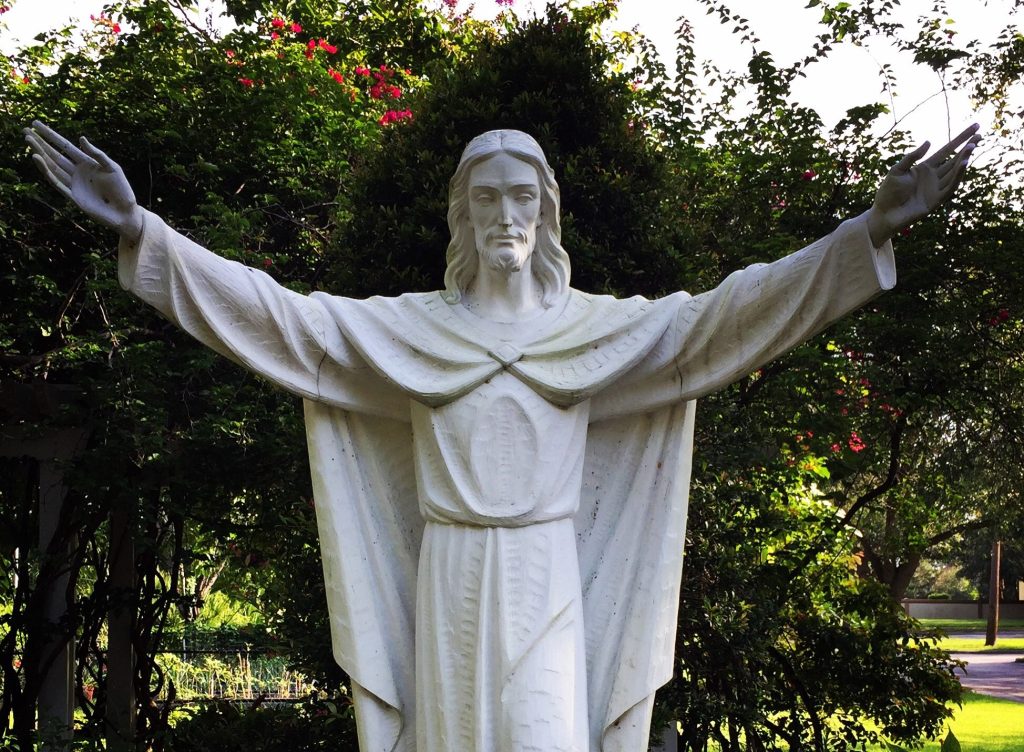
Will our love be constricted or expand?
The people of the synagogue in Jesus’ hometown rose up, drove him out of the town, and led him to the brow of the hill on which their town had been built, to hurl him down headlong (Lk 4:29). Why did Jesus’ own rise up in such a fury that they sought to physically expel him from their midst?
Jesus dared to equate others outside of his own tribe as equal to them. Just before the uprising to throw him tumbling down a hill, Jesus shared that God had already been working to reveal his invitation of salvation to those beyond the people of Israel. Elijah was sent to the widow of Zarephath and Elisha brought healing to Naaman the Syrian. These two individuals that the prophets engaged with were Gentiles.
The people hear clearly in Jesus’ inaugural address that he is bringing glad tidings to the poor, the captive and the oppressed of not only the Jewish nation but all nations. Jesus’ invitation of salvation is for all people. His own would have none of it. They were too closed in on themselves to be willing to grow beyond their shortsightedness such that they could not see that they were part of this plan of salvation as well, not to keep their light under a bushel basket, but instead to be the light to the nations.
Self autonomy, self appropriation, self focus, and ego centeredness has no place if living the Gospel is central to our lives. As St. Paul writes in his first letter to the Corinthians: “So faith, hope, love remain, these three; but the greatest of these is love” (1 Cor. 13:13). For love to grow, there needs to be not constriction but expansion. If love is to increase in us, we are to give it away.
The very simple act of breathing means that we are alive, but when we are anxious, stressed or afraid, our breathing is constricted, our blood flow is diminished, we become cold. We are surviving, yet not thriving. When we consciously take some deep breaths, our lungs expand, our intake of oxygen increases, our blood flow to the small blood vessels improves and our heart rate regulates. Our blood pressure stabilizes and we have the opportunity to be less reactive, more peaceful, and we become warm.
Jesus invited the people of his hometown to expand beyond their posture of survival and defensiveness. He invited them to move beyond tribalism to inclusiveness. Jesus invited his people to love, to will the good of others. He invites us today to do the same. Will we contribute to our present condition of defensiveness and polarization in our interactions in person and on line, perceiving reality only from our own limited point of view, reacting impulsively, impatiently, disrespectfully, or will we say yes to Jesus’ invitation to breathe deep, receive his love, so as to love in return?
Photo: Jesus’ arms are wide open to embrace us all in his love. Garden of St. Peter Catholic Church.
Link for the Mass readings for January, 30, 2022
Jesus is our peace in the midst of any storm.
On display in Mark’s recounting of the calming of the storm at sea is the humanity of Jesus. He had finally succumbed to the exhaustion from being pulled and touched, challenged and accused, the constant interaction through his service of teaching, healing, forgiving, and exorcising, such that he not only fell asleep on the boat but was in such a deep state that he was as if dead, even during the height of the storm. Also, we see his divinity expressed when his disciples wake him and he calmed the storm immediately with just his word: “Quiet! Be Still” (Mk 4:39)!
The disciples have grasped his uniqueness and have accepted him as their rabbi, their teacher, but they are still grappling with the reality that Jesus is at the same time the Son of God. The disciples will continue to experience his miracles, but it will not be until after his resurrection and ascension, that their faith will find the maturity to participate in the fullness of the ministry Jesus was grooming them for.
Storms arise in our lives, sometimes just as unannounced and as quickly as the squall from today’s Gospel. A health issue, an injury, an economic shift, a conflict, the effects of a mistake in judgment, or a sinful choice, all can arise at a moment’s notice. Covid has certainly been wreaking havoc since last March. We, like the disciples, can sometimes only hold on so as not to be tossed into the sea, or bail out water so we don’t sink. Sooner or later, we need to turn to Jesus to seek his aid. A helpful point to keep in mind that I have learned from one of our past retreat directors, Fr. RB, is: “Sometimes the Lord calms the storm, and sometimes the Lord lets the storm rage on and calms his child.”
To understand this statement is to begin to mature in our faith. No matter the severity of the storm, we are to trust in Jesus. He remains with, accompanies, and does not abandon us. Whether we brought the storms upon ourselves or they arose from another source, Jesus does not leave us to fend for ourselves. When we remember to call on his name, he will either calm the storm or bring us a sense of peace as we travel through it empowered by the assurance that he will give us that which we need to ride it out to the other side. I have felt his closeness and presence dealing with the sickness and death of JoAnn, as well as during my recovery process of pneumonia a year later.
The experience of this closeness of Jesus is to be shared. We are also to be there for others during their storms. We are to be a presence of calm assurance for those who need Jesus but do not know him or are focusing on the anxiety and fear of the storm instead of him. We do this best when we are willing to enter the chaos of another and allow God to happen.
Photo: Storm clouds gathering as I leave Mass one night. Jesus is our peace through any storm!
Fr RB Williams home page and link to his homily – http://www.rbwords.com/wttw/date/2018-01-27
Link for the Mass readings for Saturday, January 29, 2022
 Spiritual Stepping Stones