
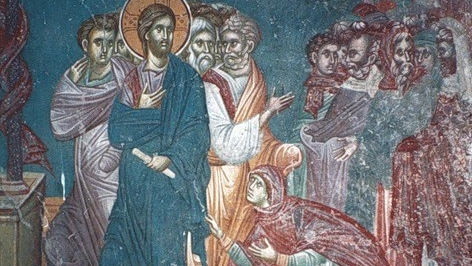
We are to reach out to Jesus for healing and bring his healing to others.
“If only I can touch his cloak, I shall be cured.” Jesus turned around and saw her, and said, “Courage, daughter! Your faith has saved you.” And from that hour the woman was cured (Mt 9:21-22).
Just to touch his cloak may seem a small and insignificant act, but by doing so, this woman showed tremendous courage. Suffering from hemorrhaging for twelve years, broke from spending all her resources to be healed, she risked. She could have been severely punished, beaten, or stoned for this small act. Under the Levitical code, her condition deemed her unclean, in the same category as a leper, a pariah. Touching someone else in that condition would then make them unclean. Yet, in that small touch, that great act of courage, “power had gone forth from him” (Mk 5:30), and she was completely healed. Not only did the woman exhibit the courage to touch Jesus, but to admit she had done so when Jesus questioned who had touched him.
In calling the woman who touched him out, Jesus was not condemning her, Jesus was acknowledging her faith and restoring her to the community from which she had been ostracized. Jesus restored her dignity. How many women today still feel and experience the pain of exclusion, not having access to the full and equal benefits of society and the Church? How many people are still considered outcasts and pariahs in our communities?
The past few years have shed a brighter light on the abuses of human dignity in our own country. While these examples are by no means new, their coming from the shadows has been long overdue. The ongoing objectification of women came forth because of the high profile cases of Harvey Weinstein and Bill Cosby. Unjust laws that allow those fleeing violence, hunger, and persecution from our southern border to be denied political asylum, and worse, children to be separated from their families have been exposed. DACA recipients rights were recently upheld by the Supreme court but they are still forced to live in fear of deportation. From Trayvon Martin to George Floyd, people of color continue to unnecessarily lose their lives. After decades of racial insensitivity to Native Americans, two high profile teams, the Washington Redskins and the Cleveland Indians, are discussing new names and mascots.
Pope Francis in his general audience from August 31, 2016, stated: “Once again Jesus, with his merciful behavior, shows the church the path it must take to reach out to every person so that each one can be healed in body and spirit and recover his or her dignity as a child of God”. We too then are to treat each person we encounter, in-person and online, with dignity, love, mercy, and respect.
The courage and persistence of the woman with a hemorrhage from today’s Gospel led her to reach out to touch Jesus even though she was crossing social norms. Jesus affirmed her move and lifted her up as a model for those marginalized, those on the peripheries among us, those we may consider unclean. The pandemic has shown the disparity of access for so many in the world. We need to continue to bring to light, pray, and work for those who suffer from indignity, injustice, and lack of access.
Icon of the woman with a hemorrhage touching the cloak of Jesus
Link for the Mass readings for Monday, July 5, 2021

Are we willing to follow the blueprint of the Carpenter?
“Is he not the carpenter” (Mk 6:3)?
This is a fascinating phrase because it may address a common question that many have. What was Jesus doing from the last time we read about him in the Gospel of Luke when Mary and Jesus find him in the Temple to the beginning of his public ministry? The years from twelve to thirty are often called the hidden years of Jesus because there is no written record describing Jesus or what he was doing during this time. There have been many speculations, but I believe that Mark encapsulates concisely what Jesus was doing in this verse: nothing unusual or out of the ordinary.
Jesus grew up in Nazareth, a small town of about two to four hundred residents. Most of the people lived a simple, agrarian lifestyle. Joseph was a tektōn, carpenter, as translated above, meaning he was most likely a common woodworker, and day laborer. He would have belonged to the artisan class. For us today, not so bad, but during this time period, it would have meant that Joseph and his family would have been considered on the lower rungs of the social ladder, lower than even the peasants “because they did not have the benefit of a stable plot of land” (Martin 2014, 78). The only people that would have been considered any lower in society would have been those considered outcasts and unclean.
What was Jesus doing during these hidden years? Most likely, he started as an apprentice of Joseph. Together they lived a hard life on the margins, relied on God and each another. Jesus grew up as a faithful and devout Jewish man, and all else was pretty much uneventful. In today’s Gospel from Mark we see that Jesus has returned home after his ministry and outreach had already begun. Word of Jesus had gotten back to his hometown crowd that he had been casting out demons, healing the blind, the lame and the sick, and as witnessed in his home synagogue, taught with authority, his own. Jesus did not follow the rabbinic custom of prefacing his teaching by sharing which Rabbi or scribe he was citing.
Other than learning his faith from Mary, Joseph, and his extended family and local synagogue, most likely, nothing even theologically eventful happened while he grew up, because as is evidenced in today’s reading the crowd questioned, “Where did this man get all this? What kind of wisdom has been given him? What mighty deeds are wrought by his hands! Is he not the carpenter” (Mk 6:2-3)? How could this simpleton woodworker, who we have known all his life do or speak as he does?
The derogatory way in which tektōn was viewed may also be indirectly present in the four Gospel accounts as well. Mark is the only one who cites that Jesus is a tektōn directly. Matthew uses the phrase “carpenter’s son” (Mt 13:55), Luke and John do not even mention tektōn at all, writing, “Joseph’s son” (Lk 4:22) and “the son of Joseph” (Jn 6:42). The further away in time, the record cleans up Jesus a bit more.
What does the relevance of the simple question, “Is he not the carpenter?” (Mk 6:3), mean for us today? It means that the Son of God became human, lived a mundane and harsh life on the margins like many in our world today. It means that God began in small measured ways, even with his Son, regarding his plan of salvation that unfolds over time, in his time. We can be assured that God is continuing his work in and through us if we are willing to participate with God.
Even if we believe in God, we may not feel that God is working in and/or through us. We may feel ineffectual, out of touch, overwhelmed, with little or no sense of direction. We or those close to us may have just been dealt with something unexpected, a dire situation, or have been struggling chronically for a long time. We may also feel life is going pretty well, that we are on top of the world, yet something is still missing, still alluding our grasp.
We need to slow down if we want to catch up to God’s plan and follow his blueprint. No matter where we find ourselves in our present condition in life, Jesus has not left us to deal with our situation alone. Jesus understands what we are going through from his own experiences of humanity. Because of his divinity, Jesus is in our midst, present and accompanying us today. We need to trust, be patient with, and invite the carpenter into our situation. May we surrender our control and work alongside him to build a firmer foundation for our lives and for others. Knowing full well that as we align our faith more and more visibly to the teachings of Jesus, we also need to be prepared to receive some of the same rejection that Jesus did.
Photo: Three or four summers ago, accessing my limited carpentry skills.
Link for the Mass reading for Sunday, July 4, 2021
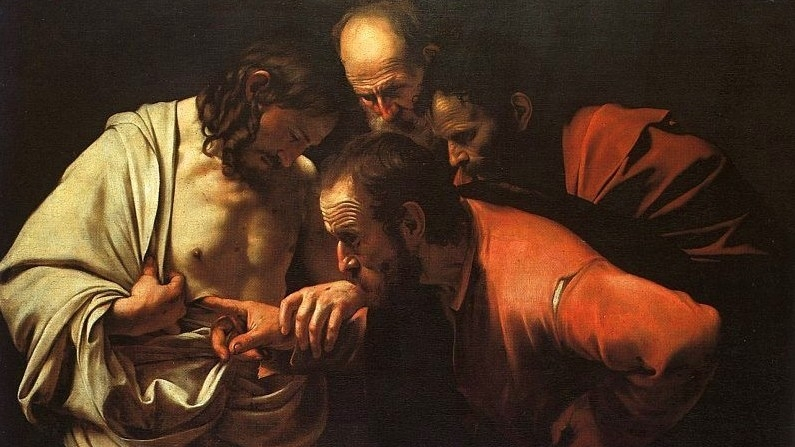
When we accompany one another in our pain, we touch the wounded Body of Christ.
Then Jesus said to Thomas, “Put your finger here and see my hands, and bring your hand and put it into my side, and do not be unbelieving, but believe.” Thomas answered and said to him, “My Lord and my God” (Jn 20:27-28)!
Thomas’ acclamation “My Lord and my God!” came from his touching the wounds of Jesus. Jesus rose from the dead, had conquered death, and yet he still bore the wounds of his Passion. This is a profound message to the Apostles, those Jesus sent to proclaim his Gospel, and for us who have been called to follow him today.
The Body of Christ continues to be wounded by the sin and division of our fallen nature that put Jesus on the Cross in the first place. Many people doubt and do not believe today in God because they question, “How can a loving God allow such suffering and pain, especially of the innocent?” A valid question. And one for which there is no sufficient answer because we can only see from our limited point of view. The most recent example of the collapse of the Surfside condo, where there have been twenty-two confirmed dead so far and many still unaccounted for can cause us to question again, “Why?”
Regarding this specific tragedy, there will continue to be an investigation to find out what caused the collapse, but even so, that will not bring back those who have died. Knowing why will not necessarily ease the pain of loss although holding those accountable will bring some sense of justice. Yet the question can remain, “Why God? Where were you and do you care?”
God is present, God cares, though again we are limited in what we can see and understand. Also, death does not have the final answer. That is what Jesus showed Thomas in bringing him close to touch his wounded side. Jesus rose from the dead and conquered it, but the scarring of his wounds remained. Jesus calls us to draw close and to touch his wounds so we can embrace our own, those we can and cannot see. As we experience his healing, Jesus will send us, as he did Thomas and the others, to touch his wounded Body again this time by entering into the pain and suffering of others where God can happen and healing can begin.
Though the temptation is strong to deny, rationalize, or flee from the conflict, challenges, hurt, and pain that we and others are experiencing, we must resist. If we don’t embrace our or other’s trials we will not come to the root cause of them. We touch the wounded Body of Christ, as Thomas did today, when we are willing to draw close, be present, and accompany those who bear his wounds, those who are vulnerable: the unborn, widows, orphans, those with chronic illness, the dying, refugees, immigrants, hungry, homeless, and those without access to clean water; those who suffer from addiction, poverty, depression, disease, oppression, prejudice, discrimination, dehumanization, racism, sexism, misogyny, unjust immigration policies, incarceration, those on death row, unemployment, underemployment, wage theft, human trafficking, domestic violence, slavery, violence, war, terrorism, and natural disasters. For what we do to the least among us, we do it to Jesus.
We can be easily overwhelmed with the suffering in our country, our world, or the personal challenges before us. Denial or indifference is not the answer. There is an act of balancing that Jesus calls us to participate in as we learn to love God, love others, and love our neighbors as ourselves. The answer is found when we are willing to encounter Jesus and follow his lead. This begins when we are willing to begin or continue to develop a relationship with him and one another.
We do not know where Thomas was when the Apostles first encountered Jesus after the Resurrection, but we do know he was not with Jesus. Apart from Jesus, we can do nothing, yet with Jesus, the one who conquered death, all things are possible! When we feel overwhelmed, helpless, or indecisive, we need to return to Jesus and acclaim with Thomas, “My Lord and my God!”
Jesus is present in our midst, just as he was with Thomas and the other Apostles. He invites us to be engaged in the unique way he calls us to serve today to make our corner of the world a little better. We can reach out, even in our present state of social distancing and engage person to person, to share a smile – even with our eyes, we can provide a listening ear, make a call, send a text, FaceTime or ZOOM, and/or send a letter. (I received a wonderful message from a past student on social media and a kind letter at the end of the school year.) Being willing to enter into the chaos of another’s life, to hear their story, their experience, and be willing to be present is a good way to begin and sustain a relationship. This is a step that will help us to move in a more reconciliatory direction in our present time.
St. Thomas, on your feast day, pray for us!
Painting from Caravaggio again: Incredulity of St Thomas, 1601-1602
Link for the readings of the Mass for Saturday, July 3, 2021
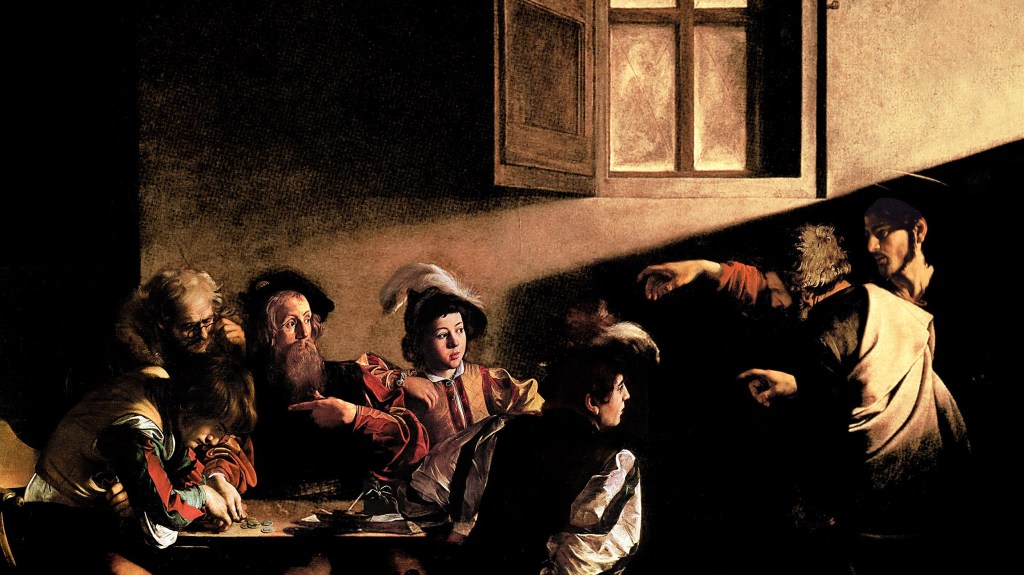
Jesus loves us as we are, yet calls us from the darkness into his light.
“Those who are well do not need a physician, but the sick do. Go and learn the meaning of the words, I desire mercy, not sacrifice. I did not come to call the righteous but sinners” (Mt 9:12-13).
How could Jesus have called Matthew, named Levi in Mark and Luke, to be part of his inner circle and then how could he eat with sinners? Matthew is a tax collector. Tax collectors were, at the least, believed to be collecting money over and above, skimming off the top, the allotted prescribed taxes and at worst, they were considered to be in collusion with the occupying power of Rome. Not only were they considered unethical and unclean, tax collectors were in league with the enemy! And Jesus is sitting down and eating with THEM!!!
In quoting Hosea 6:6, “I desire mercy, not sacrifice,” Jesus was drawing reference to the growing Pharisaic influence to aspire to and take on the ritual purity status of the priests sacrificing at the Temple. To be in favor with the religious leadership, to be accepted as part of the religious community, one had to follow certain prescriptions and practices, otherwise be recognized as unclean and while in that state, one did not belong to the community. Sharing table fellowship was a measure of that social construct, so if one was unclean, they were to eat alone.
Jesus would have none of that. Jesus sought to enter into relationship with anyone who was willing, even those who were considered unclean, on the outside, and/or the peripheries. He loved people then and loves us today for who we are and as we are, a beloved child of God. There is no THEM or OTHER for Jesus! He bestowed and bestows his mercy, love, and healing first, as the starting point of any relationship. Jesus calls us to a better and more fulfilling life now, so that it may carry over into eternity. He accepted and accepts people first, builds relationships first, then continues to walk with us, to empower us to be perfect as his heavenly Father is perfect (cf. Mt 5:48).
The bar of perfection is indeed high, higher than that of the Pharisees; the difference is that Jesus’ mercy, his willingness to enter into the chaos of another, is higher. Jesus meets us in our imperfections, sin, and weaknesses. He enters through our door, but he does not want us to stay there, he wants us to exit out of his door by becoming fully alive.
Jesus’ teachings are hard, and when we fall he does not kick us in the teeth and cast us aside. He lays down, right in the muck and mire with us. Face to face, he wipes the dirt and tears from our eyes, offers his hand, and helps us to continue on our journey to see and experience that which is good, true, and beautiful in our lives.
No matter what we are dealing or struggling with, know that Jesus loves each and every one of us more than we can ever mess up and he does not define us by our worst choices and acts. God forgives and heals as many times as we are willing to go to him. Sometimes when we feel stuck, indecisive, and immobile, we just need to remember to accept Jesus’ invitation, arise as did Matthew in today’s Gospel, and walk with him. Step by step, empowered by the Holy Spirit, we will be transformed as we grow and mature, which is messy because life is messy.
As we experience our healing moments in the midst of our chaos, may we also be understanding of and willing to enter into the chaos of others and allow God to forgive, heal, and love through us.
Painting: The Calling of St Matthew – Caravaggio, 1600
Parallel readings: Mt 9:9-13, Mk 2:13-17, Lk 5:27-32
Link for the Mass readings for Friday, July 2, 2021
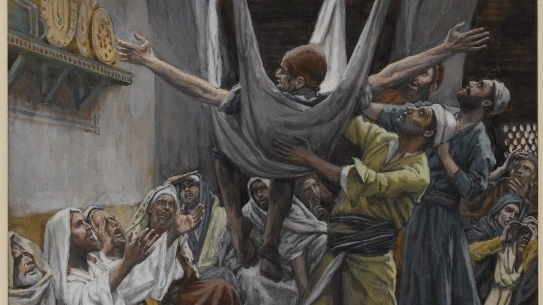
Who do we see that is in need and how will we help?
And there people brought to him a paralytic lying on a stretcher. When Jesus saw their faith, he said to the paralytic, “Courage, child, your sins are forgiven”(Mt 9:2).
Matthew’s account of this scene is much simpler than Mark and Luke’s, but the point is the same. The person paralyzed received healing because some people were willing to bear his weight and creatively bring him to Jesus. In neither of the three Gospel accounts do we know who the people are that bring this man to Jesus for healing. Were they family, friends, or neighbors? It does not matter. They were aware of someone in need, they believed Jesus could heal him, and they put forth the effort to bring this man to Jesus.
Are we like the people in today’s Gospel; are we aware, do we care? St. Mother Teresa often said that people are “not only hungry for bread – but hungry for love, naked not only for clothing – but naked for human dignity and respect, homeless not only for want of home and bricks, – but homeless because of rejection.” If we are living our faith, indifference to the needs of others is not an option. Rationalizing why we ought not to care, or worse giving in to our fears and prejudices so to dehumanize and reject others in need are counter to the call of Jesus.
How is God speaking to our consciences; how is he moving our hearts? There are so many who are hurting and suffering. Let us not get trapped into criticizing others for reaching out to help in a different way than we feel called. We just need to be honest about where God is leading us and act as the four in our Gospel reading today did. Be aware, be willing to meet the need we see, access our personal gifts of creativity, and bring them to Jesus. By collaborating with Jesus in this way miracles can and still do happen. Structures of inhumanity and injustice can be turned around.
Pope Francis has been consistent and clear about the dignity of all life. He tweeted in 2013: “It is God who gives life. Let us respect and love human life, especially vulnerable life in a mother’s womb.” During Mass on Sunday, January 14, 2018 he shared: “Migrants and refugees don’t represent just a problem to be solved, but are brothers and sisters to be welcomed, respected and loved.” On June 3, 2020, Pope Francis said, “My friends, we cannot tolerate or turn a blind eye to racism and exclusion in any form and yet claim to defend the sacredness of every human life”.
The Lord hears the cry of not just a select few but all those in need. Whose cry do we hear and who will we support?
Painting: Healing of the Paralytic – James Tissot
See also Mark 2:1-12, Matthew 9:1-8 and Luke 5:17-26
Link for the Mass readings for Thursday, July 1, 2021
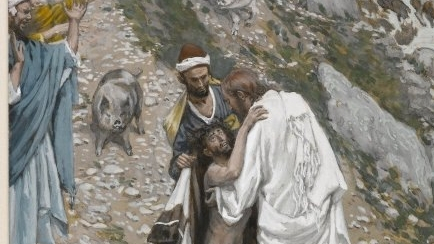
Do we ask Jesus to go away or ask to follow him?
Thereupon the whole town came out to meet Jesus, and when they saw him they begged him to leave their district (Mt 8:34).
After hearing of the healing of the demoniacs and the herd of swine rushing into the water, the townsfolk came out and begged Jesus to leave. This is also attested to in the Gospel of Mark 5:17. Luke adds that the people asked Jesus to leave because: “they were seized with great fear” (Lk 8:37). Jesus healed two demoniacs in Matthew’s account, one in the Mark and Luke accounts, and the people asked him to leave in all the accounts. Hearing of Jesus’ healing power to expel demons, that the swine ran into the seas, and hearing about his act of mercy and grace, would we too ask Jesus to leave?
Before answering, “No, of course not!” too quickly, how many times have our own judgments, prejudices, and self-centeredness, our own lack of understanding for the bigger picture, our own fear, been chosen over living the Gospel in our own lives? Is our life shaped by the Gospel message of Jesus? Do we wrestle with the challenge of how we are to love our enemies, to be perfect as our heavenly Father is perfect, to turn the other cheek, and to answer in practical, concrete ways, “What you do to the least of these: you do it to me?” Or, if we read or listen to the Gospels at all, do we seek to adjust Jesus’ message, to conform God to our will, to fit the message to our lifestyle, what works for us? Is the radiance of Jesus’ mercy, love and grace too bright for us such that we wince, that we feel it is too much to bear, and we also say, “Go away!”?
In these slower summer days, may we make some time to read, slowly and prayerfully, each of the accounts of the healing of the Gadarene demoniac(s) the three synoptic Gospels mentioned above. We will also notice with Mark and Luke’s telling that the demoniac asked to follow Jesus after being healed. Jesus said to the man: “Go home to your friends, and tell them how much the Lord has done for you, and how he has had mercy on you” (Mark 5:19). The one who was so bound up by possession that he was out of his mind, still had some glimmer of hope that he could be healed and ran up to and prostrated himself before Jesus, was healed and freed to proclaim the Gospel to the whole city.
In our reading and prayer, may we enter into this powerful account and also encounter Jesus. What still enslaves and binds us such that we continue to be separated from God and others? Will we give in to our fear and beg Jesus to leave us, or open our mind, heart, and soul to his healing word and touch? May we, as the man possessed did prostrate ourselves before Jesus, surrender to him, so to experience the healing mercy, love, and forgiveness of Jesus that we too may be free. Free to experience freedom for excellence, free to embrace who we truly are and who the Holy Spirit guides us to be.
Let us pray for each other that Jesus may forgive and free us as he freed the two demoniacs in today’s Gospel account from Matthew. May he free us from that which keeps us from being human and humane, so are more willing to encounter, accompany, encourage, embrace, and love one another. Our country may appear to be coming apart at the seams and getting darker each day. This is why we are called to be contemplatives in action, to be bearers of healing and reconciliation.
When we are truly people of prayer, God will lead us to act. Jesus guides us as he did the demoniac (in Mark and Luke) who wanted to follow him. Jesus sent him home to his community and we are sent to do the same; to be engaged, to share the love and mercy we have received from Jesus, and be his agents of change and reconciliation in our own unique ways.
Painting: James Tissot, The Swine Driven into the Sea
Parallel accounts of today’s Gospel see: Mark 5:1-20, Matthew 8:28-34, Luke 8:26-39
Link for the Mass readings for Wednesday, July 1, 2021
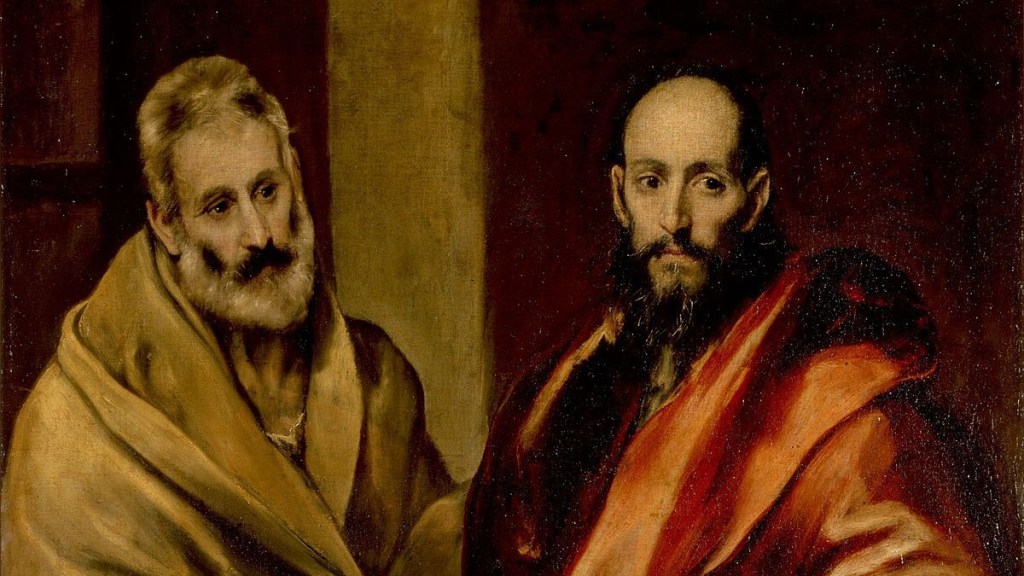
Peter and Paul answered. How do we answer, “Who do you say that I am?”
Jesus said to his Apostles, “But who do you say that I am” (Mt 16:15)?
Have we answered the same question that Jesus posed to his apostles for ourselves? Too often we move from this to that, one situation to another, putting out fires and moving from one crisis to another, or we are just seeking to make it through another day.
To be a Christian is not a call to stop living our lives, but it is an invitation to live our lives in, with, and for Jesus. We have been described as a People of the Book, along with Jews and Muslims. This is true, yet, even more so, we are a people of encounter; we encounter the Living Word, the Son of God, Jesus the Christ.
Peter and Paul encountered Jesus in their lives and were changed forever. We can encounter the same Jesus when we slow down enough to pray with the Word proclaimed in the Liturgy of the Mass or read in personal prayer.
As a very simple example: except for the first Office of the day, in praying the Liturgy of the Hours, the opening prayer is, “God come to my assistance, Lord make haste to help me.” I still need to embrace the depth of those words instead of repeatedly passing through them, not really taking in what I am saying!!! Also, how many times do we make the Sign of the Cross without being attentive to the profound act we have just engaged ourselves in?
Through invoking this prayer and making this sacramental gesture, we are acknowledging that the Creator of all that exists is a part of our lives. Each one is also a prayer we may lean on when tempted, stressed, worried, or anxious. Each one is an affirmation of a commitment to resist giving in to a mindset of minimalism and self-centeredness. All things are possible when we mindfully choose to align ourselves with Jesus, participate in the communion of the Holy Trinity, and welcome the invitation to love others as God loves us.
Peter and Paul both answered the question that Jesus posed. Peter said, “You are the Christ, the Son of the living God” (Mt 16:16), and Paul “proclaimed Jesus in the synagogues, that he is the Son of God” (Acts 9:20)! I invite you to read today’s Gospel account from Matthew a few times, imagine yourself being present in the scene, and then as Jesus approaches and asks “Who do you say that I am?” How do you respond? How we answer this question makes a difference.
Saints Peter and Paul, pray for us!
Painting of Saints Peter and Paul by El Greco, 16th Century
Link for the Mass readings for Saturday, June 29, 2021
Jesus provides the true security that we seek.
In today’s Gospel a scribe approaches Jesus. Often, when a scribe is mentioned in the Gospels, one can expect a conflict. This time though, it appears that this scribe has not come to challenge Jesus, but has a sincere interest in following him, of becoming one of his disciples because he said, “Teacher, I will follow you wherever you go” (Mt 8:19). Just as Jesus responded to the rich man who sought what he must do to enter the kingdom of God, so Jesus challenged the scribe, “Foxes have dens and birds of the sky have nests, but the Son of Man has nowhere to rest his head” (Mt 8:20).
The life of the scribe was generally very sedentary and stable. They, more than likely, would have sought urban areas where they could have access to more opportunities to practice their writing craft such as the recording of the collection of taxes, the recording of royal decisions and decrees, secretarial roles in government, as well as be legal scholars of the Torah. Some scribes could rise to high levels influencing kings or sitting on the Sanhedrin, the Jewish high council in Jerusalem. The life of Jesus was that of an itinerant preacher. For the remainder of his ministry he would not be staying in one place for long. If the scribe truly wanted to follow Jesus he would need to give up his present lifestyle and be willing to go on the road with Jesus.
There is no response from the scribe to Jesus’ invitation. This is well and good because it gives us the opportunity to answer the question for ourselves. How would we respond? Where do we place our security? Do we place our security in our job, in our home, our family, our trade, vocation, or career choice? Those pursuing college degrees, are you being led by Jesus or the pursuit of power, pleasure, wealth, and/or honor?
When we truly place our hope and security in Jesus instead of that which is finite and limited, we will be less attached to the things of this world, we can live more simply and be freer to reach out beyond ourselves to give and provide aid, comfort, and support to those who are in need. Our lives will be more balanced and fulfilling when we let go of our white-knuckled grip of those material realities that we cling to for security and safety.
As was true with the disciples, our minds, hearts, and spirits need to first be open to the invitation of Jesus to follow him. Then as we follow his guidance we need to recognize that our transformation takes time. We are to persevere in prayer, draw strength from the love of the Holy Spirit and each other as trials, experiences, sufferings, and growing pains arise. Jesus has a unique vocational call for each of us. To close today, let us pray the hymn written by the Benedictine Nuns of Stanbrook Abbey:
O God of truth, prepare our minds
to hear and heed your holy word.
Fill every heart that longs for you
with your mysterious presence, Lord.
Almighty Father, with your Son
and blessed Spirit, hear our prayer.
Teach us to love eternal truth
and seek its freedom everywhere.
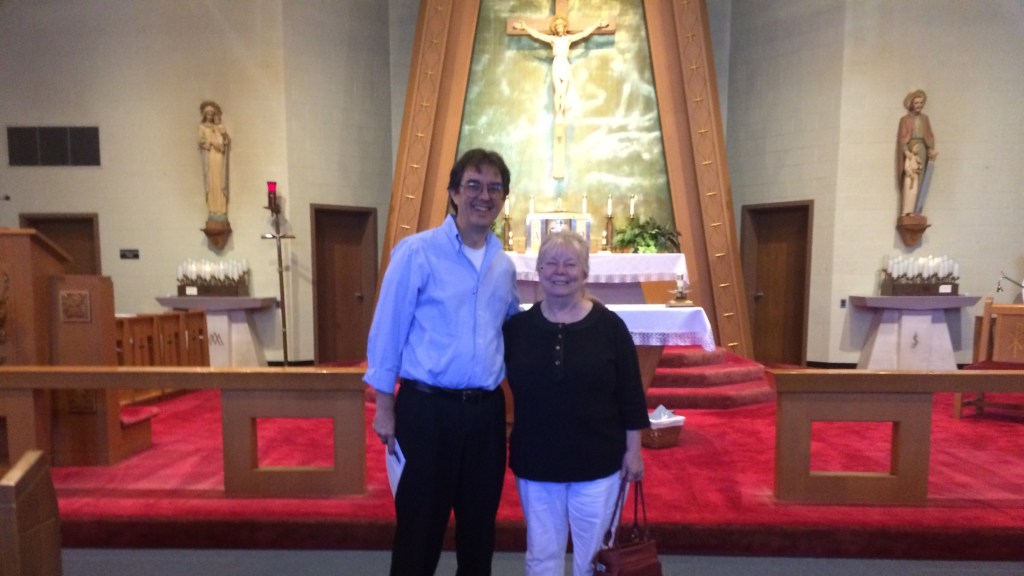
Photo of my mother and me after Mass at St Philip, the parish where I received my First Communion taken during my visit to CT a few years ago.
Link for the Mass readings for Monday, June 28, 2021

 Spiritual Stepping Stones