God’s plans begin small, just as a mighty oak begins with an acorn.
Two parables are presented by Jesus today in the Gospel of Mark. Both are presenting what the kingdom of God is like. The first presents a man who sows seeds, and the second is a mustard seed that is planted. In both cases, the seeds germinate and go through the process of becoming mature plants. The kingdom of God is like these plants in that God works through the smallest of and many times, unnoticed beginnings. Also, God’s timing is not our timing. In our rapid-paced world of instant access, we would do well to slow down.
God not only begins small, and on his own timetable, but he is often working beyond the realm of our awareness. This is evident in the first parable offered by Jesus: “This is how it is with the Kingdom of God; it is as if a man were to scatter seed on the land and would sleep and rise night and day and the seed would sprout and grow, he knows not how” (Mk 4:26-27). This is not to say that God has set everything in motion and is indifferent or despondent to his creation. Quite the opposite. God has a plan and has been intimately engaged in guiding his creation and in each of our lives as well. He revealed this truth to Jeremiah: “Before I formed you in the womb I knew you, before you were born I dedicated you” (Jeremiah 1:5). God is present to us, in a relationship with us, whether we know it or not. He quietly invites us to participate in his plan.
The beauty is that even though God has no need for us, he invites us to know him, to participate in the spreading of his kingdom. Just think of someone who you have, for the longest time, wanted to meet. If the opportunity arose to spend time with that person, how excited would you be? We have the opportunity to do so with the Creator of all that exists, and not just today, or tomorrow, but for all of eternity.
God has created us to know him, to love him, and to serve him. He invites us to share in his relationship, his work of salvation history in simple and subtle ways in this life. Are we making an effort to be aware, are we willing to watch and pray? Are we willing to place ourselves in a posture so better to receive his Word as well as his Silence? Just as an acorn that is sown matures and grows over time into the mightiest of oak trees, so may our relationship with our Loving God and Father also grow and mature that we become one with him in this life and into the next for eternity.
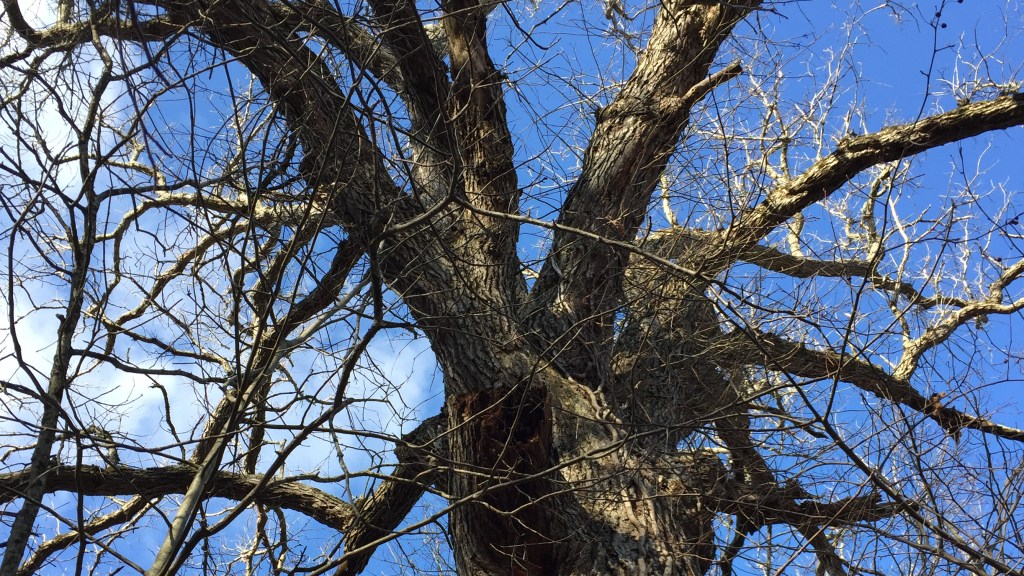
Photo: Oak canopy from a tree behind my parent’s house that I have watched grow since I was five. I visited Grandfather Oak again two Christmases ago. It is wonderful to watch God’s hand at work!!!
Link for the Mass readings for Friday January 29, 2021
Jesus calls us to share his light with one another not hide it away.
Jesus said to his disciples, “Is a lamp brought in to be placed under a bushel basket or under a bed, and not to be placed on a lampstand” (Mk 4:21)? The obvious answer is no. A lamp is brought in to illuminate a room so one can read, find something misplaced, and it can even provide some warmth if needed. It would be absurd to do the things with a lamp that Jesus presented in today’s Gospel.
We are like lamps in that we are invited to shine the light of Christ to dispel the darkness of our fallen nature and world. This is the path of a disciple. Yet, many of us do not allow the light of Jesus to shine through us. Here are a few reasons why this may be.
To draw the analogy of the lamp into our modern electric lamp instead of an oil lamp of Jesus’ day, one reason a lamp does not work is that it is not plugged into its source. Are we plugged into Jesus? Are we spending time in prayer, worship, study, building relationships, and serving God and one another?
Another reason may be that the light bulb is not screwed in all the way or the bulb has gone out. We may be plugged into the source of Jesus, but we are just going through the motions. We show up for Mass or church physically but are not engaged in any meaningful way. We spend time in prayer but we are just saying words or going through the motions without listening to God or willing to allow him to challenge us to go deeper. We have a nice pile of spiritual reading, apps, and DVDs, but the books are only gathering dust, and the apps and DVDs were not opened since they were first accessed or purchased.
Another reason a lamp may not work is that it has been damaged. Many of us may be broken or wounded. It is hard to risk sharing the light when our trust has been manipulated, misused, and/or abused. We need not despair or lose hope. Jesus meets us in our pain, our injury: emotional, psychological, physical, and/or spiritual, and offers his healing and restorative power so we too can shine his light again.
We are called and empowered by Jesus to shine his light. If we haven’t been doing so because of our woundedness, may we be open to his healing. If we aren’t plugged in to the life and source of our being, let us ask for God’s grace to be more disciplined and dedicate ourselves to spending more quality time engaged in prayer, worship, study, and fellowship. If we feel like we are in a rut, we are just going through the motions, and/or our spiritual and relational life is dry: We must consider how to rouse one another to love and good works (Hebrews 10:24). A kind act, a listening ear, or a smile is the simplest way to begin to allow the light of Jesus to shine through us to others. We just need to begin or begin again!
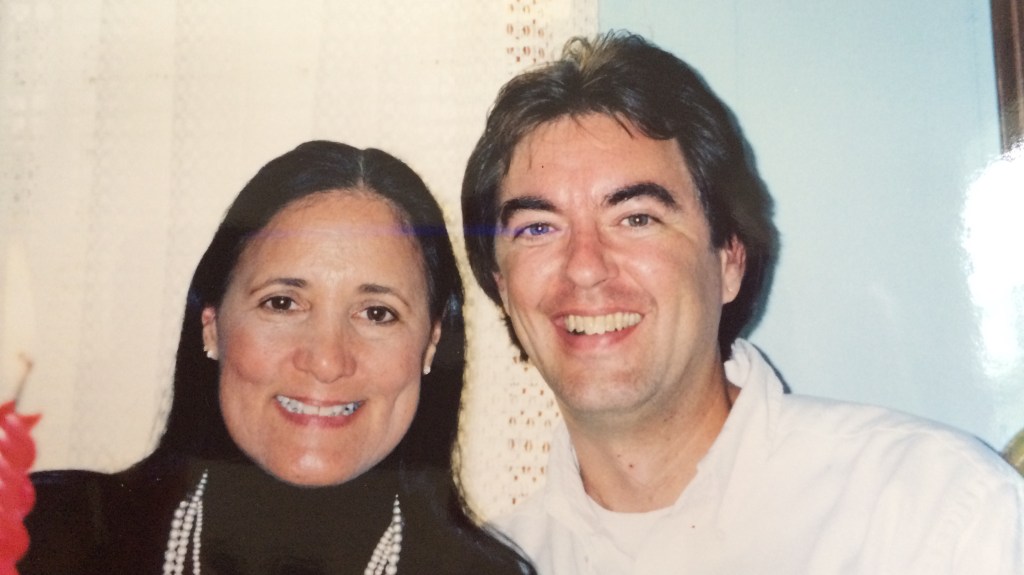
Photo: For me, the simplest way to share the light of Jesus is to offer a smile. It was often easiest to smile by JoAnn’s side.
Health update: Likely, I will be released from hospital tomorrow. I will still need to be on oxygen as I still have a longer recovery from the pneumonia ahead of me. I will send an update tomorrow once I know more, when and if I am home! Thank you again for all your prayers!!!
Link for the Mass readings for Thursday, January 28, 2021

Let us be about creating some rich soil!
Each of the elements of the Parable of the Sower is worthy of meditation and reflection. A very good practice would be to take some time to reflect on each aspect and ask what limits the germination and growth of the seeds God has sown in our lives, and also what helps us to bring about successful growth and a successful yield. When did we experience God’s word but have it almost immediately snatched away; when did we gain an insight, experience joy from his word and guidance, but did not in any way put the learning into practice; how many times have trials, hardship, and lack of courage or outright persecution, robbed us of stretching out of our comfort zone, and we instead withdrew, not wanting to risk growth?
Many of us can relate to: “Those sown among thorns are another sort. They are the people who hear the word, but worldly anxiety, the lure of riches, and the craving for other things intrude and choke the word, and it bears no fruit” (Mk 4:18-19). Distractions pull at us from within and without, from one second to the next. So much seeks to undo us, tear us down, and drive us into states of anxiety, despondency, cynicism, and depression. So many apparent goods and false truths entice us to feed our desires for power, wealth, fame, and pleasure. Material temptations offer promises of fulfillment but shortly after purchase leave us feeling empty. All the while, there is so much good that needs to be done and so much work to do. Even if we are willing to look beyond ourselves to be of help, we may not even be sure how to serve or where to begin.
Jesus offers us in the Parable of the Sower. His promise to us is that the seed sown in rich soil will grow to be a mature plant that bears much fruit. To bear fruit we need to create rich soil. This means breaking into hard ground, the hardness of our heart, prejudgments, and pride, by spending time and being present with not only those close to us but also with people who we keep at arm’s length. We also need to be willing to face our fear of rejection and be willing to encounter a person with understanding and respect instead of a preconceived notion of who someone is, then we can begin to diffuse false judgments, prejudices, and fears.
We often react from a defensive posture or give in to our immediate impulses, when instead we need to be more mindful. We do so when we take a moment to inhale deeply, discern each thought, situation, purchase, and action, to pray and seek God’s guidance, and to rely on trusted family, friends, colleagues, and classmates for guidance. We can learn from past experiences and resist making any rash or reactive decisions. Regarding service, it is best to start small, apply the same points just mentioned, and engage in reaching out in our own small way, but with, intention, confidence, and persistence.
These are just a few ideas that can help us start to uproot weeds and overgrowth, to begin to remove some rocks and soften the earth, and enjoy the process of preparing some rich soil – our heart, mind, and soul – to better receive and nurture the seed of the love of God that he sows, which is Jesus his Son. In time, as we surrender more to his will, continue to be nourished by his word, accept and put it into practice, and trust in him and not the temptations that entice, distract and disrupt our growth, we will see sprouts begin to grow, and soon mature plants that will “bear fruit thirty and sixty and a hundredfold” (Mk 4:20).
——————————————————————
Photo: Class of 2017 models of creating rich soil!
Link for the Mass readings for Wednesday, January 27, 2021
We are called to be part of a wonderful extended family!
Please forgive my lack of posts over the past few days. I have been hospitalized with Covid and pneumonia. With great care from the staff here at the hospital. I am on the mend. No improvement yet, but stable and not getting worse! And now back to the regularly scheduled program!
Even a surface reading of the Gospels will offer a glimmer of Jesus making things new. We can read and imagine the scene today. Many are gathered around him in a circle. The crowd is large but focused intently on Jesus as he taught. His family, presumably the relatives that only a few verses earlier came to seize him because he was out of his mind (cf. Mk 3:21), had arrived, were standing outside, and sent word. The message passed among the people was: “Your mother and your brothers [and your sisters] are outside asking for you” (Mk 3:32).
Jesus seized on the opportunity for a teachable moment. He looked not beyond and past the crowd that encircled him to his family who had sent word, but to those who were nearest to him and said: “Here are my mother and my brothers. [For] whoever does the will of God is my brother and sister and mother” (Mk 3:35).
The true measure of the family in the kingdom of God is not a bloodline but faith in and following the will of God. Those who have experienced or still experience the gift of a close, tight-knit, extended family can come close to the dramatic moment of silence that must have followed after this statement. For anyone living in the ancient Near East, familial, clan, and tribal relations were paramount to survival. To say that family bonds were strong is an understatement. Yet, Jesus challenged this societal norm by raising the bar even higher.
The relatives of Jesus were not present in this inner circle, they were on the outside. Imagine who might have been sitting in that circle; sinners, the unclean, tax collectors, and possibly even Gentiles – non-Jews, and Jesus said that they were his brother and sister and mother! If his relatives thought he had lost his mind before, I cannot imagine what kind of mental conniption they entered into after these words.
Jesus was not devaluing or delegitimizing family, he was restoring the family to its proper place and extending it out beyond what anyone of his time could conceive of. As Bishop Robert Barron writes, “when we give the family a disproportionate importance, in short, it becomes dysfunctional” (Barron 2011, 17). We as the baptized are united in a deeper way into the Mystical Body of Christ, which is even a more powerful call to unity here than the blood-line of family, clan, or tribe.
The end goal is that as each person draws closer in their encounter and relationship with God, they also draw closer together. As we are conformed more and more to the life of Christ we begin to bear his fruits of love, joy, peace, patience, kindness, goodness, gentleness, and self-control (cf. Galatians 5:22).
In sharing the fruit of the spirit, in giving this gift away to one another, our relationships will grow and our bonds will become stronger. Our love grows as we give it away, person to person, out beyond our comfort zones, to the peripheries, where there are those who feel set apart, and/or are on the outside looking in. We are even to share with our enemies. Not possible? True, if we enclose ourselves within our own bubble and focus on protecting our ego. Possible, when we deepen our relationship with Jesus.
Too many today are choosing to encase themselves in their own protective bubble wrap. Instead of embracing diversity, we are going backward, we are regressing. By choosing to close ourselves off from other viewpoints, talking over each other and at each other, if we are talking at all, and embracing fear instead of love, we are distancing ourselves from God and each other. Our strength as a people and as a nation and as a world increases when we embrace the human dignity of each person, and the rich diversity bestowed upon us through the unconditional love of God. May we embrace the teaching of Jesus who in his emphasis on following God’s will “was insisting that the in-gathering of the tribes into God’s family is of paramount importance” (Barron 2011, 17).
In today’s Gospel account from Mark 3:31-35, Jesus did not define those gathered around him by race, ethnicity, gender, or any other label. He defined them then, as he still defines his family today, as those who are willing to follow the will of God his Father. Mary his mother being the primary model.
Jesus, please help us to open our hearts and minds to receive the Love of the Holy Spirit so as to will the good of our family and friends, our colleagues, classmates, and neighbors, as well as those we may consider as other, and even our enemies. Help us to resist asking who does or does not belong in your inner circle, but instead be willing to surrender to God, follow his will, and sit at your feet, not only to learn from you but also to be empowered by you, so to care for one another as brothers and sisters, mothers and fathers.
I am very blessed to be part of a very rich family in blood and beyond, especially now as I have been recovering from Covid and pneumonia. I thank all of you for your prayers and your reaching out! May God bless you and draw you deeper into his wonderful family!
———————————————————————
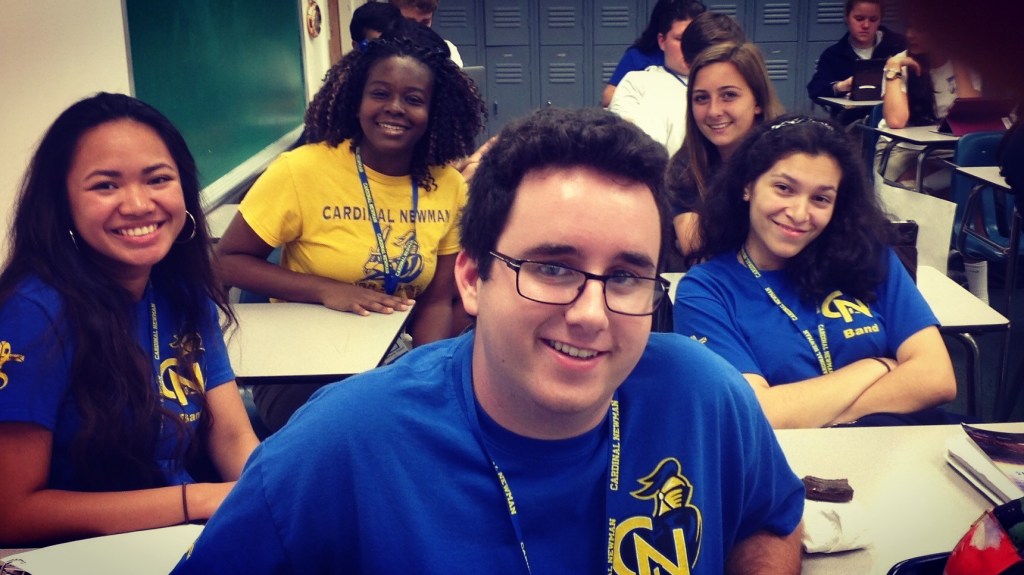
Photo: So very blessed with my Cardinal Newman family!
Barron, Robert. Catholicism: A Journey to the Heart of Faith. NY: Image, 2011.
Link for the Mass readings for Tuesday, January 26, 2021

Are we willing to follow Jesus to greater heights?
Jesus went up the mountain and summoned those whom he wanted and they came to him (Mk 3:13).
Through the centuries mountains have been sites where people have gone to rise above their daily experiences, to rise above the clouds, where the air is crisper, cleaner. It is a means of gaining a new perspective, transcending the human to touch the spiritual, and possibly hearing the voice of God. When one of the Gospel writers inserts the detail that Jesus is present on a mountain, we can be prepared that something significant is going to happen.
In today’s Gospel of Mark, the good news revealed to us is that Jesus calls to himself the Twelve, the Apostles, to preach and cast out demons. They are to continue the ministry of Jesus. These are not perfect men, but each will have a part to play in salvation history. Jesus will entrust them with the deposit of faith that they are to protect, yes, but more so to proclaim. Apostle means one who is sent.
Jesus will continue to call the Twelve to himself, to teach, mentor, model, and empower them so they will continue his mission to call people to repent and believe in the Gospel. Even though, especially through the Gospel of Mark, it often looks as if Jesus may have made a mistake in his choice. The Twelve do not ever grasp who Jesus really is, and when Jesus needs them most, Judas will turn him over to the Temple guards, the others flee at his arrest, and Peter will publicly deny him three times. It will not be until after the Resurrection and Ascension that the seeds that Jesus had sowed in them would begin to germinate and bear fruit.
Just as Jesus called the Twelve, he calls us as well. Each generation must experience and embrace the deposit of faith that has been given to us and pass it on to the next. Are we perfect, no. Do we have doubts, fears, weaknesses, yes. Does God call us and love us anyway? Yes. Like each Apostle, we are to go out and proclaim the good news that Jesus is our Lord! We do this daily with our words, faces, and actions. We think, look, speak, and act in ways that are kind, empowering, uplifting, and convicting while at the same time resisting the temptation to fix others. We are to strive to bear witness, be present, accompany and guide one another.
We all have much on our plate, some of us to overflowing. We may be thinking I cannot possibly do one more thing. Start small by bringing God with us into whatever we are already doing. He will give us the tools and accompany us as we seek to fulfill his will. As did the Apostles, we will make mistakes, make false starts, trip, fall, sin, and deny opportunities to reach out to be a witness. When we commit any or all of the above, we must resist beating ourselves up and instead learn from the experience, lean into Jesus, and with him prepare better for the next apostolic opportunity.
Jesus went up the mountain and summoned those whom he would send. Are we worthy of this same call? Probably not, for all of us fall short of the glory of God. Are we willing? That is a question for each of us to answer today and each day hereafter.
Photo: Hiking to the heights, Mohawk Trail, MA., around 1983-84
Link for today’s Mass readings for Friday, January 22, 2021
We find our meaning and source in our relationship with Jesus.
Mark details in his account that many from all over the region came to Jesus to be healed. Among the crowd, unclean spirits threw those they possessed down before Jesus. This did not slow the gathering of people who pressed in on Jesus, just to touch him. The crowd grew to a point that it was getting out of control so Jesus “told his disciples to have a boat ready for him because of the crowd, so that they would not crush him” (Mk 3:9).
People wanted to be healed, to be cured, to be exorcised, and brought others to experience the same. Yet they were missing the deeper point of who Jesus is. He was not just a miracle worker, not just someone that brought about physical healing. Healing accounts were heard and known about in the ancient world. The unclean spirits got it, they recognized Jesus before the people did, “for, whenever unclean spirits saw him they would fall down before him and shout, ‘You are the Son of God'” (Mk 3:11).
Throughout the Gospel of Mark, we will read about how the crowds, disciples, and even the apostles, all struggle to understand who Jesus is. The people closed in on Jesus seeking to be healed, but missing the deeper hunger within their souls that St Augustine, the fourth-century bishop of Hippo, so eloquently described on the first page of his autobiography: “[Y]ou have made us for yourself, and our hearts are restless until they can find peace in you” (Augustine 1963, 17). Jesus is the Son of God, not just a miracle worker, but God Incarnate.
The only way we will be fully satisfied, find fulfillment, find meaning, and be at peace within our own skin, is by developing an ongoing, developing, and deepening relationship and communion with our Creator. God is infinite and cannot be exhausted. We as finite beings are left wanting even when we have the best of material things. We always hunger and want for more, because in the depths of our very being, whether we recognize it or not, we want God.
We need to make time each day to discern which experiences leave us feeling flat, let down, or deflated. Then look at what experiences open us up to joy, ways in which we feel inspired, empowered, where we encounter a foretaste of heaven, the divine in our midst. When we slow down and make the time to see where we do not, and do, experience God in our everyday experience, we can better choose actions that will support a deeper relationship, deeper intimacy, and union that we all hunger and thirst for.
Jesus offers us today his good news: Christianity is not just a philosophy or even a theology, we are not just a people of the Book. Christianity is an encounter with the living God who has opened up heaven for us in the humanity he has assumed. Jesus conquered death and freed us to abide in an authentic love expressed at a deeper, more intimate level than we can ever imagine. Jesus satisfies our deepest hunger as he invites us to be drawn into his grace-filled embrace so as to be healed, renewed, shaped, and conformed to his heart, mind, and will. When we come to this place of encounter, reconciliation, and relationship, we come to know our mission and in serving through that mission we come to know who we are.
————————————————————————
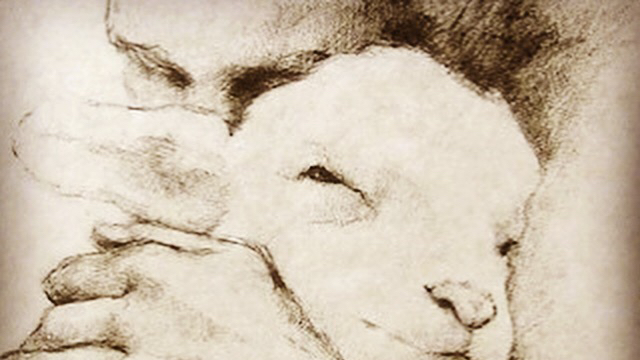
Drawing by: Jesus and the Lamb by Katherine F. Brown
St Augustine. The Confessions of St Augustine. Translated by Rex Warner. New York: New American Library, 1963.
Link for the Mass reading for Thursday, January 21, 2021
Are we to do evil or good?
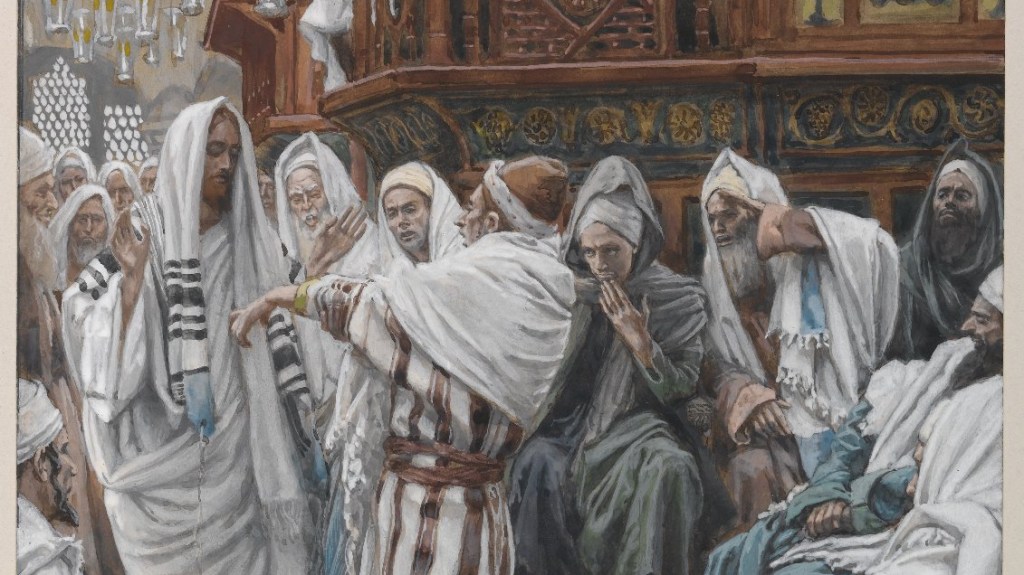
In today’s Gospel scene, Jesus enters the synagogue and sees a man with a withered hand. The eyes of the Pharisees are on him to see if, yet again, Jesus will heal on the Sabbath. Jesus is clear in his mind what he is going to do, though before doing so, he calls the man up and asks the Pharisees, “Is it lawful to do good on the sabbath rather than to do evil, to save life rather than to destroy it” (Mk 3:4)?
Jesus here is giving them a no-brainer of a question. Of course, one is to do good rather than evil on the Sabbath, to save life rather than destroy it! Yet, the Pharisees remain silent. Jesus expresses anger and grief “at their hardness of heart”. Imagine yourself present in the synagogue and witnessing Jesus looking at the Pharisees and the Pharisees looking back at him. I am sure you can recall a time when being present in a similar scene and there was dead silence. Can you imagine what was going through the mind of the guy standing in between them with the withered hand?
The anger rising in Jesus may have to do with the unwillingness of the Pharisees to show any compassion, their outright refusal to acknowledge the need of this man. That they would hold so tightly to their self-righteous stance to refuse to even have a discussion about the matter. Not even to say in effect, “Yes, Jesus of course, it is lawful to do good, to save a life but what you are doing is unorthodox.” No. They refuse to dialogue. Their faces are set like flint, they are digging in their heels, and even though Jesus is inviting them to move toward compassion, they instead harden their hearts. In their silence, they are choosing evil over good, destroying life rather than saving it. Pride has reared its grotesque head yet again.
Jesus breaks the silence as he says to the man, “Stretch out your hand.”
The man is healed, but instead of rejoicing, and sharing the good news as Andrew did with his brother Simon, the Pharisees leave immediately to find the Herodians and begin to plot to not only undo Jesus but plot how “to put him to death.”
We have witnessed in today’s Gospel the evil of pride. We have witnessed the mercy of God presented and rejected. As is stated in the Catechism of the Catholic Church: “There are no limits to the mercy of God, but anyone who deliberately refuses to accept his mercy by repenting, rejects the forgiveness of his sins and the salvation offered by the Holy Spirit” (1864). That is what Jesus is angry about. Not only do the Pharisees resist any move in the slightest direction toward compassion, or their own repentance, they further separate themselves from the love of God. They start with a principle of defending the law, and walk out seething with a premeditated intent to kill Jesus, and on the Sabbath!
With each choice of putting self over another, pride grows. Its appetite is insatiable. Pride is known as the mother of all sins because of its disordered focus on self at the expense of all others and all else. The attention sought is sole to oneself. The height of which is in direct opposition to God. We have witnessed its effects in today’s Gospel.
Let us begin this day together in prayer. Jesus, I surrender my will to you this day. Reveal the darkness that dwells within me and grant me the humility to call it out for what it is. Grant me the courage to repent and the willingness to receive the healing touch of the Holy Spirit such that I might be transformed in your image and likeness, so to know you and your Father more. May I reject evil and choose good, reject pride and choose love, reject death and choose life. With each person I encounter today, may I reject the temptation to withdraw or scowl and instead offer a smile and a hand of welcome.
———————————————————————-
Painting by James Tissot.
Catholic Church. “Article 8: Sin,” in the Catechism of the Catholic Church, 2nd ed. Vatican: Libreria Editrice Vaticana, 2012.
Link for today’s Mass readings for Wednesday, January 20, 2021

Let us follow the lead of the Lord of the Sabbath.
“The sabbath was made for man, not man for the sabbath. That is why the Son of Man is lord even of the sabbath” (Mk 2:27-28).
In making the above statement, Jesus was not discrediting or devaluing the observance of the Sabbath. He was weighing in on one of the common debates that Jewish people engaged in about what was considered work, and thus what could and could not be done on the Sabbath. Jesus went deeper to address the origin of the Sabbath observance in that it, “commemorates God’s creative and saving action for humanity, and alleviating hunger might be an example” (Donahue and Harrington, 112).
God created us, formed us, and breathed life into us. God seeks intimacy and closeness between himself and us his created beings, his children. God is our source and we are interconnected in our relationship with him and with one another. God continues to deal with us in a personal way. The Torah, the Law or the Teachings, is meant to enhance the intimacy and closeness of that relationship with God and one another, to provide boundaries and definition so that we can resist going astray.
Jesus has come to fulfill the Law, to restore it from distortion, while at the same time bring it to a higher level of love. When asked what commandment is the greatest, Jesus announced that we are to Love God with all our heart, soul, mind, and strength and we are to love our neighbor as ourselves (cf. Mk:29-31). To live out this commandment then, we need to foster our relationship with God if we are to experience his love, mercy, and forgiveness, to fill up to overflowing, so to share with others what we have received, otherwise, we have nothing to give.
With or without a relationship with God we can experience emptiness, anxiety, fear, and loneliness. Without a relationship with God, and the community of the Church, we are more vulnerable to the temptations to satiate our hunger with the material, finite, and false goods, that are readily available, and hungering more and more, fall deeper into the lures of power, pride, prestige, ego, and addiction. We then seek to protect that false sense of self at all costs, and react defensively, as we feed our fear and pride. We buffer ourselves off from the very one we have been created for, and those we consider as other.
May we pray and seek opportunities to help those who do not recognize the dignity of life in the womb. We do this best by respecting the dignity of life at all stages and acknowledging the dignity of all people by engaging in respectful dialogue even when we do not agree. May we align ourselves with Pope Francis who said in his homily in 2018 that: “Having doubts and fears is not a sin. The sin is to allow these fears to determine our responses, to limit our choices, to compromise respect and generosity, to feed hostility and rejection. The sin is to refuse to encounter the other, the different, the neighbor when this is, in fact, a privileged opportunity to encounter the Lord.”
May we resist the fear of those we may perceive as different, but seek instead to encounter, accompany, and work to empower and provide means of access for one another, especially, the most vulnerable among us. May the scales of prejudice and racism fall from our eyes such that we may see each person as God sees us, as human beings endowed with dignity, worth, potential, and diverse gifts, created in his image and likeness from the moment of conception through each stage of life until natural death.
Let us align ourselves with the Lord of the Sabbath, who walked with his disciples among a field of wheat one day, and who is now our Bread of Life this day. As his followers, we are to commit to allowing no evil talk to pass our lips and to say only the good things that people need to hear (cf. Ephesians 4:29). We need to have the courage to stand up, call out and hold accountable those who delegitimize, degrade, and dehumanize others in word and deed, while at the same time resist attacking the person. We are to love, to will their good, even those who speak and act with hate. As with Dr. King, whose memorial we celebrated yesterday, we must be instruments of the light that dispels the darkness and the love that transforms hate.
———————————————————
Photo accessed from http://www.pexels.com
Donahue, S.J., John R., and Daniel J. Harrington, S.J. The Gospel of Mark in Sacra in Sacra Pagina Series, vol. 2. Collegeville, MN: Liturgical Press, 2002.
Pope Francis full text of homily at Mass on World Day of Migrants and Refugees, Sunday, January 14, 2018: http://saltandlighttv.org/blogfeed/getpost.php?id=79091
Link for readings for Mass readings for Tuesday, January 19, 2021
 Spiritual Stepping Stones