Can we now begin to work together and choose love over hate?

He said to them, “Today this Scripture passage is fulfilled in your hearing” (Lk 4:21).
Jesus, who had just sat down, spoke these words to his hometown congregation in Nazareth who had just heard him read the passage from the writings of the prophet Isaiah. Jesus proclaimed that he was the one to whom Isaiah was talking about. Luke chose to place this event as the starting point of Jesus’ public ministry, of bringing glad tidings to the poor, proclaiming liberty to the captives, recovering sight to the blind, letting the oppressed go free, and proclaiming a year acceptable to the Lord (Lk 4:18-19).
This message of universal healing for all of humanity, restoration, and reconciliation for all people would be the mission of Jesus. He presents to his hometown folk the message that he would be the vehicle to bring the love and redemptive work of his Father to all the nations, to invite all people to be aware of the reality present to them: that God his Father is inviting all into communion and relationship. The poor mentioned were not just in reference to those experiencing material poverty, but also to those finding themselves on the margins of society, the outcasts, those on the peripheries. The captives were not only those imprisoned for debts or crimes but those bound in the chains of their own sin and addiction. The blind were not only those who could not physically see but those who experienced the spiritual blindness of pride and arrogance. The oppressed were not just those under the iron fist of totalitarian and dictatorial regimes, but those pressed down through their own self imposed anxieties and fears.
In what ways are we in need of Jesus’ teaching, healing, and restorative power? What is keeping us on the peripheries, apart from communion and fellowship? What sins and addiction keep us bound, what fears and anxieties keep us oppressed? What is keeping us blind to the reality that God is in our midst and seeking a deeper relationship with us? Today we hear or read again Jesus’ words proclaimed in the Gospel. Jesus invites us to be healed and to align ourselves with his will and ministry of loving service to others.
The events of the storming of the Capitol show that we still need to hear the same words that Jesus spoke to the people of his own hometown. Are we willing to listen? Will we hold on to our biases and prejudices, to our tribe, our nation, our political party at the cost of losing our integrity, reason, and dignity? Or can this be an opportunity to see our darkness on full display? Will these events help us to be more open to the gift of our uniqueness as individuals, the richness of our human diversity while at the same time recognizing that we truly are all interconnected? Have we had enough division and polarization?
The Psalmist stated that, “From fraud and violence he will redeem them” (Psalm 72:14) and John wrote, “whoever does not love a brother [or sister] whom he has seen cannot love God whom he has not seen” (1 John 4:20). With these words from today’s readings we can begin again. We can examine our consciences, turn to God with a contrite, sorrowful heart for what we have done and what we have failed to do.
As we do so may we experience the healing hands of Jesus on our bowed heads and the warmth of his forgiveness and love pouring through us as we are purged from our sin and pride. Then, in recognition of how much suffering and pain is present in our country and world, we can open our hearts and minds to the guidance of the Holy Spirit to participate with him in choosing love over hate, bringing the invitation of healing and reconciliation to others, and committing to bringing about an “acceptable year of the Lord” in 2021 (Lk 4:19).

————————————————————————
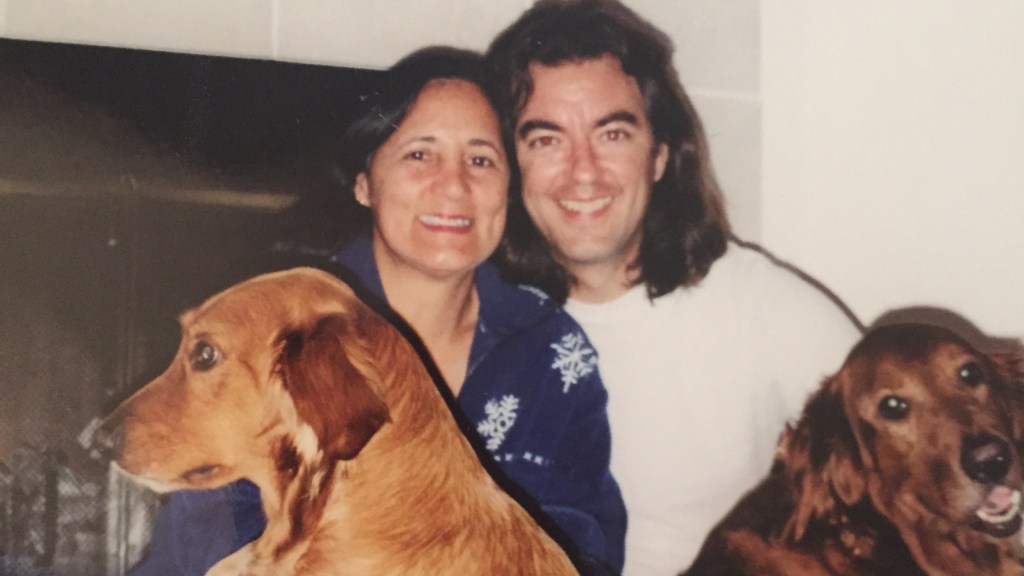
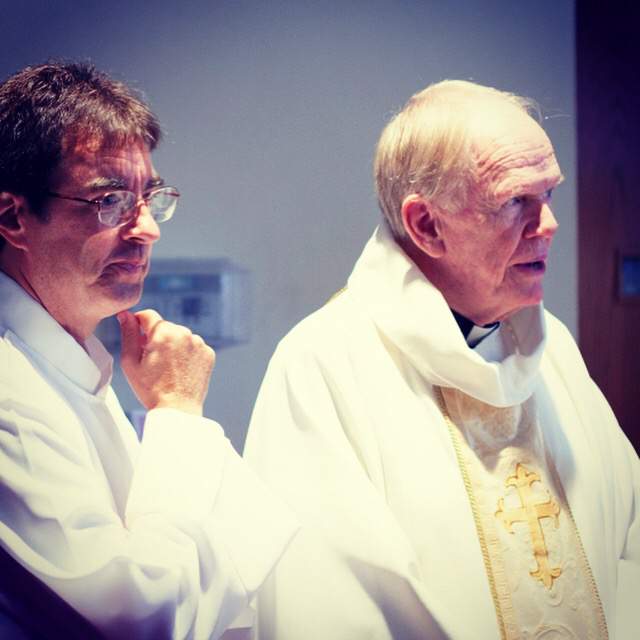
Photo: Fr. Ed, friend of over 30 years, and myself just before my ordination. He taught me to have the Bible in one and and The NY Times in another.
Link for the Mass readings for Thursday, January 7, 2021

The very desire to pray is already prayer.

And when he had taken leave of them, he went off to the mountain to pray (Mk 6:46). We often read in the Gospels that Jesus went off by himself to pray. I am sure this was not a practice that he began during his public ministry, but one that he learned and developed from Mary and Joseph. The Apostles themselves witnessed Jesus praying, and in the account of Luke 11:1, one of his disciples asked Jesus to teach them to pray.
Pope Francis in a general audience he gave in 2013 shared that, “the Church is apostolic because she is founded on the preaching and prayer of the apostles” (Francis 2014, 37). Jesus prayed, he taught his Apostles to pray, and we are at our best when we are people of prayer. We hear of prayer and that we need to pray, but what is prayer and how do we pray?
That we even desire to pray, that we even want to be closer to God is already a prayer. This is true because we are experiencing an invitation from God to draw close to him, to develop a relationship with him, to come to know the one who knows us better than we know our self. God is ever and always present.
Fr. William Barry in his book, God and You, describes how prayer is becoming consciously aware of our relationship with God. This helps to counter the idea that God is like a gumball machine in the sky, we just need to say the right types of prayers, be good, say them in the proper order and we will get what we want, we will be happy. “God is in relationship with each and every created thing in the universe and in relationship to the whole of it… whether that being is aware of the relationship or not.” The amazing thing about God is that “he will not force himself on us. He continually tries to arouse our awareness and interest in him” (Barry 1987, 12-13).
God reaches out to us in so many ways such as a majestic sunrise or sunset, the ebb and flow of the waves on a beach, and the brilliant radiance of a starlit sky. He can also do so through our trials of sickness, pain, others who are being hurt, or encountering injustice, he is also present through our every day relationships and experiences. The key is to be aware of what is being stirred up within us when we experience something and allow ourselves to “wonder about the experience and its meaning” (Barry, 13).
What is most important regarding becoming people of prayer is our awareness, our becoming conscious that we have a relationship with God. “This relationship is based on God’s actions to establish it and his desire that we become conscious of who he is and wants to be for us. Our consciousness depends on our willingness to pay attention to God’s actions, or at least to experiences that might be actions of God, and to let our desires for God be aroused” (Barry, 14).
Another question that Fr. Barry answers regarding prayer is that if God knows everything about us, why bother to pray at all? God is not just wanting information, he is inviting us to participate in a relationship. He wants to know whether we believe he cares how we feel and whether we are willing to let him in, to let him know what we feel and desire. We need to be honest in our dialogue of prayer and be willing to reveal something of ourselves, while at the same time, be open and willing to allow God to reveal what he seeks to reveal to us. This is how we build authentic relationships with God and each other (cf. Barry, 15).
Jesus, you invite us in so many small ways each day, though often, we allow our harried pace, distractions, temptations, and hard hearts to lead us away or block us from the gift of your presence. Please help us to slow down and rest in the wonder that God our Father is present to us and how the Holy Spirit is working in our life each and every day. Help us to realize we do not need to be perfect to come to you, to say the right words to be heard by you, nor to feel that we have to say any word at all, but we can just rest in your loving gaze. Help us to be conscious, to be aware of how much God cares about us, that God is interested in how we feel and what we think, that he cares. Help us to remember that we are all called to be holy, to be saints, to be mystics because you call each and every one of us to be in a relationship with you.
——————————————————————–
Photo: Fr. William Barry, SJ, (accessed from americamagazine.org) who went home to God this past December 18, 2020 at 90. May he now be at rest in God’s loving embrace.
Barry, William A. S.J. God and You: Prayer as a Personal Relationship by William Barry SJ. New York: Paulist Press, 1987.
Link for the Mass readings for Wednesday, January 8, 2020

May we surrender to the love of God and love as we have been loved.

We can observe two movements of Jesus going out to serve others in today’s Gospel. The first is evident in the beginning verse: “When Jesus saw the vast crowd, his heart was moved with pity for them, for they were like sheep without a shepherd; and he began to teach them many things” (Mk 6:34). Jesus witnessed their deeper, spiritual hunger. The crowd gathered around Jesus for they were hungry, yet they were not even aware of the depth of their hunger.
Surely, they heard the accounts of Jesus preaching with authority, his healings, and exorcisms. They wondered if he could be the Messiah, the one who had been promised, present now in their midst. Yet, for the vast number of them, if not all gathered, they sought a leader, that Jesus was not. He was not to be a mighty military leader, he would not train his followers in guerilla warfare, and Jesus would not conquer the Roman occupation with might.
After his teaching, the time grew late and he and his disciples were aware of the hunger of the crowd. The disciples only saw the five loaves and two fish that were present, barely if enough to feed the Twelve, let alone the vast multitude. Their first instinct was to send them on their way such that they could fend for themselves. Jesus, who knew the Father, knew there were no limitations to his providential care. Jesus: Then, taking the five loaves and the two fish and looking up to heaven, he said the blessing, broke the loaves and gave them to [his] disciples to set before the people; he also divided the two fish among them all (Mk 6:41).
Jesus shepherded and provided nourishment for five thousand men, so if that number was not including women and children, the number could have been easily doubled, and all ate and were satisfied (Mk 6:42). Jesus was aware of their deepest needs and provided for them. Jesus knew their spiritual hunger as well as their physical hunger, better than those who came to listen to him.
Are we so different today? We think we know what we need, but how many times are they really wants, apparent goods, and/or substitutes for what we truly hunger for deep down? We continually strive to be autonomous, self-sufficient, able to control and govern our own affairs. We witness this when the disciples wanted to send off the people to get their own food, and they would deal with the meager amount they had. Yet, this is counter to who we have been created to be.
Jesus showed his disciples time and again the way of God was not self-sufficiency, but self-surrender. They were and we are to place our complete trust in and reliance on God. We are to allow ourselves to be loved by God and so love others in return. This is not an emotion but an act of the will, of being aware of another in their time of need. We are to expand beyond ourselves, be present, and allow God to happen through us. “In this is love: not that we have loved God, but that he loved us and sent his Son as expiation for our sins” (1 John 4:10). May we turn our heart and mind to God daily so to receive and savor his love, so to be moved with compassion, to love, and to serve him in one another in turn.

Photo: All together
Link for the Mass readings for Tuesday, January 5, 2020

The light of Jesus reveals that which we need to repent from.

In yesterday’s Gospel reading we celebrated the Epiphany, in which the three magi encountered Jesus. They left changed, no longer following a star to find a king, but bearing the light of Christ from their encounter. Next Sunday we will recall the Baptism of Jesus by John. Today the daily readings jump ahead to the beginning of Jesus’ ministry. John the Baptist has been arrested. He must decrease as Jesus increases.
Jesus inaugurates his ministry echoing the words of John’s ministry: “Repent, for the Kingdom of heaven is at hand” (Mt 4:17). John prepared the way for the Kingdom to come, Jesus himself in his person is the Kingdom of heaven. Heaven is not so much a place but a state of communion with God, and who better to embody the reality of heaven than the Son of God in our midst. He who remained fully divine, in communion with his Father, while becoming human and living among us.
Jesus proclaimed his promise of the Kingdom to his people who were suffering. He is the one who has been promised. Jesus is the fulfillment of their greatest hope. Matthew summarized the ministry of Jesus thus: “He went around all of Galilee, teaching in their synagogues, proclaiming the Gospel of the Kingdom, and curing every disease and illness among the people” (Mt 4:23).
Jesus provided hope and healing to those who were losing hope, struggling, and in pain. Jesus taught the way, the truth and the life with authority, providing light amidst their darkness. He did so through not only being the Kingdom in their midst, not only being their light to guide their way, but also being the way, the truth, and the life embodied. He empowered and freed them from their slavery to the sin that kept them bound. He helped them to see that they could not be enslaved by anyone or anything. Jesus helped the people to see that what kept them bound was their separation from God.
Jesus did not only come to the people of Galilee two thousand years ago. His message and person is meant for everyone. Jesus proclaims his message again to us today, “Repent, for the Kingdom of heaven is at hand” (Mt 4:17). There is no better new year’s resolution to begin with than this! Jesus is still present to us, providing hope and healing, providing his presence of love and mercy, providing his teaching which shines a light in our darkness. He is empowering us to receive his gift so that we too can rise up freed from our slavery to our own selfishness and sin. May we decrease so to allow Jesus to increase. In this way, we too will bear Christ and empower others as we provide the same presence of his love, mercy, and forgiveness with those in our midst.

Photo: Made some time to take an evening walk just before sunset.
Link for the Mass readings for Monday, January 4, 2021

The light that led the Magi can lead us as well.

When Jesus was born in Bethlehem of Judea, in the days of King Herod, behold, magi from the east arrived in Jerusalem, saying, “Where is the newborn king of the Jews? We saw his star at its rising and have come to do him homage” (Mt 2:1-2).
At some point as they approached Jerusalem, the magi lost track of the star, did it become cloudy, did they close in on the city during the day, or did they believe it was the proper protocol that in entering the city they ought to check in with Herod first before proceeding? We do not know. Somehow, these magi were led by a star with the belief that they were to pay homage to the king of the Jews in a distant land.
What drew them from their home miles away? What inspired them to leave the comfort of their everyday routine? This was no easy journey, and it was a risky adventure. Yet something or someone inspired them, invited them to come. They said yes. And though they were misdirected for a time, when they left the audience of King Herod and resumed their pilgrimage, they again saw the star and were “overjoyed” (Mt 2:10).
That joy must have multiplied when they prostrated themselves before the baby king, the one for whom they risked all and sought for. They had now found. In reality, their journey had only begun. Their lives would be forever changed and they would go back a different way than they came. The magi would not return to Herod, nor would they return to their home quite the same. They would not return from this journey and just go back to business as usual. The magi carried within them their encounter with the Christ; the light that drew them, they now carried inside of them.
They would proclaim him in the East. The magi did what they were called to do, to encounter the Christ and bring his light to the world. They and those who followed the same invitation are why we are still able to hear this same message today.
Today is the feast of Epiphany, and it is on this day that we celebrate that the King of the Jews, Jesus the Christ, has made his salvation known to the whole world. The manifestation of God’s glory came to the Jews first as the chosen people of God and then to all the Nations. The Son of God has become one of us and one with us so that all people are given the offer to be saved.
We too are invited. We like the magi are called to put the light of Christ first in our life. Let us seek each day to encounter him and his plan. Distractions, diversions, and temptations, anxieties and anticipations as well as many appealing and apparent goods will attempt to lead us astray, yet to put Jesus first will help all other priorities to fall into their proper order and place.
Bishop Robert Barron in his book, To Light a Fire on Earth, writes about becoming part of God’s “Theodrama”, using the Swiss theologian, Hans Urs von Balthasar’s term. God is directing all of creation, all of the cosmos, and each of us to play our part. “The key”, Bishop Barron writes, “is to find the role that God has designed for us, even if it looks like a bit part… When, through faith, we see every moment and every creature as an ingredient in the divine plan, when we know that there is a gracious providence at work in the universe, we live in joyful surrender and with a great sense of wonder.”
This is what the Epiphany is about. Jesus manifesting his light to us so that we can finally come to see that we are not the center of the universe, but he is. “When we decenter the ego, and live in exciting and unpredictable relationship to God, we realize very clearly that our lives are not about us. And that’s a liberating discovery” (Barron 2017, 164-165).
May we follow the lead of the magi, and prostrate ourselves before our Lord and Savior. Let us lay face down and surrender to him our ego and self-centered way of life. Let us acknowledge and let go of those things that prevent us from deepening our relationship with God and one another. When ready, we will rise again forever changed, heading forth in a different way to proclaim the Gospel of the Lord!
—————————————————————–
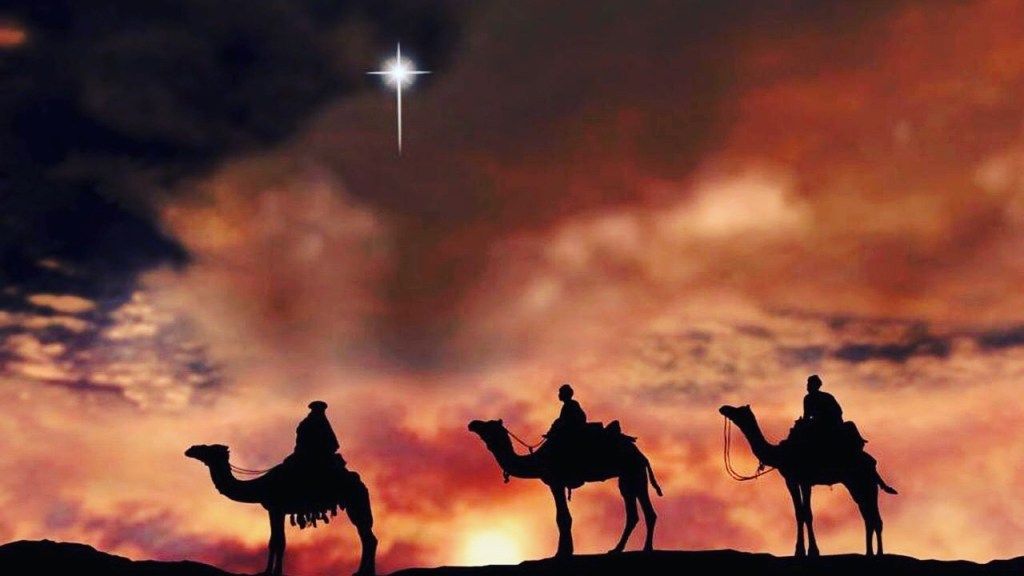
Photo: The Magi following the star accessed from http://www.free-hdwallpapers.com/wallpapers.com
Barron, Robert and John L. Allen Jr. To Light a Fire on the Earth. New York: Image, 2017.
Link for today’s reading of the Mass for Sunday, January 3, 2021

Who is John? Who is Jesus? Who are we?

“Who are you” (Jn 1:19)? John did not claim or pretend to be something that he was not. He was clear who he was, he was clear of his place in serving God, and he was clear about the mission God gave him. He was preparing the way of the Lord. John shared that “there is one among you whom you do not recognize, the one who is coming after me, whose sandal strap I am not worthy to untie” (Jn 1:26-27).
The question also arose about who Jesus was. It was not only a question during his lifetime, but this query was also addressed during the early development of the Church’s Christology and still arises today. The readings of the Christmas Season, that we are still celebrating liturgically, in fact, all four Gospels, address the question of who Jesus is. In fact, the entirety of the Bible from Genesis to Revelation answers this question!
The majority of the heresies that arose in the Church surrounded this question as well. From the Annunciation, we recognize that at his conception in the womb of Mary Jesus remained fully God and became fully human. He did not become the Christ at his baptism as the heresy of Adoptionism would propose. Nor was Jesus a powerful created being as the priest Arius would suggest in the third century. We counter the heresy of Arianism every Sunday when we recite in the Nicene Creed: “God from God, Light from Light, true God from true God, begotten not made, consubstantial with the Father; through him, all things were made.”
Arianism taught that Jesus was a created being, the highest of beings made by God, but created none the less. The Church teaches that Jesus is begotten not made. He was, is, and always will be God, the Second Person of the Trinity. He is God the Son consubstantial, homoousios, which means of one and the same substance with God the Father. The Father and the Son are one in substance, yet distinct in their operation. The Father begets, the Son is begotten.
Adoptionism and Arianism are but two of the various early heresies that arose, of which Arianism gained more of a following. Arianism still rears its head today in practice as it did then because of the unwillingness of those who will not acknowledge that the divine could become human. This goes back to our starting question that was asked about John. “Who are you?”
Who are we? We are human beings created in the image and likeness of God. We are physical beings with a rational soul, we are invited to embrace the reality that we are human and through our participation in the life of Jesus, we also become divine. Do we reject our humanity, our created status, trying to determine our own destiny on our own terms, to put ourselves in the place of God, or are we like John the Baptist, and acknowledge the gift of who we are and the mission God invites us to participate in?
As we continue to celebrate this Christmas Season and the new year that has just begun, may we embrace whose we are and have been created and are called to be. Each and everyone of us is a unique person, never created before nor will we ever be again, with a particular vocation and part to play in building up of the reign of God. We will come to know our purpose and find meaning in our life as we follow the lead of Mary and John the Baptist, who made time to ponder and align their human will with the divine will of God. As we collaborate with Jesus in all the decisions we are to make, the smallest to the biggest, let us pray for a heart, mind, and soul that is open to following the love of the Holy Spirit so that we can know the mission that the Father has given us and begin to live it each day.
For me, looking back at 2020, even before the pandemic, was a year of living in survival mode. My hope for this year is to continue healing, balancing, meditating, praying, writing, and hopefully a return to reading, walking, and living.
——————————————————————————————-
Photo: I believe this was my senior year of high school or just after graduation, on a CT beach, ’82 or ’83, pondering God’s direction. More pondering to do this year 😉 Maybe time to get back to the beach as well!
Link for today’s Mass readings for Saturday, January 2, 2021

May we follow the lead of Mary and make some time to ponder the will of God.

Mary offers us a wonderful gift today as we begin the new year together. “Mary kept all these things, reflecting on them in her heart” (Lk 2:19). Gabriel shares with Mary that she will conceive a child through the power of the Holy Spirit. Her relative Elizabeth, who is past childbearing years, is six months pregnant when Mary and Elizabeth meet. In their encounter, John leaps in the womb of Elizabeth. The shepherds convey the message they received from the angels that Mary’s baby is the long-awaited Messiah. Simeon and Anna offer prophetic confirmation that Jesus is the Messiah.
These are events to ponder, not to just take at face value and move on. The Church at her best has followed the model of Mary’s reflection, pondering, and meditating on what these words mean and has come to call this day the Solemnity of the Blessed Virgin Mary, the Mother of God. This title says more about Jesus than it does about Mary. This is the teaching that the Church Fathers confirmed during the council of Ephesus in 431 AD:
Mary is the Mother of God, in Greek – Theotokos – the God-bearer.
The full divinity of the Son of God was present at the conception of Jesus. He remained fully divine as the second Person of the Trinity and the Holy Trinity was not diminished in any way as he developed as a human being in the womb and was born of Mary. This is the Mystery of the hypostatic union: Jesus is one divine person subsisting in two natures the human and divine.
Theological insights such as Mary being the Mother of God, the hypostatic union of Jesus, are easily missed or worse dismissed if we conform ourselves to the present age of instant gratification, instant access, surfing, swiping, taking in sound bytes from Facebook, Twitter, and Instagram and amassing information overload. All of these technological avenues can be wonderful if we stop, slow down, and as Mary did, ponder what they offer.
If we still read books, do we do so with pencil and highlighter in hand, take notes and go back to those points underlined, highlighted, and or annotated and ponder the insights we have received, and then put them into practice? Or do we just have a moment of pause and say hmm, interesting, and then move on to the next factoid?
May today, the first day of the new year, be a day to take a few deep breaths, slow down, and commit to a practice of daily pondering. We can reflect on a word, a phrase, or a short statement that we write down and return to it often. The phrase could be as simple as a paraphrase from today’s reading: Mary pondered on these things in her heart. Let us reflect on where God has been calling us to stop and take a deeper look at our lives. It could be one word: Theotokos, expressing that Mary is the God-bearer, the Mother of God, and what that means to us in our lives. We can meditate on a picture like the one I posted with this reflection.
If we seek to live a life of joy and fulfillment in 2021, we would do well to follow the model of Mary. That would entail assuming a posture of pondering and a willingness to slow down and reflect on life, on what is important, what has value, where we are putting our time and effort, and recognizing where we do not welcome God and where we do welcome God in our life. Otherwise, we may just float along through another year indecisively or stagnantly with indifference or cynicism, merely reacting to situations that arise, or just plodding along in survival mode or merely bored and listless. Being still can be scary because as we do so, our fears, our past hurts, and our loneliness can arise.
Yet in that willful act of slowing down and even coming to a complete stop, the Holy Spirit can embrace us in these very real emotions with his love, so we can begin to heal and transform beyond merely existing, so to set a course of being fully alive and in love with life. Hand in hand with Jesus and Mary, we can face and embrace our fears, and heal from our wounds. As we do so we will be better engaged in our lives by experiencing more meaning and purpose. Conformed to the life and love of Jesus, we will realize that we are not alone, and so can build more authentic and intimate relationships. We can act more decisively and with greater clarity, and experience more fully what we are here for, to bring a little more tenderness, mercy, understanding, forgiveness, and love to the many others around us who are wounded also.
May 2021 be a wonderful new year of meaning, joy, and fulfillment, as we, like Mary, come to experience God’s presence in the silence of our hearts, so to be a people of faith, hope, and love in contemplation and action. Mary Mother of God, pray for us.
Happy New Year! Peace and all God’s good. Take good care of yourselves and those around you.
————————————————————————————
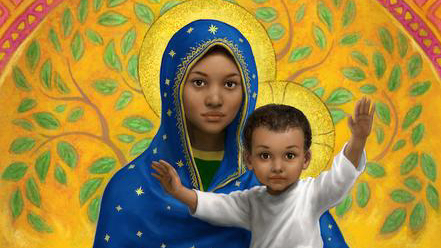
Painting by Anthony VanArsdale done for the National Black Catholic Conference
Link for the Mass readings Friday, for January 1, 2021

May we receive the Light so to become bearers of light to dispel the darkness.

And the Word became flesh and made his dwelling among us” (John 1:14). The Logos, the Word, the second person of the Holy Trinity, dwelt or another translation, “tabernacled” among us. The Son of God pitched his tent in our midst. This is a reference to the tabernacle or tent of meeting which was erected whenever Moses and those who had escaped slavery in Egypt camped. Within the tent of meeting was placed the Ark of the Covenant. This was done to follow the will of God who wanted to be present with his people. “They shall make a sanctuary for me, that I may dwell in their midst” (Exodus 25:8).
The Ark of the Covenant and the tabernacle housing it was portable and would move with the people, such that God was always present in their midst. The basic structure would later become the foundation for Solomon’s temple, then Herod’s Temple. The Holy of Holies was believed to be the very seat of God in Jerusalem. In the fullness of time, Jesus was born to us, and he became the living temple, Emmanuel, God with us. As he predicted,“Destroy this temple and in three days I will raise it up” (Jn 2:19).
And why did Jesus come? So that the glory of God could be revealed not just to the temple priest, but to all of us, “and we saw his glory, the glory as of the Father’s only-begotten Son, full of grace and truth” (Jn 1:14). Jesus came to be one with us in our humanity while remaining fully divine to reveal the glory of his Father to us, the same glory that filled the tabernacle. Jesus came to be present, to accompany us, in our very midst as God did in the tabernacle and then the Temple.
The Son of God became human to restore the ancient covenant that God has been making with his people throughout the ages. Jesus invites us to share in the infinite, faithful love that he shares and has shared and always will share with his Father. This free, generous act of love is a pure gift. Jesus, in becoming human, in living among us, in teaching, healing, and casting out demons, built a bridge leading to a relationship with God. He shines his light, a light that is not overcome by the darkness of pride, hatred, prejudice, and violence so that we can see the truth: God is our Father and we are all brothers and sisters.
The Incarnation, the reality that the Son of God became fully human while remaining fully divine, reveals to us that none of us are junk. In becoming one with us so that we can become one with him reminds each of us that by our very existence God granted us human dignity because we are created in his image and likeness.
Each and every human being is a part of God’s family. This includes all people no matter race, ethnicity, or creed, male or female, the unborn, the hungry, the homeless, the stranger, the sick, those without access to water or adequate health care, widows, orphans, refugees, migrants, the LGBT person, the person in jail or on death row, the person at the end of life, political party, and as Fr. James Martin, SJ wrote, “so many others who feel forgotten, excluded or marginalized. All are members of God’s family.”
The significance of this wonderful gift of the love of God poured out for us is not only to be pondered upon and embraced but also shared with all we encounter each day of the new year we are about to begin. Even in the darkness of division and polarization, may we be advocates of understanding, reconciliation, hope, and bearers of his light and love.

Photo by Jonas Ferlin from Pexels
Link for the Mass readings for Thursday, December 31, 2020

May we continue to appreciate the gift of the Incarnation and each other.

We have no evidence that the vocation of Anna, Simeon, the Magi, or the shepherds changed in any way after their encounter with the baby Jesus. What did happen in each of their lives was the same as what happened with Luke’s account of Anna today; they told the story of their encounter. They, like Anna, shared what they experienced with anyone who would listen.
At the end of today’s account from Luke, Joseph, Mary, and Jesus “returned to Galilee, to their own town of Nazareth. The child grew and became strong, filled with wisdom; and the favor of God was upon him” (Lk 2:39-40). No ticker-tape parade, no giving the key to the city, and no gala ball awaited the Holy Family when they entered Nazareth. They went on to live very simple lives.
The pattern of how God works, how his kingdom begins is like a mustard seed, like the seed that is sown, or like yeast. It starts small, quietly, and simply. God works through the everyday events of our lives, often unseen. We so often look for the mighty, majestic, and grandiose. We often believe we need to do great things, and often do nothing. St Mother Teresa directs us to follow what she learned from the Little Flower, St Therese of Lisieux, to do little things with great love.
As the Christmas Season continues, we are experiencing that life has already or has begun to shift; families and friends have come and gone or are readying to go, vacation days are coming to an end. We can choose not to allow the celebration and remembrance of Jesus’ birth, as well as our coming together with family and friends to just fade away, to be absorbed by the busyness of life again. Instead, we can appreciate the gift we have been given in the Incarnation. We can spend time each day in stillness with Jesus. Life can be hard because it is so fragile. It can change in an instant or the blink of an eye. We would do well not to take any moment for granted.
As the Holy Family begins their journey to Nazareth, and we begin to return to our regular course of daily living, may we be a little more open this year to paying some more attention to the quiet and gentle ways of how God is working in our lives. God has yet again planted his seeds in us this Christmas Season. They have been sown that we might see his creation as a gift of wonder to protect and be good stewards of. Others have been sown that we might experience the gift of seeing each other as brothers and sisters who might be more willing to support and care for one another, to be aware and reach out to those in need, as well as to be open to expressing our need for help and allowing others to assist us.
When we do so we will start to recognize the simplicity of divinity operating within the midst of our humanity. The Holy Spirit is inviting us to be transformed in this new year, to kindle in us the fire of his love so it may spread to others. We are to watch, pray, and cooperate with his will if he is to renew the face of the earth through each of us.

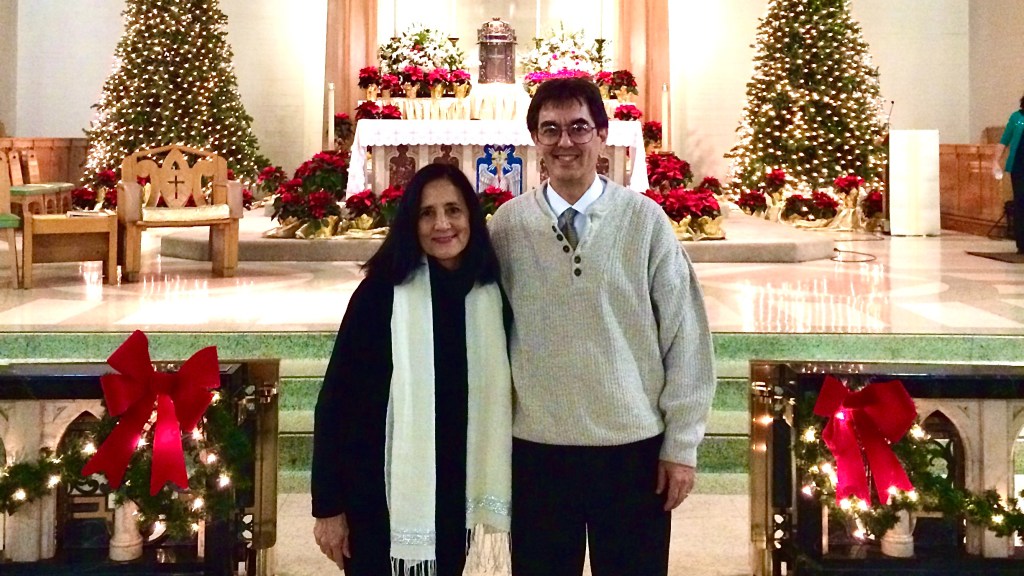
Photo: Christmas Eve 2015, St Augustine Parish, Los Angeles.
Link for today’s Mass readings for Wednesday, December 30, 2020

“My own eyes have seen the salvation which you prepared in the sight of every people.”

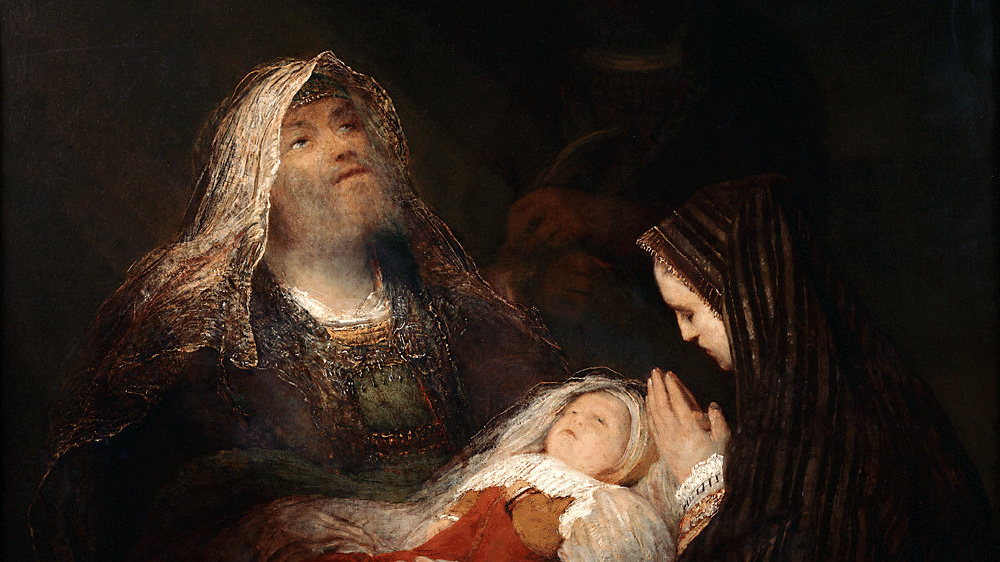
“Lord, now let your servant go in peace; your word has been fulfilled: my own eyes have seen the salvation which you prepared in the sight of every people, a light to reveal you to the nations and the glory of your people Israel” (Lk 2:29-32).
As Simeon receives Jesus to be consecrated to the Lord, he recognizes through the gift of the Holy Spirit that this child, is the one he and Israel had been waiting for. Jesus is the Messiah, the Christ. He has come to fulfill the Law and the Prophets as well as be a light to the Gentiles, to all the Nations.
These verses, called the Canticle of Simeon, recorded by Luke are recited each night by those of us who pray the Divine Office or the Liturgy of the Hours. They are prayed during Compline or Night Prayer, the last prayers before going to sleep. We also may remember this reading as the Gospel reading from this past Sunday. The gift of reading a Gospel passage again and again is that when we are open God can speak to us in deeper ways or help us to see something we have not seen before. We too can celebrate the birth of Jesus who is our savior, our fulfillment and our light also.
We can meditate again with this same passage. We can enter the scene and, like Simeon, receive this child in our arms from Mary and Joseph. May we too see the salvation that is offered us, the invitation given to us. May we not run from the light of his truth, but may we embrace it so as to be transformed. Let us glory in the joy of knowing that Jesus came to share his love, mercy, and grace, with us. He is the promise of healing that we all need to realize and actualize in our lives.
That is the key, Jesus invites but does not impose. This Christmas can be just another day in a cycle of days that pass with no change, or we can immerse ourselves in this Octave of Christmas so as to take seriously the fact that Jesus is who he said he is, who the Apostles claimed that he was, who the Church still announces that he is today. Jesus is the Christ the Son of the Living God. Do we also believe this truth?
I invite you to return to the meditation we started above continue to hold  the baby Jesus, our savior, in your arms as Simeon did. As you hold him look into his face, see his smile, the glint in his eye, and allow that exchange to melt away any sin of pride, lust, greed, envy, sloth, gluttony, prejudice, and wrath. May we experience the warmth of his love radiate up from the depths of our soul. May we be filled with his joy to overflowing, such that as we gaze on another today we may share that same smile we have received and so radiate the love of Christ with those we encounter today and each day going forward.
——————————————————————–
Painting: Het loflied van Simeon – the Song of praise from Simeon, by Arent de Gelder, ca. 1700-1710
Link for today’s Mass readings for Tuesday, December 29, 2020