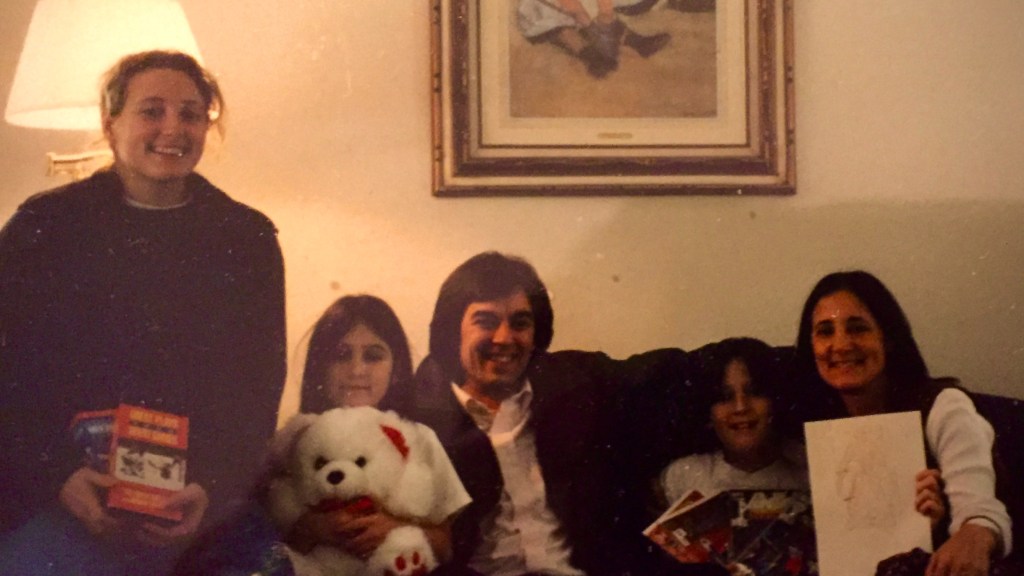
Our faith grows stronger when we trust God and one another.
Joseph heard the news that Mary, his betrothed, was with child. He clearly knew the child was not biologically his. Scripture does not account for the thoughts or emotions of Joseph, but whatever inner turmoil he did have, he came to a decision that would not expose Mary to shame. He was not going to make a public spectacle of Mary, but divorce her quietly. Before he made his final decision though, Joseph made an excellent choice when discerning serious matters. He slept on the idea before acting.
During Joseph’s sleep, the angel of the Lord delivered a message. “Joseph, son of David, do not be afraid to take Mary your wife into your home. For it is through the Holy Spirit that this child has been conceived in her. She will bear a son and you are to name him Jesus, because he will save his people from their sins” (Mt 1:20-21). When Joseph awoke, he did as the angel of the Lord had commanded him and took his wife into his home (Mt 1:24). From their encounter with God’s messengers, both Mary and Joseph trusted in God’s will, and “that has made all the difference” to quote Robert Frost’s poem, “The Road Not Taken.” Because of Mary and Joseph’s yes to God and to family, the Son of God became man and opened up heaven for us in the humanity he assumed.
God often works in the same way when dealing with us. What may appear to be absurd, unimaginable, or downright impossible, is indeed possible when we align our will with God. This is the week of Joy in Advent. Joy is more than pleasure or happiness. Pleasure ends when the sensate experience ends. Happiness is experienced with pleasure and can last longer, in that we can recall the pleasurable experiences for a time, but happiness too will fade. Joy, though, like hope, is a gift of the Holy Spirit that wells up from within, from the depths of our soul.
The source of joy does not come from external experiences but from an encounter with and acceptance of God’s invitation. Joy is an experience of communion with the love of God. This has been given to us in greater measure because Jesus became one with us, and so upon his ascension into heaven, we too can experience the loving communion he experiences with his Father. We also experience the love of the Holy Spirit in our encounter with family and friends, this exchange of giving and receiving of ourselves in conversation, shared experiences, and in resolving challenges and conflicts together.
Mary and Joseph both received incredible news, that neither of them fully comprehended. They could have easily responded in a different way. Instead, they trusted in God, they chose family, and because they did so, we can rejoice not this week but all of our days!
Mary and Joseph followed God’s lead and were willing to allow their unborn child, Jesus, to come to full term. Because they risked public ridicule and worse, Jesus entered into our human condition. Even in the midst of our trials we can rejoice, not in the fact that we suffer or face uncertainties in this life, but because we are not alone. We may feel on our own, see no way out, and/or no help on the horizon, but God will make a way and reveal it to us through his Son. We may not understand either, but like Mary and Joseph, we are to trust in God and one another.
Jesus, Mary, and Joseph, please intercede on our behalf this Advent Season such that we may better be able to resist the temptation of taking each of our family members for granted, but instead choose to be appreciative and thankful for one another. Help us to react less and breathe deeply more. Help us to be more understanding, patient, and willing to forgive, such that even though we have experienced past hurts, conflicts, disagreements, and different perspectives, we may ultimately experience time and again the joy of being there for one another, through thick and thin.
————————————————————————————————
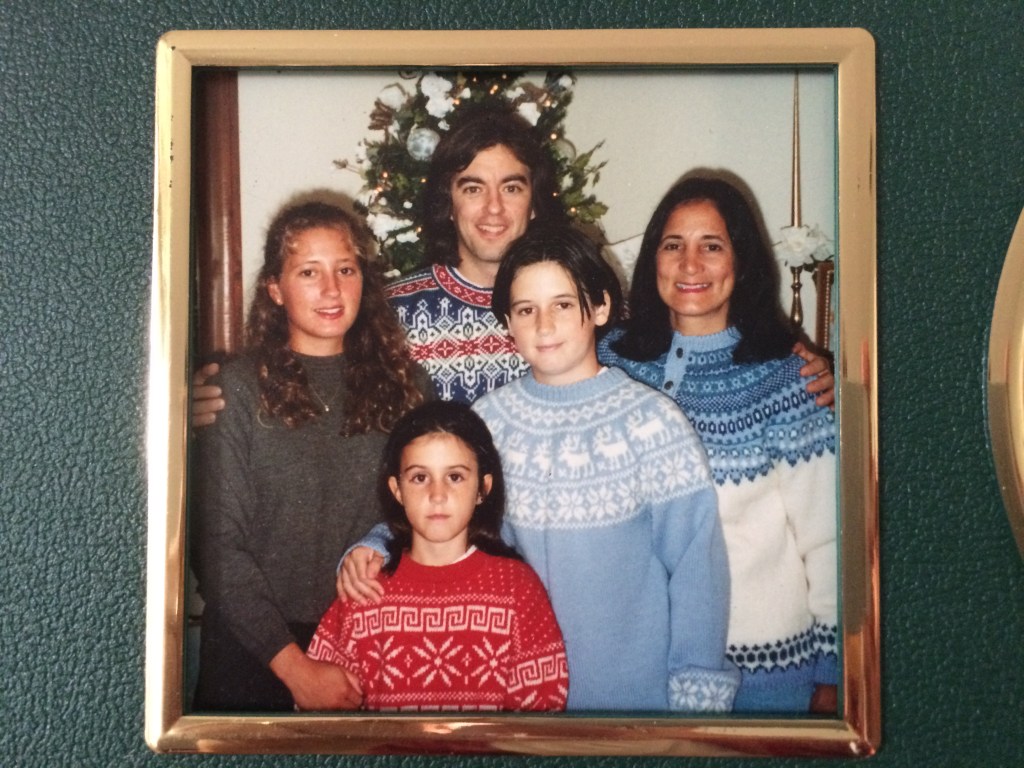
Photo: Our first Christmas picture together as a family about twenty-four years ago, actually taken in late summer so it would be ready for our first Christmas card!
Link for the Mass readings for Friday, December 18, 2020

“Do I let his fire warm my heart?”
Today’s Gospel account is from Matthew’s record of the genealogy of Jesus. Jesus, the Son of God, is fully divine, while at the same time he is also fully human. Here Matthew presents the lineage of Jesus’ human line from Abraham to his foster father Joseph and his mother Mary. Jesus is part of a people and a family. If you go through this genealogy with a fine-tooth comb, there are gaps, but Matthew is more concerned with the line of faith than a strict historical account. Matthew also includes women in this listing, which is not common in ancient patriarchal societies. Looking at their stories in Scripture will also show that they were not at all the most virtuous, but more importantly, they played a significant part in God’s plan of salvation.
This is our heritage as well. We are spiritual Semites. Genealogies have become more popular in recent years as can be seen by the different advertisements for DNA test kits. The draw for these is that we want to belong, to be a part of. To understand who we are, we seek to understand where we have come from. To be able to go forward, we need to reach behind. Jesus was born in time, to the people of Judah, and is a part of the succession from Abraham and his clan, to the twelve tribes of Jacob, to the unified nation of Israel under David. Jesus continues to bring God’s movement of grace beyond a nation to a universal invitation for all.
Through our Baptism, we are part of the lineage of Jesus. We are not alone, no longer estranged, no longer separate, or on the peripheries. Yet many, even those who profess their belief in Christ, are missing his greatest gift of faith, which is developing a relationship with him now. Too many of us are Christian in name only.
We are now in the final two weeks of Advent. A good practice is to spend time drawing close to Jesus who made himself close to us in becoming one of us. Pope Francis can help. The Pope encountered a young man who told him that he didn’t believe in anything. He said, “I don’t have the gift of faith! What do you have to say to me?”
“Don’t be discouraged,” I said. “God loves you. Let yourself be gazed upon by him! Nothing else.”
May we too be willing to receive the gift of Jesus: “What is important is to find the way best suited for you to be with the Lord, and this everyone can do; it is possible for every state of life.” Pope Francis also offered these two questions to ponder: “Do I find time to remain in his presence, in silence, to be looked upon by him? Do I let his fire warm my heart” (Francis 2014, 16)?
We are never alone if we remember Jesus is present in our everyday experiences. We just need to be aware of his loving gaze, to rest in it, and then to return ours. We are also invited to embrace his radiating fire, his love to warm and expand our hearts. In doing each, we become more open to the gift of his presence in our lives. When we allow him to lead us to encounter one another and support each other in our weaknesses, we too will experience the love of the Holy Spirit shared between Father and Son.
Photo: San Francisco rainbow day after Thanksgiving last year.
Francis, Pope. The Church of Mercy: A Vision for the Church. Chicago: Loyola Press, 2014.
Link for the Mass readings for Thursday, December 17, 2020

The healing touch of Jesus opens up heaven for us.
At that time Jesus cured many of their diseases, sufferings, and evil spirits; he also granted sight to many who were blind (Luke 7:21).
Once the public ministry of Jesus began, a big part of his ministry was healing. This healing often brought people from a posture of being on the outside looking in, to returning to become again part of the community socially and spiritually. Typically, those with physical ailments were considered to have offended God in some way or ritually unclean. Many in this state, such as lepers were even required to keep at a distance, away from others, for to touch someone in this state would render them ritually unclean.
The healing touch of Jesus brought more than physical renewal as it also opened the door for people’s relationships with family, friends, and God to be restored. The healing miracles of Jesus were also a foretaste of the eternal kingdom of his Father where there is no longer pain, suffering, and separation, where our relationship with God will ultimately reconciled.
People may wonder if Jesus still heals today. I say, “Yes!” There are many accounts of people who have been physically healed, even beyond scientific explanation by calling upon his name. There are also those, like myself and many with me, who have prayed for a healing that was not granted in the way we sought in prayer. Though my wife, JoAnn, was not healed from pancreatic cancer in this life, she is free from her suffering and pain. Her relationship with God the Father has been restored and she is now with him interceding on our behalf.
The physical healings of Jesus were precursors of the ultimate healing he came to bestow upon each and every one of us. Even death is not an end nor does it have the final word. The Son of God entered into our human condition to become one with us in our humanity so that we can begin to become one with him in his divinity in this life, where he conquered death, so that we can continue on with him for eternity where we will see his Father face to face.
Photo: JoAnn, in her early twenties, maybe looking to the Heaven where she is now.
Link for the Mass readings for Wednesday, December 16, 2020.
“Which of the two did his father’s will?” Which one are we?
“…you did not later change your minds and believe him” (Mt 21:32).
Jesus again is challenging those in the religious establishment of his time that refused to see what was right before their eyes. That John the Baptist was moving the hearts and mind of the people to prepare the way for the Lord, that through the healings of Jesus, the blind could now see, the deaf could now hear the lame could walk, lepers were healed, demons were exercised, and people’s sins were forgiven.
Jesus’ parable clearly shows that those in authority were like the son who heard the will of their father, said yes to his request but did not in the end follow the father’s will. The other son represented those on the peripheries, those looking in from the outside of society. They too were invited by the father to work in the vineyard. They originally said no but then would repent and come to their senses and follow the will of their father.
The religious rulers Jesus was challenging were most likely fervent in their faith and zeal to serve God when they first said yes to his call and then over time, something happened. We could speculate but we cannot say for sure what. Most likely it was different for each one. What is revealed in the Gospel accounts is that those leaders refusing to see Jesus for who he was were no longer saying yes to the Father.
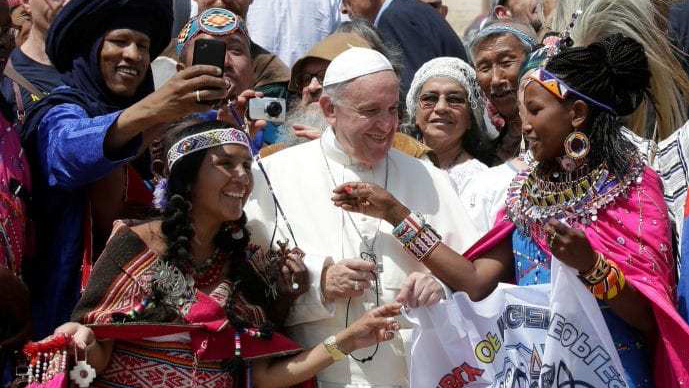
Pope Francis has been expressing the same radical message of the Gospel in his challenge for the Church leadership to repent. There is to be a wholehearted yes to the will of God. To say yes, there needs to be a no to abuse, clericalism, hypocrisy, elitism, sexism, racism, entitlement, corruption, and the like. Those who are leaders of the Church are to be shepherds who smell like their sheep.
The message of the Gospel is about relationship not lordship over another. There is one Lord, Jesus the Christ. We are to be like him and serve one another, accompany and empower one another. That means we need to be aware of each other’s needs, then pray for and assist each other where we are able. To be there for one another we need to resist the temptations of complacency, comfort, and indifference.
Pope Francis does not just challenge the leadership but us as well. Advent is the time for us to look in the mirror and with humility see where and when we are saying no to God. When we do so, we can then decide to turn around and change our minds like the tax collectors and the prostitutes, see Jesus present to us in each other, and be open again to allow God to happen in our lives.
May we have the courage to speak the words the Holy Spirit gives us.
The question raised by “the chief priests and the elders of the people” regarding what authority Jesus was teaching was not an uncommon question. Rabbis and teachers often began their presentations by sharing with their listeners who was their teacher. It would have been from the authority they received from them that they taught.
Jesus did not do so for his authority came directly from God. Those questioning Jesus knew this and wanted Jesus to say it publicly so as to charge him with blasphemy by putting himself on the same level as God. Jesus did not give them the satisfaction. Instead of answering their question, Jesus deftly asked one of his own. “Where was John’s baptism from? Was it of heavenly or of human origin” (Mt: 21:24)?
The answer given by the chief priests and elders to the question posed by Jesus showed their weakness. They were the shepherds of the people of Israel, yet they would not speak the truth. Instead, they offered an answer that was calculated and weighed out by taking a quick opinion poll among themselves. Their answer was feebly, “We do not know.”
In answering this way, their authority as leaders was diminished. For if they were the religious guardians and guides, why could they not answer the simple question regarding the origin of John’s baptism?
Do we weigh out our answers based on a presumed response or do we speak the truth? We want to be liked, respected, we want to belong and to fit in, which is natural, but sometimes we feel uncomfortable speaking what we know we ought to say for fear of another’s reactions.
If we are to be people of integrity, if we are to live out our baptismal call as prophets, there will be times when we need to resist the perceived and real pressures we feel, face the conflicts that arise, and speak what we know God would have us say at the moment, especially regarding the dignity of others. As we do so, we still need to respect the person we are speaking with. Sometimes silence is called for. The key to our discernment is to follow the lead of God and not our fear.
Jesus, please forgive us for the times when we have not been honest because we have given into anxieties and fears. Help us to call on you to guide us and give us the courage and words to speak with charity no matter what pressures we face.
———————————-
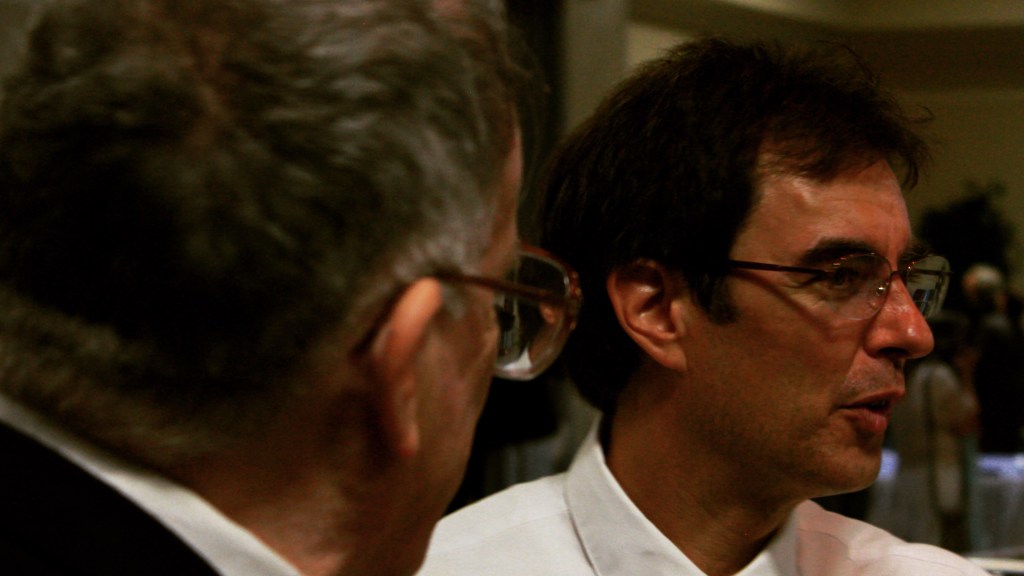
Let us pray for one another that we may speak and act in each situation as God directs us. Photo credit: Jack McKee
Link for the Mass readings for Monday, December 14, 2020
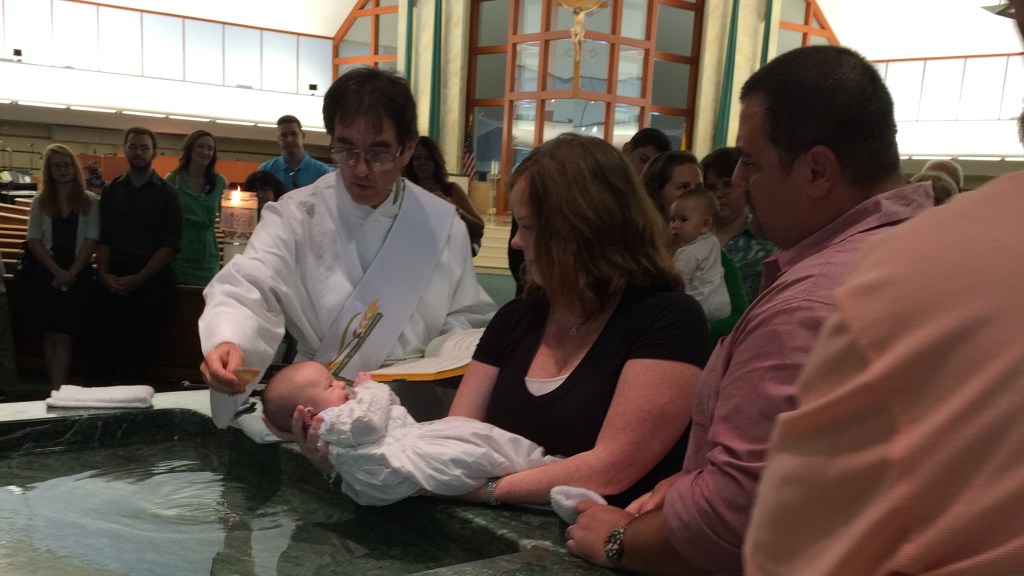
Repent, be baptized and rejoice!
“I am the voice of one crying out in the desert, ‘make straight the way of the Lord,'”as Isaiah the prophet said” (Jn 1:23).
These are the words that John the Baptist pronounced in response to the priests, Levites, and Pharisee’s question, “Who are you?”. John was preparing the way for the Lord, which he had been doing since his time in the womb of his mother Elizabeth. John leaped for joy at Mary’s greeting, the Holy Spirit filled Elizabeth and she proclaimed: “Most blessed are you among women, and blessed is the fruit of your womb” (cf: Lk 1:42-45). John began his ministry rejoicing in the womb.
John continued to do so in this present scene by calling people to repentance through baptism with water so that Jesus “might be known to Israel” (Jn 1:31). John following the tradition of the prophets was calling his people back to God. Time and again, many of the people had gone astray, like lost sheep without a shepherd, and God called the prophets to rise up and speak on his behalf. John was shepherding as he preached: “Repent, for the kingdom of heaven is at hand” (Mt 3:2). He was calling the people of God back into the fold. The sign the people heeded that call and were willing to repent was their willingness to submit to baptism.
Through this baptism of water, the people would readily have recognized the correlation with the freedom of their people from their time as slaves in Egypt when Moses led them through the parting of the waters of the Red Sea. Their ancestors left their old way of life of slavery under the Pharaoh behind and were invited to begin a new life. The people who responded to the call of John were called to repent, to turn their mind from their old ways of separation from God, and prepare for a new life of communion with God that would be brought on by the coming of him who “will baptize you with the holy Spirit and fire” (cf. Mt 3:11).
Jesus would be he, and today we celebrate Gaudete Sunday. Gaudete means rejoice. We are rejoicing in the retelling of the story of our salvation. John prepared the way for Jesus to be revealed as “the Lamb of God, who takes away the sins of the world” (Jn 1:29). Jesus participated in the same baptism of John just as others had. Jesus showed in that act of humility how he, “the Word became flesh and made his dwelling among us” (Jn 1:14). He the Son of God became fully human to be one with us in our fallen nature of sin, he entered our humanity to walk and accompany us, to lead us. Just as Moses led the Hebrews from slavery from Egypt to a new life in the Promised Land, Jesus leads us to the Promised Land of the kingdom of Heaven.
Each time we enter the sanctuary as Catholics we dip our fingers in holy water and make the Sign of the Cross. We do so because in that simple act we remember our baptism in whose name we have been baptized: God the Father, God the Son, and God the Holy Spirit. In the Sacrament of Baptism, our sins were burned away through the transforming fire and love of the Holy Spirit. We were indelibly marked, branded by that fire, meaning our baptism cannot be undone. We were marked by Christ, conformed to, grafted to, the Body of Christ. We were changed for eternity. This means we are also able to participate in the life and love of the Trinitarian communion now. The same Love that the Father and Son share between one another who is the Holy Spirit we share in and are called to share with others.
Let us rejoice this Gaudete Sunday for the gift of our baptism, the gift of repentance, the gift of being able to recommit our lives to Jesus, to each day being able to begin our life anew in Christ. May we bring this joy that we have experienced to all we meet this week, to prepare a way as John did for others who are wounded and hurting that they too may receive the light and life of Christ in their life.
Photo: One of the greatest joys of being a deacon is the grace to be able to administer the Sacrament of Baptism! I believe I am baptizing Connor and his baptismal garment is over 100 years old!
Reconciliation brings joy!
“Mary set out and traveled to the hill country in haste” (Lk 1:39). Why? Because she was filled with joy. She had just experienced an incredible encounter with the angel Gabriel telling her that she was to bear the “holy, Son of God” (Lk 1:35). She also learned that her relative Elizabeth, who had been barren, was six months pregnant. Who better to understand and appreciate what she had gone through than Elizabeth? When we hear good news we want to share it with someone, especially when we believe another will fully appreciate our experience.
Is there a time when you felt overjoyed about something that you felt like you were going to burst and you couldn’t wait to share your experience? A memory may have already started forming in your mind, a smile and glow may be radiating from your eyes as you re-experience that moment.
One such graced encounter I had was when I was in my early twenties and dealing with a heavy personal issue. I was living in Sharon, Connecticut at the time and had an opportunity to go to the Shrine of Divine Mercy in Stockbridge, Massachusetts to participate in a penance service. I walked up hesitantly to a kind-looking, elderly, polish Marian priest. His name alludes me now, but not his face. He radiated invitation and mercy. After a few stammering words, I let loose and shared what I had been dealing with. When he offered absolution, I felt the burden physically lift, I felt almost like levitating. Then a surge of joy welled up in me that lasted for days.
There is a great gift in sharing a burden with a trusted friend or family member, being heard and supported, and/or receiving absolution from a priest. We need to resist the temptation of turning within ourselves, trusting in the lie that we can handle our conflicts, challenges, and trials all on our own. There is a pearl of great price, God’s healing grace, that is available to us when we share our journeys with one another. In this way, we come to realize concretely that we do not have to go through our pain and suffering alone!
Many of us are struggling with a lot, and sometimes we are not at our best, nor do we make our best decisions. We react instead of act, we get caught in the momentum of behavior that we know is not acceptable, and we continue to slide. The key is not to beat ourselves up and walk around feeling guilty. There are enough people who would be happy to sign up to do that. Instead, we need to choose to practice a healthy sense of guilt, examine our conscience, be mindful, and able to admit when we have done something inappropriate or wrong.
That is the key to reconciliation, embracing the humility to admit our sin, to be contrite – sorry for what we have done, not upset or defensive because we got caught, and to follow the counsel of James: “Therefore, confess your sins to one another, and pray for one another so that you may be healed” (James 5:16). Then when we have experienced the joy of forgiveness, of reconciliation, may we be like Mary, and go in haste to share with others the wonderful gift we have received and invite them to do the same!
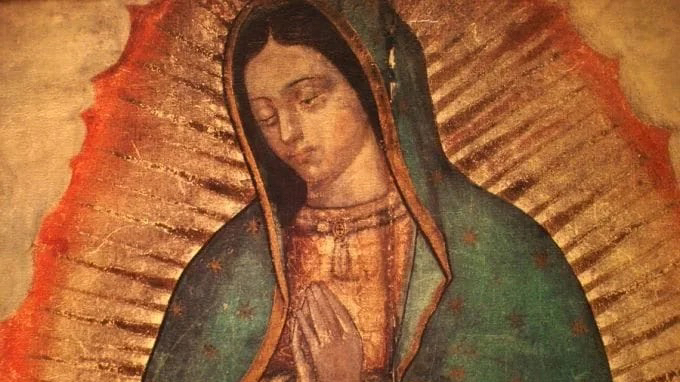
Photo: “Are you not under my shadow and protection? Am I not the source of your joy? Are you not in the hollow of my mantle, in the crossing of my arms?” – Our Lady of Guadalupe to St. Juan Diego. Our Lady of Guadalupe, Pray for us!
Link for the Mass readings for Saturday, December 12, 2020
Fickle or faithful?
Jesus compared “this generation” to children who could not be satisfied. For when the flute was played for them they did not dance, when the dirge was played they did not mourn. There was no pleasing them no matter what. Jesus drew the parallel to the present bystanders who acted as fickle as the children. They criticized John as being possessed for practicing fasting and asceticism. They then accused Jesus of being a glutton and a drunkard because his choice of companions for table fellowship.
In today’s Gospel account, Jesus could have been addressing his detractors as well as his disciples. He encouraged his followers to be wary of wallowing in the mud of fickleness. He also wanted them to be sure that they were authentic dispensers of his truth and the will of his Father no matter the reaction of the people, for “wisdom is vindicated by her works” (Mt 11:19). Just as Jesus taught that false prophets would be revealed over time by their fruits (cf. Mt 7:16), so those who were true to his teachings would be vindicated, if not fully in this life, certainly then in the next.
Pope Francis said that “The first thing for a disciple is to be with the Master, to listen to him and learn from him” (Francis 2014, 15). May we pray for open hearts and minds eager and willing to hear the word of Jesus our Master and the courage to act upon his leading in our everyday circumstances. To do so, we must first slow down our pace and quiet our minds sufficiently enough so that we can even hear his word. We also need to discern the difference between his voice, our own, and the many other distractions, diversions, and temptations we hear. God himself speaks to us in so many ways; directly in the silence of the heart, through others, spiritual direction, small groups, fellowship, through the Bible, as well as our culture, and influences, as well as through his creation.
More often than not, we may not definitively know if what we hear and how we are being moved is coming from God. Yet, remaining paralyzed and doing nothing is not an option. We can find support and confirmation from Scripture and Tradition, others who are wise and practiced in following God, then we can reassess our guidance and then act. If we are wrong, we learn from our mistakes and begin again. If we are on the mark, this helps us to build our confidence in recognizing God’s voice. What we do not want to do is remain indecisive out of fear or anxiety, from the perceived reaction that will come. Nor do we want to remain indifferent to action.
Another important step in discipleship is that we are not to seek to impress, but to express. Adulation and acclaim for ourselves are not what we are about. Our firm intent is to become less so that Christ becomes more. We are also to resist moralizing and condemning others and instead be willing to meet people where they are, accompany and break open the word in practical ways so they see the benefits of having God in their lives. The invitation and life of a disciple of Jesus is not an easy one. Will we follow?
We need not be afraid that we don’t have what it takes, because we don’t at the start. Just as in learning to walk, our beginning attempts more often than not ended with a thud and us sitting on the floor or ground looking up. Yet, we got up, and with continued practice, we gained strength, balance, made corrections, and so began to gain confidence and the ability to move forward upright, step by wobbly step. Dr. Martin Luther King, Jr. put it more eloquently when he spoke to students at Spelman College in April of 1960. “If you can’t fly then run, if you can’t run then walk, if you can’t walk then crawl, but whatever you do you have to keep moving forward.” So it is in anything we do, but especially in the spiritual life. If we are not moving ahead we are falling behind.
Jesus, please help us to know you and your voice so we may follow the will of God. Grant us the courage to walk with you and to face the risk of whatever the reaction of others may be as we offer your truth with love and mercy. Set a spark in our soul so that above all we begin, one step at a time, hand in hand with you to serve those you bring to us. Help us move forward and allow God to happen in our interactions with one another.
—————————————————————————–
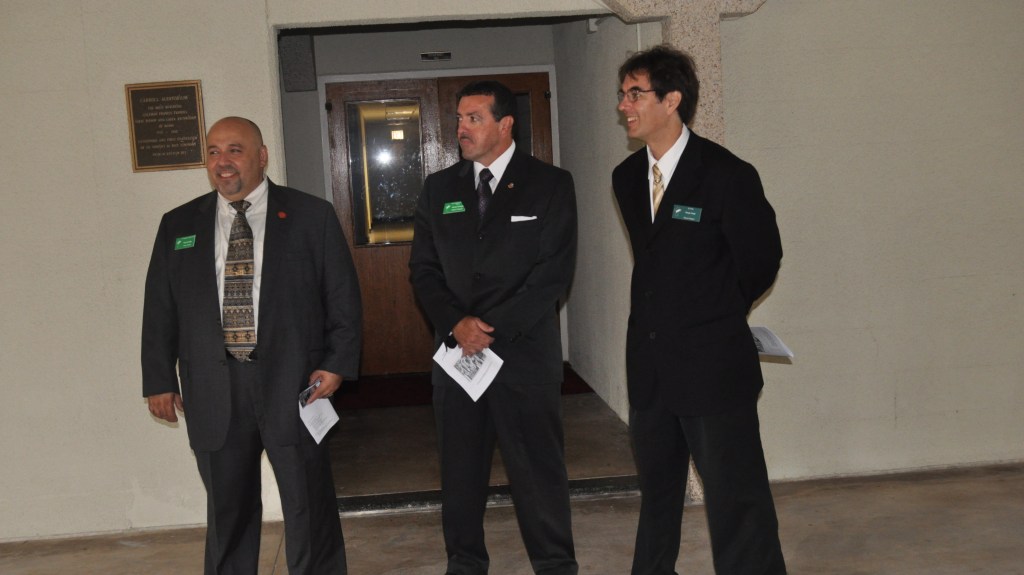
Photo: Day of installation as Lector with my classmates Pete and Hank. During the service we were told: “Take this book of holy Scripture and be faithful in handing on the word of God, so that it may grow strong in the hearts of his people.” – from the Rites, Volume Two.
Francis, Pope. The Church of Mercy: A Vision for the Church. Chicago: Loyola Press, 2014.
Link for today’s Mass readings for Friday, December 11, 2020
 Spiritual Stepping Stones