True humility comes from following the will of God.
“For everyone who exalts himself will be humbled, but the one who humbles himself will be exalted” (Lk 14:11).
With these words, Jesus ends his parable about people jockeying for seats of honor, when in fact it is the prerogative of the host to determine the seating. Jesus also addressed this same issue with the Apostles when James and John requested to sit, one on his right and the other on his left when he would come in his glory (cf. Mark 10:35-45). True humility is submitting ourselves to the will of God and acting as he directs such that he is given the primacy of place, not us.
A memory of mine from third grade sticks with me and that is the feeling one day of someone watching me in the classroom. The feeling was not my classmates or the teacher. I do not believe I was paranoid, nor do I now. What I think the experience was about was me starting to be aware of me from the outside of myself, kind of looking in at myself as I perceived others as seeing me.
Maybe this was the awakening of my ego. I am no psychiatrist, this is all speculation on my part, but I feel as if that memory and today’s Gospel reading has converged. Too often throughout my life I have made decisions seeking others’ approval and just as often, I have chosen my actions regarding perceived opinions, not actual decisions requested of me directly. These perceived opinions were much more subtle in nature, but also could multiply so to be debilitating at times when I sought to make a decision.
What I am coming to realize, is that it is more important to align myself to God’s will for my life. This does not mean that I am turning my back on family, friends, and colleagues, but in point of fact, by coming to a better understanding of God’s will, I am more authentic in my interactions with others instead of operating from a posture of appeasement, which is more disingenuous. In so doing, I am better able to be present to others for their needs and not my own.
What may have been going on with those at dinner seeking the closer seats to the host, what impelled James and John to want to sit at Jesus’ right and left when he came into his glory, was that they were seeking honor, prestige, glory, acceptance to feed their egos, their false senses of self. Jesus is teaching us to instead align our energy and seek God’s will and we will find the fulfillment and joy that we seek. This is the transformation we saw happen in Peter. He protected himself at the cost of denying Jesus three times but forgiven by the mercy of Jesus he gave himself in love to serve him and his Church unto his death.
May we seek freedom from indecision, mental distractions, and temptations that we entertain to protect our own ego. Let us pray instead for a clearer mind, heart, and spirit that can discern clearly the will of God, and the courage and confidence to act upon his leading without hesitation. May we surrender our ego to God, as Mother Teresa is known for saying, to become a simple pencil in God’s hand. Instead of seeking honor, recognition, and praise, let our intention rather be to follow God’s leading and to serve others unconditionally, willing their good. In dying to our ego-self, may we go forward today living for Jesus. In our baptism we have been crucified with Christ, so it is no longer we who live, but Christ in us (cf. Galatians 2:20).
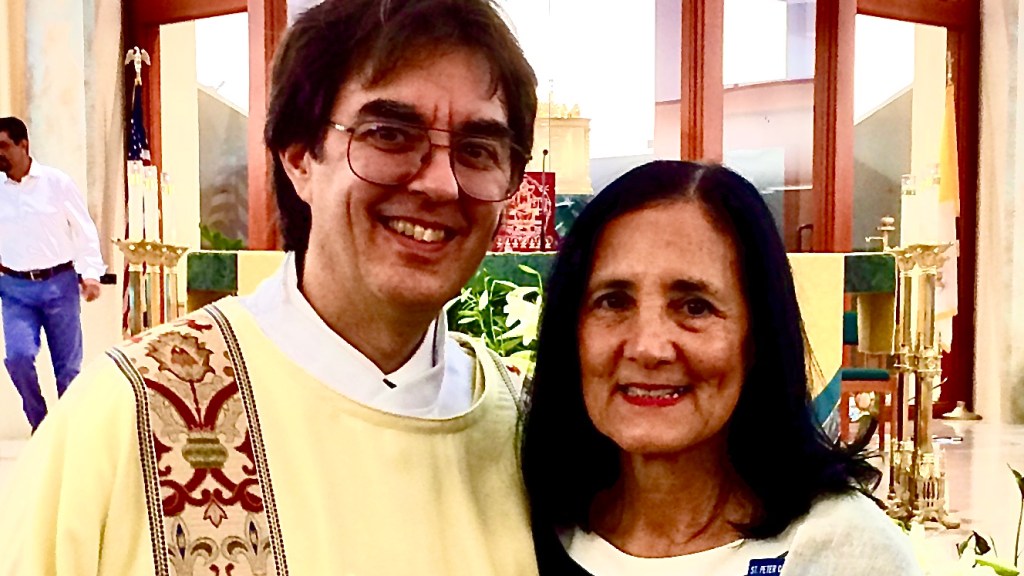
Photo: Easter 2017
The dignity of the person ought to be our starting point.
“Who among you, if your son or ox falls into a cistern would not immediately pull him out on the sabbath day?” But they were unable to answer his question (Lk 14:5-6).
Jesus was again dealing with the issue to heal or not to heal on the Sabbath. Jesus was dining at the home of a leading Pharisee. While there, Jesus noticed a person suffering from dropsy. This English word is derived from the Greek word hydrōpikos which refers to the swelling caused by the retention of fluid, or edema (cf. Johnson, 223). If you have ever experienced swelling of the joints it can be uncomfortable at best and extremely painful or debilitating at worst, especially if one’s livelihood is dependent on hard labor.
Jesus again showed his keen awareness and compassion, yet, why does Jesus keep healing on the Sabbath? He knows it gets under the skin of the Pharisees, why doesn’t he just heal the day before or after the Sabbath? Jesus, in the line of the prophetic tradition, utilized these confrontations regarding Sabbath observance as teachable moments to make a point. Jesus wanted to help the Pharisees and others observing these interactions understand what it meant to know and follow the will of God. Ultimately, what Jesus proposed through his consistent healing on the Sabbath was that the dignity of the person is to be the barometer in guiding whether we are following the will of God or not. In the Gospel of Mark, Jesus stated that the Sabbath was made for people, and not people for the Sabbath (cf. Mark 2:27).
Jesus was not questioning the Sabbath, he was boring down on the core issue. The real debate was not about whether to heal or not, but what had been debated often in Jewish circles was how to define work. It was doing work that was to be avoided on the Sabbath. The further inference Jesus was making was that respecting the dignity of the person ought to be the starting point about making any decision, policy, or observed practice.
May we take time to reflect over the course of the past twenty-four hours. How did we treat those we interacted with in person, in traffic, or online? What we think about another directly or indirectly does make a difference in their and our welfare. If we find that we have been thinking, speaking, acting, or looking, in any way that has been less than kind, encouraging, or empowering, may we seek God’s forgiveness. May we also pray for the grace to begin each day with a firmer intent to think, speak, act, and look at another with the primary intent of willing their good.
May we also pray for those who lead us, secularly as well as religiously, especially as the early voting has begun. May each policy that is formulated; how we deal with the unborn, health care, aboriginal rights, law enforcement, capital punishment, immigration reform, racism, interfaith or no faith, sexual orientation, end of life issues, scientific advancement, military decisions regarding war and peace, begin with the dignity of the person. Building a culture of life starts person to person, but doesn’t just stop there. We also need to stand up when the dignity of our brothers and sisters are not respected. May we be inspired by Jesus to be aware of the needs of another, be moved with compassion to want to help another, and the courage to embrace and walk with another.
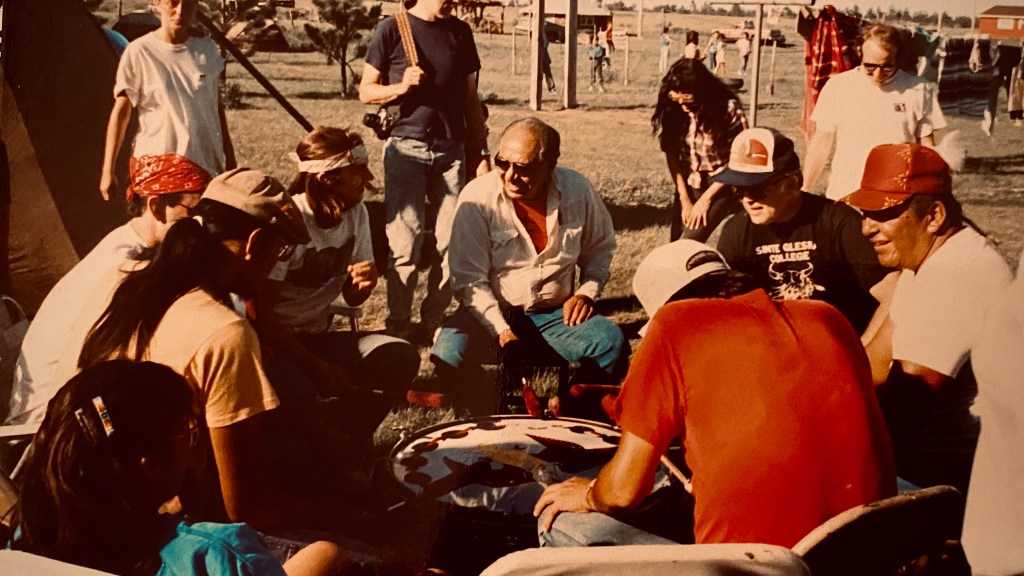
Photo: I’m drumming with Albert White Hat, Sr. (November 18, 1938 – June 13, 2013) and neighbors at the Lakota Summer Institute, Rosebud Reservation, SD. I believe in the summer of 1990. I feel blessed having had the opportunity to learn from and spend time with Albert that summer. He taught me a lot about respecting the dignity of the person.
Johnson, Luke T. 2007. “The Gospel of Luke”. In vol. 3, Sacra Pagina Series, edited by Daniel J. Harrington. Minnesota, Liturgical Press, 1991.
Jesus through the stirring of your Sacred Heart, help us to be moved to help others.
Some Pharisees came to Jesus and said, “Go away, leave this area because Herod wants to kill you” (Lk 13:31).
Even with this warning, from some Pharisees no less, Jesus continued to teach openly and publicly as well as performed healings and cast out demons. He did not fear the threat of retribution even from the likes of Herod. He willingly surrendered all to his Father.
The courage of Jesus makes him a very dangerous man because he cannot be controlled, threatened, or coerced. Jesus is sure of what God has sent him to do and he is going to follow through with his Father’s plan even it means giving up his life.
Some of his persecutors like the centurion who ran his spear through his side, admired the courage of Jesus, coming to believe that he was the Messiah (cf. Mark 16:39). Many of the first-century martyrs who followed Jesus to their own deaths were a big reason for many who came to believe and also became followers of this One who died on a Cross. Tertullian, an early Church Father, living from 155 – 220 AD, went so far as to say that “The blood of the martyrs is the seed of the Church.”
We are all called by God to be martyrs, not necessarily by shedding our blood. Martyr literally means witness. Each of us is called by Jesus to bear witness to what we believe. Faith is a gift. If we feel that we are weak in our faith, we are in good company, because Jesus said on more than one occasion to his Apostles, the ones he would send out as his witnesses, “Oh, you of little faith.”
If we feel like our faith could use a little shoring up, then we can ask God to increase our faith, while at the same time, we can start to bear witness in our everyday encounters. How this plays out will be different for each of us. All of us have had those stirrings of the heart to say or do something or to reach out in one way or another.
Last year while I was still in Los Angeles, I was walking back to our apartment with a pizza for supper. Ahead of me was a disheveled, skinny, man who certainly looked like he could have used something to eat. I felt the stirring within to ask if he wanted a slice, not a big effort or cost on my part. I bought into the mind noise of reasons why I shouldn’t make the offer and instead picked up my pace like the priest or the Levite in the parable of the Good Samaritan, widened my distance, so as not to provide him the opportunity to ask, and walked by him at a steady clip.
A few months ago, back home now in Florida, I was driving home with a pizza and saw a man sitting on the sidewalk. This time I pulled the car over and offered him a slice. He said he didn’t like pizza but thanked me for the offer. Like all of us, there have been times I have not followed through on the invitation of the Holy Spirit and times when I have. The key is not to beat ourselves up when we don’t but to continue to pray for discernment, and for Jesus to give us the courage to act as he did.
How is God calling, challenging us, to resist indifference and be his witnesses in our everyday lives? May the Sacred Heart of Jesus help us to be more open to the stirring of the Holy Spirit to be better witnesses. Each time we say yes, our faith increases.
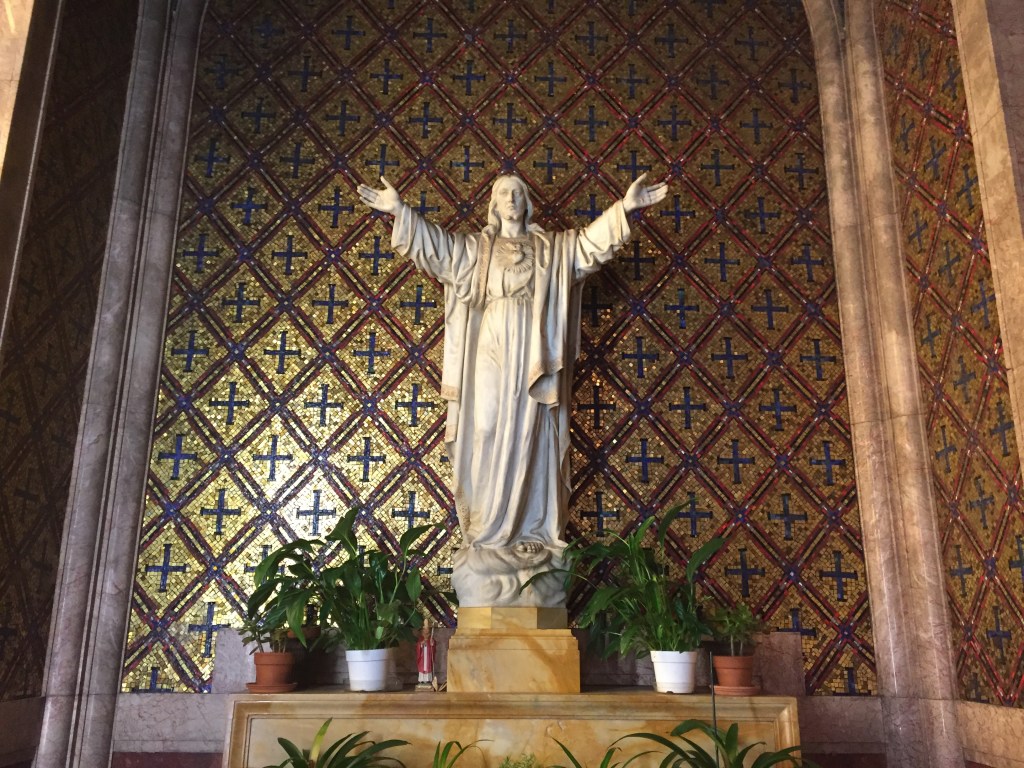
Photo: Statue of the Sacred Heart of Jesus in the Mission Dolores Basilica in the Mission District in San Francisco
Link of the Mass readings for Thursday, October 29, 2020
Experiencing the desire to pray is already prayer.
Jesus went up to the mountain to pray, and he spent the night in prayer to God (Lk 6:12).
Jesus spent the whole night in prayer to God. What is prayer? All of us as human beings seek meaning and to belong. We desire security and stability, as well as direction and adventure. We want to be accepted, to love and to be loved and to experience meaningful relationships. These primary yearnings are present within us. Often though we confuse what we truly desire and succumb to the temptations that ultimately leave us unsatisfied and more important ignore what will truly fulfill us: developing a relationship with God through prayer.
If you want to pray, you have already begun. The desire in and of itself to pray is prayer. The danger of reading about prayer is that we think we are praying. In the turning of the page or completion of the chapter, we feel as if we are accomplishing something, but we are only imagining how prayer can be. Peter Kreeft wrote: “It is tempting to remain in the comfortable theater of the imagination instead of the real world, to fall in love with the idea of becoming a saint and loving God and neighbor instead of doing the actual work, because the idea makes no demands on you” (Prayer for Beginners, 12).
There is a myriad of ways to pray and each practice will match each of our unique personalities. The key to prayer is to make a commitment to a time and a place to pray each day. Start with a timeframe, such as five minutes that you know you can do. Depending on the discipline of prayer you practice, your family, school, work, and/or ministerial demands will be indicators going forward as to how much you might be able to increase the time you pray once you have built a consistent practice.
The amount of time that we dedicate to prayer is not important. What is important is the commitment to pray each day. For me, attending Mass and the Liturgy of the Hours has been a consistent anchor since studying for the diaconate. The daily Mass readings, writing a reflection each day on them, and then sharing both with JoAnn was a practice we shared together each evening. Beginning about a year ago, I started meditating in the morning and the evenings. Before bed, I end the day praying and meditating with the mysteries of the Rosary.
JoAnn was less contemplative and more active in her prayer. She would speak to God as if speaking to a friend, we attended Mass together, and she experienced God in her daily activities and encounters with people. I too have found that seeing Jesus in those we encounter is a sign of our maturation in prayer. For the person is no longer other or one to be kept at arm’s length but a human being with dignity created in the image and likeness of God. This becomes more apparent when we spend time with one another.
St Therese of Lisieux offers us a good approach to prayer: “For me, prayer is a surge of the heart; it is a simple look turned toward heaven, it is a cry of recognition and of love, embracing both trial and joy” (CCC, 2559). No matter how we pray, our goal is that we allow our lives to be conformed to Jesus, that we encounter and build a relationship with him and each other, such that our experience of prayer matches St Augustine’s: “True, whole prayer is nothing but love” (Foster, 1).
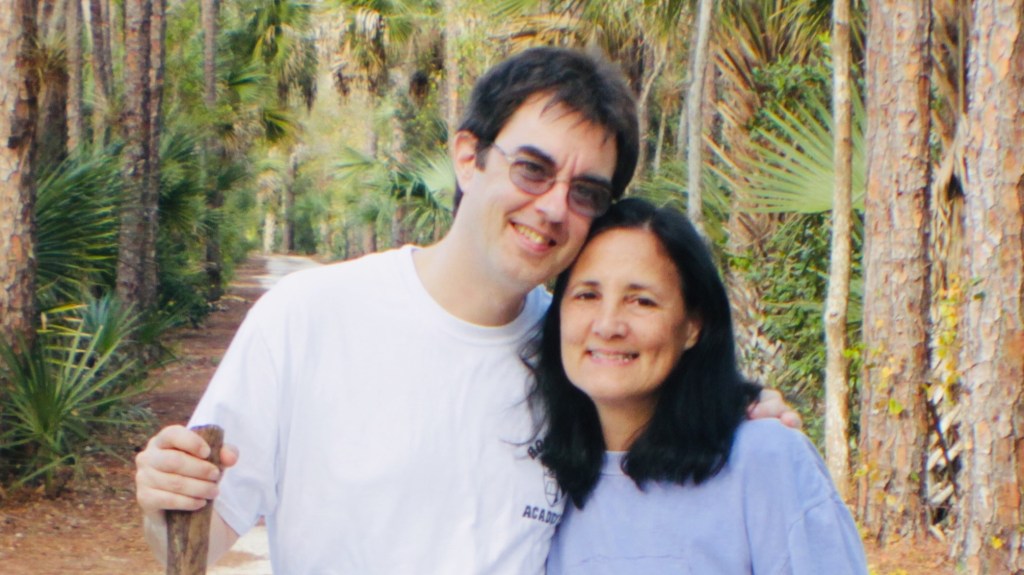
Photo: Taking a hike or walking with JoAnn was one of my favorite forms of prayer!
Foster, Richard J. Prayer: Finding the Heart’s True Home. NY: HarperCollins, 1992.
Kreeft, Peter. Prayer for Beginners. San Francisco: Ignatius Press, 2000.
Simple acts of caring and kindness can save lives.
In today’s Gospel from Luke, Jesus compares the Kingdom of God to a mustard seed and yeast. Each of these elements is not only small but they are tiny. Though with the proper environment, resources of sustenance, water, and sunlight, this seed will germinate, sprout, and grow into a large bush. Yeast, a single-celled organism, is the catalyst for assisting dough to rise, strengthen, and ferment, thus providing a more appealing and tasty bread.
Jesus offered these simple examples from everyday agrarian life that his listeners understood from experience. If we have planted seeds or made our own homemade bread, we could be in a better position to relate to these two small parables as well.
Throughout the Gospels, Jesus lives out the parables, in his engagement person to person. Jesus’ interaction happened concretely, through walking along the road and breaking of bread together, sharing stories, teaching, healing, and exorcising demons with his touch, and he still does so today. The smallest, genuine act of kindness or love can seem insignificant and may even go unnoticed by many, but it is important to the individual and can reveal dramatic results over time.
There is a story that expresses this point called, “A Simple Gesture” from the story collection, Chicken Soup for the Soul. The short tale describes how one day a boy named Mark was walking home from school and came upon another boy who had tripped and dropped all of his books and many other items. Mark offered to help carry some of the load of the other boy, who, as they walked home, found out was named Bill. They talked about common interests and when they approached Bill’s home, Bill invited Mark in for a Coke and to watch some T.V. They spent the afternoon together, then interacted on occasion for the rest of middle school and into their high school years.
Three weeks before their graduation, Bill asked Mark if they could talk. Bill shared that the reason that he had been carrying all of that stuff home on the day they had first met was because he didn’t want to leave a mess for anyone else to clean up. Bill had planned to commit suicide that evening. Bill continued to share that, after their original encounter and afternoon together, he realized that if he had killed himself that day he would have missed more opportunities to talk and laugh. Bill finished the conversation by saying, “So you see, Mark, when you picked up my books that day, you did a lot more. You saved my life” (Canfield and Hansen, 35-36).
Personal encounters were how Jesus helped others to realize that the Kingdom of God was at hand. Mark, in making the effort to help Bill pick up some of the personal items that he had dropped, helped to shift the momentum away from a potential suicide attempt. This action shows how Jesus can continue to work through us today.
Like a modern-day Good Samaritan parable, “A Simple Gesture”, helps us to see that when we are aware of opportunities to help and act with genuine care, no matter how small, we can have a dramatic effect on another’s life. The opposite is also true.
Many people have a lot on their plate, we may not be aware of even half of what others are going through. That is why we need to be attentive to the move of the Holy Spirit in our lives. He will lead us out beyond ourselves so that we notice others. In doing so, we become like the mustard seed, or the yeast, in another’s life. Through a smile, a hello, a bent ear to listen, what may appear to be minuscule or mundane at the moment, may, in fact, be life-changing and transforming.
—————————————————————
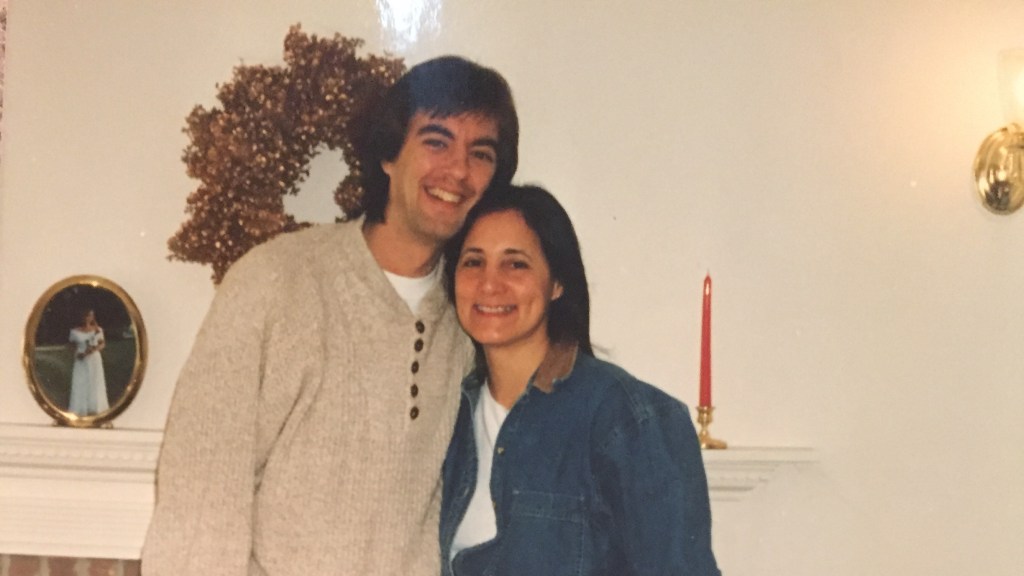
Photo: Back when we were still dating! Without JoAnn’s consistent kindness, caring, and support, I would not be where I am today.
Canfield, Jack, and Mark Victor Hansen. Chicken Soup for the Soul: 101 Stories to Open the Heart and Rekindle the Spirit. Deerfield Beach, FL: Health Communications, 1993.
Link for the Mass Readings for Tuesday, October 27, 2020
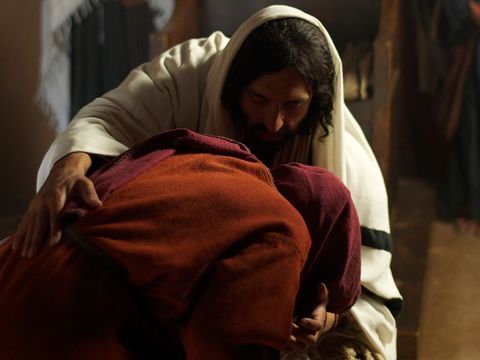
Healing can happen, when there is awareness, invitation, and an acceptance of the invitation.
Jesus was teaching in a synagogue on the sabbath. And a woman was there who for eighteen years had been crippled by a spirit; she was bent over, completely incapable of standing erect. When Jesus saw her, he called to her and said, “Woman, you are set free of your infirmity.” He laid his hands on her, and she at once stood up straight and glorified God (Lk 13:1013).
In reading this Gospel passage, we see again the compassion and mercy of Jesus. He was aware and saw the need of the crippled woman, called her to himself, she came, and through his words and the laying on of his hands, the woman was healed. He did so without hesitation, knowing that since he was healing on the sabbath this would bring further scrutiny and criticism. Yet, Jesus did not think of himself, he thought of the woman in need and made himself present to her.
Jesus is not only a model of service but also the very power as the Son of God that brings about healing. In today’s Gospel, Jesus was aware of the woman’s need. The first step in building a culture of life is to respect the dignity of each person we encounter and to be aware of their need. It is much easier to be unaware of or to operate from a position of – they brought the issue upon themselves. We can react with indifference, impatience, and/or contempt because we would rather not be bothered by another’s issues.
The next step is an invitation. Once Jesus becomes aware of the woman, he did not impose his will, even for her healing. Instead, Jesus invited her to come. We need to respect another’s option to say no to help and allow them to come on their own. Though there are times, such as for those who are dealing with an addiction, when there may be a need for more direct intervention.
We need to resist being stumbling blocks to others in need of the healing presence of Jesus. We are all capable of accepting another where they are and as they are, we can will their good, and we can be a healing, understanding, and supportive presence. We can be a means of healing as were the four men who brought their crippled friend to Jesus and being undeterred from not having access by letting him down through a roof (see Mark 2:1-12 and Matthew 9:1-8). We are called to bring the love and mercy of Christ to others and we also need to be kinder and more gentle with ourselves. When there is awareness, invitation, acceptance of the invitation, and two or more gathered in the name of Jesus, there can be healing.
————————————————————
Photo: from freebibleimages.org
Link for the Mass readings for Monday, October 26, 2020
Jesus, you loved God and neighbor. Please help us to do the same.
“You shall love the Lord, your God, with all your heart, with all your soul, and with all your mind. This is the greatest and the first commandment. The second is like it: You shall love your neighbor as yourself. The whole law and the prophets depend on these two commandments.” (Mt 22:37-40).
The scholar of the law who asked Jesus to share with him which commandment of the law is the greatest was a common question among Jews for they had 613 laws! Following these laws was how one showed faithfulness to God. Discussing which were the most important and which were those of lesser rank as well as the practicality of learning and practicing all 613 presented quite a challenge. How do we do with just following the Ten Commandments today? Could we even recite the Ten?
The scholar brought Jesus into this debate. Jesus’ response, that we call today the Great Commandment, was a masterful synthesis of the Torah, the Law, or the Teachings. He drew from Deuteronomy 6:4-5 which was the beginning of the Shema, the prayer that Jews offered each morning and each evening while facing the Temple that stated: “Hear, O Israel! The Lord is our God, the Lord alone! Therefore, you shall love the Lord, your God, with all your heart, and with all your soul, and with all your strength.” Jesus then added to it Leviticus 19:18: “Take no revenge and cherish no grudge against your fellow countrymen. You shall love your neighbor as yourself. I am the Lord.”
As we witness time and again with Jesus, he did not come to abolish the law but to fulfill it (cf. Mt 5:17). Jesus sought to help people to come to know his Father who he knew so intimately, who he loved so fully. Though the Great Commandment sounds simple enough, and it is, it demands our whole self, our full commitment to be contemplatives in action. We are called to love God with our whole heart, soul, and mind. That means all of us, physically, socially, emotionally, and spiritually. We are to recognize that God is actively engaged in all of what we do and who we are in every aspect of our self-identity and integrity.
Our lives will be richer and more fulfilled once we embrace, once we open ourselves up to this reality, and resist the temptation to compartmentalize our time with God. Saying we are only with God on Sunday while in the sanctuary of the Church but leaving him there in the tabernacle is not loving God with our whole heart, soul, and mind. Stepping into the parking lot becomes like a time warp in which we go back into secular apparent reality, where in the first instant of encounter with our neighbor cutting us off with their car, our hand gesture is most likely not a blessing in the form of the sign of the cross.
If we can turn on a dime so quickly, have we really worshipped at all? Are we living our lives more as Pope Francis calls, “defeated Christians”? Are we just going through the motions of our faith, showing up but our heart, soul, and mind aren’t fully engaged? Pope Francis shares that “the one who confesses the faith well, the whole faith, has the ability to worship, to worship God” (Francis, 292).
We become Christians, contemplatives in action when we give our all as did St. Francis of Assisi who would often pray this simple prayer “My God and my all”. He gave himself in love, all of who he was to God. He encountered the God of Jesus Christ who is Love, received his loving embrace, and went forth to share that love with others. This is called the Greatest Commandment not one of the Greatest Commandments, because loving God and neighbor is one and the same act.
May we embrace the gift of who God is for us, not just as the one who created us and went away to do whatever God does, that is deism. The God of Jesus Christ is a God of relationship grounded in unconditional love, the one who is present with us always, in all the practical and mundane we do, and in everyone we meet. Through this embrace of God and his love and going out from ourselves to will the good of the other, the better we will be able to heal from our wounds of prejudice, bigotry, selfishness, pride, greed, lust, fear, and anxiety.
Our very life is a blessing, a gift, to be thankful to God for and to share and bless others with. May each thought we entertain, each word we speak, each action we take, each facial gesture we express, be one of encouragement, of support, of empowerment, and of love. Dedicating ourselves to following the Great Commandment means that we are to approach our life one day at a time renewing our commitment to love God and neighbor a little bit better today than yesterday. To aid us in our trust and conviction, let us pray often the prayer of St. Francis, “My God and my all”.
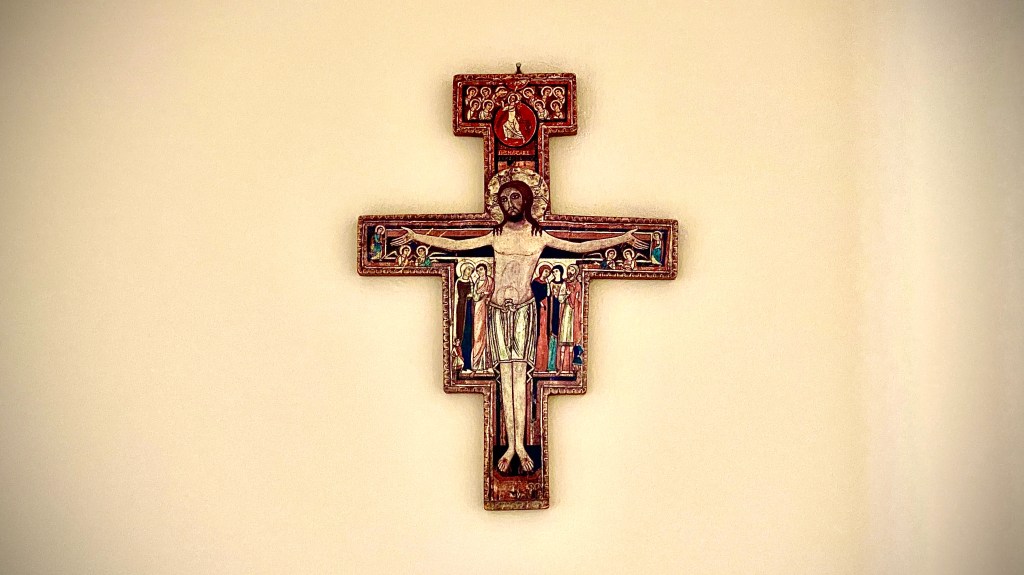
Photo: Replica of the San Damiano Cross that I have had since my novitiate year while with the Franciscans. When St. Francis was praying before the original he felt the call by God to rebuild his Church.
Pope Francis. Encountering Truth: Meeting God in the Everyday. NY: Image, 2015
Repentance is the key for a healthy relationship with God and each other.
In today’s Gospel, we read about two accounts of horrific deaths. The first is at the hands of Pontius Pilate, who has not only ordered the execution of Jesus’ fellow Galileans but had their blood mixed with “the blood of their sacrifices.” In the second incident, Jesus brought up the tragic accident in which eighteen people died “when the tower of Siloam fell on them.”
In both cases, Jesus rejected the common notion of the time that these incidents were caused by God’s punishment and focused instead on the importance of repentance. Jesus stated quite emphatically, that, “Do you think that because these Galileans suffered in this way they were greater sinners than all other Galileans? By no means! But I tell you, if you do not repent, you will all perish as they did” (cf. Lk 13:1-5)!
Jesus was emphatic about helping his followers understand the purpose of his coming. Jesus provided meaning and fulfillment in this life as well as being the way to the truth of eternal life in the next. Yet, to receive the gift of his invitation, people needed to repent from their focus on self, misunderstandings of God, and the false substitutions that the world offered. Instead, they were to repent, have a change of mind, and turn back to God, the very source of their being. This is just as true for us today.
Jesus accompanies us through our trials, pain, and desolation, just as he is present in the midst of our achievements, joys, and consolations. To repent and surrender to him is not some submissive posture to a tyrant but an acceptance of the aid offered by the divine gardener. Our repentance gives permission to Jesus to cultivate our ground to rid us of that which sickens us and fertilize us in such a way that we are renewed by his care. Jesus tends to our growth such that we can be more aligned with the will of his Father and the love of the Holy Spirit. In these ways, we are healed and mature so that we will bear fruit that will last. We will become more patient, kind, loving, understanding, forgiving, present, and joyful in our encounters with one another.
We live in uncertain times as did those of the first century. We still live in a fallen world. We do not know the time or the hour, and sometimes we do not understand the rhyme or the reason why someone’s life here ends. The death of my wife, JoAnn, still makes no sense. She was proactive and took good care of herself and I remember her doctors saying that except for the pancreatic cancer she was in perfect health. What made our last months together in this world more bearable was our daily turning over our lives to God’s will and the many people who were praying for us. The months together then seemed like forever and today looking back it seems like the blink of the eye.
We often do not want to think about our death, yet, we need to ponder it from time to time. By doing so we just might live the one life we have been given a little bit better. Each day we wake up is a gift from God. Please don’t take it for granted. Repent, turn back to the God who loves us more than we can ever imagine or mess up. The time to appreciate our life and the lives of those that we hold close to our hearts is now.
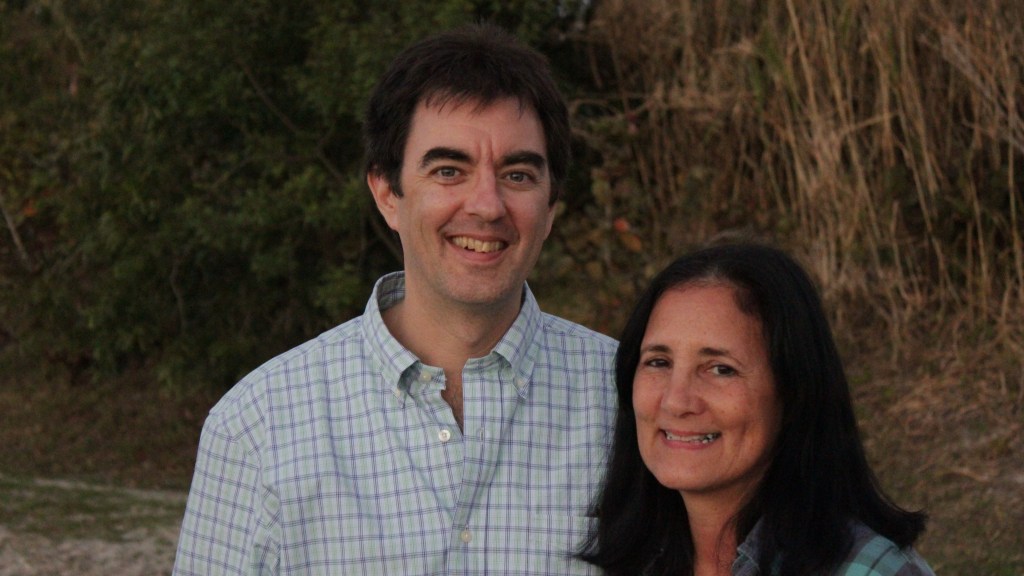
Photo: Each day with JoAnn was a gift.
Link for the Mass readings for Saturday, October 24, 2020
 Spiritual Stepping Stones