

Caught in the net of God’s love.
Jesus said to the disciples: “The Kingdom of heaven is like a net thrown into the sea, which collects fish of every kind.” (Mt 13:47).
The invitation of God is universal and we are all lured by his invitation of love and intimacy. We long to belong, our very substance and essence as human beings is the reality that our ultimate fulfillment can only be reached in communion with the God who created us. Yet, though drawn, we resist being caught.
St Augustine (354-430), bishop of Hippo, came to a point in his life where he realized that the flame of his desire for wealth, fame, and pleasure was dimming. He clearly felt moved toward “one reality that cannot decay, from which all other realities are derived.” Though he was caught in God’s net and being pulled in, Augustine still sought to wriggle free, for: “Though drawn to the Path, who is my savior, I shied from its hard traveling” (Augustine 2008, 161).
How many of us could echo Augustine’s dilemma? We have experienced God in our lives and feel the invitation to go deeper, yet, we still seek to wriggle free. We are attracted to God but our attraction to fame, pleasure, power, or wealth still has a stronger hold. At a baser level, we may believe that the minimalist approach is easier. God’s path is too hard.
Hard yes, but if we look at anything that has been worthwhile in our life, haven’t we received it through discipline, effort, and hard work?
Often it is more effort to work against God’s will, just read the Book of Jonah! May we instead surrender to the current of the Father’s Love and allow ourselves to be caught in the net of his Grace. At first, anxiety and fear will arise, because the pull may appear too strong, his love too pure. Yet, when we align our discipline and effort with his will, the anxiety will wane, and we will indeed be free to swim again. This time with more exhilaration and joy than we had ever experienced before.
———————————————————————–
Photo by Orest Sv from Pexels
St Augustine. Confessions. Translated by Gary Wills. NY: Penguin Books, 2008.
Link for the Mass readings for Thursday, July 30, 2020

Death does not have the final answer.
The Gospel account from Luke may be more infamous because of the encounter of Martha and Jesus. Martha approached Jesus in the midst of his teaching looking for support in rebuking her sister Mary for sitting at his feet with the male disciples gathered around him. Jesus not only did not do so but said that Mary had chosen the better part. Martha’s boldness is on display again in today’s Gospel reading from John read. Martha again approaches Jesus when she becomes aware that he has come close to their home. She does not wait but “went to meet him” (Jn 11:20). Martha’s brother, Lazarus had now been dead for four days and Jesus, who had the time to arrive before his death, was not present to help his friend Lazarus in his time of need.
How many times have we been in Martha’s position? We felt that Jesus was not there when we needed him most. Why does God allow suffering? Especially the suffering of the innocent, which is an age-old question. Part of the answer is that we live in a fallen world of sin and self-centeredness. God does not bring about suffering but he does allow it because he loves us so much he is willing to give us the free will to reject him and each other. The cost of our freedom means that there are consequences to our choices which can be detrimental or beneficial. We are all interconnected so when we choose to act on our own apart from God’s guidance and the welfare of others, the damage that ensues affects not only those around us but everyone. On the other side of the coin, there is the presence of grace when we draw close to God and each other.
We are not alone in our suffering, especially, when we do as Martha had done. She went out to meet Jesus. Martha most likely did so not holding back any of the full range of her hurt and pain. The only evidence we have is her words that express her anguish. “Lord, if you had been here, my brother would not have died” (Jn 11:21). We can only see from our limited point of view, especially when we are in the midst of grief. Yet God sees far beyond our limited, finite perspectives. In the midst of our suffering, Jesus helps to not only bring about a greater good, though it may take time to come to understand and experience, he accompanies us in our suffering. This is true even in our experiences with death.
Jesus did not come to comfort his friends Martha and Mary when he heard of the death of Lazarus, Jesus came to restore him to life, which would also be a foreshadowing of his own Resurrection. The difference being that Jesus would not merely be resuscitated as Lazarus was and die again. Jesus conquered death and became the firstborn of the new creation. We need not fear even death, our own, or our loved ones. Jesus has conquered death for all of humanity.
I still entertain thoughts that JoAnn will walk through the door one day such that the last ten months has been my worst nightmare or a bizarre conspiracy in which she didn’t really die. I know that will not happen. I know that Jesus did not heal her from pancreatic cancer. I also know despite that fact we were not alone in our suffering. Many people drew close from near and far in many unique ways and Jesus was present with us each step of the way during those agonizing months. My heart is still heavy and still aches and it doesn’t take much for tears to flow, yet, I believe that JoAnn has risen to experience the greatest healing beyond anything we can ever imagine in this lifetime. I believe that God will bring about a greater good for me and our adult children because I believe with Martha that Jesus is the Christ, the Son of God (cf. Jn 11:25-27).
Photo: “True love stories never have endings.” – Richard Bach
Link for the Mass readings for Wednesday, July 29, 2020

No matter the storm that rages before us, with Jesus, we shall overcome.
“Explain to us the parable of the weeds in the field.” He said in reply, “He who sows good seed is the Son of Man, the field is the world, the good seed the children of the Kingdom. The weeds are the children of the Evil One, and the enemy who sows them is the Devil.” (Mt 13:36-39).
In this parable of the wheat and the weeds, Jesus is addressing the ancient question of why God allows evil and how are we to deal with it. Why do bad things happen to good people? As a starting point, we need to recognize that God is God and we are not; meaning we are not capable of reading the mind of God. Any answer to explain how and why God allows suffering will be insufficient. A second reality is that the Devil exists, though he is a created being. An angelic being, yes, but not equal in any way to God.
God is not a being. At best we can say he is Infinite Act of Existence, he is, or as God told Moses, “I am who am” (Exodus 3:14). God did not create evil, he only created good. “God looked at everything he had made, and found it very good” (Genesis 1:31). The Devil, Satan, the one who opposes, was created good also, as a high archangel, Lucifer, yet he chose to turn away from the will of God, and those angels who followed him are demons. God is greater than the Devil and his demons, and his good is greater than the evil they sow.
Evil is not so much a created thing, but a deprivation, or distortion of the good. God does not create evil, but he does allow it, and even though we cannot understand the reasons why God allows or permits evil or suffering, it is not a sufficient reason to say that God does not exist. This is especially true if we are seeking to grasp spiritual realities and truths from purely physical and rational means alone. We are indeed rational beings, who seek to know and to understand which is good, but we are so much more. As human beings, we are physical AND spiritual, so need not limit ourselves to the merely sensate and empirical realm alone.
To better be guided by God, to hear his voice in the silence of our soul, to be fulfilled, our hearts and minds need to be open to the will of the Holy Spirit in our lives. We are called to be people of prayer. As we mature spiritually and deepen our relationship with God we will come to experience God as did Job: “I know that you can do all things, and that no purpose of yours can be hindered. I have dealt with great things that I do not understand; things too wonderful to me, which I cannot know” (Job 42: 2-3). In essence, Job acknowledged and accepted that God was in control and he was not, and though he could not grasp everything, he trusted in the will of God for his ultimate good.
How do we deal with evil then? We need to surrender our pride and control over to God and acknowledge that he is in charge and knows what is best for us. We need to choose to put God first above ourselves and everything and everyone else. Our fundamental option, our telos, our end goal, is to be above all an embrace of the reality that we are striving to be in a relationship with him. From the moment of our conception, we are a living, craving, hunger, and desire to be one with God and one another. This is true of the atheist and the mystic alike, whether we believe it or not. As we embrace this reality, put God first and focus on him, no matter what arises, we will begin to experience his presence in not only our everyday lives but begin to feel his presence with us in the midst of our suffering. We will come to know that he is stronger than any pain or evil, and he will guide us through and give us what we need to endure.
Our loving God and Father has given us the means to understand suffering and evil especially in sending his Son to enter into our humanity, to suffer with us, even unto his unjust death on the cross. Our deepest prayer is when we willingly offer up our suffering and enter into the Mystery of the Passion of Jesus. Jesus, the pure and innocent one, beaten and crucified, understands our pain and agony, our cry for the horrors of injustice, and he understands the presence of evil. Jesus himself, asked not to be crucified, though he relinquished in saying, “Not my will but yours be done” (Lk 22:42).
In that acknowledgment, Jesus faced the utter evil, horror, betrayal, and injustice of humanity, his crucifixion. In taking upon himself the sin of the world on the Cross, he even felt his separation from the Father. Through his complete surrender into God forsakenness, into his death, and descent into hell, his willingness to die for us, Jesus made the Resurrection possible. He conquered suffering, evil, and death forever, he brought about a greater good, through the evil of the crucifixion. No matter what trials we face, the Father has the last word over sin, suffering, and even our death.
We may not receive a sufficient answer to our present suffering but we can engage with the suffering and evil in our lives with our hope intact because we can trust that God hears our prayers and is present with us in our trials and tribulations. For our part, we need to be willing to be honest with him, even if we are angry, afraid, or doubtful. We will not find Jesus when we deny or run from our challenges. We will find him with his arms wide open and waiting for us when we are willing to enter into and face our suffering and pain. “Suffering is never the last word. Life is stronger than death, love is stronger than hatred, hope is stronger than despair, nothing is impossible with God” (Fr. James Martin, S.J.).
When we struggle or suffer, we are not alone. Let us resist running from our pain and instead bring our challenges to Jesus on the Cross. The strength of our faith is that we can trust in the knowledge that Jesus is present and accompanies us in the midst of our suffering. Jesus understands our pain because he experienced it on the Cross and experiences it with us now. Our hope is strengthened by the fact that Jesus has already won the battle and he will give us the strength to endure.
No darkness can or will overcome the love of the Holy Spirit. Aligned with him we will be victorious even in the face of the greatest evils we are confronted with. Let us face whatever storm that rises before us with confidence and courage, as did Jesus when he set his face toward Jerusalem. Hand in hand with Jesus, we shall overcome.
———————————————————————–
Photo by Johannes Plenio from Pexels
The quote above comes from Fr. James Martin, S.J. who answered a question on how we deal with suffering. You may access his answer on the YouTube video On Pilgrimage With James Martin SJ Fordham University. His response to dealing with suffering begins around the 1:30:00 mark. The whole video is well worth watching!
Link for the Mass Readings for Tuesday, July 28, 2020

Though minuscule compared to the cosmos, God cares for each and every one of us.
“The Kingdom of heaven is like a mustard seed that a person took and sowed in a field. It is the smallest of all the seeds, yet when full-grown it is the largest of plants.” (Mt 13:31-32).
God can do so much with so little. This is so because even the smallest detail is important to God. Just think of the immensity, not only of our solar system and galaxy but the whole cosmos. Despite the grandiosity and massive expanse of all creation, not even a sparrow can fall to the ground without the notice of God. Even all the hairs of our head can be counted (cf Mt 10:29-30). Our life, who we are, and who we are becoming matters to God.
God sows his seeds of divine grace, a movement of his love, reaching out to us in a joyful way. He watches us, his children, and shares his life with us. We can accept or reject his love which falls afresh upon us like the morning dew upon the grass. To accept the reality that God loves us as we are is of great benefit. From a posture of saying yes to the outpouring of God’s love, we become more aware of the gift already bestowed. As we experience the nourishing and life-giving gift of God’s love we are then to share it with others. What we will also come to realize is that as we give more, we receive more of God’s love.
Our smallest thought, word, or deed makes a difference because they reflect our yes or no to the invitation of God. May we think, speak, and act today as children of our loving God and Father. May we share a smile, a word of encouragement, a wave until we can hug again, or attentive presence with someone today. No matter how small a sharing of God’s love we offer, it can mean for another more than we can ever imagine.
Photo: accessed from pexels.com
Link for the Mass reading for Monday, July 27, 2020
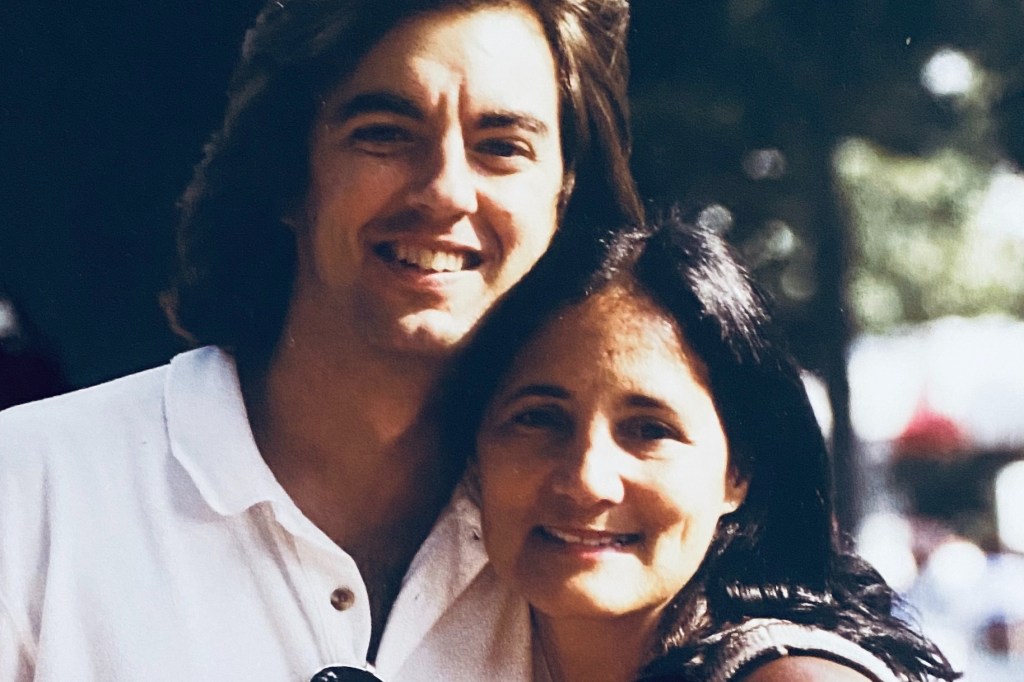
Jesus offers us a great gift, are we willing to receive it?
“When he finds a pearl of great price, he goes and sells all that he has and buys it “ (Mt 13:46).
The merchant did not just find any pearl, which in ancient times, was often considered a great treasure. He found a pearl of great price. This would have been a pearl beyond all pearls that he had ever seen. How many material treasures do we seek to satisfy us? Jesus equates heaven as being like the finding of this great pearl. It is beyond anything we have experienced before. What are we willing to let go of, to sell, to turn away from to attain this treasure?
The cost of discipleship is high, indeed costing us all that we have. Jesus wants to be part of all of our life; not just attendance at church on Sunday, not just during our time of prayer, but also in our work, in our recreation, in our struggles, and in our joys, in our interactions with others and in our solitary pursuits.
The merchant in Jesus’ account recognized the great value before him and was willing to give all that he had to attain that pearl. Jesus is inviting us to invest in him by allowing him access to every moment of our experiences so that we may enter into a deeper and more intimate relationship and communion with him and his Father.
When we do so we will also experience the treasure of great price which is the love shared between them, who is the Holy Spirit. We experience this communion most concretely in this life when we develop authentic relationships with one another. I believe many of the issues we face will improve when we are willing to engage with one another, instead of unearthing the worst, seek the best, and will each other’s good. Barriers will begin to crumble when we let go of what we perceive divides us and embrace the mutuality of our shared humanity. Relationships are not perfect because we are not perfect. As we sacrifice by putting others before ourselves, are willing to see their point of view, listen, and seek to understand each other, even when we don’t agree, doors will begin to open.
Jesus is about forging relationships, within and beyond the usual social norms. He reached out beyond family and synagogue to the peripheries. In doing so, he was following the will of God. This “is no grim, grey, agonizing thing; it is a lovely thing. Beyond the discipline, beyond the sacrifice, beyond the self-denial, beyond the cross, there lies the supreme loveliness which is nowhere else” (Barclay, 87). Jesus offers us an ultimate treasure which is a relationship, infinite intimacy, and communion with the one who made us for himself. This relationship begins when we are willing to build relationships with one another.
———————————————————————–
Photo: With my pearl of great price, JoAnn, who taught and continues to teach me how to love.
Barclay, William. “The Gospel of Matthew, vol. 2.” In The Daily Study Bible Series, Revised Edition, 87. Philadelphia: Westminster Press, 1975
Link for the Mass Readings for today, Sunday, July 26, 2020
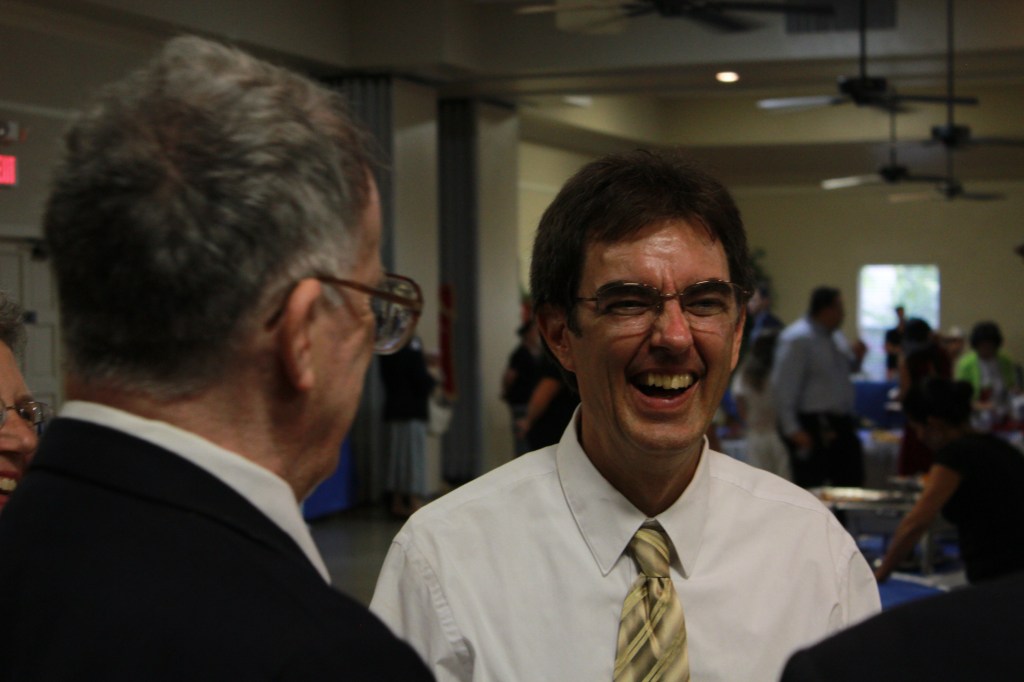
Laughter is a gift of listening and serving.
“The mother of the sons of Zebedee approached Jesus with her sons and did him homage, wishing to ask him for something. He said to her, ‘What do you wish?’ She answered him, ‘Command that these two sons of mine sit, one at your right and the other at your left, in your Kingdom’” (Mt 20:21-22).
The context of this request from the mother of the sons of Zebedee, James and John, comes from reading a few verses before the quote above. Start reading at Matthew 20:17 and you will see that Jesus and his twelve apostles are heading toward Jerusalem. Jesus stops to share with them, for the third time, that he will be condemned and crucified.
Jesus’ statement of his imminent suffering and death appears to be ignored by the mother of James and John. The other ten are indignant, not because of the apparent lack of acknowledging Jesus’ statement, but about who is the greatest among them! It is easy to imagine how the chaotic scene ensues! As Saint John Chrysostom wrote: “See how imperfect they all are: the two who tried to get ahead of the other ten, and the ten who were jealous of the two” (Chrysostom 1975, 1552)!
This event is recorded in Matthew, Mark, and Luke. Mark has James and John speaking for themselves, not their mother, as in Matthew. Luke does not even record the initial request of James and John at all but comes in at the point of the apostle’s dispute. What all record, including the Gospel of John, is Jesus’ interjection where he made it clear to his apostles that he came to serve, not to be served. To follow Jesus meant, not that James and John would be given positions of honor and power, the sitting at his right or his left, but that they were to serve as he served, to love as he loved.
As disciples of Jesus, one of the most powerful ways we can serve, the most powerful ways we can love, is to be truly present, done most effectively when we actively listen. This is done when we look at each other, resist the temptation of thinking about our own needs, and/or thinking about what we are to say. We need to put the book down, set the work aside, turn off the tv, put away the cell phone, disengage our thoughts, and instead look at and listen to what the person before us has to say.
Make the time to stop, to be mindful, present, and listen to Jesus, to our family members, friends, colleagues, and those to whom, in the past, we may not have given the time of day. Jesus came to serve, to love, to listen. May we too give of ourselves with our time and undivided attention toward those he directs us to serve. If you are in need of a little help on this memorial of St. James, ask for his intercession. “St. James, pray for us.”
—————————————
Photo: Laughter is a fruit and gift of listening which we can embrace more often when we are willing to not take ourselves too seriously 🙂 photo credit Jack McKee
Chrysostom, St John. Homily. The Liturgy of the Hours: According to the Roman Rite. Vol. 3. NY: Catholic Book Publishing, 1975.
Parallel Gospel passages to review:
Mark 10:35-45; Matthew 20:20-28; Luke 22:24-27 and John 13:12-17
Mass readings for Saturday, July 25, 2020
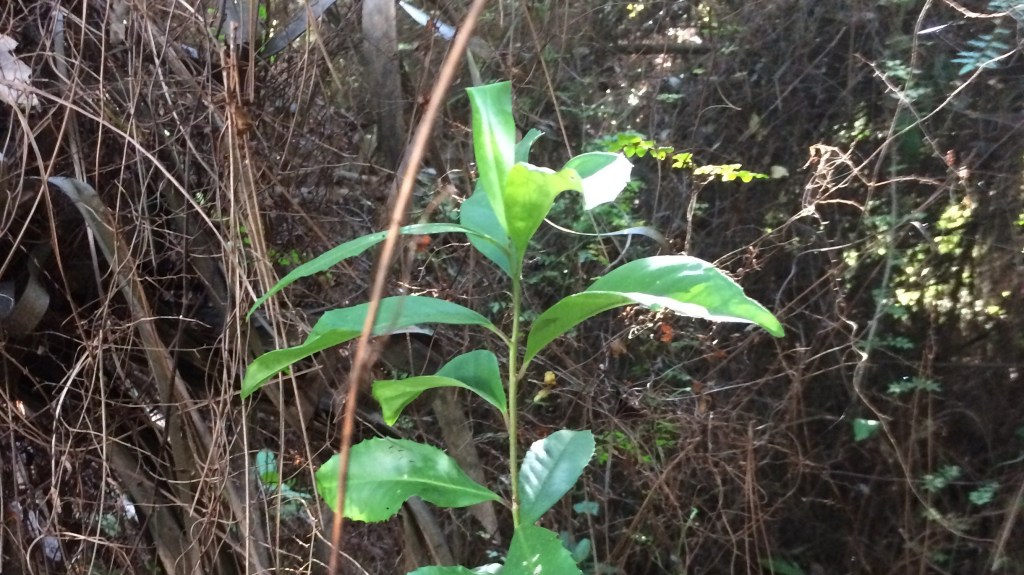
Rooted firmly in Jesus and cutting back the vines of false truths, we can mature.
In the Gospel today, Jesus explains to his followers his Parable of the Sower. Many people of faith would fall into the third category: “The seed sown among thorns is the one who hears the word, but then worldly anxiety and the lure of riches choke the word and it bears no fruit” (Mt 13:22). Jesus is a part of our life, we are growing in our faith, but our discipline and maturation, and so bearing of the mature fruit is diminished. We are limited because Jesus is only a part of our life, not the core foundation. This is because we look to the world and its false promises to be our security and support.
Pope Francis questioned in his apostolic exhortation, The Joy of the Gospel: “How can it be that it is not a news item when an elderly homeless person dies of exposure, but it is news when the stock market loses two points? This is a case of exclusion. Can we continue to stand by when food is thrown away while people are starving? This is a case of inequality” (Francis 2013, 53). How often is it that the top voting issue in our national elections has to do with concern about the economy?
If we are placing our hope and focus, if our primary source of building for ourselves a secure foundation is in the political and economic realm, we are going to be consistently anxious and stressed. Our faith is going to be choked, and worse our politics will be shaping the Gospel instead of the Gospel shaping our politics. We will justify and rationalize behaviors from our leaders that are contrary to living our life aligned with the teachings of Jesus as long as the economy is going well.
These subtle vines of false security also promote the privatization of our faith. If we seek to counter and challenge injustice, if we call for an awareness of those who are vulnerable and suffering, if we call out actions that are immoral, speaking out for the rights of the unborn, we can face the backlash of being accused of stamping on an individual’s personal rights; being called a socialist or a leftist, by seeking to keep migrant families together, to provide a safe haven for asylum seekers or refugees. Taking the risk to be “God’s microphone”, to speak the Gospel publicly, is challenging today because: “The process of secularization tends to reduce the faith and the Church to the sphere of the private and personal” (Francis 2013, 64).
To live our faith is not just a hobby and it means more than just doing so in our own home. If we are going to mature as disciples of Jesus, we are going to need to resist the false lures of riches and material security, we are going to need to be willing to face the anxieties of criticism and hostility for speaking the truth of our faith. The unfortunate part is that we may face a lot of push back from those of our brothers and sisters even within our own churches, the Body of Christ.
We can mature as disciples when we are willing to commit daily to reading the Bible, seeking resources to better understand his word, praying and meditating, pondering the teachings of Jesus, and so better have the eyes to see and ears to hear his Word and guidance. As we build our foundation on Jesus and his teachings, put them into action in our everyday lives, build a support group, we can share with others the trials and successes of our journey of faith. These small acts will make a tremendous difference.
Courage is a mark of feeling the fear and saying and doing what we are inspired by God to do anyway. Let us call on the name of Jesus when we are tempted to place our trust in anything other than God, may we call on the love of the Holy Spirit to give us the words to speak and the actions to impart, with understanding, and kindness, when we are in the midst of people expressing unjust, disrespectful, or dehumanizing words or actions.
Jesus is calling all of us to deepen our relationship with him and to invite others to do the same. The road ahead and the trials we will face will not be easy but as we face them, with Jesus and one another, we will become stronger. We will begin to mature and bear fruit when we allow Jesus to be our constant source and our foundation. Sustained by his power we can then act with courage and put into practice what we learn.
Apparent goods and the false expressions of material security seek to lull us into complacency and indifference. The tendrils of anxiety and fear, often from our limiting cultural identifications and social pressures, squeeze at our heart and throat to keep us indecisive and unresponsive to God’s call for us to act and speak beyond our comfort zones. Our answer to these pressures is to remember that we are not alone. We need to call on Jesus, trust in him, risk and step out in love to serve and accompany others in need, to build relationships with our brothers and sisters in faith, of different faiths, and no faith, so to cut away the vines and thorns, to remove all that is not of God, that attempt to choke us and keep us separated.
Over time our soil will become richer, our roots will grow deeper, the Love of the Holy Spirit will increase in our hearts, minds, and souls, we will begin to see others through God’s eyes, we will become more human, more open to a maturing relationship of communion with our loving God and each other, that bears the mature fruit of love, joy, peace, patience, kindness, goodness, gentleness, faithfulness, and self-control.
——————————————————————
Photo: Plant in our backyard, a symbol for us to be true to ourselves and who we are called to be, growing and maturing free of the vines around that attempt to choke it.
Pope Francis. Evanglelii Gaudium: The Joy of the Gospel. Frederick, MD: The Word Among Us, 2013. Link for online access:
http://w2.vatican.va/content/francesco/en/apost_exhortations/documents/papa-francesco_esortazione-ap_20131124_evangelii-gaudium.html
Link for Mass readings for, Friday, July 24, 2020

May the light of Jesus soften our hearts and minds.
The root of the message offered in today’s Gospel is what is foundational to the beginning and continuing as a disciple of Jesus. This being the disposition of our hearts. Are we closed to receiving the message of the Gospel, or are we open to embrace the invitation of Jesus to become more active in living out our faith in our everyday life?
The exchange of Jesus with his disciples in today’s reading from Matthew comes after his sharing of the Parable of the Sower (Mt 13:1-9). In this parable, Jesus offers scenarios regarding the conditions of seeds sown. Some fell on a hardened path, some on rocky ground, some fell among thorns, and some fell on the rich soil. The seeds in the first three settings were not able either to germinate or come to full maturity. The seed that was sown in rich soil was able to germinate, sprout, mature, and bear fruit.
As disciples, we are meant to bear fruit. That means our beginning step to preparing rich soil is to have an open heart and mind to the message of the Gospel. If we have eyes to see and ears to hear, we can quickly assess when our hearts are hardened and our minds are closed. When someone makes a statement, do we immediately judge it before the sentence is even completed? If we are in touch with our emotions, are we aware of the tenseness of our body and our shortening of breath? Think back to some times when we have reacted in this way, think of some times when we have had similar reactions in prayer, or when we feel God leading us to serve in a particular way, or when a scriptural passage piques our interest and we ignore it, read on, or close our Bible. How about times when a person interrupts us with an issue, or we see someone in need and keep walking and while we walk away with feel the angst of guilt. More directly regarding our present situation, how do you feel discussing racial issues and getting in touch with our own biases and prejudices?
The good news presented in the above examples is that we are alive and our conscience is somewhat intact. Our soil may be on rocky ground, there may be some weeds and thorns, but at least there is some soil. The most difficult state and the one Jesus addressed in today’s Gospel is the heart of indifference that is closed, the seed falling on the well-trod path, that is hard and packed so nothing gets through. For these people, “they look but do not see and hear but do not listen or understand” (Mt 13:13). Yet, even this soil can be broken open and tilled. Even the hardest heart can be softened if one is willing to turn to Jesus.
Jesus, in his explanation of why he spoke in parables, returned to the inaugural message of his ministry: “This is the time of fulfillment. The kingdom of heaven is at hand. Repent and believe in the Gospel” (Mk 1:15). To be a disciple of Jesus we need to be willing to repent, to acknowledge the places in our hearts and minds that are closed, those areas that are hardened from real or perceived past pain or trauma, those situations in which we choose to shut down and separate ourselves from God and others. When we allow Jesus in, we can experience his healing touch. By risking to reach out in this way for help, we can begin to heal. As we do so, we can begin to hope, to care, and to love.
Being a disciple means that we will make mistakes, we will not be perfect, we will be hurt, betrayed, and experience the injustice of this world. But if we trust in Jesus, are willing to learn from our mistakes, return to him for healing and confession, our hearts will soften and our minds will open.
We will come to experience that we are not alone, that we have not been abandoned, that there is hope because there is a way forward, there is a goal we have to attain, which is to enter into the process of becoming true to who we are and who we are called to be. We will also begin to experience our interconnectedness with one another. When we come to realize that we are not alone, that we are not an island in a sea of people, that we are loved, we may be more willing to hear other people’s stories, be more understanding of their struggles and trials, and maybe begin to have eyes to see and ears to hear our brothers and sisters that have been beside us all along. Instead of being a part of the problem, we can then begin to be part of the solution.
Photo: Autumn Heart Leaf from pexels.com
Link for the Mass readings for Thursday, July 23, 2020
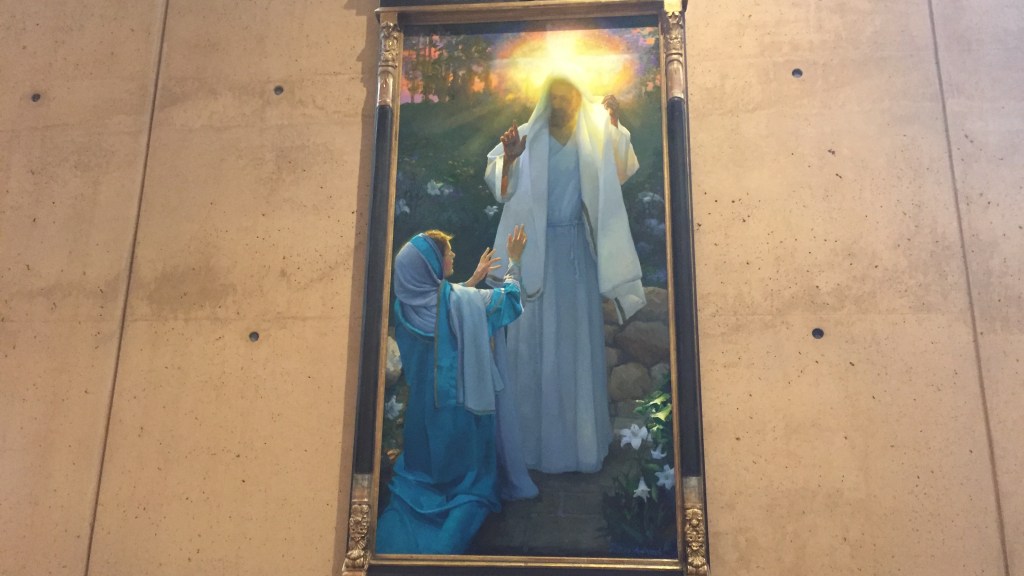
 Spiritual Stepping Stones