
No darkness can prevail over the light of Jesus the Christ.
Jesus returned to his hometown of Nazareth, as we saw in yesterday’s reading, and that did not end so well, with his fellow Nazoreans running him out of town (Lk 4:29). In today’s reading, Jesus was teaching in the synagogue at Capernaum. The initial reaction to Jesus’ teaching was similar in both accounts; the people were “amazed” and “astonished” with his teaching. But no one in either group makes the bold statement that arises today: “I know who you are – the Holy One of God” (Lk 4:34)! This phrase was professed by a demon. He who taunted Jesus.
From the very beginning of Jesus’ ministry opposition was present. In Nazareth, the fallen nature of our humanity reared its head. The people he grew up with were unwilling to see beyond the ordinary Jesus they always knew. Wasn’t he just the son of Joseph, just the carpenter? Jesus was safe when he merely worked a quiet life, participated in the life of the synagogue, even when he returned from surrounding territories amidst words of praise, and even stepping up to read in the synagogue from the words of Elijah: he was the hometown boy making good. But once Jesus began to equate himself in the line of the prophets and share how God was working beyond the people of Israel, with his accounts of Elijah going to the Gentile widow, and Naaman, another Gentile, going to Elisha, highlighting that God worked beyond the people of Israel, even his own had enough. Jesus had to go (Lk 4:29).
In today’s account, another source of opposition is the taunting demon. Jesus rebuked the demon immediately and called him out of the man. Jesus faced time and again the fallen nature of humanity, disbelief, lack of faith, as well as the opposition of demons, and soon the failure of religious and civic leadership. Sound familiar?
Where do we find our self in the scenes of Jesus’ ministry and teaching, in our own time today? Following Jesus is a day to day commitment and we must be willing to face the same challenges that his disciples did. We need to be willing to face our weaknesses, our woundedness, and our own shortcomings and conform our lives to the will of Jesus. By doing so we will be confronted with the darkness and sin within ourselves. With true humility, we will be better able to resist defending and rationalizing where we fall short of the glory of God and instead be willing to repent, to turn away from our sin, to turn back to God, and be willing to be healed.
We also need to resist dismissing Jesus’ encounter with the demon in today’s Gospel too quickly. Demons do exist and play a role in the principalities and powers that influence us and our world. We ignore this reality to our own peril, for they will tempt and subtly attack us at our weakest and most vulnerable points. This is not a cause for anxiety and fear. The weakest Christian is stronger than the devil himself but we must be aware and vigilant. When faced with temptation by Satan or his demons, we just call on the name of Jesus and those of the dark will flee from the radiant light of Christ. This is why it is so important to regularly examine our conscience, to be aware of, and to confess our sin. In doing so, we will be free, otherwise, they can and will be used against us.
The closer we draw to Jesus, the more we experience his light, the more of our own sin we will see. This is not a cause to run and hide but to humbly embrace the truth so that healing will be possible. This also means that we will see more clearly the dark influences that plague us and our world which we are blinded to when we turn in upon ourselves and our feed our own selfishness, embrace our own pride, and turn away from God.
May we instead place our trust and belief in Jesus today and each day, spend time in prayer, in his word, examine our conscience, and be willing to be led by him to serve one another, speak up for one another, and stand strong against the temptations and darkness of this world. When we fall short, fail, as we will, as did the apostles, we need to follow, not Judas, but Peter: repent, confess our love for Jesus, and begin again. Together, with our Loving God and Father, may we hold one another accountable, support, and lift one another up in love, for Jesus is at our right hand, and, even in the darkest moments, with Jesus, we will stand firm!
Solar Eclipse: Photo Credit: Reuters Daniel Chan
Link for the readings for Tuesday, September 1, 2020
What can we do to make today and each day acceptable to the Lord?
He said to them, “Today this Scripture passage is fulfilled in your hearing” (Lk 4:21).
Jesus sat down after speaking these words to his hometown congregation in Nazareth who had just heard him read the passage from the prophet Isaiah. Jesus proclaimed that he was the one to whom Isaiah was talking about. Luke chose to place this event as the starting point of Jesus’ public ministry, of bringing glad tidings to the poor, proclaiming liberty to the captives, recovering sight to the blind, letting the oppressed go free, and proclaiming a year acceptable to the Lord (cf. Lk 4:18-19).
This is a message of universal healing for all of humanity, that restoration and reconciliation would come and Jesus would be the vehicle to bring all the nations, all people, back into communion and relationship with his Father. The poor mentioned were not just in reference to those experiencing material poverty but to those finding themselves on the margins of society, the outcasts, those on the peripheries. The captives were not only those imprisoned for debts or crimes but those bound in the chains of their own sin and addiction. The blind were not only those who could not physically see but those who experienced the spiritual blindness of pride and arrogance. The oppressed were not just those under the iron fist of totalitarian and dictatorial regimes but those pressed down through their own self imposed anxieties and fears.
In what ways are we in need of Jesus’ healing and restorative power? What is keeping us on the peripheries, apart from communion and fellowship? What sins and addictions keep us bound, what fears and anxieties keep us oppressed? Jesus invites us in today’s Gospel to be healed and to align ourselves with his will and ministry of loving service to others. The same words he spoke to his own hometown he is speaking to each one of us today. Will we hold on to our biases and prejudices and run Jesus out from our midst to hurl him over a cliff because he is not only offering his healing hand to us but also to others outside our racial or ethnic makeup, our nation, or our political party? Or will we come to Jesus, kneel before him, acknowledge our need for his healing and make him the Lord of our life?
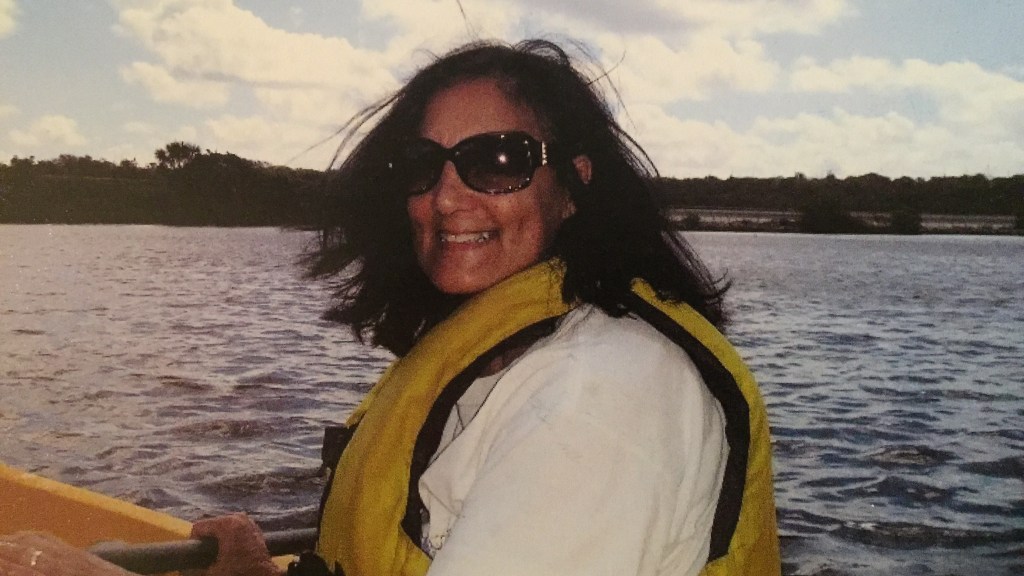
JoAnn recognized her need for Jesus in her life and she accepted the invitation of his love and relationship. She often said that she found rote prayers hard to do. She was much more comfortable speaking with Jesus as she spoke with our kids and me. JoAnn was also willing to admit her mistakes and confess her sins, which she was blessed to have had the opportunity to do twice in the final month prior to her death. JoAnn often told us as her condition declined further that her death would not be an end but just a change of address and that she would be close to us, with us, and that she would love us forever and ever.
Let us take some time today to examine our conscience. Then come to Jesus with a contrite, sorrowful heart for what we have done and what we have failed to do. May we feel his healing hands on our bowed heads and the warmth of his love pouring through us to purge us of our sin and pride and heal us from that which keeps us bound. JoAnn has been at her new address for what will be a year this Wednesday, September 2. She intercedes for us now such that Jesus may guide us as he guided her on how and where we can participate with him in bringing healing, reconciliation, and love to others in our midst, to bring about an “acceptable year of the Lord” (Lk 4:19).
—————————————————-
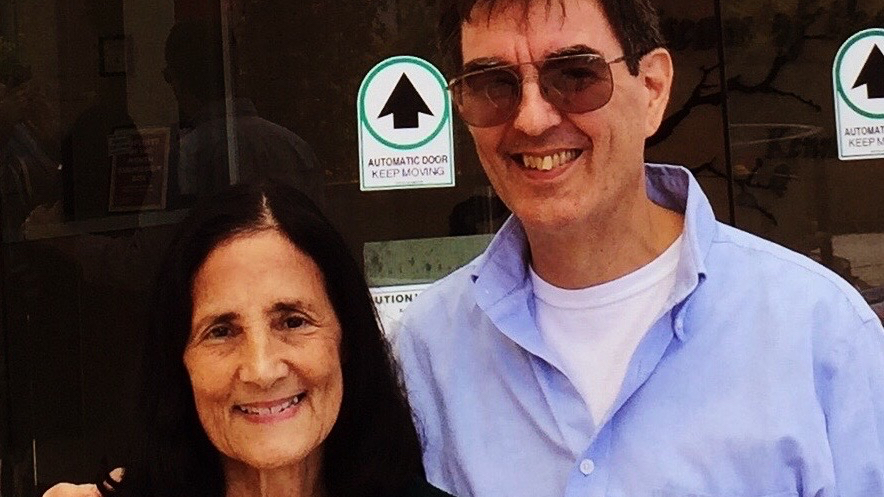
Photo: Just noticed the sign behind us saying “Keep Moving”. No matter what life throws at us, take the hand of Jesus and keep moving and share the love of God with each other!
Link for the Mass readings for Monday, August 31, 2020
Taking up our cross like Jesus will lead us to experience the freedom for excellence,
There is a difference between the freedom of indifference, doing what we want when we want, how and whenever we want and the freedom for excellence which gives us the freedom to excel at some particular endeavor. I have a guitar in my closet that I have had since I was seven. I cannot play it like George Harrison, Eric Clapton, or Jimmy Page. I do not have the freedom to play it because I have only picked it up in spurts over the years.
I do have the freedom to be sharing these words with you as a deacon because I have invested daily the time and energy, required disciplines and sacrifices to be ordained and to continue my practices as a disciple of Jesus beyond ordination.
If we seek the freedom of excellence to be proficient in anything, playing a sport, an instrument, singing, dancing, acting, writing, drawing, pursuing a career, having healthy relationships, being married and a parent, we are required to make a commitment of time, discipline, and sacrifice. We will also be required to take risks, make mistakes, and to embrace the reality that we can continue to grow.
In any of the above examples and any you may think of, consistent time is needed each day. The most challenging part of any endeavor is to begin. Once we actually start, the next challenge is the discipline to stick to the system we have put in place to move toward our goal, no matter the distractions and temptations that may dissuade us. Attaining the freedom of excellence also takes sacrifice because to do anything means we are not able to do something else. During each step of the process, we risk making mistakes, not doing it right, looking foolish. We experience frustration and impatience as we see ahead of us what we seek to accomplish, but the freedom to do just that seems so far out of reach.
Yet, with persistence and consistent effort, we will begin to have brief experiences, breakthroughs in our area of pursuit. We will at times lose ourselves in the moment where we are not only able to play a series of chords, hit that note, make a move, nail a precision shot, or are involved in the joyful experience of engaged communication of mutual understanding, we become one with those actions. From this context from our personal experience of life, we might have a better understanding of the demands of discipleship.
Then Jesus said to his disciples, “Whoever wishes to come after me must deny himself, take up his cross, and follow me. For whoever wishes to save his life will lose it, but whoever loses his life for my sake will find it. What profit would there be for one to gain the whole world and forfeit his life” (Mt 16:24-26)?
Those of us who seek to be disciples of Jesus will need to invest our time daily, be willing to be disciplined and to sacrifice. This is the same as any other endeavor we seek to be free to pursue. Developing our relationship with Jesus is to be our first priority. All else flows from our losing our life in Jesus, mind, body, and soul. We can have all the power, prestige, fame, material gain, pleasure at the tips of our fingers, we may have gained the whole world, but if our fundamental option is our self and our own pride, we will have in actuality forfeited our life. God is our fulfillment; nothing else can satisfy the deep yearning for communion with him that we experience in the depths of our soul, whether we are consciously aware of that truth or not.
Finding our life, being true to who we are, free of that which is imposed on us from without and within, is what Jesus means by taking up our cross. We are to let go of our identity, our masks of who we pretend to be if we are to be free to live a life of integrity and authenticity. Jesus refused the identity of the messiah that others projected upon him. He was not to be a leader of power in the worldly sense, not a warrior king, but a suffering servant, a king of peace.
Jesus would go to the cross and take upon himself the pain, suffering, and sin of the world, and face death head-on, and conquer all even death itself. He did so that we might have life and have it to the full. As St Irenaeus is believed to have written, “The glory of God is the human being fully alive.” What God wants for us is what we want for ourselves deep down. We just need to have the ears to hear, the eyes to see, and the will to risk embracing the wonderful depth of God’s love and put that gift of love into practice in our everyday lives by dying to ourselves and living for others. By doing so we will experience the freedom for excellence to be who we are called to be and experience the joy and fulfillment of being fully alive!
—————————————
Photo: Crucifix in the sanctuary at St Peter Catholic Church, Jupiter, FL
Link for the Mass readings for Sunday, August 30, 2020
St John, guide us to follow the will of God with integrity as you did.
Herodias’ own daughter came in and performed a dance that delighted Herod and his guests (Mk 6:22).
Mark paints a word picture of a family: Herod, Herodias, and their daughter: ancient manuscripts differ as to whether she was Herod’s or Herodias’ daughter. Also, two times, in Mk 6:22 and 6:28, she is referred to in the Greek as korasion, meaning a young woman, as young as twelve years old (Donahue 2002, 198). The setting is the banquet hall of Herod, the tetrarch or prince of Galilee. His high officials, military commanders, and the elites of Galilee were all gathered to celebrate Herod’s birthday. This is a royal, opulent family.
The daughter comes out to dance for Herod. Her dance delights Herod and he grants her anything she wants. Following the counsel of Herodias, she asks for the head of John the Baptist on a platter. The reason for this request was because Herodias held a grudge toward John because he stated to Herod that it “is illegal for you to be married to your brother’s wife” (Mk 6:18). Herod was distressed at the daughter’s request but granted John’s death sentence to save face before his honored guests. The execution was swift, the head of John was brought on a platter, given to the girl, who then brought it to her mother.
This is not the ideal image of the family that we hopefully aspire to. John’s upbringing as we learn from Luke had a different experience. His mother, Elizabeth, and father, Zechariah, were devout Jews. They raised their son as a person of integrity and we can see from today’s reading of Mark the extent to which he would do so. John was willing to give his life, rather than compromise his principles. This stands in stark contrast to Herod Antipas who, with little contemplation about what he was doing, acted pretty quickly in giving the order to end the life of John in such a brutal fashion.
Could there be any two starker images of family life than in today’s Gospel? One family as corrupt, conniving, and malicious as can hardly be imagined and another as faithful, pure, and holy as can be hoped for. Families are not perfect, but most, if not all are a bit messy. We do the best we can to support and love one another. Hopefully, most of our families fall somewhere in between, and hopefully closer to, John’s family than to the Herod’s.
Even when life goes well, it can be difficult and challenging. The best we can do as a family is strive to accept and support each member for the unique gift and person we are, make it known that we are praying and thinking about one another, commit to be present and encourage one another, be willing to forgive one another, continue to communicate with one another, and even when we disagree, may we agree to respect one another.
No matter how bumpy the road of life gets or how high the waves of trials and tribulations toss us about, may we support each other to follow in the line of St John the Baptist to strive to be people of integrity. May we stand up for the dignity of ourselves and others no matter what. Even when we mess up, may we commit to accompany, love, and be there for one another.
For all families, and especially those who are suffering from abuse in any and all of its forms, on this his memorial day, we ask St. John the Baptist to pray for us.
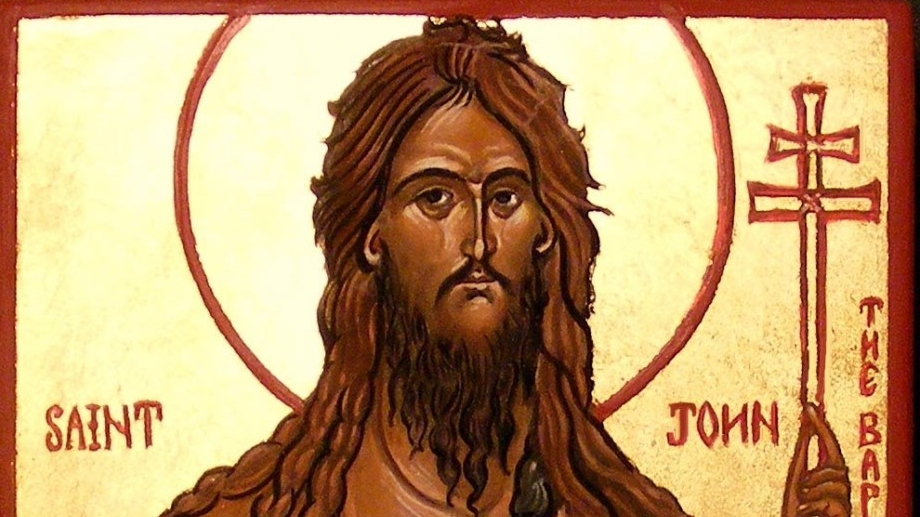
Photo: Icon of John the Baptist accessed from: https://thejoecatholic.org/?p=3700
Donahue SJ, John R. and Daniel J. Harrington SJ. The Gospel of Matthew, in Sacra Pagina Series, vol. 1. Ed. Daniel J. Harrington. Minnesota: Liturgical Press, 2002.
Link for the Mass reading for Saturday, August 29, 2020
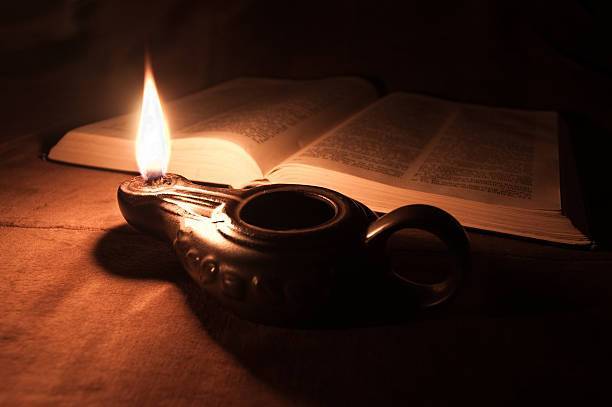
What is the level of oil in our lamps?
“The foolish ones said to the wise, ‘Give us some of your oil, for our lamps are going out.’But the wise ones replied, ‘No, for there may not be enough for us and you. Go instead to the merchants and buy some for yourselves'” (Mt 25: 8-9).
The above verse comes in the midst of Jesus’ Parable of the Ten Virgins. The bridegroom has been delayed in his coming so the virgins fall asleep. When they awake, five are prepared with oil for their lamps and five are not. From the first reading of this verse, we can be struck by the unwillingness of the wise not wanting to share their oil with the foolish.
The key to the lanterns being full or empty of oil had to do with the effort or lack thereof regarding those involved. All have been invited to the wedding feast, some are prepared and some are not. The oil in the parable may represent the invitation to relationship and discipleship with Jesus.
We cannot build a relationship with Jesus for others nor can others build a relationship with Jesus for us. No matter how full our lamps are, no matter how much of a blessing we find in our relationship with Jesus and our faith community, and no matter how we desire Jesus to have a relationship with our family members, friends, and colleagues, we cannot build that relationship for them. We cannot share our oil with them.
Also, if we do not have a relationship, or are resisting going deeper in discipleship, and we see others experiencing the joy, fulfillment, and fruits of a relationship with Jesus, and would like to have what others have, in the same vein, they can’t give us their relationship either. They cannot give us their oil. We need to be open to the invitation of the bridegroom, we need to be willing to develop a relationship, to do our part. Jesus knocks on our door, but if we do not open it and let him in, he will not impose upon our free will.
Two examples may help to bring the point home. In Acts 8:9-24 there is the account of Simon the magician and in Acts 3:6 there is an example from Simon Peter. Simon the magician witnesses the works of the Holy Spirit moving through Philip, Peter, and John. He offers Peter money to be able to do what they did and Peter strongly rebukes Simon. Money can’t buy love, nor can it buy the fruits of the Spirit experienced by those who have developed an intimate relationship with Jesus. Regarding Simon Peter, in the account from Acts 3:6, Peter comes upon a crippled beggar and states that he has neither gold nor silver, but what he did have he would give him: “In the name of Jesus Christ the Nazorean, [rise and] walk.” The man was healed and walked.
Simon the magician’s lamp was empty, because he spent years building himself up, putting himself first, and saw God’s grace as a means for his own self-aggrandizement. Simon Peter’s lamp had been filled with oil from having learned at the Master’s feet, having gone with him through the crossroads, the storms, his own failures, betrayals and humility, and repentance, so to be empowered by the Holy Spirit at Pentecost, and willing to give what he had received to others.
The bridegroom has invited us to participate in the wedding, the union of Jesus and his Church. The time of his return is not yet, but we need to be prepared. May we resist sloth and self-interest, and be willing to fill our lamps by being about the work of developing our relationship with Jesus and in the words of Mary, doing what he tells us!
We can’t fill other’s lamps, but we can invite, pray for, and model for others how to fill their own. We can do this by being present to those in our realm of influence where they are, assist them in their need, share our faith, offer to pray with and for them, invite them to fellowship, study, and worship, be a living witness, and offer the same invitation we have received to fill our lamps to be ready for the bridegroom’s return.
————————————————————
Photo: “Thy word is a lamp unto my feet and a light unto my path” (cf. Psalm 119:105).
Link for the Mass readings for Friday, August 28, 2020
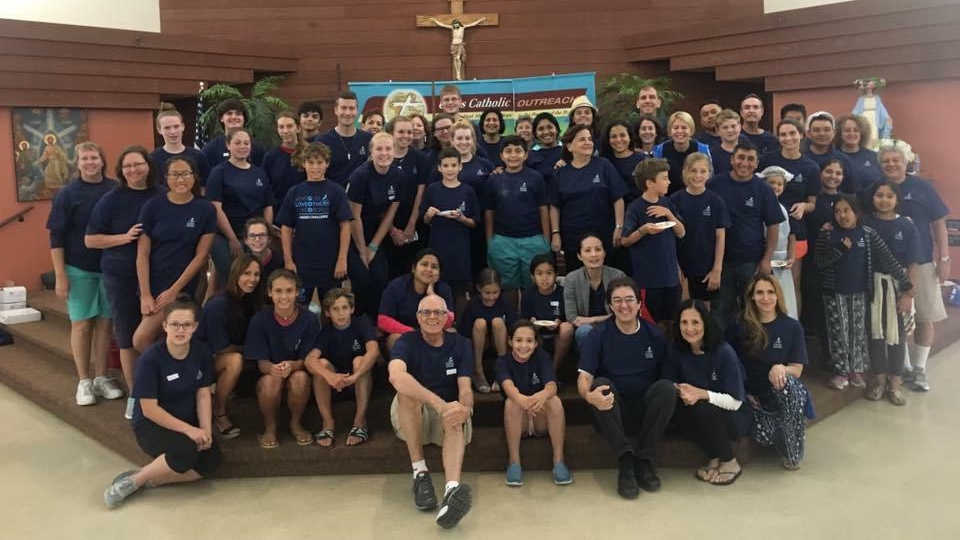
The master has put us in charge to be faithful and prudent stewards.
“Who, then, is the faithful and prudent servant, whom the master has put in charge of his household to distribute to them their food at the proper time” (Mt 24:45)?
Jesus is calling us to be that “faithful and prudent steward” and the household we are to serve is our own homes, churches, communities, states, countries, and world. For the world is our home and those we serve are our brothers and sisters. Jesus’ call is a universal call to solidarity. We are all invited to be united in this effort for and with one another because we are all created in the same image and likeness of our loving God and Father.
God has created us, not as automatons or robots, or drone worker bees. He has created us as unique persons, one of a kind, distinct wonders that have never been nor will ever be again. Within our uniqueness, there is also the gift of diversity. We are not intended to be separate from one another, for God has created all of us to be interconnected, to be loved, and to love. What affects one, affects all.
Jesus clearly emphasizes this distinction in his parable, often called the Judgment of the Nations, when he stated: “Lord, when did we see you hungry and feed you, or thirsty and give you drink? When did we see you a stranger and welcome you, or naked and clothe you? When did we see you ill or in prison, and visit you?” And the king will say to them in reply, “Amen, I say to you, whatever you did for one of these least brothers of mine, you did for me” (Mt 25: 37-40).
Being faithful and prudent stewards means being aware of and willing to attend to the needs of the hungry, the thirsty, the stranger, the naked, those ill, and/or imprisoned, as well as so many others in need. How do we even begin to address the tremendous number of people who are hurting especially during this time of pandemic? First and foremost, we need to resist being limited by numbers, but instead meet and engage with one person at a time. We are to resist judging someone as other but instead see a brother or sister. It is helpful to also resist tribalism and nationalism, and reach out to fellow human beings in Jesus’ distressing disguises. We also need to be more aware of our prejudices regarding ethnicity, race, gender, and/or religion and instead see people in need.
Not all of us will be moved in the same way or for the same cause, but let us be open to God who will guide us regarding how and who best we can serve, help, reach out, and give of ourselves to others. When we have the humility to admit to and confess our prejudices, intolerance, or biases, where we have been unaware or indifferent, God can heal and transform our hearts of stone into hearts of flesh.
As we are forgiven and begin to heal, as we experience the love and mercy of Jesus, we can draw strength from him, begin to see the dignity present in one another, begin to see each person we encounter as God sees them and begin to take steps to accompany and love one another. We will be faithful and prudent stewards when we are willing to respect the dignity of each person we meet, in thought, word, and deed.
Photo: Participating in our first Hunger Challenge collaborative with St Peter and Cross Catholic Outreach a few years ago.
Link for the Mass reading for Thursday, August 27, 2020
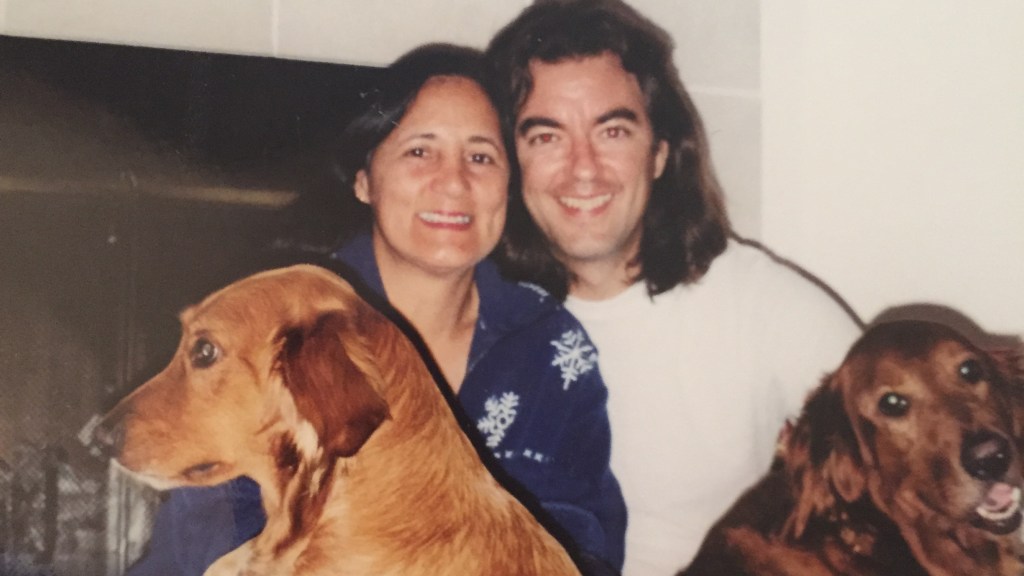
Where is our emphasis, on just the outside, surface level, or developing our mind, body, and spirit?
Jesus said, “Woe to you, scribes and Pharisees, you hypocrites. You are like whitewashed tombs, which appear beautiful on the outside, but inside are full of dead men’s bones and every kind of filth. Even so, on the outside you appear righteous, but inside you are filled with hypocrisy and evildoing” (Mt 23:27-28).
How many of us spend an inordinate amount of time regarding physical externals? Washing, makeup, the right clothes, the correct scents, teeth whitening, plucking, nipping, and tucking. How about time spent exercising through gym memberships, home exercise equipment, physical trainers, sports, stretching, running, or cycling. How about time spent towards a career through education, updating, professional learning, seminars, webinars, and networking. There are other categories that I can add, and the point is that there is not anything necessarily wrong with any of the above in moderation and each in balance is healthy in practice.
Though if external activities are all we are investing our time and energy in, then Jesus has a point. We may “appear beautiful on the outside” with great looks, a body that doesn’t quit, and a career to die for, but what is going on inside? Are we empty, unfulfilled, achieving goal after goal, yet feeling adrift or hollowed out? Do we have all the right social skills and etiquette down, know the right things to say in public, we have friends in the hundreds on our social media accounts, yet we feel alone and not a part of anything meaningful?
Worse yet, do we go to Church, say the right prayers, are active in ministry, we tithe, are members of boards, involved in the community, and doing some great works of charity, but when the door is closed, and no one is looking… what kind of “hypocrisy and evil doing” are we up to? It is easy to stay focused on Jesus chewing out the Pharisees, right now, yet, Jesus wants more for us as well. He shines his light in the imperfections and shadow sides of us as well.
The above represent some of the extremes of external behavior, and I am sure many of us are more balanced in our lives, but we do need to take a good, solid look at what time we invest and where we are focusing our energies. We need to examine our conscience regularly regarding a real assessment of the health of our relationship with God, family, significant friendships in our lives, our vocation instead of occupation, and our service to those within and beyond our intimate circle.
Making time for prayer, study, worship, exercising, eating healthy, discerning, and living out our vocation, and service to others helps to build a foundation for developing the inside, who we truly are, and how God sees us. Making time to rest, renew, and reflect on the core of who we are in the depths of our soul, getting in touch with who God calls us to be, leads contentment and peace. Standing up for who we are and what we believe in, speaking what we believe with confidence and respect while allowing others to do the same, leads to fulfillment and joy. With these points as our foundation then we are more apt to address the externals in a healthier, balanced way, such that we achieve a fuller experience of life, identity, and integrity.
If we spend our time whitewashing the tomb, chasing the finite and material pursuits alone, we will be restless, unsatisfied, and seeking more. Often we will be exhausted creating and maintaining an image of the false self. Instead, we can conform our lives to Christ, be transformed from within, and live a more balanced and integrated life that nurtures, the mind, body, and soul. We will then find meaning, fulfillment, and peace.
Photo: JoAnn, me, Dakota, and Jesse, keeping each other in balance.
Link for the Mass readings for Wednesday, August 26, 2020
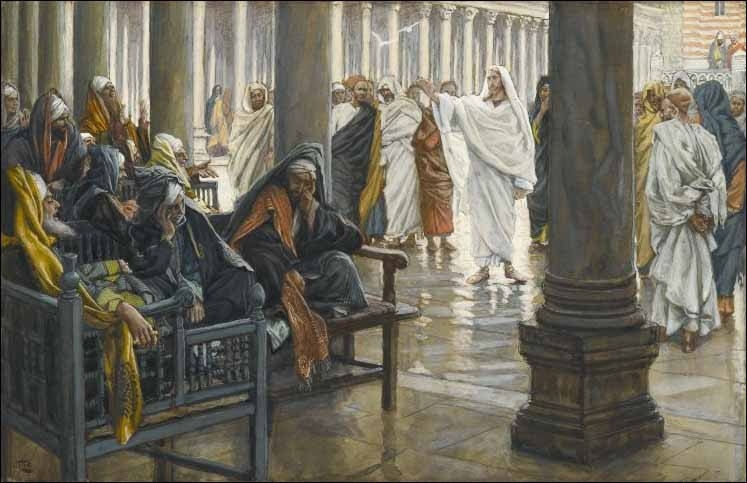
Woe to you hypocrites.
The Gospel readings from the past week have been a ringing denouncement by Jesus regarding the abuse of the leadership and religious authority of his day. This is true especially today, more overtly, as we witness Jesus calling out those scribes and Pharisees who have abused their power and positions: “Woe to you, scribes and Pharisees, you hypocrites. You cleanse the outside of cup and dish, but inside they are full of plunder and self-indulgence” (Mt 23:25).
The most unfortunate part of this Gospel is that the Church today is still not immune from these indictments. Continued reports in the US and worldwide regarding the worst kind of self-indulgence and that is the abuse of children by clergy and cover-ups from those who were placed in positions as shepherds to protect their flocks. This has left a gaping wound in the Body of Christ because of the devastation, first and foremost, to those who have been gravely wounded physically, emotionally, and spiritually, as well as for those families who have accompanied their loved ones through these years of trauma.
Jesus bestowed dignity on the vulnerable youth of his day when he chided his disciples for not allowing the children to be brought to him for a blessing (cf. Mt 19:13-15). Jesus modeled the proper treatment of children and at-risk adults time and again throughout his ministry, and as disciples of Christ, first and foremost, we too are to stand up for and protect the dignity of each person, but especially the most vulnerable among us. There is no defense for these horrific actions, nor the egregious coverups.
The majority of the reports revealed abuses that happened prior to the first significant waves of revelations of 2002. Since that time, many dedicated laity and clergy have been diligently working together, to protect at-risk adults and children, to implement strategies and programs of awareness, to educate parents, children, and all who work with children and at-risk adults in our dioceses across the country.
Yet, as investigations such as the Pennsylvania Grand Jury report unearthed systemic abuse, the greater majority of which happened again prior to 2002, each of us is reminded that each diocese needs to bring to light, be transparent, and open records of abuse as far back as they have them and not wait for others to go digging. Those who have been responsible for acts of abuse, those who have been complicit in covering up their actions or shuffling priests around, no matter their level within the hierarchy, need to step down from public ministry. To those who are still hiding in the shadows, they need to remember that Jesus said, “There is nothing hidden that will not become visible, and nothing secret that will not be known and come to light” (Lk 8:17).
There can no longer be a practice of covering up heinous crimes and abusers to protect the identity of the institution of the Church. We are the Body of Christ, and where one suffers, we all suffer. Jesus Christ promoted integrity over identity. The dignity of the person is to be placed before any institution. We need to pray for, while at the same time provide full access to those who have been abused. This means that they are to be heard, that their claims will be fully investigated, and they will have access to resources for healing, mentally, physically, spiritually, and socially. Part of that process is to allow them to share their stories that need to be told and heard. We also need to continue to be vigilant in protecting settings that provide access to children and at-risk adults from predators.
We need not leave the Church because of those who sin, we all fall short of the glory of God. We need not be paranoid either, but we do need to be clear to put boundaries and proven protective practices in place, we need to be alert and vigilant to the warning signs regarding those who do not respect boundaries, as well as be fully open and cooperative with revealing the abuses enacted in the past.
We also need to be authentic people of prayer, because this is also a spiritual problem. Let us pray for those who have been abused, for their healing, for accountability of abusers, for this darkness to be revealed by the light, and for those who have lost their faith because of the stain of hypocrisy that has tainted the Church. Let us strive to be people of integrity, building a true culture of life, that respects, protects, empowers, and stands up for the dignity of all.
Photo: “Woe to you Scribes and Pharisees” – James Tissot, late 19th century
Link for the Mass reading for Tuesday, August 25, 2020
 Spiritual Stepping Stones