Wonder expands the more we embrace faith AND reason.
Today’s Gospel reading is a sad account. Jesus preached and taught in his “native place”, but for the most part, his words were not received, he did not perform healings, exorcisms, he was not able to bring those who knew him for the greater majority of his life into deeper communion with his Father. The whole reason that he came was to bring light to a world suffering in darkness, and those closest to him refused the invitation such that: “he was not able to perform any mighty deed there, apart from curing a few sick people by laying his hands on them. He was amazed at their lack of faith” (Mk 6:6).
Is our world today becoming more and more like Jesus’ “native place”? Do we take Jesus for granted, if we pay attention to him at all? Many expend more energy on cynicism, taking care of number one, and an uncritical acceptance of empiricism or scientism. Again, a sad state because science is an awesome gift. Science and faith come from the same source, our intrinsic ability to embrace wonder! These two are not incompatible. Authentic faith seeks understanding. A questioning and searching mind are the ingredients for a living, relevant, and vibrant faith and life.
Faith without reason, as well as reason without faith, leads to a more limited understanding of the vast expanse of creation. Scientism is limiting the very gift of science itself because it stops when the questions get really interesting, when the exploration goes beyond the measurable, the sensate experiences as we know them. Faith without reason can devolve into mere superstition.
May we resist setting limits, settling for a minimalist or cynical approach, and the hardening of our hearts, and instead open ourselves up to the limitless possibilities God opens up before us! There is so much to experience in God’s creation if we just slow down and are still enough to experience the wonder of our everyday moments all around us. The Holy Spirit works through each of us when we resist keeping each other at a distance and are willing to encounter and accompany one another. We can experience so much more by embracing our faith and reason, and opening our hearts and minds to the wonder and glory of God, which is the human being fully alive!
———————————————————————–
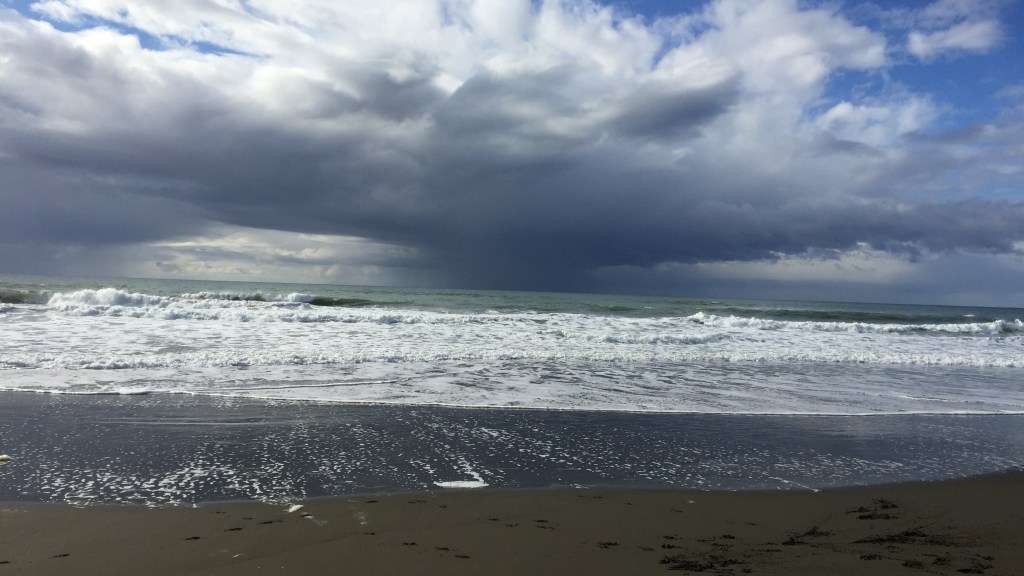
Photo: Fort Funston Beach, San Francisco, CA this past Thanksgiving
Link for the Mass reading for Wednesday, February 5, 2020
“Do not be afraid, just have faith.”
“Jesus, aware at once that power had gone out from him, turned around in the crowd and asked, ‘Who has touched my clothes'” (Mk 5:30)? The woman could have slipped away, she could have stood still and said nothing, no one knew. His disciples were bewildered that Jesus asked such a question with so many pressing about him. But the woman approached with “fear and trembling” and told him the truth. Jesus did not admonish her for breaking a social taboo but publicly acknowledged her faith.
All the while as this scene transpired, Jairus must have been in agony. He knew how close his daughter was to death, and every second counted. Jesus took that limited precious time and engaged with this woman. Just as they were about to resume their journey, and he began to breathe again, the terrible news came that his daughter had passed away.
What might have flashed through his mind at that moment? The time Jesus took to talk with the woman, could that have made the difference? He was a synagogue official and would have known the taboos she crossed to reach out and touch Jesus in public, he knew that in doing so she would make Jesus unclean, she was a woman considered the lowest of low. She was frail and pallid from her condition, at death’s door herself, yet she had mustered more courage and faith than he had.
Jesus said to the man, “Do not be afraid, just have faith” (Mk 5:36). Jairus had just witnessed such faith with the woman healed from the hemorrhage, probably someone until this very moment who he would have shown disdain for. Maybe just maybe, if he could muster the same faith as her, Jesus could bring his daughter back to life. A light shone in the darkness of his despair and the darkness did not overcome it. Jesus indeed healed his daughter, by taking her hand and commanding her to rise and walk, she came back to life.
How many of us have ourselves or have ever known someone who has experienced such great needs as did Jairus, whose daughter died and was brought back, or the woman who had been suffering for twelve years with hemorrhages and received healing? How many of us have experienced the opposite? No healing that we prayed for. We wondered where Jesus was or why didn’t he bother to help? The truth is Jesus is present, though he may or may not have brought about the outcome we seek.
February 2 marked five months since JoAnn died. She was not healed as was the woman with the hemorrhage nor while I lay by her side awaiting the funeral home to pick up her body did Jesus raise her from the dead. Sometimes, I feel like JoAnn will walk through the door like this has all been a horrible dream though I know that will not happen. Yet through each stage, Jesus has been and continues to be present with me as he is with each of us through our pain and suffering, whether we feel his presence or not. Sometimes he allows the unthinkable to happen, of which we cannot even comprehend at the time, to bring about a greater good. Often, we are not able to see that until a later date, when some time has passed, and we have gained some perspective from healing.
I still do not see a greater good at the moment. Ultimately, faith is placing our trust in our God and Father who loves us, who is present to us, and carries us in our darkest hour. Are we willing to be carried? He sent his Son Jesus to us, to walk with us. Are we willing to walk with him? Death is not the final answer. Jesus has conquered death and become the firstborn of the new creation. In this truth there is hope. I trust in the words Jesus spoke to Jairus, “Do not be afraid, just have faith (Mk 5:36). There are miracles in our lives and when we experience them we need to be thankful to God and those who journey with us. In our times of trial and sorrow, it is important to lean into Jesus and one another a little more. And when needed, allow God to carry us for a time.
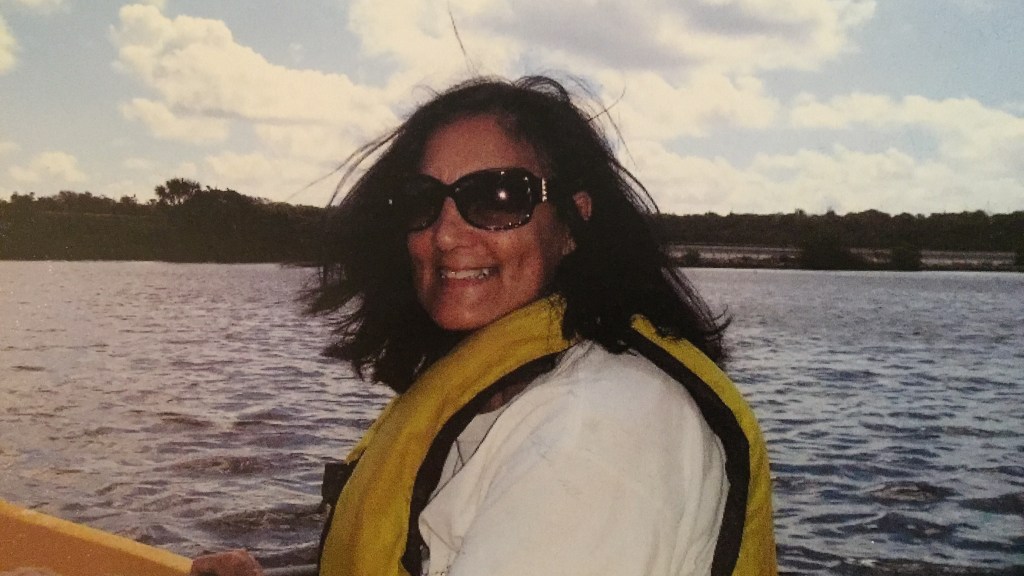
Photo: JoAnn my heart and our intercessor from across the waters.
Link for the Mass readings for Tuesday, February 4, 2020
Jesus is greater than any addiction, we need not run from him but to him.
Today’s Gospel account follows Jesus successfully showing his power over the tumultuous storm at sea. Jesus and his disciples have entered the Gentile territory of the Gerasenes. As soon as they get out of the boat a man possessed by an unclean spirit rushes up to him. He himself was in a worse state than the storm. He called himself Legion as he was possessed by many demons. He had been living in the tombs, away from society, family, and friends, some of whom had made multiple attempts to restrain him, cure him, bring him back to his right mind, but to no avail. The encounter with Jesus ultimately brought about the result of this man “sitting there clothed and in his right mind” (Mk 5:15). Jesus was able to liberate this man from his desperate state. If you have not done so, I recommend reading the full account (Mk 5:1-20).
Many scoff at the healing power and miracles of Jesus, and they certainly would also discount demonic possession. Though rare, there are still cases today. A strict approach of scientism that only accepts the empirical, only that which can be measured by the five senses, discounts not only the divinity of Jesus and the reality of God but any talk of a spiritual realm. This is unfortunate because this is a limited approach to understanding the fullness of creation. We ourselves are both physical and spiritual, and to seek to understand both, helps us to better understand ourselves and the world around us.
Too many today are in the same need of experiencing the liberating power of Jesus as the Gerasene. Just as chaotic and tumultuous, especially among too many of our youth, are those who are consumed and imprisoned by the vice grip of addiction. Family members and friends reach out desperately to help, to provide aid, and find themselves in the same situation as those who sought to care for this man who had been living in the tombs. Somehow this man caught “sight of Jesus from a distance, he ran up and prostrated himself before him” (Mk 5:6). There must have been some ember at the core of who he was that could still move and bring him to Jesus.
May we join in prayer and seek the best means to provide support and aid for all those suffering, bound, and shackled by the wide range of addictions that plague too many today. This growing epidemic damages individuals, families, and friends and could benefit from a unified approach of the best that science, psychology, prayer, and spiritual direction can offer. Each of us is ensnared at some level and seek to be free to feel the harmony and peace we were created for.
Jesus is the light that can reach into even the deepest darkness of internal imprisonment. Yet we must choose, as did the Gerasene demoniac to surrender to Jesus. May we resist the temptation to flee from him, and instead run into his open arms. Resting in the grip of his embrace, we will come to know that we are not alone in our suffering, that our deepest anguish, sin, and wounds can be healed.
Jesus is stronger than any evil that seeks to bind any of us, and we claim victory in his name and by the power of his word for all those who are suffering from any form of possession and/or addiction. May Jesus lead all of us to freedom, to our right mind, and like the Gerasene man who was healed in today’s Gospel account, experience the fullness of his healing whereby we too may go forth to help others to find the same path to redemption, liberation, and restoration.
—————————————————————————————–
Photo by Enrique Aguilar Hernandez from Pexels
Link for the Mass readings for Monday, February 3, 2020
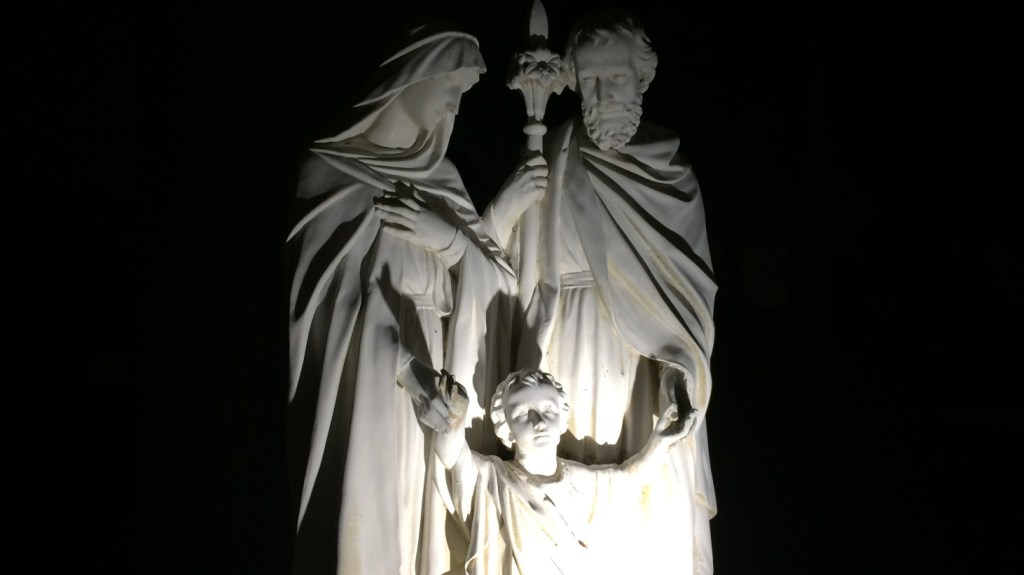
Jesus was dedicated in the Temple to fulfill the promise that God’s glory would return, so to lead us out of darkness into his wonderful light.
Simeon, a righteous and devout man of Israel, had received a revelation from the Holy Spirit that before his death he would behold the Messiah, “the Christ of the Lord” (Lk 2:26). We do not know how long Simeon was waiting, we do not know how old he was when Mary and Joseph brought Jesus to the temple. How many people had crossed his path, how many times must he have turned his head wondering when a family brought a male child to be presented to the Lord, “Is this the one?”
Today we recall the presentation of Jesus in the temple, the day in which Simeon’s waiting, his growing anticipation, comes to fulfillment. “Lord, now you let your servant go in peace; your word has been fulfilled: my own eyes have seen the salvation which you have prepared in the sight of every people: a light to reveal you to the nations and the glory of your people Israel” (cf. Lk 2:29-32). He can now go to his eternal rest in peace.
We can see in the presentation of Jesus more than a pious act though. In this event, the glory of God had returned to the Temple in this infant. What Simeon said and experienced as he held up the infant, is still true for us today. Jesus the Christ has come to us, to lead us “out of darkness into his wonderful light” (1 Peter 2:9), for, Jesus is the Temple, the embodiment of the Living God, where heaven and earth meet, where the divine and human are one.
May we spend some time in prayer today imagining ourselves holding the infant Jesus in our arms, as did Simeon, looking into his eyes, and allowing his smile, his giggle, to fill us with his unconditional love and mercy. As we adjust and cradle him in the crook of our arm and reach a hand to him, he grasps our finger. In that simple touch, we experience a warmth that radiates through our entire being melting all anxiety, doubt, and/or fear. Anything that keeps us bound to darkness and sin is loosed such that we may feel the freedom of forgiveness and reconciliation. From this moment of experiencing Jesus in our time and place, may we give our life to him so that we too may radiate his light, his love, his mercy, and forgiveness to others. To love those whom Jesus sends us to encounter today.
Photo: Holy Family at St Peter Catholic Church
Link for the Mass readings for Saturday, February 1, 2020

“Quiet! Be still!”
On display in Mark’s recounting of the calming of the storm at sea is the humanity of Jesus. He has finally succumbed to the exhaustion from being pulled and touched, challenged and accused, the constant interaction through his service of teaching, healing, forgiving, and exorcising, that he not only fell asleep on the boat but was in such a deep sleep that he was as if dead, even during the height of the storm. Also, we see his divinity expressed when his disciples wake him and he calmed the storm immediately with just his word: “Quiet! Be Still” (Mk 4:39)!
The disciples have grasped his uniqueness and have accepted him as their rabbi, their teacher, but they are still grappling with the reality that Jesus is at the same time the Son of God. The disciples will continue to experience his miracles, but it will not be until after his resurrection and ascension, that their faith will find the maturity to participate in the fullness of the ministry Jesus was grooming them for.
Storms arise in our lives, sometimes just as unannounced and as quickly as the squall from today’s Gospel. A health issue, an injury, an economic shift, a conflict, the effects of a mistake in judgment, or a sinful choice, all can arise at a moment’s notice. We, like the disciples, can sometimes only hold on so as not to be tossed into the sea, or bail out water so we don’t sink. But sooner or later, we need to turn to Jesus to seek his aid. A helpful point to keep in mind that I have learned from one of our past retreat directors, Fr. RB, is: “Sometimes the Lord calms the storm, and sometimes the Lord lets the storm rage on and calms his child.”
To understand this statement is to begin to mature in our faith. No matter the severity of the storm, we are to trust in Jesus. He remains present with us, accompanies us, and does not leave us alone. Whether we brought the storms upon ourselves or they arose from another source, Jesus does not leave us to fend for ourselves. When we remember to call on Jesus, he will either calm the storm or bring us a sense of peace as we travel through it empowered by the assurance that he will give us that which we need to ride it out to the other side.
We are also to allow Jesus to work through us such that his presence will be there for others in their storms. We are to be that conduit of calm assurance for those who need Jesus but do not know him or are focusing on the anxiety and fear instead of him. We do this when we are willing to enter the chaos of another, choose to be present and accompany them in their trials and allow God to happen. Through our open hearts and minds, the divinity and peace of Christ will be present in our midst as we lean on and embrace one another.
Photo: Peaceful morning at Cardinal Newman yesterday.
Fr RB Williams home page and link to his homily – http://www.rbwords.com/wttw/date/2018-01-27
Link for the Mass readings for Saturday, February 1, 2020
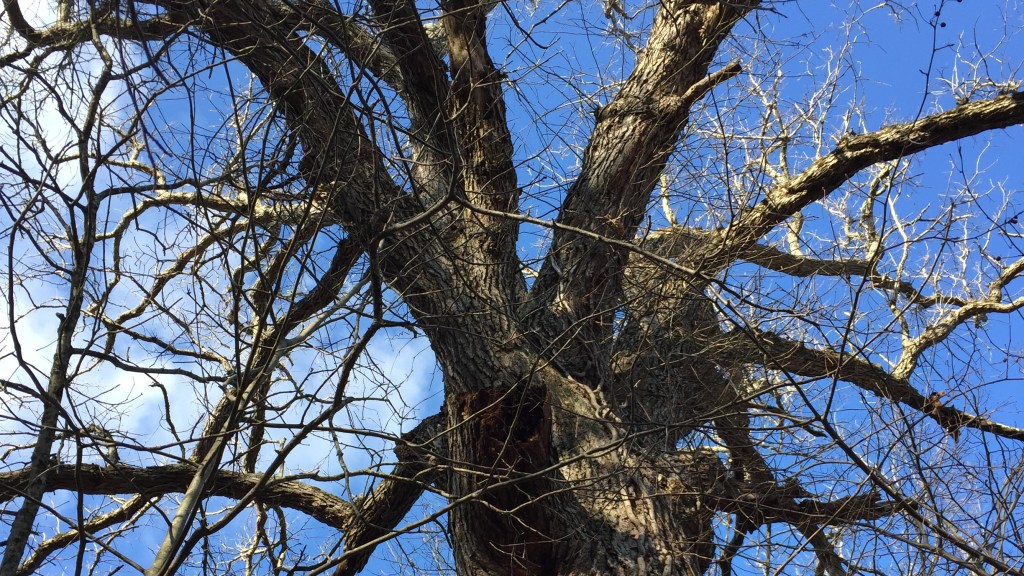
As we would plant an acorn in the soil, God plants his word in our soul.
Two parables are presented by Jesus today in the Gospel of Mark. Both are presenting what the kingdom of God is like. The first presents a man who sows seeds, and the second is a mustard seed that is planted. In both cases, the seeds germinate and go through the process of becoming mature plants. The kingdom of God is like these plants in that God works through the smallest of and many times, unnoticed beginnings. Also, God’s timing is not our timing. In our rapid-paced world of instant access, we would do well to slow down.
God not only begins small, and on his own timetable, but he is often working beyond the realm of our awareness. This is evident in the first parable offered by Jesus: “This is how it is with the Kingdom of God; it is as if a man were to scatter seed on the land and would sleep and rise night and day and the seed would sprout and grow, he knows not how” (Mk 4:26-27). This is not to say that God has set everything in motion and is indifferent or despondent to his creation. Quite the opposite. God has a plan and has been intimately engaged in guiding his creation and in each of our lives as well. He revealed this truth to Jeremiah: “Before I formed you in the womb I knew you, before you were born I dedicated you” (Jeremiah 1:5). God is present to us, in a relationship with us, whether we know it or not. He quietly invites us to participate in his plan.
The beauty is that even though God has no need for us, he invites us to know him, to participate in the spreading of his kingdom. Just think of someone who you have, for the longest time, wanted to meet. If the opportunity arose to spend time with that person, how excited would you be? We have the opportunity to do so with the Creator of all that exists, and not just today, or tomorrow, but for all of eternity.
God has created us to know him, to love him, and to serve him. He invites us to share in his relationship, his work of salvation history in simple and subtle ways in this life. Are we making an effort to be aware, are we willing to watch and pray? Are we willing to place ourselves in a posture so better to receive his Word as well as his Silence? Just as an acorn that is sown matures and grows over time into the mightiest of oak trees, so may our relationship with our Loving God and Father also grow and mature that we become one with him in this life and into the next for eternity.
Photo: Oak canopy from a tree behind my parent’s house that I have watched grow since I was five. I visited Grandfather Oak again this past Christmas. It is wonderful to watch God’s hand at work.
Link for the Mass readings for Friday January 31, 2020
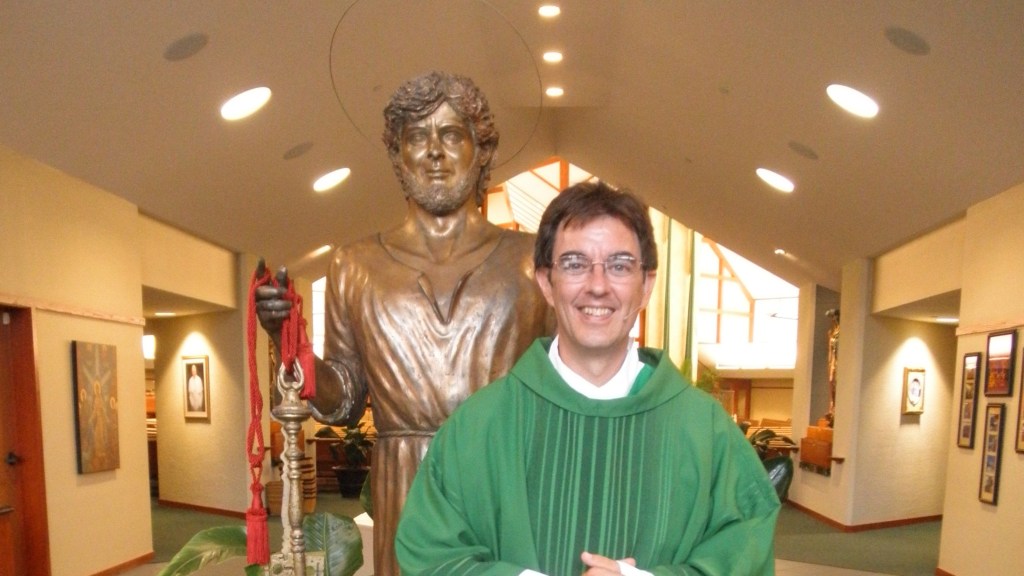
Sharing the light of Jesus can begin with something as simple as a smile.
Jesus said to his disciples, “Is a lamp brought in to be placed under a bushel basket or under a bed, and not to be placed on a lampstand” (Mk 4:21)? The obvious answer is no. A lamp is brought in to illuminate a room so one can read, find something misplaced, and it can even provide some warmth if needed. It would be absurd to do the things with a lamp that Jesus presented in today’s Gospel.
We are like lamps in that we are invited to shine the light of Christ to dispel the darkness of our fallen nature and world. This is the path of a disciple. Yet, many of us do not allow the light of Jesus to shine through us. Here are a few reasons why this may be so.
To draw the analogy of the lamp into our modern electric lamp instead of an oil lamp of Jesus’ day, one reason a lamp does not work is that it is not plugged into its source. Are we plugged into Jesus? Are we spending time in prayer, worship, study, building relationships, and serving God and one another?
Another reason may be that the light bulb is not screwed in all the way or the bulb has gone out. We may be plugged into the source of Jesus, but we are just going through the motions. We show up for Mass or church physically but are not engaged in any meaningful way. We spend time in prayer but we are just saying words or going through the motions without listening to God or willing to allow him to challenge us to go deeper. We have a nice pile of spiritual reading, apps, and DVDs, but the books are only gathering dust, and the apps and DVDs were not opened since they were first accessed or purchased.
Another reason a lamp may not work is that it has been damaged. Many of us may be broken or wounded. It is hard to risk sharing the light when our trust has been manipulated, misused, and/or abused. We need not despair or lose hope. Jesus meets us in our pain, our injury: emotional, psychological, physical, and/or spiritual, and offers his healing and restorative power so we too can shine his light again.
We are called and empowered by Jesus to shine his light. If we haven’t been doing so because of our woundedness, may we be open to his healing. If we aren’t plugged in to the life and source of our being, let us ask for God’s grace to be more disciplined and dedicate ourselves to spending more quality time engaged in prayer, worship, study, and fellowship. If we feel like we are in a rut, we are just going through the motions, and/or our spiritual and relational life is dry: We must consider how to rouse one another to love and good works (Hebrews 10:24). A kind act, a listening ear, or a smile is the simplest way to begin to allow the light of Jesus to shine through us to others. We just need to begin!
Photo: For me, the simplest way to share the light of Jesus is to offer a smile.
Link for the Mass readings for Thursday, January 30, 2020
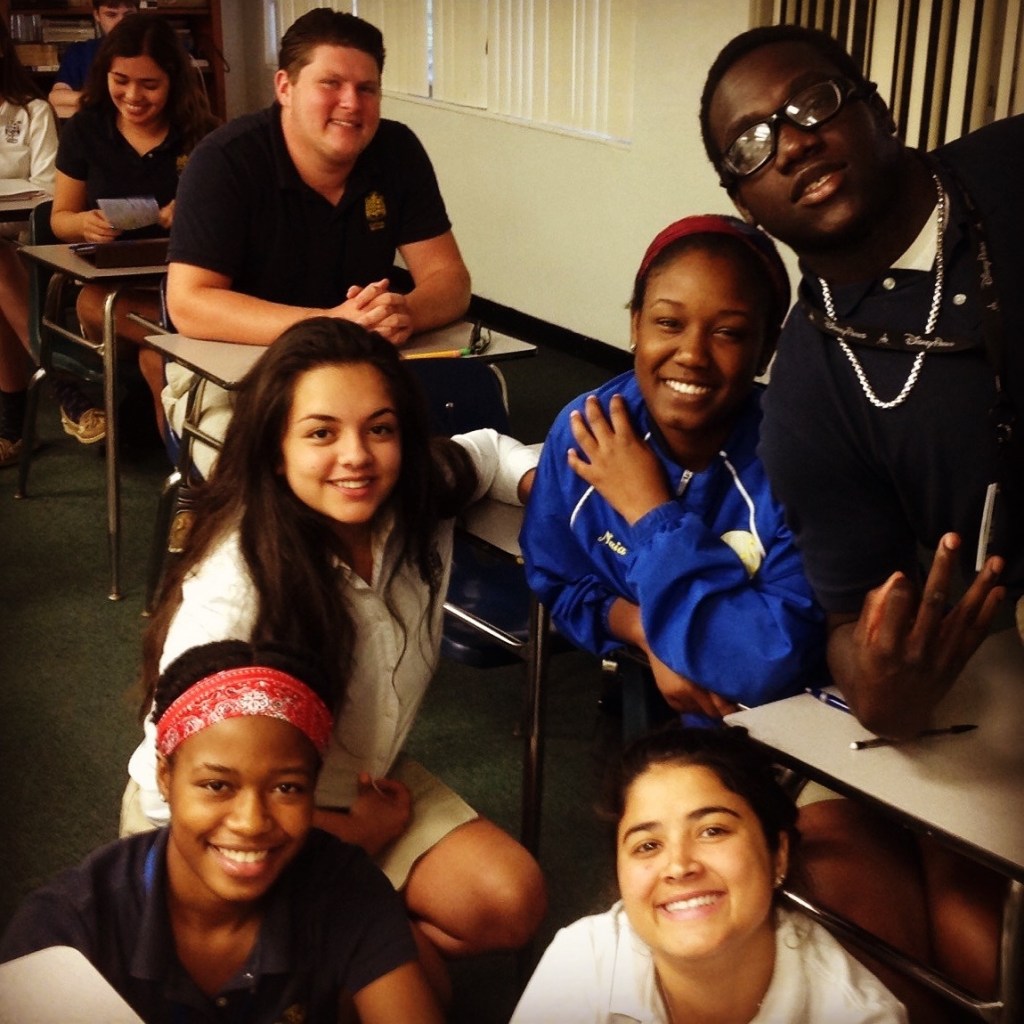
The seed sown in rich soil will bear much fruit.
Each of the elements of the Parable of the Sower is worthy of meditation and reflection. A very good practice would be to take some time to reflect on each aspect and ask what limits the germination and growth of the seeds God has sown in our lives, and also what helps us to bring about successful growth and a successful yield. When did we experience God’s word but have it almost immediately snatched away; when did we gain an insight, experience joy from his word and guidance, but did not in any way put the learning into practice; how many times have trials, hardship, and lack of courage or outright persecution, robbed us of stretching out of our comfort zone, and we withdrew, not wanting to risk growth?
Many of us can relate to: “Those sown among thorns are another sort. They are the people who hear the word, but worldly anxiety, the lure of riches, and the craving for other things intrude and choke the word, and it bears no fruit” (Mk 4:18-19). Distractions pull at us from within and without, from one second to the next. So much seeks to undo us, tear us down, and drive us into states of anxiety, despondency, cynicism, and depression. So many apparent goods and false truths entice us to feed our desires for power, wealth, fame, and pleasure. Material temptations offer promises of fulfillment but shortly after purchase leave us feeling empty. All the while, there is so much good that needs to be done and so much work to do. Even if we are willing to look beyond ourselves to be of help, we may not even be sure how to serve or where to begin.
Jesus offers us in the Parable of the Sower a promise that the seed sown in rich soil will grow to be a mature plant that bears much fruit. To bear fruit we need to create rich soil. This means breaking into hard ground, the hardness of our heart, prejudgments, and pride, by spending time and being present with not only those close to us but also with people who we keep at arm’s length. We also need to be willing to face our fear of rejection and be willing to encounter a person with understanding and respect instead of a preconceived notion of who someone is, then we can begin to diffuse false judgments, prejudices, and fears.
We often react from a defensive posture or give in to our immediate impulses, when instead we need to be more mindful. We do so when we take a moment to inhale deeply, discern each thought, situation, purchase, and action, to pray and seek God’s guidance, and to rely on trusted family, friends, colleagues, and classmates for guidance. We can learn from past experiences and resist making any rash or reactive decisions. Regarding service, it is best to start small, apply the same points just mentioned, and engage in reaching out in our own small way, but with, intention, confidence, and persistence.
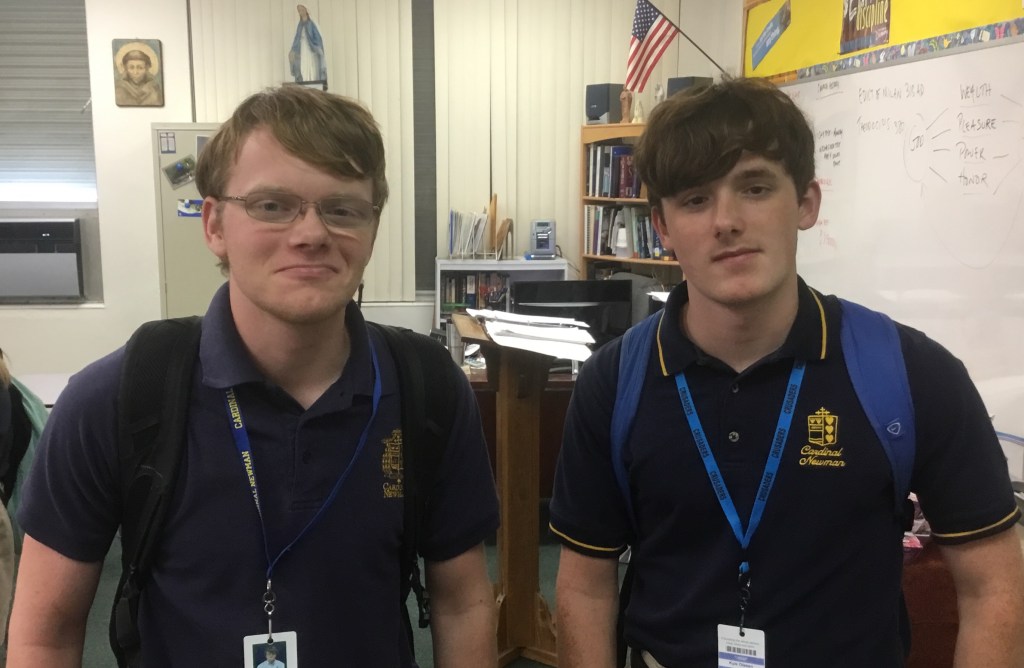
These are just a few ideas that can help us start to uproot weeds and overgrowth, to begin to remove some rocks and soften the earth, and enjoy the process of preparing some rich soil – our heart, mind, and soul – to better receive and nurture the seed of the love of God that he sows, which is Jesus his Son. In time, as we surrender more to his will, continue to be nourished by his word, accept and put it into practice, and trust in him and not the temptations that entice, distract and disrupt our growth, we will see sprouts begin to grow, and soon mature plants that will “bear fruit thirty and sixty and a hundredfold” (Mk 4:20).
——————————————————————
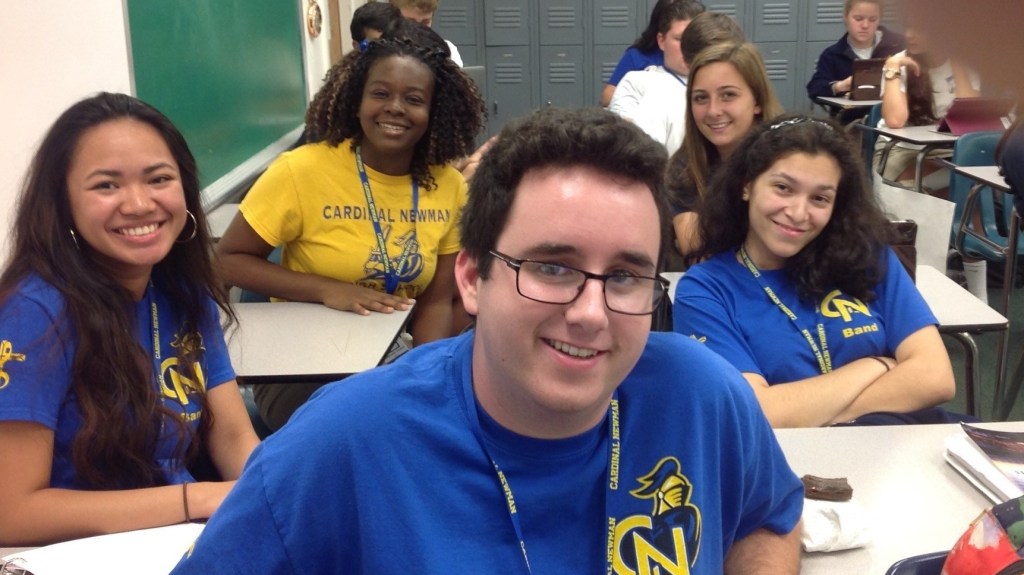
Photo: Class of 2017 models of creating rich soil!
Link for the Mass readings for Wednesday, January 29, 2020
 Spiritual Stepping Stones