
Let us commit to accompanying and supporting one another as did the Holy Family.
We have no evidence that the vocation of Anna, Simeon, the Magi, or the shepherds changed in any way after their encounter with the baby Jesus. What did happen in each of their lives was the same as what happened with Luke’s account of Anna today; they told the story of their encounter. They, like Anna, shared what they experienced with anyone who would listen.
At the end of today’s account from Luke, Joseph, Mary, and Jesus “returned to Galilee, to their own town of Nazareth. The child grew and became strong, filled with wisdom; and the favor of God was upon him” (Lk 2:39-40). No ticker-tape parade, no giving the key to the city, and no gala ball awaited the Holy Family when they entered Nazareth. They went on to live very simple lives.
The pattern of how God works, how his kingdom begins is like a mustard seed, like the seed that is sown, or like yeast. It starts small, quietly, and simply. God works through the everyday events of our lives, often unseen. We so often look for the mighty, majestic, and grandiose. We often believe we need to do great things, and often do nothing. St Mother Teresa directs us to do, what she learned from the Little Flower, St Therese of Lisieux, little things with great love.
As the Christmas Season continues, we are experiencing that life has already or has begun to shift; families and friends have come and gone or are readying to go, vacation days are coming to an end. May we not allow the encounter that we have experienced with Jesus in celebrating his birth, as well as our coming together, just fade into the busyness of life again. Let us appreciate the gift we have been given in our relationships of family and friends, and renew our commitment to keeping in touch and supporting one another. Life can be hard and can change in an instant because it is fragile.
As the Holy Family begins their journey to Nazareth, and we begin to return to our normal course of daily living, may we be open to the quiet and gentle ways of how God is working in our lives. As seeds are planted so to germinate and sprout, as the yeast begins to cause the dough to rise, may we commit to support and care for one another, to be aware and reach out to those in need, to be open to expressing our need for help and allowing others to assist us. When we do so we will start to see God working in our lives and begin to recognize the simplicity of divinity operating within the midst of our humanity. The Holy Spirit is inviting us to be transformed in this new year, to kindle in us the fire of his love so it may spread to others. We are to watch, pray, and cooperate with his will if he is to renew the face of the earth through us.
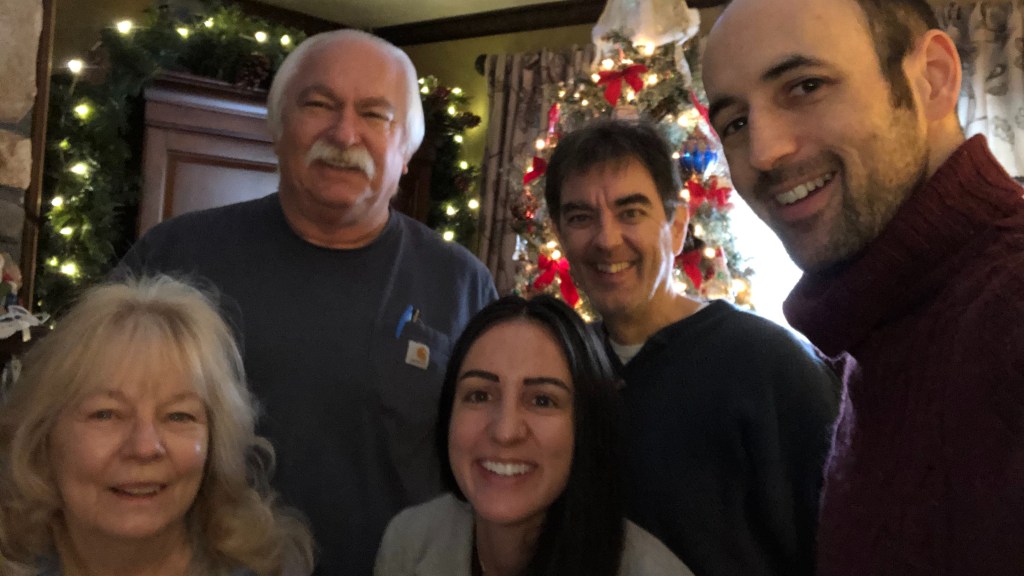
Photo: First Christmas back home in Connecticut in about 20 years
Link for today’s Mass readings for Monday, December 30, 2019
Do we see the Holy Family in today’s refugees?
When the magi had departed, behold, the angel of the Lord appeared to Joseph in a dream and said, “Rise, take the child and his mother, flee to Egypt, and stay there until I tell you” (Mt 2:13).
The scene of the nativity is not a romantic one. Mary gave birth to Jesus in a stable or a cave, which was not the most hygienic of situations as this is where animals were kept. After the shepherds and kings come to pay the baby homage the situation does not get much better, for as we read in today’s Gospel from Matthew, Joseph is urged by an angel to flee. The reason for the urgency of their departure we read about yesterday. Herod had ordered the death of all male children under two years of age.
With the words of the angel and their forced relocation to Egypt, Jesus, Mary, and Joseph became what we would call today refugees. They were fleeing persecution. So many families today are unfortunately in a similar situation in which they are fleeing to save their lives because their countries are torn by war, violence, and/or they do so because of the threat of persecution.
So many are fleeing the horrors of the Syrian civil war, the instability, and violence in other areas of the Middle East and northern Africa, as well as in our hemisphere, especially in the Central American countries of Honduras, Guatemala, and Nicaragua. These countries, as well as too many others, are part of the tragic reality that has resulted in the largest number of families fleeing their countries since World War II.
The Son of God could have easily been born in a palace, among a family with power and stability, yet he chose to be born among the poor and displaced. His earliest days were ones marked by instability and danger.
“Jesus wanted to belong to a family who experienced these hardships so that no one would feel excluded from the loving closeness of God. The flight into Egypt caused by Herod’s threat shows us that God is present where man is in danger, where man is suffering, where he is fleeing, where he experiences rejection and abandonment; but God is also present where man dreams, where he hopes to return in freedom to his homeland and plans and chooses life for his family and dignity for himself and his loved ones” (Pope Francis homily, 12-29-13).
It is no wonder that Jesus teaches clearly later in the Gospel of Matthew 25:31-46 that we will be judged on how we treat the least of his brothers and sisters. For how we treat those in need is how we treat him. Not only does Jesus invite us to open our hearts and minds to those exiled from their homes and seeking refuge, but we are to also reach out to those families in need in our own communities.
To do so, we need to be aware and willing to be of help, to provide welcome, hospitality, hope, promise, and what support we can give. Jesus entered our human condition so he understands our trials, he is present to be of support for those of us in need as well as those in positions to help. As we celebrate the Feast of the Holy Family, may we pray for those families in need, as well as how we can be more aware and seek concrete ways we can play our part to be of help.
——————————————-
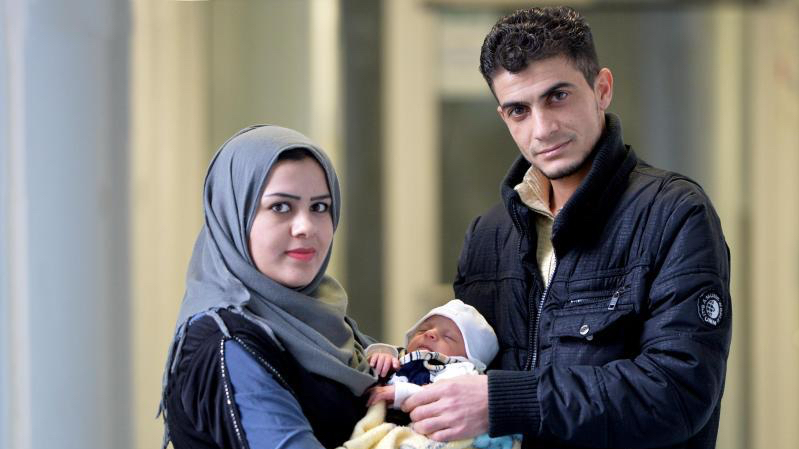
Photo: Syrian refugees, Mamon and Tema Al-Hamza with their baby Angela who was born shortly after entering Germany in December 2015 (Credit: WEB.DE).
Link for the Mass readings for Sunday, December 29, 2019
This Christmas, reject fear and instead “embrace and protect human life.”
The magi come from the East seeking the newborn king. They follow the natural sign of the star, and they are led into Jerusalem. They lose or turn away from the star and seek instead the ruler, Herod, to help them find the child. But after meeting with Herod they again see the star and come to Jesus, do him homage, and share their gifts. Warned in a dream not to return to Herod with the location of the newborn infant, they instead depart for their home another way. The magi had encountered the infant king and would share the news of his birth with joy. A sign that the good news of Jesus is for all nations, for all peoples.
King Herod, as in the time of Moses with the Pharaoh, has a different reaction: Fear. Herod fears to lose his title, power, and prestige. “When Herod realized that he had been deceived by the magi, he became furious. He ordered the massacre of all the boys in Bethlehem and its vicinity two years old and under, in accordance with the time he had ascertained from the magi” (Mt 2:16). Often when we are led by our fears, we react with violence.
We see in today’s Gospel two very different reactions to the birth of Jesus. In coming before him, the magi become more open in their posture, leaving a different way, and moving on to share their experience with others. King Herod closes in upon himself in a defensive posture of protecting his false self and disregarding the dignity of others even to the point of ordering the death of infants.
This Christmas Season how do we respond to the birth of Christ? Do we grasp at and cling to fear or do we accept the invitation to let go of the fear and prejudice?
May we choose with the magi and Joseph to follow God’s lead that respects the dignity and value of others. Pope Francis pointed out on this feast day of the Holy Innocents in 2016 that “Christian joy does not arise on the fringes of reality, by ignoring it or acting as if it did not exist. Christian joy is born from a call – the same call that Saint Joseph received – to embrace and protect human life, especially that of the holy innocents of our own day. Christmas is a time that challenges us to protect life, to help it be born and grow.”
Life is a precious gift yet it is fragile and vulnerable. This Christmas Season as we continue to enjoy our family and friends, tell those we care for that we love them, may we also be willing to be more open to the cry of the innocent, the cry of the poor in our midst. Jesus, please touch our hearts that we may be willing to reach out to the need of the holy innocents of our own day, for they are family. Help us to resist assuming a posture of fear, and instead to be more open to will the good of others by allowing you to love others through us.
———————————————————————
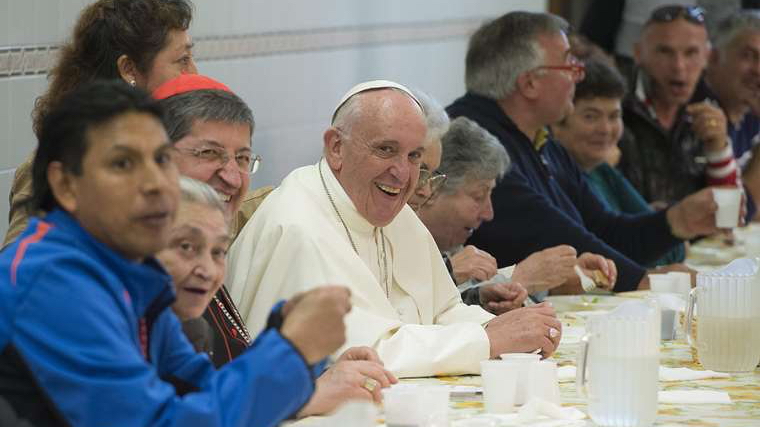
Photo: Pope Francis in 2015 eating lunch with the poor – L’Osservatore Romano
LETTER OF HIS HOLINESS POPE FRANCIS TO BISHOPS ON THE FEAST OF THE HOLY INNOCENTS
Link for today’s Mass readings for Saturday, December 28, 2019
There is good news and it is not that we have a gift return receipt!
Jesus Christ is born for us. Jesus Christ dies for us. Jesus Christ conquers death and rises again for us. Because of our place in time, December 27, 2019 AD – Anno Domini, In the year of our Lord, we are capable of experiencing the Paschal Mystery of Jesus: his life, suffering, death, Resurrection, and Ascension into Heaven. The important question we need to answer is, “Does this new fact, this new reality in human history make a real difference in our lives?”
Christmas did not end two days ago. We are still in the Octave of Christmas. The Church celebrates two octaves in the Church liturgical calendars, Christmas and Easter. These eight days are celebrated as such to impress on us the solemnity of the event of remembrance. From the vigil celebration of Christmas Eve on December 24 to January 1, the Solemnity of Mary the Mother of God, we celebrate the significant event of the Incarnation, the Son of God becoming one with us in human history. The Masses celebrated within the Octave of Christmas, as well as the readings of Evening Prayer in the Liturgy of the Hours, reflect the celebration of Christmas Day each day for the eight days. It is like having a week-long birthday party.
If we are solely focused on gifts, the returning of gifts, and celebration apart from the celebration of Jesus’ birth, if we are removed from the liturgical cycle and rhythm of the Church, it is easy to fall into the post-Christmas blues because it does feel like everything is done but the returning of gifts and getting a good after Christmas deal. We hear Christmas music coming through many radio channels for weeks before Christmas, but at some point on Christmas Day and definitely the following day, they stop. This is when the music of Christmas ought to begin!
A cure for the post-Christmas blues is to be thankful and rejoice in the Gospel, the Good News, that Jesus changed human history and we are a part of that human history of transformation. In today’s Gospel reading from John, Mary Magdalene shared that Jesus was no longer in the tomb. Peter and James ran to see, John arrived first, and then Peter. Peter went in and saw an empty tomb except for the burial clothes. When John entered after Peter, “he saw and believed” (Jn 20:8).
Do we see? Do we believe? The Apostle John came to realize and embrace the gift of the Paschal Mystery: Jesus has been born for us, he suffered, died, rose again and conquered death for us. His, Mary and Peter’s lives were transformed and ours can be too. This is something to celebrate, not just two days ago, or just today, but for eight days, each and every day! “O Come let us adore him, O come let us adore him, O Come let us adore him, Christ, the Lord!”
————————————————————–
Photo: Christmas Eve Mass at St Peter last year.
Link for today’s reading for Wednesday, December 27, 2019
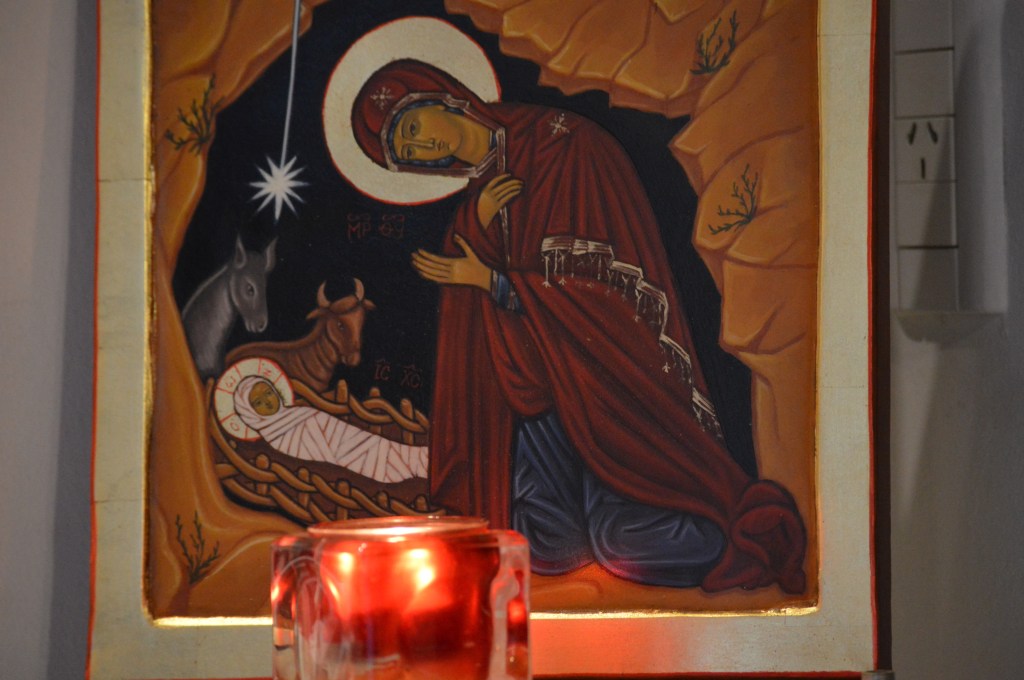
The Light of Christ has come among us, may we not fear and hide from it but embrace and spread it!
“You will be hated by all because of my name, but whoever endures to the end will be saved” (Mt 10:22).
Why are we talking about being hated the day after Christmas? Because Jesus, this baby whose birth we just celebrated is “the light that shines in the darkness” (Jn 1:5). The very reality of Jesus is that he is the light that exposes darkness, he is the very embodiment of Love that exposes hatred.
Jesus exposes the truth of those dark places within our own hearts, minds, and the very depth of our being. Yet many of us turn away or reject the light, not aware that it is an invitation to healing and to wholeness. We wince at the luminous brightness of his light and resist the intimacy of the love he seeks to share. We have so often faced so much of the opposite; hurt, pain, betrayal, and lack of understanding or acceptance, that we assume a defensive crouch to protect our false sense of self, and as time passes we become ingrained in our pride and our posture of ego.
Yet, to be fully alive, we need to embrace the light, not hide from it. When we are open to the healing touch of Jesus and receive the gift of his light in our life, we begin to die to our ego, we begin to replace our actions of vice with actions of virtue. Once we allow ourselves to be loved by Jesus, we begin to recognize that we are turned within our self, and then we can adjust our posture and begin to open ourselves to him. We also begin to recognize that we are not the center of the universe. We then will be able to love, to will the good of the other.
As we follow the model of John the Baptist and become less so that Jesus becomes more in our lives, we will face the same rejection that Jesus faced. We will be labeled crazy, out of step, simple-minded, irrational, and worse, as St Stephen found out, whose martyrdom we celebrate today. Yet we are to resist returning to a defensive posture, we are to refuse to react in kind, but instead, be present and allow God to happen. We are to assume a posture of openness, accepting the person where they are and as they are, and share the same transformative mercy, love, and forgiveness of Jesus we have received from our attacker.
Change, maturation, and growth are not easy. That is why we are called disciples. We are to be disciplined and to persevere, but we need to remember that our redemption does not come from our own doing or willing it to be so. Our healing, restoration, and transformation come first and foremost from an invitation to receive the blessing of Jesus, an invitation to receive the healing salve of his love, mercy, and forgiveness. May we be willing to be healed and transformed from our bias, prejudice, hatred, and selfishness. May we be willing to be conformed to Jesus and so step out of our comfort zones, and with courage be more loving, merciful, and forgiving with our family, friends, and enemies.
Transformation is not a one-time event, Christmas is not just a day, it is not just a season. Christmas is a way of allowing Jesus to enter into and transform our lives each and every day, each and every moment, with each and every decision. When we are tempted with impatience, call on the name of Jesus and take a few deep breaths. When we are tempted to judge, may we see the baby Jesus in the manger, weak, vulnerable, and in need, so to see the one we are about to judge with understanding, mercy, and love that wills their good. When we are tempted to react negatively or defensively, let us visualize ourselves kneeling before the Christ child as we surrender our will, our ego, so to share our point of view as an invitation, not as an imposition, and allow others to do the same. May we be able to disagree while at the same time respect the dignity of the person that we are open to dialogue with.
May each day going forward into the new year be a new beginning committed to being open to receiving the light and love that Jesus has come to bring, so to be healed by him and so be willing to serve him, as well as see Jesus in one other. Let us persevere in sharing the light, love, mercy, and forgiveness that Jesus gave us at his birth and continues to do in our everyday experiences.
————————————————————————–
Photo credit: Ritalaura cathopic.com icon picture taken in St Michael the Archangel Parish, Recreo, Santa Fe, Argentina
Link for today’s Mass readings for Tuesday, December 26, 2019
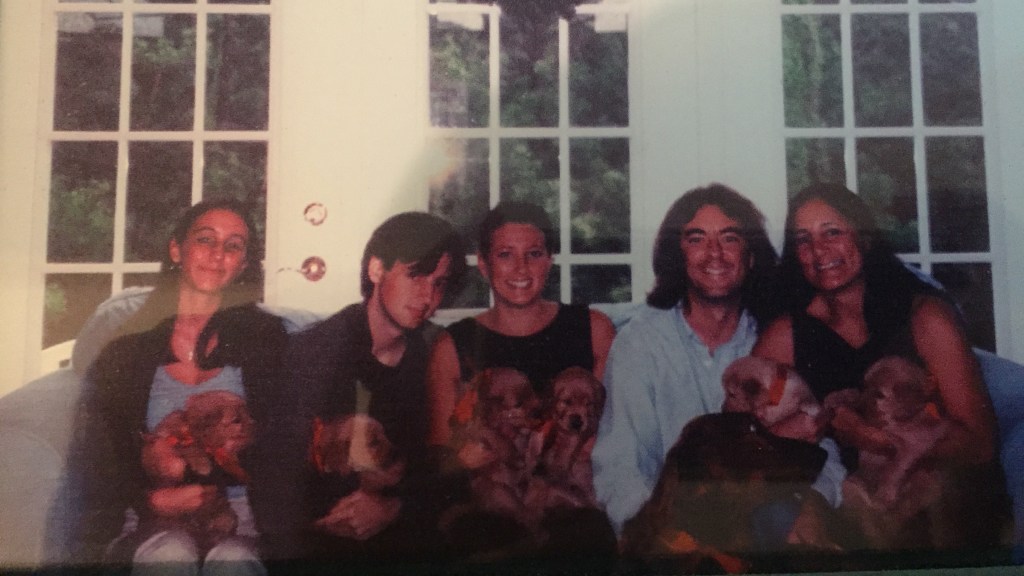
Merry Christmas!
My prayers are with all of you who are reading these words. May God bless you and all you hold close to your hearts. Life is short even in the best of circumstances. Be present, supportive, understanding of, patient with, empower and love one another. Merry Christmas!
Photo: One of JoAnn’s favorite Christmas pictures!
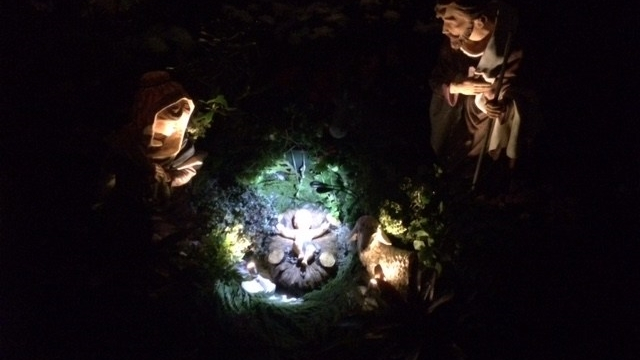
The Word becoming flesh means something significant in our lives!
“And the Word became flesh and made his dwelling among us” (Jn 1:14).
If there are ever words to meditate and ponder upon these are them! The danger is becoming complacent or indifferent to the reality that they present, or to the idea that this is just any other day that we just endure and go on to the next day. Instead, may we embrace the promise and invitation they are meant to convey to us as individuals, as a people, and for all of creation.
The Word, Logos in the Greek, who was, who is, and who always will be, the Second Person of the Holy Trinity, has become one with us. We are the minutest of minutest speck of specks present in the whole of the cosmos. And yet, we have been graced by the presence of God who became man for each and every one of us, each individual person, so we can be one with him. He became human that we might be invited to become divine through our participation in his life.
The Mystery we celebrate today is that God took on flesh, becoming fully human, while at the same time, remaining fully divine. He did not just appear to be a man for a time and cast off his humanity like a cloak. The Son was conceived in the womb of Mary, developed as you and I did, and when born let out a gasp and a cry indicating that the savior was born to us. Joseph and Mary gazed in wonder at the gift of their son, the gift of the Incarnation for the whole world.
Christmas Day is the celebration of new life. Not just the birth of any baby, but through his coming into the world, a new beginning for humanity and creation. We do not just celebrate the baby who would become a great teacher and moral template, but the coming of our Savior, the reality and the hope that we may be wounded and even a bit been broken, but not undone, not unmade but saved from our slavery to sin. God’s grace is greater than our worst mistake, misjudgments, and most grievous faults.
Though darkness may appear to reign and there may be a temptation to buy into anxiety, fear, and desperation, today we celebrate that “A light shines in the darkness and the darkness did not overcome it” (Jn 1:5). This is a day to rejoice, a day to recommit to the light, to the baby who would later call himself, “the way, and the truth, and the life” (cf. Jn 14:6).
Let us embrace the gift of our humanity, the gift of our families, biological and beyond, as we embrace this baby wrapped in swaddling clothes, for he shows to us the truth and realization that: “We cannot save ourselves. We can only open ourselves to the hope that comes to us from without, from others, ultimately from one Other” (Lohfink 2014, 255). The One whose birth we celebrate today: “The Light of the human race” (Jn 1:4).
——————————————————–
Photo: The Nativity scene before our altar at our parish of St Peter
Lohfink, Gehard. No Irrelevant Jesus: On Jesus and the Church Today. Collegeville, MN: Liturgical Press, 2014.
Link for today’s Mass readings for Monday, December 25, 2019

Jesus is the light that shines upon us, freeing us from darkness and the shadow of death.
“In the tender compassion of our God, the dawn from on high shall break upon us, to shine on those who dwell in darkness and the shadow of death, and to guide our feet into the way of peace” (cf Luke 1:78-79).
This promise of the Holy Spirit is spoken through the father of John the Baptist, Zechariah, and this evening at the Christmas Vigil we begin to celebrate the fulfillment of those beautiful words.
God’s tender compassion has surrounded us and has been a part of us since before our conception. He knows the number of hairs on our head and he knows each one of us by name. Totally transcendent, infinite beyond our comprehension, yet he knows each one of his created beings intimately. He cares for us, guides us, and invites us to experience his joy and the fulfillment of who he has created us to be.
The ultimate love he expresses is that our relationship is based on our free will, our choice to say yes or no to the relationship with him he offers us. He gives us the freedom to choose anything but him. Some would say, he should just make us follow him. That would not be love, but tyranny. The light of God enters our being from the light of his Son. We can recede back into the darkness or walk into his brilliant light to be empowered and transformed by his love for us.
When we accept the invitation to enter into a relationship and to follow God’s guidance we will better be able to see the darkness within ourselves that prohibits us from experiencing the fullness of the light that brings us his peace. We need to choose to allow the light to dawn in every aspect of our being, our wounds, our prejudices, our defense mechanisms, our comfort, those areas where we deny the truth or cling to that which has already gone.
May we prepare our hearts and minds as we celebrate the gift of the incarnation one more time not to withdraw or run from but to run to the “dawn from on high,” that shines on us, “who dwell in darkness and the shadow of death, and to guide our feet into the way of peace.” The closer we are to God, the more we experience his peace, that peace that surpasses all understanding, and the more we can share his light and peace with others in this new year to come.
Photo: Final days of Advent in Connecticut
Link for the Mass readings for Tuesday, December 24, 2019
 Spiritual Stepping Stones