How are we related?
He said to them in reply, “My mother and my brothers are those who hear the word of God and act on it” (Luke 8:21).
There are many popular genetic testing kits that are advertised on TV and through the internet. People have asked me is it possible to be a blood relation to Jesus. Jesus’ reply today can help you to save some money. What is important is not a blood relation with Jesus, but for “those who hear the word of God and act upon it.” God is to be first, even before family. We may experience a subtle shudder from this statement, but to those of Jesus’ time, it would have been apoplectic. Family meant everything in the Ancient Near East.
Jesus is not making the point that we disregard family but he is teaching us that if we are to be authentically present to our family this will come about best by following the will of God. As we deepen our relationship with Jesus and put his teachings into action, we begin to bear the relational fruits of the Spirit. Would not our familial relationships be much better if we were more loving, joyful, peaceful, patient, kind, generous, faithful, gentle and practiced self-control? Jesus taught and showed from his own life that the path to fulfilling and intimate relationships flourish when we put God first because as we grow closer in relationship with him we also do so with those around us.
Another point we can glean from Jesus’ response in today’s Gospel is that our “family” is to transcend bloodline, tribe, and nation. Any of “those who hear the word of God and act upon it” is spiritually akin to Jesus the Christ. The point is not that we may have a genetic, lineal relation with Jesus, but that when we live and act according to his Father’s will, we are part of the universal family of God’s grace and mercy and our relationship with him and one another grows as we continue to bear the fruits of the Spirit. As brothers and sisters in Christ, we can act with more caring and kindness, seek common ground through dialogue, be more willing to walk and accompany one another and seek to understand not to judge those who are different. The bottom line is that we are to love one another as Jesus loves us!
I have been blessed to experience the fruits of this teaching first hand. As I have grown closer to Jesus, I have not only grown closer in relationship with my immediate family but have also been blessed with a larger extended family through the communities of St. Peter Catholic Church, the Diocese of Palm Beach, Rosarian Academy, and Cardinal Newman High School. So many of whom JoAnn and I have been so grateful for in their outpouring of love, prayer, and support through JoAnn’s illness and most recent death three weeks ago.
————————————
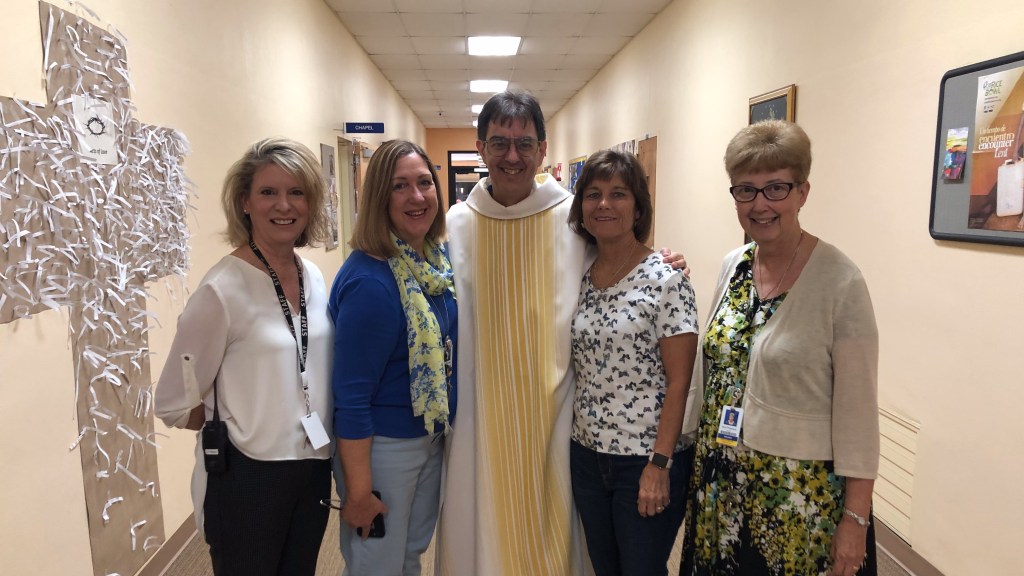
Photo: Together with my sisters in Christ at CN after our last morning liturgy before I prepared to leave to be with JoAnn in California.
Link for the Mass reading for Tuesday, September 24, 2019

Let us allow the light of Jesus to shine through us to others.
Jesus said to the crowd: “No one who lights a lamp conceals it with a vessel or sets it under a bed; rather, he places it on a lampstand so that those who enter may see the light” (Luke 8:16).
God blesses us freely without cost, he gives himself to us. He has done great things for us and he is the source of our joy! We do not earn nor is there anything that we can do to gain God’s grace. But we can lose the gift we have been given. This happens either by refusing what has been offered, or once accepting and receiving, not doing anything with our gift. If we are people of faith in name only, but not followed by action, we are concealing the light we have been given.
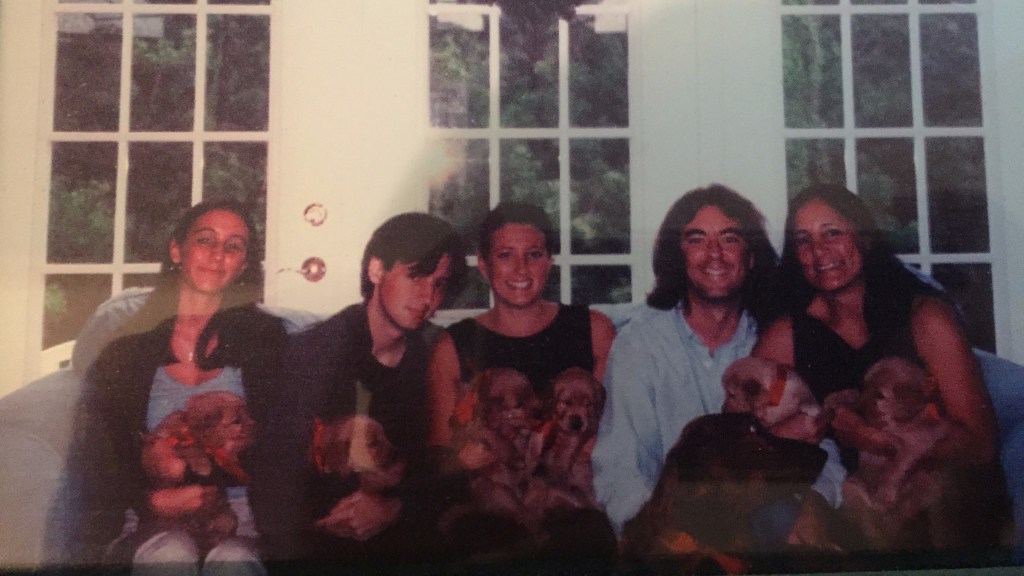
Since our Golden Retrievers have passed away, the walking I had done with them has been almost non-existent. Premature aging of my heart, weight gain, lower back and body ache, as well as a series of pulled muscles over the course of last year, were all subtle hints that my lack of attention to exercise was exacting a cost on my health. This past week, I started to stretch daily again and plan to begin to implement a series of exercises that can help to turn this situation around. It is amazing that I can feel aches from just walking a few miles over the past few days.
The same can be said for our faith. If we do not exercise our faith, we will receive signs of spiritual atrophy. To not even acknowledge the presence of God in our life, the free gift of his invitation to be in a relationship with him, we will experience limitations in our lives. For whether we believe in God or not, we hunger to be in communion with him and one another, so we will be looking for other apparent avenues of happiness that will fall short of fulfilling us. If we do accept that there is a God, yet don’t participate in worship, fellowship, service, and prayer, we are not much better off. I can believe that my car will get me to where I want to go, but if I do not put the key in the ignition, turn on the engine, put the car in drive, I will remain stationary.
If we claim to be people of faith, we need to put our faith into action. That means daily we need to spend time in prayer, reading the Bible, studying our faith through spiritual reading, CDs, DVDs (I at first wrote cassettes and videotapes!) and/or podcasts. We need to consistently participate in worship, the sacraments, and be engaged in service to one another. As we do so, we will begin to reflect Jesus to others and so be able to see God at work in our everyday experiences and better collaborate with him in all we do. In allowing the light of Jesus to shine through us, we also need to resist the tendency to privatize our faith, while at the same time resisting getting in someone’s face. Instead, we need to be present, caring, understanding, supportive, and willing to accompany one another, even others of no or different faith traditions.
Jesus has given his life for us, and he continues to be present to us. May we be open to being conformed today and each day by his love and mercy. We do so by consciously turning away the temptations of sloth, indifference, prejudice, and fear, and instead seek to encounter one another and build relationships. Jesus is willing to enter the chaos of our lives. May we too be willing to do the same for one another by seeking in each interaction to radiate the presence of Christ’s light, so to shine with actions of patience, understanding, support, joy, and hospitality in such a way that anytime we come together, God happens.
hoto by Gursharndeep Singh from Pexels
Link for the readings for Monday, September 23, 2019
Pencils in God’s Hand
“A rich man had a steward” (Lk 16:1). So begins Jesus telling his parable of the dishonest steward. Very simply a steward is someone placed in charge of overseeing something. In this parable, the steward was placed in charge of overseeing the rich man’s affairs. The point of Jesus in this parable is that we are to be stewards given the task to oversee God’s affairs.
To be successful stewards we must remember who we are. The steward in the parable squandered the property of his master. He was not adequately fulfilling the charge he was given. Most likely because he was serving himself and his own needs instead of those of his master and as Jesus would later state, “No servant can serve two masters” (Lk 16:13).
For us to be good stewards, we must agree with the foundational principle that God is God and we are not. Maybe a pithy statement but if we don’t get this point right from the start we are going to be in trouble. That is exactly the misstep with Adam and Eve. They were tempted and fell when they grasped at what God freely had given. Instead of excepting the gift of their humanity, their role as stewards, they sought to define their own path, they put themselves in the place of the master, instead of the steward, and there can only be one master and that is God.
When we place ourselves in the role of the master in the sense of being our own God or forcing God, from our perspective to fit into our image, then we have problems. We can see the effects of this fallen reality on full display in our world today. The reason why Jesus never sinned was that he never forgot who he was. Jesus is the steward we are called to be. His mind and heart are open to following the will of God. “Though he was in the form of God, Jesus did not deem equality with God something to be grasped at. Rather he emptied himself and took the form of a slave, being born in the likeness of men” (Philippians 2:6-7).
Jesus, though he was divine, did not grasp at his divinity, but embraced the gift of being human and that meant he was willing to be the steward and not the master, most profoundly so in the Garden of Gethsemane when he asked that the cup of his death be taken away from him, yet he was willing to submit to the will of his Father.
Being the steward and not the master is not an easy place for us to be because so many of us are not willing to relinquish control. When we give up control though and turn it over to God we can feel safe in the assurance that God has our best interest in mind. St. Mother Teresa put it best when she sought just to be a pencil in God’s hand.
What helped JoAnn and me through the journey of the cross that she carried with the cancer was that we let go of the outcome. We were open to a miracle, we sought the aid of doctors and specialists, but we were also open to the reality that this was her time. This did not make the path any easier, nothing about this cancer was easy, but through the midst of it, we felt the peace of God a greater majority of the time.
This is a helpful reminder to me that there is a place for sorrow in JoAnn’s death, but there is a greater place for joy in her victory over death claimed for her by Jesus. As I was charged with JoAnn’s care, so to do I need to continue to be a pencil in God’s hand each day. We need to continue forward, as JoAnn is doing now in a more profound way, as his stewards because there is only one master, who is God, and there is much work still to be done and the laborers are few.
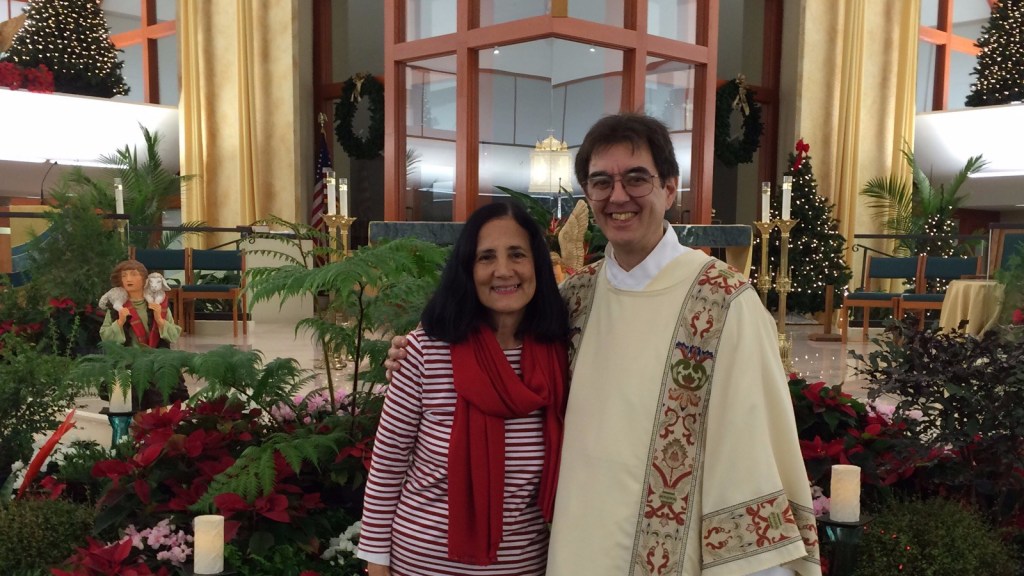
Photo: Christmas a few years back
Link for the Mass readings for Sunday, September 22, 2019
Jesus calls us as he did Matthew. Are we willing to follow?
“While he was at table in his house, many tax collectors and sinners came and sat with Jesus and his disciples” (MT 9:10).
We as the Church, we as followers of Jesus, still have much to learn from Jesus. Today’s reading provides another wonderful example. Once Jesus begins his public ministry he is constantly on the go. Going to where? Meeting people where they were, in the midst of their daily lives as he did with Matthew in today’s Gospel reading. And what is the response to Jesus calling Matthew, a tax collector, and then partaking in table fellowship with other tax collectors and sinners? The Pharisees question the disciples about his practice and curious onlookers follow at a distance. But to those who have, maybe for the first time in their lives, been respected as fellow human beings, feel hope. A hope that there actually may be a path leading in from the peripheries. A hope that they no longer have to be on the outside looking in. A hope that they, for the first time in their lives might finally belong.
Jesus is shown time and again encountering the person as they are in their present circumstances and the chaos of their lives. He welcomes, is present to, and embraces the person as they are. He invites people to be part of something greater than their self, to actualize their potential and embrace a life of meaning and purpose. The only requirement is to be willing to be loved, to be willing to be human, to be willing to be free, and once experiencing this encounter, willing to share what they have received with others.
Do we: deny or mask our own fears, stoke our own pride believing that we can take care of ourselves without the help of anyone else, seek false truths and the glittering lures of power, wealth, pleasure, and honor for our security and satisfaction, that in the end leave us empty, attached, and/or addicted? Or are we willing: to have the humility to recognize our sinfulness, our need for Jesus and receive his love, so to let go of our bondage to false illusions of security, and realize that we are, at the deepest core of our being, a living, craving hunger and desire to be loved by God and others, so to love in return?
If we are willing to risk, to be vulnerable, to open our heart to Jesus we will experience the love, fulfillment, and belonging we seek in the very depths of our soul. This is the fulfillment that no other pursuit or person can bring. We do this best as Jesus did, by being willing to enter into the lives of others, by resisting judgment and accepting another as they are for who they are, by being present and willing to accompany our fellow brothers and sisters. For as Jesus said, “I desire mercy, not sacrifice” (Mt 12:7). Mercy, as I have quoted Fr. James Keenan, S.J. before, “is the willingness to enter into the chaos of another.” Jesus is willing to do so for us. Are we willing to be loved by him, to be called by Jesus like Matthew, so we can love others in the midst of their chaos as well?
——————————————————
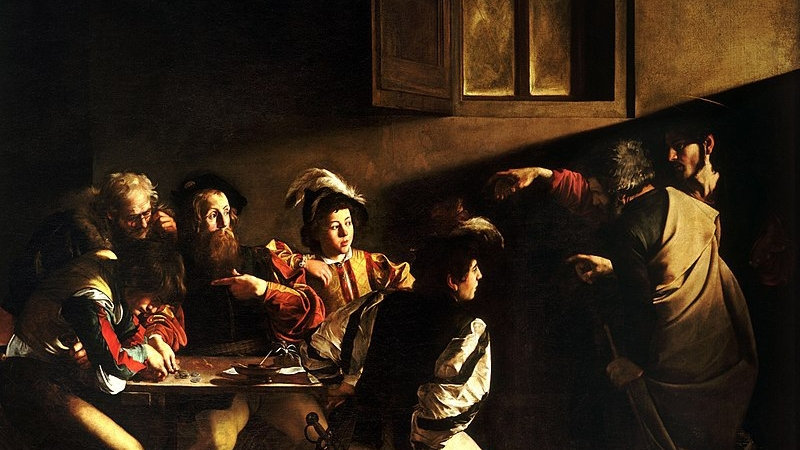
Painting: The Calling of St. Matthew, Michelangelo Merisi da Caravaggio, 1600
Link for the Mass readings for Saturday, September 21, 2019
Discipleship is about relationship.
Accompanying him were the Twelve and some women (Lk 8:1-2).
A simple statement to be sure, but very significant in how Jesus again is showing us how to live our lives as followers, disciples of him. Jesus, as I have written many times, is fully human and fully divine. What he has done and is doing as the Son of God incarnate is to draw close to us in our humanity, as a human being, so that we can enter into a relationship with him and his Father through the love of the Holy Spirit, thus becoming one with him in his divinity.
From the beginning of his public ministry and throughout, he is inviting people to participate in his life and the kingdom of Heaven which is at hand in his very presence. Time and time again Jesus does so by building relationships with people. This is how Luke can write the verses that Jesus was accompanied by the Twelve and Mary Magdelene, Joanna, and Susanna. These were real people and real relationships he developed.
Jesus invited people to experience and build a relationship with him. Christianity is not a Lone Ranger religion, it is not the survival of the fittest, and Jesus did not teach that we have to pull ourselves up by our own bootstraps. We are created by God to be in communion, to be in a relationship with him and one another, and that means we need to accompany and empower each other.
We are to go out, encounter, and get to know one another by making time for each other, and hearing the stories of our tragedies and our triumphs. It means resisting the temptation of withdrawing into our own bubbles and taking the risk to be vulnerable with one another. Relationships are messy, but they just fall apart when we decide to go it alone.
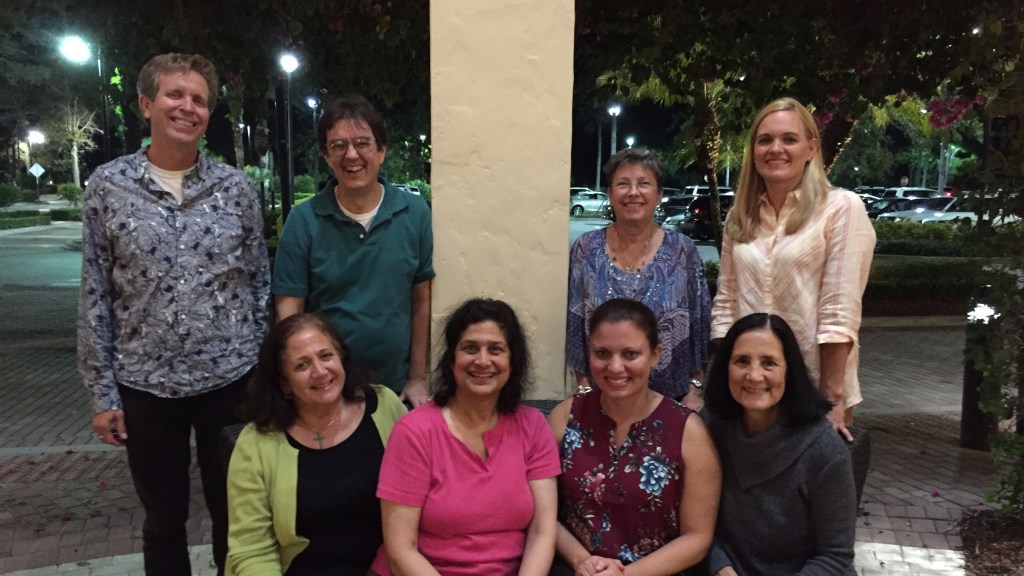
JoAnn and I experienced this gift of fellowship in a powerful way over the past two and a half years when we became a part of a small group at our Church. The eight of us met weekly, learned about our faith, yes, but more importantly built relationships by being willing to encounter and respect each other even when we disagreed, and share the stories, the good, bad and the ugly, of our lives. We forged such a bond that when JoAnn and I were planning her funeral, we each agreed without hesitation that each one of the members of our group would play a significant and intimate part in her funeral Mass.
Being willing to encounter, accompany, risk, and forge relationships grounded in respect and love for Jesus and one another, where no person is left behind, is what our faith is all about.
Photo: Our small group getting together last year to celebrate two years of fellowship.
Link for the Mass readings for Friday, September 20, 2019
The one who confesses contritely more is forgiven more and thus able to love more.
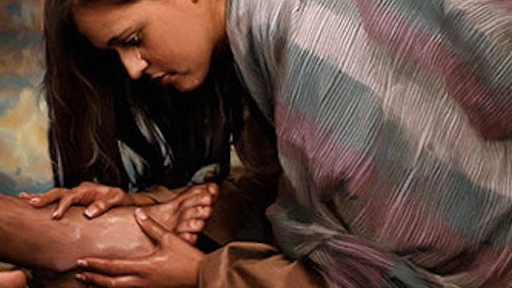
Bringing an alabaster flask of ointment, she stood behind him at his feet weeping and began to bathe his feet with her tears. Then she wiped them with her hair, kissed them, and anointed them with the ointment (Lk 7:37-38).
Logistically, to our modern minds, the setting of this verse may appear to be confusing. How could this “sinful” woman be standing behind Jesus such that her tears would fall on his feet? This could be confusing to us because when we think or imagine someone sitting and eating, they do so by sitting in a chair. Thus the feet would be toward the front of the person.
During the time period Jesus lived, the customary practice when eating was not to sit at all but to recline. Thus, the woman was standing behind the feet of Jesus as he reclined, and her tears fell on his feet. She then knelt down, dried his feet with her hair, and then anointed Jesus’ feet with the ointment she brought for him.
Today’s Gospel account is a simple but powerful scene of contrition. This is the posture we are to approach Jesus when we have sinned. We are not to rationalize, deny, ignore, or come grudgingly forward when we are caught and held accountable for our sin. We are to feel true contrition or sorrow for the sins we have committed because the healing presence of Jesus leads us to a place of compassion and understanding for the hurt we have caused others through our sinful actions.
Unfortunately, there are too many leaders in the secular as well as the church who assume the posture of Simon the Pharisee in this account. They puff up their chests in righteous indignation over the sins of others, while not being transparent and forthcoming with their own sinful choices and behavior. Using instead their means of power, prestige, and places of honor, not to serve and empower others, but to hide and protect themselves from being held accountable, and/or justifying and rationalizing their own weaknesses and vices.
In so doing though, they are not aware of the depth of their own sin and thus to “the one to whom little is forgiven, loves little” (Lk 7:47). One is not forgiven because God is not willing to forgive, but because he will not go against our free will. If we are unaware or unwilling to bring our sins forward in a contrite manner, we are cutting ourselves off from the healing forgiveness of God. But if we, like the woman in today’s Gospel account, are willing to bear our soul with humility and sorrow we will not only be forgiven but experience a deeper outpouring of God’s love. The one who confesses contritely more is forgiven more and thus is able to love more.
Would that each of us really grasped this gift of grace that God offers us. What if instead of hiding from, being in denial of, rationalizing, or justifying our sin, we embraced it and sought the healing forgiveness of Jesus. In opening up our hearts and minds to the forgiving and purifying love of the Holy Spirit there is a pain, as there is in any healing, but also freedom, when we are able to do as the woman in the Gospel did today. When we trust Jesus as she did with our deepest and darkest sins, we too can be healed so to be freed of the shackles that bind us and to love as we have been loved. God loves us more than our worst mistakes, but we can only know that when we confess and are forgiven of them.
Photo: accessed online
Link for the Mass readings for Thursday, September 19, 2019
Embracing change is necessary to authentically living the Gospel.
“To what shall I compare the people of this generation? What are they like? They are like children who sit in the marketplace and call to one another, ‘We played the flute for you, but you did not dance. We sang a dirge, but you did not weep'” (Lk 7:31-32).
In today’s Gospel, Jesus convicted those who held a narrow view of who was a true follower of God. He illustrated this by sharing the image of a flute being played and no one danced, thus when times of joy arose, there was no celebration, and when the funeral dirge was sung, they did not weep, they did not mourn. Jesus then tied the analogy to his present condition where there were those who did not accept the ascetical practices of fasting and the call to repentance from John the Baptist, nor did they accept the inclusive table fellowship of Jesus.
In our own time, we have encountered those that are not pleased beyond their own narrow focus and who suffer from tunnel vision. Anything that hints at even a slight variation of change sends tremors of discontent. If we are honest, we all have some resistance to change, but if we are to authentically live the Gospel, Blessed, soon to be St., John Cardinal Newman’s quote is an apt barometer: “To live is to change and to be perfect is to have changed often.” JoAnn was one to embrace change much more easily than I. She consistently helped me, even when I didn’t feel it was helpful, to be more open to change instead of getting too comfortable in a set routine. She has done so again in “changing her address” to a heavenly zip code. I am sure that Jesus and JoAnn will help me to adjust to this whopper of a change as well.
The Church, at her best, is a balance between the rock foundation of our core beliefs, such as the Nicene Creed, which provides stability, assuredness, and identity, and being open to the life-giving movement of the Holy Spirit. Each generation must make the Gospel relevant in our own time. We must be flexible and resist rigidity, legalism, and clericalism, so to avoid molding the Church in our image, but being authentic to renewal, integrity, and embracing the Mystery of God’s movement such that we are molded, transformed, and conformed in the image and likeness of Jesus, who is the embodiment of Love, the Trinitarian communion of which we profess in the Creed.
We can live a life of joy when we are not threatened by those who are different. The gift of Catholicism is the universal call and invitation of Jesus open to all of humanity. As Catholics, we are to embrace the gift of unity AND diversity, the foundation of the deposit of faith AND the variety of cultural expression. The collaboration of the divine and the human is messy, but this both/and not either/or approach is what Jesus guides us to participate in. Is this challenging? Yes. Hard? Yes. Impossible? On our own, and from our own egoistic perspective, yes. When we are willing to surrender our will to the Father, our heart and mind to the Son, and allow our soul to be led by the Holy Spirit, all things are possible!
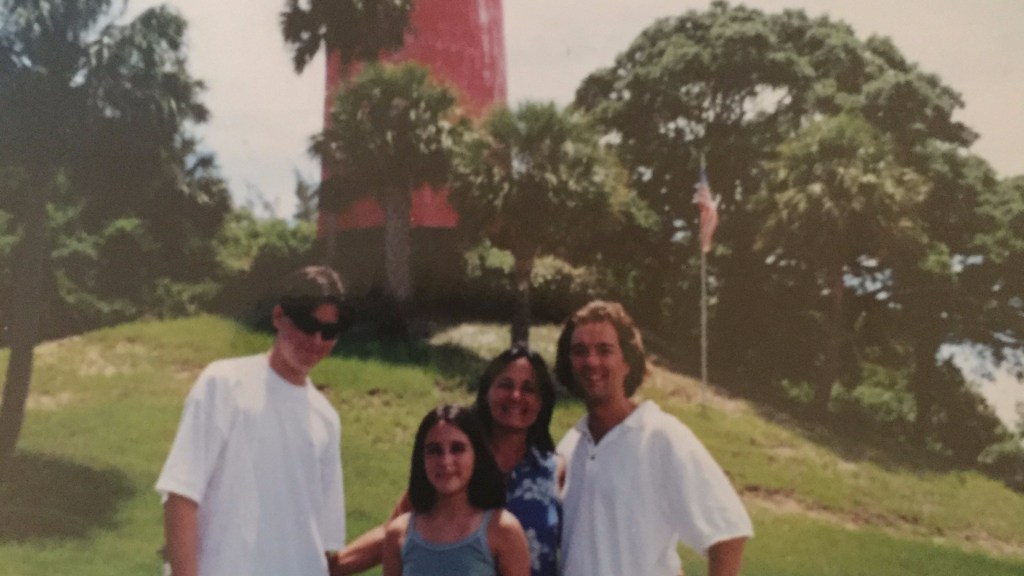
Photo: At the base of the Jupiter Lighthouse in 1997, I have been truly blessed in my willingness to embrace two tremendous changes in my life, marrying JoAnn in 1996 and moving to Florida in 1997.
Link for the Mass readings for Wednesday, September 18, 2019
Let us pray to be moved with compassion to the very depths of our being so we are more willing to help others.
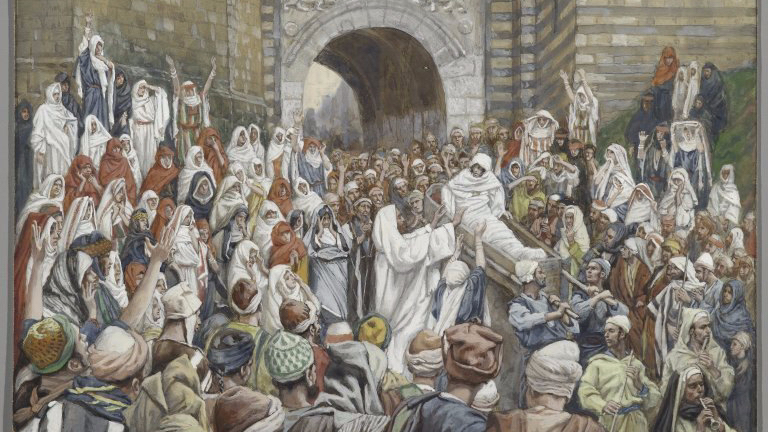
When the Lord saw her, he was moved with pity for her and said to her, “Do not weep.” He stepped forward and touched the coffin; at this the bearers halted, and he said, “Young man, I tell you, arise” (Lk 7:13-14).
Jesus saw a widow and her only son in a casket. In the time of Jesus, this woman would have had little means to support or protect herself. Jesus’ immediate response to her was pity or compassion. The original Greek word used was splanchnizomai, meaning that Jesus was moved from the very depths of his bowels. The emotional depths to which Jesus was moved to reach out and help the widow of Nain, shows us his humanity. Jesus’ healing of the widow’s son, bringing him back from the dead, shows us his divinity. The entire event shows us the best of who we ought to aspire to as his followers.
Instead of fear, judgment, prejudice, or indifference, we are to follow the lead of Jesus and instead seek to understand, to place ourselves in the shoes of those who feel vulnerable, misunderstood, and find themselves on the margins. May our hearts, not be hearts of stone, but hearts of flesh so to be moved from the very depths of our innards with the same compassion of Jesus toward those, who, like the widow, are vulnerable, at-risk, and on the peripheries.
We as the Church, the Body of Christ, need to be more welcoming, hospitable, willing to walk with others and to share their journeys. We also need to go out beyond the walls of our churches and homes, not just wait for people to come to us and be more present to and more willing to accompany them. We also need to listen to their stories, needs, and pleas and seek, in collaboration with those whom we encounter, to explore viable options to address those needs. All the while, each step of the way, we need to remember to respect and empower those we walk with as human beings created in the image and likeness of God. In this way, we may often find that we are helped more than we help!
As we begin today and each day, let us pray that God may open our hearts and minds to see the vulnerable among us, to be aware of those in our midst, those who are in need, those needing someone to be present, to be understood, even those in our own families. May we be more willing to allow the Holy Spirit to stretch us so that we are able to love more, to expand more, so we are more willing to experience those for whom in the past that we have discounted or rationalized reasons for not helping.
JoAnn would often pray for God to reveal to her one person that she could help each day, to guide her to whom and how she could reach out to someone in need. Prayer is the best way to begin, as not only will God lead us and give us greater awareness, he will also give us the means to be present and ways to assist lifting another up, like the widow that Jesus had compassion for in today’s Gospel. If we can see others as human beings, as brothers and sisters, not as somehow less or other, but with dignity, we will be moving in the direction of being able to act with the same compassion of Jesus.
———————————————————-
Painting: “The Resurrection of the Widow’s Son at Nain” by James Tissot, 1890, online collection from the Brooklyn Museum
Link for the Mass readings for Tuesday, September 17, 2019

 Spiritual Stepping Stones