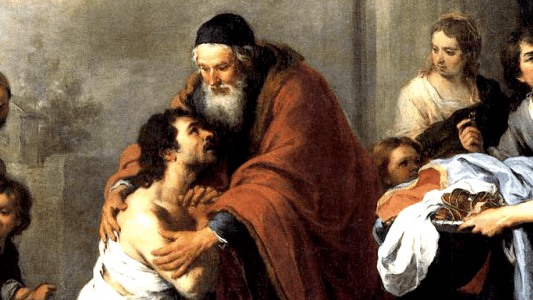
Jesus has conquered death through the Triumph of the Cross!
“No one has gone up to heaven except the one who has come down from heaven, the Son of Man. And just as Moses lifted up the serpent in the desert, so must the Son of Man be lifted up, so that everyone who believes in him may have eternal life” (Jn 3:13-15).
The reference to Moses lifting up the serpent can be found in Numbers 21:4-9. The people, worn out by their journey in the desert began to complain instead of trusting in God’s deliverance. The people sought a return to their prior condition of slavery rather than forge ahead and endure the trials of gaining freedom. Venomous snakes came into the camp and began to bite many who then died. The people recognized their sin and implored Moses’ intercession. Moses prayed for the people and lifted up a bronze serpent on a pole and whoever looked upon the serpent was healed.
There is a difference between seeking understanding from God, seeking to understand why something is happening in our lives, and complaining from a posture of self-centeredness. The Israelites were looking at their present condition of suffering and missing the point that they were free from slavery. They were not trusting in God’s providential care and support present to them in the moment.
How often do we, with our ease of access, slip into the same whining and complaining mode when something doesn’t go quite right. St Paul reminds us through his words to the Corinthians: “Let us not test Christ as some of them did, and suffered death by serpents” (1 Cor 10:9). From the first moment that JoAnn and I received the diagnosis that she had pancreatic cancer, we placed ourselves in the Garden of Gethsemane. We did not seek our will but the Father’s. We followed the lead of what the medical field had to offer but also recognized that healing in this life was not coming.
There is a gift of knowing your time is limited. In fact, all of our time here is limited. We live our lives better by acknowledging instead of denying that reality. We did not become bitter or angry, we accepted each stage of JoAnn’s decline as it came and appreciated the time we were given, our last seven months, our twenty-three years of marriage, is a blessing to cherish because we spent it growing closer to God and each other.
Nothing about the journey was easy, yet we enjoyed and embraced each moment that we had together with our kids and each other. Paul reminds us that no matter what arises, no matter if the circumstances are inconvenient or dire, “God is faithful and will not let you be tried beyond your strength; but with the trial he will also provide a way out, so that you may be able to bear it” (1 Cor 10:13).
Today, we celebrate the Feast of the Triumph of the Cross. It is a good reminder that, when trials and tribulations arise, instead of grumbling, let us look to the crucifix. The sacramental reminder that the Son of God came to be one with us, to experience the fullness of our human experience, even our pain and suffering, even man’s inhumanity and deepest levels of injustice, to lead us to freedom through his death, resurrection, and ascension into Heaven. JoAnn may have died to this earthly life, but through the saving grace of Jesus the Christ, through the triumph of his Cross, she is now born from above and is participating in his new creation.
What used to be a symbol of oppression, torture, and capital punishment is no more. Let us embrace and “glory in the cross of our Lord Jesus Christ; in him is our salvation, life and resurrection. Through him we are saved and set free” (Gal 6:14). Is the life of the disciple easier? Absolutely not, but with Jesus walking by our side we shall overcome.
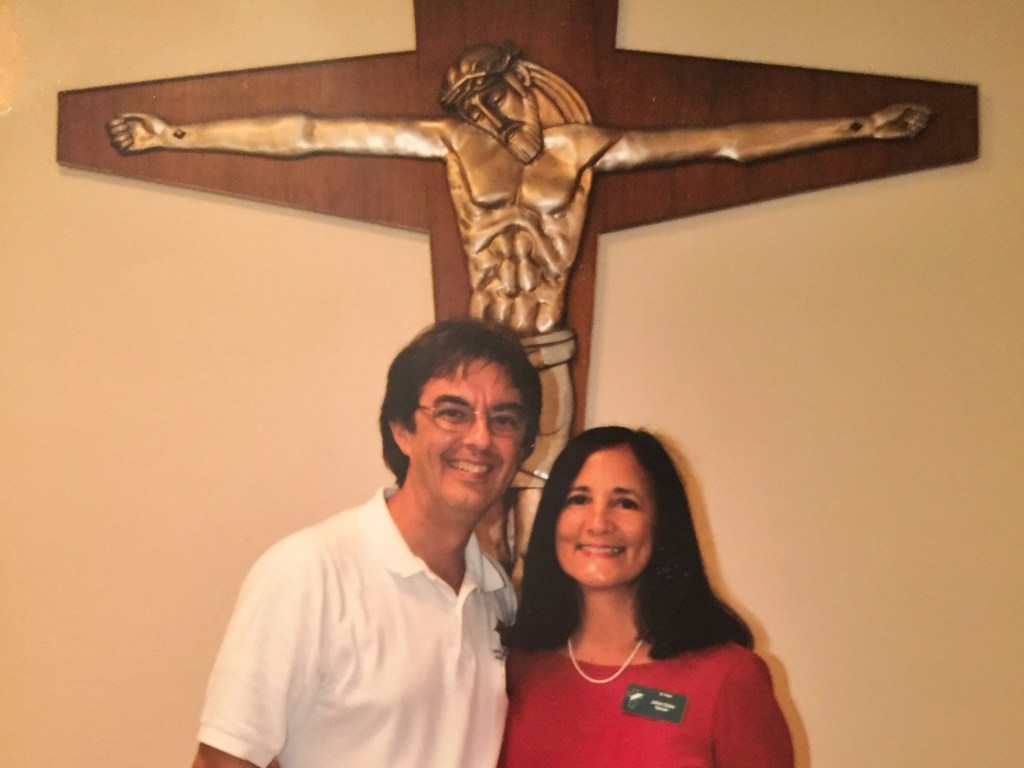
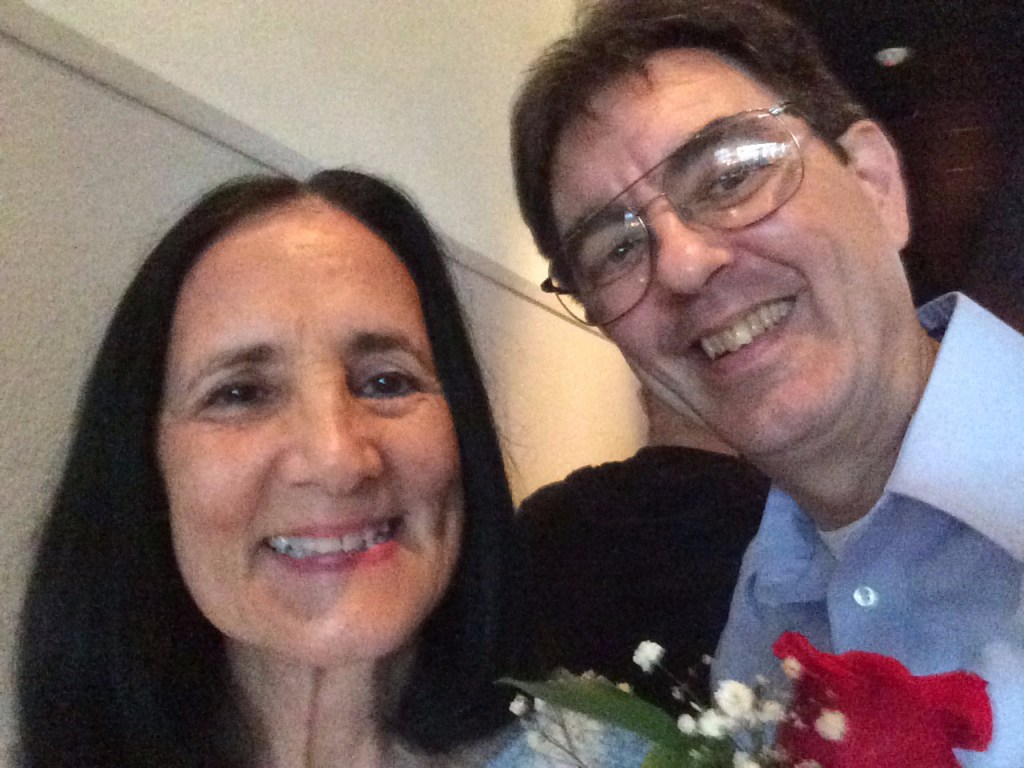
Photo: JoAnn and I at Our Lady of Florida Spiritual Center on a formation weekend. We did not know at that time that her experience of and participation in the triumph of the Cross would come so soon.
Link for the Mass readings for Saturday, September 14, 2019
We need people in our lives who love us enough to tell us the truth.
“Can a blind person guide a blind person? Will not both fall into a pit” (Lk 6:39)?
This phrase from today’s Gospel appears to be one of Jesus’ simple teachings. It seems to be straightforward, practical and makes sense. Yet, as with much of what Jesus teaches, there is a deeper level. The are many degrees of spiritual blindness that we can succumb to, and follow others, thinking we are improving, yet allowing them to lead us to fall into a pit.
Succumbing to a cult of personality is very tempting to many of us. Who are our models, our heroes? Who is it that we seek to emulate. Are they people who are seeking all that is good, true and beautiful? Are they people who are guiding us to our highest hope and good to actualize our potential, or do they constantly lead us astray?
We need people in our lives that are not afraid to tell us the truth, or who respect us enough to guide us in such a way that they do not manipulate and take advantage of our blind spots, but instead, help reveal to us our shortsightedness and give us the light to see a clearer path to avoid the pitfalls along the way.
My wife, JoAnn, was a person who was as clear as she was blunt. She spoke openly and freely about what was on her mind. She could see her own weaknesses and faults and was quite willing to help me see mine as well. When I had time to digest her insights, I agreed with her assessment a greater majority of the time. JoAnn helped me to move beyond my comfort zones as well as pull me back when I would overextend myself. I often found that I discerned God’s will through her redirection or confirmation regarding matters I presented.
As I prepare for JoAnn’s wake tonight and funeral Mass tomorrow, I do so with a heavy heart, while at the same time one full of gratitude for having spent the past twenty-three years married together. Though far too short, the time we had together was a blessing. I became a much better person with JoAnn in my life and I believe she will continue to be guiding me to better understand and discern God’s will for my life going forward each day.
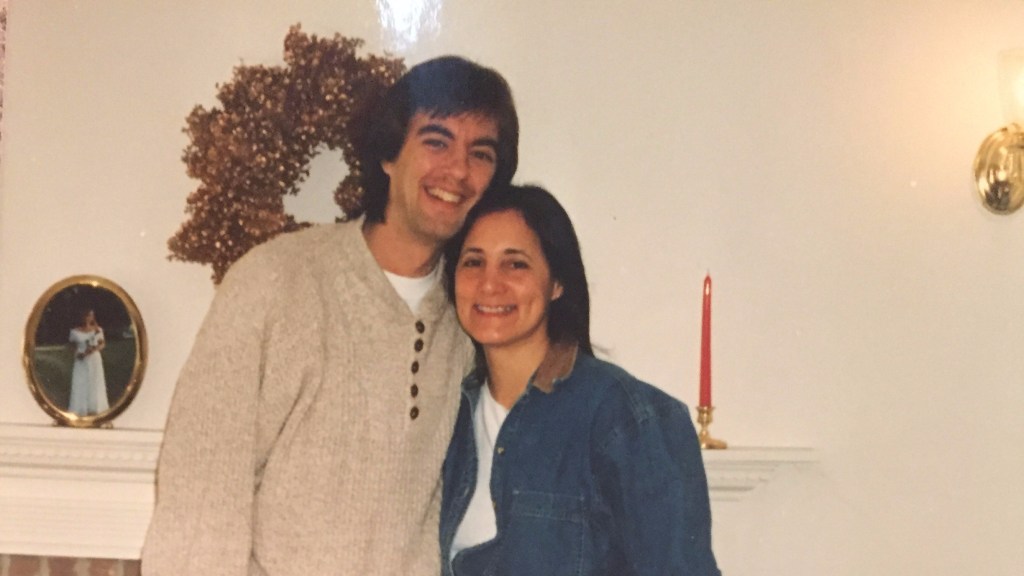
Photo: One of the earliest pictures from when JoAnn and I began dating.
Link for the Mass readings for Friday, September 13, 2019
May we not be afraid to be bold, yet respectful and loving in our engagement with one another.
Jesus said to his disciples: “To you who hear I say, love your enemies, do good to those who hate you, bless those who curse you, pray for those who mistreat you” (Luke 6:27-28).
Certainly, this is as hard of a teaching as any of us have ever heard, yet this is the path to peace. Peace that is not just an absence of violence but a peace that is grounded in mutual respect and unity. No matter where we might look, there are very few examples or models for us to see this Gospel being put into practice. We instead see a consistent engagement in rhetoric, language, and outright hostility that promotes division and polarization.
Nor do I believe in the temptation of the pendulum swing that would threaten to counter and go the other way, where what we think and say has the substance of milk toast, meaning, that we are so careful not to offend that we don’t share our ideas or what we truly believe. Staying away from hot button issues and the taboos of talking religion and politics is not a way to bring peace or solve important issues. Neither approach is helpful to mature growth.
Neither an overly aggressive nor a lukewarm engagement is what Jesus is presenting in today’s Gospel. Jesus is inviting us to proclaim what we think and believe, but in our interactions with one another, the primary starting point is respecting the dignity of the other person. We can have a dialogue and disagree without it devolving into disparaging, demeaning and belittling attacks, shouting at and over people. We can agree to disagree, while still stating clearly what we believe, even boldly doing so, while at the same time being willing to listen to the others do the same. In this way, we each can be heard, we can exchange ideas, and quite possibly learn and grow from our encounter with one another.
We are able to have a constructive argument when we come to the table willing to love our “enemy” instead of making another person into a monster. We can clearly point out the actions of others that can even be abhorrent, and unconscionable without disparaging the person. Otherwise, if we meet hate with hate, violence with violence, darkness with darkness, we will only beget and increase that which we denounce. Jesus offers a different way, by loving, by willing the good of the other, we don’t have to even like the person, but we can love the other as other. In so doing, we counter darkness with light, violence with nonviolent resistance, and hate with love.
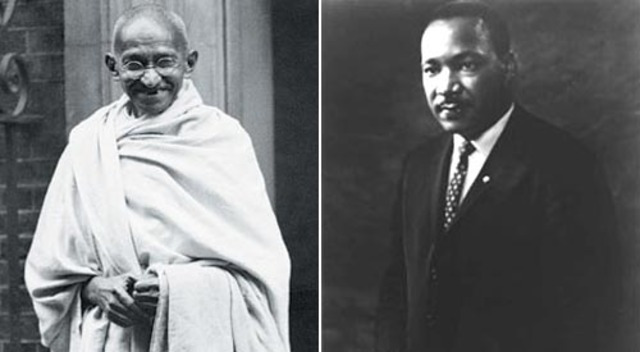
Photo: Mahatma Gandhi and Dr. Martin Luther King, Jr., were models of living today’s Gospel by loving their enemies.
Link for the Mass readings for Thursday, September 12, 2018

Living the beatitudes are not easy, but when we do we will experience the joy of God that wells up from within!
“Blessed are you when people hate you, and when they exclude and insult you, and denounce your name as evil on account of the Son of Man” (Lk 6:22).
The Beatitudes are contrary to much of what too many of us are tempted by when seeking our satisfaction, security, and fulfillment and that is power, fame, wealth, pleasure, and celebrity. What is more, how many of us who proclaim to be people of faith resist Jesus’ teachings because of our own anxieties, fears, and self-centered reasons?
In today’s Gospel account from Luke, Jesus taught his disciples how to attain the kingdom through five blessings and four woes. Jesus’ message is a universal message, an invitation to and for all who have ears to hear and a heart open to receive. Yet, these teachings challenge us to place our trust, not the things of this world, for that which is finite and material are fleeting and passing, but in Jesus. By placing our trust in Jesus, he will lead us to his Father, and it is in building that relationship that we will experience true happiness and fulfillment.
This is an inviting offer, yet when putting Jesus’ teachings into practice in our everyday lives we will receive opposition. To live in accord with Jesus is to identify with the poor, the hungry, those who mourn, and to speak the truth to power and those in authority, within and without of the Church. This we are to do even when we risk being hated, excluded, insulted, and denounced as evil. We are also to resist the lure and attachment to the false promise of a security believed to be found in material wealth, thinking that we can have all the food, drink, clothes, friends, and happiness that money can buy. These are only apparent goods, and if we seek to be fulfilled by them solely, we will be left empty and wanting more time and again. Pursuing the material and finite to fill our deepest hunger, can also lead us into being ensnared by attachment and addiction.
To be blessed, to be happy, to be fulfilled in this life is fleeting, but we can experience it to a degree if we are more willing to be unattached to the things of this world, and instead, be anchored in building a relationship with Jesus. If we are serious about being his disciple, then a good place to start is learning and living the beatitudes. This is no easy task, but when we live and proclaim the Gospel in our day and time, “we will rejoice and leap for joy” (Lk 6:23)! Joy because we can experience the good things that God gives us, but not be ensnared by them, because we are fueled by the love of Jesus, the source of our joy, which wells up from within and never runs dry!
For, Jesus was not just an amazing teacher, he is the Son of God, the wellspring of eternal life. He became one with us so that we can become one with him, one with us in our humanity so that we can become one with him in his divinity! The same “power that came forth from him” (Lk 6:19) to heal, to cast out demons, to teach the truth, is still active in our lives today through our participation in his life. Jesus is the kingdom of Heaven that is at hand and he will lead us, if we are willing to follow, to the ultimate desire and deepest craving and hunger of our being, to be in communion with God and one another. When we experience moments of the foretaste of our oneness with God in this life we experience true joy!
Photo: JoAnn had the greatest laugh, here displayed from this past March at the Griffith Observatory in Los Angeles. May you experience a taste of God’s joy today!
Link for the Mass readings for Wednesday, September 11, 2019
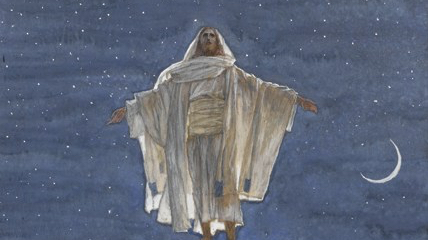
Prayer may not necessarily answer our questions but can bring us comfort, peace, and God’s presence.
Jesus departed to the mountain to pray, and he spent the night in prayer to God (Lk 6:12).
In the midst of a busy ministry, Jesus spent time alone with God in prayer. In Luke’s Gospel, Jesus often did so before making important decisions, as in today’s reading that recorded the choosing of his Apostles. Prayer is an important, foundational principle to experiencing and knowing God as well as discerning his will for living a fully human life.
The Mystery of God is not a problem to be solved. In our language today, we often use mystery and problem interchangeably, as, “I lost my keys, it is such a mystery.” Strictly speaking, the loss of keys is a problem that can be solved. We can backtrack our steps, and through a process of elimination, the problem becomes smaller until we solve the whereabouts of the missing keys. We cannot solve or prove God exists as if he is a problem to be solved. This is because God is not a being, not even the supreme being. God is a mystery that transcends any finite dimension of reality. We have nothing to measure him by, we cannot prove his existence, nor can we solve him as we would a problem.
Yet we can come to know God intimately just as Jesus did. Even though he is transcendent, beyond our reach and comprehension, he is at the same time closer to us than we are to ourselves. We come to know God through his invitation, and as we enter into the mystery of his reality through developing a relationship with him, we come to know him. He does not become smaller, but more vast, always beyond our comprehension. His mystery is luminous as if we were in a completely dark room and someone turned on and shined a flashlight into our eyes. We wince from its brightness, yet in time, our eyes adjust and we eventually are able to see what was beyond our ability apart from the light. Jesus wants us to experience and embrace the mystery of the radiance and warmth of his Father’s light and love.
Jesus called each apostle by name. He calls us by name too and invites us to pray with him as he prayed when he walked this earth. Since JoAnn’s death, already a week ago now, I have been completing the necessary things that need to be done and our kids and I have been supporting each other each step of the way. In my time alone, I have been spending a lot of time in prayer.
I have not gained any insight as to why JoAnn suffered and lost her life to pancreatic cancer. I do feel a peace that she is with God now, while at the same time a sorrow that we are no longer together. Like suffering an amputation, I will heal and with time and space I am sure that God will bring about a greater good. He is walking with me, leading and guiding me I am sure, as sure as I am that my life will never be the same.
We can come to know God, though we will never fully comprehend him or necessarily his ways because we are finite beings. Our lives are busy and full, even with good things, yet, if we are not making time to spend with God alone as Jesus did, we will run out of gas, we will make decisions that may appear to be good, but will lead us astray and away from the fulfillment of our vocation and experience of God. Through making time for prayer with him, we will discern his will for our lives, we will receive comfort, strength to endure the challenges we face, and be drawn ever deeper into his mystery to experience the intimacy of communion and relationship we have been created for.
————————————
Painting: James Tissot – Jesus Goes Up Alone on a Mountain to Pray, 1886-1894
Link for the Mass readings for Tuesday, September 10, 2019

We need to provide a helping hand to one another.
The scribes and the Pharisees watched him closely to see if he would cure on the sabbath
so that they might discover a reason to accuse him (Lk 6:7).
This is an unfortunate and sad scene in the Gospel, what is even worse is that this is not an isolated incident for the scribes and Pharisees. They are often watching him closely to accuse him. Accuse Jesus of what? Of not honoring the sabbath and breaking the law of God. There is quiet anticipation as Jesus calls a man with a withered hand up to him.
Jesus knows the hearts and minds of his would-be accusers, he also knows what is at stake regarding what he is about to do, but because he is more concerned with the condition of the man and not his standing in the community, because Jesus seeks to express the will of God and not impress those in his midst he asks aloud: “I ask you, is it lawful to do good on the sabbath rather than to do evil, to save life rather than to destroy it” (Lk 6:9)? Jesus did not wait for an answer but told the man to stretch out his hand. The man did so and was healed.
These two phrases coming from Jesus in today’s Gospel we need to commit to memory and meditation for they are foundational principles regarding how we ought to interact with one another. First, whenever we wonder as to whether or not we ought to help someone, we need to ask ourselves, “Is it lawful to do good or evil, to save life or destroy it?” If more of us ask this question, we will be more ready, willing, and available to help those in need in our realm of influence. If a law promotes evil, demeans the dignity of another in inhumane ways, we are to speak out against it and provide help to those oppressed by it.
Second, “Stretch out your hand”, is another phrase we can take to heart. We can address the need of a person by providing what understanding and assistance we can. Are we the Son of God? No, but we can access the power of God through calling on the name of Jesus. Maybe we will not heal a man’s withered hand, but we can provide a smile, a cup of water, food, some money, our presence, volunteer with groups who are already engaged, and we can write to and pressure our congressional leaders to support the dignity of the people under their care. We can also ask God to send us to those he would have us serve and he will.
Pope Francis shared in his homily yesterday that “we Christians cannot stand with arms folded in indifference, or with arms outstretched in helplessness. No. As believers, we must stretch out our hands, as Jesus does with us.” To be a Christian is to be willing to serve as Jesus did. That means being willing; to encounter one another, to respect the dignity of each person we meet, to provide a human hand and human presence to those in need and to assist them the best we can, one person at a time.
Photo: Vatican News, Pope with children at Akamasoa Association, article link
Link for the Mass readings for Monday, September 9, 2019
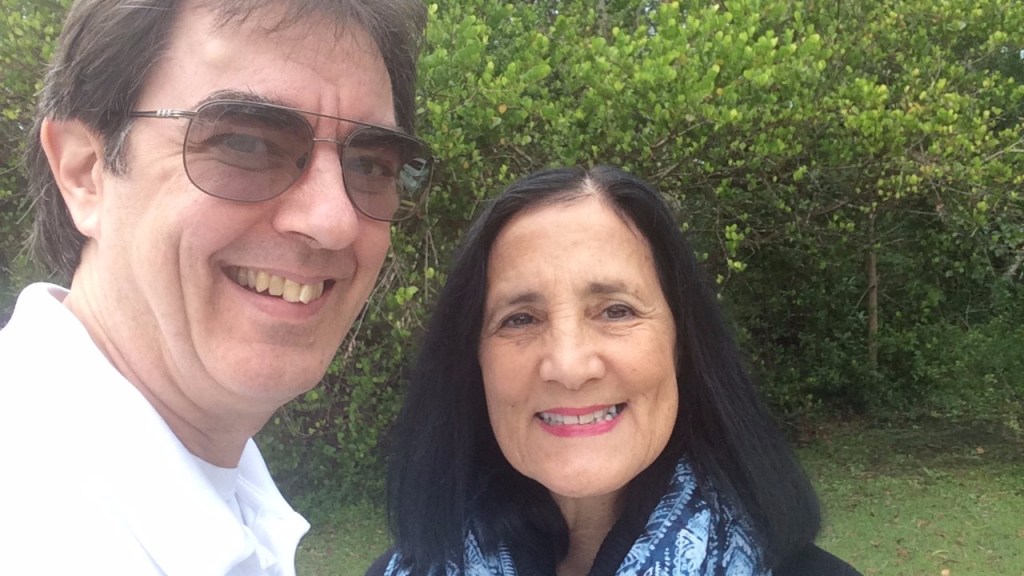
When we put our relationship with God first, our relationships with each other are much better.
Our Gospel today, upon first reading may not appear to be related or confusing in the analogies that Jesus is making. Jesus first begins by stating that to be a disciple of his, there is a need to, first hate “father and mother, wife and children, brothers and sisters,
and even his own life,” and then be willing to “carry his own cross” (cf Lk 14:26-27). Then Jesus begins to talk about the smart builder calculating the cost of materials and labor to be sure he has enough to build the tower to be sure he has all he needs otherwise he will not complete what he set out to do. In the same way, Jesus talks about a king preparing for battle. If his goal is for success, he needs to be confident he has enough soldiers to win, if not, he will need to send an emissary to make peace.
Each of these four points is interconnected if we understand what Jesus is conveying regarding discipleship with him and that is to look toward what is the fundamental option or the end goal of having a relationship and discipleship with Jesus. The goal or success of discipleship with Jesus is relationship with God in this lifetime and for eternity in the next, and to lead others to experience the same.
To attain this goal then, God must be first in our lives before all else, even the closest of family members and most intimate of friends. For if we truly want to be close to family and friends and to see each other as brothers and sisters in Christ, we need to know the Father. As we come to know and experience God, we will be transformed by the infinite power of his love.
Having a relationship with God is not just knowing about him, but knowing him intimately and that means we have to change. We become less self-focused and self-centered as we begin to experience, in relationship with God, his love. As we do so we begin to see our sins, how short we fall from sharing the love of God in our human relationships and the way we treat one another. With humility, contrition, and confession we begin to heal and change into his loving sons and daughters. In so doing, our natural human relationships improve and we grow closer and more mature because the love of God is more present in our lives. We become more loving, forgiving, patient, present, and other-centered as we allow Jesus to love others through us.
JoAnn loved to plan. She enjoyed planning things out before we would do any project no matter how small. I tended to dive in without thinking matters through necessarily to the desired end. JoAnn helped me to slow down and think before I lept. I helped her to be more open to preparing instead of holding too tightly to the desired plan. When things did not always go according to the plan, we were able to adjust better and be more flexible because we were committed to each other.
Although not always as patient with each other as we wanted to be, our commitment and love for God, helped us to grow in our love for each other, and over the years we grew in our patience in working together, we learned from each other, and knew we were always better together despite sometimes having different ways of approaching certain projects or challenges. All of our relationships will grow and mature if we lean on God first and open our hearts and minds to allowing his love to transform us and flow out to each other!
Photo: JoAnn’s birthday 2018
Link for the Mass readings for Sunday, September 9, 2019

Jesus is the Lord of the Sabbath and all aspects of our lives!
Then he said to them, “The Son of Man is lord of the sabbath” (Lk 6:5).
The disciples were traveling with Jesus, they gathered food where they could. In today’s Gospel, they picked heads of grain and rubbed them in their hands to make them easier to chew. The critique of those Pharisees, presumably, walking along with or close by to Jesus, was that his disciples were breaking the sabbath law by working and thus not keeping it holy.
The reason for this was that pious Jews would often practice what is called, building a hedge around the Torah, meaning that they would institute practices beyond the original law so that there would be no way of breaking it. Fr. Bill Burton, ofm, shared an example that has stuck with me since my Scripture studies in seminary.
There is a prescription in Exodus 23:19, that states that you should not cook a kid (baby goat) in its mother’s milk. So as not to even come close to breaking this law, observant Jews developed the practice, which continues today, to not cook any meat and dairy together; thus the idea of building a hedge around the Torah. The hedge in today’s reading had to do with what constituted work and what did not, so as to keep the sabbath rest intact and keep the Sabbath holy. Jesus settled the debate by claiming that he was the Lord of the Sabbath.
The Lord of the Sabbath needs to be the Lord of our lives. We live in a fallen world, but even at its best, we live in a finite and fragile world. We as human beings can only do so much. The best we can do is to use our intellect and ability to reason while at the same time seek to discern God’s will and direction so to have access to the spiritual resources that he offers to us in our everyday affairs, especially when tragedy strikes.
JoAnn, my heart and wife for the past twenty-three years passed away this past Monday morning as a result of the ever-increasing effects of pancreatic cancer. The Bahamas and the outer banks of North Carolina were devastated by Dorian. The Amazon continues to burn. Tragedy, pain, and suffering happen in our independent lives directly and in our world collectively. Yet, in each instance, we are not abandoned, we are not alone. God works with us and through others who allow their hearts and minds to be open to his love working through them.
I cannot answer why these things happen. I cannot answer why JoAnn had pancreatic cancer. But I do know God was with us every step of the way and as JoAnn physically decreased she allowed her mind and heart to be open, such that Jesus increased in her life touching others through her with his love. There will be many who will reach out to come to the aid of the Bahamas and North Carolina, and I pray there will be more of an outpouring of world support for the people and lands of the Amazon.
Jesus needs to be the Lord of our lives, in and out of season, in the midst of our trials as well as our joys and celebrations. As we lean on him and each other all things are possible and what may seem incomprehensible or hopeless at the moment, God will bring about a greater good through his will and timing.
———————————————————–
Photo: Sunset at Santa Monica Beach two nights ago with Jack and Christy watching the sunset.
Link for today’s Mass readings for Saturday, September 7, 2019
 Spiritual Stepping Stones