
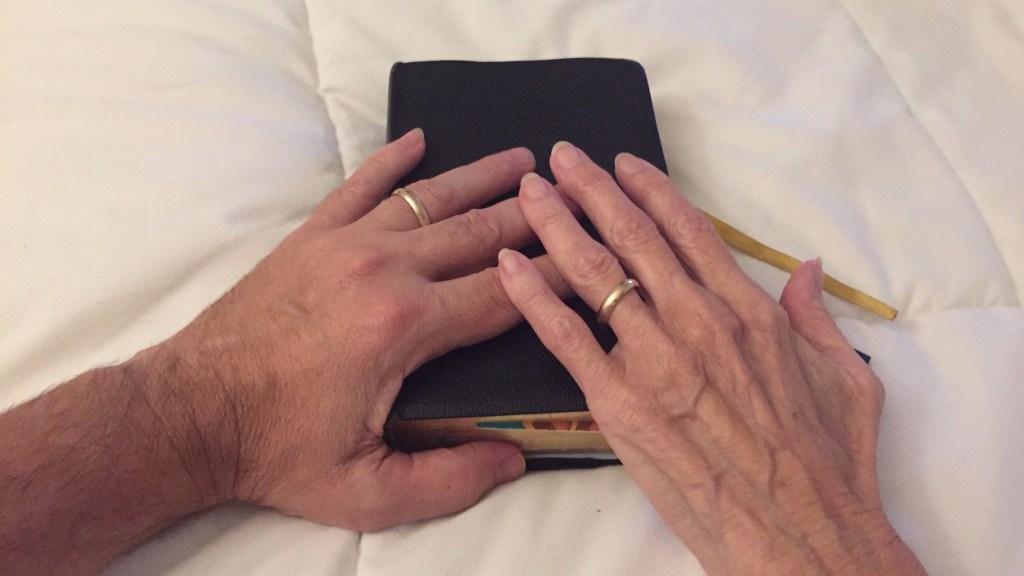
With this ring, I thee wed.
Some Pharisees approached Jesus, and tested him, saying, “Is it lawful for a man to divorce his wife for any cause whatever” (Mt 19:3)?
The question about divorce came from an already existing debate within Jewish circles of interpretation and schools of thought. Testing Jesus arose from time to time to better understand who he would side with. Regarding the issue of divorce, there was a range of interpretations. On one end of the spectrum, there was the School of Shammai, which permitted divorce only in the event of some sexual misconduct. At the other end of the spectrum, was the School of Hillel, which would allow a man to divorce his wife if she cooked a bad meal (cf. Harrington 2007, 275).
The Pharisees sought to understand the perspective of Jesus in this debate. Jesus responded: “Have you not read that from the beginning the Creator made them male and female and said, ‘For this reason a man shall leave his father and mother and be joined to his wife, and the two shall become one flesh'” (Mt 19:4-5)? This response negated both schools as well as rejected the precept that Moses set for allowing divorce, explaining that, “from the beginning it was not so” (Mt 19:8). Jesus’ defense went back to God’s original intent recorded in the Book of Genesis, which allowed no provision for divorce.
In God’s plan, marriage is a covenantal relationship, as is the relationship between God and his people. A covenant is a sacred bond that is not to be broken. In the Sacrament of Matrimony, a man and a woman who give themselves to one another and are open to children as the fruit of their union mirror the Trinitarian communion of Father and Son and the eternal love between then the Holy Spirit.
The ideal of marriage then is to be a lifelong commitment; for God does not break his covenant with us, nor should we. The goal is clear, yet we live in a fallen world and we do not often live up to what God has planned for us. For many reasons, there are times where a marriage does not work as intended, but that does not mean we are to give up on marriage. Even though Jesus holds the standard high, he does not abandon us when we ourselves fall. He is present in our brokenness, and fallibility. He reminds us: “Those who are well do not need a physician, but the sick do. I did not come to call the righteous but sinners” (Mk 2:17).
It is right to keep our goals high and resist the temptation to settle for anything less than what God has in store for us, which is a covenant relationship with himself and each other. Relationships are not easy and no we don’t naturally know what we are supposed to do. We need to educate, support, model and mentor those preparing for marriage as well as during their marriage to help them remain faithful to God and one another. And when a relationship breaks down, we need to be present to and walk with those who suffer through the pain of the rupture. We ought not to abandon one another for Jesus does not abandon us and instead loves us more than we can ever mess up.
Photo: JoAnn and my hand on my breviary. We have dedicated our lives to God and each other, and on the inside of each of our rings is etched the word eternity.
Harrington, S.J., Daniel J. The Gospel of Matthew in Sacra Pagina, vol. 1. Edited by Daniel J. Harrington, S.J. Collegeville, MN: Liturgical Press, 2007.
Link for the Mass readings for Friday, August 16, 2019
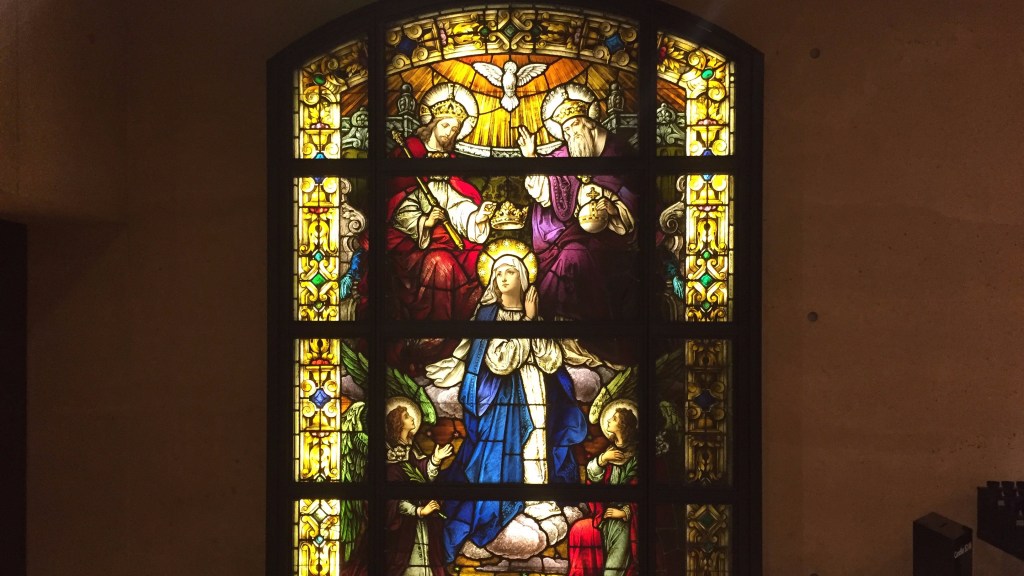
Mary is now where we one day will be!
“For at the moment the sound of your greeting reached my ears, the infant in my womb leaped for joy” (Lk 1:44).
When we experience a great joy we want to share it with others, just as Mary did when she conceived Jesus through the power of the Holy Spirit and also heard that Elizabeth was also with child. When we unite with those we love we leap for joy, sometimes literally, as John did in the womb!
There was no one on this earth closer to Jesus than Mary. She bore him, nursed him, raised him, initiated in a motherly fashion his public ministry, held him in her arms as he was taken down from the cross, and she was with the Apostles in the upper room when the Holy Spirit descended upon them. Mary, like Jesus, was also Immaculately conceived. When her time came to leave this life, who better than Mary to have experienced the “singular participation in her Son’s resurrection and an anticipation of the resurrection of other Christians” (Catechism of the Catholic Church 1997, 966)?
Today we celebrate the official dogmatic constitution issued by Pope Pius XII in 1950, the Assumption of Mary, a special grace she received from her Son. Jesus is the promise and Mary is the hope that we will live eternally with our heavenly Father, for Mary is now where we will one day be, body and soul. Today is a day of great joy!
Jesus and Mary have undone the sin of Adam and Eve. They, in their continual faithful life of saying yes to the will of God, opened up heaven for us. In our darkest trials, when the storm clouds of injustice, racism, and violence gather, when a situation or conflict does not appear to be getting any better, when death may be imminent, and/or when a loved one has died, even then, death does not have the last word.
There is hope because there is a light that shines in the darkness when we echo Mary’s song“My soul proclaims the greatness of the Lord; my spirit rejoices in God my Savior. For he has looked upon his handmaid’s lowliness; behold, from now on will all ages call me blessed.” (Lk 1:46-48). God is ever faithful and present to us in his mercy. May we, like Mary, ponder upon the wonderful gifts of Jesus, love, mercy, and the bestowal of his grace. May we also, like Mary, reflect the light of her Son as we experience the foretaste of heaven by receiving his love and being beacons of joy in a weary world.
Holy Mary, Mother of God, pray for us now and at the hour of our death!
Stain glass of the Assumption of Mary at the Cathedral of Our Lady of the Angels, Los Angeles, CA
For the readings of the Mass for Thursday, August 15, 2019
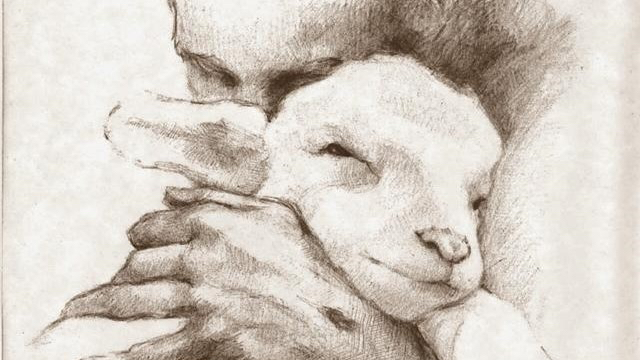
Reject gossip and choose to embrace reconciliation
Gossip is a seductive and enticing poison. Many of us fall for its lure and its intoxication. There are many different reasons we engage in gossip. We may think we feel better about ourselves by putting someone else down, we may be jealous of what another has, or maybe someone just rubs us the wrong way. The reason that we may feel justified in choosing to gossip is when someone has hurt, offended, or wronged us in some way. Even in that instance, we observe Jesus offering a different approach in today’s Gospel.
Jesus said to his disciples: “If your brother sins against you, go and tell him his fault between you and him alone” (Mt 18:15). Jesus is drawing on his Jewish heritage. Leviticus 19:17 warns against holding hate in your heart and instead encourages seeking to reason with your brother. Jesus is redirecting us from adding fuel to the fire by seeking revenge or stewing in our own hurt, which will build resentment and hate. Instead, he is inviting us to seek reconciliation.
Pope Francis, in his September 9, 2016, General Audience was very clear: “[G]ossip is a ‘terrorist’ who throws a grenade – chatter – in order to destroy,” he added. “Please, fight against division, because it is one of the weapons that the devil uses to destroy the local Church and the universal Church.” Let us refuse to be a weapon of the devil in his plot to divide us with our thoughts or our words, but instead, seek to be a disciple of Jesus by advocating for forgiveness and reconciliation.
We need to commit to being more discerning with our tongue. With our words, we can cut, wound, or destroy, or we can convict, reconcile, and heal. Let us choose today to lift up and empower one another. Yes, it is much easier to grumble about someone than to approach them in love and hold them accountable. If we are not quite ready for that, Pope Francis invites us to “bite our tongue” instead or we can choose to pray about the situation with someone we trust: “For where two or three are gathered together in my name, there am I in the midst of them” (Mt 18-20). In seeking the help of Jesus, we will have a better chance of choosing reconciliation over gossip.
Image credit: “Jesus and the Lamb” by Katherine Brown
Link for Pope Francis’ comments
Link for the Mass readings for Wednesday, August 14, 2019
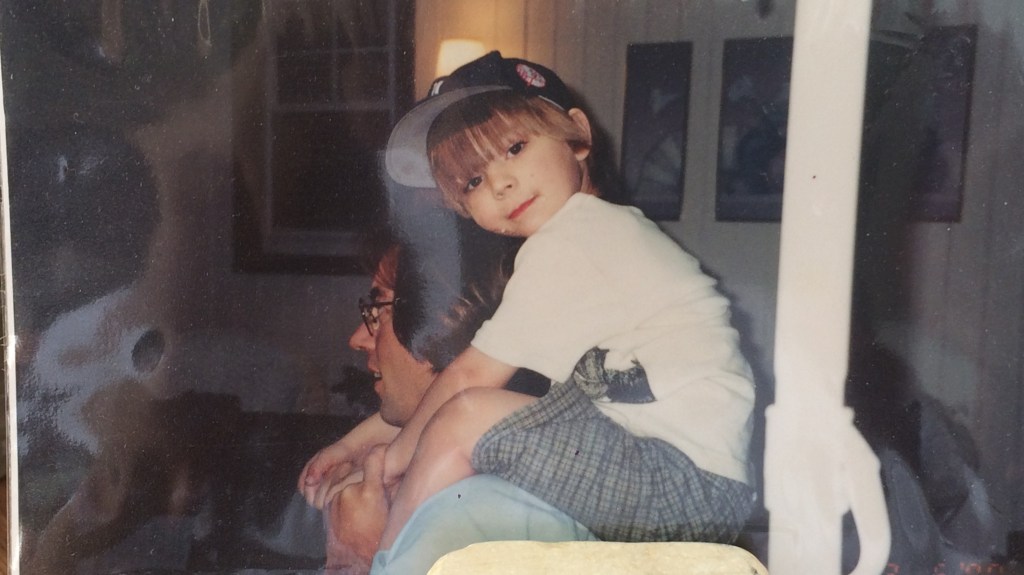
Whoever becomes humble like this child is the greatest in the Kingdom of heaven.
“Amen, I say to you, unless you turn and become like children, you will not enter the Kingdom of heaven. Whoever becomes humble like this child is the greatest in the Kingdom of heaven. And whoever receives one child such as this in my name receives me (Mt 18:3-5).
The above response Jesus gave was to the disciple’s question regarding who is the greatest in heaven. Jesus offers an unexpected response, as children had no esteem, honor, or greatness in his society. Jesus was not pointing out so much the innocence of children, but emphasizing that children were completely dependent on others for their very survival.
If we are to embark or stay on the journey that will lead us to the Kingdom of heaven, we need to do the same. We need to give our control and apparent, self-sufficiency over to God and place our dependence on him alone. We need to depend on God as would an infant or young child does on their parent.
Very young children have not developed a defensive filter and they say what is on their mind, often with precise insights! How often do we do the opposite by automatically responding in a defensive manner, thinking about how we will be received or fearing an ulterior motive from the question? Jesus has taught us that our yes is to be yes, and our no is to be no, and anything more is from the evil one (cf. Mt 5:37). As his disciples, Jesus calls us to be humble, to admit to our sins, our mistakes, to confess, correct and learn from them.
We grow in humility when we take responsibility for our actions, turn away from that which we place before God, and release those biases and idols that can lead us down the path of prejudice. We also do so when we resist the allures of material, apparent goods, and our own self-centered postures, which so often can lead us to the imprisonment of addiction. We can avoid much of the pitfalls above when we follow the instruction of Jesus to “become like children”. This is more likely to happen when we depend more on God, surrender our control, and place our trust in him. By doing so, we can build a firmer foundation of truth and humility, we will begin to find that we will be more satisfied, fulfilled, and be less defensive and more present to those in need.
We live in a fallen world and there is a temptation to buy into the idea that “might makes right” and “the prize belongs to the survival of the fittest”. Yet the reality is that we are all wounded, a bit beat up, emotionally, physically, and spiritually, and in need of God’s healing. We are to resist assuming any defensive posture, or taking offense when presented with negativity but instead align ourselves with God and ask him to love others through us, so that we can be more understanding, loving and empowering. We could all use a little more support, empathy, and kindness. May we begin to be a little more humble, present, more like a healing balm for one another today, for whoever receives one child such as this in Jesus’ name receives him (cf. Mt 18:5).
Photo: Me and my nephew Nicholas some time ago. He is now 23. Please join me in prayer that in the name and power of Jesus, Nick may be freed and healed from the battering cycle of addiction. If you know of anyone struggling with addiction, add their name and we can join in praying together for the healing of so many who are ensnared and needing to be set free! Thank you.
Link for the Mass reading for Tuesday, August 13, 2019
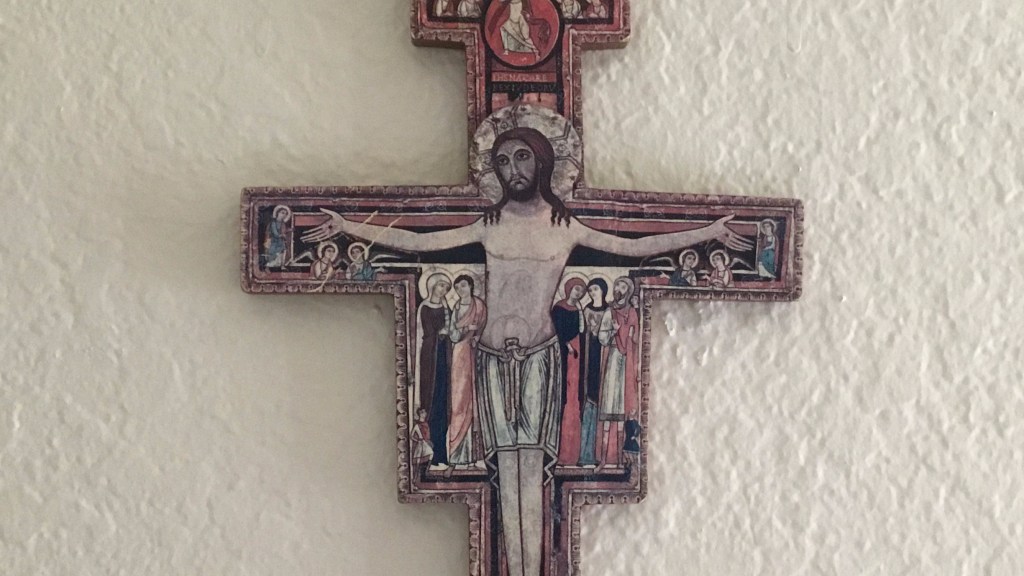
Death does not have the final answer, Jesus does!
Jesus said to them, “The Son of Man is to be handed over to men, and they will kill him, and he will be raised on the third day.” And they were overwhelmed with grief (Mt 17:22-23).
This is the second time in the Gospel of Matthew that Jesus shares with his disciples that he will die soon. They are overwhelmed with grief because their focus is on the first part of Jesus’ statement that he will be handed over to death. They do not understand or yet comprehend the second part about how he will be raised on the third day. How could they? There was no point of reference for them. Jesus did bring three people back to life during his ministry, but Jesus would not be merely resuscitated as they were and just die again. Jesus would resurrect and conquer death.
For us today, we can read today’s Gospel about the impending death of Jesus and gloss over it a bit too easily because we celebrate Easter each year, we celebrate that Jesus has risen. Yet, do we really take in what this means? Does the fact of the Resurrection, the reality that Jesus has conquered death and become the firstborn of the new creation really have relevance in our lives?
The life, death, and Resurrection of Jesus matters! The missing piece for those for whom this statement doesn’t register any relevance may be that they do not want to think about death all that much. To be honest, none of us really want to come face to face with our own mortality, and most of us don’t until we or a loved one is forced to.
Beginning the summer after my freshman year of college, I began working second shift in a nursing home as a CNA. It was the first time that I experienced death up close through the care of the residents I worked with. They were not merely patients but became family. I experienced, with each person who I was blessed to be with when they died, an experience of a peace that surpassed all understanding, that transcended the moment.
The most important lesson I learned from these moments of grace was to not take life for granted. Life is fragile and when we are able to contemplate and face our own death, I do believe that we live our lives more fully. And when we experience this exercise with the one who conquered death, the possibilities in our lives become unlimited.
Jesus understands each of our struggles and tribulations, our sins and our failings, as well as our deepest hopes and dreams. Jesus also knows about our deepest fear of death, for he, as a human being, experienced it too in the Garden of Gethsemane. The gift of the crucifix, the beautiful sacramental object of Jesus on the Cross, is a reminder to us all that death does not have the final answer, Jesus, fully human and fully divine, does.
Photo: Crucifix I have had with me since my early twenties. It now hangs in JoAnn and my apartment bedroom.
Link for the Mass readings for Monday, August 12, 2019
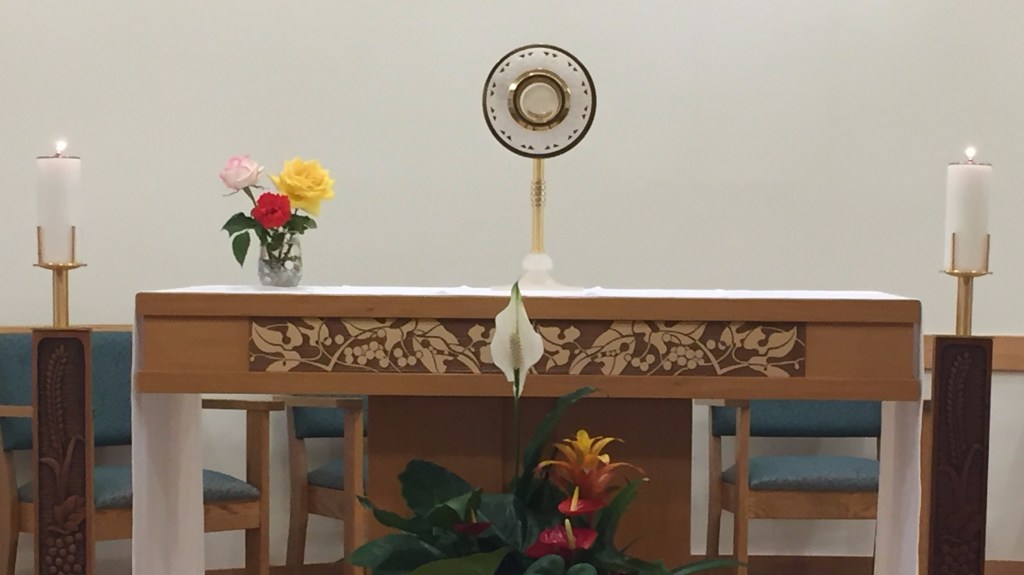
God is pleased to give us the kingdom, relationship with him.
We live in a fallen world where suffering, violence, hatred, anxiety, and fear abound and this reality does not appear to be changing any time soon. Yet, there is still cause for hope. Jesus says in the opening of today’s Gospel: “Do not be afraid any longer, little flock, for your Father is pleased to give you the kingdom” (Luke 12:32).
Unfortunately, far too many do not find comfort in these words. A common complaint is “Well, Jesus said these words some two thousand years ago, I do not see any kingdom, and not only has this world not gotten any better, but it also seems to be getting worse!” To say or buy into this perspective is to miss what God’s kingdom is.
The first words that we have recorded from the beginning of the ministry of Jesus were, “This is the time of fulfillment. The kingdom of God is at hand. Repent, and believe in the Gospel” (Mk 1:15). What Jesus said then and is saying to us now is that the kingdom of God is about a relationship and a relationship happens person to person and builds slowly over time.
Jesus came to restore the relationship that has been lost with his Father. We live in a fallen world because we have forgotten who we are, that we are children of God. Instead of our primary focus being the building and strengthening our relationship with God, we are distracted and led astray by so many other material pursuits. We are putting ourselves first. We are the priority instead of God and each other. There is suffering, pain, and deep hunger in the world because too many are selfish and self-centered.
Our Father is pleased to offer us the kingdom, relationship with him, but we refuse to accept his gift. Instead of looking to that which is above, we are diverted and entranced by the things here below that only wither and fade. Our world will not change until we make a change, person by person, one relationship at a time.
The kingdom of God is in our midst. Jesus has his arms wide open to receive us. All we need to do is repent, turn back to him, and run into his loving embrace. Then step by step, encounter by encounter, as we are more open and willing to hear and share the will of God, we will better be able to build relationships that are lasting and true. Heaven and earth become one each time we receive the love of God and share it with one another.
Photo: Spending time in Jesus’ embrace in the chapel at the Sisters Disciples of the Divine Master, Los Angeles. We put God first in our lives when we spend time with him in Mass, adoration, prayer, fellowship, and serving one another in love
Link to the Mass readings for Sunday, August 11, 2019

“Unless a grain of wheat falls to the ground and dies, it remains just a grain of wheat; but if it dies, it produces much fruit.”
Jesus said to his disciples: “Amen, amen, I say to you, unless a grain of wheat falls to the ground and dies, it remains just a grain of wheat; but if it dies, it produces much fruit. (Jn:12:24).
In reading this verse, I was transported back to Middle School. Our sixth-grade class was dismissed to head to the cafeteria for the Science Fair. As I drew closer I could hear some unintelligible chanting going on. Of course, I was curious and craned my neck to see over the other students filing in as we entered our destination. As I drew closer and saw a circle of kids taunting and circling someone, I stopped. I heard muffled groans and then saw one of my friends standing in the center of the circle, his forearms pulled up to cover his face. No one was laying a hand on him, but the heckling was inflicting enough damage. I froze not knowing what to do or how to act.
I don’t remember how the situation was resolved, but I do remember how bad I felt that day, and still do for not doing anything. I also withdrew from my friend when I saw him later because I felt so bad for not speaking up or stepping in. I wasn’t there for him as he was harassed nor did I provide comfort later because I was still only thinking of myself, my shame, and not his feelings or his need. That day, I remained just a grain of wheat that did not fall to the ground and die. I was unwilling, unable to die to myself, unwilling to stand up for my friend or provide any comfort.
When we find ourselves in situations when another human being’s dignity is being diminished, Jesus implores us to resist loving our life, assessing first our own self-interest, or we will lose it. Instead, we are to “hate our life” in this world (cf. Jn 12:25) by thinking of others first, instead of ourselves.
We will be in a better position to serve as Jesus did when we are willing to die to self, like the grain of wheat that falls to the ground and dies. We will grow and mature to bear fruit as God’s mouthpiece, when we speak truth to power, work to change systems in our culture and society that oppress and devalue others, prevent and defend attacks against the dignity of the person. As we strive for change within ourselves, others, and society, we need to also, at the same time, accompany and provide support, person to person, for those who have been ignored, disrespected, devalued, objectified, or abused in any way.
Jesus, grant us the courage to love, to will the good of the other. Give us the eyes to see and the ears to hear the cry of the poor; those who are demeaned, belittled, or dehumanized. Holy Spirit, inspire us to to be that grain of wheat that dies to our own self-centered and fallen self, such that we are not just silent bystanders. Loving God and Father, empower us to stand, speak up, and act on behalf of the dignity of those who are vulnerable, those who do not have access or the avenue to speak up for themselves.
———————————————————————–
Photo: agriculture-cereal-clouds-39015 from pixabay.com
Link for the Mass readings for Saturday, August 10, 2019
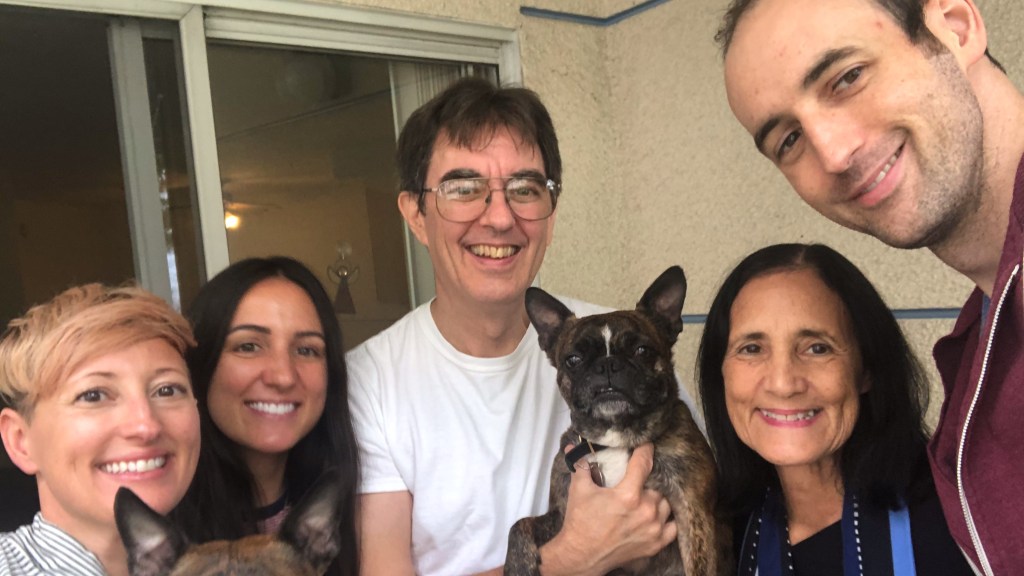
We are not alone in taking up our crosses.
Jesus said to his disciples, “Whoever wishes to come after me must deny himself, take up his cross, and follow me” (Mt 16:24).
Jesus invites us to deny our self-centered default position which places I, me, and mine, at the center of each our decisions. We can deny our self when we resist making excuses for our sins and come to a genuine place of sorrow for the pain we have caused God, our self and others. By acknowledging our sins and confessing them, we die to our selfish ways, and then we rise again through the power of Christ. Empowered by our humility and the strength of Jesus we are better equipped to resist those temptations when they rise again.
We are also in a better position to then take up our cross, which is to follow the will of God. Jesus showed us the proper orientation of surrender when he said at Gethsemane: “Father, if you are willing, take this cup away from me; still, not my will but yours be done” (Lk 22:42). Jesus followed his Father’s will to the cross and endured horrific suffering, excruciating pain, humiliation, and abandonment, to death and into new life!
Many a mother I have talked with has shared the struggles of labor, but also expressed the joy of giving birth; many of my students have been exasperated by the time and effort expended for an examination, a sporting event, art show, musical or theatrical performance and yet experienced the joy from the feat they accomplished; and how many times have you faced a challenge, trial, or cleared some obstacle and felt the exhilaration of overcoming the hurdle?
Taking up our cross and following the will of God means accepting a disciplined approach to our lives. When we follow God’s will, as opposed to our own solely, the difference is that we are not alone in our persistent effort. Seeking God’s will in the midst of our decision-making process and trials for our everyday physical as well as spiritual pursuits is the key.
In my mid-twenties, I entered the Franciscan Friars of Holy Name Province to study for the priesthood. In the year and a half of discernment with them, I contemplated from time to time about my ordination day. I often did not feel any joy. I enjoyed every aspect of my experience with the friars and the ministries I was involved in, but there was something or someone missing. I took a leave of absence and, at that time, I realized what was missing was having a family.
About two years later I met JoAnn, and her three children, Mia, Jack, and Christy. Six months after that we were married and seventeen years later, I was ordained to the permanent diaconate. This is the short version of the story. There were many crosses along the way, but in seeking God’s will throughout, the circle was complete!
The journey continues as the five of us face a new cross together. From the beginning of JoAnn’s diagnosis of pancreatic cancer, we have both prayed, not that our will but God’s will be done. Though this cross has been the heaviest, Jesus has born it with us and blessed us richly in our surrender. Self-denial, carrying our cross, and following Jesus is the path that leads to freedom for excellence, fulfillment, and joy in this life and more profoundly in the next!
Photo: Mia’s last visit July 4th weekend with Levi and Harley
Mass Readings for today, Friday, August 9, 2019

 Spiritual Stepping Stones