

Wheat or weeds, maple or poison ivy?
“’Master, did you not sow good seed in your field? Where have the weeds come from?’ He answered, ‘An enemy has done this.’ His slaves said to him, ‘Do you want us to go and pull them up?’ He replied, ‘No, if you pull up the weeds you might uproot the wheat along with them. Let them grow together until harvest” (Mt 13:27-30).
One of my favorite trees is the Maple. When JoAnn, the kids, and I moved to Florida twenty years ago, the thought did not cross my mind that Maples grew in Southern Florida. A few years after we moved into our home, I was walking in our backyard and thought I saw a maple leaf. I squatted down for a closer look and found that not only was it a maple leaf but a sapling with three leaves! I carefully cleared some of the weeds and grass growing among and around it, but otherwise let it be because it was so fragile. As it grew I cleared more around it. Today it is a fully mature Swamp Maple!
About a year ago, I saw a new Maple sapling emerging, though this time, some poison ivy was growing around it. I sprayed poison ivy killer, thinking I was carefully avoiding the Maple. Unfortunately, I must have gotten some of the poison spray on the Maple leaves because the sapling also shriveled up and died.
I can relate to Jesus’ parable today. The master warned his servants to let the wheat and weeds grow together until they were more mature at the time of the harvest, so as not to pull up the wheat with the weeds. Weeds in this verse is translated from the original “Greek [as] zizanion [which] refers to a noxious weed that in its early stages closely resembles wheat and cannot be readily distinguished from it” (Harrington 2007, 204). Both, in their immature state, were indistinguishable.
Jesus is calling us to resist the temptation of judging one another. Even when there are those who commit heinous acts of evil, we may feel justified in our judgment and condemnation. Jesus says no. We may convict the person of their action and we are certainly to hold each other accountable, but judge and condemn, no. The Father is the ultimate arbiter and judge.
All of humanity has been created in the image and likeness of God, each of us are a unique gift to this world, we have been created good, yet all of us fall short of the glory and grace of God. God the Father will judge at the end of time between the wheat and the weeds and only he knows the time or the hour. Let us leave the judgment to God, and let us instead be about following the teachings of Jesus, repenting, and encouraging each other in the maturation process which can include, convicting others when needed, yes, but condemning, no. As St Paul wrote: “We who are strong ought to put up with the failings of the weak and not please ourselves” (Romans 15:1).
We are to resist the temptation to spread the poison of judgment, gossip and condemnation, otherwise we are promoting division and a culture of death. We are to instead welcome, nurture and care for one another, promoting unity and a culture of life.
May we pray for patience, understanding, and the ability to seek forgiveness in our interactions, as well as be willing to forgive each other. Life, even when going well, is hard. We need the encouragement and support of each other if we are to mature and actualize the fullness of who God calls us to be. “Encourage each other while it is still today” (Hebrews 3:13).
—————————————
Photo: Our Maple tree back in Florida, much more mature than the little sapling I discovered about twenty years ago.
Mass readings for Saturday, July 27, 2019
Harrington SJ, Daniel J. “The Gospel of Matthew”. In vol. 1, Sacra Pagina Series, edited by Daniel J. Harrington. Minnesota, Liturgical Press, 2007.
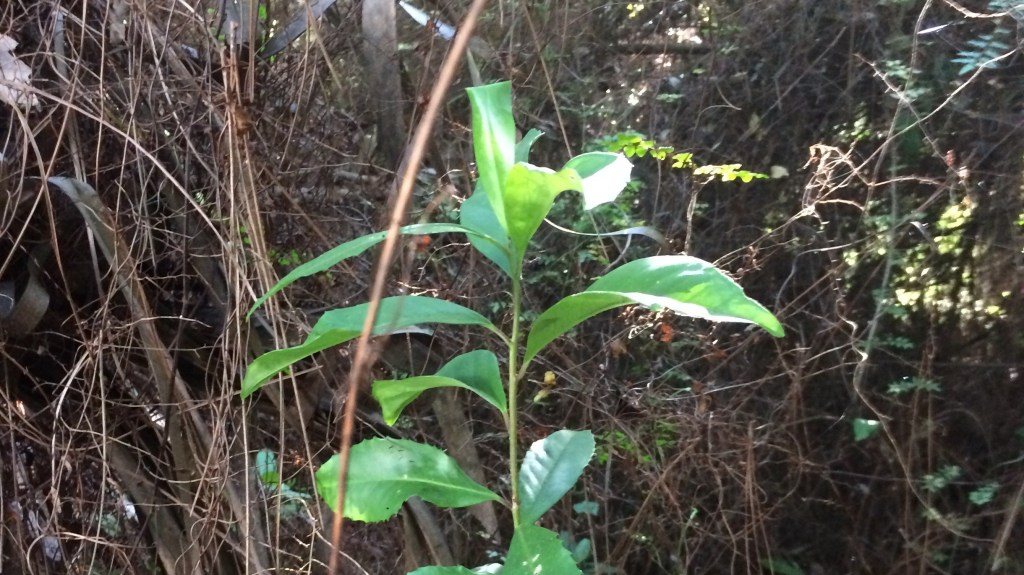
Focused on Jesus, we can be free of the vines that threaten to choke us.
In the Gospel today, Jesus explains to his followers his Parable of the Sower. Many people of faith would fall into the third category: “The seed sown among thorns is the one who hears the word, but then worldly anxiety and the lure of riches choke the word and it bears no fruit” (Mt 13:22). Jesus is a part of our life, we are growing in our faith, but our discipline and maturation, and so bearing of mature fruit is diminished. We are limited because Jesus is only a part of our life, not the core foundation. This is because we look to the world and its false promises to be our security and support.
Pope Francis questioned in his apostolic exhortation, The Joy of the Gospel: “How can it be that it is not a news item when an elderly homeless person dies of exposure, but it is news when the stock market loses two points? This is a case of exclusion. Can we continue to stand by when food is thrown away while people are starving? This is a case of inequality” (Francis 2013, 53). How often is it that the top voting issue in our national elections has to do with concern about the economy?
If we are placing our hope and focus, if our primary source of building for ourselves a secure foundation is in the political and economic realm, we are going to be consistently anxious and stressed. Our faith is going to be choked, and worse our politics will be shaping the Gospel instead of the Gospel shaping our politics. We will justify and rationalize behaviors from our leaders that are contrary to living our life aligned with the teachings of Jesus as long as the economy is going well.
These subtle vines of false security also promote a privatization of our faith. If we seek to counter and challenge injustice, if we call for an awareness of those who are vulnerable and suffering, if we call out actions that are immoral, speaking out for the rights of the unborn, we can face the backlash of being accused of stamping on an individual’s personal rights; being called a socialist or a leftist, by seeking to keep migrant families together, to provide safe haven for asylum seekers or refugees. Taking the risk to be “God’s microphone”, to speak the Gospel publicly, is challenging today because: “The process of secularization tends to reduce the faith and the Church to the sphere of the private and personal” (Francis 2013, 64).
To live our faith is not just a hobby and means more than just doing so in our own home. If we are going to mature as disciples of Jesus, we are going to need to resist the false lures of riches and material security, we are going to need to be willing to face the anxieties of criticism and hostility for speaking the truth of our faith. The unfortunate part is that we may face a lot of push back from those of our brothers and sisters even within our own churches, the Body of Christ.
We can mature as disciples when we are willing to commit daily to reading the Bible, seeking resources to better understand his word, praying and meditating, pondering the teachings of Jesus, and so better have the eyes to see and ears to hear his Word and guidance. As we build our foundation on Jesus and his teachings, put them into action in our everyday lives, build a support group, we can share with others the trials and successes of our journey of faith. These small acts will make a tremendous difference.
Courage is a mark of feeling the fear and saying and doing what we are inspired by God to do anyway. Let us call on the name of Jesus when we are tempted to place our trust in anything other than God, may we call on the love of the Holy Spirit to give us the words to speak and the actions to impart, with understanding, and kindness, when we are in the midst of unjust, disrespectful, or dehumanizing words or actions.
We need to trust in Jesus’ invitation. He is calling all of us to deepen our relationship with him and to invite others to do the same. The road ahead, and the trials we will face will not be easy. But as we face them, with Jesus and one another, we become stronger. We begin to mature and bear fruit when we allow Jesus to be our constant source, our foundation. Sustained by his power we can then act with courage and put into practice what we learn.
When we are choked by the vines of temptation from apparent goods and false senses of material security that seek to lull us into complacency and indifference, when the tendrils of anxiety and fear squeeze at our heart and throat to keep us indecisive and unresponsive to God’s call for us to act and speak beyond our comfort zone, to step out in love to serve and accompany others in need, we are to remember that we are not alone. We need to call on Jesus, trust in him, reach out to our brothers and sisters in faith, so to cut away the vines and thorns, all that is not of God, that attempt to choke us.
Over time our soil will become richer, our roots will grow deeper, the Love of the Holy Spirit will increase in our hearts, minds, and souls, we will begin to see others through God’s eyes, we will become more human, more open to a maturing relationship of communion with our loving God and Father and each other, that bears the mature fruit of love, joy, peace, patience, kindness, goodness, gentleness and self control.
——————————————————————
Photo: Plant in our backyard back in Florida, a symbol for us who place our trust and build our foundation in Jesus, growing and maturing free of the vines that attempt to choke it.
Pope Francis. Evanglelii Gaudium: The Joy of the Gospel. Frederick, MD: The Word Among Us, 2013. Link for online access:
http://w2.vatican.va/content/francesco/en/apost_exhortations/documents/papa-francesco_esortazione-ap_20131124_evangelii-gaudium.html
Link for Mass readings for, Friday, July 26, 2019
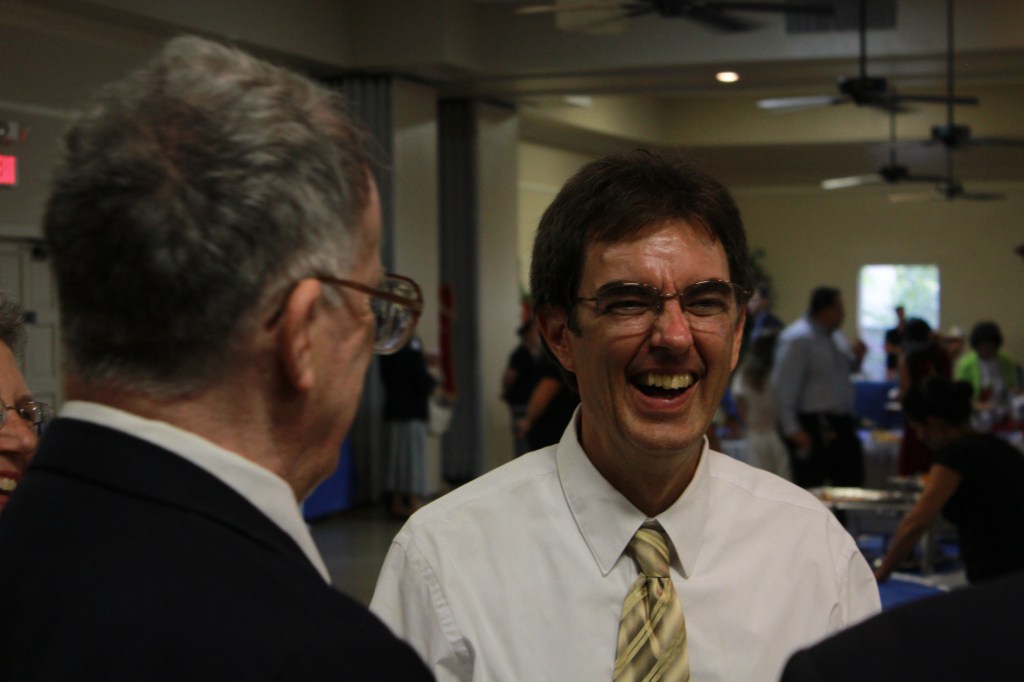
Discipleship is not about getting ahead but walking with, side by side.
“The mother of the sons of Zebedee approached Jesus with her sons and did him homage, wishing to ask him for something. He said to her, ‘What do you wish?’ She answered him, ‘Command that these two sons of mine sit, one at your right and the other at your left, in your Kingdom’” (Mt 20:21-22).
The context of this request from the mother of the sons of Zebedee, James and John, comes from reading a few verses before the quote above. Start reading at Matthew 20:17 and you will see that Jesus and his twelve apostles are heading toward Jerusalem. Jesus stops to share with them, for the third time, that he will be condemned and crucified.
Jesus’ statement of his imminent suffering and death appears to be ignored by the mother of James and John. The other ten are indignant, not because of the apparent lack of acknowledging Jesus’ statement, but about who is the greatest among them! It is easy to imagine how the chaotic scene ensues! As Saint John Chrysostom wrote: “See how imperfect they all are: the two who tried to get ahead of the other ten, and the ten who were jealous of the two” (Chrysostom 1975, 1552)!
This event is recorded in Matthew, Mark and Luke. Mark has James and John speaking for themselves, not their mother, as in Matthew. Luke does not even record the initial request of James and John at all, but comes in at the point of the apostle’s dispute. What all record, including the Gospel of John, is Jesus’ interjection where he made it clear to his apostles that he came to serve, not to be served. To follow Jesus meant, not that James and John would be given positions of honor, the sitting at his right or his left, but that they were to serve as he served, to love as he loved.
As disciples of Jesus, one of the most powerful ways we can serve, the most powerful ways we can love, is to be truly present, done most effectively when we actively listen. This is done when we look at each other, resist the temptation of thinking about our own needs or thinking about what we are to say. We need to put the book down, set the work aside, turn off the tv, put away the cell phone, disengage our thoughts, and instead look at and listen to what the person before us has to say.
Today, make the time to stop, be mindful, present, and listen to Jesus, to our family, our children, our parents, friends, colleagues, and those to whom, in the past, we may not have given the time of day. Jesus came to serve, to love, to listen. May we too give of ourselves with our time and undivided attention directed toward another. If you are in need of a little help on this memorial of St. James, ask for his intercession, “St. James, pray for us.”
—————————————
Photo: Laughter, a fruit and gift of listening 🙂 photo credit Jack McKee
Chrysostom, St John. Homily. The Liturgy of the Hours: According to the Roman Rite. Vol. 3. NY: Catholic Book Publishing, 1975.
Parallel Gospel passages to review:
Mark 10:35-45; Matthew 20:20-28; Luke 22:24-27 and John 13:12-17
Mass readings for today, Thursday, July 25, 2019

The seed sown does not have to be stolen.
“A sower went out to sow. And as he sowed, some seed fell on the path, and birds came and ate it up” (Mt 13:4). With these words Jesus begins his Parable of the Sower. We read later in verse 19 Jesus’ explanation that: “The seed sown on the path is the one who hears the word of the kingdom without understanding it, and the evil one comes and steals away what is sown in his heart.”
The kingdom of Heaven begins small like a seed. The beginning is an invitation by God to participate in his life. God meets us in our present moments and experiences, but the key is are we aware? Many times there are moments in our life that we pass off as mere coincidence, when in fact God is at work, planting a seed, yet our minds and hearts are closed such that we do not allow that seed to be received. The moment passes and the seed is stolen by the evil one.
A path is a worn area of land not suitable for growth because it is hardened by much foot traffic. When we are hardened to life such that we cannot weep, cannot feel our emotions, the seed, who is Jesus, has no place to germinate in our life. We often do not feel compassion for the needs of others because we would rather hold onto our pride and bear a grudge, we would rather be unforgiving because we would rather be right, and we allow ourselves to be governed by our fears such that we find protection in our prejudices.
In allowing our hearts to be hardened, we close ourselves off to the source of our life, our very being, and we allow the evil one to steal the gift of life that God offers. God the Father has sent his Son to dwell among us. He seeks the cracks and places that have not been hardened, where there is some loose soil, the places in our being that are still open to faith, hope and love.
Jesus, may the seed of your Word come into our lives today to reveal your truth so that we may understand who we are and who your Father calls us to be. Send your Holy Spirit to dwell deep within our hearts and to take root in every aspect of our lives such that we begin to feel compassion again, we begin to hope again, we begin to have faith again, and we begin to love again.
———————————————————–
Photo by freestocks.org from Pexels
Link for the Mass readings for Wednesday, July 24, 2019

God first equals healthier relationships.
What Jesus proposes is not an either/or statement, but is meant to be a both/and statement. The end goal of our life is to be in communion with God. To attain that goal, we need to not only acknowledge that God exists but also come to know and follow his will. As Jesus said, “For whoever does the will of my heavenly Father is my brother, and sister, and mother.” (Mt 12:50). The challenge is that there is so much that pulls at us for our attention, so much that reaches out to divert us, people, activities, material pursuits are all vying for first place for our minds, hearts, and souls.
The challenge and demands of family life are tremendous. We often read, hear, and experience ourselves, how much the family is being challenged in our modern age.
Many of us strive to put family first in our lives. That ought to and needs to be a priority as healthy relationships require commitment, love, sacrifice, and persistence. What Jesus offers then seems to be counter intuitive. Jesus is approached, in the midst of is teaching, and told that his mother and brothers were there wanting to see him. We would think he would say, “Great! Bring them right in, I have a place reserved for them front and center!” Yet, his comment, “Who is my mother? Who are my brothers” (Mt 12:49), raised a few eyebrows and hackles.
Jesus was not choosing his disciples over his family, he was clarifying that the primacy of place of God his Father is to be first and foremost. “For whoever does the will of my heavenly Father is my brother, and sister, and mother” (Mt 12:50). Families come in many different shapes and sizes, one size indeed does not fit all. Building our relationship with our heavenly Father is the foundation toward striving toward healthier relationships.
God first means that we become less and his Son becomes more in our life, this means we come to truly experience the love of the Holy Spirit: sacrifice, willing to give of ourselves to each other, willing the good of each other, and making time for each other. As we deepen our relationship with God, balance will come into better focus. This is even truer for those in our family who say no to the invitation of building a relationship with Jesus. We need to resist the temptation of becoming defensive, imposing our will and God’s will on others. Instead, continually invite, but ultimately live our faith authentically, and others will see the transformation in us. Just as important, is that we will be able to be more present to our loved ones, be better equipped to accompany them, encourage and support them as they need us.
Putting God first in our lives, will indeed help us with our family relationships. As we grow closer and deepen our relationship with Jesus, we mature and begin to experience the fruits of our relationship with him, which are love, joy, peace, patience, kindness, goodness, gentleness, and self-control (cf. Galatians 5:22-23). As we are putting these values into practice toward one another, we will be more present to and develop deeper relationships with our own family, while at the same time coming to experience a larger extended family, the Church, the Body of Christ, the poor in our midst.
Who was the closest relationship Jesus had? Mary. Not because she gave birth to him, but because she was the premier model of discipleship. Would you like to deepen your relationship with your family? May we follow Jesus’ invitation and with Mary begin our day today and often throughout it by saying, “May it be done to me according to your word” (Lk 1:38).
Photo: Leaning on God and each other!
Link for the Mass readings for Tuesday, July 23, 2019
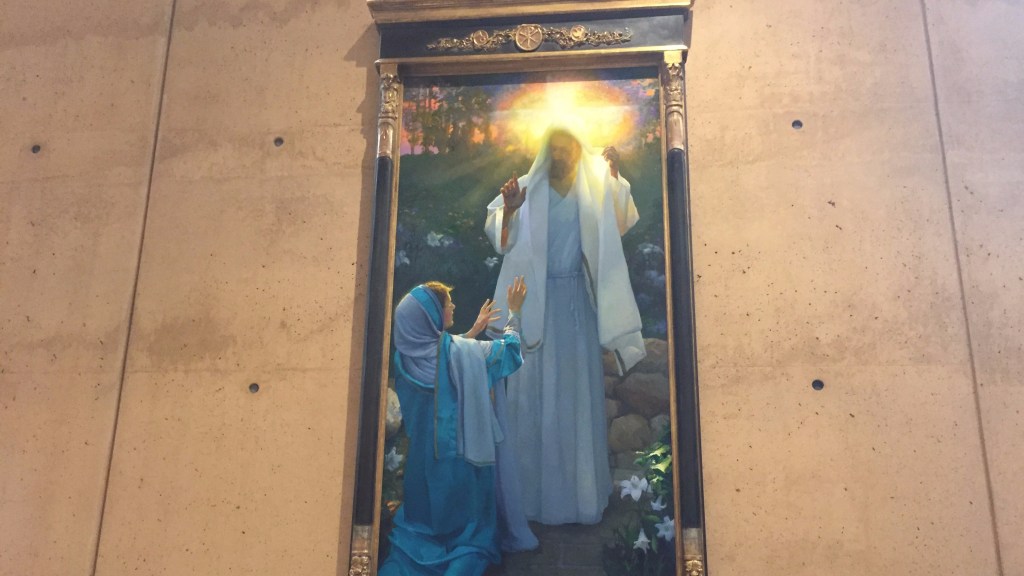
Mary Magdalene, model of hope and perseverance
Mary Magdalene went and announced to the disciples, “I have seen the Lord,” and then reported what he told her (John 20:18).
Mary is the Apostle to the Apostles! Though before she announces this proclamation, the foundation of our faith that Jesus is risen, we find Mary weeping outside the tomb. She is crushed by the death of her Lord and his body appeared to have been taken away. Peter and John, following Mary’s initial lead, ran to the tomb, saw it empty, and “then the disciples returned home” (Jn 20:10).
Mary stayed, she remained still, experiencing her doubt and growing despair.
How many times have our hopes been obliterated, what pain have we or do we endure, what horrors do we continue to witness in our lives, throughout our communities, country and world? When Jesus first speaks to Mary, she does not recognize his voice, thinking him to be the gardener. Are we like Mary, that we are so weighed down by our sorrow that we are unable to recognize Jesus in our midst?
Mary was willing to weep, to experience and not run from her sorrow, and deep down held on to hope. Even after seeing the tomb empty, even after Peter and John had left, she still looked in the tomb again. Despite a growing doubt and despair, even after encountering two angels, she did not leave the empty tomb. In the midst of her disillusion, Mary recognizes the risen Jesus when he calls her by name!
May we not lose the ability to weep but also hold on to hope. Both are part of our humanity. To lose our capacity to weep, is to reject our humanity, and then risk the slide into the temptation of indifference to our own hurt and the agony of others. Hope is a cornerstone of our faith. Jesus is present in the midst of our brokenness. When we are willing to be still and experience our emotions, resist the temptation to run away, while at the same time embracing hope, we too will encounter Jesus.
May we experience Jesus in the midst of our trials or sorrow, as well as our joys, for Jesus is present to us through the full range our human condition. And when we encounter Jesus, like Mary, may we go boldly forth with joy, to proclaim what he tells us! May we share our stories of Jesus active in our lives, so to be a living Bible to others. Our stories shared may be the only Bible someone else ever reads.
Mary of Magdalene, Apostle to the Apostles, pray for us!!!
Painting: The Resurrection by Peter Adams, 2018 – hanging in the Cathedral of Our Lady of the Angels, Los Angeles, CA
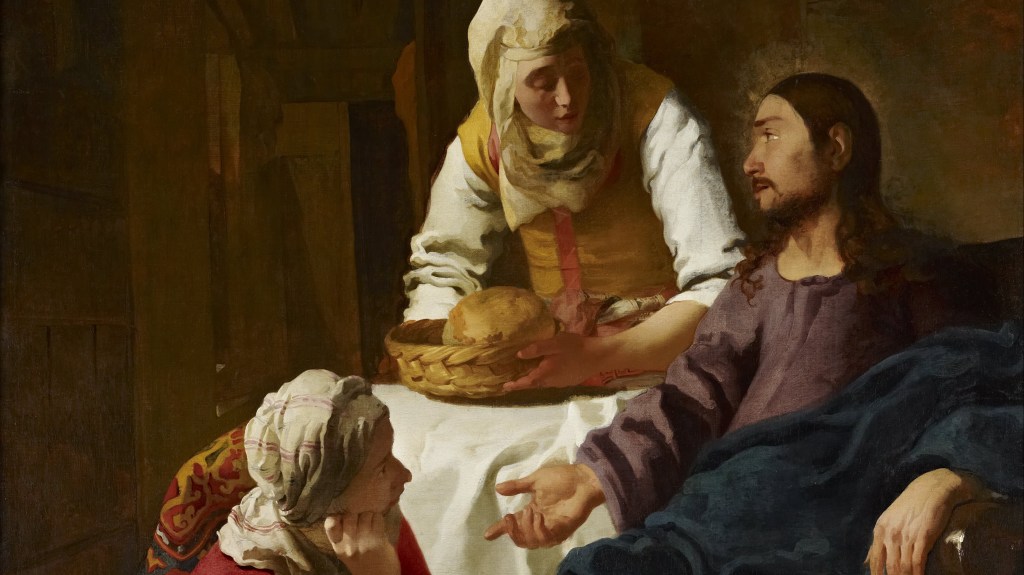
Mary has chosen the better part, will we?
Often when hearing and then discussing today’s Gospel account from Luke, the question arises, “Are we more like Martha or Mary?” There is a long tradition within the Church regarding the interpretation of this account as dealing with the balance of the active and contemplative lives of the Church. The obvious question that causes much consternation though is, why is Martha doing all the work and everyone else, including Mary her sister sitting around Jesus?
The point that is missed in each of these perspectives is Jesus’ response: “Martha, Martha, you are anxious and worried about many things” (Lk 10:41). Jesus is addressing not so much the issue of Martha taking care of the meal preparations, but her anxiousness and worry about many things. I do not believe this is a paternalistic snipe at Martha, saying in effect, get back in the kitchen and complete your task. I believe Jesus is inviting Martha to follow the lead of her sister, Mary, and do the unthinkable, to sit at his feet.
The cultural practice of the time was that when people gathered for a meal in someone’s home, the women would cook and and stay in the kitchen, and serve the men while they ate and talked. Mary sitting at the feet of Jesus becomes even more profound when Jesus does not rebuke her for sitting with the men, but praises her, “There is need of only one thing. Mary has chosen the better part and it will not be taken from her” (Luke 10:42). Jesus is saying to good effect, “Martha, lay your burdens, anxieties and worries down and I will give you rest” (cf Mt 11:28).
Martha is doing her duty and following common cultural practice. She is a good woman, a good person, a good hostess, but she is “worried and anxious about many things”. The issue for Martha is deeper than lack of help. There is a restlessness and hunger that is not being fulfilled that is causing her emotional unrest. Jesus is showing her that there is something more than being a good person, there is being one who lives a life in relationship with God. Jesus is speaking to us as well today. So many within and without of the Church are about being good and doing good work, but there is something missing.
If we do not begin our day with prayer, if Jesus is not the primary focus, if we do not bring him into every aspect of our life and live apart from him, we can and often will do good things, act in kind and caring ways, but there will be something missing, there will be a lack. We will also more easily be distracted and diverted from doing that which will truly fulfill our lives and this simple foundational pattern can have a tremendous impact on the fulfillment of our relationships, our careers, our vocational paths and how we encounter and interact with one another.
We look at ourselves, relationships, communities, country, and world, we experience and see anxiety, fear, violence, suffering and pain, and ask, “Where is God, why has he left us in this state?” If we are still enough to listen, we will hear Jesus share with us that, “God has not left you, you have left God. Why are you anxious and worried about so many things. Mary has chosen the better part and it will not be taken from her.”
Hopefully, Martha tossed aside her apron that day and joined Mary at the feet of Jesus. I believe she did. May we do the same to reorient our life in collaboration with God, and find rest and renewal in him, to be contemplatives in action and begin to experience a life of fulfillment and joy.
Painting: Johannes Jan Vermeer – Christ in the House of Martha and Mary
Link for the Mass readings for Sunday, July 21, 2019
“He withdrew from that place.”
In today’s Gospel from Matthew, Jesus realized that: “The Pharisees went out and took counsel against Jesus to put him to death” (Mt 12:14). Jesus did not then start to plan how he would defend himself against their plot, he did not arm his supporters, nor is there any indication that Jesus let the fact that he was a marked man bother him. What did Jesus do with this bit of news?
“He withdrew from that place” (Mt. 12:15) and cured those who followed him. Was Jesus being a coward by withdrawing? No. Jesus was refusing to engage or give any of his time or energy to their negativity. He focused on what he was about and that was continuing the mission that God had sent him to achieve, which was to help bring about the salvation of humanity and the world, and call those who would work with him to continue his mission.
Many of us will hopefully not receive death threats, but many of us have and will witness and/or receive critical, negative, belittling, or dehumanizing looks, words, and outright actions to cause physical, mental, emotional or spiritual harm, just in the course of our daily interactions. For those of us who choose to practice publicly the teachings of Jesus, we may receive even more!
Our common response to the many forms of perceived or actual animosity directed toward us is to react. Our reactions generally are based on learned defense mechanisms we have adopted through our lives. Often when we react, we slip into survival mode, experience increased anxiety, defensiveness, anger as well as a myriad of other emotions. Ideally, as we mature in our faith, our response is to draw into the present moment, breath, and call upon God’s guidance to direct us such that we can act more mindfully and be advocates of God’s grace.
Many times the best way to diffuse negativity is to do as Jesus did in today’s Gospel, resist to engage in it altogether and continue to be about enacting God’s will in our life. May we recall a time that we have taken offense and reacted in kind toward someone who pushed our buttons and got under our skin. Jesus, show us how we could have reacted differently in that situation and help us to imagine doing so. Send the Holy Spirit to guide and help us to be more patient and understanding in the future.
Life is short in the best of scenarios, let us not take a day or moment for granted, nor give away our precious time to engaging in negative reactions. Instead may we begin our day today by meditating on these words attributed to St. Teresa of Avila (1514-1582):
“Let nothing disturb you,
Let nothing frighten you,
All things are passing away:
God never changes.
Patience obtains all things.
Whoever has God lacks nothing;
God alone suffices.”
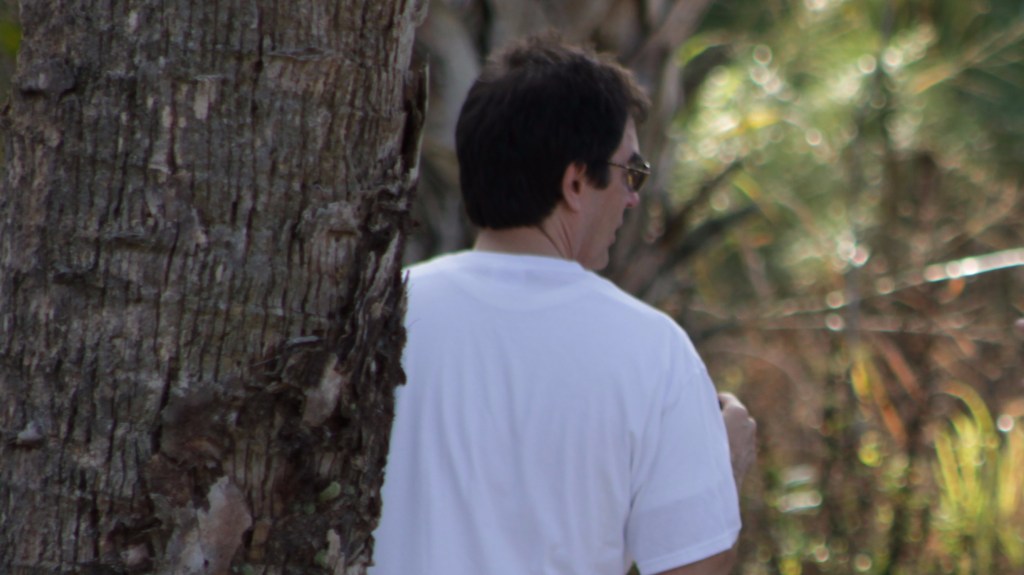
Photo: 2010 Hike, taking a walk is often a good way to decompress and leave negativity behind! Photo credit – Jack McKee
Link for the Mass readings for Saturday, July 20, 2019

 Spiritual Stepping Stones