Called, shaped, and sent on mission
In today’s gospel account, chosen because of the feast of St Paul’s conversion, we read:
Jesus appeared to the Eleven and said to them: “Go into the whole world and proclaim the Gospel to every creature” (Mk 16:15).
The Eleven, and Paul who would encounter Jesus after his Resurrection (cf. Acts 9:1-9), are commissioned with carrying the Gospel, to the whole world. What did they preach? How are we do follow in their footsteps?
The earliest kerygmas, Greek for to preach, and in this case to preach the Gospel, were very simple but effective mnemonic devices. Each disciple was taught what was needed to be covered in sharing the Good News. One such “blueprint” was the symbol of the fish. In Greek, fish is written as ichthus. Each of the characters of ichthus represented the key words that needed to be covered as follows:
Iesous – Jesus
Christos – Messiah or Anointed One
Theos – God
Hyios – Son
Soter – Savior.
Jesus Christ is the Son of God our Savior.
The dynamic truth of these five words are profoundly transformative if we truly believe them. What we need to ask ourselves is, do we believe this statement to be true? If we do, how can we stop ourselves from smiling, from dancing, from sharing that Jesus is truly who he said he is!
Jesus is fully God and fully man and he became one of us so we can become one with him. Through the Son of God’s Incarnation, Passion, Resurrection and Ascension, we are called, as were the first disciples, to share in the divinity of Jesus. We become deified, divinized, we become God through our participation in the life of Jesus. The foundation of our faith has to do with our encounter with the person, Jesus the Christ.
This encounter is personal for each of us. No one can save another, we can only propose, invite, and present the Good News that Jesus Christ is the Son of God our Savior, and share our own experiences of this reality. Our encounter with Jesus does not need to be as brilliant as happened with Paul. More often, Jesus invites us in more quiet and subtle ways. We are to share the Gospel with joy and accompany each other on our journey by providing support, encouragement, and guidance, and let God be who he is.
The Apostles and Paul, Mary the Mother of God, Mary Magdalene and the many who have continued to answer yes to his invitation through the ages up until this day were willing to be shaped, conformed and sent on mission. Each of us, have a part to play in salvation history, and so are called to have our own unique experience of encountering Jesus. As we say yes to his call, as Bishop Robert Barron says often, “Our faith will grow as we give it away.” We too are called, when we say yes, we too will be shaped, conformed, and sent on mission to proclaim the Gospel, to give our faith away!
——————————————-
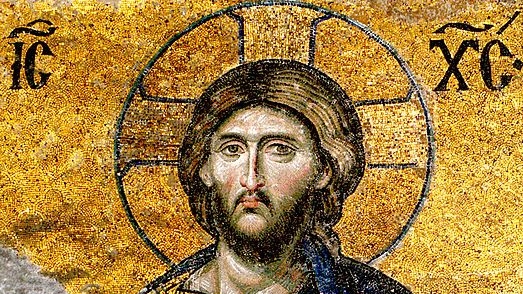
Picture: The mosaic of Jesus Christ the Pantocrator, Ruler of the Universe at Hagia Sophia, in Istanbul, Turkey.
Link for the Mass Readings for Friday, January 25, 2019: http://www.usccb.org/bible/readings/012519.cfm
Jesus satisfies our deepest hunger.
Mark details in his account that many from all over the region came to Jesus to be healed. Among the crowd, unclean spirits threw those they possessed down before Jesus. This did not slow the gathering of people who pressed in on Jesus, just to touch him. The crowd grew to a point that it was getting out of control so Jesus “told his disciples to have a boat ready for him because of the crowd, so that they would not crush him” (Mk 3:9).
People wanted to be healed, to be cured, to be exorcised, and brought others to experience the same. Yet they were missing the deeper point of who Jesus is. He was not just a miracle worker, not just someone that brought about physical healing. Healing accounts were heard and known about in the ancient world. The unclean spirits got it, they recognized Jesus before the people did, “for, whenever unclean spirits saw him they would fall down before him and shout, ‘You are the Son of God'” (Mk 3:11).
Throughout the Gospel of Mark we will read about how the crowds, disciples, and even the apostles, all struggle to understand who Jesus is. The people closed in on Jesus seeking to be healed, but missing the deeper hunger within their souls that St Augustine, the fourth century bishop of Hippo, so eloquently described on the first page of his autobiography: “[Y]ou have made us for yourself, and our hearts are restless until they can find peace in you” (Augustine 1963, 17). Jesus is the Son of God, not just a miracle worker, but God Incarnate.
The only way we will be fully satisfied, find fulfillment, and be at peace within our own skin, is by developing an ongoing, deepening relationship and communion with our Creator. God is infinite and cannot be exhausted. We as finite beings, are left wanting with even the best of material things. We always hunger and want for more, because in the depths of our very being, whether we recognize it or not, we want God.
We need to make time each day to discern which experiences leave us feeling flat, let down, or deflated. Then look at what experiences open us up to joy, ways in which we feel inspired, empowered, where we encounter a foretaste of heaven, the divine in our midst. When we slow down and make the time to see where we do not, and do, experience God in our everyday experience, we can better choose actions that will support a deeper relationship, a deeper intimacy and union that we all hunger and thirst for.
Jesus offers us today his good news: Christianity is not just a philosophy or even a theology, we are not just a people of the Book. Christianity is an encounter with the living God who has opened up heaven for us in the humanity he has assumed. Jesus conquered death and freed us to abide in an authentic love expressed at a deeper, more intimate level than we can ever imagine. Jesus satisfies our deepest hunger as he invites us to be drawn into his grace filled embrace so to be healed, renewed, shaped, and conformed to his heart, mind and will. When we come to this place of encounter, reconciliation, and relationship, we come to know our mission and in serving through that mission we come to know who we are.
————————————————————————
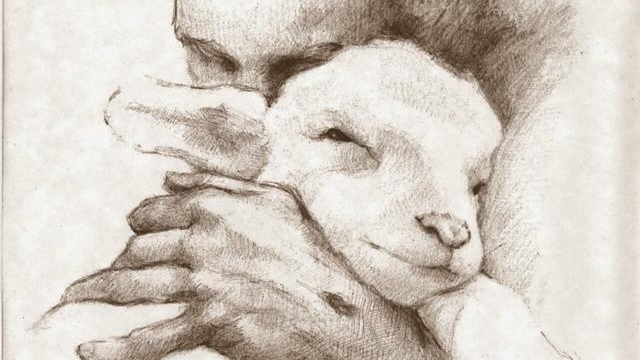
Drawing by: Jesus and the Lamb by Katherine F. Brown
St Augustine. The Confessions of St Augustine. Translated by Rex Warner. New York: New American Library, 1963.
Link for the Mass reading for Thursday, January 24, 2019: http://www.usccb.org/bible/readings/012419.cfm
Let us reject evil and do good.
In today’s Gospel scene, Jesus enters the synagogue and sees a man with a withered hand. The eyes of the Pharisees are on him to see if, yet again, Jesus will heal on the Sabbath. Jesus is clear in his mind what he is going to do, though before doing so, he calls the man up and asks the Pharisees, “Is it lawful to do good on the sabbath rather than to do evil, to save life rather than to destroy it” (Mk 3:4)?
Jesus here is giving them a no brainer of a question. Of course, one is to do good rather than evil on the Sabbath, to save life rather than destroy it! Yet, the Pharisees remain silent. Jesus expresses anger and grief “at their hardness of heart”. Imagine yourself present in the synagogue and witnessing Jesus looking at the Pharisees and the Pharisees looking back at him. I am sure you can recall a time when being present in a similar scene and there was dead silence. Can you imagine what was going through the mind of the guy standing in between them with the withered hand?
The anger rising in Jesus may have to do with the unwillingness of the Pharisees to show any compassion, their outright refusal to acknowledge the need of this man. That they would hold so tightly to their self righteous stance to refuse to even have a discussion about the matter. Not even to say in effect, “Yes, Jesus of course, it is lawful to do good, to save life, but what you are doing is unorthodox.” No. They refuse to dialogue. Their faces are set like flint, they are digging in their heels, and even though Jesus is inviting them to move toward compassion, they instead harden their hearts. In their silence, they are choosing evil over good, destroying life rather than saving it. Pride has reared its grotesque head yet again.
Jesus breaks the silence as he says to the man, “Stretch out your hand.”
The man is healed, but instead of rejoicing, and sharing the good news as Andrew did with his brother Simon, the Pharisees leave immediately to find the Herodians and begin to plot to not only undo Jesus, but how “to put him to death.”
We have witnessed in this scene evil incarnate. We have witnessed the mercy of God presented and rejected. As is stated in the Catechism of the Catholic Church: “There are no limits to the mercy of God, but anyone who deliberately refuses to accept his mercy by repenting, rejects the forgiveness of his sins and the salvation offered by the Holy Spirit” (1864). That is what Jesus is angry about. Not only do the Pharisees resist any move in the slightest direction toward compassion, or their own repentance, they further separate themselves from the love of God. They start with a principle of defending the law, and walk out seething with the intent to kill Jesus, and on the Sabbath! Their hypocrisy is on full display.
With each choice of putting self over another, pride grows. Its appetite is insatiable. Pride is known as the mother of all sins because of its disordered focus on self at the expense of all others and all else. The attention sought is to be directed solely to one self. The height of which is in direct opposition to God. We have witnessed its effects in today’s Gospel.
Let us pray these words together. Jesus, I surrender my will to you this day. Reveal the darkness that dwells within me and grant me the humility to call it out for what it is. Grant me the courage to repent and willingness to receive the healing touch of the Holy Spirit such that I might be transformed in your image and likeness, so to know you and your Father more. May I reject evil and choose good, reject pride and choose love, reject death and choose life. With each person I encounter today, may I reject the temptation to withdraw or scowl and instead offer a smile and a hand of welcome.
———————————————————————-
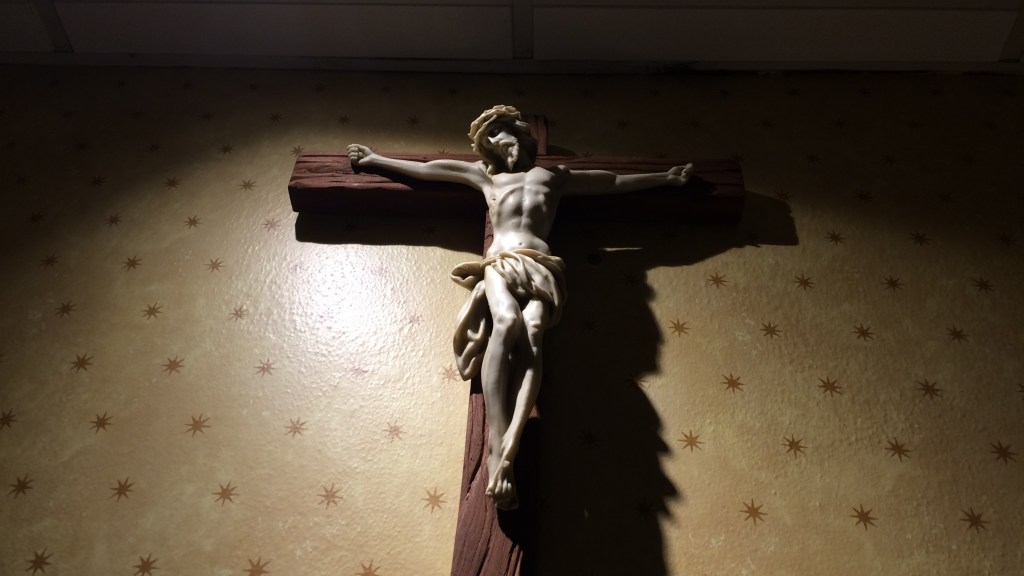
Photo: Crucifix hanging in our chapel last year at Cardinal Newman High School. May the light of Christ dispel any darkness from our midst.
Catholic Church. “Article 8: Sin,” in the Catechism of the Catholic Church, 2nd ed. Vatican: Libreria Editrice Vaticana, 2012.
Link for today’s Mass readings for Wednesday, January 23, 2019: http://www.usccb.org/bible/readings/012319.cfm

The Lord of the Sabbath empowers us to love and respect the dignity of all life.
“The sabbath was made for man, not man for the sabbath. That is why the Son of Man is lord even of the sabbath” (Mk 2:27-28).
In making the above statement, Jesus was not discrediting or devaluing the observance of the Sabbath. He was weighing in on one of the common debates that Jewish people engaged in about what was considered work, and thus what could and could not be done on the Sabbath. Jesus went deeper to address the origin of the Sabbath observance in that it, “commemorates God’s creative and saving action for humanity, and alleviating hunger might be an example” (Donahue and Harrington, 112).
God created us, formed us, and breathed life into us. There is an intimacy and closeness between God the Father and us his created beings, his children. God is our source and we are interconnected in our relationship with him and with one another. God continues to deal with us in a personal way. The Torah, the Law or the Teachings, is meant to enhance the intimacy and closeness of that relationship with God and one another, to provide boundaries and definition so that we can resist going astray.
Jesus has come to fulfill the Law, to restore it from distortion, while at the same time bring it to a higher level of love. When asked what commandment is the greatest, Jesus announced that we are to Love God with all our heart, soul, mind, and strength and we are to love our neighbor as our self (cf. Mk :29-31). To live out this commandment then, we need to foster our relationship with God so to experience his love, mercy, and forgiveness, to fill up to overflowing, so to share with others what we have received, otherwise we have nothing to give.
With or without a relationship with God we can experience emptiness, anxiety, fear, and loneliness. Without a relationship with God, and the community of the Church, we are more vulnerable to the temptations to satiate our hunger with material, finite false goods, that are readily available, and hungering more and more, fall deeper into the lures of power, pride, prestige, ego, and addiction. We then seek to protect that false sense of self at all cost, react defensively, as we feed our fear and pride. We buffer our self off from the very one we have been created for, and those we consider as other.
Today, let us join the Church in praying for the legal protection of the unborn, may we pray and seek opportunities to help those who do not recognize the dignity of life in the womb. We do this best by respecting the dignity of life at all stages and acknowledging the dignity for all people by engaging in respectful dialogue even when we do not agree. May we align ourselves with Pope Francis who said in a homily in 2018 that: “Having doubts and fears is not a sin. The sin is to allow these fears to determine our responses, to limit our choices, to compromise respect and generosity, to feed hostility and rejection. The sin is to refuse to encounter the other, the different, the neighbor, when this is in fact a privileged opportunity to encounter the Lord.”
May we resist the fear of those we may perceive as different, but seek instead to encounter, accompany, and work to empower and provide means of access for one another, especially, the most vulnerable among us. May the scales of prejudice fall from our eyes such that we may see each person as God sees us, as human beings endowed with dignity, worth, potential, and diverse gifts, created in his image and likeness from the moment of conception through each stage of life until natural death.
Let us align ourselves with the Lord of the Sabbath, who walked with his disciples among a field wheat one day, and who is now our Bread of Life this day. As his followers we are to commit to allowing no evil talk to pass our lips and to say only the good things that people need to hear (cf. Ephesians 4:29). We need to have the courage to stand up, call out and hold accountable those who delegitimize, degrade, and dehumanize others in word and deed, while at the same time resist attacking the person. We are to love, to will their good, even those who speak and act with hate. As with Dr. King, we must be the light that dispels the darkness and the love the transforms hate.
———————————————————
Photo accessed from http://www.pexels.com
Donahue, S.J., John R., and Daniel J. Harrington, S.J. The Gospel of Mark in Sacra in Sacra Pagina Series, vol. 2. Collegeville, MN: Liturgical Press, 2002.
Pope Francis full text of homily at Mass on World Day of Migrants and Refugees, Sunday January 14, 2018: http://saltandlighttv.org/blogfeed/getpost.php?id=79091
Link for readings for Mass readings for Tuesday, January 22, 2019:http://www.usccb.org/bible/readings/012219.cfm
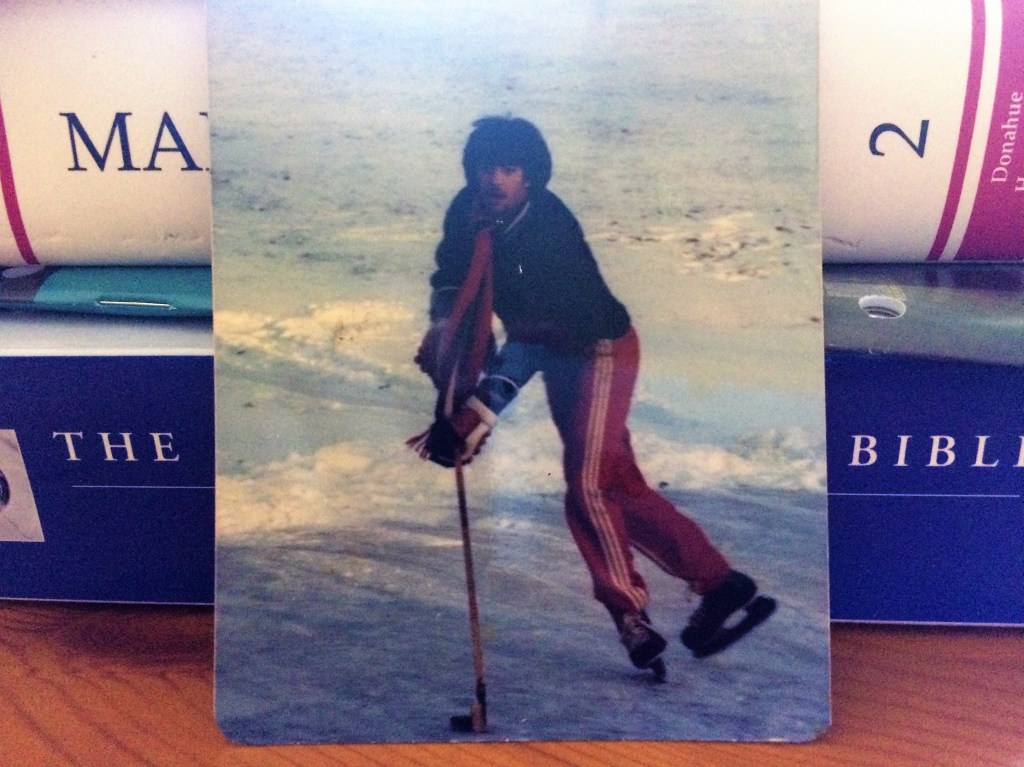
A life of balance, celebrating our life in Christ
“Can the wedding guests fast while the bridegroom is with them? As long as they have the bridegroom with them they cannot fast. But the days will come when the bridegroom is taken away from them, and then they will fast on that day” (Mk 2:19-20).
The conflict that Jesus is responding to is that Jesus is witnessed eating and drinking, practicing table fellowship with his disciples, as well as tax collectors and sinners. There is no evidence that he and his disciples practice fasting. Jesus’ response utilizes the image of a wedding banquet, which for the people of his time would often last at least a week.
Fasting certainly was not a practice during the wedding feast. Now that Jesus has begun his public ministry, it is a time of celebration, because Jesus has been proclaiming the good news that the kingdom of God is at hand, the bridegroom is with his people. As Donahue and Harrington write: “People are summoned to hear the good news of the victory of God over evil, illness, and sin. Even those thought to be habitually outside the pale of God’s forgiveness are welcomed to the banquet” (Donahue 2002, 108). This is indeed a time to rejoice for heaven and earth have been wedded!
People are being healed of chronic conditions, having demons exorcised from them, are able to see, to hear, and be restored to the community that they had been separated from. These are causes of celebration, why wouldn’t those receiving the gift of new life not celebrate? We have and will continue to see Jesus preaching, healing, and inviting those in his midst to participate in God’s kingdom played out in our daily readings. That is one of the gifts of reading the Gospels.
Jesus also references his death, when he will be taken away, and the people will fast on that day. This day will be his crucifixion. So we, like the community of Mark, live in between the time when Jesus walked the earth and proclaimed his message of the good news, and after his Crucifixion, Resurrection, and Ascension, until the time when he will return. We are living in a time of both/and. If we look at the course of a week as a model, we may contemplate the opportunity to fast on Fridays in remembrance of the day he gave his life for us, and to feast on Sundays, the Lord’s Day, when we celebrate his Resurrection.
The course of our life follows an ebb and flow of sorrow and joy, sickness and healing, conflict and resolution, sin and reconciliation. In the midst of our every day, may we seek to take the hand of Jesus, the one who is fully human and fully divine, yoke our lives to his, and seek to live a life of balance. Let us resist the temptations of overindulgence and gluttony while at the same time resisting the polar opposite of a hyper asceticism. We are both a unity of soul and body, so we need to attend to and take care of both our spiritual and physical needs.
I invite you to make a list of three things you can do for yourself this week to take care of your self. Three things to take care of the spirit, such as go to Mass or church, spend five minutes a day in quiet prayer, read from the Gospel of Mark, a spiritual book, sit in comfortable chair and/or listen to some music. Three things to take care of the physical, such as plan your meals so they are little healthier, fast with smaller meals on Friday, and invite family and friends to gather this Sunday for a meal and fellowship together, add some exercises that include a combination of stretching, cardio, and weight bearing, take a walk outside, breath in some fresh clean air.
Life goes fast, let us not take our life for granted, and commit this week to seek Jesus’ help to better take care of ourselves and each other, to celebrate the victory we have received in Christ, the wedding of heaven and earth, the human and divine.
—————————————————————————–
Photo: Playing hockey (around 1982) and reading the Bible, an ideal balance of spirit and body!
Donahue, S.J., John R., and Daniel J. Harrington, S.J. The Gospel of Mark in Sacra in Sacra Pagina Series, vol. 2. Collegeville, MN: Liturgical Press, 2002.
Link for today’s Mass readings for Monday, January 21, 2019: http://www.usccb.org/bible/readings/012119.cfm
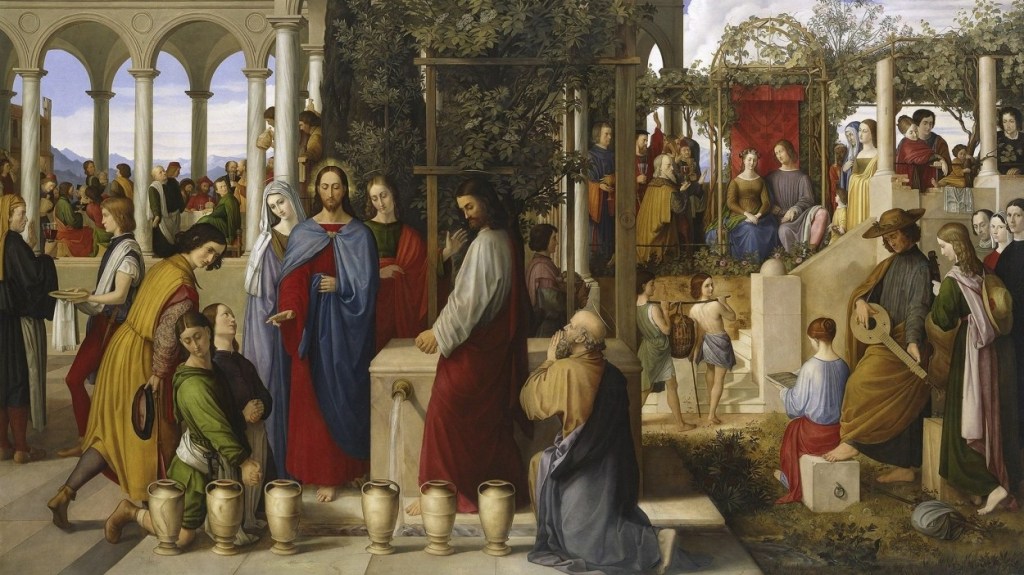
“Do whatever he tells you.”
God takes the initiative to reach out to us and then we have the choice to respond. Our very desire to encounter God in prayer is already a prayer in itself, because we are acknowledging the relationship with God that already exists. Awareness that God exists is not the end goal but only the beginning. A deist believes God exists. Our God, though transcendent and so beyond our realm of understanding, is at the same time a God who draws close, who initiates an encounter and invites us, each and every one of us, to have a relationship with him.
Our relationship with God begins with our awareness of his presence in our lives and a recognition that he invites us to experience him more and more. Our relationship develops in intimacy and authentically when we are willing to reveal ourselves to God and be still and open as he reveals himself to us.
Many times our relationship with God and others flattens out or plateaus for many reasons. The core of which is that we close in on ourselves. We focus too much on work or projects, seek false truths, deny our own emotional and spiritual hurts and wounds and instead of seeking help or reaching out, we keep others at arm’s length. We begin to live a half life or merely exist day to day because we are only going through the motions.
God seeks for us to be fully engaged in life. We can see this in the account of John’s Gospel for today. The wine has run out at the wedding feast of Cana.
Our discernment for our vocation and path in life becomes clearer when our relationship with God is truer. God sent his Son to invite us and help us to deepen our relationship with his Father. If you need to stop but do not know how, if you are aware of past hurts and wounds that are in need of healing, if you are indecisive, anxious, angry, or losing hope, follow the words of Mary: “Do whatever he tells you” (Jn 2:5).
Jesus will lead us to the source of our being, to the truth of who we are and are called to be. We find this in being aware of and developing our relationship with God. As our relationship with him grows we are transformed just as Jesus transformed the water to wine. Each of us have been given gifts to utilize for mission, and Jesus will give us what we need to accomplish what God has given us to do. He will also guide us through any barrier or obstacle that opposes the mission he has given us. We will find joy and strength, we will find healing and renewal, we will find access and means, when we do whatever he tells us and allow him to transform us in his love.
———————————————————-
Photo: Painting by Julius Schnorr von Carolsfeld – The Wedding Feast at Cana – 1819
Link for the Mass readings for Sunday, January 20, 2019: http://www.usccb.org/bible/readings/012019.cfm
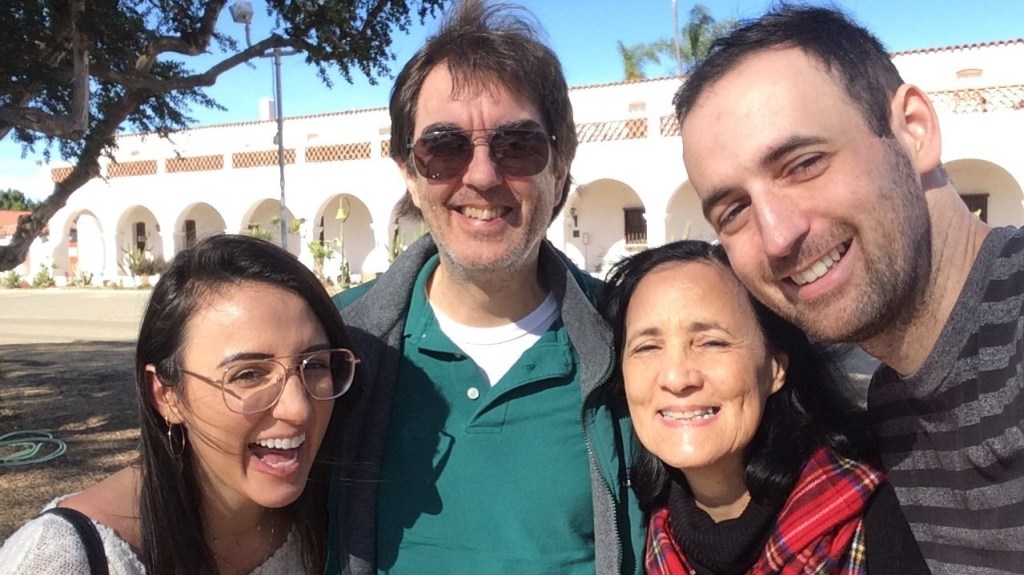
Jesus invites us all to experience his healing and his joy!
Tax collectors were disliked, even despised by many in ancient Palestine because they were considered unclean, as were lepers and sinners. They were cast in this net because there were those who abused their position. A tax collector had a responsibility to pay a fixed amount to the occupying power of Rome, but then could keep as a commission anything he collected over and above that fixed amount. The majority of the population, already just getting by, paying a temple tax, and the Roman tax, then finding out their local tax collector was taking more than their fair share, did not make for feelings of endearment.
Jesus surprises all who had come to hear him teach when he not only invites Levi, also known as Matthew, to follow him, but then they have dinner together. We are witnessing yet again another healing miracle. Jesus provides an opportunity of bridging divides by inviting someone to his inner circle to turn away from one way of life to begin anew, to: “Repent and believe in the gospel” (cf. Mk 1:15). The Pharisees question his choice of table fellowship companions. It is not clear if the Pharisees are eating with them or are on the outside looking in. The other curious point is that the Pharisees are conversing with Jesus’ disciples. So both groups are together witnessing the communal exchange.
Whichever is the case, that they were engaged in the meal together or observing from afar, not quite sure if they were wanting to participate, they could not have been at too great a distance because Jesus could hear their concerns and responded to them: “Those who are well do not need a physician, but the sick do. I did not come to call the righteous but sinners” (Mk 2:17). The Pharisees, and possibly some of his disciples, were not a part of the intimacy of this communion because of their own unwillingness to accept those that Jesus invited to share a meal with, to accept that they were sinners also in need of healing.
Jesus forgives and offers mercy to all who are willing to be aware of his invitation to fellowship. In the surrendering our finite freedom over to his divine freedom, we receive healing and transformation, then develop a relationship of intimacy and communion with the one who is ushering in the kingdom of God. Our relationship continues to grow and deepen as we accept the love and light of Jesus in our life, which helps us to be more aware of our fear, pride, and sinfulness. In our turning away and letting go of our self absorbed posture, we are further healed, experience his joy, and come into the fullness of who God calls us to be, so to share the invitation of blessing, healing, and joy we have received with others.
As with many Gospel passages, this one offers a wonderful opportunity to place ourselves in the scene. Mark presents Jesus teaching the people though he does not tell us anything about what Jesus shared. Knowing what follows, we might ask ourselves, “What might Jesus have taught about before going directly to Levi at the custom’s post?” Could he have been talking, as Matthew adds in his parallel account, about how Amos preached that God desires mercy and not sacrifice (Mt 9:12)?
Let us sit with the opening line for a time and see what Jesus shares. Then as Jesus moves to the custom post, follow him and the others. What is our reaction to Jesus calling the tax collector Levi to follow him as one of his Apostles? Are there sins that others commit that we find easy to forgive, others that we find hard to forgive? Do we accept the invitation to table fellowship with the motley crew, stay at a distance, or walk away? With the gift of these readings that we have been graced with, it is important that we make the time to ponder them, to invite Jesus into our reading, and to encounter him as did those we read about. This is a wonderful spiritual practice that can bring us much joy and bring us into communion with the Physician. No RSVP needed, just come, open up your Bible and join the feast!
————————————————————————-
Photo: Last year celebrating the Christmas break at Mission San Luis Rey de Francia, Oceanside, CA
Link for today’s Mass reading for Saturday, January 19, 2019: http://www.usccb.org/bible/readings/011919.cfm
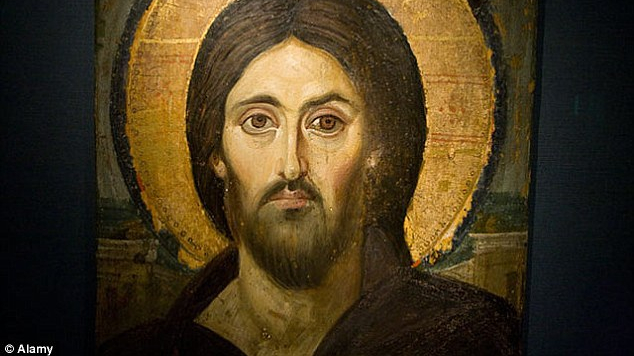
Iēsous Kyrios, Jesus is our Lord!
When it was known that Jesus was in the vicinity, people came. They came to hear him teach, because he taught with authority, he taught in ways that were practical as well as demanding, he confirmed the foundational principles of Judaism, while at the same time he called out abuses in leadership. Jesus came not to abolish the law but to fulfill it. That meant that he did not water down the message of God, but raised the standards even higher than they had been before under the leadership and legacy of Moses. Unlike some of the Pharisees though, Jesus did not just add heavy burdens to leave the people to carry on their own, Jesus accompanied those he challenged, he carried the weight of our sin, all the way to Calvary. Jesus also healed and cast out demons.
If Jesus had a business card to hand out as people gathered it would have had written on it his first words recorded by Mark in his Gospel: “This is the time of fulfillment. The kingdom of God is at hand. Repent, and believe in the gospel” (Mk 1:15). The time of fulfillment is indeed at hand in the presence of the Son of God made flesh. The entrance to that kingdom is measured by a willingness to turn away from self and turn back to God. Those who are open to the love of God, willing to be shaped and transformed by his love, who are in touch with their hunger and yearning to be one with the Father, recognizing that there is more to life than what they experience in the here and now are drawn to Jesus. This is why his house in Capernaum was full to overflowing.
When Jesus returned to Capernaum after some days, it became known that he was at home. Many gathered together so that there was no longer room for them, not even around the door, and he preached the word to them (Mk 2:1-2).
It is clear that there is a movement afoot in just these first two chapters of Mark. Another key verse from Mark is the very first line of his Gospel: “The beginning of the gospel of Jesus Christ [the Son of God]” (Mk 1:1). This is an amazing line, unless we read the words only, missing its proper contextual background. Those reading or hearing these words in the first and early second century would have grasped Mark’s intent immediately. There are two words in that verse that would have leapt off the pages or the lips of the reader; gospel and Christ.
The geopolitical powerhouse lording over Israel at the time of the life of Jesus was Rome. The house of Caesar was its head. Augustus Caesar was emperor at the time of the birth of Jesus and Tiberius Caesar was during most of the adolescence and adult life of Jesus. The term gospel, euangelion in Greek, meant good news. This gospel was spread throughout the Roman empire by messengers on two occasions, at the behest of the emperor; on his birthday and after great military victories. Christ, or Christos in Greek, meant the anointed one. The only ones who were anointed were emperors, kings, and priests.
Mark was making a very clear point with this opening verse, the proclamation of the good news is that Jesus is the Christ, the anointed one, not Caesar. It is not Kaiser Kyrios, Casaer is Lord, but Iēsous Kyrios, Jesus is Lord! This verse is treasonous in the face of Caesar and a subversive rallying cry for the followers of Jesus then and today. Yet Mark was not calling for a military coup, or power play, as has been seen from age to age.
Jesus the Christ is our Lord. He is the one to whom we bow when we hear his name, not any emperor, president, prime minister or political party. We are not called to take up arms but to repent, to turn back to God, to resist the path of self-centeredness, and instead we are called to love – to will the good of others. Let us surrender our ego to the Son of God, so to be transformed from the darkness of revenge, hate, pride, and division, and instead be conformed to the Body of Jesus the Christ, our Lord, so to uphold the dignity of our brothers and sisters through our acts of mercy, love, caring and unity, from the moment of conception through each stage until natural death.
Iēsous Kyrios! This is good news!
________________________________________
Photo: 6th century icon of Jesus
Link for the Mass reading for Friday, January 18, 2019: http://www.usccb.org/bible/readings/011819.cfm

 Spiritual Stepping Stones