
God cares and provides for us as he does the sparrows.
“Are not five sparrows sold for two small coins? Yet not one of them has escaped the notice of God. Even the hairs of your head have all been counted. Do not be afraid. You are worth more than many sparrows” (Lk 12:6-7).
About thirty-five years ago I was in high school and either in my junior or senior sociology or psychology class, my teacher mentioned that if we thought Stephen King told amazing tales, we should definitely read the Bible, especially regarding the imagery found in the Book of Revelation. My teacher’s comment piqued my interest because at the time I enjoyed reading Stephen King, though I had not spent any time reading the Bible. My teacher’s words stayed with me beyond that class period.
A few weeks or months later I remember going to Waldens, a bookstore, at the Enfield Mall in the next town over from where I grew up in East Windsor, Connecticut. I purchased a King James Bible. I don’t remember reading it right away, but shortly sometime after, I do remember leaving a party. I don’t remember anything about the party or why I left, but when I arrived home, I remember going up to my room and for some reason grasping my new Bible. I then just opened it at random and began reading. The verse above was what I read, and it was the first time I can remember experiencing God speaking to me.
It was not a booming voice emanating from the burning bush that was directed to Moses, the room didn’t shake, nor did the lights flicker. Yet, in that quiet and still moment, I heard in my mind, “You will not ever win the lottery, but like the sparrows, I will take care of you. I will always give you the ability and means to work.” God has proven true to his word. I have not won the mega millions, but God has provided me with the opportunity to have regular gainful employment and even though experiencing some tight financial times through the years, God has provided beyond work through the kindness of friends, families, as well as some amazing assistance outside of the norm at times.
Does God still speak to us as he spoke to the people in the Bible? Absolutely! God does speak to us directly, he also speaks to us through his Word in our personal reading, in our time of communal worship, through preaching, he speaks to us through music, art, movies, he speaks to us through others, through our serving each other, through his creation, and a myriad of other infinite possibilities.
The question is not so much, does God still speak to us? The question is how do we open ourselves up to the reality that we can hear his words or his silence? One way is to ask God to help us to recognize his voice, just as the sheep that come to learn the shepherd’s voice. Another way is to make time to be still, that provides the opportunity for reflection and ask God to reveal times in the past where he has spoken and we were not aware. When we examine and reflect on our day, with God’s help we can see where God has been with us and reaching out to us.
Not only do we need to make a consistent time each day to pray, but stay long enough to listen! One of the biggest reasons many of us do not hear God is because we are not listening or we don’t make the time to stop. God’s silence is also a profound answer. There are many people that may want to give us advice, to offer solutions to fix our problems, when sometimes, we just need to stop, slow down, and be still. Are we willing to be open and believe that God speaks to us, and guides us? Fr. Jim Martin, S.J. has expressed the search for finding God in this way: “God is always inviting us to encounter the transcendent in the everyday, the key is noticing” (Martin 2010, 86).
God knows us better than we know ourselves, he loves us more than we can ever imagine. Let us be a little more aware today than we were yesterday, and may we have eyes, ears, and our mind open to notice God working in our lives. Let us be willing to trust in and surrender our control over to our Loving God and Father who cares for and provides for us as he does the sparrows. Let us be open to his invitation to spending time with him to listen to his word or his silence.
————————————————————
Photo by Tejas Prajapati from Pexels
Link for the Mass readings for Friday, October 19, 2018: http://www.usccb.org/bible/readings/101918.cfm
Martin, S.J., James. The Jesuit Guide to Almost Everything: A Spirituality for Real Life. NY: Harper Collins, 2010.

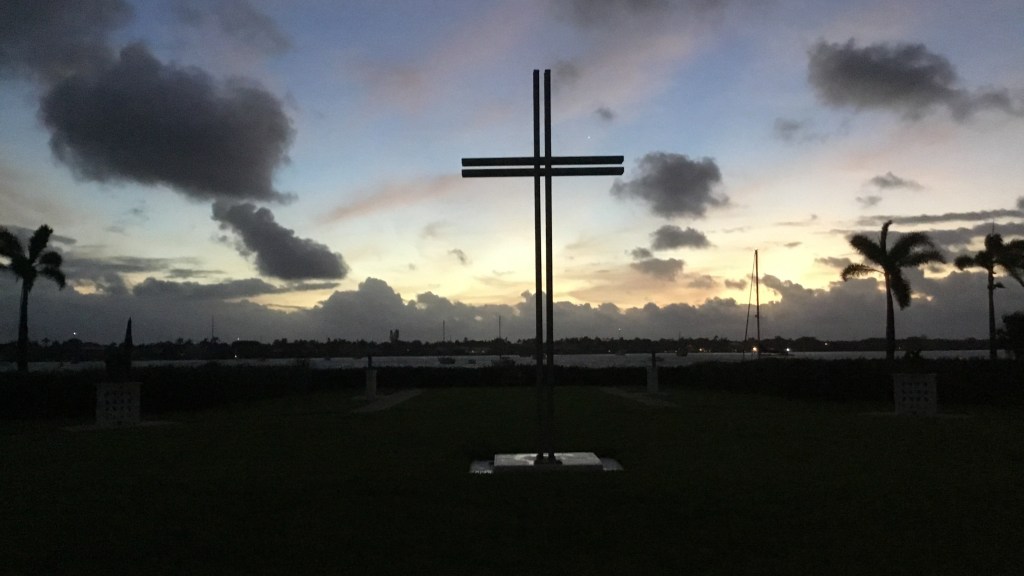
The way of the Cross: loving God, loving self and our neighbor as our self
The Lord Jesus appointed seventy-two disciples whom he sent ahead of him in pairs to every town and place he intended to visit (Lk 10:1).
Jesus sent out disciples ahead of him. He sends us out as well. Just as Mary conceived Jesus through the overshadowing of the Holy Spirit, she went in haste to assist Elizabeth who also was to give birth. What happened when Mary came upon Elizabeth? No sooner had Mary’s greeting reached Elizabeth John leapt in her womb with gladness. This is the model of evangelization, sharing the joy of Christ that we experience in coming together. Let us resist defining people as other and building walls, but instead build bridges of encounter.
Yes, we are a people of the book like our Jewish and Muslim brothers and sisters, but we are primarily a faith tradition grounded in the encounter of a person, Jesus the Christ. Our pastor, Fr. Don, has shared with us a simple image to represent the path of discipleship and that is the image of the cross. The vertical part of the cross represents how we develop our personal relationship with Jesus, through our regular practice and discipline of prayer, meditation, contemplation, and study. The horizontal represents our encountering Jesus in each other through fellowship, small group study, and worship. If we only have the vertical, the one on one relationship with Jesus, we just have a stick. If we just serve others without encountering Jesus, we just have a stick. Put them together and we have the cross which is embodied by our love for God and love of neighbor.
Christianity is the way of the cross, not the way of the stick. We are to be contemplatives in action. We experience the joy of encountering Jesus, personally, and in our interactions with one another. We do not need to set off to some far away land, but open our minds and hearts to allow God to happen in our everyday experiences. We are to love others as Jesus loves us, we are to share the inexpressible joy of that love, and that love we share is to be unconditional. We are to participate in “ the surrender of life for the sake of others” (Lohfink 2014, 73).
Jesus sent seventy-two off to build Christian communities, one smile at a time, one person at a time, one encounter at a time, one relationship at a time. I agree with Gerhard Lohfink in his piece, “What Does the Love Commandment Mean?” Love is not a pious universal that we love all humanity in some vague removed or remote way. The love that Jesus expressed and imparts us with today is something tangible, corporal, it’s hands on: “This love constantly breaks out of the individual communities to embrace non-Christians, guests, strangers, the suffering (obviously including those in other countries) but it is always tied to the concrete experience of common life in the individual community” (Lohfink 2014, 72).
May we experience Jesus this morning in our personal time of prayer, and may we also be open to experience him in others, especially those we may have kept at arm’s length. With each encounter let us reach out beyond our self to engage others with hospitality, respect, and joy. Each pair of eyes that you to happen to look upon, offer a smile and say hello. Just that simple, genuine expression acknowledges to the other that they matter, have worth, and dignity. If someone asks you how you are, instead of saying, “Fine.” Say instead, “Better since you asked. Thank you for caring.” There are many ways to reach out and give of ourselves to others in love, we just need to be willing to follow the lead of the Holy Spirit.
——————————————————————-
Photo: from parroquiamadridejos at cathopic.com
Lohfink, Gerhard. “What Does the Love Commandment Mean?” In No Irrelevant Jesus: On Jesus and the Church Today, translated by Linda M. Maloney, 64-74. Collegeville, MN: Liturgical Press, 2014.
Link for the Mass readings for Thursday, October 18, 2018: http://www.usccb.org/bible/readings/101818.cfm

Come into the light of Christ
After Jesus continues to call out those Pharisees who follow their own will instead of the love of God and put themselves in place of honor instead of God, one of the scholars of the law said to him in reply “Teacher, by saying this you are insulting us too.”
Jesus does not miss and beat and convicts the scholar as well when he said, “Woe also to you scholars of the law! You impose on people burdens hard to carry, but you yourselves do not lift one finger to touch them” (Lk 11;45-46).
Jesus is clear about his mission, he is clear about what the kingdom of God is not and what it is. Jesus is shining a light on the practices of the Pharisees and the scholars of the law such that they can see the darkness that is blinding them. Unfortunately, unlike the blind man Bartimaeus (see M 10:46-52) who knows he is blind and wants to see, this is not true for these men who Jesus confronts in today’s Gospel.
How about us? As Jesus shines his light and love in our direction, do we cover our eyes because the light is too bright and withdraw further into the shadows or do we allow our eyes time to adjust so to allow the brightness of the Mystery of God to reveal to us that which has kept us bound in sin? Will we justify, or rationalize our behavior or that of others that we know is sinful or will we be transparent and walk into the light and the embrace of Jesus, so to repent and believe in the Gospel?
May we not follow the path of those Pharisees and scholars of the Law who imposed heavy burdens on those seeking relationship with the living God, but be willing to follow Jesus and meet others where they are at, so to accompany, encourage, and support each other in living the Gospel in our everyday lives. Let us no longer hide in the darkness, enslaved by our fears and prejudices, but come from the shadows into the light of Jesus the Christ, encourage and lead others with the Love of the Holy Spirit to do the same.
Photo from Cathopic
Link for the Mass readings for Wednesday, October 17, 2018: http://www.usccb.org/bible/readings/101718.cfm
Resist Hypocrisy and Embrace Hospitality
The Lord said to him, “Although you cleanse the outside of the cup and the dish, inside you are filled with plunder and evil. You fools” (Lk 11:39).
Jesus’ harshest critiques were for acts of hypocrisy. He did so to show, in no uncertain terms, how dangerous this was, especially for religious leaders. These men were entrusted with the care of God’s people. They may have observed the proper rituals, spoke, and dressed to match the part, but this all meant nothing if their hearts were hardened and they were closed to the will of God. Most of all the danger was when they themselves became obstacles, stumbling blocks to those who sought God. Jesus indicting them as fools meant that they were bereft of the wisdom of God they projected to have.
A recent Pew study tracing religious affiliation from 2007 to 2014 found that approximately 56 million Americans identify themselves as following no religious affiliation. Some have labeled this group as the “Nones”. I am sure the context and nuance of why this trend is on the rise has many components, but I believe one ingredient is that many feel they have witnessed unacceptable levels of hypocrisy that have turned them off to organized faith traditions. Our present crisis regarding abuse of minors and cover up within the Catholic Church itself by religious, priests, and bishops, continue to support this trend. That the very leaders commissioned to bring the Good News, guide, and protect seekers have instead abused anyone is horrific and unconscionable.
In the depths of our very being we seek and yearn for the transcendent, the infinite. We are spiritual seekers, yet, time and again, we experience suffering, injustice, and hypocrisy at the hands of the very ones who are our leaders in both the religious and political sphere. Jesus got this, and this is why he convicted those who abused their positions, because he knew the significant damage that could be inflicted on the believer.
We as people of faith must first and foremost recognize that we live in a fallen world. No one is perfect, even and especially our leaders. We all fall short of the perfection of Christ we seek and aspire to. If we put anyone up on a pedestal they, sooner or later, are going to fall, and the higher up they go, the greater the fall. God is to hold priority of place before all and anyone else. Also, our actions must follow Jesus’ lead of resisting the urge to project all is well and good, that we are fine, when we are not, and none of us are all of the time. None of us are super men or women. If we think we can go it alone, we will fall sooner or later.
Jesus invites each of us to experience transformation. To receive this gift we need to seek help from God, the true source of our very being and existence. We must be people of courage allowing the light of Jesus to shine upon those dark places of sin within our souls, and be willing to see that which needs healing so as to release our own “plunder and evil”, which we harbor within. We need to open ourselves to the love of the Holy Spirit so to risk, to trust one another with our weaknesses, faults, and shortcomings. We need to resist hiding and rationalizing, and instead be humble and transparent, if we are ever going to be able to heal and mature spiritually.
In a posture of humility and openness to be helped, we allow the unique gifts of others to come to the fore. At the same time we need to offer what we uniquely can give, not judging another who has fallen, but providing empathy, support, and encouragement so they too can heal and grow. When we are transparent with our sin, and empower and accompany one another, we as Church can resist the temptation of hypocrisy and instead embrace the gift of hospitality.
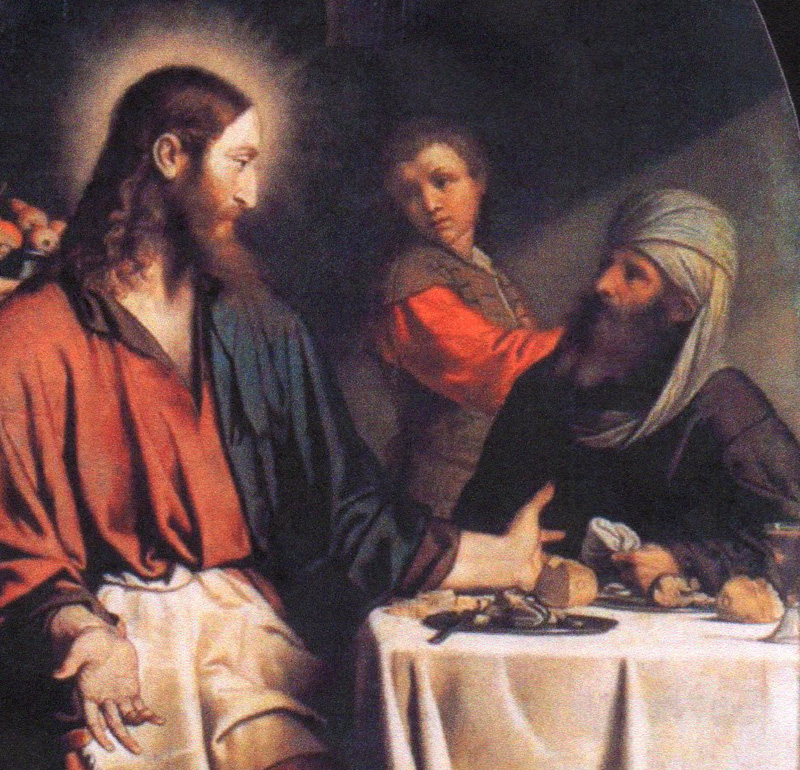
Painting: Supper In the House of Simon, by Italian artist Moretto da Brescia (1150-1554)
Link for today’s Mass readings: http://www.usccb.org/bible/readings/101618.cfm
Let us not seek a sign, but seek to follow Jesus.
While still more people gathered in the crowd, Jesus said to them, “This generation is an evil generation; it seeks a sign, but no sign will be given it, except the sign of Jonah” (Lk 11:29).
To understand what Jesus means we need to understand the sign of Jonah. Jonah was sent by God to go to Nineveh, the capital city of Assyria, to call them to repent from their wicked ways. The Jews not only considered Nineveh to be a place of decadence, wickedness and godlessness, the military of Assyria had invaded Israel and eventually conquered the northern kingdom around 721 BC. We can understand Jonah’s initial refusal follow God’s lead. Not only did he not want to go to Nineveh, Jonah wanted God to punish and destroy them. Those who have read the tale, know that Jonah acquiesced and within hours of his proclamation to the citizens, including the king, they repented and God showed them mercy.
Jesus is drawing a parallel between the people of Nineveh and his listeners. The people of Nineveh listened and repented to a reluctant messenger. The Ninevites, Gentiles, the sworn enemies of Israel, received God’s mercy when they repented. Now, in their midst was one greater than Jonah, the Son of God, and they were demanding of him a sign. The sign of Jonah was repentance. Jesus, from the beginning of his public ministry preached the same: “This is the time of fulfillment. The kingdom of God is at hand. Repent, and believe in the Gospel” (Mk 1:15).
We would do well to listen to Jesus’ message. Repentance is a foundational spiritual discipline. We are called to consistently examine our conscience. We need to come to accept that we live in a fallen world. This is not a pessimistic view. This is an awareness of the reality of our present condition. Jesus warned about the cult of personality, the messiah complex. Jesus himself is the sign, he is the Way, the Truth, and the Life.
Through accepting that we live in a fallen world, and recognizing that we need a savior, we can make the next step to acknowledge that we need to repent and turn back to him who can save us, for apart from him, we can do nothing, yet with God, all things are possible.
If we believe we can solve our problems on our own, we will consistently fall short. Julian the Apostate, Roman emperor from 361-363 AD attempted to adopt and put into practice Christian charitable works, which he saw value in but he sought to do so through the state by enacting policies without practicing Christianity. In essence, doing good on his own without Jesus. This did not work.
St Mother Teresa recognized the need for Jesus and stressed this when she taught her novices that she was not interested in numbers, she was not interested in having a branch of social workers. She and those who followed Jesus were to be missionaries of God’s charity. They were to serve Jesus in the distressing disguise of the poor. To do so they participated in daily Mass for an hour so they could bring Jesus to those they ministered to. Later in the day after returning from their time of service they participated in adoration for an hour. Empowered by Jesus, blessed by his mercy and love they could serve Jesus in those they met in the harshest of conditions.
We are not so much to seek signs, but to seek Jesus. Let us begin this morning by acknowledging and repenting from our own selfish pursuits and accept the invitation of Jesus to be the center of our lives, the very source of our thoughts and actions. For it is, “Through him we have received the grace of apostleship, to bring about the obedience of faith, for the sake of his name” (Romans 1:5). Let us trust that God is at work within us, may we be open to follow his lead, to do what he asks of us today. Let us rise and be on our way to go and announce the Gospel of the Lord in word and deed.
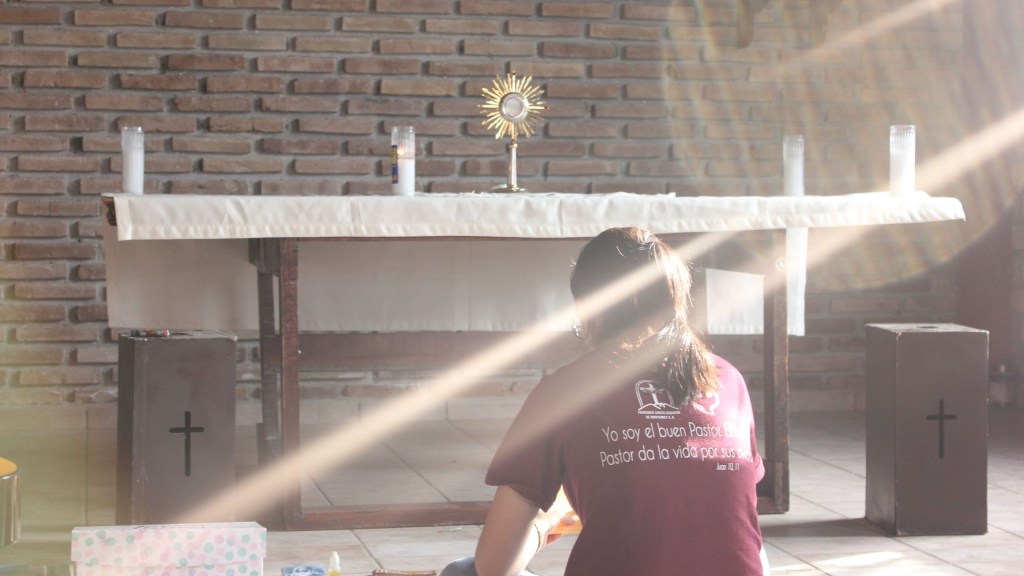
Photo credit: Caro Mendoza from cathopic.com
Link for the Mass readings for Monday, October 15, 2018: http://www.usccb.org/bible/readings/101518.cfm
What is the one thing you are lacking?
A man approached Jesus seeking to know what he must, “do to inherit eternal life” (Mk 10:17). Jesus shared that following the commandments, such as: do not kill, commit adultery, steal or bear false witness; do not defraud, but do honor his father and mother (cf. Mk 10:19), would be a good place to start. The man affirmed that he had followed them all. I can see the eyebrows of Jesus raise and his mouth curl into a smile as he realizes the sincerity of the man kneeling before him. The disciples recognized that look and held their breath.
Jesus, looking at him, loved him and said, “You are lacking one thing. Go, sell what you have, and give to [the] poor and you will have treasure in heaven; then come and follow me” (Mk 10:21).
Jesus was not admonishing or condemning the man, he was loving him, and invited him to take the next step to fulfill the deepest desire we all have, which is to be one with God and one another. Yet, instead of embracing the invitation, the man was crestfallen. He had followed the prescriptions of Torah all his life, he felt he was blessed by God with the gift of having many material goods, but in the end it was those possessions that had enslaved him. He genuinely came seeking eternal life, and Jesus gave him just what he sought, and even more by giving him the opportunity to be one of his disciples, but he could not give up the one thing he was lacking.
The heart of the commandments is to help us to be freed from that which enslaves us, so that we can put God and each other first and foremost in our lives. This is what we all have been created for, as St. Augustine himself realized when he wrote, “You have made us for yourself, O Lord, and our hearts are restless until they rest in you” (St Augustine, Confessions).
May we return to this scene from Mark 10:17-31 today, and recall the image of the disciples and Jesus watching the rich man walk away sad. Slowly, we observe that they turn their eyes of invitation toward us. A bit hesitant, maybe, we too ask Jesus, “What must I do to inherit eternal life?” What are we holding onto that is keeping us from giving ourselves completely to Jesus? Jesus looks at us, holds our gaze in his and loves us. Jesus then says, “You are lacking one thing…” What does he say next? What is our response?
————————————
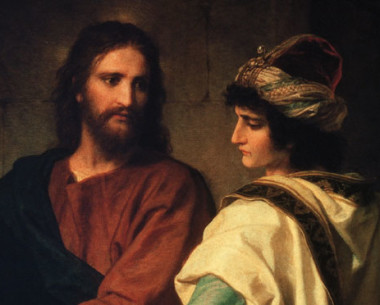
Painting – close up of “Jesus and the Rich Young Ruler” – 1889, by Heinrich Hofmann
Link for the Mass readings for Sunday, October 14, 2018: http://www.usccb.org/bible/readings/101418.cfm
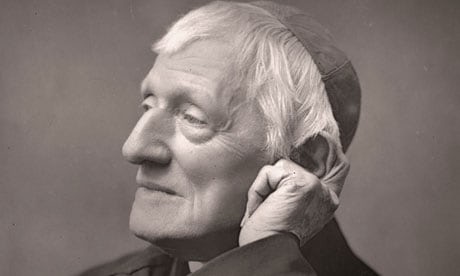
Radiating Christ – Blessed John Cardinal Newman
The Prayer of John Cardinal Newman
Radiating Christ
Dear Lord, help me to spread Thy fragrance everywhere I go. Flood my soul with Thy spirit and life. Penetrate and possess my whole being so utterly that all my life may only be a radiance of Thine.
Shine through me and be so in me that every soul I come in contact with may feel Thy presence in my soul. Let them look up and see no longer me but only Thee, O Lord!
Stay with me, and then I shall begin to shine as thou shinest; so to shine as to be a light to others. The Light O Lord will be all from Thee; none of it will be mine; It will be Thou, shining on others through me.
Let me thus praise Thee in the way Thou dost love best, by shining on those around me. Let me preach thee without preaching, not by words but by example, by the catching force, the sympathetic influence of what I do, the evident fullness of the love my heart bears to thee!
Hearing God’s word and observing it in our lives
While Jesus was speaking, a woman from the crowd called out and said to him, “Blessed is the womb that carried you and the breasts at which you nursed.” He replied, “Rather, blessed are those who hear the word of God and observe it” (Lk 11:27-28).
The woman’s comment directed to Jesus in today’s reading is certainly better than the charge leveled against him yesterday that he was healing by the power of Beelzebul, yet even this complement is still off the mark. What made Mary truly blessed was her fiat, her yes, to being willing to participate in the incarnation; conceiving, carrying to term, and giving birth to the Son of God. Then continuing to hear the word of God and observing it through the rest of her life. Mary is the model disciple.
Jesus is, in clarifying the woman who called out, helping her, those present, and us today to a keep proper perspective regarding living under the kingdom or reign of God. God is to be sovereign, primary, first and foremost. We need to be careful not to put any “thing” or any “one” before God. Even today we need to be careful not to make Mary into a goddess. We honor Mary and the saints, we invoke their intercession for assistance as we do family and friends with us now, but we do not adore them, as we do with God. Mary points us to her Son, not to herself. She is like the moon that radiates the light of the sun. This is the point of discipleship.
As blessed John Henry Cardinal Newman articulates so well in his prayer, “Radiating Christ”, the goal of the disciple of Jesus is to come to that point where others may look up at us and “see no longer me, but only Thee, O Lord!” How do we do that? We place ourselves in a posture of humility, of prayer, of being willing to hear the word of God, observe it, and then act upon it and serve him through serving one another. This means we need to slow down, resist the urge to accomplish and just get something done. Sometimes when I am reading by breviary, I will catch myself just reading the psalms, the readings, and the prayers, to get them done, instead of letting the words pierce my heart, convict me, and call me to conform my life to Jesus. Prayer then becomes a function instead of an encounter with the living God. I will stop myself and begin again.
To hear God’s word, we must stop and listen. This can happen in the events of our daily lives as well, when we are attentive. It is resisting the temptation to walk around or away from someone who is homeless, and instead share a few moments, a few dollars, some food, and to even ask their name. Is this uncomfortable, yes, challenging, yes. But the Word of God calls us out beyond our comfort zones, and to be there for others.
Again think of Mary, who, from the beginning experienced suffering with Jesus. She conceived Jesus through the power of the Holy Spirit. What a gift, but at the same time what a trial! How was she going to explain this to Joseph, her betrothed! Simeon’s prophecy at Jesus’ dedication in the temple ended with the words to Mary, “and you yourself a sword will pierce” (cf Luke 2:25-35). We can trace Mary’s sorrows, and continued faithfulness as “she pondered these things in her heart” (cf Luke 2:19) throughout her life from raising Jesus, to being present during his public ministry where she saw him rejected in their hometown of Nazareth, the questions and accusations hurled at him, up to his arrest, scourging, and crucifixion.
In hearing and observing the words of Jesus, we cannot help but to be transformed. May we too, like Mary, ponder the life events of Jesus, turn to him in our trials, challenges, and experiences of injustice. Instead of being weighed down or buried by them, may we be yoked to Jesus, so we can persevere and become stronger, so to experience a joy and a peace that surpasses all understanding, a fulfillment that is beyond comprehension.
From this place of union with Jesus, may love replace our fears, prejudices, and pride, so we have the courage to be present, to provide aid and comfort to those he sends us to minister to. May we say yes, as did Mary, and so allow the Son of God to dwell within us, in the very depths of our souls, such that our thoughts, words, and actions, all reflect Jesus to others.
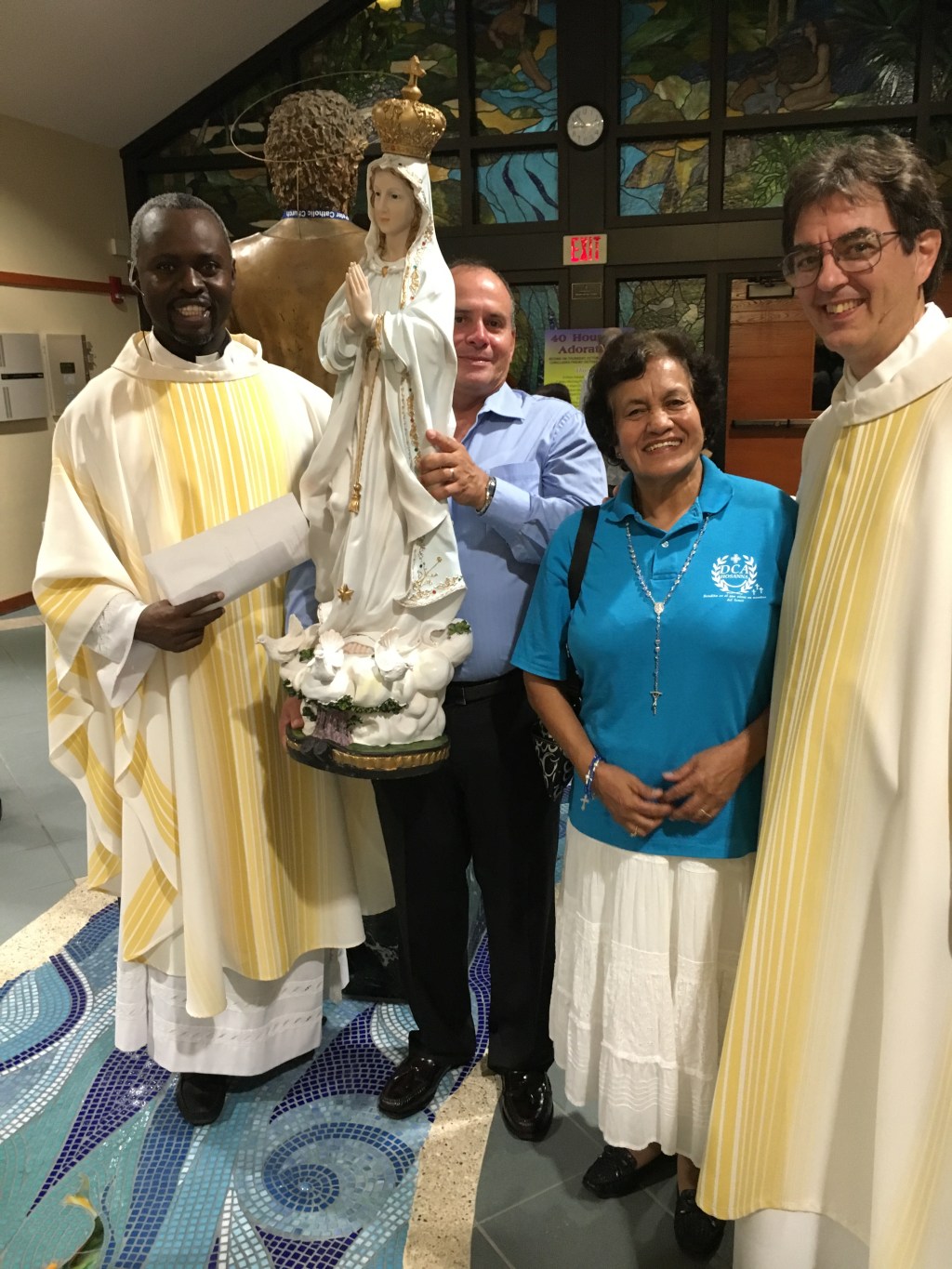
Photo: Last year’s Mass celebrating the 100th anniversary of visitation of Our Lady of Fatima with our St Peter family.
Link for the Mass readings for Saturday, October 13, 2018: http://www.usccb.org/bible/readings/101318.cfm
 Spiritual Stepping Stones