
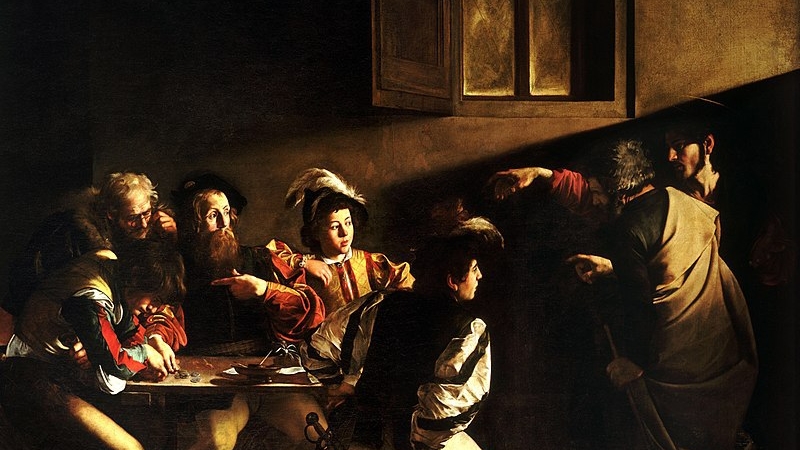
We belong to God and one another.
“While he was at table in his house, many tax collectors and sinners came and sat with Jesus and his disciples” (MT 9:10).
We as the Church, we as followers of Jesus, still have much to learn from Jesus. Today’s reading provides another wonderful example. Once Jesus begins his public ministry he is constantly on the go. Going where? Meeting people where they were, in the midst of their daily lives. And what is the response to Jesus calling Matthew, a tax collector, and then partaking in table fellowship with other tax collectors and sinners? The Pharisees question the disciples about his practice and curious onlookers follow at a distance. But to those who have, maybe for the first time in their lives, been respected as fellow human beings, feel hope. Hope that there actually may be a path from the peripheries. Hope that they no longer have to be on the outside looking in. Hope that they, for the first time in their lives might finally belong.
Jesus is shown time and again in the Gospels to be about encountering the person as they are in their present circumstance and chaos of their lives. He welcomes, is present, embraces the person as they are. He invites people to be part of something greater than their self, to actualize their potential and embrace a life of meaning and purpose. The only requirement is to be willing to be loved, to be willing to be human, to be willing to be free, and once experiencing this encounter, willing to share what they have received with others.
Do we: deny or mask our own fears, stoke our pride believing that we can take care of ourselves without the help of anyone else, seek false truths and the glittering lures of power, wealth, pleasure, and honor for our security and satisfaction, that in the end leave us empty, attached, and/or addicted? Or are we willing: to have the humility to recognize our sinfulness, our need for Jesus and willing to receive his love, so to let go of our bondage to false illusions of security, and realize that we are, at the deepest core of our being, a living, craving hunger and desire to be loved by God and others, so to love in return?
If we are willing to risk, to be vulnerable, to open our heart to Jesus we will experience the love, fulfillment, and belonging we seek in the very depths of our soul. This is the fulfillment that no other pursuit or person can bring. We do this best as Jesus did, by being willing to enter into the lives of others, by resisting judgment and accepting another as they are for who they are, being present and willing to accompany our fellow brothers and sisters. For as Jesus said, “I desire mercy, not sacrifice” (Mt 12:7). Mercy, as I have quoted Fr. James Keenan, S.J. before, “is the willingness to enter into the chaos of another.” Jesus is willing to do so for us. Are we willing to be loved by him, to be called by Jesus like Matthew, so we can love others in the midst of their chaos?
——————————————————
Painting: The Calling of St. Matthew, Michelangelo Merisi da Caravaggio, 1600
Link for the Mass readings for Friday, September 21, 2018: http://www.usccb.org/bible/readings/092118.cfm
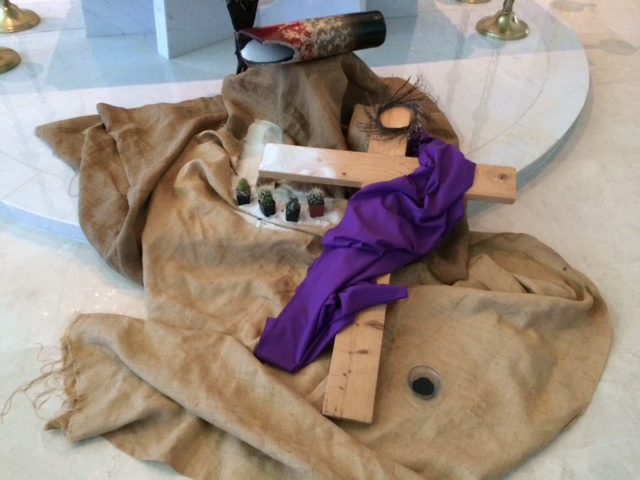
Bathing the feet of Jesus with tears of contrition
Bringing an alabaster flask of ointment, she stood behind him at his feet weeping and began to bathe his feet with her tears. Then she wiped them with her hair, kissed them, and anointed them with the ointment (Lk 7:37-38).
Logistically, to our modern minds, the setting of this verse may appear to be confusing. How could this “sinful” woman be standing behind Jesus such that her tears would fall on his feet? This could be confusing to us because when we think or imagine someone sitting and eating, they do so by sitting in a chair. Thus the feet would be toward the front of the person.
During the time period Jesus lived, the customary practice when eating was not to sit at all but to recline. Thus, the woman was standing behind the feet of Jesus as he reclined, and her tears fell on his feet. She then knelt down, dried his feet with her hair, and then anointed Jesus’ feet with the ointment she brought for him.
This is a simple but powerful scene of contrition. This is the posture we are to approach Jesus when we have sinned. We are not to rationalize, deny, ignore, or come grudgingly forward when we are caught and held accountable for our sin. We are to feel true contrition, sorrow, for the sins we have committed because the healing presence of Jesus leads us to a place of compassion and understanding for the hurt we have caused to God and others through our sinful actions.
Unfortunately, there are too many leaders in our secular as well as our church leadership who assume the posture of Simon the Pharisee in this account. They puff up their chests in righteous indignation over the sins of another or others, while not being transparent and forthcoming with their own sinful choices and behavior. Using instead their means of power, prestige, and places of honor, not to serve and empower others, but to hide behind and justify or rationalize their own weakness and vices.
Imagine where our Church would be right now if those who have used their positions of power and privilege to abuse children and at risk adults would have instead assumed the posture of the woman in today’s Gospel.
How about this? How about all those who have abused, covered up, or contributed in any overt act or omission, that lead in any way to the abuse of anyone, invited those they have abused, along with their families, to the church sanctuary. When the honored guests arrived, they would be escorted to sit in the front pews to participate in a Mass offered for their healing and reconciliation from the pain, horror, shame, and anguish that they have suffered and endured.
After today’s Gospel from Luke 7:36-50 is proclaimed, the abusers would then come down from the altar, take off their chasubles and stoles, place them at the feet of those they had abused, bathe their feet in tears of sorrow for the sin they committed. Next they would wipe and anoint their feet with the holy oil that the priests and bishops hands were anointed with at their ordination. Then they would offer their letter of resignation from public ministry to those they abused and ask for forgiveness.
What would our Church be like if this was the response to our present crisis? May we all remember and live by Matthew 25:40 “Amen, I say to you, whatever you did for one of these least brothers [and sisters] of mine, you did it for me.”
Photo: Reconciliation scene before the altar at Our Lady of Florida Retreat Center
Link for the Mass readings for Thursday, September 20, 2018: http://www.usccb.org/bible/readings/092018.cfm

Jesus Christ – the celebration of the human and the divine!
“To what shall I compare the people of this generation? What are they like? They are like children who sit in the marketplace and call to one another, ‘We played the flute for you, but you did not dance. We sang a dirge, but you did not weep'” (Lk 7:31-32).
Jesus was convicting those who held a narrow view of who was a true follower of God. He illustrated this by sharing the above example that there was no pleasing the listeners, for when the flute was played no one danced, when times of joy arose, there was no celebration, and when the funeral dirge was sung, they did not weep, they did not mourn. Jesus expanded the analogy to his present condition where there were those who did not accept the ascetical practices of fasting and the call to repentance from John the Baptist, nor did they accept the inclusive table fellowship of Jesus.
We also have encountered those that are not pleased beyond their own narrow focus and who suffer from tunnel vision. Anything that hints at even a slight variation of change sends tremors of discontent. And if we are honest, we all have some resistance to change. But if we are to authentically live the Gospel, Blessed John Cardinal Newman’s quote is an apt barometer: “To live is to change, and to be perfect is to have changed often.”
The Church, at her best, is a balance of the rock foundation of our core beliefs, such as the Nicene Creed, which provides stability, assuredness, and identity, while at the same time being open to the life giving movement of the Holy Spirit. Each generation must make the Gospel relevant in our own time. We must be flexible and resist rigidity, legalism, and clericalism, so to avoid molding the Church in our image, but being authentic to renewal, integrity, and embracing the Mystery of God’s movement such that we are molded, transformed, and conformed in the image and likeness of Jesus, who is the embodiment of Love, the Trinitarian communion of which we profess in the Creed.
We can live a life of joy when we are not threatened by those who are different. The gift of Catholicism is the universal call and invitation of Jesus which is open to all of humanity. Embracing, the gift of unity AND diversity, the foundation of the deposit of faith AND variety of cultural expression, the divine and the human, is messy, but this both/and not either/or approach is what Jesus guides us to participate in. Is this challenging? Yes. Hard? Yes. Impossible? On our own, and from our own egoistic perspective, yes. When we are willing to surrender our will to the Father, our heart and mind to the Son, and allow our soul to be led by the Holy Spirit, all things are possible!
Photo: Our daughter, Christy, on her first day of arrival, celebrating her move about five years ago to California and trusting in the guidance of the Holy Spirit!
Link for the Mass readings for Wednesday, September 19, 2018: http://www.usccb.org/bible/readings/091918.cfm
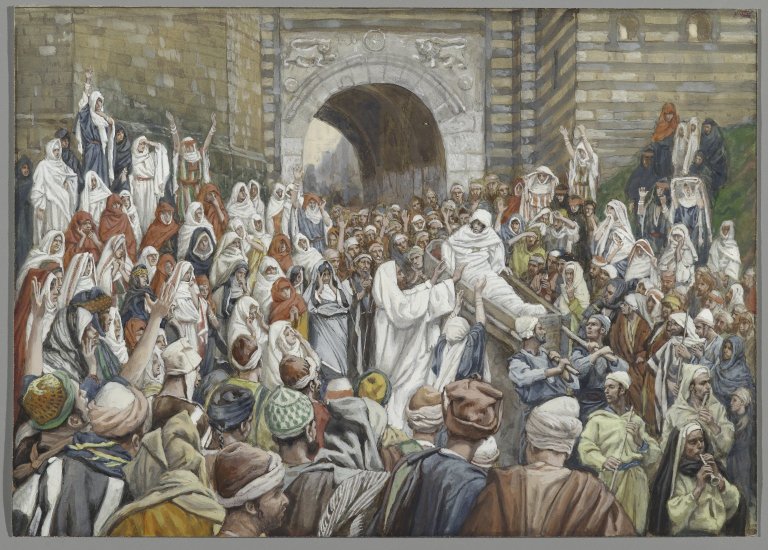
Let us pray that the compassion of Jesus fills our souls.
When the Lord saw her, he was moved with pity for her and said to her, “Do not weep.” He stepped forward and touched the coffin; at this the bearers halted, and he said, “Young man, I tell you, arise” (Lk 7:13-14).
Jesus saw a widow and her only son in a casket. In the time of Jesus, this woman would have had little means to support or protect herself. Jesus’ immediate response for her was pity or compassion. The original Greek word used was splanchnizomai, meaning that Jesus was moved from the very depths of his bowels. The emotional depths to which Jesus was moved to reach out and help the widow of Nain, shows us his humanity. Jesus’ healing of the widow’s son, bringing him back from the dead, shows us his divinity. The entire event shows us the best of who we ought to aspire to as his followers.
Instead of fear, judgment, prejudice, or indifference, may we seek to understand, to place ourselves in the shoes of those who feel vulnerable, misunderstood, and find themselves on the margins. May we be moved from the very depths of our innards with the same compassion of Jesus toward those, who, like the widow, are vulnerable, at risk, and on the peripheries. We in the Church need to be welcoming, hospitable, willing to walk with others, to share their journeys. We also need to go out beyond the walls of our churches, and be present, be willing to listen to the stories and needs, the pleas, and seek, in collaboration with those who we encounter, to discover options to address those needs. At each step of the way we need to do so such that we respect and empower those we walk with as human beings created in the image and likeness of God.
Does anyone come to mind? Let us take time this day to pray that God may open our hearts and minds to see the vulnerable among us, to be aware of those in our midst, maybe even in our own families, those who are in need, those needing someone to be present, to be understanding. Especially, those who we may have in the past discounted, or have come up with rationalizations of why they ought not to receive any help, even if not from us. If someone or a group of people come to mind and you are unsure what to do or how you can help, begin by praying, praying for someone to help, praying that we can come to see those who come to mind as human beings like the widow that Jesus had compassion for. If we can see others as human beings, as brothers and sisters, not as somehow less or other, but with dignity, we will be moving in the direction of being able to act with the compassion of Jesus.
———————————————————-
Painting: “The Resurrection of the Widow’s Son at Nain” by James Tissot, 1890, online collection of the Brooklyn Museum
Link for the Mass readings for Tuesday, September 18, 2018:http://www.usccb.org/bible/readings/091818.cfm

May we treat each other with dignity and respect.
This pericope, extract or section from, Luke 7:1-10, is called The Healing of the Centurion’s Slave. It represents a wonderful picture of collaboration and harmony. The centurion, a gentile – a non-Jew, heard that Jesus was near and appealed to Jewish elders to seek out Jesus to invite him to his home to heal his slave. As Jesus was on the way, the centurion apparently had a change of heart, concerned about his sinfulness and did not want to trouble Jesus. He sent his friends to Jesus with the request to heal his slave with his word. Jesus was amazed: “I tell you, not even in Israel have I found such faith” (Lk 7:9). The slave was then healed.
Aside from the fact that no one seemed to have a problem with slavery, certainly not uncommon in the Ancient Near East, everyone involved, the centurion, his friends, Jewish elders, and Jesus were all working together to make this healing possible. The centurion actually showed concern, not indifference for his slave, Gentiles and Jews collaborated with one another, and Jesus did not hesitate to answer the request of the centurion, a representative of the Roman occupying army.
This Gospel scene is certainly worth meditating on. The centurion gave voice, spoke on behalf of his slave. Jesus healed the slave with his Word. We need to use our words to speak up for those who do not have a voice. We need to help people to understand that the unborn are human beings, they are just smaller and more vulnerable than us. But we need to be more than pro birth. We need to provide support systems for the parents to care for their children once they are born, and viable alternatives for those that may be contemplating an abortion.
We need to write our bishops and demand that there be accountability and transparency regarding past abuses of children and we need to learn strategies and teach parents and all who volunteer and work with our youth, children, and at risk adults, how to be empowered so as to be clear with their boundaries and know the warning signs, to protect themselves from predators, within and without of the Church. Those who seek to molest, abuse, and/or lure our youth into human trafficking must no longer have access.
We need to speak up for migrants and immigrants, as well as their children, some of whom are still separated because of our government. We need to write our congressional representatives to not only protect D.A.C.A – Deferred Action for Childhood Arrivals – recipients, but provide the means and pathways provided such that they may become citizens. People who are fleeing their homes because of war, terrorism, natural disasters, and seeking a better life, need to be welcomed and granted asylum. We can effectively screen people who would seek to cause harm and provide hospitality for those needing refuge and a new life. Our law system needs to be reformed such that it no longer disproportionally targets people of color, even to the point of innocent people losing their lives, whether on the street or through capitol punishment.
As the centurion spoke up for his servant who was ill and in need of healing, we need to be aware of those in need, hear their stories, and speak up for those who have been abused within and without of the Church, those who have suffered the indignity of physical, sexual, emotional, and psychological abuse. We need to hold those accountable who have misused their power, as well as those who have manipulated the gift of trust misplaced.
There are so many people that are not treated with the dignity they have been endowed with by our creator and deserve to receive. So many people who are treated less than human because of race, creed, ethnicity, gender, sexual orientation, political affiliation, and/or land of birth. We all fall woefully short of the harmony and collaboration witnessed in today’s Gospel account. Yet, we need not lose hope.
May we resist despair, apathy, and indifference, and instead, keep our ears, eyes, and heart open to hear the cry of the vulnerable among us. May we be willing to see each other as people created in the image and likeness of God, treat those we encounter with the dignity and respect each of us deserve, and be willing to collaborate and work together for the good of all people in little ways with great love today as Jesus did, one person at a time.
—————————————————————————————–
Photo by Min An from Pexels
Link for the Mass readings for Monday, September 17, 2018: http://www.usccb.org/bible/readings/091718.cfm
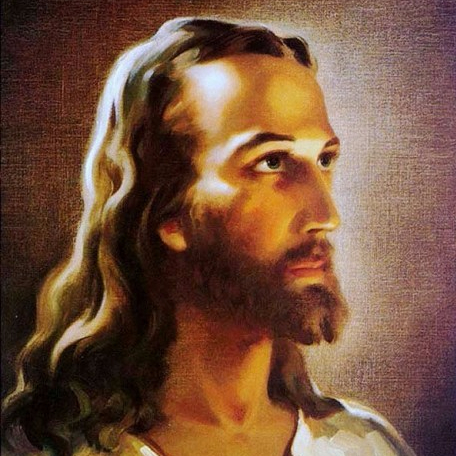
Who do you say that Jesus is?
“But who do you say that I am” (Mk 8:29)?
This question is just as important to us today as it was when Jesus asked his disciples the same question some two thousand years ago. The disciples response all those many years ago, of John the Baptist, Elijah or one of the prophets, as multiplied and become more varied as is recorded in the many books written about Jesus and the 30,000 plus denominations who claim to follow him. There is also a vast array of pictures, paintings, documentaries, and movies. Through each medium, we are given a view of the Jesus of history or the Christ of faith, some emphasizing more the humanity of Jesus and others more the divinity of Jesus, and some a balance of both the human and the divine. Debate has continued as to whether Jesus was God or only human, or even if he ever really exist at all.
When I taught fifth and sixth grade students at Rosarian Academy, each Easter Season, I assigned my students the task of drawing a picture of the Resurrected Jesus. I quickly noticed a common characteristic of their artistic renditions: Jesus consistently did not have a beard. At first, I started to hand back the pictures to say they needed to add a mustache and beard, but quickly stopped myself. I realized I had made a mistake. This is how they saw Jesus from their perspective at their age.
The way we talk about and express Jesus may actually say a lot more about us than Jesus. The portrait I posted above is the Warner Sallman painting he titled, “Head of Christ”. I chose it because this was the portrait of Jesus I grew up with in our home and when I close my eyes and talk to Jesus this is the image that most comes to mind for me.
How can we come to, not know so much about Jesus, but actually know him? We need to do the same as Peter and the disciples did. We need to spend time with him. How do we do that today in 2018? We need to daily spend time in prayer with Jesus. We also need to be aware of his presence in our daily experiences. Jesus is with us in all we do, we just need to be aware. Jesus is present in our encounters with each other, for what you do to the least of my brethren, you did it to me (cf. Mt 25:40). We come to know Jesus by reading and meditating on the Gospels, the primary sources of the life and teachings of Jesus. Go back and read today’s account from Mark, and imagine yourself in the scene. Allow your senses to come alive.
We also come to know Jesus by going to Mass. His Word is proclaimed and if we go with hearts and minds open to encountering him, he will speak to us beyond the written word on the page but in the Word proclaimed by the minister of the Word. The Holy Spirit will reveal to us that which is hidden within is word, as he did with Peter who proclaimed that Jesus is the Christ, the Messiah. Jesus is present in the assembly gathered, in our prayers of petition and in his real presence, Body, Soul, and Divinity, in the Eucharist that we receive. We have direct encounters with Jesus when we participate in the other sacraments as well. In our Baptism and Conformation we have been conformed to the very being of Jesus such that we become an integral part of the Body of Christ. In Reconciliation, Jesus hears our confession, heals us and absolves us of our sins through the priest present. We also receive his healing touch in the Anointing of the Sick. Our acts of service are defined for those participating in Matrimony or Holy Orders.
We come to know Jesus in our service with one another in engaging ourselves in the corporal and spiritual works of mercy. We come to know Jesus through those who knew him by reading the lives of the saints and spiritual writings of today. Jesus is also present to us in our sorrows and joy, our defeats and our triumphs, and we experience him more deeply when we enter into, instead of running from, our conflict and pain, ask him for help and guidance, as well as, thank him for our triumphs. Our deepest encounter with Jesus is being open to experiencing his love.
Jesus is already with us, he loves us more than we can imagine. We just need to open the door in all experiences of our lives and let him in. As we do so we will come to develop a relationship with Jesus, come to know him, come to know his will for our life, and come to experience the joy and fulfillment of our life. For our relationship with Jesus will lead us to the relationship we have been created for, to be one with God and one another.
Place yourself in today’s Gospel. Feel the heat of the day, feel the rough material on your skin, allow your senses to come alive as you see the disciples gathered around you, and then turn your head as you hear the question, “But who do you say that I am?” You hear some say John, Elijah, or a prophet. Then Peter proclaims, “Your are the Christ” (Mk 8:29). Do you agree with Peter? Who do you say that Jesus is? This is an important question to meditate on. I invite you to do so this Lord’s Day and through the week. Please feel free to post your response. I would be interested to read how you answer Jesus’ question. Who do you say that Jesus is?
Painting: “Head of Christ” by Warner Sallman, 1940
Link for the Mass readings for Sunday, September 16, 2018: http://www.usccb.org/bible/readings/091618.cfm
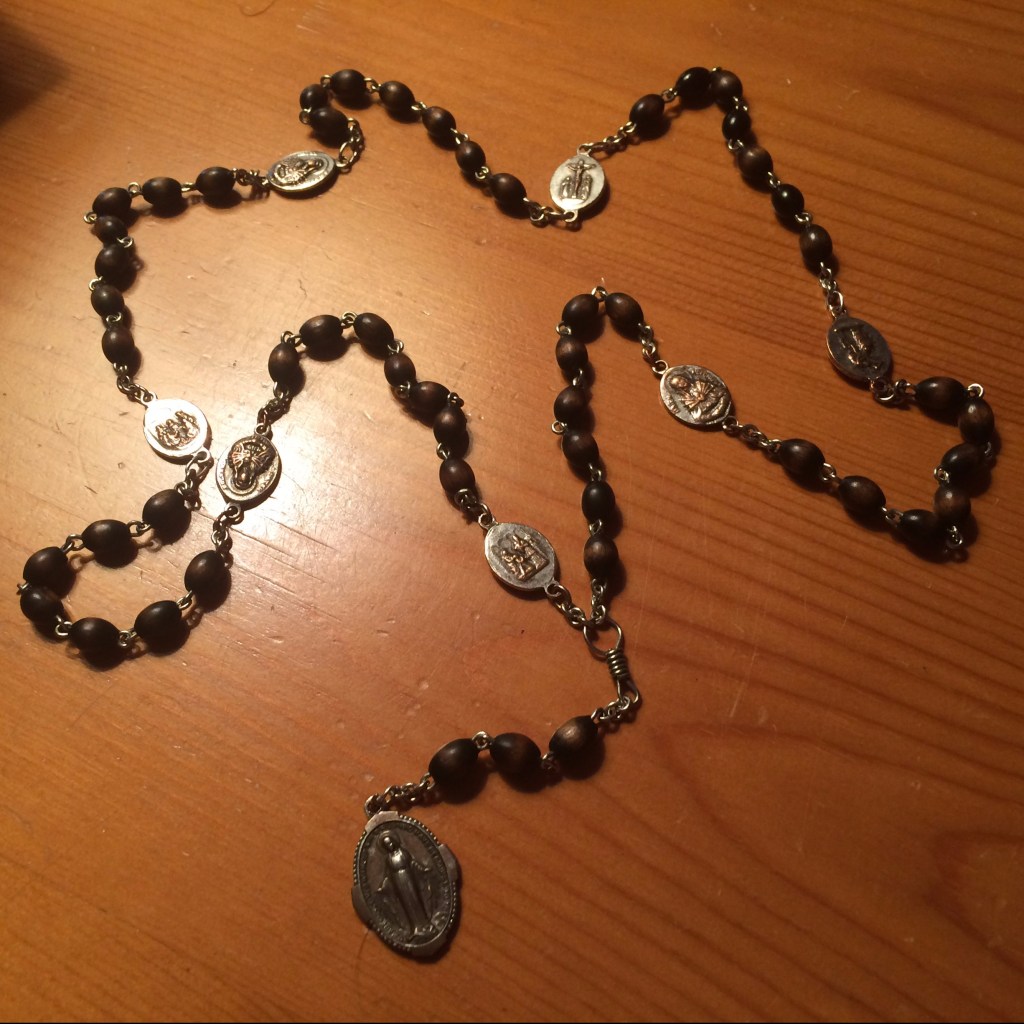
Our Lady of Sorrow, Our Lady of Love
When Jesus saw his mother and the disciple there whom he loved he said to his mother, “Woman, behold, your son.” Then he said to the disciple, “Behold, your mother.” And from that hour the disciple took her into his home (Jn 19:26-27).
In the summer of 1991, I entered the Franciscans of Holy Name Province as a pre-novitiate and was stationed at Holy Cross Friary in the Bronx. My ministry for that year was working in the friary and the adjoining parish of Holy Cross. Shortly after entering, one of the friars, Br. Paul Goldie, passed away. He had been serving at the friary since 1953 and had been a friar for 54 years. A practice among the friars was to pass on personal items to those in the community when one of their own passed away. I was honored to have been given a picture of St. Francis, that hangs in my classroom and Br. Paul’s rosary.
I noticed that the rosary was different from others. Instead of a crucifix it had a Miraculous Medal, instead of five beads there were three beads leading to the decade of beads, and instead of five decades of beads, there were seven groupings of seven beads. In between each of the series of seven beads there was a small medal. On one side was a picture of Mary pierced in the heart seven times, and on the back of each medal was a different scene. I would find out some time later that this was a Rosary of Our Lady of Sorrows. The depictions on the back of the seven medals represented Mary’s seven sorrows: Simeon announces the suffering destiny of Jesus, Mary escapes into Egypt
with Jesus and Joseph, Mary seeks Jesus lost in Jerusalem, Mary meets Jesus as He carries
His Cross to Calvary, Mary stands near the Cross of her Son Jesus, Mary receives into her arms the body of Jesus taken down from the Cross, and Mary helps place the body of Jesus in the tomb.
The fifth mystery, Mary stands near the Cross of her Son Jesus, is from our Gospel reading today. It must have been the most sorrowful of the seven, for Mary to witness her son dying such an agonizing death as the crucifixion. Yet, Mary did not run from the pain, she embraced his and her own pain, the piercing of the lance, pierced her own heart, the depths of her own soul. Mary, though free of sin, was not free of the pain of a fallen world. In fact, Mary like Jesus, felt it more deeply.
By being willing to love, we risk experiencing and entering into the pain of those we love. So many times we run from love, because we do not want to experience the pain relationships entail. We are finite and fragile beings, and so we will let each other down, we will make mistakes, say the wrong things, do the hurtful things, we will get sick or deal with chronic illness and need care, we will lose patience, we will sin. Jesus though calls us, like Mary and John present at the Cross, to remain present to one another, to love, to will the good of the other, and so to experience the fruit of an authentic relationship which is grounded in the unimaginable love that God the Father has for us.
Love is the bond of communion that gives us the strength to move through the crossroads and upheavals of life, love is the bond of commitment that draws us out from our selfishness so to learn from one another, to grow stronger together, to be present to one another. Where there is an authentic relationship, there is love at its foundation. When we love one another we participate in the communion of the Holy Trinity, we participate in the very same divine communion of the Father, and the Son, and the Holy Spirit.
Is there risk of rejection in inviting another? Yes. Is there pain in love? Yes. Is there conflict in relationship? Yes. Yet to be fulfilled, to be fully alive, for love to be real, we must be willing to take the risk to love and be rejected, just as God does with us. As we enter a relationship or decide to strive for better authenticity in one we are already a part of, we must be willing to love, to be willing to commit to one another, to be present to one another, to share our pain and experience another’s pain. We must be willing to accompany each other in our imperfections, and be humble and willing to offer and seek forgiveness and reconciliation.
Mary and John experienced a depth of love with Jesus at the climax of the crucifixion, they embraced a pain and sorrow at the foot of the cross that we cannot imagine, yet they remained, and so they were able to mourn, heal, and experience the full joy of the Resurrection. At the coming of the Holy Spirit at Pentecost, they also experienced the divine communion of love between the Father and the Son, and shared that same love and commitment with the community of Jesus’ followers and those who had never met him.
Br. Paul’s rosary, which I still pray with, was passed on to me. It is a reminder for me of the brotherhood I shared with the friars, and it is a reminder to be present to others in their pain. There will be sorrows in this life, but when we enter into them and face them, we will find Jesus present in the midst with his arms wide open to receive us in our pain, to hear us, comfort and assure us that he is with us. May we remember to, as did Mary and John, to lean on, be present to, support, and love one another as Jesus loves us.
Photo: Br Paul’s Rosary of Our Lady of Sorrows
Link for the Mass readings for Saturday, September 15, 2018: http://www.usccb.org/bible/readings/091518.cfm
“Glory in the Cross of our Lord Jesus Christ!
“No one has gone up to heaven except the one who has come down from heaven, the Son of Man. And just as Moses lifted up the serpent in the desert, so must the Son of Man be lifted up, so that everyone who believes in him may have eternal life” (Jn 3:13-15).
The reference to Moses lifting up the serpent can be found in Numbers 21:4-9. The people, worn out by their journey in the desert began to complain instead of trust in God’s deliverance. The people sought a return to their prior condition of slavery rather than forge ahead and endure the trials of gaining freedom. Venomous snakes came into the camp and began to bite many who then died. The people recognized their sin and implored Moses’ intercession. Moses prayed for the people and lifted up a bronze serpent on a pole and whoever looked upon the serpent was healed.
There is a difference between seeking understanding from God, seeking to understand why something is happening in our lives, and complaining from a posture of self centeredness. The Israelites were looking at their present condition of suffering and missing the point that that they were free from slavery. They were not trusting in God’s providential care and support present to them in the moment.
How often do we, with our ease of access, slip into the same whining and complaining mode when something doesn’t go quite right. St Paul reminds us through his words to the Corinthians: “Let us not test Christ as some of them did, and suffered death by serpents” (1 Cor 10:9). This time last year, Irma was making landfall on the west coast of Florida, and JoAnn and I experienced many hours of travel in bumper to bumper traffic. The slow two day travel was grueling but we had the freedom to leave, while there were many who did not.
As I type this reflection, Florence is readying its assault on the Carolinas. Many have left, facing the inconvenience of leaving home, some are digging in to face the storm. In either case these are tough decisions. There are also those who have risked all, not just leaving natural disasters, but human aggression and violence worldwide. Many seeking aid from neighboring countries. Some are finding welcome while others are being turned away.
Paul reminds us that no matter what arises, no matter if the circumstances are inconvenient or dire, “God is faithful and will not let you be tried beyond your strength; but with the trial he will also provide a way out, so that you may be able to bear it” (1 Cor 10:13).
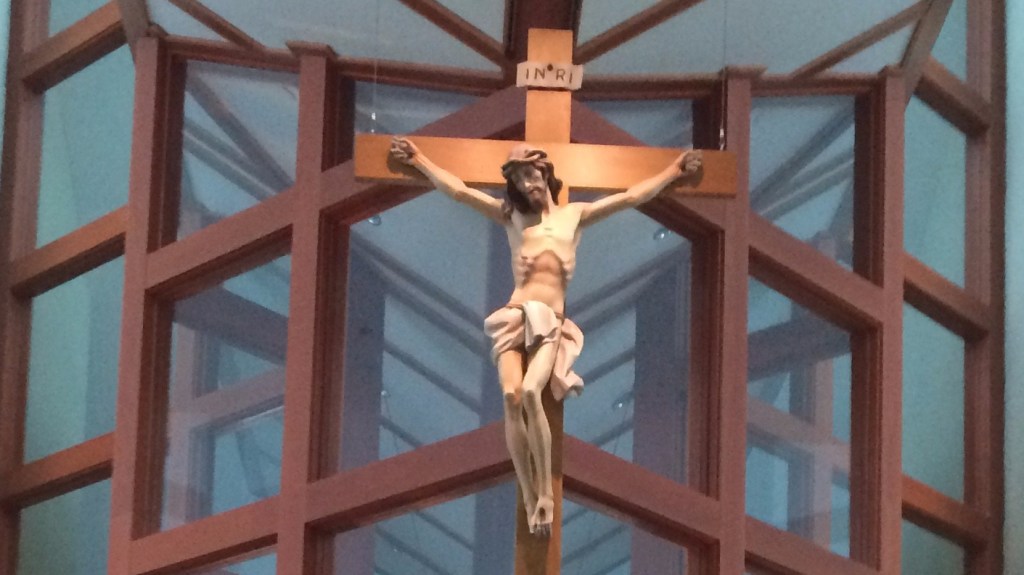
Today, we celebrate the Feast of the Triumph of the Cross. It is a good reminder that, when trials and tribulations arise, instead of grumbling, let us look to the crucifix. The sacramental reminder that the Son of God came to be one with us, to experience the fullness of our human experience, even our pain and suffering, even man’s inhumanity and deepest levels of injustice, to lead us to freedom through his death, Resurrection and Ascension into Heaven.
Jesus is present with us in our struggles. May we embrace this idea and remind ourselves of it, so that when we find ourselves grumbling, only looking at our own self and limitations, that we remember to turn instead to Jesus, seek his guidance, trust in him, and follow his lead. We will experience his power and support so to bear the weight of our own cross, and trust that there will be a way out. We are not alone.
What used to be a symbol of oppression, torture, and capital punishment is no more. Let us embrace and “glory in the cross of our Lord Jesus Christ; in him is our salvation, life and resurrection. Through him we are saved and set free” (Gal 6:14). Is the life of the disciple easier? Absolutely not, but with Christ at our side we will be free, even in our struggle. Let us pray for those affected by the effects of Florence, for their safety and support through these next days, weeks, and months.
Photo: Crucifix in the sanctuary of St Peter, Jupiter, FL
Link for the Mass readings for Friday, September 14, 2018: http://www.usccb.org/bible/readings/091418.cfm
 Spiritual Stepping Stones