The sun is setting on our Lenten Season

A core group within the leadership of Israel have decided. They will not deny themselves, their power, prestige, their place. They will not take up their cross and follow Jesus, the way, the truth, and the life. They will not allow the teaching and momentum of the growing number of those following Jesus to continue unchecked. The Sanhedrin, the Jewish High Council, will follow the guiding words of their president, the high priest, Caiaphas, “You know nothing, nor do you consider that it is better for you that one man should die instead of the people, so that the whole nation may not perish” (Jn 11:49-50). With these words, they began to plan how to put to death the carpenter of Nazareth.

With the words of Caiaphas, the sun began to set on the life of Jesus. These words even effect us still today as they usher in the sunset of our Lenten observance. The gift of our liturgical readings allows us to relive the story of our faith. Lent has given us a time to reflect, to meditate on who Jesus is. Do we see nothing in the Gospel messages that lead us to believe he is more than just a carpenter, another teacher from the past, or do we agree with Jesus’ pronouncement that he is fully God and fully man? Do we see his teachings and life as a threat as did the Sanhedrin? Do we also decide we like our life the way it is, that we do not want Jesus to get in our home and start turning over the tables and disrupting our comfort? Instead, do the Gospels inspire us to shake off our complacency, our indifference, our cynicism, so to be inspired to acknowledge our sins, to repent, to begin anew?

May we set aside some time this Saturday before we enter tomorrow into the readings of the Passion to meditate on the words of Caiaphas, “consider that it is better for you that one man should die instead of the people, so that the whole nation may not perish” (Jn 11:49-50). He did not know what he proclaimed would be so true, that the one, Jesus, would die, not only so the nation would not perish, but that all humanity would not perish. Jesus died for you and for me that we might have life and have it to the full. Will we follow Jesus, deny ourselves, and take up our cross and follow him into Holy Week?

———

Photo: California sunset

Link for the Mass readings for Saturday, March 24, 2018:
http://www.usccb.org/bible/readings/032418.cfm

Blasphemer or Son of God?

Two groups of Jews emerge in today’s Gospel account, there are those who are about to stone Jesus for blasphemy and those who begin to believe. The first group does not recognize the good works that Jesus has done as coming from the Father, nor his reasoning that “even if you do not believe me, believe the works, so that you may realize and understand that the Father is in me and I am in the Father” (Jn 10:38). They listen to the claim that Jesus is making but they refuse to accept the fulfillment of the assertion: Jesus is the Son of God.
The more that Jesus seeks to help them to understand that he is who he says he is, the more they dig in their heels. They leave the stones on the ground but then move to have him arrested. Jesus evades their grasp and moves to the region across the Jordan where John first baptized. John did not preach in the Temple precincts either, even though he was the son of a priest. John followed the lead of God to prepare the way for Jesus and his eternal priesthood. The Temple would no longer be the seat of God, Jesus would be the new living Temple.
Jesus returned to the place of his baptism, where he joined in solidarity with sinful humanity. This visible image of consecration revealed what happened silently in his conception and birth: the Son of God took on flesh and became man. As people came to John in the Jordanian wilderness, so too, people came to Jesus. Not all would reject his message. Many came to him and said, “John performed no sign, but everything John said about this man was true.” And many there began to believe in him (Jn 10:41-42).
The question that arises for us as we step closer to Palm Sunday and Holy Week is to which group of Jews recorded in today’s Gospel account do we align ourselves with? Do we label Jesus as a blasphemer or accept that Jesus is the Son of God? The scriptural record does not leave any room for Jesus being only human; a good teacher, a wise man, or a revolutionary radical. We either accept Jesus is fully human and fully divine or we don’t. If he isn’t who he claimed to be, God, then Christianity is a sham. If we accept that Jesus is the Christ, the Son of the Living God, then our thoughts, words, actions, and even our faces need to reflect that truth.
A good way to begin each day is to affirm our belief in Jesus, to say, “Jesus I believe in you, I need you,” and to ask him what works of the Father he would have us offer in his name this day? May we have the openness of mind and heart to hear his words and the courage to act upon his guidance, so to be living stones, radiating the light of the living Temple of Jesus the Christ, the Son of the Living God.

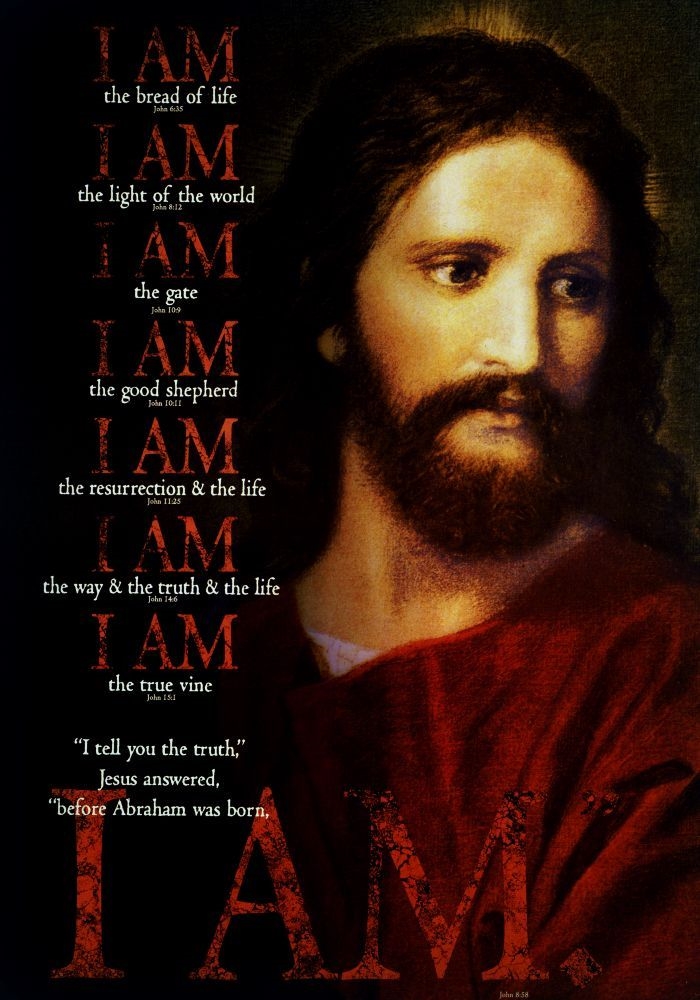
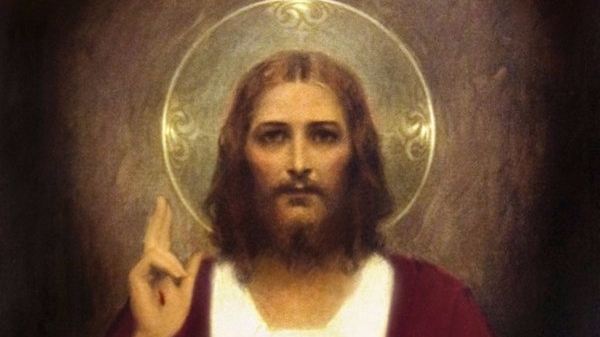
Painting credit: Sacred Heart by CB Chambers
Link for the Mass readings for Friday, March 23, 2018:
http://www.usccb.org/bible/readings/032318.cfm

Jesus is the Holy One of God.

The reaction of the people in today’s Gospel account builds from thinking that he is possessed to picking up stones to throw at him. This interaction has some similarities found in Jesus’ Bread of Life discourse (cf. John chapter 6), where Jesus made the statement, that, “I am the bread of life” (Jn 6:48) and in today’s verse “whoever keeps my word will never see death” (Jn 8:51). In both cases the people do not understand what Jesus is sharing and Jesus, instead of using analogy or explaining he is just speaking in hyperbole, which he has done at times, does not soften his words but doubles down.
Jesus holds firm to the truth that his followers will consume him and that he is not just a representative of God, a prophet or a rabbi, but that he in fact is God: “Amen, amen, I say to you, before Abraham came to be, I AM” (Jn 58). The people pick up stones at this point because Jesus has just done the unthinkable, he not only has spoken God’s name, which is not to be uttered because it is considered too holy to do so, he equates the name of God, I AM, with himself. Jesus is saying and equating himself with God. During the Bread of Life discourse people walked away from him because they were repulsed and most likely considered him mad, here they believe he is speaking blasphemy. They were right in doing so, unless, Jesus is who he said he is.
For us today, we can believe or disbelieve in Jesus, but from our reading of the Gospels we cannot say that Jesus presented himself a mere man, a teacher, philosopher, prophet, or guru. Jesus has consistent conflict, which is evident in all four Gospels because Jesus presents himself as God incarnate. Jesus heals on the Sabbath because he is the Lord of the Sabbath, Jesus is the Bread of Life, Jesus is I AM. The Apostles struggle with the words and actions of Jesus as well.
We may also struggle with our understanding of who God is and who Jesus is. We may have doubts, concerns, and unanswered prayers and/or questions. To walk the path of discipleship is not to walk with constant assurance, for we walk by faith and not by sight (cf. 2 Corinthians 5:7). Walking by faith means that we journey with Jesus trusting that he is who he claimed himself to be and because of that fact is still with us today. What we need to know will be revealed as we continue to turn our life over to him more and more each day. May we take assurance in our times of struggle from Peter who, with the Twelve, was asked by Jesus if they would leave him, Peter responded, “Master, to whom shall we go? You have the words of eternal life. We have come to believe and are convinced that you are the Holy One of God” (Jn 6:68-69). May we too live our lives believing and in participation with Jesus, the Holy One of God.

Photo: Accessed from Pinterest
Link for the Mass readings for Thursday, March 22, 2018:
http://www.usccb.org/bible/readings/032218.cfm

“If the Son frees you then you will be truly free.”

It is interesting to note that in today’s Gospel reading from John, Jesus is speaking to those who “believed in him” (Jn 8:31). But the more he talks to them the further from his followers they seem to be! Jesus states: “If you remain in my word, you will truly be my disciples, and you will know the truth, and the truth will set you free.” His listeners balk at the word “free” asserting that because they are ancestors of Abraham they have never been enslaved by anybody. In the United States of America, we also value our freedom. I believe that many of us would react very much in the same way. We may have different ways of expressing why we feel that we are free, but we would certainly assert that we are not enslaved.
Jesus’ words ring just as true for us, as they did for those he spoke to in today’s Gospel: “Amen, amen, I say to you, everyone who commits sin is a slave of sin.” Jesus is shedding light on the truth that many of us do not see, our enslavement to sin. This is the truth that we need to acknowledge if we want to be truly free. What many of us claim to be freedom is doing whatever we want to do, when we want to do it. The sadness is that we cannot even hear the clanking of the chains or feel the weight of the shackles chaffing at our skin as we raise and shake our fists while acclaiming our freedom.
The response to Jesus saying that one “who commits sin is a slave of sin” is not to hide, deny, attack or flee from this statement. Worse would be to read into the fact that since Jesus is referring to one who commits sin, he must not be talking about me. The response to Jesus is to embrace the truth he is placing before us, to allow the light that he is shining to expose the darkness in our heart where sin speaks and we say yes. To acknowledge where in our thoughts, words, and actions we do not put God first.
Our response to Jesus ought to be to follow the lead of Pope Francis who when he was asked, “Who is Jorge Mario Bergoglio?” answered,  “I am a sinner, but I trust in the infinite mercy and patience of our Lord Jesus Christ, and I accept in a spirit of penance.” We are all sinners because we all in some form or fashion place idols before God in so many ways and we are enslaved by that sin, such that it chokes and threatens to undo us. Sin is like a Chinese finger trap. The more we pull to escape, the tighter the grasp of the trap, yet when we push our fingers together and they touch we escape.
We come to be free from our sin by acknowledging that we are sinners and that we need the mercy of Jesus, that we need Jesus in our life to free us from our slavery to sin. We also need to realize that Jesus accepts us as sinners, as we are. We do not have to be perfect or have our house in order for him to come to be present with us, our prayers do not have to be just so,  we just need to invite him in and accept the free gift of his love and mercy.  We need to continue to walk with him until we can believe his message to us: “So if the Son frees you, then you will truly be free.”

Link for interview with Pope Francis from America Magazine, September 30, 2013:
https://www.americamagazine.org/faith/2013/09/30/big-heart-open-god-interview-pope-francis
Fr. Antonio Spadaro, S.J., begins the interview with the questions of who is Jorge Mario Bergolio? The whole interview is well worth the time to read!
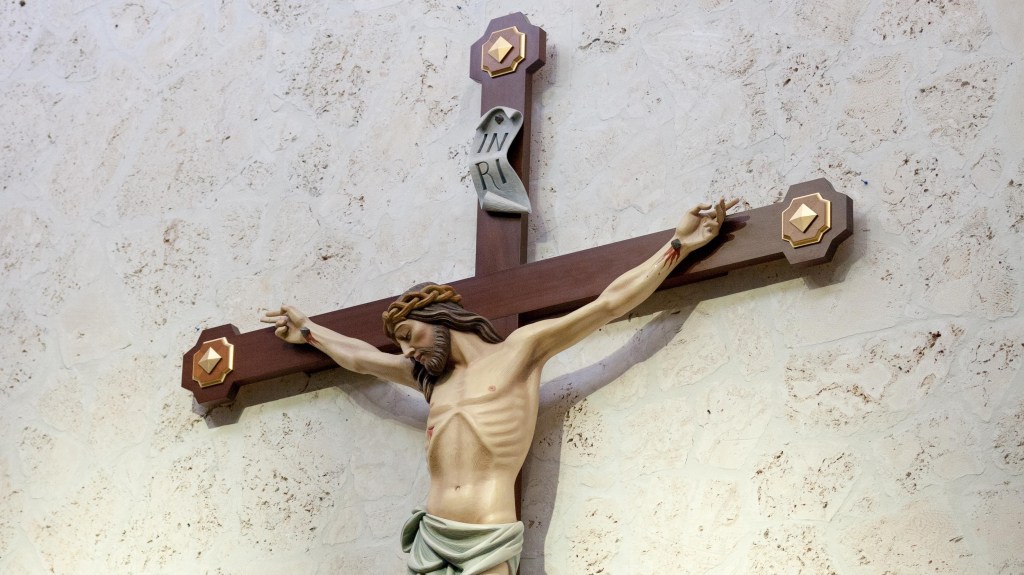
Photo: Crucifix in the sanctuary of the cathedral, St Ignatius of Loyola, PBG, FL
Link for the Mass readings for Wednesday, March 21, 2018:
http://www.usccb.org/bible/readings/032118.cfm


Repent from sin and believe in Jesus

Jesus seeks again to help the Pharisees to understand who he is. In the preceding section of today’s Gospel of John, the Pharisees do not believe in his claim of being “the light of the world” because he testifies on his “own behalf, so [his] testimony cannot be verified” (Jn 8:13). The point being made here is that for something to be verified there must be support given by two or three valid witnesses (cf. Deuteronomy 19:15). Jesus states that he testifies on his own behalf as does his Father who sent him (cf. Jn 8:19). He is again equating himself with God.
Jesus continues in today’s Gospel account to attempt to help the Pharisees and those gathered around them to understand who he is and what is about to transpire in his crucifixion. Jesus shared that God the Father sent him and continues to be with him. He has not left Jesus alone because Jesus maintains the intimacy of their relationship as he follows the will of his Father and will continue to do so all the way to being lifted up on the Cross.
Those listening to Jesus do not understand, they asked if he was talking about killing himself. Often throughout the ministry of Jesus many, even his Apostles, do not understand what Jesus taught, and that was because they were trying to make sense of what he said from a purely material and finite reality. Jesus invited them seek a deeper understanding by sharing that he is from above and they were from below. They were needing to be born from above, to open their mind and hearts to him, as Simon Peter did when he came to realize that Jesus was the Christ, the Son of the living God. Jesus gave those he taught a choice. They could die in their own sin, or repent and choose to live in participation with him.
Discipleship is a journey. We will not come to understand Jesus from one instance or encounter. Even Saul, who had an amazing experience with Jesus, would take about three years to figure out what happened to him that day on the road to Damascus. So it will be with us. We need to resist the world’s craving for instant gratification regarding the growth of our discipleship.
We will grow and mature in our faith as we acknowledge and repent from our sin, believe in Jesus, remain committed to him, and walk with Jesus daily by following the will of his Father as he did. The gift of the liturgical seasons is that as we journey each year with Jesus, as did his original disciples, we can assess our growth. Like a finger making an upward spiral motion, we come again and again to the same point each year, and hopefully, we are higher up that spiral each time.
Sometimes it is hard to see change in the day to day, but may we see that we have grown closer in our relationship with Jesus this Lent in comparison to the last one. If not, it is not too late to begin again, to repent from that which keeps us bound to this world and turn our gaze to what is above. Jesus made a choice, he chose to die on the cross for us as we are right now. We can hold tight to our sins or leave them at the cross. We can reject or believe and follow Jesus. We can die from our sins or live with Jesus for eternity.

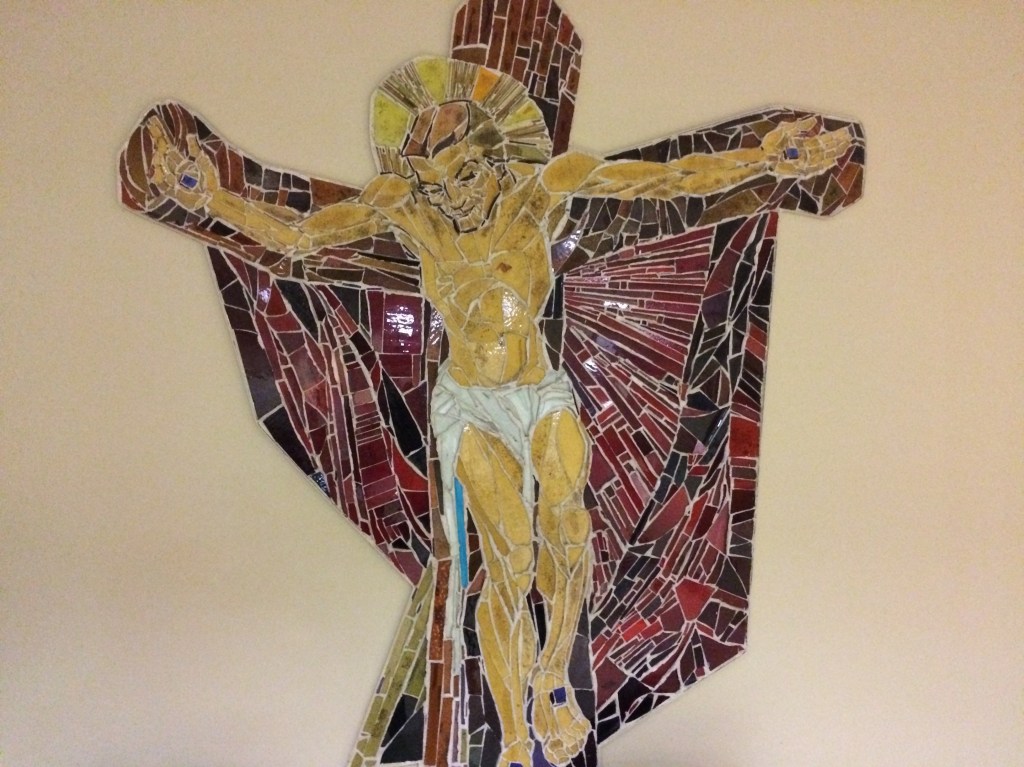
Image of Crucifixion from Our Lady of Florida Spiritual Center, Palm Beach Gardens, FL
Link for the Mass readings for Tuesday, March 20, 2018:
http://www.usccb.org/bible/readings/032018.cfm

St Joseph, model of discernment

We need to stop once in a while and ask ourselves who do we want to be? It is so easy to get caught up in being busy, taking care of children, work, taking care of the home, school assignments, as well as the myriad of activities that each of us, experiencing our unique vocation in life, can add to the list. These can all be good things, but we can lose ourselves in the midst of being so busy that we are slipping into a state of survival mode or merely existing. We can fall into the trap of being defined by what we do instead of who we are and who God is calling us to be.
God has a plan for us with the end result being eternal communion with his Father in heaven. Our end goal is living a life of holiness, becoming saints. We need to remind ourselves of this from time to time, by assessing where we are now, and placing ourselves in a posture of listening to the guidance of where God is leading us.
Our Gospel account from Matthew today gives us an opportunity to see this holiness in action. Joseph, has become aware that Mary is with child and he is not the Father. Joseph, “a righteous man” follows the law, but is “unwilling to expose her to shame, decided to divorce her quietly.” Joseph’s righteousness lead him to follow the law, yet he was unwilling to make of her a public spectacle and so pondered the idea of divorcing her quietly. Before he made his final decision, Joseph slept on the matter.
This is often a good course of action when weighing such a heavy issue. How many times do we rush into decisions only to regret them later? Joseph hears clearly God’s direction through the angel of the Lord in a dream. When Joseph rises in the morning, he does not dig in his heels feeling he knows best and return to his original decision, he does not let fear or anxiety from the possible scenarios he could play out in his mind regarding what others may say or think sway him, nor do the possible and real difficulties he can envision deter him. Joseph trusts God. With confidence and assurance of who he is and that God is with him, Joseph acts on the guidance he has received.
Joseph is a model for us in our path of discernment. When faced with issues before us, we need to remember who we are, whose we are, and who we are called to be. We are children of God, and that means we belong to God, a God who loves and cares for us. He has a plan for each of our lives. Every decision and action is a step in fulfilling that plan. When we are discerning, no matter how large or small the decision, we are invited to gather information, look at the reasonable options available to us, and then seek God’s guidance. In this way, we are participants with God in our journey of growing in faithfulness and holiness. Joseph followed these steps and God granted him not only the guidance he sought, but the support to fulfill the commission he received. We can be assured God will do the same for us.
St. Joseph, pray for us!

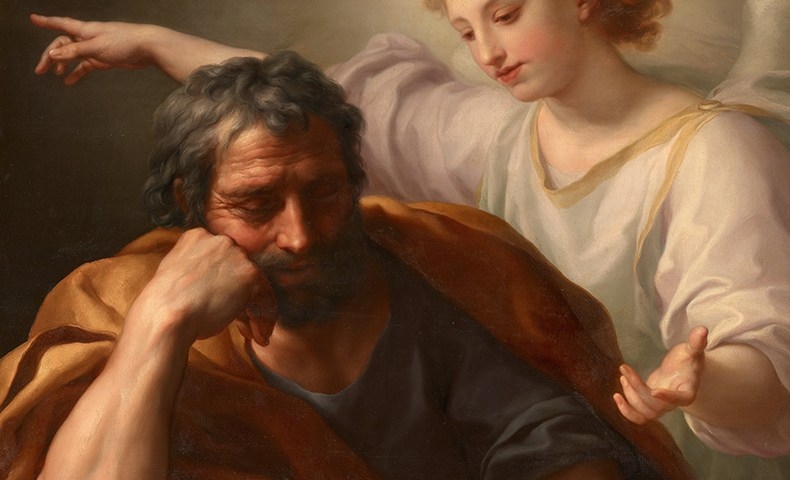
Painting: The Dream of St Joseph by Anton Raphael Mengs about 1774
Link for the Mass readings for Monday, March 19, 2018:
http://www.usccb.org/bible/readings/031918.cfm

Let us die with Christ so that we can live for him.

We are now beginning the fifth week of Lent. We are coming closer to the cross, to remembering the suffering, crucifixion and death of Jesus. In today’s Gospel Jesus is sharing with those in his midst that he will lose his life in fulfillment of his Father’s will: “I am troubled now. Yet what should I say? ‘Father, save me from this hour’?
But it was for this purpose that I came to this hour. Father, glorify your name.” Jesus has come among us, to be one with us and to experience the fullness of being human. In becoming human, he is opening the door for us to experience his divinity.
To be able to experience the divinity of Jesus, we have to die to our self. Death is not a partial thing, it is a total surrender. As Christians, our first experience of this death is Baptism. In Baptism we die with Christ, and we rise to new life with him. We are purified from the condition of Original Sin as we are born again in water and Spirit. We are conformed to and indelibly marked to Jesus and incorporated into the living organism of the Church, the Body of Christ. We become a part of his new creation.
In Confirmation, we continue the path of giving more of our life to Jesus. We are sealed with the gift of the Holy Spirit, we are empowered through the imposition of the laying on of hands and the anointing with chrism. We join in the apostolic mission of those who are sent by Jesus to proclaim the Gospel, the Good News, that Jesus has become one with us so that we can be one with him. Jesus has given his life and returned to the Father in the fullness of his humanity, so to unleash the power and fullness of the love that he shares with his Father.
This is possible because what one human being experiences, sin or grace, all people experience. God has created us, as with all of his creation, as interconnected. Each of us are distinct and unique, one of a kind, while at the same time in communion with God and one another. The Son of God, in becoming human, and in his willingness to go all the way in even experiencing our suffering and death, has risen from that experience and returned to the Father in the fullness of his humanity. What he experiences with the Father, we have access to in our life, to the degree that we are willing to accept our humanity, participate in his life, and his invitation to receive his divinity.
When we reject our humanity, reject the fact that we are created beings, not totally self sufficient within ourselves; when we assume, grasp at, and appropriate for ourselves, self autonomy and stand firm that we need no help from God, we assume that we are the center of the universe and all revolves are us instead of God, we separate ourselves from the source of the very communion we live, crave, and hunger for.
Any act of the will of our consciousness that we place before God must be rejected, must die. To the extent that we can surrender our whole mind, heart, soul, and strength to Jesus, is the extent that we participate in his life, his divinity. Jesus has died for us so he also can be with us always. We are not orphans, for he continues to be with us in the Mass. We come to receive him, Body and Blood, Soul and Divinity, during each liturgical celebration. We consume him and so continue to be nourished, to be transformed into his Body. We are dismissed from our time of worship and communion as bearers of Christ. We are sent to bring him to those we encounter in our realm of influence.
By participating in the Sacraments of Initiation; Baptism, Confirmation, and Eucharist, we become the grain of wheat that dies, germinates in the ground, then sends forth roots and shoots. As we continue in our daily surrender to God and participate in the disciplines of prayer, fasting, worship, study, service, and almsgiving we begin to bear fruit. For whoever serves Jesus, must follow him, and wherever he is, there his servants will be. The Father will honor whoever serves his Son (cf. Jn 12:26). Surrendering our lives in this way to Jesus we can say with St. Mother Teresa of Calcutta: “Each time anyone comes into contact with us, they must become different and better people because of having met us. We must radiate God’s love” (Mother Teresa, pp. 18-19). Let us, like the grain of wheat, die to our false self, allow the shell of our ego to be cracked open, so as to rise with Christ in his glory of being fully alive in him and to actualize who he calls us to be!

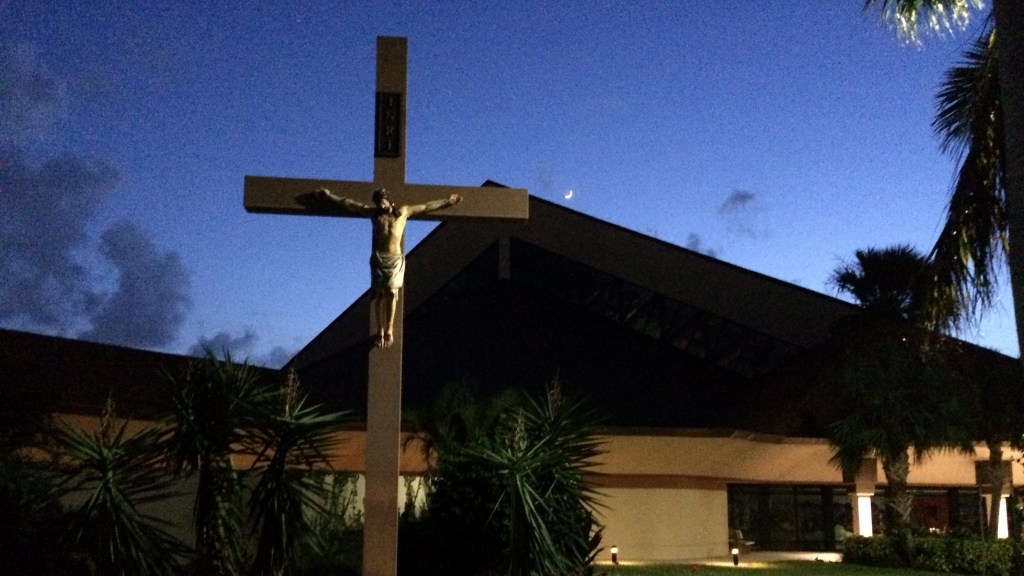
Photo: Crucifix grounds of St Peter Catholic Church, Jupiter, FL
Mother Teresa and Devananda, Brother Angelo, ed. Total Surrender. Ann Arbor, MI: Servant Publications, 1985.
Link for the Mass readings for Sunday, March 18, 2018:
http://www.usccb.org/bible/readings/031818-year-b.cfm

Let us be willing to hear Jesus and find what he is doing in our lives.

Jesus is recorded a few verses before (cf. 7:37-39) today’s Gospel reading as speaking about quenching the thirst of those gathered around to listen to him. The  thirst he is talking about fulfilling is a spiritual thirst, what we all desire to be refreshed by and to experience, that which we have been created to receive; the thirst to belong, to be in communion, to be loved and to love in return. Jesus speaks of coming to those who thirst to be refreshed with: “Rivers of living water [that] will flow from within” (Jn 7:38).  Jesus spoke of the day when he would send the Holy Spirit to well up from within the soul of each who would follow him. All who participate in the life of Jesus would come to experience too the love between God the Father and God the Son, who is God the Holy Spirit.
Some who heard Jesus speaking in this way were deeply moved, believing him to be a Prophet, others believing he was indeed the Messiah. Yet, there were those who could not see past their own prejudice. They heard his teaching, may have even been moved as well but said, “The Messiah will not come from Galilee, will he” (Jn 7:41)? Remember Nathaniel’s first reaction when Philip had told him that they had found the Messiah? Nathaniel asked if anything good could come out of Nazareth (cf. Jn 43-47). As I mentioned in prior reflections, Jesus was also rejected because he was looked down upon because of his trade as a tekton, carpenter.
Why the region of Galilee, the town of Nazareth itself, would be disparaged is a matter of speculation. The fact was that there were those, unlike Nathaniel, that could not see past their initial prejudices. Even though Jesus spoke and taught with authority, though as the Temple guards who were sent to arrest him said, “Never before has anyone spoken like this man” (Jn 7:46), and even when Nicodemus spoke out to the other Pharisees rationally, requesting they hear Jesus out and give him the opportunity to make his case, there were those in authority and among the people who could or would not hear Jesus, who were unwilling to change and so closed themselves off to the invitation to receive the gift of the love of God.
Lent is about change. Jesus’ primary message from the beginning of his ministry was that: “This is the time of fulfillment. The kingdom of God is at hand. Repent and believe in the Gospel” (Mk 1:15). To be able to receive the living water, the Holy Spirit welling up within us, that Jesus has promised, we must repent, change our hearts and minds. We must come to terms with those prejudicial attitudes and postures that are present and ingrained within us, those limitations of thought that prevent us from seeing as God sees, and be humble enough to identify our sinful attitudes, actions, grudges, habits that bind us and let them go. We can dig in our heals like those in today’s Gospel and refuse to give Jesus the time of day or we can follow the lead of Nicodemus and hear him out.
Create some time in your day to reread this Gospel a few times, place yourself in the scene. As he is teaching, do you find that you are among those who are moved by his words, see the promise and possibilities of inviting the Holy Spirit into your life, or are you finding that you question Jesus, you have doubts, you limit him and other people to enter your life because of prejudicial boundaries you have established? Allow Jesus to come to you one on one, after his group presentation, share any doubts you may have with him, give him the opportunity to be heard and ask him what he is doing in your life, what plans he has for you. Share with him also your limitations, weakness, sin, and broken places that are in need of healing.
Repent and believe in the Gospel that you may have access to the living water that Jesus seeks to provided us, the love shared between him and his Father, who is God the Holy Spirit. As we turn away from our selfish postures, our defensive stances, take a breath instead of give free reign to our reactive impulses, we are better able to experience being loved by God. Being willing to receive this living water of God’s love welling up within us, being nourished by it, we can love and be loved by others in return, even those we may have never thought possible.

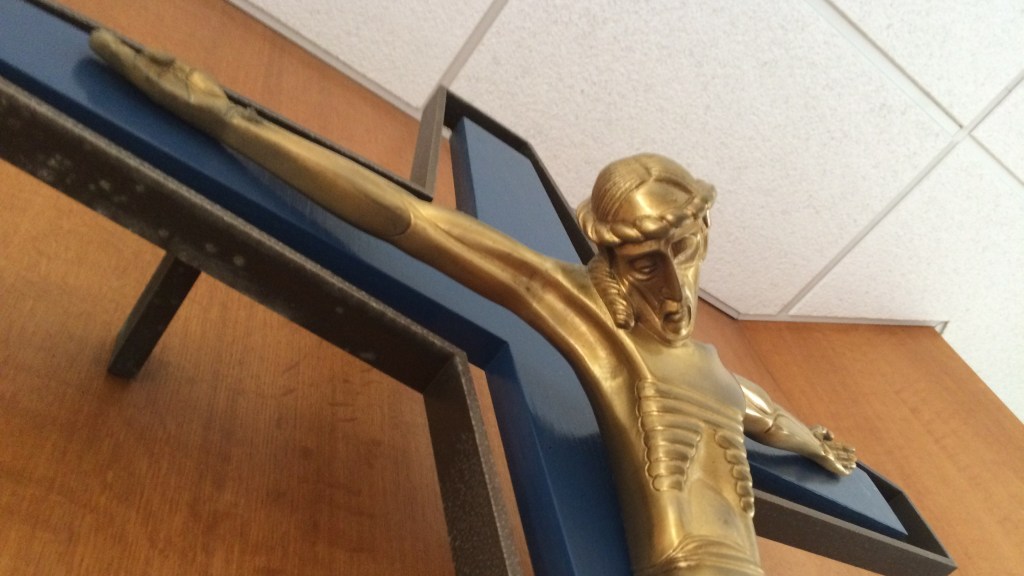
Photo: Crucifix in the small chapel at Our Lady of Florida Spiritual Center, Palm Beach Gardens, FL
Link for the Mass readings for Saturday, March 17, 2018:
http://www.usccb.org/bible/readings/031718.cfm


God is not about numbers, but building relationships

Jesus affirms who he is and whose he is in today’s Gospel of John. Despite those who do not believe that he is the Messiah, and accuse him of being possessed because he healed on the Sabbath, Jesus again makes his point very clear: “I did not come on my own, but the one who sent me, whom you do not know, is true. I know him, because I am from him, and he sent me” (Jn 7:28-29). Jesus is the Son of God made man and he belongs to the One who sent him, God the Father.
As Jesus was challenged in his time, he continues to be challenged today. That level of challenge has increased even to the degree that his human existence is even dismissed as myth, that even as a historical figure, some speculate that Jesus did not walk the roads of Galilee and Judea as recorded in today’s Gospel. This need not be a reason for alarm. Though it is a reason to know our Tradition, the deposit of faith that has been preserved and passed on from Jesus to his Apostles and disciples, and to those early Church Fathers and Mothers named and unnamed, and passed on up to us to this day in an unbroken apostolic succession. We need to know the Bible, how to read the sacred Word, to understand its context and schedule daily time to encounter the Word proclaimed in worship, prayer, and private study.
We also need to know what we believe, who we believe in, and whose we belong to. In this way when we are challenged, we do not need to stoop into a defensive crouch, but instead listen to the person’s points, their critiques, and ask questions of what they believe and why they believe what they believe. Our posture is to be one of being open to understanding where they are coming from. We can then respond with the truth as we know it and as did Jesus did with an open mind and heart of surrender to allow the Holy Spirit to be present through us. When we are anxious, defensive, argumentative, seeking to be right, or fearing to be wrong, we limit what Jesus can do through us. God is not about numbers and quotas, he is about building relationships, one person at a time.
We are only responsible for continuing to develop our relationship with Jesus, to learn and grow in our faith journey with Jesus, to share what we have received in a spirit of charity and dialogue with those we interact with, to be honest when we do not know the answer and promise to find the answer and get back to the person. We are all on this journey of seeking the True, the Good, and the Beautiful together. Let us respect and love those who challenge our faith, be open to the reality that they may have something to teach us, and allow God to guide each of us home through our encounter with each other.

Photo: Yearbook signing and reminiscing on the journey shared and the new one to begin – now two years underway!
Link for the Mass readings for Friday, March 16, 2018:
http://www.usccb.org/bible/readings/031618.cfm


God reaches out to us through his Son, let us reach out to and embrace him.

God heard the cry of his people who were suffering their enslavement in Egypt. God sent Moses to free them. Pharoah did not accept the request of Moses to let his people go and instead put more pressure on his slaves to fulfill their daily quota of bricks as before though now without providing the straw that they needed to accomplish the task (cf. Exodus 5). The Hebrew slaves did not take out their frustrations on their oppressor, but on Moses. This pattern would continue up until they were freed and would continue during their freedom in the desert. They complained regularly that they were better off in slavery being dependent on the Pharaoh instead of placing their trust and dependency on God.
God in like manner sent his Son to free us from our slavery to sin, just as he sent Moses to free the Hebrews enslaved under Pharaoh. How many times do we, like our ancestors, also complain, preferring our life of sin, a life of mere existence, over embracing the gift of a life lived to the full. Even worse there are too often those in positions of spiritual leadership who abuse their power, look out for their own interests, instead of guiding and serving the people entrusted to their care.
Jesus is recorded in today’s Gospel addressing those who are missing, “how God has made his will known to the people, the Father who sent me has testified on my behalf. But you have never heard his voice nor seen his form, and you do not have his word remaining in you, because you do not believe in the one whom he has sent.” God the Father has sent his Son to reveal the will of the Father to them but many do not have eyes to see or ears to hear.
Those who are learned “search the Scriptures, because [they] think [they] have eternal life through them; even they testify on my behalf. But [they] do not want to come to me to have life.” What is hidden in the Hebrew Scriptures is revealed in the New Testament: the New Covenant made with Jesus and all of creation. The prophesies reveal that the Messiah will come as a suffering servant, he will unify the nations, cleanse the Temple, and the enemies of God will be placed at his feet. These affirmations are presented and known by those who study the sacred texts, yet they still do not recognize the signs that the Messiah is in the very midst of them.
Even Moses testified of Jesus when he said: “I will raise up for them a prophet like you from among their kindred, and will put my words into the mouth of the prophet; the prophet shall tell them all that I command” (Deuteronomy 18:18). Yet the successors of Moses would not even believe in his writings, so Jesus said how would they believe in his words?
Jesus shows us in our Gospel today how the people of his time could have known he was who he claimed to be. This is true for us today as well. If we are sincerely seeking God who has and continues to make his will known, we will find him in philosophy, mathematics, the sciences, literature, his creation, in our service to each other, in truths of other faith traditions, but the fullness of the Father is revealed in our encounter of him through his Son, “whom he has sent”, or will we miss God’s invitation because we do not believe in “the one whom he has sent”?
Jesus is also revealed in Scripture, the Old and New Testaments. To understand the New Testament we must understand the Old, for Moses and the prophets testify to his coming and Jesus came to fulfill the Law and the Prophets. Do we leave the Bible on the shelf like any other book? If we do read it, do we do so as if it were a dead letter, or do we read and hear it read it as it is truly meant to be read and heard, as the Word of God proclaimed?
The Father makes himself known to us in the name and presence of his Son, and to experience the truth of this reality in our lives all we need to do is accept his invitation that he offers us to come into our lives. As we reach out to God he meets us because he is already present and reaching out to us through his Son. We do not need to run to God, because he is already running to meet us, awaiting to hold us in his arms, now and forevermore!

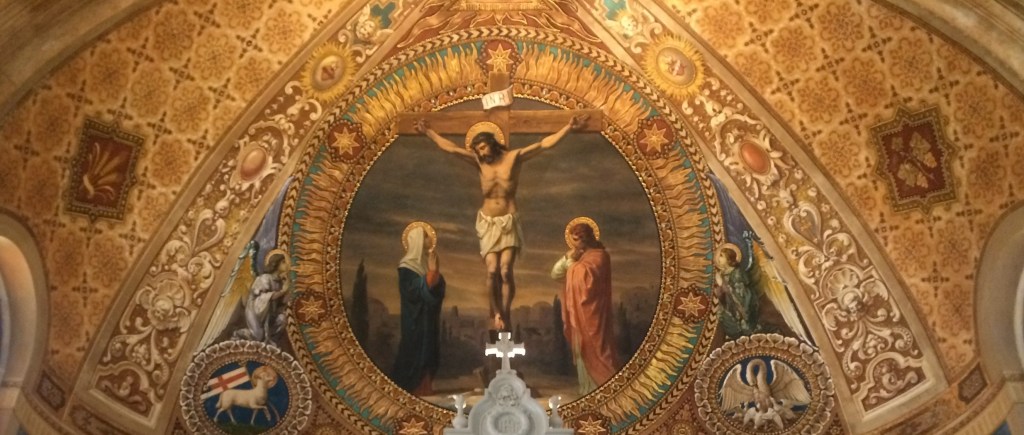
Photo: St Edwards, Palm Beach, FL, ceiling behind the altar
Link for the Mass readings for Thursday, March 15, 2018:
http://www.usccb.org/bible/readings/031518.cfm