Prayer for the Ability to Serve

Dearest Lord,

May I see you today and everyday in the person of your sick,

and, while nursing them, minister unto you.

Though you hide yourself in the unattractive disguise of the irritable,

the exacting, the unreasonable, may I still recognize you, and say,

“Jesus, my patient, how sweet it is to serve you.’

Sweetest Lord, make me appreciative of the dignity of my high vocation,

and its many responsibilities.

Never permit me to disgrace it by giving way to

coldness, unkindness, or impatience.

  • St Mother Teresa of Calcutta


In What Ways do we Need Jesus’ Healing?

He said to them, “Today this Scripture passage is fulfilled in your hearing” (Lk 4:21).

Jesus, who had just sat down, spoke these words to his hometown congregation in Nazareth who had just heard him read the passage from the writings of the prophet Isaiah. Jesus proclaimed that he was the one to whom Isaiah was talking about. Luke chose to place this event as the starting point of Jesus’ public ministry, of bringing glad tidings to the poor, proclaiming liberty to the captives, recovering sight to the blind, letting the oppressed go free, and proclaiming a year acceptable to the Lord (Lk 4:18-19).

This is a message of universal healing to all of humanity that restoration and reconciliation would come and Jesus would be the vehicle to bring us back into communion and relationship with his Father. The poor mentioned were not just in reference to those experiencing material poverty, but to those finding themselves on the margins of society, the outcasts, those on the peripheries. The captives were not only those imprisoned for debts or crimes, but those bound in the chains of their own sin and addiction. The blind were not only those who could not physically see, but those who experienced spiritual blindness of pride and arrogance. The oppressed, were not just of those under the iron fist of totalitarian and dictatorial regimes, but those pressed down through their own self imposed anxieties and fears.

In what ways are we in need for Jesus’ healing and restorative power? What is keeping us on the peripheries, apart from communion and fellowship? What sins and addiction keep us bound, what fears and anxieties keep us oppressed? Today we hear or read again Jesus’ words proclaimed in the Gospel. Jesus’ invitation for healing, for aligning with his ministry, the same words he spoke to his own hometown he is speaking to us. Will we remain blind and run Jesus out of our midst to hurl him over a cliff or come to him, kneel before him, and acknowledge our need for Jesus to be the Lord of our life?

Let us take some time today and examine our conscience. Then come to Jesus with a contrite, sorrowful heart for what he have done and what we have failed to do. May we feel his healing hands on our heads and the warmth of his love pouring through us to purge us of our sin and heal us from that which keeps us bound. Then let us ask him how we can participate with him in bringing about an “acceptable year of the Lord” (Lk 4:19).

The Way of the Cross, Being Fully Alive!

If we seek the freedom to be proficient in anything, playing a sport, an instrument, singing, dancing, acting, writing, drawing, pursuing a career, having a healthy relationship, being married and a parent, we are required to make a commitment of time, discipline, and sacrifice. The process of mastery also requires a willingness to risk, and make mistakes.

In any of the above examples, and any you may think of, consistent time is needed each day. The most challenging part of any endeavor is beginning and making the time. Once we actually begin, the next challenge is the discipline to stick with the goal no matter the distractions and temptations that may dissuade us. This process also takes sacrifice, because to do anything means we are not able to do something else. During each step of the process we risk making mistakes, not doing it right, looking foolish. We experience frustration and impatience as we see ahead of us what we seek to accomplish, but the freedom to do just that seems so far out of reach.

Yet, with the persistence to time, discipline, and sacrifice, we begin to have brief experiences, a foretaste of the freedom of mastery. We lose ourself in the moment where we are not only able to play a series of chords, hit that note, make a move, nail a precision shot, or are involved in a communication of mutual understanding, we are one with those actions. From this context from our personal experience of life, we might have a better understanding of the demands of discipleship.

Then Jesus said to his disciples, “Whoever wishes to come after me must deny himself, take up his cross, and follow me. For whoever wishes to save his life will lose it, but whoever loses his life for my sake will find it. What profit would there be for one to gain the whole world and forfeit his life (Mt 16:24-26)?

Those of us who seek to be his disciples need to invest our time, discipline, and sacrifice. This is the same as any other endeavor we seek to master. The difference is that developing a discipleship with Jesus is to be our first priority. All else flows from our losing our life in Jesus, mind, body, and soul. We can have all the power, prestige, fame, material gain, pleasure at the tips of our fingers, we may have gained the whole world, but if our fundamental option is our self and our own pride, we have forfeited our life. God is our fulfillment; nothing else can satisfy the deep yearning for communion with him that we experience in the depths of our soul.

Finding our life, being true to who we are, free of that which is imposed on us from without and within, is what Jesus means by taking up our cross. We are to let go of our identity, our masks of who we pretend to be, if we are to be free to live a life of integrity and authenticity. Jesus refused the identity of the messiah that others projected upon him. He was not to be a leader of power in the worldly sense, not a warrior king, but a suffering servant, a king of peace. He would go to the cross and take upon him the pain, suffering, and sin of the world, and face death head on, and conquer all. He did so that we might have life and have it to the full. As St Irenaeus is believed to have written, “The glory of God is the human being fully alive.” May we make the commitment to give our time, discipline and sacrifice in pursuit of discipleship with Jesus, to carry our cross and to lose our life in him. By doing so we will experience the freedom for excellence to be who we are called to be and experience the joy and fulfillment of being fully alive!

—————————————

Today’s Gospel Reading:

http://www.usccb.org/bible/readings/bible/matthew/16:21

Have Courage, Share our Talents!

“Then the one who had received the one talent came forward and said, ‘Master, I knew you were a demanding person, harvesting where you did not plant and gathering where you did not scatter; so out of fear I went off and buried your talent in the ground. Here it is back'” (Mt 25: 24-25).

I used to struggle with this verse of Jesus’ Parable of the Talents, because I related to, but sided with the the servant who buried his talent in the ground. What the servant did made senseto me, he kept his master’s talent safe and returned what he had been given. This practice of burying was considered a safe and acceptable practice in ancient Palestine when protecting someone else’s money. Also, at the beginning of the parable, there is no reference to investing the talents, though in the Gospel of Luke there is an explicit demand to “trade with these until I come” (Lk 19:13). What is Jesus saying to us?

Actually, Jesus in this parable, offers a microcosm of salvation history, the thread of which has been woven through all of Sacred Scripture from Genesis to Revelation. God, through his sovereign will, has consistently called, calls today, and will continue to call into the future a people to himself. In each age God has bestowed upon humanity his generous gift of grace, inviting us to receive and share in his very life, which is what we have been created for. This is a free gift, to be freely accepted or rejected. Once received though – no matter how little we choose to receive, we are directed to share what we have been given. Through a life lived of accepting, receiving, giving back to God and to one another, we are given even more through the promise of eternal reward.

In receiving the gift of God, himself, and sharing what he has given, ultimately his love, for God himself is Love, we not only mirror on earth, albeit dimly, but share in the divine communion of the love between God the Father, God the Son, and God the Holy Spirit. To reject this gift, to receive some of the benefits and not to share it, we face the possibility of condemnation. We do so because in rejecting the gift of God himself or refusing to share even small aspects of himself we have been willing to receive, we cut ourselves of from the very life force and source of our being. If we are not connected to the vine, we wither and fade.

We can see this pattern emerge in this parable. The master gives his servants talents. To one he gives five, to another two, and to a third he gives one. All accept what they have been given. But differ in what they do. The first two double what they have been given, and the third buried what he had been given. Two have received and multiplied their talents, the one refused to and kept it to himself. The master returns, commends and rewards the two, then berates and even takes the little the one had been given and gives it to the one who had more.

The message of this parable is as clear as it is challenging. John P. Meier summarizes that, “Jesus is insistent; along with sovereign grace, serious demand, and superabundant reward comes the possibility of being condemned for refusing the demand contained in the gift. Indeed, one might argue that no aspect of Jesus’ teaching is more pervasive in the many different streams of the Gospel tradition, and no aspect is more passed over in silence today” (309).

God has created us, has loved us and creation into existence from the abundance of his grace. Will we continue to reject the gift of his love and invitation of communion? Will we receive just the minimal amount of our existence and limit ourselves and who we are called to be for our self and others because we would rather embrace the temptations of anxiety and fear? Will we resist the full expression of the gift God has given us, afraid to risk, to go out from ourselves to serve others? Or, will we appreciate the gift of our life and say thank you for the breath we breathe? Are we willing to expand the love we have been blessed with and received by being willing to share, to multiply our talents, to embrace who God calls us to love in kind, to will the good of others, whoever they may be?

I have lived the life of the wicked servant who buried his talent out of fear. I have embraced the sin of sloth and resisted opportunities to share what God has given me to invest. This is no path to fulfillment, but an experience of separation from the fullness of the One who wants so much more for me. To live a day to day existence adrift and dulled, is certainly not the way I hope to spend eternity. I still struggle with anxiety and fear at times but trust in the love of God and even in trepidation, and wobbly knees at times, seek Jesus’ hand and accept to be led by him. I have risked and fallen, made mistakes and duffed up time and again, but each year of life gets better and better and more fulfilling. We are not alone. What Jesus invites, gives, and yes demands us to do, he will at the same time provide the support and energy to carry it through to fulfillment. I leave you with the words of Jesus and St John Paul II who echoed them as he began his pontificate:

“Be not afraid!”


Mass readings from today:

http://www.usccb.org/bible/readings/090217.cfm

Meier, John P. A Marginal Jew: vol. 5, Probing the Authenticity of the Parables. New Haven: Yale University Press, 2016.

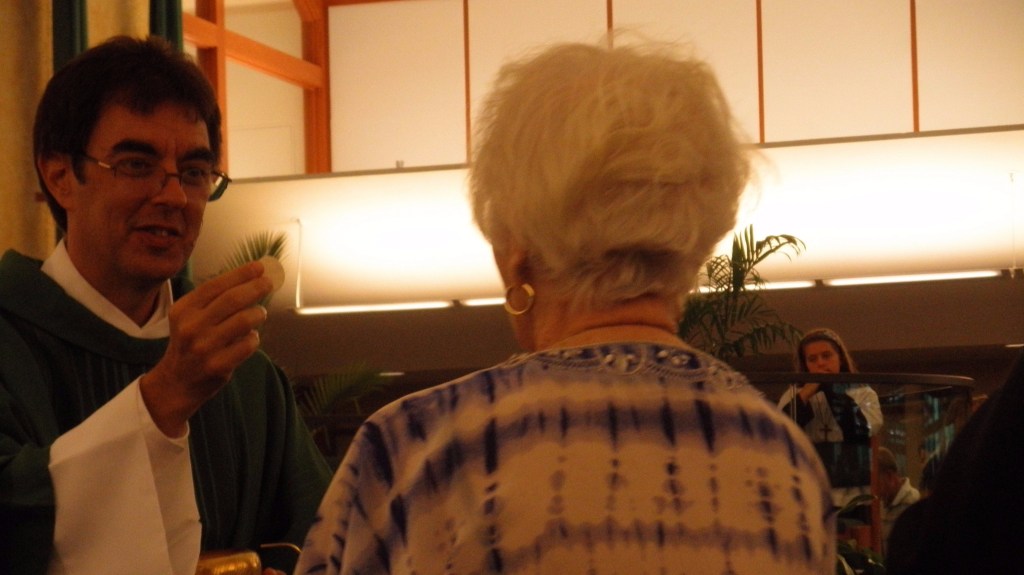
Photo credit: JoAnn Dube’

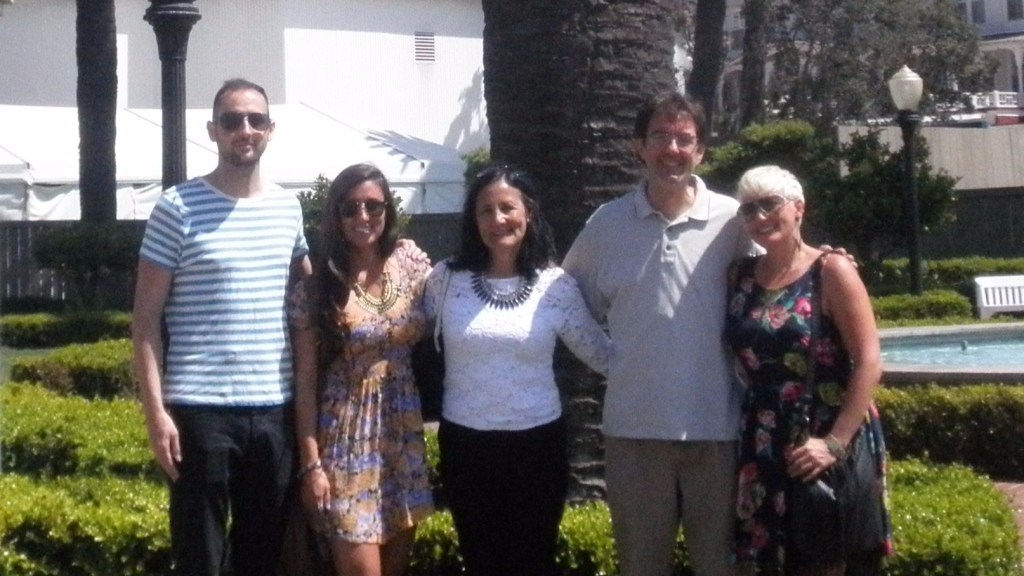
Picture from my first Mass as an ordained permanent deacon, September 7, 2013



Are Our Lamps Empty or Filled?

“The foolish ones said to the wise, ‘Give us some of your oil, for our lamps are going out.’
But the wise ones replied, ‘No, for there may not be enough for us and you. Go instead to the merchants and buy some for yourselves'” (Mt 25: 8-9).

The above verse comes in the midst of Jesus’ The Parables of the Ten Virgins. The bride groom has been delayed in his coming so the ten virgins fall asleep. When they awake, five are prepared with oil for their lamps and five are not. From a first reading of this verse, we can be struck by the unwillingness of the wise not wanting to share their oil with the foolish.

The key to the lanterns being full or empty of oil had to do with the effort or lack thereof regarding those maidens involved.  All have been invited to the wedding feast, some are prepared and some are not. The oil in the parable may represent the invitation to relationship and discipleship with Jesus.

We cannot build a relationship with Jesus for others nor can others build a relationship with Jesus for us. No matter how full our lamps are, no matter how much of a blessing we find in our relationship with Jesus and our faith community, and no matter how we desire Jesus to have a relationship with our family members, friends, and colleagues, we cannot build that relationship for them. We cannot share our oil with them.

Also, if we do not have a relationship, or are resisting going deeper in discipleship, and we see others experiencing the joy, fulfillment, and fruits of a relationship with Jesus, and would like to have what others have, in the same vein, they can’t give us their relationship either. They cannot give us their oil. We need to be open to the invitation of the bridegroom, we need to be willing to develop a relationship, to do our part. Jesus could be knocking on our door, but if we do not open it and let him in, he will not impose upon our free will to refuse to answer.

Two examples may help to bring the point home. In Acts 8:9-24 there is the account of Simon the magician and in Acts 3:6 Simon Peter. Simon the magician witnesses the works of the Holy Spirit moving through Philip, Peter, and John. He offers Peter money to be able to do what they did and Peter strongly rebukes Simon. Money can’t buy love, nor can it buy the fruits of the Spirit experienced by those who have developed an intimate relationship with Jesus. In Acts 3:6, Peter comes upon a crippled beggar and states that he has neither gold nor silver, but what he did have he would give him: “In the name of Jesus Christ the Nazorean, [rise and] walk.” The man was healed and walked.

Simon the magician’s lamp was empty, because he spent years building himself up, putting himself first, and saw God’s grace as a means for his self aggrandizement. Simon Peter’s lamp had been filled with oil from having learned at the Master’s feet, having gone with him through the crossroads, the storms, his own failures, betrayals and humility and repentance.

The bridegroom has invited us to participate in the wedding. The time of his return is not yet, but we need to be prepared. We need to fill our lamps by being about the work of developing our relationship with Jesus and in the words of Mary, doing what he tells us! We can’t fill other’s lamps, but we can be present to others where they are, assist in their need, share our faith, offer to pray with and for them, invite them to fellowship, study, and worship. But when it comes to encountering and being open to developing a relationship with Jesus, that is between Jesus and the person invited.


Mass Reading for the Day:

http://www.usccb.org/bible/readings/090117.cfm


Faithful and Prudent Stewards Are We!

“Who, then, is the faithful and prudent servant, whom the master has put in charge of his household to distribute to them their food at the proper time” (24:45)?

Jesus is calling us to be that “faithful and prudent steward” and the household we are to serve is our own homes, churches, communities, states, countries, and world. For the world is our home and those we serve are our brothers and sisters. Jesus’ call is a universal call to solidarity. We are all united in this effort for and with one another because we are all brothers and sisters created in the same image and likeness of our loving God and Father.

God has created us, not as automatons or robots, or drone worker bees. He has created us as unique persons, one of a kind, distinct wonders that have never been nor will ever be again. While at the same time, we as this gift of diversity is not intended to be separate from one another, but God has created all of us to be interconnected, to be loved and to love. What affects one, affects all. Also, how we treat one another is how we treat Jesus.

Jesus clearly points this point out in his parable, often called the Judgment of the Nations, when he stated: “‘Lord, when did we see you hungry and feed you, or thirsty and give you drink? When did we see you a stranger and welcome you, or naked and clothe you? When did we see you ill or in prison, and visit you?’ And the king will say to them in reply, ‘Amen, I say to you, whatever you did for one of these least brothers of mine, you did for me’”(Mt 25: 37-40).

There are many areas to address from Jesus’ articulation of who we are to care for as faithful and prudent stewards, and for the remaining part of this reflection, I will focus on “When did we see you a stranger?” The stranger’s face can be seen in the over 65 million refugees and immigrants who are seeking refuge, safety, basic care and support from war, terrorism, government abuse, gangs, violence, human trafficking and more. Archbishop Thomas Wenski, diocese of Miami, points out that: “These 65 million men, women and children represent the greatest number of displaced persons since the end of World War II” (Wenski).

How do we even begin to address this crisis, including those displaced and dealing with the devastation of Hurricane Harvey? First and foremost, we need to see not numbers, but brothers and sisters in each face, not nations, but fellow human beings in dire need, not ethnicity, race, or religion, but Jesus in the exhausted eyes of each stranger. We need to pray how we can “give a visible demonstration of support for refugees and migrants” (Wenski). As think and pray about how we can help, Pope Francis is leading the way.

On September 27, Pope Francis will be launching a campaign of encounter called “Share the Journey”. Luis Antonio Taglehis, Cardinal Archbishop of Manila and President of Caritas Internationalis, wrote in a letter in late July that the “campaign proposes to look at the migratory phenomenon with “new eyes and an open heart,” to “dissipate the fear” of the people and to “understand why so many people are abandoning their homes,” (Droujinina). The U.S. bishops will be coordinating with “Catholic Charities USA and Catholic Relief Services, who have also designated the week of Oct. 7-13 a “week of prayer and action” in order to promote a culture of encounter to counter the culture of indifference” (Wenski).

May we have the humility to begin to confess those wounded areas in our being where we suffer from anxiety and fear, acknowledge that we have been unaware or indifferent, and/or even where we still harbor prejudice, intolerance, or bias. As we are forgiven, as we experience the love and mercy of Jesus, let us draw strength from him, begin to see the dignity present in one another, and begin to take steps to encounter and serve one another as brothers and sisters.

Special thanks to Elena Garcia and Jill Hanson for bringing Archbishop Wenski’s article to my attention, and for Archbishop Wenski’s leadership.


Gospel reading for today:

http://www.usccb.org/bible/readings/083117.cfm

Archbishop Wenski article in full:

http://www.usccb.org/bible/readings/083117.cfm

Marina Droujinina article about launch of Share the Journey Campaign:

https://zenit.org/articles/caritas-pope-to-launch-share-the-journey-campaign/

External or Internal?

Jesus said, “Woe to you, scribes and Pharisees, you hypocrites. You are like whitewashed tombs, which appear beautiful on the outside, but inside are full of dead men’s bones and every kind of filth. Even so, on the outside you appear righteous, but inside you are filled with hypocrisy and evildoing” (Mt 23:27-28).

How many of us spend an inordinate amount of time regarding physical externals? Washing, makeup, the right clothes, the correct scents, teeth whitening, plucking, nipping, and tucking. How about time spent exercising through gym memberships, home exercise equipment, physical trainers, sports, stretching, running, or cycling. How about time spent towards a career through education, updating, professional learning, seminars, webinars, Linkedin and networking. There are other categories that I can add, and the point is that there is not anything necessarily wrong with any of the above in moderation and each in balance are healthy practices.

Though if external activities are all we are investing of our time and energy, then Jesus has a point. We may “appear beautiful on the outside” with great looks, a body that doesn’t quit, and a career to die for, but what is going on inside? Are we empty, unfulfilled, achieving goal after goal, yet feeling adrift or hollowed out? Do we have all the right social skills and etiquette down, know the right things to say in public, we have friends in the hundreds on our social media accounts, yet we feel alone and not a part of anything meaningful?

Worse yet, do we go to Church, say the right prayers, are active in ministry, we tithe, are members of boards, involved in the community, and doing some great works of charity, but when the door is closed, and no one is looking… what kind of “hypocrisy and evil doing” are we up to? I bet you’d like me to go back to Jesus chewing out the Pharisees, right now, wouldn’t you?

The above represent some of the extremes of external behavior, and I am sure much of us are more balanced in our lives, but we do need to take a good solid look at what time we invest and where we are focusing our energies. We need to examine our conscience regularly regarding a real assessment of the health of our relationship with God, family,  significant friendships in our lives, our vocation instead of occupation, and our service to those beyond our intimate circle.

Making time for prayer, study, worship, finding and living out our vocation, and service to others helps to build a foundation for developing the inside. Making time to rest, renew, and reflect on the core of who we are in the depths of our soul, getting in touch with who God calls us to be, leads to contentment and peace. Standing up for who and what we believe in, speaking what we believe with confidence and respect, while allowing others to do the same, leads to fulfillment and joy. With these points as our foundation then we are more apt to address the externals in a healthier, balanced way, such that we achieve a fuller experience of life, identity, and integrity.

The question is, do you want to spend time whitewashing the tomb, living life on the outside or conforming your life to Christ, and being transformed from within?


Family Affair

Herodias’ own daughter came in and performed a dance that delighted Herod and his guests (Mk 6:22).

Mark paints a word picture of a family: Herod, Herodias, and their daughter: ancient manuscripts differ as to whether she was Herod’s or Herodias’ daughter. Also, two times, in Mk 6:22 and 6:28, she is referred to in the Greek as korasion, meaning a young woman, as young as twelve years old (Donahue, 198). The setting is the banquet hall of Herod, the tetrarch or prince of Galilee. His high officials, military commanders, and the elites of Galilee were all gathered to celebrate Herod’s birthday. This is a royal, opulent family.

The daughter comes out to dance for Herod. Her dance delights Herod and he grants her anything she wants. Following the counsel of Herodias, she asks for the head of John the Baptist on a platter. The reason for this request was because Herodias held a grudge toward John because he stated that it “is illegal for you to be married to your brother’s wife” (Mk 6:18). Herod was distressed at the daughter’s request, but granted John’s death sentence to save face before his honored guests. The execution was swift, the head of John was brought on a platter, given to the girl, who then brought it to her mother.

Now, as I was reading this account again on the USCCB link posted below, I glanced to the right side of the web page at an advertisement for a book called, The Fragrance of Family Life. Clicking on the image of the book revealed this blurb: “This guide will help you share prayer time with your children, parents, grandparents, and all those whom the Lord has placed in your life.” On the cover of this book was a painting of a peasant family, clearly meaning to represent Joseph, Mary, and Jesus.

Could there be any two starker images? One family as corrupt, conniving, and malicious as can hardly be imagined and another as faithful, pure, and holy as can be hoped for. Families, like all of us, are not perfect, they are a bit messy. We do the best we can to support and love one another. Hopefully, most of our families fall somewhere in between, and hopefully closer to, the Holy Family than the Herodians.

The best we can do as family is to: accept each family member for the unique gift and person they are, make it known we are praying or thinking about one another, commit to support and encourage one another, forgive one another, continue to communicate with one another and even when we disagree respect one another, and no matter what bumpy roads or stormy seas of trial our families are going through or may go through, and you catch yourself shouting out: “Jesus, Mary, and Joseph”, just remember to add, “Pray for us” after your invocation. Bottom line: no matter how much we mess up, may we always agree that when the smoke clears, we will love and be there for one another.

For all our families, and especially those in Texas, on this his memorial day, we ask St John the Baptist to pray for us. From our family to yours, God bless you!


Link for today’s Mass reading:

http://www.usccb.org/bible/readings/082917.cfm

Donahue SJ, John R. and John R.Harrington SJ, Daniel J. 2007. “The Gospel of Matthew”. In vol. 1, Sacra Pagina Series, edited by Daniel J. Harrington. Minnesota, Liturgical Press, 2002.


Embrace Contrition and Reconciliation

“Woe to you, scribes and Pharisees, you hypocrites. You lock the Kingdom of heaven before men” (Mt 23: 13).

Context, in any reading of the Gospels, or any scriptural text, is important, but certainly with today’s reading. Our country is already experiencing enough division, polarization, and racial unrest as it is. These comments have too often been used to fuel anti-Semitic rhetoric. We need to remember that Jesus is Jewish. “The criticisms are leveled with those of power and/or influence as in the prophetic denunciations, not against the whole people of Israel. The aberrations denounced by Jesus were also denounced by other Jewish teachers in the rabbinic tradition. The goal of the denunciations is to highlight the error, to preserve others from it, and perhaps to bring those who err to the way of righteousness” (Harrington, 327).

Those who would use these verses to denounce people of the Jewish faith tradition, just for being Jewish, would be acting in the same way as those to whom Jesus was convicting. Jesus was speaking to the specific actions of specific leaders he had encountered who were using their power and influence for their own means and agendas. The hypocritical behavior that Jesus brought to light unfortunately still exists in our civil and religious leadership, though not all. It is why so many people are disillusioned with our religious and civic institutions.

We seek truth and authenticity because these two qualities are foundational for building trust and relationships. St. Augustine, whose feast we celebrate today, wrote, “You have made us for yourself, O Lord, and we are restless until we rest in you.” He experienced a life without God and with him, and regretted the days he had resisted his invitation. It is unfortunate how many today have not come to embrace the words of Augustine, because of their experiences with those, who in the name of Christ, have “locked the kingdom of heaven” before them.

It is very easy to point fingers at others and how hypocritical they are, but Jesus is also speaking directly to each one of us. How have we erred? In what areas of our life have we allowed past hurts and wounds, anxieties and fears, prejudicial and judgmental attitudes, to limit us from living a more authentic life aligned with the teachings of Jesus. We all fall short in living the “Way, the Truth, and the Life” (cf Jn 14:6), but the good news is that when we have the humility to be contrite, to recognize and to be sorry for the hurt we have caused, to admit when we have been wrong, we have a loving Father with arms wide open to embrace us, comfort, and heal us.

May we speak up, out, and against any act that diminishes or denounces the dignity of another, while at the same time, resisting the temptation to do so in a way that diminishes those who inflict division and hate. Jesus invites us to convict, yes, as he and the long line of prophets have done, with the intent of winning back our brother or our sister, with the intent of making a commitment to contrition and reconciliation.


Link for the Mass readings of the day:

http://www.usccb.org/bible/readings/082817.cfm

Harrington, S.J., Daniel J. “The Gospel of Matthew, vol. 1.” In Sacra Pagina, edited by Daniel J. Harrington, S.J. Collegeville, MN: Liturgical Press, 2007.

But Who Do You Say that I Am?

“But who do you say that I am” (Mt 16:15)?

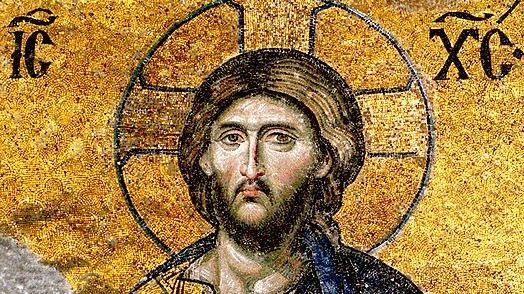
This question is just as important to us today as it was when Jesus asked his disciples the same question some two thousand years ago. The answer is wide and varied as attested to in the many books written about Jesus and the many denominations who claim to follow him. There is also a vast array of pictures, paintings, documentaries, and movies. Through each medium, we are given a view of the Jesus of history or the Christ of faith, some emphasizing more the humanity of Jesus and others more the divinity of Jesus, and some a balance of the both the human and the divine. Debate has continued as to whether Jesus was God or only human, to did he ever really exist at all?

When I taught fifth and sixth grade students at Rosarian Academy, each Easter Season, I assigned my students the task of drawing a picture of the Resurrected Jesus. I quickly noticed a common characteristic of their artistic renditions: Jesus consistently did not have a beard. At first, I started to hand back the pictures to say they needed to add a mustache and beard, but quickly stopped myself. I realized I had made a mistake. This is how they saw Jesus from their perspective at their age.

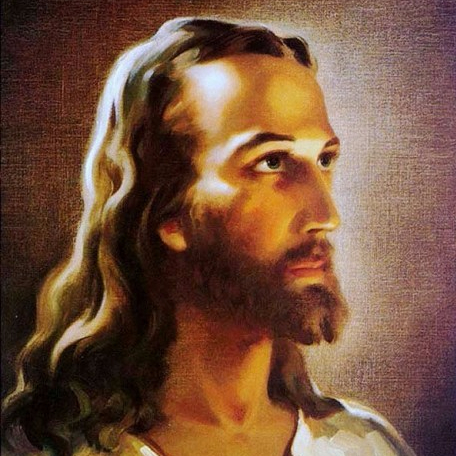
The way we talk about and express Jesus may actually say a lot more about us than Jesus. The portrait I posted above is the Walter Sallman painting he titled, “Head of Christ”. I chose it because this was the portrait of Jesus I grew up with in our home and when I close my eyes and talk to Jesus this is the image that most comes to mind for me.

Seeking to know Jesus better, as my wife can attest, I have two book shelves with books just on Jesus, though for this blog, and at this time, I have gone back to the earliest, primary sources, the Gospels. I have read the daily Mass readings each day, prayed with them, and shared a bit of my reflections with you. Hopefully, what I have shared has provided some food for prayer, reflection, and practice.

“But who do you say that I am?” is an important question to meditate on from time to time. I invite you to do so this Lord’s Day and through the week. Please feel free to post your response. I would be interested to read how you answer Jesus’ question.


Link for today’s Mass Readings:

http://www.usccb.org/bible/readings/082717.cfm