Please Forgive Me

Peter approached Jesus and asked him, “Lord, if my brother sins against me, how often must I forgive him? As many as seven times” (Mt 18:21)?

Peter’s initial question of asking to forgive seven times may sound pretty generous to us, because the usual question most of us ask is, “Do I have to forgive at all?” Many of us do not do forgiveness well, even if we look at it as a virtue. If someone says they are sorry, do we say the words I forgive you? Often our automatic response is, “That’s alright”, “It’s ok”, or “No problem”. When we are convicted of a mistake, error or offense, do we ask for forgiveness or operate from a defensive posture to explain why we did what we did, or defend what we did as right, not willing to admit any inappropriate action?

We are very habitual creatures, and much of what I shared is learned behavior. We are conditioned and shaped from our youth. That is why when we hear Jesus’ answer to Peter, “I say to you, not seven times but seventy-seven times”, we may dismiss what Jesus says outright as impossible, or what may come to our minds are those cases or positions that we feel justified in not forgiving. Jesus is yet again raising the bar.

We are to strive to forgive as our heavenly Father forgives. Seventy-seven times? Forgive the same person seventy-seven times? Yes. If someone is seeking forgiveness, we are called to forgive. I don’t believe Jesus means we don’t hold people accountable, remain in a dangerous or life threatening situation, or enable people in self-destructive behavior. Forgiveness has to do with not holding on to the hurt, not allowing the offense to fester as a grudge that builds to hate and negative or violent behavior ourselves. Forgiveness is also a blessing and not a curse. For when we forgive, it is an antidote to the poison someone has injected us with. If we refuse to forgive, we allow the person who has injured us to do so over and over again, we allow that poison to fester.

If you are struggling with holding onto a grudge and past hurts. Visualize yourself approaching the person you have the issue with and saying I forgive you. You may also find it helpful to visualize Jesus standing beside you while you do this exercise. Repeat the process each day in your time of prayer until you start to feel yourself coming to a place of forgiveness, and can imagine that reconciliation is indeed possible. If you find visualizing difficult, sit down and talk to Jesus. Be honest with him, tell him the situation and that you do not want to forgive the person. Then ask for Jesus to help you. Embrace the sacrament of Reconciliation and confess your unwillingness to forgive. When ready, determine how best to reach out to the person to say that you forgive them; a phone call, letter, email, or in person.

We don’t do forgiveness well. But with Jesus, we can begin again. Let us practice saying each morning, “Please forgive me, (Name)” and think of a few thoughts, words, or actions you need to be forgiven for, and then say, “I forgive you (Name), for” and think of a few words, actions, or inactions. Also, Jesus gave us a pretty good prayer: “Forgive us our trespasses and we forgive those who trespass against us.” We are not alone. Remember, Jesus asked God to forgive those who crucified him. We can ask God to forgive those who have offended, hurt, or abused us.

 

Choose Reconciliation Over Gossip


Gossip is a seductive and enticing poison. Many of us fall for its lure and its intoxication. There are many different reasons we engage in gossip. We may think we feel better about ourselves by putting someone else down, we may be jealous of what another has, or maybe someone just rubs us the wrong way. The one reason that we may feel justified in choosing to gossip is when someone has hurt, offended, or wronged us in some way. Even in that instance, Jesus offers a different approach in today’s Gospel.

Jesus said to his disciples: “If your brother sins against you, go and tell him his fault between you and him alone” (Mt 18:15). Jesus is drawing on his Jewish heritage here. Leviticus 19:17 warns against holding hate in your heart and instead encourages seeking to reason with your brother. Jesus is redirecting us from adding fuel to the fire by seeking revenge, or stewing in our own hurt, which will build resentment and hate. Instead he is inviting us to  seek reconciliation.

Pope Francis, in his September 9, 2016 General Audience was very clear: “The gossip is a ‘terrorist’ who throws a grenade – chatter – in order to destroy,” he added. “Please, fight against division, because it is one of the weapons that the devil uses to destroy the local Church and the universal Church.” Let us refuse to be a weapon of the devil in his plot to divide with our thoughts or our words, but instead seek to be a disciple of Jesus by advocating for forgiveness and reconciliation.

May we make a commitment to be more discerning with our tongue. With our words we can cut, wound, or destroy, or we can convict, reconcile, and heal. Let us choose today to lift up and empower one another. Yes, it is much easier to grumble about someone than to approach them in love and hold them accountable. If we are not quite ready for that, Pope Francis invites us to “bite our tongue” instead or we can choose to pray about the situation with someone we trust: “For where two or three are gathered together in my name, there am I in the midst of them” (Mt 18-20). With Jesus in our midst, we will have a better chance of choosing reconciliation over gossip.


Link for the Mass Readings for the Day:

http://www.usccb.org/bible/readings/081617.cfm

Link for Pope Francis’ comments:

https://cruxnow.com/vatican/2016/09/10/pope-francis-warns-gossip-destroys-church-within/

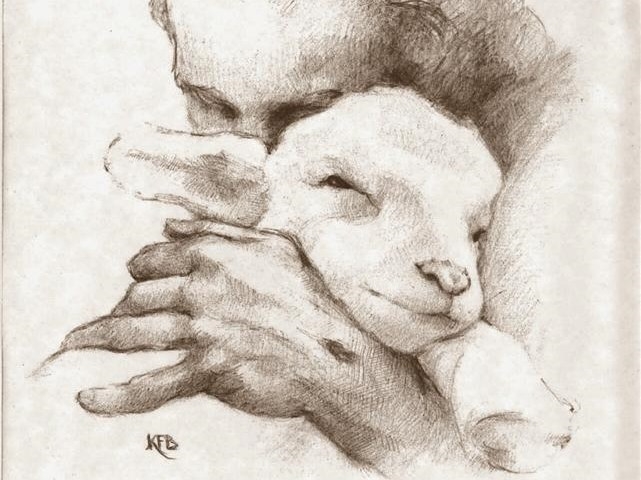
Image credit: Katherine Brown


Let Us Too Leap for Joy!

“For at the moment the sound of your greeting reached my ears,
the infant in my womb leaped for joy” (Lk 1:44).

After Mary, conceived Jesus, through the power of the Holy Spirit,  she went in haste to the home of her relative Elizabeth. As soon as Elizabeth heard Mary’s greeting, John leapt for joy in her womb. When we experience great joy we want to share it with others, just as Mary did. When we unite with those we love we, like John, we leap for joy.

There was no one closer to Jesus than Mary. She bore him, nursed him, raised him, initiated, in motherly fashion, his public ministry, held him in her arms as he was taken down from the cross, and she was with the Apostles in the upper room when the Holy Spirit descended upon them. Mary, like Jesus, was also Immaculately conceived. When her time came, who better than Mary to have experienced the “singular participation in her Son’s resurrection and an anticipation of the resurrection of other Christians” (966).

Today we celebrate the official dogmatic constitution issued by Pope Pius XII in 1950, the Assumption of Mary, the final grace she received from her Son. Today is a day of joy! Jesus is the promise and Mary is the hope that we will live eternally with our heavenly Father, for Mary is now where we will one day be, body and soul. This is a day to celebrate!

Jesus and Mary have undone the sin of Adam and Eve. They in their faithful life and witness to God have opened up heaven for us. This is the Gospel, this is Good News! In our darkest trials, when storm clouds of injustice seem to gather, when nothing appears to get better, there is hope, because there is a light that shines in the darkness:  “My soul proclaims the greatness of the Lord; my spirit rejoices in God my Savior for he has looked with favor on his lowly servant.” God is ever faithful and present to us in his mercy. May we like Mary ponder the wonderful gifts of our Father’s Love, Mercy, and bestowal of his Grace.

Mary, like the moon, reflects the light of her Son. May we celebrate with thanksgiving today this wonderful gift we have been given of experiencing the foretaste of heaven and so go forward with haste, reflecting the radiance of Jesus in our life by being beacons of light and hope, and today at some point leap with joy! Holy Mary, Mother of God, pray for us now and at the hour of our death!


For the readings of the Mass for Tuesday, August 15, 2017:

http://www.usccb.org/bible/readings/081517-mass-during-day.cfm

Catechism of the Catholic Church


May We See Each Other as Human Beings

Jesus said to him, “Then the subjects are exempt. But that we may not offend them, go to the sea, drop in a hook, and take the first fish that comes up.  (Mt 17:26-27).

Jesus recognizes religious law as well as civil law, and if there is to be order and stability there needs to be an acknowledgement of and respect for the law, as Jesus said, “But that we may not offend them” and as he will say later, give back to Caesar what belongs to Caesar and to God what belongs to God (cf. Mt 22:21). These statements really cannot be used to adequately draw a parallel to the modern church and state issue, as there are many complexities and nuances to address that are beyond the scope of this reflection.

Also, the editorial hand of Matthew is in place here. The major issue for him is how to be a faithful Jew and at the same time a faithful follower of Jesus, while also living under the occupation of Rome. If one is seeking a barometer on how to act as a disciple of Jesus in today’s world, Jesus’ message is consistent and clear: “You shall love the Lord your God with all your heart, with all your soul, with all your mind, and with all your strength. The second is this: You shall love your neighbor as yourself” (Mk 12:30-31).

Jesus not only gave us these words to live by, he consistently embodied them in every word he spoke, action he took, teaching he taught, and miracle he performed. In this greatest commandment, Jesus also redefined neighbor, as to represent all human beings, even those that we would consider our enemies. Each human person has dignity in that he or she has been created in the image and likeness of God. Any law is subservient to that fundamental starting point.

Each and every decision we make today, no matter how small or large, in dealing with one another on an individual to individual basis, all the way to national legislation, is to have as the starting point, the human dignity of the person. When we define any human being as other through labels, when we seek to belittle, delegitimize, or dehumanize any person, we are wounding the dignity of the person and ourselves. This is the root of conflict, aggression, prejudice, racism, tribalism, nationalism, violence, and war.

Jesus gave his life that we might have life and have it to the full. He taught and teaches us still, to see each other as human beings, brothers and sisters, with distinct gifts and viewpoints. Each and every one of us has something to offer for the greater good, and each and every one of us are beloved by God. May we join in prayer today for Heather Heyer and those wounded bodily and spiritually in Charlottesville, but not only there. Let us pray for forgiveness, healing and reconciliation for the many places in ourselves, in our families, communities, countries and world ravaged by hatred, violence and war.


———————————————————————–

Mass Readings for today, Monday, August 14, 2017:

http://www.usccb.org/bible/readings/081417.cfm

Image credit: William Zadanak

Making Time to Pray

After doing so, he went up on the mountain by himself to pray.
When it was evening he was there alone (Mt 14:23)

“After doing so,” is referring immediately to the preceding verse where Jesus dismisses the five-thousand after he had fed them and forced his disciples to go ahead of him and sail off to the other side of the Sea of Galilee. Jesus was now alone, which was the reason he originally came to this deserted place but the people had followed him. Though weary, and worn, Jesus “went up on the mountain by himself to pray.”

We need to do the same. In the midst of our business, we need to make time to be alone and pray. Like Jesus, we have many demands on our time. We may have many obligations, many people, and many challenges pulling at us. We also may have many distractions, anxieties, and fears that tempt us when we do move in the direction of making time to pray. For being quiet, being still, can be a fearful thing. It is here we are called to face ourselves, our sin, our despair, loneliness, or our pain, suffering, and hurt. As Jesus walked up the mountain, I am sure two recent events, being rejected in his hometown and the death of John the Baptist, were on his mind.

If making time for prayer has been a challenge, then the first step is to just begin with examining your days to find some “crumbs of wasted time to try to build short moments for recollection and prayer, we may discover that there is quite a lot of it” (Bloom 49). The point is to begin, and it is not so important how or what we pray, but to just make a commitment to two, three, five minutes each day to let go of time so you can just be in the present, in the moment. It is in the present moment that we can encounter God.

Choose a place where you know you will not be interrupted, set an alarm for the time you choose, so you can be freed from watching the clock, and then just take a few deep breaths and rest with God. Say to yourself, “I am seated, I am doing nothing, I will do nothing for five minutes, then relax” (52). The goal to start is not so much what you do during this time, it is that you complete the time you have committed to, no matter what arises. You can just examine the day, say the Lord’s prayer slowly, breathe, talk freely with God. Resist the temptations that will arise to stop and get up.

You may find even a couple of minutes very difficult, but once you have given yourself time each day for about a week, the exercise will become a little easier. You will begin to create a stable foundation of stillness that will begin to stay with you during the busier times of the day. You will begin to experience some more patience, begin to catch those times when your shoulders were in your ears and you were not even aware of it.

If you do not believe that this can be done, then you can use this blog post as a confirmation. I did not believe I had the time to write this, there was already too much on my plate. But I felt God encouraging me to go deeper into the Gospel readings, pray with them, and share what insights I received. The only goal was to write one entry a day. I have been doing so each day since late June.

One stepping stone at a time is the key. Choose a time and place to commit to be still, sit, breathe, and complete your time of stillness. God will take care of the rest!


Mass Readings for today, Saturday, August 12, 2017:

http://www.usccb.org/bible/readings/081217.cfm

Bloom, Anthony. Beginning to Pray. New York: Paulist Press, 1970.

We Live by Faith

Then the disciples approached Jesus in private and said, “Why could we not drive it out?” He said to them, “Because of your little faith.” (Mt 17:19-20).

How do the disciples get from this recurring theme of having little faith in the Gospel accounts to Peter healing a crippled beggar when he said, “I have neither silver nor gold, but what I do have I give you: in the name of Jesus Christ the Nazorean, [rise and] walk” (Acts 3:6)?

A helpful definition “is to say that faith always entails a relationship between persons which stands or falls with the credibility of the person who is believed” (Rahner and Vorgrimler, 164). Faith is not just an intellectual exercise, it is a lived experience. Christian faith is the absolute conviction, belief, and relationship experienced with Jesus Christ. The disciples learned from Jesus but more importantly developed an intimate relationship with him, such that the love they received and shared became so strong that there was no more room for doubt, distraction and fear, such that they would align themselves with the will of God and do what Jesus did and through him do even greater deeds than he (cf. Jn 14:12-14)!

We are invited to do the same. If we only read the Gospels or hear them read at Church we may know something about Jesus, but our life will for the most part remain unchanged. But when we read, meditate and pray with the Gospels, and put into practice what we read, like the disciples we will come to know and develop a relationship with Jesus and be conformed to him. In this way, we are not just reading a dead letter but encountering the living Word, the Son of God who invites us to share in the infinite dance of Love that he participates in with God the Father and God the Holy Spirit.

As our relationship and intimacy with Jesus grows and matures we too will be able to say with conviction the words of Paul: “I live by faith in the Son of God who has loved me and given himself up for me” (Galatians 2:20).

———————————————————————–

Mass Readings for today, Saturday, August 12, 2017:

http://www.usccb.org/bible/readings/081217.cfm

Rahner, Karl and Vorgrimler, Herbert. Theological Dictionary. New York: Herder and Herder, 1965.

Painting credit: CB Chambers

Take Up Your Cross

Jesus said to his disciples, “Whoever wishes to come after me must deny himself, take up his cross, and follow me. (Mt 16:24).

Jesus invites us to deny our self-centered default position which places I, me, and mine, at the center of each our decisions. We also deny our self when we resist making excuses for our sins and come to a genuine place of sorrow for the pain we have caused God, our self and others. By acknowledging our sins and confessing them, we die to our selfish ways, and then we rise again through the power of Christ. Empowered by our humility and the strength of Jesus we are better equipped to resist those temptations when they rise again.

We are also in a better position to then take up our cross, which is to follow the will of God. Jesus showed us the proper orientation of surrender when he said at Gethsemane: “Father, if you are willing, take this cup away from me; still, not my will but yours be done” (Lk 22:42). Jesus was willing to follow his Father’s will to the cross of horrific suffering, excruciating pain, humiliation and abandonment, to death and into new life!

Many a mother I have talked to has shared the struggles of labor, but the joy of the birth; many of my students have shared the time and effort expended for an examination, a sporting event, art show, musical or theatrical performance and the joy they experienced from the feat they accomplished; and how many times have you faced a challenge, trial, or cleared some obstacle and felt the exhilaration of success?

Taking up our cross, following the will of God is the same. In actuality, each of the examples above can certainly be expressions of following God’s will. Seeking God’s will in the midst of our decision-making process and trials is the key.

In my mid-twenties, I entered the Franciscan Friars of Holy Name Province to study for the priesthood. In the year and a half of discernment with them, I contemplated from time to time about my ordination day. I often did not feel any joy. I enjoyed every aspect of my experience with the friars and the ministries I was involved in, but there was something or someone missing. I took a leave of absence and in that time, I realized what was missing was having a family. About two years later I met JoAnn, and her three children, Mia, Jack and Christy, and six months after that we were married. Seventeen years after our marriage I was ordained to the permanent diaconate. This is the short version of the story. There were many crosses along the way, but in seeking God’s will throughout, the circle was complete! The journey continues.

Self-denial, carrying our cross, and following Jesus is the path that leads to freedom for excellence, fulfillment and joy!

———————————————————————–

Mass Readings for today, Friday, August 11, 2017:

http://www.usccb.org/bible/readings/081117.cfm

May We Die to Ourself

Jesus said to his disciples: “Amen, amen, I say to you, unless a grain of wheat falls to the ground and dies, it remains just a grain of wheat; but if it dies, it produces much fruit. (Jn:12:26).

In reading this verse, I was transported back to Middle School. Our sixth-grade class was dismissed to head to the cafeteria for the Science Fair. As I drew closer I could hear some unintelligible chanting going on. Of course, I was curious and craned my neck to see over the other students filing in as we entered our destination. I drew closer to see a circle of kids chanting and circling. I stopped as I heard muffled groans and then saw one of my friends standing in the center of the circle, his forearms pulled up to cover his face. No one was laying a hand on him, but that heckling and chanting was inflicting its damage. I froze not knowing what to do or how to act.

I don’t remember how the situation was resolved, but I remember how bad I felt that day, and still do for not doing anything. I also withdrew from my friend when I saw him later because I felt so bad, I couldn’t even be there for him to provide any comfort as I was still only thinking of myself and not his feelings.

That day, I remained just a grain of wheat. I was unwilling, unable to die to myself to stand up for my friend or provide any comfort.

When we find ourselves in such situations, when another’s human dignity is being diminished, even now as adults, Jesus reminds us that we are not to love our life, assess our own self-interest first, or we will lose it. Instead we are to love, to will the good of the other, to hate our life in this world so as to preserve it for eternal life (cf. Jn 12:25) By building a foundation of thinking of the other first instead of ourselves we will be in a better position to serve as Jesus did.

May we pray for each other today, that we may draw strength from Jesus, to be that grain of wheat that dies to self, so that our actions directed toward others may be empowering, caring, and supportive; and may we bear the fruit of his courage to stand up, to speak up and out, for the dignity of those in our midst who are treated in any way that belittles or demeans their dignity as a person.

———————————————————————–

Mass Readings for today, Thursday, August 10, 2017:

http://www.usccb.org/bible/readings/081017.cfm

“O Woman, great is your faith!”

He said in reply, “I was sent only to the lost sheep of the house of Israel.” But the woman came and did him homage, saying, “Lord, help me.” He said in reply, “It is not right to take the food of the children and throw it to the dogs.” (Mt 15:23-24).

I would encourage you to read the full account (Mt 15:21-28), it is only eight verses. See the link below.

Jesus’ reaction in this scene does not appear to be consistent with how he has acted toward others who have approached him in the past. Is he just having a bad day and taking it out on this woman? Is his reaction because she is a woman and a Gentile at that? I don’t think so in either case.

Jesus has seen his disciples time and again attempting to turn people away, just as recently when the five thousand were hungry and they were ready to send them to the nearby villages, knowing the hour was late to get their food. I am sure Jesus was tired that day too, all but spent, and I am sure he did not check who were the card-carrying Jews among those gathered, but he fed all present.

I wonder if Jesus was not so much testing the woman’s faith, as much as testing the faith and the response of his disciples. The woman was calling for help. Would the disciples offer to provide her support, following the lead of Jesus who they have observed so many times before? Jesus remained silent to her initial plea, what would the disciples do? They asked Jesus to send her away. Jesus appeared to support their indifference when he justified his non-response by stating that he was sent to the lost sheep of Israel, clearly she was of another fold. Again, the disciples did not step up to defend the woman in need. The woman persisted. She came forward and knelt before Jesus imploring him to help her and Jesus met her with a degrading slur, referring to the woman as a dog. The disciples would now certainly appeal to Jesus for mercy, right? Nothing. Nada. His apostles stayed silent, or worse they may have even started to have a good laugh ay=t her expense.

The woman does not back down, she remains resilient. She is here because her daughter needs help and she will not be turned away. She does not react or get defensive, but comes back with her own retort that even the dogs will eat the scraps that fall from the table. Jesus then upends the whole scene and shares that the woman is the one with great faith! A woman, a Gentile, not his disciples.

Those who have great faith are the ones who believe and act on that belief. Coming up with excuses to turn people in need away is not faith. Those who are aware of the need of another and are willing to take a risk to reach out and help, that is great faith. How would we have acted in this same scenario? I invite you to read this segment in full a few times, then imagine yourself in the scene. Who are you? And honestly, how would you react? If we are going through a trial as did the woman, do we have her persistence, determination, and resilience not to give up? How can we align ourselves with Jesus and his ministry of service today? If you get a bit stuck, ask Jesus who knows for help!

———————————————————————–

Mass Readings for today, Wednesday, August 9, 2017:

http://www.usccb.org/bible/readings/080917.cfm


Peter Walked on Water!

“It is a ghost,” they said, and they cried out in fear. At once Jesus spoke to them, “Take courage, it is I; do not be afraid.” Peter said to him in reply, “Lord, if it is you, command me to come to you on the water.”
He said, “Come.” Peter got out of the boat and began to walk on the water toward Jesus. (Mt 14:26-29).

No matter how many times I read this Gospel, I get goosebumps because, Peter was walking on the water! Yes, he quickly started to sink, but for that brief moment…

Life is a struggle, challenges, fears, trials, and conflicts pound at us. Do we allow ourselves to be paralyzed by our fears; or do we look for Jesus who is already present in the midst of our storms?

In many a top ten, list of fears, I would guarantee speaking in public will consistently make the top three. I have struggled with this myself for as long as I can remember. I still remember the first reflection I gave during my formation for the deaconate. I must have prepared for three to five hours, writing and rewriting well into the wee hours of the morning the night before. Just before the morning liturgy, our director of formation, Deacon Dennis Demes, informed me that there had been a last-minute change of plans and we were going to have different readings. He offered to give the reflection or gave me the option to continue and incorporate what I had planned into the new readings.

As we processed in, the winds and waves of anxiety started to kick up a storm and continued to build when it was my time to come up and read the Gospel. As I began the reading, a quiet peace settled over me. I then began to preach extemporaneously, ignoring my notes. There was a feeling of joy that welled up in me that I can’t explain, other than, I was walking on water! Half way through the reflection though, I looked away from my brothers and back to my notes. I sputtered from there, but finished free of any major catastrophe.

After the service was over, I remained in my seat quietly for a second to catch my breath. My classmates Dennis, Hank, and Pete swarmed around me like I had just touched home plate after a walk off homerun. I can still feel Pete’s bear hug, and have drawn on my brother’s support and strength from that morning on more than one occasion, as I have faced similar storms.

There will be times when Jesus will invite us to come out of the boat. We need to trust him and step out in faith. This will be a risk, and yes, there will be times that we will sink, just as Peter had done. But even though he sank, he immediately remembered to call out to Jesus to save him and Jesus immediately reached out his hand and pulled him up. Jesus was there for Peter, he has been there for me, and he will be there for you. “Be not afraid!” Come out of the boat, and walk on the water!

———————————————————————–

Mass Readings for today, Tuesday, August 8, 2017:

http://www.usccb.org/bible/readings/080817.cfm