Something Greater than a Pearl Here

“When he finds a pearl of great price, he goes and sells all that he has and buys it. ” (Mt 13:46).

The cost of discipleship is high, indeed costing us all that we have. Jesus wants to be part of all of our life; not just attendance at church on Sunday, not just during time of prayer, but also in our work, in our recreation, in our struggles, and in our joys, in our interactions with others and in our solitary pursuits.

The merchant recognized the great value before him and was willing to give all that he had to be able to attain that pearl, and his investment was beyond the ultimate worth of what he risked. Jesus is inviting us to encounter him in every moment so that we may enter deeper into an intimate relationship and communion with his Father so to experience the Love between them, the Holy Spirit; the peace and joy of which we can begin to experience in this life.

To be clear, this precious gift of eternal life is not bought or earned, but received as a free gift. Our reception is marked by following the will of God. This “is no grim, grey, agonizing thing; it is a lovely thing. Beyond the discipline, beyond the sacrifice, beyond the self-denial, beyond the cross, there lies the supreme loveliness which is nowhere else” (Barclay, 87). Our return of our time, talent and treasure is eternal life, infinite intimacy and communion with the one who made us for himself.

Do we recognize the value of what Jesus offers us? Then we, like the merchant, have a decision to make today!

———————————————————————–

Mass Readings for today, Sunday, July 30, 2017:

http://www.usccb.org/bible/readings/073017.cfm

Barclay, William. “The Gospel of Matthew, vol. 2.” In The Daily Study Bible Series, Revised Edition, 87. Philadelphia: Westminster Press, 1975.

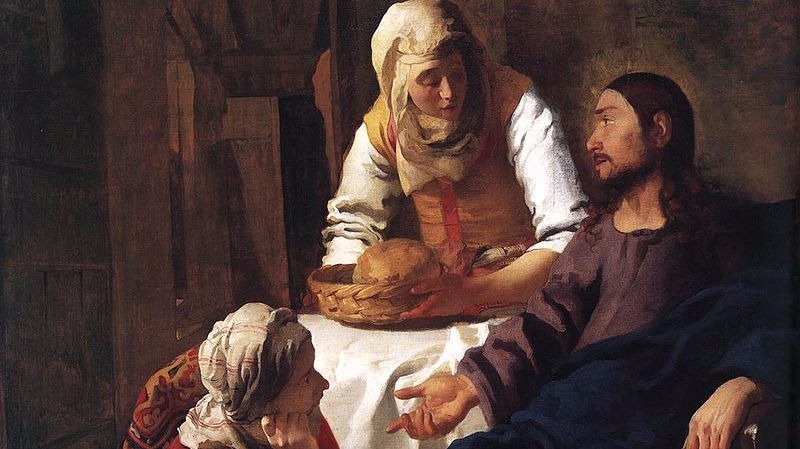
Martha’s Healing, Our Healing

“Martha, Martha, you are anxious and worried about many things. There is need of only one thing. Mary has chosen the better part and it will not be taken from her.” (Lk 10:41-42).

In this statement, Jesus is continuing his message of growth and evolution. Jesus met people in their present wounded condition, and invited them to healing, greater awareness, and ultimately a more authentic and intimate relationship with him, his Father and each other. Jesus recognized, and lived, the standard teachings, social constructs and laws to be a faithful Jew, but he also revealed the deeper meanings of those social and religious constructs.

Jesus is doing the same in this encounter with Martha. Martha is fulfilling the important role of hospitality, and yet, is clearly frustrated.

Luke’s choice of the Greek merimnao for anxiety and thorubazomai for worried, shows that Jesus understands Martha’s inner turmoil. Merimnao, as found in other New Testament writings, is used to express entanglements of life in the world. Martha is clearly anxious that she has much to do, but more so that Mary is breaking the social norm of sitting with the men! The fact that only men are to sit with the teacher as proper etiquette is probably causing even more anxiety for Martha than Mary not helping her. When Jesus stated that Martha was worried, thorubazomai, he is saying that she is putting herself in an uproar, she is twisting herself into knots (Johnson, 174)!

Jesus was not condemning Martha, he was holding up a mirror to her, helping Martha to see that the most important part of hospitality is attending, being present, to the guest and in doing so, also challenging the social convention that she, as Mary had chosen, was not separate but invited to sit with Mary, equally with the men, not to be separated but included.

St Augustine (354-430), Bishop of Hippo, offers an even deeper insight. What Jesus is offering Martha is a foretaste of heaven: “No, there will be none of these tasks there. What you will find there is what Mary chose. There we shall not feed others, we ourselves shall be fed. Thus, what Mary chose in this life will be realized there in its fulness; she was gathering fragments from that rich banquet, the Word of God” (Augustine, 1561).

In essence, Jesus was echoing his message to the Pharisees, which was, “I desire mercy not sacrifice” (Mt 9:13; Hosea 6:6). Jesus was inviting Martha to sit with her sister Mary. I believe Martha received a healing in that moment and she did just that. Martha sat with her sister.

What is important to God the Father, what Jesus taught, what he inspires us to do, is to respect the dignity of the person in all that we do. To be aware of what the true need of the person is in that moment. That includes respecting and recognizing the needs and woundedness within ourselves. What are those inner anxieties and worries that keep us from deeper intimacy with Jesus and one another? We need to reflect on and identify them and bring them to Jesus for our healing.

What is paramount to living as a disciple of Jesus is being present to one another, including one another, supporting and empowering one another. We are called to be people of mercy. We are invited to join Mary and Martha and sit at the feet of Jesus, so we too can find rest, we too can be healed, we too can speak with the boldness of Martha: “Yes, Lord. I have come to believe that you are the Christ, the Son of God, the one who is coming into the world” (Jn 11:27).

—————————————————————————————–

Mass Readings for today, Saturday, July 29, 2017:

http://www.usccb.org/bible/readings/072917.cfm

Johnson, Luke Timothy. “The Gospel of Luke, vol. 3.” In Sacra Pagina, edited by Daniel J. Harrington, S.J., 174. Collegeville, MN: Liturgical Press, 1991.

St. Augustine. Catholic Church. The Liturgy of the Hours: According to the Roman Rite, vol. 3. 1561. NY: Catholic Book Publishing, 1975.

May Riches or Anxiety not Choke You

In the Gospel today, Jesus explains his parable to those who have had eyes to see and ears to hear. They have encountered Jesus, and their heart, mind and soul is open to know him more. If you are reading this blog, then you are like many believers. Jesus has taken root in you, your faith has not been stolen away. You have resisted a hyper sense of cynicism, scientism, secularism, or relativism. You have also endured some times of stress and trial and your faith has not diminished but endured. Most of us would fall into the third category: “The seed sown among thorns is the one who hears the word, but then worldly anxiety and the lure of riches choke the word and it bears no fruit” (Mt 13:22).

We have accepted Jesus in our life, we are maturing and growing in our faith, but it is limited because we may look to the world and riches to be our security and support. As Pope Francis questioned in his apostolic exhortation, The Joy of the Gospel: “How can it be that it is not a news item when an elderly homeless person dies of exposure, but it is news when the stock market loses two points? This is a case of exclusion. Can we continue to stand by when food is thrown away while people are starving? This is a case of inequality” (53). The top voting issue in the last election was concern about the economy. If we are placing our hope and focus in political and economic stability we are going to be anxious and stressed. Our faith is going to be choked, and worse our politics will be shaping the Gospel instead of the Gospel shaping our politics.

Even if we do put God first above all else and seek to strive to live a life of faith, anxiety arises as we seek to live out our faith. Taking the risk to be who God is calling us to be in a world where: “The process of secularization tends to reduce the faith and the Church to the sphere of the private and personal” (Francis, 64), is a challenge.

I understand that anxiety. I have wrestled with it all my life. But the Holy Spirit, family and friends, continue to provide support and encouragement and I continue to move forward despite the fear and anxiety that arises at times. Making time daily to enter into reading the Word, making the effort and seeking resources to better understand his word, praying and meditating to hear his word and guidance, and sharing with others the trials and successes of my journey, has made a tremendous difference. Has the fear gone away? Absolutely not. In fact, yesterday I was sharing a homily at our daily Mass at St Peter, sharing the same message I posted yesterday, yet, my heart was pounding and my leg shaking. But I was not paralyzed, I was able to share the message God asked me to share. That is the difference.

We need to trust in Jesus’ invitation. He is calling all of us to deepen our relationship with him and to invite others to do the same. The road ahead, and the trials we will face will not be easy. But as we face them, with Jesus and one another, we become stronger. We begin to bear fruit when we allow Jesus to be our constant source, he is the vine and we are the branches. Sustained by his power we can then act with courage and put into practice what we learn. When we are choked by anxiety and fear we also need to remember that we are not alone and we need to reach out for help to cut away those weeds that attempt to choke us. In all these ways, our soil becomes richer, our life view becomes more human, our hearts, minds, and souls become more open to building a relationship of communion with our loving God and Father and each other.

——————————————————————

Link for Mass readings for today, Friday, July 28, 2017 http://www.usccb.org/bible/readings/072817.cfm

Pope Francis. Joy of the Gospel. Link:

http://w2.vatican.va/content/francesco/en/apost_exhortations/documents/papa-francesco_esortazione-ap_20131124_evangelii-gaudium.html

Revealing the Mystery of God

“The disciples approached Jesus and said, ‘Why do you speak to the crowd in parables?’
He said to them in reply, “Because knowledge of the mysteries of the Kingdom of heaven
has been granted to you, but to them it has not been granted. To anyone who has, more will be given and he will grow rich; from anyone who has not, even what he has will be taken away” (Mt 13:10-13).

This is a challenging statement because Jesus appears to be saying that the kingdom of heaven is only open to a select few.

The context is important. Jesus is speaking to address the reality that there were people who rejected him in his own time. Matthew reflects this, as well as the reality within his own community at the end of the first century, which was made up of Jewish Christians, Gentile Christians, and those Jews who rejected Jesus. The tension then was how to address this reality. Do you think the rejection of Jesus and his message is still an issue today? If so, why do you think people would reject Jesus?

One way Jesus addresses this tension is through parables. Each of the parables deals with the Kingdom of heaven. Just think of the parable from yesterday, the sowing of the seeds. God is the sower and Jesus is the seed. The only seeds that bear fruit are those that have found fertile, rich soil. The ones on the hardened path, within rocks, or among thorns do not bear fruit, and in most cases wither and die. Closed minds and hearts, fear, anxiety and worry or Satan come in the way of the seed’s germination. The ones who hear and understand the message of Jesus do so because they are willing to let go of that which keeps them bound from his invitation and they are willing to persevere and endure the trials they face. They enter into relationship with Jesus and come to know the Father. The parables of Jesus offer not so much a concrete answer, but draw us to think deeper, to surrender our control and preconceived notions. Many of us moderns do not like this approach. We want to know what is or isn’t and why or why not this is so, and we want to know it right now. We often do not want to think, we just want the answer. We want to be in control.

The key that Jesus is giving to us then is for us in come to know God, we need to understand that the Mystery of God is not a problem to be solved, we cannot conform him to our will and control, but God is a relationship that we are invited to enter into and embrace. We can see this when Jesus says: “Because knowledge of the mysteries of the Kingdom of heaven has been granted to you, but to them it has not been granted.” It has been granted to those who allowed and today allow themselves to experience Jesus, those who were and are willing to walk with him, and develop a relationship with him. Heaven is not so much a place as it is the reality of entering into full communion with God the Father. This is what his Son came to do, to show us the way to the Father by revealing him to us through himself.

As Jesus told Philip, “If you have seen me, Philip, you have seen the Father” (John 14:9). We will never fully comprehend the Mystery of God, but we will come to know him through experiencing him, and to do that fully means letting go of our ego, control, fears, prejudices, and anything that we are attached or addicted to. We do so through surrendering our self to Jesus and being about the hard work of developing a relationship with him and one another. This happens both on a physical as well as a spiritual level. If we only seek to understand the Kingdom of heaven through reason alone, it will not be granted to us. We enter the Mystery of God through our faith and reason, through our hearts, minds and souls.

You may be thinking right now, this is too much (this blog post today is too long), I am not sure how to begin, I don’t really even know how to pray. St Paul offers some guidance. In writing to the Romans, he states:

“But if we hope for what we do not see, we wait with endurance. In the same way, the Spirit too comes to the aid of our weakness; for we do not know how to pray as we ought, but the Spirit itself intercedes with inexpressible groanings. And the one who searches the hearts knows what is the intention of the Spirit, because it intercedes for the holy ones according to God’s will” (Romans 8:25-27).

The Kingdom of heaven is for everyone. Jesus wants none excluded. The point about the mystery of his Kingdom is that there is no problem to solve; there is just a relationship to enter into and embrace. Let us open our hearts, minds, and souls to God, trusting with endurance, that what Jesus says is true, that the Holy Spirit will guide us, pray in and through us, and let God the Father happen.


Mass Readings for today, Thursday, July 27, 2017:

http://www.usccb.org/bible/readings/072717.cfm


What is Jesus inviting you to do?

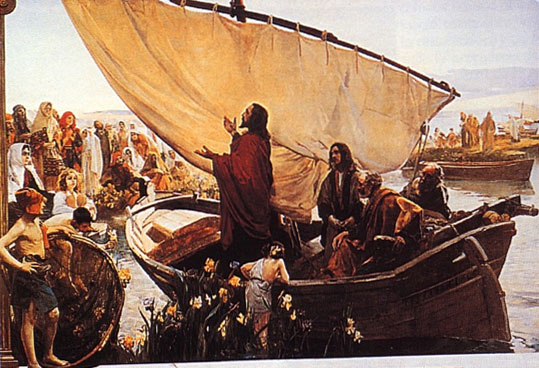
“On that day, Jesus went out of the house and sat down by the sea. Such large crowds gathered around him that he got into a boat and sat down, and the whole crowd stood along the shore.” (Mt 13:1).

Jesus sits and the people gather. Jesus is the focal point, the teacher, to those who come to hear him speak, but as they come, there are so many that Jesus enters the boat so more would have a clearer view of him and because sound travels better on water, more could hear him. The deeper meaning of the large crowds is that Jesus is speaking to the whole world.

Again, as we heard a few Sundays ago, Jesus shares the parable of the sower and the seed. God is the sower and Jesus is the seed. Not everyone of the many who hear his word receive it in such a sufficient way that bears fruit. Some are distracted, some allow Satan to take the seed sown, while others allow the worries and anxieties to choke out any new growth. We are invited to prepare ourselves to receive the Word of God, to prepare rich soil by hearing and understanding the Word of God, Jesus the Christ, in the depths of our souls. There we are to nurture the seed of his life within us, be conformed to him, and bear fruit by, birthing Jesus; proclaiming his message to others, yielding a bounty harvest of thirty, sixty, a hundred fold!

Over twelve years ago, JoAnn and I were invited to hear a speaker who was offering a program that would help supplement our income. I don’t remember the program at all, but what struck me that evening as the gentlemen walked the stage was, wouldn’t it be great if this guy was talking about Jesus! God, in that moment, planted a seed that I heard and understood. What followed, I will offer the short version, was that I was led to return to Catholicism and start to attend St Peter Catholic Church. I was led to teach no longer at a public school, but a Catholic school – Rosarian Academy. While there I entered the formation program for the permanent diaconate, was ordained in 2013, and in a few weeks I will begin my fourth year of teaching Theology and assisting in campus ministry at Cardinal Newman High School, preaching,  and now writing this blog. My hope is that the Holy Spirit has and continues to work through me in helping others to prepare rich soil and to receive Jesus in their hearts, minds and souls.

This summer I have felt the Lord leading me to step in the boat with him to share to a larger crowd. Knowing nothing of social media, I took Jesus’ hand and he has led me to start this blog. Not knowing where to start, I felt guided to share reflections on the Gospel of the Day because it is in the Gospels we can read about Jesus, get to know him and his teachings. I want to share him with others, sow the seeds of his life and words, and to invite others to get to know him, to get up on that stage and talk about Jesus!

God has been and will continue to sow seeds in your life. He is calling you as well to prepare rich soil to receive his Son and guiding you in ways to nurture his growth in your life so you too can sow the seeds of his word and life in your realm of influence near and far. Resist those temptations of the mind that say, I have nothing to say, nothing I can do, I am too young, I am too old, too busy. I do not know how God has or is inviting you, but he is. Be not afraid! Read this Gospel passage, meditate, and imagine yourself as part of the crowd listening to Jesus in the boat. What is his invitation to you? Return to this meditation often this week. Spend time in his word, read about the lives of the saints, look for God working in the daily experiences of your life, and spend quiet time in prayer to discuss with Jesus his will and above all listen and seek to understand. You are not alone.

—————————————

Mass readings for today, Wednesday, July 26, 2017:

http://www.usccb.org/bible/readings/072617.cfm

Resource for reading the lives of the Saints. Today the feast of Joachim and Anne, the parents of Mary, the grandparents of Jesus. Good saints to being with!:

https://www.franciscanmedia.org/source/saint-of-the-day/

Listen up!

“The mother of the sons of Zebedee approached Jesus with her sons and did him homage, wishing to ask him for something. He said to her, ‘What do you wish?’ She answered him, ‘Command that these two sons of mine sit, one at your right and the other at your left, in your Kingdom’” (Mt 20:21-22).
The context of this request from the mother of the sons of Zebedee, James and John, comes from reading a few verses before the quote above. Start reading at Matthew 20:17 and you will see that Jesus and his twelve apostles are heading toward Jerusalem. Jesus stops to share with them, for the third time, that he will be condemned and crucified.
Jesus’ statement of his imminent suffering and death appears to be ignored by the mother of James and John. The other ten are indignant, not regarding the lack of acknowledging Jesus’ statement, but about who is the greatest among them! It is easy to imagine how the chaotic scene ensues! “See how imperfect they all are: the two who tried to get ahead of the other ten, and the ten who were jealous of the two” (Chrysostom, 1551)!
This event is recorded in Matthew, Mark and Luke. Mark has James and John speaking for themselves, not their mother, as in Matthew. Luke does not even record the initial request of James and John at all, but comes in at the point of the apostle’s dispute. What all record, including the Gospel of John, is that Jesus made it clear to his apostles that he came to serve not to be served. To follow Jesus meant, not that they would be in positions of power, the sitting to his right or his left, but that they were to serve as he served, to love as he loved.
One of the most powerful ways we can serve, can love, is to be truly present with others and this is done most effectively when we actively listen. We need to resist the temptation that the apostles fell for, thinking about their own needs instead of listening to what Jesus was sharing with them; the coming of his own death! We need to put the book down, set the work aside, turn off the tv, put away the cell phone, disengage our thoughts, and instead look at and listen to what the person in our midst has to say.
Today, may we make time to stop and listen to Jesus, to our family, our children, and friends, and those, who we may have in the past not given the time of day. Jesus came to serve, to love, by willing the good of the other as St Thomas Aquinas said. Let us too serve and love one another by giving of ourselves with our time and attention.
—————————————
Mass readings for today, Tuesday, July 25, 2017:
Parallel Gospel passages to review:
Mark 10:35-45; Matthew 20:20-28; Luke 22:24-27 and John 13:12-17
Chrysostom, St John. Homily. Catholic Church. The Liturgy of the Hours: According to the Roman Rite. 1975.

The Sign of Jonah

“An evil and unfaithful generation seeks a sign, but no sign will be given it except the sign of Jonah the prophet” (Mt 12:39).
Jonah is the prophet best known as the one who spent 3 days and nights in the belly of a whale, great fish or sea monster, depending on your scriptural translation. Jonah ended up in that predicament because he refused to follow God’s direction to speak his message of forgiveness to the sworn enemies of Israel, the Ninevites. It would be like God asking one of us to fly out to the Middle East to meet with members of ISIS or Al-Qaeda and invite them to repent. Not only would we not believe they would want to repent, would we want them to if they would? Also, whether they did or didn’t, would we be able to return from such a meeting with our heads intact?
These were probably some of the issues running through Jonah’s mind when he refused to follow God’s will. Jonah overcame his resistance and followed the command of the Lord, kept his head on his shoulders, and the people of Nineveh repented. Happy, happy, joy, joy! Not exactly. At the repentance of his enemies and God’s expression of mercy and forgiveness, Jonah said to God, “This is why I fled at first to Tarshish. I knew that you were a gracious and merciful God, slow to anger, rich in clemency, loathe to punish” (Jonah 4:2)”. Jonah did not want his enemies to receive God’s forgiveness!
Some of the scribes and Pharisees asked for a sign. Jesus gave them the sign of Jonah: The Ninevites, who were Gentiles, non-Jews, were willing to repent at the word of Jonah, and those scribes and Pharisees before questioning him, God’s chosen, were not willing to repent at the urging of one greater than Jonah, the Son of God, who was in their midst.
Jesus announced his ministry, as recorded Mark 1:15, with the words: “The kingdom of heaven is at hand. Repent and believe in the Gospel.” That is again our invitation today. Let us examine our conscience by asking God to help us to recognize his presence among us, then reflect on what good God has done in our lives and give him thanks. Review the last day or two to see where God has called us to act. Where did we answer his call, where did we, like Jonah resist? For those actions in which we did resist the will of God, especially in turning away from an opportunity to bestow God’s grace upon someone, or committing some other sinful action, we need to ask God for forgiveness. Finally, close by spending some quiet time asking God for his grace to be with us as we go through the day. This examination of conscience is an excellent exercise to practice at the end of each day. (This process I just described is called the Examen, a Jesuit practice I learned from Fr. James Martin, SJ).
Someone greater than Jonah is in our midst, he is Jesus the Christ. May we be willing to bestow his Love and Mercy on all we meet today, even and especially those who may have just popped into our mind that we would rather not share his grace with: those who get under our skin, grate on our nerves, or who we even consider an enemy. Let us repent and call others to do so by the way we live our life.
—————————————
Mass readings for today, Monday, July 24, 2017:

Maples Do Grow in Florida!

“’Master, did you not sow good seed in your field? Where have the weeds come from?’ He answered, ‘An enemy has done this.’ His slaves said to him, ‘Do you want us to go and pull them up?’ He replied, ‘No, if you pull up the weeds you might uproot the wheat along with them. Let them grow together until harvest” (Mt 13:27-30).

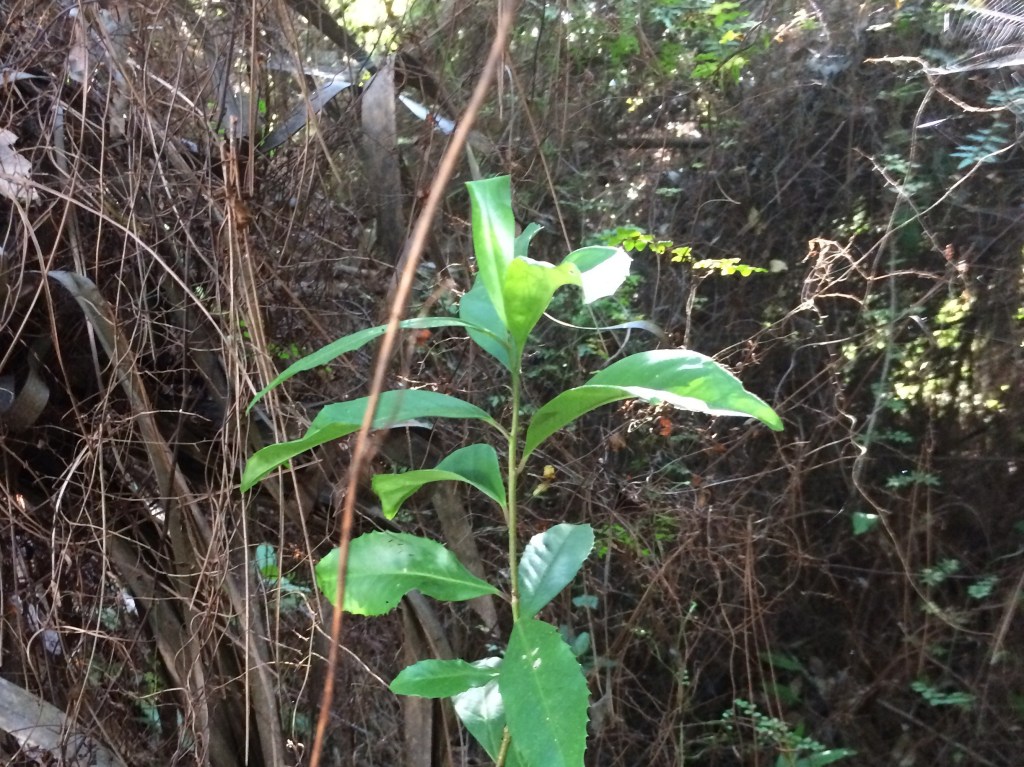
One of my favorite trees is a Maple. When JoAnn, the kids, and I moved to Florida twenty years ago, I did not believe that Maples grew in Southern Florida. A few years after we moved into our home, I was walking in our backyard and thought I saw a maple leaf. I squatted down for a closer look and found that not only was it a maple leaf but a sapling with three leaves! I carefully cleared some of the grass around it, but otherwise let it be because it was so small. As it grew I cleared more around it. Today it is a fully mature Swamp Maple!

A few weeks ago, I saw a new Maple sapling emerging, though this time poison ivy was growing in the brush and weeds around it. I sprayed poison ivy killer, thinking I was carefully avoiding the Maple. Unfortunately, I must have gotten some of the poison on the Maple leaves because it shriveled up and died.

You can understand why I related well to Jesus’ first parable in today’s reading. The master warned his servants to let the wheat and weeds grow together until they were more mature at the time of the harvest, so as not to pull up the wheat with the weeds. Weeds in this verse is translated from the original “Greek [as] zizanion [which] refers to a noxious weed that in its early stages closely resembles wheat and cannot be readily distinguished from it” (Harrington, 204). Both, in their immature state, were indistinguishable.

The practical application for us is to recognize the importance of resisting the temptation of judgment. We may be quick to judge or even condemn someone who is not living what we believe our faith tradition dictates, or maybe the person is of another faith or no faith. Even those who commit heinous acts of evil, we may feel justified in our judgment to condemn. Jesus says no. The Father is the ultimate arbiter and judge.

All of humanity has been created in the image and likeness of God, we are a unique gift to this world, we have been created good, yet we all fall short of the glory and grace of God. God the Father will judge at the end of time and only he knows the time or the hour. We are rather to be about following the teachings of Jesus, repenting, and encouraging others in the maturation process which can include, convicting others at times, yes, but condemning, no. As St Paul wrote: “We who are strong ought to put up with the failings of the weak and not please ourselves” (Romans 15:1).

May we resist the temptation to spread the poison of judgment, gossip and condemnation, otherwise we are promoting death, as I did with our second gift of a Maple that withered and died. Let us instead welcome, nurture and care for one another, promoting life, as I did with our first little gift of a Maple. We need to pray for patience, understanding, and the ability to forgive and seek forgiveness in our interactions with each other. Life, even when going well, is hard. We need each other if we are to mature and actualize the fullness of who God calls us to be. “Encourage each other while it is still today” (Hebrews 3:13).

—————————————
Mass readings for today, Sunday, July 23, 2017:
http://www.usccb.org/bible/readings/072317.cfm

Harrington SJ, Daniel J. 2007. “The Gospel of Matthew”. In vol. 1,
Sacra Pagina Series, edited by Daniel J. Harrington, 204.
Minnesota, Liturgical Press.

Mary Magdalene: Hope in the Midst of Sorrow

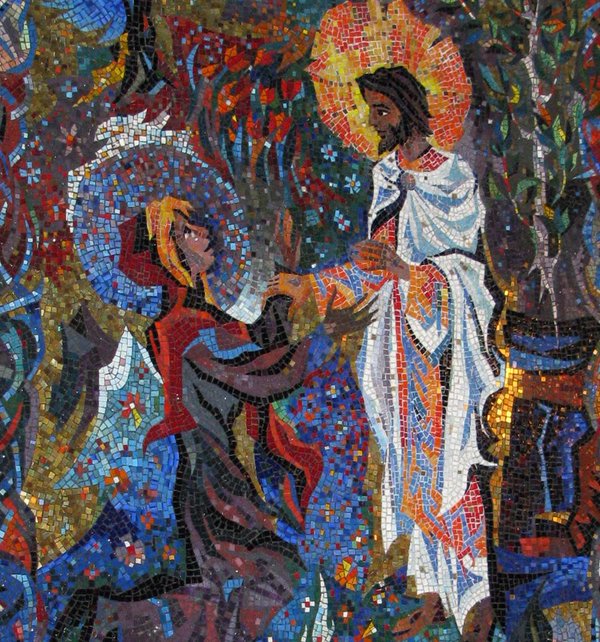
Mary Magdalene went and announced to the disciples, “I have seen the Lord,” and then reported what he told her (John 20:18).
Mary is the Apostle to the Apostles! Though before she announces this proclamation, the foundation of our faith that Jesus is risen, we find Mary weeping outside the tomb. She is crushed by the death of her Lord and his body has apparently been taken away. Peter and John, following Mary’s initial lead, ran to the tomb, saw it empty, and “then the disciples returned home” (Jn 20:10).
Mary stayed, she remained still, experiencing her doubt and growing despair.
How many times have our hopes been obliterated, what pain have we or do we endure, what horrors do we continue to witness throughout our communities, country and world? When Jesus first speaks to Mary, she does not recognize his voice, thinking him to be the gardener. Are we like Mary, that we are so weighed down by our sorrow that we are unable to recognize Jesus in our midst?
Mary was willing to weep, to experience and not run from her sorrow, and deep down held on to hope. Even after seeing the tomb empty, even after Peter and John had left, she still looked in the tomb again. Despite a growing doubt and despair, even after encountering two angels, she did not leave the empty tomb. In the midst of her disillusion, Mary recognizes the risen Jesus when he calls her by name!
May we not lose the ability to weep but also hold on to hope. Both are part of our humanity. To lose our capacity to weep, is to reject our humanity, and then risk the slide into the temptation of indifference to our own hurt and the agony of others. Hope is a cornerstone of our faith. Jesus is present in the midst of our brokenness. When we are willing to be still and experience our emotions, resist the temptation to run away, while at the same time embracing hope, we too will encounter Jesus.
I pray you may experience Jesus in the midst of your trials or sorrow, as well as your joys, for Jesus is present to us through the full range our human condition. And when we encounter Jesus, like Mary, may we go boldly forth with joy, to proclaim what he tells us! May we share our stories of Jesus active in our lives, so to be a living Bible to others. Our stories shared may be the only Bible someone else ever reads.
Mary of Magdalene, Apostle to the Apostles, pray for us!!!

—————————————
Mass readings for today, Saturday, July 22, 2017:
http://www.usccb.org/bible/readings/072217.cfm

Something Greater Here…Mercy!

I say to you, something greater than the temple is here. If you knew what this meant, I desire mercy, not sacrifice, you would not have condemned these innocent men. For the Son of Man is Lord of the sabbath.” (Mt 12:6-8).
 
Jesus continues to rock established regulations and practice. Here he is challenging the understanding of the Sabbath itself when justifying the accusations leveled toward his disciples who were picking and eating grain on the Sabbath, and he does so in a profound way by saying that “something greater than the temple is here.” Present in the heart of the temple, the area called the Holy of Holies, was the ark of the covenant. Atop the ark was the lid called the mercy seat of God. Jews believed that this was where God sat and when the blood of atonement was offered from sacrifices, God’s mercy was offered to the people. In the temple then, was the very presence of God.
 
Jesus’ claim that he is greater than the temple is putting him on the same level as God. A blasphemous statement to say the least, unless of course, he is God. Not only does he make this claim, but he doubles down by claiming that he is the Lord of the sabbath; Jesus is God!
 
In quoting Hosea 6:6: “I desire mercy, not sacrifice”, Jesus is not only saying that he is the something greater, but also that his disciples are, his way is something greater. One of the foundational points of the Way of Jesus is mercy. Through the incarnation, the Son of God dwelt among us, became one with us in our humanity. He restored our dignity in the midst of our brokenness. What Jesus is saying in his defense of his disciples, and what he is saying to us today is: “What is owed to every human being on the basis of his or her human dignity is personal respect, personal acceptance, and personal care” (Kasper, 2014, 202).
 
We as the Church are also greater than the temple as we are the Body of Christ and are to follow Jesus in his bestowing acts of mercy on our neighbor. “The works of mercy are charitable actions by which we come to the aid of our neighbor in his [or her] spiritual and bodily necessities. Instructing, advising, consoling, comforting are spiritual works of mercy, as are forgiving and bearing wrongs patiently. The corporal works of mercy consist especially in feeding the hungry, sheltering the homeless, clothing the naked, visiting the sick and imprisoned, and burying the dead. Among all these, giving alms to the poor is one of the chief witnesses to fraternal charity: it is also a work of justice pleasing to God” (Catechism of the Catholic Church, 2nd ed. 2447).
 
Let us review the spiritual and corporal works of mercy above and choose one to practice this week. May we desire and seek the mercy of God, be open to receiving it, and be open to share his mercy. Let us draw strength and courage from Jesus, so to be willing to face our own brokenness and come to healing, while at the same time bestowing mercy; which is “the willingness to enter the chaos of another” (Keenan, 2015).
 
—————————————
Mass readings for today, Friday, July 21, 2017:
 
Kasper, Walter. 2014. Mercy: The Essence of the Gospel and the Key to Christian Life. NY: Paulist Press.
 
Catholic Church. Catechism of the Catholic Church: Revised in Accordance with the Official Latin Text Promulgated by Pope John Paul II. Vatican City: Libreria Editrice Vaticana, 1997.
 
Keenan SJ, James. “The Scandal of Mercy Excludes No One.” Thinking Faith. December 4, 2015.