
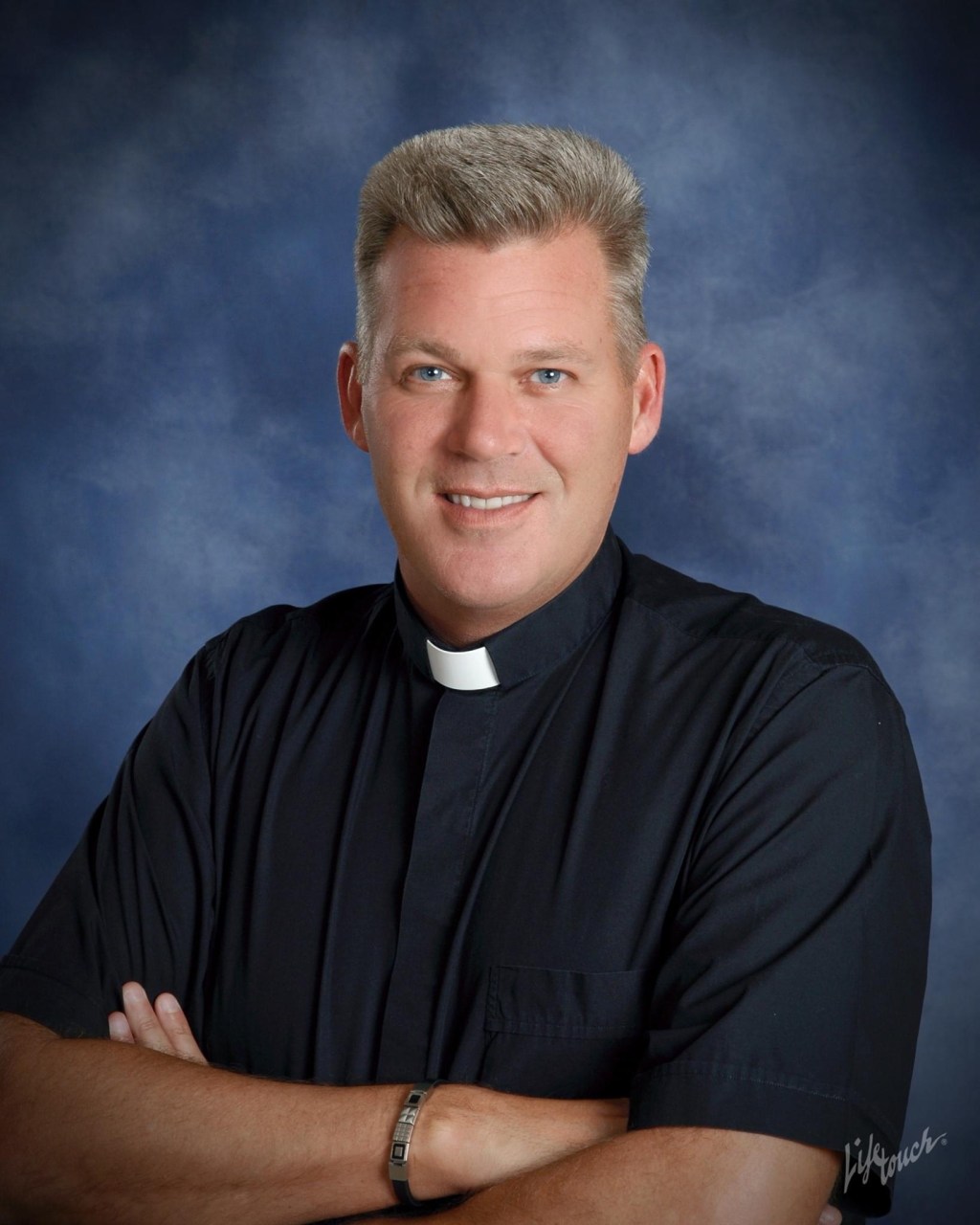
May we hear and respond to the invitation of the Good Shepherd.
I am not sure how many people reading this reflection are shepherds, live on a farm, or raise sheep. Many of us are most likely far removed from the daily life and commitment of a shepherd. With such ignorance as our starting point, we can fall prey to a false romanticism of the life of a shepherd as a reaction to the fast pace and hustle and bustle of modern urban and suburban life.
The commitment and demands of shepherds during Jesus’ time were all consuming, with little acknowledgment or recognition. In fact, many shepherds were looked down upon, considered the lowest of the low, at the bottom of the society of ancient Palestine. Yet Jesus compared himself to being a shepherd.
Just scratching the surface of the social context of shepherds could help to shed light on John’s Gospel today where Jesus paints an image of himself as the Good Shepherd as he says. “My sheep hear my voice; I know them, and they follow me” (Jn 10:27).
A good shepherd lived among his sheep, watched over them, cared for them, helped to birth and raise them. He would smell like his sheep. The lamb would hear the voice of the shepherd in the womb, in the first days after its birth, and on through its life. A good shepherd protected his flock with his life from predators and thieves. If there was danger, he would call the sheep to himself. Though we may not be fond of being compared to sheep, Jesus does the same for us. He watches and cares for us, protects, nourishes us with his own Body and Blood, and has given his life for us. Jesus guides us, if we are willing to hear his voice in the silence of our hearts.
We get into trouble when we stray from his protective care and wander away. Yet, Jesus will come when we are in need, baying for help. Each one of us are precious and important to him. He will find us if we are willing to be found, if we just call out to him, for he knows our voice too. He will come to us and will carry us back home on his shoulders.
With the humility and simplicity of a lamb, allow yourself to be still today, rest your head on the lap of the Good Shepherd, surrender to him all your cares, doubts, anxieties and fears. Allow yourself to be healed by confessing any sins that are weighing you down, let him impart some healing balm on past hurts left unforgiven, and let him bind up any recent wounds. At some point in your contemplation, also let soak in the ultimate gift, the gift Jesus has given us: his very life, that we might have life in him. A life not merely to exist or survive, but a life of joy and fulfillment in which we will thrive.
Listen for the voice of Jesus calling us to himself today, to receive, rest in, and renew in his care and love. This is the Lord’s Day, the day he rose again, conquering death for ever and always for himself and for us, the sheep of his flock. This is also Good Shepherd Sunday. May we remember and pray for our priests, bishops, and Pope Francis who have heard the call of the Shepherd and followed him to serve as our shepherds.
—————————————————–
Photo: Remembering and praying for our pastor, Fr. Don today. He led me and JoAnn back to the Church, to the diaconate, and now in a few weeks back into the seminary to study for the priesthood.
Link for the Mass readings for the fourth Sunday of Easter, May 8, 2022
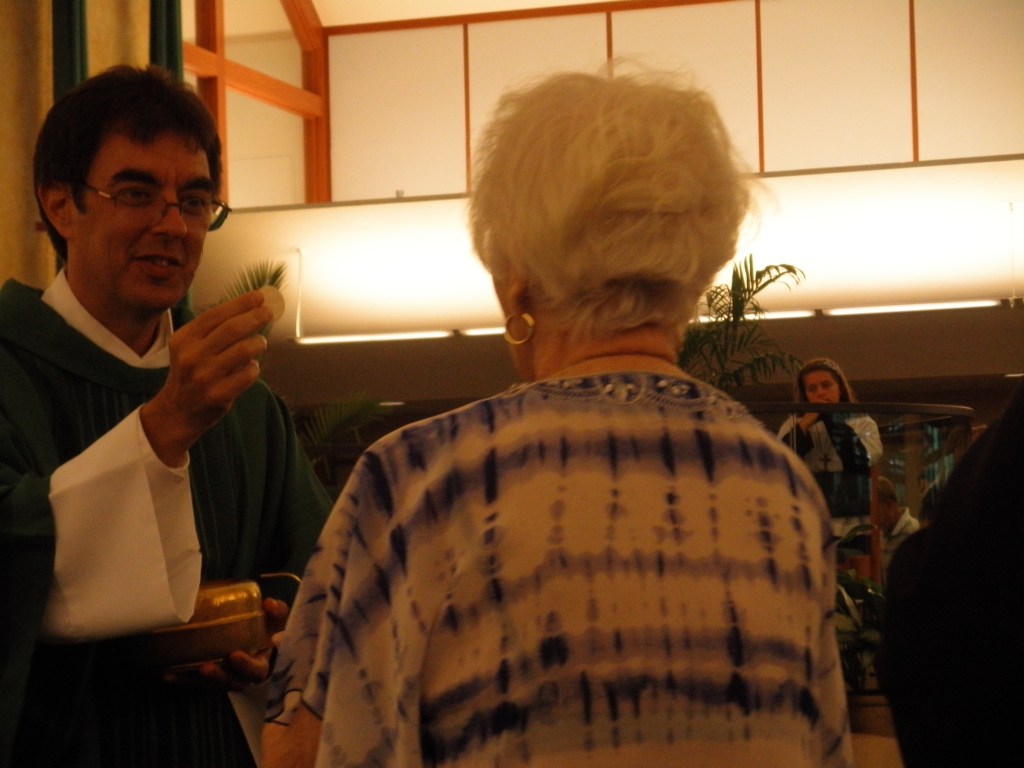
The Body of Christ, the Holy One of God.
Even though Jesus had fed the five thousand and they were satisfied and there was plenty more where this gift of grace came from, even though they traveled by boat and followed him to Capernaum seeking a sign, the discourse regarding eating his Flesh and drinking his Blood was just too far of a stretch for most of the disciples to take. In fact: Many of the disciples of Jesus who were listening said, “This saying is hard; who can accept it” (Jn 6:60)?
Many of his disciples walked away from Jesus at that point and returned to their former ways of life. They could not believe because they did not fully appreciate who Jesus was, the One from above, who was sent by the Father. They had not developed a deep enough relationship with him such that they could trust him and what he said was true, they could not believe in the One whom God had sent.
Jesus then said to the Twelve, “Do you also want to leave?” Simon Peter answered him, “Master, to whom shall we go? You have the words of eternal life. We have come to believe and are convinced that you are the Holy One of God” (Jn 6:67-69). Peter’s response is one of belief and trust. I am sure he and the apostles reacted in the same way as the other disciples gathered there, but they trusted Jesus enough that even though this teaching was hard, even inconceivable, he would make sense of it for them, just as he had done so many times before.
This is to be our response as well. When we find some of Jesus’ teachings are hard to digest, we need to resist the temptation to walk away. Instead, may we follow Mary’s model of pondering, as she did when Gabriel shared she would bear the Savior of the world. She did not fully comprehend what the message meant, but she trusted God and said yes. May we follow Peter, who may have also been dealing with mixed emotions and doubts, remained firm in his belief in Jesus because he trusted that Jesus was the “Holy One of God”. Peter had experienced that Jesus had known what he was saying and doing before, he would continue to trust him this time as well.
Jesus is a model to follow, yes, but he is so much more! Jesus does not give us more burdens to bear, but graces that build on our nature that we are invited to receive. He did not want to die, but he was willing to say yes, to submit his human will to his Father because he trusted him and knew he would bring about a greater good. Jesus gave his life and in so doing he conquered death, transcending the time and space of our present dimension so as to be present to us in the Sacrament of the Eucharist at each and every Mass.
Jesus lives! He is the firstborn of the new creation, and he wants to not only lead us to eternal life, but impart his life in us, in such an intimate way that we may consume him in the gift of the Eucharist, that we may be one with him in this life and for all eternity! May we with Peter come to believe and be convinced, that Jesus is the Holy One of God!
Amen. Amen.
I’m alive, I’m alive,
Because he lives.
Amen. Amen.
Let my song join the One that never ends.
Because he lives.
The verse from Matt Maher’s song, “Because He Lives (Amen)”.
—————————————————————
Photo: Sharing Jesus at my first Mass as a deacon!
Link for video: Because He Lives (Amen), Matt Maher, from cd: Saints and Sinners, 2015
Link for the Mass readings for Saturday, May 7, 2022
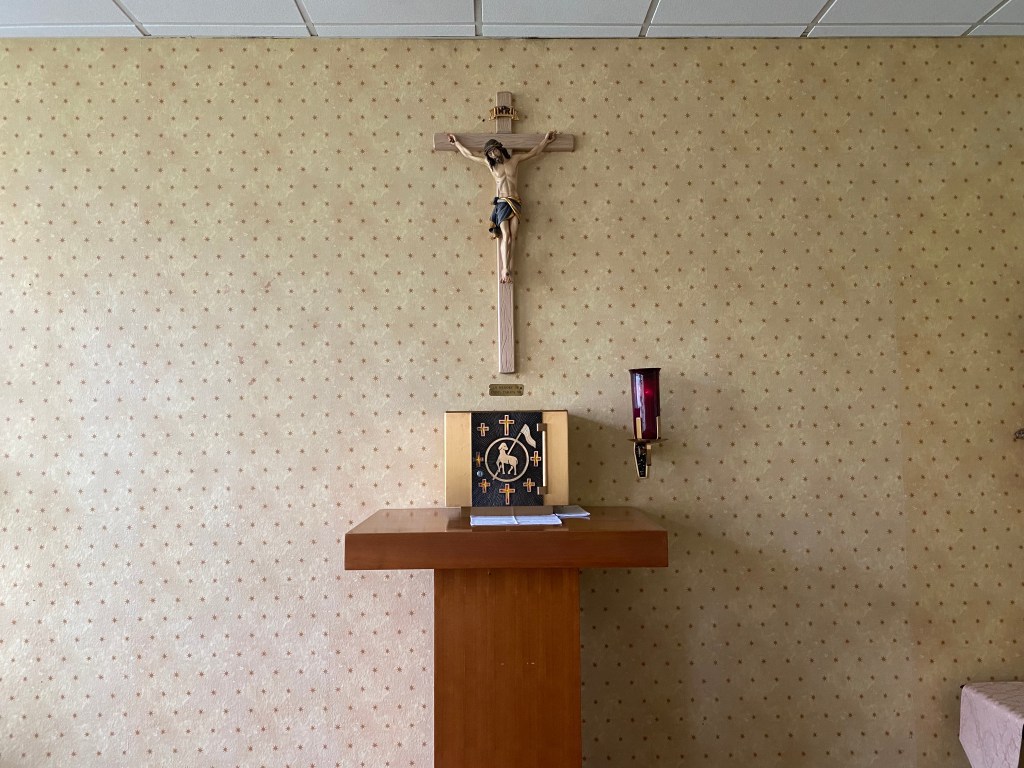
The Eucharist: Jesus becomes one with us so we can become one with him!
All that Jesus has been building up to is now coming to a climax. Any silent shock of disbelief or quiet murmuring has now escalated. The Jews quarreled among themselves, saying, “How can this man give us his Flesh to eat” (Jn 6:52)? Jesus hears the growing concern and disbelief. If he was speaking in a figurative or symbolic way, this would be the moment to clarify his point.
Jesus does speak, but he does not walk back or qualify his comments. Jesus doubles down: “Amen, amen, I say to you, unless you eat the Flesh of the Son of Man and drink his Blood, you do not have life within you” (Jn 6:53). Jesus does not only repeat that his disciples are to eat his Flesh but he also insists that they are to drink his Blood. Drinking or even eating meat with the blood of an animal was inconceivable for devout Jews. Also, the Greek used here in John’s Gospel for eat is trogein, which is used to describe how an animal eats, by gnawing and tearing at the flesh. The imagery that Jesus is using here is more graphic than the customary use of phagein, which would be used for chewing, as a human would chew their food.
Jesus continues to make his point that whoever does eat his Flesh and drink his Blood, will not only remain in him, but also Jesus will remain in them, and they will have eternal life. A wonderful end goal, but would any be able to make the leap of faith to get there? In tomorrow’s Gospel reading we will be able to see the response to Jesus’ claims.
Almost two thousand years later, we continue to have the opportunity to celebrate daily the person of Jesus in our midst. This happens through participating in the source and summit of our faith, the Mass. Our hearts have the opportunity to be set on fire as we hear the word proclaimed during the Liturgy of the Word, and then Jesus is made known to us in the breaking of the bread in the Liturgy of the Eucharist. We are invited to experience an intimate encounter with the Son of God, as we consume him, Body, Soul, and Divinity.
That we are to eat the Flesh and Blood of Jesus may sound just as bizarre as it did to Jesus’ followers. The term we have for this miraculous transformation of bread and wine is transubstantiation. What happens at the calling down of the Holy Spirit and the words of institution which are invoked by the priest is that the substance, the reality, of the bread and wine is transfigured into the Body and Blood of Jesus, while the accidental form or appearance remains the same. So we consume Jesus’ unbloody, acceptable sacrifice.
Jesus is giving all of who he is corporally, fully, holding nothing back of himself so we can receive all of him. In consuming Jesus, we become divine as he permeates our whole being. We are then dismissed at the end of the Mass to go, like Mary, to bear Jesus Christ, to love others as Jesus loved us. By giving ourselves to others, we will also experience Jesus in each other. For what we do to the least of our brothers and sisters, we do to him (cf. Mt 25:40).
Jesus is risen, he has risen indeed, and he has not left us orphans but remains with us now and for all ages! We are alive, because the Bread of Life lives within and among us! Amen. Alleluia!
——————————————————–
Photo: Our tabernacle in the chapel at Cardinal Newman High School. Spending some quiet time with Jesus before heading home for the evening.
Link for the Mass readings for Friday, May 6, 2022
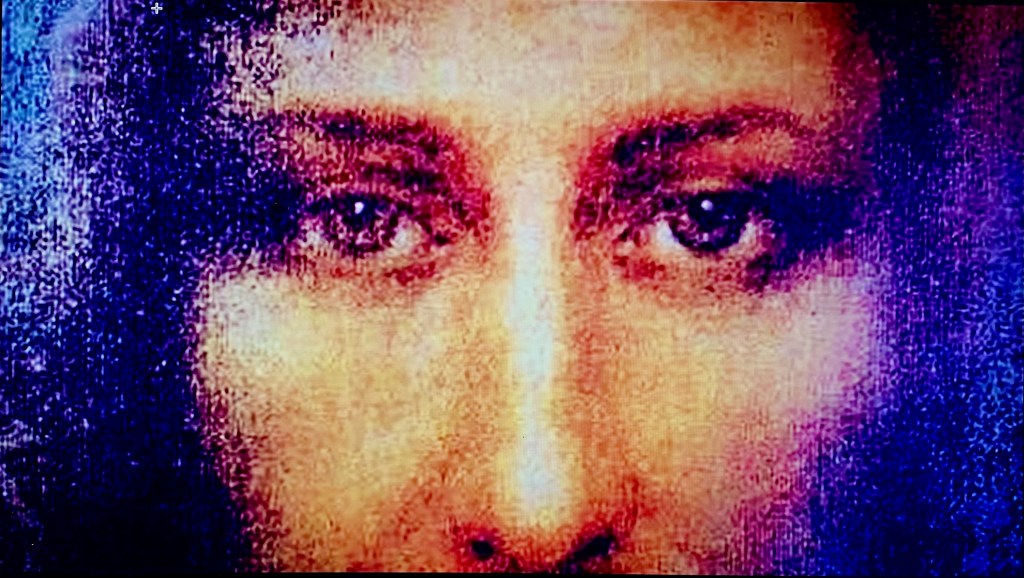
“I am the living bread that came down from heaven.”
Those in the crowd to whom Jesus is speaking with are those who experienced his multiplication of the loaves and fish. Step by systematic and deliberate step, Jesus is setting the stage for today’s insertion into his presentation.
Jesus begins slowly, but with each successive step, he is not willing to be tamed. He, as the One from above, the One who has seen and has been sent by the Father, who is fully divine, as well as fully human is speaking among those who have come to him. He has responded to the people’s request regarding how they were to “accomplish the works of God” by saying that they are to believe in him, he who had been sent by God. They were to “work for food that endures for eternal life, which the Son of Man will give”. Jesus with the multiplication of the loaves and fish provided for those who were hungry in the moment. He is now describing how he will provide food that will endure for eternal life. Jesus shared that he is this food, the bread from heaven, that will give life to the world.
What Jesus has shared thus far and what he shares in today’s Gospel message has been given to him to say from his Father and is for everyone who is willing to accept his invitation: “I am the living bread that came down from heaven; whoever eats this bread will live forever; and the bread that I will give is my Flesh for the life of the world.” We have an advantage, that those listening to Jesus, did not have. We just experienced Lent and we can certainly draw a line to how Jesus certainly does give his very life, his Flesh, that is sacrificed and hung on the cross. We believe too that Jesus died and experienced utter God forsakenness by giving his very life for the life the world.
But for those in the crowd who only the day before sought to unanimously make him their Messiah by popular acclamation are growing a bit uncomfortable. This discourse is now starting to move away from a more figurative discussion to a more dramatic and concrete presentation with what appears to be horrific implications. After an initial gasp or two, some murmuring would have begun, centering around such questions as:
“Did Jesus really just say he would give his flesh?”
“Jesus is equating himself with the bread from heaven, and the bread he is offering is his flesh?”
“Is Jesus saying what I think he is saying?”
Yes! The Son is saying just that because the Father has given all that he is, holding nothing back, emptying himself into the Son. The Son has received all that the Father is and returns himself, giving all that he is, holding nothing back, to the Father. This eternal giving and receiving, this eternal communion of Love shared between the Father and the Son is the Holy Spirit. Jesus is offering participation in this perichoresis, this divine dance of infinite communion, as he offers all that he is to his listeners then and to us, this day, to be consumed. He is holding nothing back in his offer. We are invited not only to receive all that Jesus is, we are also invited to give ourselves away in return. More to come tomorrow…
—————————————-
Photo: Closeup of the artistic rendition of the face of Jesus based on the Shroud of Turin.
Link for the Mass readings for Thursday, May 5, 2022
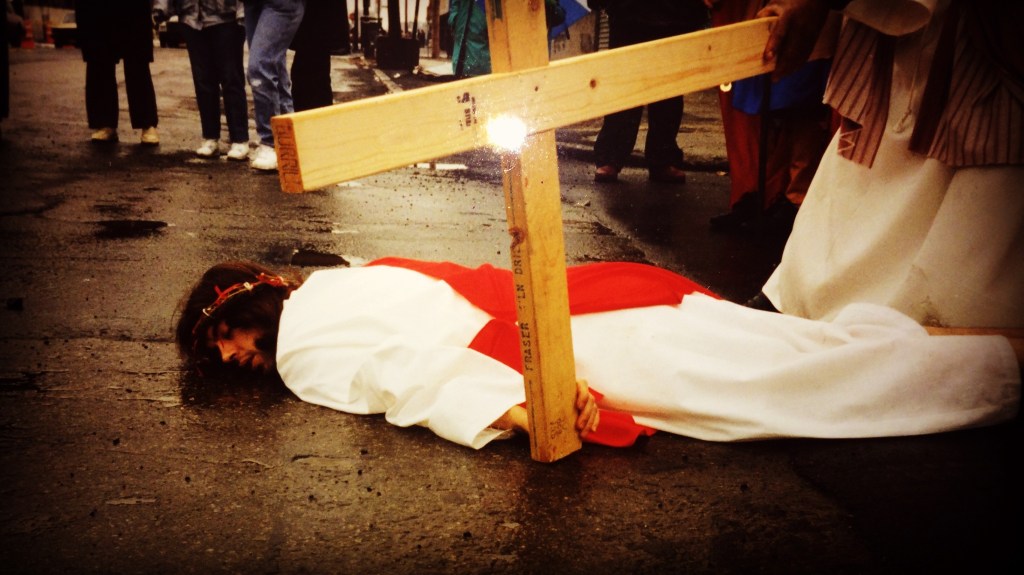
Jesus is there for us when we fall, are we there for each other?
“Everything that the Father gives me will come to me, and I will not reject anyone who comes to me, because I came down from heaven not to do my own will but the will of the one who sent me” (Jn 6:37-38). Jesus does not reject us, he accepts us as we are, first and foremost. Jesus has come to do his Father’s will which is to lead us all to salvation, to be redeemed and restored to the proper order of freedom from our enslavement to sin. This is why Jesus met Cleopas and the other disciple on the road to Emmaus. They were walking the wrong way! Jesus did not tell them that, he just opened up the Scriptures to them, so they could see that he was who he claimed to be and then revealed himself to them in the breaking of the bread. Once they had a deeper encounter with him, they determined on their own to turn back, and even though evening approached they went back to tell the Apostles the Good News of their experience.
It was through sharing a meal with them that they recognized him. How many meals had they shared together before his death? A close reading of Sacred Scripture shows how important table fellowship is for Jesus and his followers before his death and after his Resurrection. True, Jesus eating with his disciples after his Resurrection shows that he is no ghost, he is human, but also he is reestablishing the cornerstone of his ministry, table fellowship.
Here the basic needs of sustenance are met, for the body, and in also in sharing his time and conversation with anyone willing to eat with him, no matter their level of ritual purity, he touches the deepest hunger within each of us, which is to belong, to be accepted as we are, for who we are. The majority of the crowd that Jesus is speaking to has continued to come to him because he fed them with only a few loaves and some fish. In the miraculous multiplication, Jesus is providing for their bodily nourishment, but also preparing them for the deeper spiritual nourishment of the body and soul to come in the next verses as he goes deeper into his Bread of Life discourse.
Jesus loves us, he wills the best for us. Many resist this claim for different reasons. It could be the callouses, scars, and growing cynicism as a result of wounds inflicted by others, those who did not fulfill expectations, betrayal within and without of the Church. Each of us could have also been let down by those we have looked up to and trusted. If we are involved in a relationship long enough, we will experience disappointment or worse. This is because sooner or later, the masks will come down and who we truly are, the fullness of our wounds and our gifts will come to the fore. Conflicts will arise because we are finite beings. We are still a work in progress.
None of us are perfect. We are all on a journey. On our own, we will consistently fall short of our goal. That is why we need a savior. We need someone we can trust that will be there for us when we are let down and when we fall down face-first into the mud. Someone who, when that happens, will lay down in the mud with us, look us in the eye, and smile.
Even if we are not able to look past the predicament, or smile in return, we might just be able to catch his eyes looking at us and then we will see him offer us his hand. We can then rise together, and stand again. That is how Jesus shows his mercy and love for us. He enters into our chaos and meets us in the midst of the muck and grime of our mistakes, brokenness, and sin. He loves us there, and when we are ready to accept his offer of love, he invites us to get up, and begin to walk again.
As our relationship grows and deepens and as our trust strengthens, we begin to believe that we belong. We begin to heal and realize that we are a part of something greater than ourselves and we can then with wobbly steps, begin to offer attempts of the same mercy, forgiveness, and unconditional love with others. This is the path of discipleship. This is the road we are on, together. This is not a hundred-yard dash but a long and winding road. Let us be willing to persist, to be led, to love, to be there for, and accompany one another each step of the way. And especially may we have the willingness to help each other when we fall.
———————————————————————————
Photo: Me, as Jesus in the Living Stations, falling the third time, Good Friday around 1991 in the streets of the Bronx
Link for the Mass readings for Wednesday, May 4, 2022

Dialogue can happen when we respect, share with, and listen to each other.
In our growing global and increasingly interacting world, a sense of pluralism, the recognition and affirmation of diversity and peaceful coexistence has become more and more of an ideal. In and of itself, the embracing of diversity is good. Especially when we have and continue to experience and see such atrocities committed in the name of “tribalism”. What can be a dark side of pluralism though, is that for the sake of getting along we are not true to who we are and we limit our public discourse so as not to offend. Not that to offend is the goal.
Identity is also not to be held up as the sole model either. Because identity has a dark side as well in that we can easily slip into a defensive posture when we feel our identity is threatened. This is why we are told that if you want to have a conflict free conversation you may want to avoid speaking about politics, religion, and I forget the third. The reason is that in these areas we identify ourselves with our personal beliefs and if someone critiques or criticizes our beliefs we feel personally threatened, and more often than not, we slip into a defensive posture and the dialogue devolves into talking at and over each other or withdrawing altogether.
These thoughts lead me to the opening verses in today’s Gospel from John: Jesus said to Thomas, “I am the way and the truth and the life. No one comes to the Father except through me. If you know me, then you will also know my Father. From now on you do know him and have seen him” (Jn 14:6-7). This may not appear to be a pluralistically sensitive comment if wanting to keep calm at the dinner table. Though it is a statement of truth.
The statement that could raise the hackles of those who are not Christian is “No one comes to the Father except through me.” This may appear at face value to be a very arrogant statement. Unless, Jesus is who he says he is, the Son of God, the Second Person of the Trinity. If Jesus is God, then of course to get to God you will be going through Jesus. Jesus does not say that you have to be a Christian to get to God. Jesus himself was not a Christian.
Regarding interfaith dialogue the Catholic Church has come far regarding some dehumanizing stances from the past to embrace a truer interpretation of Jesus’ statement. In the Vatican II document, Nostra Aetate, meaning In Our Time, the first lines of the document, states that the Catholic Church “rejects nothing of what is true and holy… She has a high regard for the manner of life and conduct, the precepts and doctrines which, although differing in many ways from her own teaching, nevertheless reflect a ray of that truth which enlightens all…”
We do not enter dialogue with the intent to avoid sharing about the truth of our beliefs, but to be able to reclaim the ability to share clearly what we believe and be willing to allow someone else to do the same. We have lost the ability to have a good argument or debate that is founded in the respect and dignity of the person first, an openness and understanding for different and diverse opinions and beliefs second, and third, grounded in the ultimate goal of learning and growing from one another.
We can reclaim the gift of dialogue if we are willing to let go of the need to talk at others, to be right, and entrench ourselves in our positions, and instead seek to be more grounded in integrity instead of identity. To grow as a person of integrity means developing the ability to think critically and with a more nuanced outlook, resisting absolutes and black and white thinking. Another line from Nostra Aetate states: “Let Christians, while witnessing to their own faith and way of life, acknowledge, preserve and encourage the spiritual and moral truths found among non-Christians, also their social life and culture.”
Being a person of integrity means standing up for the dignity of another person no matter who they are because they are a human being, created in the image and likeness of God. This is what the parable of the Good Samaritan was all about. Being a person of integrity means martialing the courage to hold someone accountable respectfully and refuse to look the other way just because they are of the same gender, political party, religion, or tribe. Being a person of integrity means saying what we believe and allowing another to do the same, respecting our differences, agreeing to disagree, and finding common ground where we can. In this way we are more open to growing and broadening our understanding of the people and wonder of the world around us.
Being a person of integrity is not easy. To follow Jesus, who is the way, the truth, and the life, demands courage to speak truth to our peers, to power, to speak truth in and out of season, in the midst of our fear of conflict, of offending, of being wrong. We are also to have the humility to recognize when we have not respected others and are willing to be held accountable ourselves. Though to strive for it is worth the effort, otherwise we succumb to a slow death of cowardice that eats away at our soul. When we are true to who we are and who God calls us to be, we can experience the soaring heights of the freedom and joy we were created for! If you are not sure how to begin, listen first and ask questions before sharing your own ideas or point of view.
Jesus, help us today in our discernment to be true to who your Father calls us to be and help us to be more willing to allow the Holy Spirit to fill us with his courage, joy, and love so as to strive to be people who are willing to be aware, to care, to enter into dialogue, to serve, and to be people of integrity.
———————————————————————
Photo: Good dialogue can also strengthen relationships!
Nostra Aetate, Declaration on the Relation of the Church to non-Christian Religions, October 28, 1965. Tr. in Vatican Council II: Vol. I: The Conciliar and Post Conciliar Documents, Costello Publishing, 2004.
Link for the Mass readings for Monday, May 3, 2022

Jesus has risen and that ought to make a difference in our lives.
One of the best ways to celebrate the Easter Season is to continue to conform our lives to the one for whom we celebrate this season for, the one who gave his life for us that we may experience and be engaged in our life to the full. We can accomplish this better by putting into practice what we read in the Gospels as well as being open to encountering God in our daily experiences and one another.
Today’s Gospel reading continues after Jesus not only fed the 5,000 but also after he had walked across the Sea of Galilee and guided his disciples safely to the shore. Those who had eaten as a result of the multiplication of the loaves and fish, got in their own boats to follow Jesus to Capernaum as well.
When the crowd found and gathered around Jesus, he continued to teach them, guiding them to “not work for food that perishes but for the food that endures for eternal life, which the Son of Man will give you.” The people asked him what they could, “do to accomplish the works of God?” Jesus answered and said to them, “This is the work of God, that you believe in the one he sent” (cf: Jn 6:27-29).
The people asked Jesus what they were to do to accomplish the work of God, and he said to believe in the one he sent. The response of Jesus may not appear to fit the request. But to believe is not passive. Belief is to be followed by action. If we say that we believe in Jesus, do we pray with him, do we worship him independently and in communion with fellow believers, do we sing songs praising him, do we serve him through the giving of ourselves to one another by practicing the corporal and spiritual works of mercy?
When we experience setbacks, interruptions, conflicts, or are weighed down by tribulations, do we turn to cursing and yelling or turn instead to Jesus for guidance and direction? By the way, yelling or expressing our anger at Jesus is honest prayer and we are talking to instead of turning our back on him. Do we turn within ourselves or only surround ourselves with those of like mind, color, political and/or religious views, and make others into scapegoats, or do we embrace the richness, uniqueness, and diversity of God’s people, open ourselves to dialogue, and new possibilities?
If we are not consistently doing any of the above, then do we really believe in Jesus Christ, the one whom God sent? Where are we spending our time, talent, and treasure? Answering these questions is a good way to assess what and in who we truly believe. If our diagnosis today is that we are not as faithful as we would like, my prescription is to take a spoonful of belief in Jesus and do one small thing today in his name with great love.
——————————————————-
Some quiet time before Mass Third Sunday of Easter at St Peter Catholic Church, Jupiter, FL.
Link for the Mass readings for Monday, May 2, 2022

If we love Jesus, we must be willing to feed his lambs.
In today’s Gospel, Jesus forgives Peter for denying him three times by asking him three times if Peter loves him. Again, Peter does not quite grasp the teaching, for after the third request of “Do you love me?” Peter is distressed, and with an impatient tone said, “Lord, you know everything; you know that I love you” (Jn 21:17).
Jesus’ forgiveness of Peter is not just about the repentance of Peter’s denial but the true nature of discipleship. To be disciples of Jesus is to love one another as Jesus loves us. Peter is called to repentance not for himself but to love others, to serve others. After each affirmation of love by Peter Jesus responds with: “Feed my lambs.” “Tend my sheep.” “Feed my sheep.”
I have written often that love is best defined by St Thomas Aquinas as willing the good of the other as other. This is expressed vividly in Jesus’ imagery to Peter. If we say we love Jesus like Peter did, we will feed and tend the lambs and sheep of his flock. We will forgive, take care of, nourish, empower, support, guide and accompany one another. This means we will also love those who hate us, those who seek to persecute us, and love our enemies as ourselves.
Jesus loves us and invites us to give this love that we have received away, person to person, expecting nothing in return. We do not love to get, but love to freely give without cost. The expression of our love will be different for each of us because Jesus commissions each of us to serve his lambs and sheep in different ways.
Ultimately, what Jesus sends us to do is to enter into and build relationships with people. We begin relationships first and foremost by allowing the love of Jesus to flow through us, by loving the person as they are and where they are, just as Jesus has done with us. Jesus does not define us by our worst mistakes, Jesus loves us more than we can ever mess up, and Jesus loves us more than we can ever imagine. Are we ready to go into this week, day by day, encounter by encounter, online and in person, willing to do the same? Willing to feed Jesus’ lambs, willing to tend his sheep, and willing to feed his sheep?
Painting: Shawn K. Carson
Link for the Mass readings for the third week of Easter, Sunday, May 1, 2022

 Spiritual Stepping Stones