
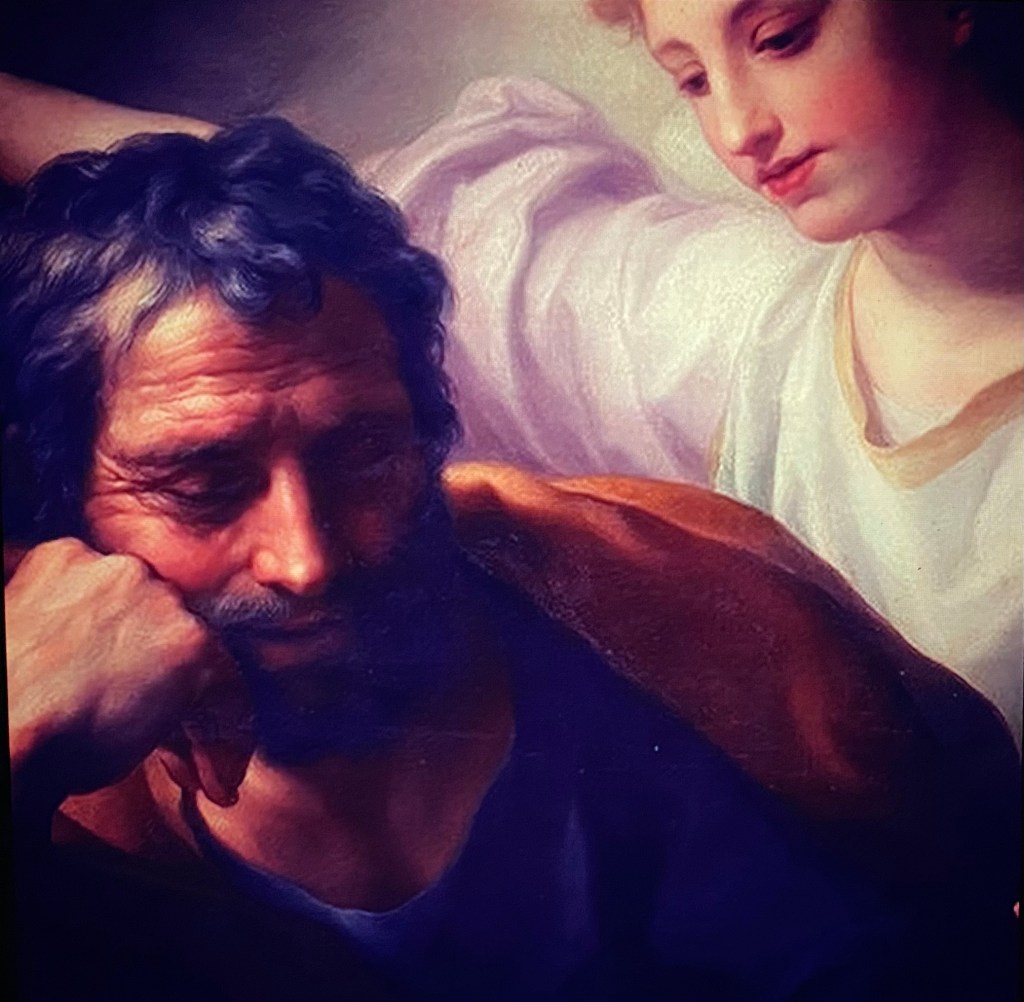
In our times of discernment, may we follow the lead of Joseph.
Who do we want to be? It is so easy to get caught up in being busy, taking care of children, the home, school assignments, work, as well as a myriad of other activities that each of us, experiencing our own unique station in life, can add to the list. These can all be good things, but we can lose ourselves in our busyness and responsibilities such that we slip into a state of survival mode or merely existing. One day can move into one week, into one month, into one year, and then we wake up one morning and wonder where the last ten years went!
We can fall into the trap of being defined by what we do instead of who we are and who God is calling us to be. God has a plan for us with the end result being eternal communion with him in heaven. Living a life of holiness and becoming saints is our call. We need to remind ourselves of this from time to time, more often rather than less actually, by assessing where we are now and listening to the guidance of God.
Our Gospel account from Matthew today gives us an opportunity to see this practice in action. Joseph has become aware that Mary, his betrothed, is with child and he is not the Father. We can forget about the humanity of the moment, reading now from so many years removed. I am sure there is some serious anguish that Joseph death with even as we read that he is “a righteous man” who follows the law, but is “unwilling to expose her to shame, decided to divorce her quietly” (Mt 1:19). Joseph’s life of righteousness pulls him to follow the law, yet he shows that discernment in matters of the dignity of the person is just as important. Joseph not only was unwilling to make Mary into a public spectacle but was also unwilling to allow the possibility of her to be stoned to death.
Joseph pondered the idea of divorcing her quietly and again no mention of the mental maelstrom, intestinal upheaval, or emotional roller coaster as he pondered. Yet, a very good piece of guidance are fortunate to glean from this account. Before he made his final decision, Joseph slept on the matter, which is often a good course of action when weighing such a heavy issue. How many times do we rush into decisions only to regret them later? Because Joseph is willing to wait a bit, he receives God’s direction through the angel of the Lord in a dream.
When Joseph arose that morning, he did not dig in his heels feeling he knew best and then return to his original decision, he did not let fear or anxiety or whatever emotions he may have experienced about the possible scenarios that played out in his mind sway him, nor did the very possible and reality of the difficulties he could envision deter him. Joseph trusted God. With the confidence and assurance of who he was and who God called him to do, Joseph acted on the guidance he had received.
This is why St. Joseph is a model for us. When faced with decisions, we need to remember who we are, whose we are, and who we are called to be. We are children of God. That means we belong to God, a God who loves and cares for us. He has a plan for each of our lives. Every decision and action is a step in fulfilling that plan.
When we are discerning, no matter how large or small, we are invited to gather information, look at the reasonable options available, all the while, continuing to seek God’s guidance. God will guide and accompany us through many means and ways such as a thought, a family member or friend sharing an insight at an opportune time, experiences, through our dreams, as well as many other ways. God granted Joseph not only the guidance he sought but the support to fulfill the commission he received. We can be assured that God will do the same as we discern his direction as well.
St. Joseph, pray for us!
——————————————————————–
Painting: “The Dream of St Joseph” by Anton Raphael Mengs about 1774
Link for the Mass readings for Saturday, March 19, 2022

Good prayer leads to good stewardship.
A foundational quality of a good leader, whether he or she be a political or religious leader, would be that they are seeking the best interest of those they serve. They also seek to be good stewards. Unfortunately, self-interest is a tremendous temptation. For how long are they willing to approach the position as one who is willing to serve instead of being served? Another important attribute in a leader is their openness to critique and guidance when they are in need to hear it.
Jesus in today’s parable presents a landowner who turns his vineyard over to tenant farmers. They are to oversee the crops to bring about a productive yield of grapes come harvest time. Unfortunately: “When vintage time drew near, he [the owner] sent his servants to the tenants to obtain his produce. But the tenants seized the servants and one they beat, another they killed, and a third they stoned” (Mt 21:34-35). Eventually, the owner sends his own son, and the tenants kill him.
Jesus offered this parable as a mirror to the tenants of his time, the chief priests and Pharisees, of Israel. The vineyard is an image used to represent Israel. Clearly, the owner is God, and the tenant farmers are those in leadership positions overseeing the care of Israel. We do not know which leaders hearing this parable took it to heart and changed their minds and repented from their self-centered focus. We do know that there were those who carried out exactly what Jesus laid out in the parable. There were those, who following political and religious leaders of the past, persecuted, beat, and killed the prophets, and would do the same to Jesus.
Jesus called for the people of Israel in his time to rise up and actualize the potential of their covenantal relationship with and faithfulness in serving God. He still does so today. We who bear the name of Christian are part of this heritage or “spiritual Semites” as Pope St. Paul VI has stated. We ought to have a close relationship with our brothers and sisters in Judaism and we too are also given the responsibility of being good stewards.
Pope Francis offers us a prescription that we can aspire to that comes from one of our brothers in the Eastern Orthodox tradition, Bartholomew, the Patriarch of Constantinople: “He [Bartholomew] asks us to replace consumption with sacrifice, greed with generosity, wastefulness with a spirit of sharing, an asceticism which ‘entails learning to give, and not simply to give up. It is a way of loving, of moving gradually away from what I want to what God’s world needs. It is liberation from fear, greed, and compulsion'” (Laudato Si, 9).
This is a way we are to follow and to model. All of us on this earth are stewards awaiting the return of the Son of the Land Owner, whether people of faith or no faith, and we need to resist the temptation of the tenants from today’s parable who sought to grasp at what was not theirs and embraced the deadly sin of envy and greed. Instead, may we be more open to receiving what we have been entrusted with and care for the gift of the earth, all humanity, and life upon it.
—————————————————————————————-
Photo: View from Griffith Observatory, Griffith Park, Los Angeles, CA a few years ago.
Link for the Mass readings for Friday, March 18, 2022
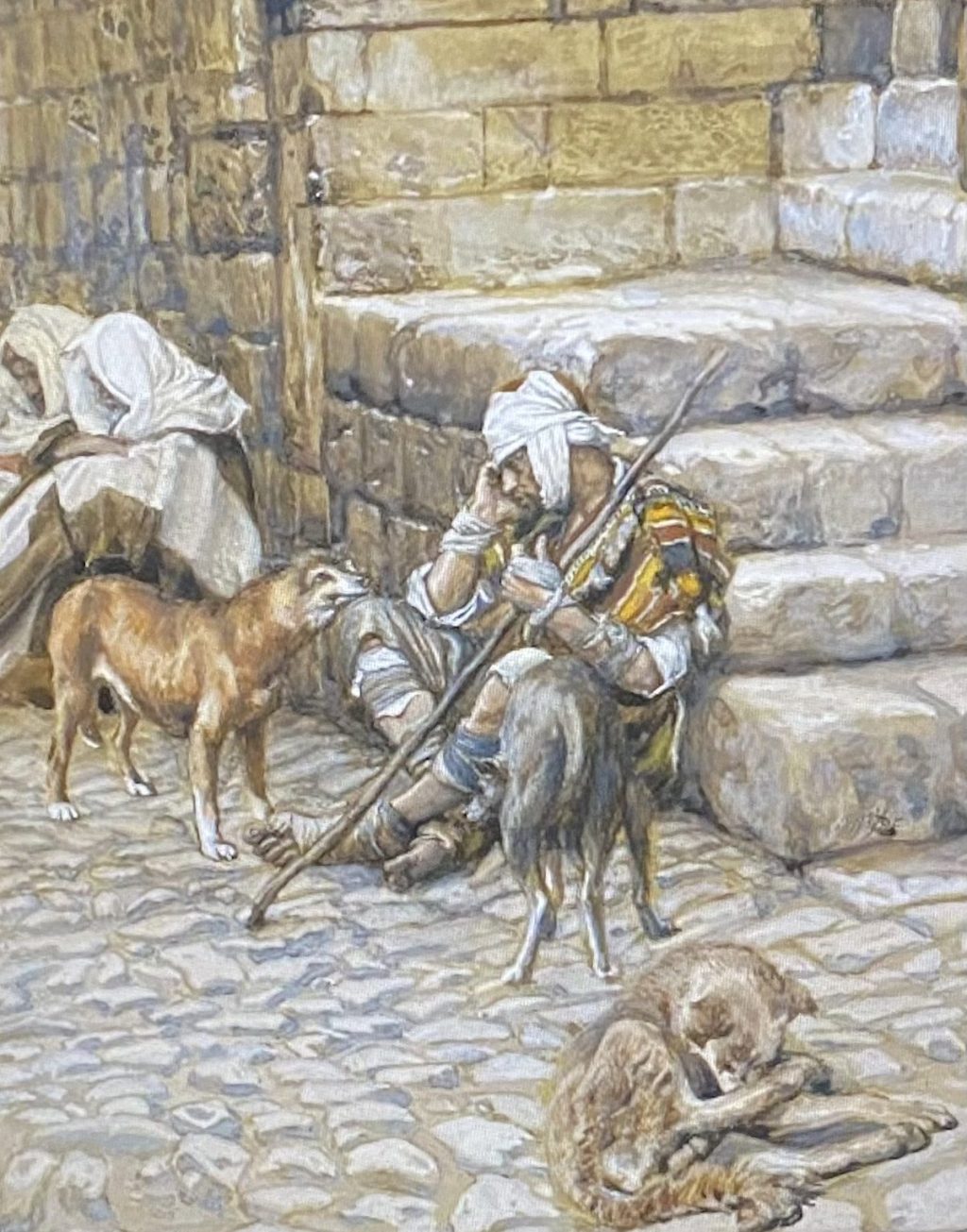
Who do we walk over or by without notice?
The Parable of the Rich Man and Lazarus from the Gospel of Luke 16:19-31 is well worth the read. Jesus challenges us through parables such as these. For the people of his time, those who had wealth and status in society did so, it was believed that they were blessed by God. When the rich man and the beggar, Lazarus, die, I am sure Jesus paused to allow his listeners to imagine what would happen to these two men. Many would not have predicted what happened next.
Lazarus was taken up “by angels to the bosom of Abraham” (Lk 16:22). The rich man found himself suffering from the torment of flames, such that he was parched, begging just for a drop of water from Lazarus (cf. Lk 16:23-24). Abraham, the model of faith and father of Judaism, was not sitting with the rich man, who must have always been seated at the highest places in his day, but now that seat, at the bosom of Abraham, was offered to Lazarus. There was no hope at this moment for the rich man to cross over because of the wide chasm that separated them. An ironic subtlety was afoot as well in Jesus’ telling of the parable to the Pharisees. Lazarus the poor beggar is named, whereas, the rich man is not.
How does the rich man come to this state of suffering and separation? This is the life he lived prior to his death. He walked over or by Lazarus day after day not giving him even a second look. Lazarus would have been grateful even for the mere scraps that fell from the rich man’s table, just as the rich man now sought just a drop of water from the finger of Lazarus. The rich man committed the root offense from which sprouts much of our sin; he failed to bother, to care, to love his brother, to will his good.
Jesus’ parable of the Rich Man and Lazarus, echoes Matthew 25:40, “whatever you did for one of the least brothers of mine, you did for me.” How we treat others matters. Failing to care, to reach out to those in need around is sinful. We, probably like those who first heard this parable, experience time and again, a wicked mind storm that swirls with reasons, rationalizations, and justifications as to why we do not reach out to help others. The majority, if any, are not valid. We are invited to give and to love joyfully from a natural, not a hesitant disposition, to provide aid and support.
Almsgiving is one of the three pillars of Lent. The first step is to be aware of those who are in need. This can be in our own home! Second, when we see someone in need and we feel the wind and the waves of our mind surging with reasons of why not to help, call on Jesus to calm the storm of our minds. Third, may we take a breath and stop. Let our eyes adjust so we can see the person before us as a human being, as a sister or a brother with dignity, value, and worth. Everyone wants to belong, to be a part of, to be loved. Finally, at that moment, we can seek the guidance of Jesus, allow him to work through us so that we may be present and allow God to happen in whatever form or act of caring and kindness that is called for.
——————————————————————-
Painting: “The Poor Lazarus at the Rich Man’s Door” by James Tissot 1886 and 1894
Link for the Mass readings for Thursday, March 17, 2022
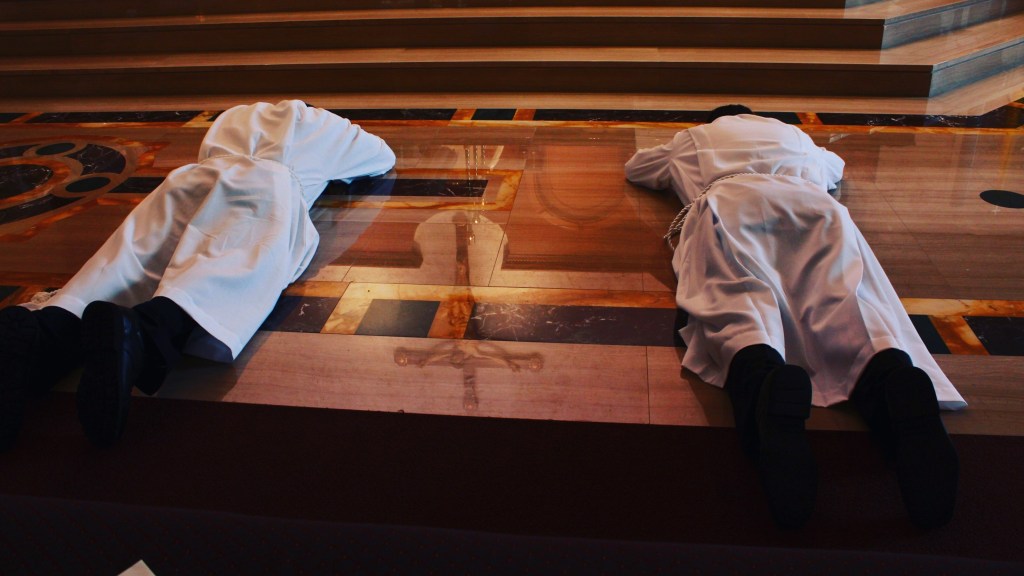
This Lent, let us follow the lead of Jesus who came “not to be served but to serve”!
Look at me, serve me, I want, are attitudes and dispositions that tempt us. Fame, honor, power, prestige may be another way of making the same point, which is that we often have a hyper-focus on self and self-promotion, as George Harrison wrote and sang as a critique on this mindset: “I, me, mine.” Social media offers more of a platform to fuel this temptation. If we think this is something new with the advent of modern technology, we can look at today’s Gospel of Matthew to see that we have been operating from this posture for a very long time.
Jesus, for the third time, was attempting to prepare his disciples for his passion. He said: “Behold, we are going up to Jerusalem, and the Son of Man will be handed over to the chief priests and the scribes, and they will condemn him to death and hand him over to the Gentiles to be mocked and scourged and crucified, and he will be raised on the third day” (Mt 20:18-19).
The response of the mother of James and John (the two brothers make the request themselves in the Gospel of Mark) is actually not that surprising if we spend any time with people. She disregards what Jesus just mentioned about his imminent death and requests that when Jesus assumes his seat of power that her two sons will be number one and number two. The other disciples were quite indignant and I can imagine what followed was not a pretty sight.
Jesus shares directly with the brothers that to give them a place at his right and left “is for those for whom it has been prepared for my Father” (Mt 20:23). He addresses them all by letting them know that the preeminent place in his kingdom, whoever is to be first, is the one who serves his brother and sister.
Jesus is encouraging us this Lent to resist the ways in which we believe that participating in certain activities are beneath us, the slight and not so slight prejudices that we allow to guide us such that we feel we are better than others, why we don’t associate with certain people because we consider them as other.
If we are willing to be honest with our self-centered views, we can then adjust our perspective and follow the lead of Jesus by instead seeking out opportunities to give of our time, talent, and treasure, to serve. What talents and gifts have been given to us by Jesus and how can we put them into use to help others? Can we treat each person we interact with today with respect, such that, we act in ways that honor the dignity of each person? Can we make an extra effort to be more patient, understanding, and present to others, especially with those who in the past we have kept at arm’s length?
The suggestion of Pope Francis is a good orientation to assume this Lent: “Yet I would also hope that, even in our daily encounters with those who beg for our assistance, we would see such requests as coming from God himself.” In this way, we can live like Jesus who came, “not to be served but to serve” (Mt 20:28).
——————————————————————————
Photo: My classmate Deacon Henry and me during our ordination. Prostration during the rite symbolizes our unworthiness for the office to be assumed and our dependence upon God and the prayers of the Christian community and prayers which we continue to need and rely on! For those who have been praying for us, thank you!!!
Link for the Mass readings for Wednesday, March 16, 2022
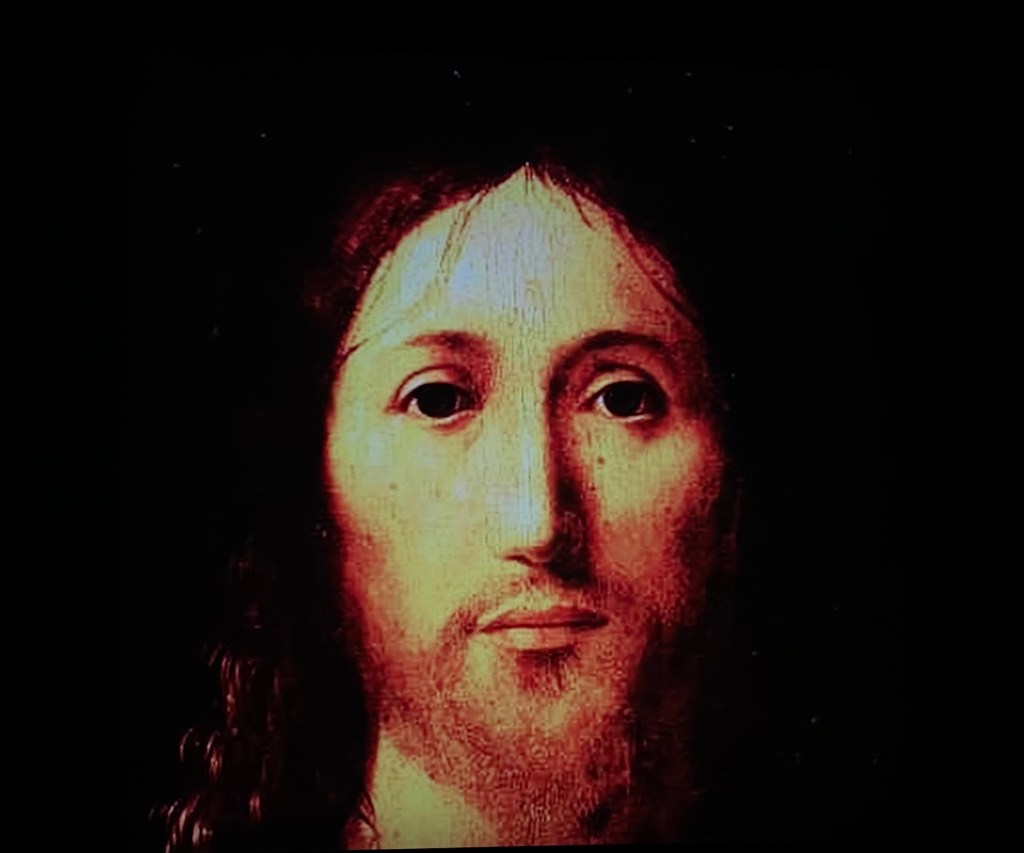
Jesus is with us, we just need to have the honesty and humility to ask for his help.
There are many polls, surveys, and discussions about why fewer people participate in formal faith traditions, while at the same time many people are still hungry for God. Some people still profess to be spiritual but identify less with organized religion. There are a handful of causes why, but Jesus may be shedding light on two possible ones. Jesus discusses in today’s Gospel from Matthew: “For they preach but they do not practice. They tie up heavy burdens hard to carry and lay them on people’s shoulders, but they will not lift a finger to move them” (Mt 23:3-4).
We have an innate sense that alerts us to hypocrisy and when many seek something deeper in their life and they get slapped in the face with leaders and practitioners in faith traditions preaching one way in public while living another, it is damaging. The Catholic Church is still reeling from not only those clergy who have abused children, but those bishops who have covered up the abuse. The most recent investigation coming out of Germany. This certainly is the height of hypocrisy in that those entrusted to shepherd the people of God are preying on their own flock.
As horrific as these acts are, there are so many other ways we are not practicing what we preach. It is easy to give up and walk away and say this is not my problem, to point fingers and justify our own acts of hypocrisy by saying well at least I am not that bad. Yet even this evil within the Church does not change the truth that Jesus is the way, the truth, and the life. He is the source of our being and fulfillment.
We are followers of Jesus, and that means the standard we strive for is how he lived his life. Jesus always pointed the way to the Father. We as human beings are finite, are going to make mistakes and sin. While Jesus is our model, even more, he is the source for our living faithfully to his teachings. Through his love working through us and directed out toward others, we are capable of standing up for the dignity of those entrusted to us within our realm of influence.
If we want to guide someone in the ways of our faith tradition it is not enough to say this is what you need to do and live accordingly. We need to practice and live what we are guiding others to do, be willing to accompany, assist, and walk with someone along the way. As a Christian, just giving someone the Bible and say there you go, that’s all you need, and quote a couple of scripture passages is not enough. If we are sharing a principle to put into practice and we are not willing to lift a finger to help them, or worse do the opposite, we do more damage than if we said nothing.
Jesus calls us to resist judging and condemning, and to instead love our enemies, be forgiving, and merciful. Powerful actions to live up to, heavy burdens to lift indeed. To say that the bar Jesus sets is high is an understatement, but he lived them out. We not only learn how to act from reading about the life and teachings of Jesus but even more importantly, he gives us the power and assists us to live them out. This power is unleashed when we are willing to be humble, authentic, and honest with our own sins and places that are in need of healing.
Jesus challenges us even more than the scribes and Pharisees did his earlier followers, but he will help us carry the load. For our part, we need to be willing to see where we fall short of the goals he sets for us, refuse to follow and seek his help. For our healing to begin and to continue, we need to daily allow Jesus to come into the depths of our hearts and reveal to us the places where we need his healing. Hiding is not the answer, for in doing so we refuse his help and we project our problems out toward others instead of our love.
We are going to fall, to come up short, but when we are honest and reach out our hand to Jesus, he will help us to get back up. We are then better able to help others in their walk as well. The most important guidance we can give anyone is to lead people in such a way that they encounter and experience Jesus for themselves, so even when we fall, they will still have Jesus as their guide, they can then help us up, and we can continue to journey together, side by side.
————————————–
Photo: Painting, Christ Blessing by Italian artist Antonello da Messina, 1465
Link for the Mass readings for Tuesday, March 14, 2022
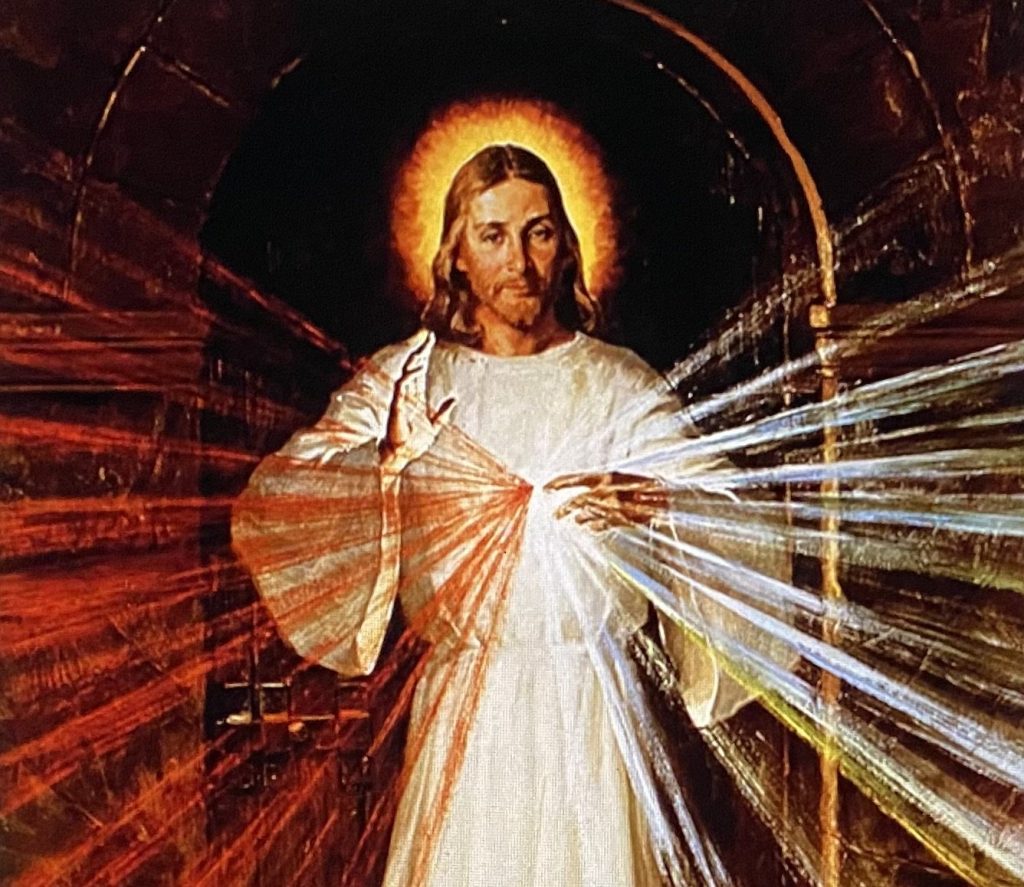
Let us practice the mercy of Jesus this Lent.
Polarization, division, and finger-pointing continue to be the order of the day on so many levels in our country. Unfortunately, it is taking a firmer hold at the community, familial level, and within the Church as well. Instead of looking for someone to blame for the cause of this or that situation, looking for a scapegoat, we need to look in the mirror and honestly assess how we are contributing to division. Why are we not as interested in seeking to uphold the motto of the United States of America – E Pluribus Unum – Out of Many One; or instead of upholding the motto of our faith – “That they may all be one” (John 17:21).
We need to take a step back, take a breath or two, and examine our conscience and honestly acknowledge how we are contributing to the divisiveness and polarization through our own thoughts, words, and actions. Then we will be in a better position to act instead of react. We can disagree and offer different points of view and seek different approaches to solve problems respectfully when we come into an encounter willing to engage in dialogue and collaboration instead of coming into an exchange with the intent of forcing our own point.
A beginning place for us this Lent can be to understand and put into practice what Jesus said in the opening of today’s Gospel:
“Be merciful, just as your Father is merciful” (Lk 6:36).
Mercy, from the Hebrew word chesed, meaning to show tender compassion, can help us to turn the momentum away from disunity and polarization toward respecting the gift of our diversity while at the same time embracing our unity. Fr. James Keenan, S.J. defines mercy as the willingness to enter into the chaos of another. Instead of imposing our point of view, mercy is the willingness to accompany, to come to know and make a concerted effort to understand another.
Instead of prejudging someone, mercy is a willingness to hear first and assess thoughtfully what has been said, even when the message conveyed is heated, derogatory, and inflammatory. There may be some truth in the maelstrom of what has been sown. Jesus also guides us to stop judging and condemning each other. We are limited by our own finite natures as it is. We are not God and are not capable of fully reading another person.
In most cases, we do not know another’s struggles, anxieties, fears, traumas, and experiences. When encountering one another we need to resist the knee-jerk reaction to judge, and instead, listen first, allow someone to vent without taking offense, and without seeking a way to “fix” them or the problem. We are not problems to be fixed but people to be understood and loved.
Jesus also reminds us to forgive. As God forgives us we are also invited to forgive others, to let go of grudges. Not to do so means allowing the poison injected into us to spread instead of seeking the healing antidote of forgiveness. The one who has wounded us has walked away and if we are not willing to forgive we continue to do harm to ourselves as we allow that wound to fester.
It is much easier to stay in our shell or bubble. We feel protected and safe so no one can hurt us, but that is not the posture Jesus would have us assume, for we are focused on our self. Staying in our bubble suffocates us, stunts our growth, and limits our potential as human beings created in the image and likeness of God. Jesus calls us, not to cave in upon ourselves, but to go out from ourselves, to be agents of love and mercy.
Each day we have a choice. We can withdraw and remain indifferent seeking to protect ourselves, we can choose to promote disunity and polarization, or we can seek to be merciful and work for unity. We can follow the lead of Jesus so as to be more willing to encounter others as they are and accompany them. We can resist the temptation to judge and condemn, but instead seek to understand and listen. We can be advocates of forgiveness, healing, and reconciliation. Let us choose today to allow the Holy Spirit to expand our hearts so as to be more understanding and merciful with ourselves and each other, just as our heavenly Father is with us time and again with us.
——————————————————————————
Image: A close-up of the painting, Divine Mercy, by Robert Skemp, 1982 – A good prayer to pray this Lent is from the chaplet of Divine Mercy: “For the sake of His sorrowful Passion, have mercy on us and on the whole world.”
Link for Mass readings for Monday, March 13, 2022
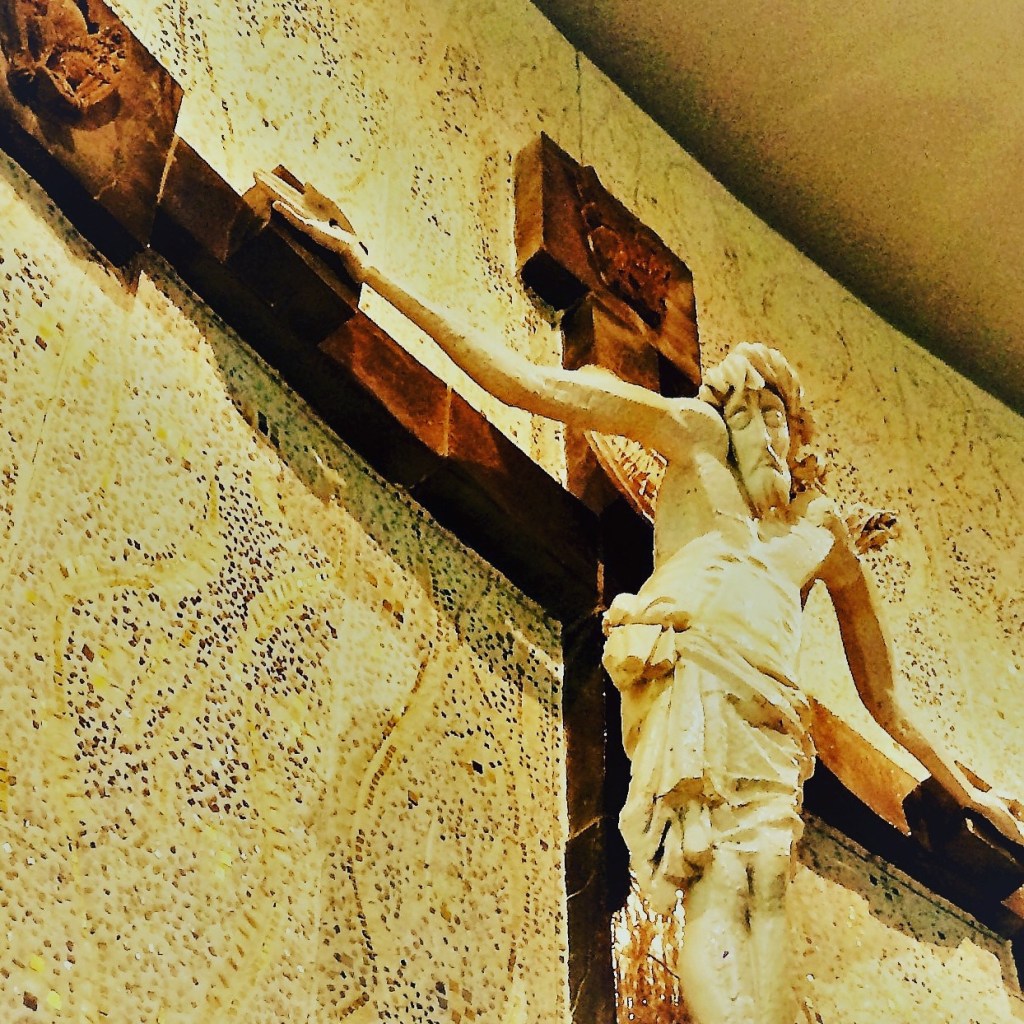
Rest in the loving gaze of Jesus and be restored.
Our life can be an experience of both desolation and consolation. There is an ebb and flow where we suffer from trials and also celebrate joys. The key to living a life of faith is to see God in both experiences. Jesus today provides an opportunity for Peter, John, and James, the inner circle of the Twelve, to experience an expression of his divinity for: While he was praying his face changed in appearance and his clothing became dazzling white (Lk 9:29). Jesus revealed his divine nature in a powerful display to prepare them for the Passion that he was about to endure. The experience is also a foreshadowing of his Resurrection.
Jesus invites us to experience the Transfiguration, the Passion, and the Resurrection in our own lives. We can miss a transfigured moment, when we assume a posture of pride, not acknowledging God’s interjection into our lives by believing we achieved or arrived at our present station in life on our own merits alone. On the other hand, we can experience moments of transfiguration when we acknowledge that God breaks into our lives at that moment when we needed him the most and recognize the assistance he has given us, and/or when he has revealed to us the path and direction we were to take. The natural response is to offer prayers of thanksgiving, recognizing that we don’t go it alone, that God and those he sends to help us are a tremendous support.
Jesus is also present in our desolations. Many of us run from our suffering, we are afraid of the Cross. But it is through the cross that we come to experience the Resurrection. We may not be aware, but when we run away from our suffering, we are running away from Jesus who awaits us with arms wide open to embrace us in our suffering; to comfort us, heal us, and transform us. But to embrace Jesus, we need to be willing to embrace our suffering.
The older I get, the crucifix becomes more and more of a consolation. This icon of Jesus, his body broken and emptied out for us on the cross, shows the depth of his love for us. He took upon himself the full range and suffocating weight of our sins and transformed even the worst of our fallen nature through his love. The crucifix is not a sign of despair, but of hope and transfiguration, for it reminds us that no matter what we are experiencing, what trial that we may be in the midst of at this very moment, Jesus has experienced it, and is now, and will always be present, experiencing it with us, and all the while, inviting us to participate in his work of redemption for all.
Looking and meditating upon Jesus on the Cross has provided me moments of peace and consolation, granted me the courage that I did not have to face various conflicts, challenges, and trials so as not to be crushed but instead to have been able to be strengthened through my weakness. The crucifix is a reminder that Jesus continues to love each one of us as we are right now, despite our sins, brokenness, and failures, and each moment is an opportunity to begin again as he accompanies each one of us through the ups and downs of our lives.
I invite you to spend some time with him today. Immerse yourself in his ever-present love by gazing upon the picture included here, with your own crucifix, or simply rest silently with Jesus. Spend some time looking at Jesus while he looks at you. Allow the love of Jesus to gently wash over, heal, and renew you. Jesus conquered and transfigured death so that we can be restored to enter into the intimate relationship with God that we have been created for.
________________________________________
Photo: Crucifix in main sanctuary of Our Lady of Florida Spiritual Retreat Center, Palm Beach Gardens, FL.
Link for the Mass readings for Sunday, March 13, 2022
We are all brothers and sisters
“You have heard that it was said, You shall love your neighbor and hate your enemy. But I say to you, love your enemies, and pray for those who persecute you, that you may be children of your heavenly Father” (Mt 5:43-45). With these words, Jesus continues to raise the bar of discipleship and outlines what the pursuit of love truly is.
For many people, as Bob Dylan wrote and Joan Baez has sung, “love is just a four-letter word.” But the love that Jesus calls us to is not romantic, emotional, or mere sentiment, though this may be healthy in that when we have feelings of infatuation we are drawn out from ourselves to another, but this kind of love has no depth and is based on physical or emotional attraction, and if it is to be real it must mature to the level of friendship.
The bond of friendship and family goes beyond mere attraction and is built through shared interests and experiences. Through sharing our lives with others, working through conflicts, trust is built, and relationships will hopefully grow and deepen. Jesus, though, is calling us to mature in our growth of loving even beyond friendship or familial ties. If we love those who willingly love us in return, greet only our brothers and sisters, only those in our clique, group, tribe, or political party, what is the recompense or satisfaction in that? Agape, in Greek, loving without conditions, with little or no chance of mutual exchange, is what Jesus is calling us to strive for.
Many of us could not conceive of loving our enemy or someone who is persecuting us, because we have, at best only experienced doing no overt harm to others and loved our friends and family. But do we risk going outside of our group, our like-minded safety net? Life is hard enough and it is often safer, we believe, not to take the risk. We continue to operate from a concept of love as an emotion or feeling, because it feels good, even though without something deeper this love does not last.
How can Jesus ask us to love an enemy or pray for someone who persecutes us? St. Thomas Aquinas can be of help. He defines the love that Jesus describes as willing the good of the other as other. We make an act of the will, a free choice to accept the person as they are, to see them, not from our limited finite perspective but as God sees them, as a person with dignity. Can we pray for, embrace thoughts of support for, assume a posture of understanding, visualize positive interactions with, actively offer kind words, and resist reacting toward those who we consider as different than us? Can we resist judging and labeling others?
On our own, we may not even conceive of the possibility, but we can be assured that if Jesus has asked us to strive for this height and depth of love, he will provide the means and support. We love others unconditionally by allowing Jesus to love others through us, one person at a time as we strive to reach the summit of loving our enemy. Even if we fall short, how much better would our country and the world be if we sought this as our goal? To counter divisiveness, fear, and hatred, we need to choose to engage in an act of the will to love one another as Jesus loves us.
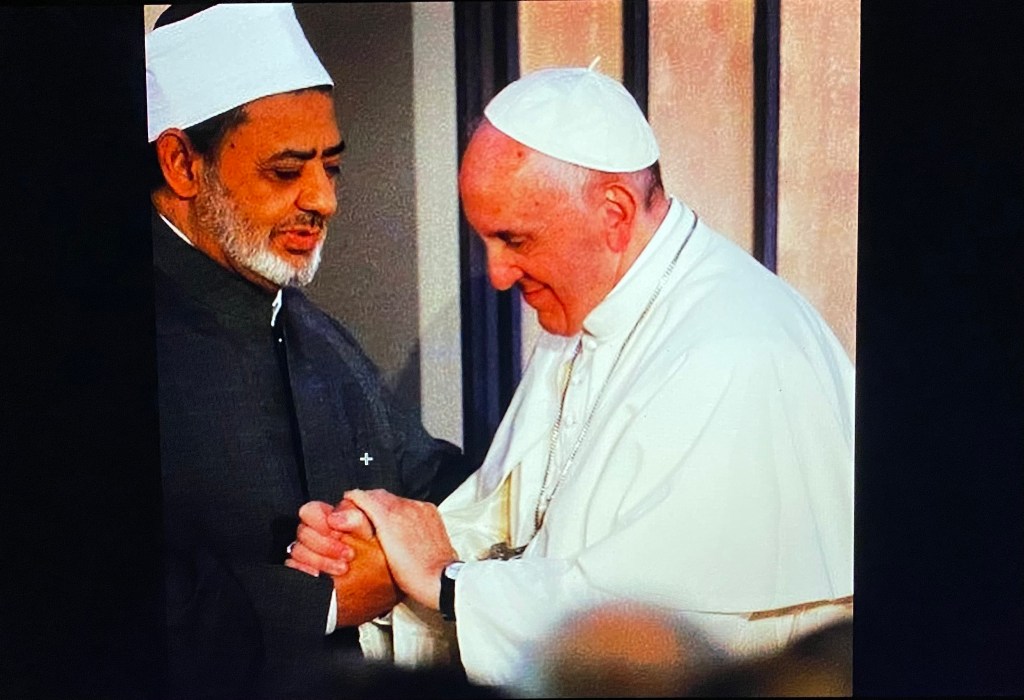
Pope Francis and Grand Imam, Sheikh Ahmad Al-Tayyeb have brought forth the fruit of dialogue and a willingness to engage in mutual brotherhood when they first met at the Vatican in 2016. Since that time they have collaborated to draft the document, “A Document on Human Fraternity for World Peace and Living Together” which they both presented and signed while meeting together in Abu Dhabi on February 4, 2019.
Pope Francis summed up the importance of their collaboration when he said, “Fraternity is the new frontier for humanity. It is the challenge of our century, the challenge of our times. There is no time for indifference. Either we are brothers and sisters or we will destroy each other…. A world without fraternity is a world of enemies.” This ongoing dialogue also helped to inspire the writing of Pope Francis’ encyclical, Fratelli Tutti – on fraternity and social friendship, released in 2020.
We unfortunately are witnessing yet again the opposite of this call for fraternity with the present aggression and atrocities against the people of Ukraine by President Putin’s military forces. May we pray and fast for an end to this and violence in all its forms. May we also embody in our thoughts, words, and actions these words from line 95 of Fratelli Tutti: “Love also impels us towards universal communion. No one can mature or find fulfilment by withdrawing from others. By its very nature, love calls for growth in openness and the ability to accept others as part of a continuing adventure that makes every periphery converge in a greater sense of mutual belonging. As Jesus told us: ‘You are all brothers'” (Mt 23:8).
——————–
Pope Francis and Grand Imam of Al-Ahzar Sheikh Ahmed El-Tayeb sign human fraternity document in Adu Dhabi, February 4, 2019. Photo credit: AFP (L’Agence France-Presse)
Link for the Mass readings for Saturday, March 12, 2022
 Spiritual Stepping Stones