
We will learn if we have the humility to make and learn from our mistakes.
“Get behind me, Satan. You are thinking not as God does, but as human beings do” (Mk 8:33).
Peter received this rebuke from Jesus only moments after he recognized Jesus as the Christ. Acknowledging Jesus as the Anointed One was a significant insight inspired by God, but Peter still saw Jesus from his limited perspective, his preconceived notion of who the Messiah was to be. Peter was not alone in this presumption. For some five hundred years the chosen people were awaiting the promise and coming of the Messiah. The greater majority sought a Messiah in the mold of a new King David. One who politically and militarily would liberate the people from their Roman oppression.
The Messiah would set things right. The Messiah would restore proper order politically as well as spiritually. Many of the Jews were not happy with the alliance that the Sadducees, who held control over the Temple, had with Rome.
Peter got the first part right when he answered the question Jesus asked, “Who do people say that I am” (Mk 8:27), but he saw not the suffering servant of Isaiah 53 but most likely some other view of the Messianic hope of Israel. When Jesus began to build on Peter’s first insight by sharing how he would suffer, be rejected, and killed, Peter probably did not even hear anything about Jesus rising on the third day. He pulled Jesus aside and began to rebuke him!
We can learn from Peter’s boldness and misstep. In both instances, Peter confidently shared what he believed. In the first insight, that Jesus is the Christ, he was on target. In the second, he was off the mark by not understanding the reality of Jesus’ impending suffering and death and was corrected. Peter stated what he believed, sometimes insightful, sometimes shortsighted, yet through each experience, he learned. Sometimes they were hard lessons, such as when he later rejected Jesus three times. Yet Peter kept coming back to Jesus. Peter was not lukewarm and/or indecisive.
Too many times I tend to be more cautious and often indecisive. Being reflective is good, but I could use more of Peter’s boldness. What doesn’t work is being afraid of making mistakes. Jesus shared a key lesson with Peter that we need to fully appreciate, and that is, we need to understand things from God’s perspective instead of our own. Our discernment in this area will only improve, as did Peter’s when we build our relationship with God.
Making mistakes, sinning, and being tripped by our temptations is not so much the problem as much as trying to rationalize or justify them, and staying in a state of self-justification when we become aware of them. We need to face them with contrition, seek forgiveness, and learn from them if we are to mature in our relationship with God. The good news is that we are not alone. Jesus walks with us each step of the way. Will he convict us and rebuke us as he did with Peter? Absolutely, because he loves us and seeks the best for us, but he will also provide the support and empowerment we need to get the most effective balance of boldness and humility.
——————————————————————-
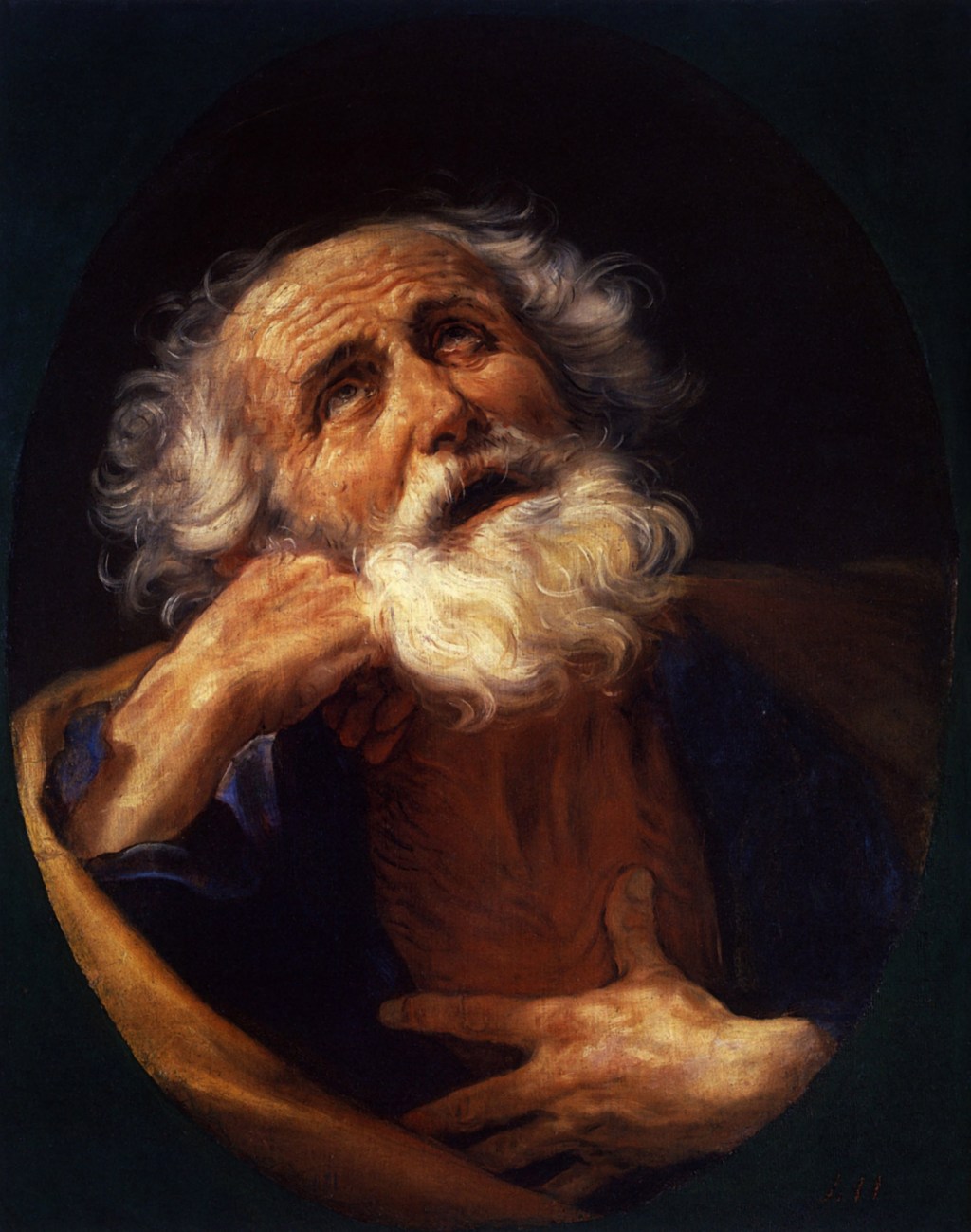
Painting: St Peter – Guido Reni, 1634
Link for the Mass readings for Thursday, February 17, 2022
Jesus has a wonderful plan for each of us if we are willing to trust and follow his lead.
In today’s Gospel from Mark, Jesus healed a blind man. Like the healing of the deaf man (cf. Mk 7:31-37), Jesus again used his own saliva in the healing process showing the intimacy and closeness of each encounter. The difference this time is that this man does not receive a full and complete healing the first time. Jesus laid hands on the man’s eyes a second time and he saw clearly; his sight was restored and he could see everything distinctly (Mk 8:25).
Often with Jesus, there are instant healings, as well as healing without touch. What might be happening here? Maybe it is because Jesus meets each person where they are at. He invites us into the process of healing and each person has a different response, even to the point of saying no to the invitation to heal. Remember how Jesus was only able to heal a few people while in his own home town of Nazareth?
We are also invited to read the Bible as a whole and these two miraculous healings of the deaf and blind men more deeply than just the literal physical healings. Each of us suffers from both spiritual deafness and blindness to some degree. We come to hear and see God’s will for us gradually. As I shared a few days ago if we knew God’s intention for us early on, we might be crushed with the weight of our own doubt! If someone had told me when I was in high school that I would be a teacher or that I would preach to a whole church assembly in English and in Spanish, I would have quietly retreated to the stand of white birch trees across from the old oak tree in the field behind my parent’s house until that idea passed.
Yet, Jesus met me on my level. Sometime around my junior year of high school, he invited me through an interim pastor to teach Sunday school to a class of three. About a year later I gave a children’s sermon to the youth and the small congregation. The summer after my freshman year of college, I began to work second shift as a certified nurse’s aide and during my sophomore year of college, after following the urge to take a search in education course, I switched my major from psychology to elementary education. After graduation, my first teaching position was not in the four walls of a classroom, but the six hundred eighty acre sanctuary of the Sharon Audubon Center as an environmental education specialist.
I began to interact with people, Jesus drew me out of my own self-centered posture, and I began to grow and mature. I would eventually enter the classroom when we moved to Florida in 1997 to teach, first in public school and then through JoAnn’s guidance, I applied for a substitute position at Rosarian Academy in WPB. I not only got the position but would also spend the next eight years teaching middle school religion, then entering the formation program to become ordained a deacon, and for the past eight years teaching at Cardinal Newman HS.
Each of these experiences of saying yes to Jesus was my willingness to trust his lead and to be coaxed out of my shell. Certainly, with the loss of JoAnn, I have been challenged again these past two years and five months, and yet, Jesus has continued to lead me as he has consistently done. I trust that he will do the same for each of you. We just need to have our eyes and ears open for his healing touch and his gentle guidance. He is not done with any of us yet! Stay tuned…
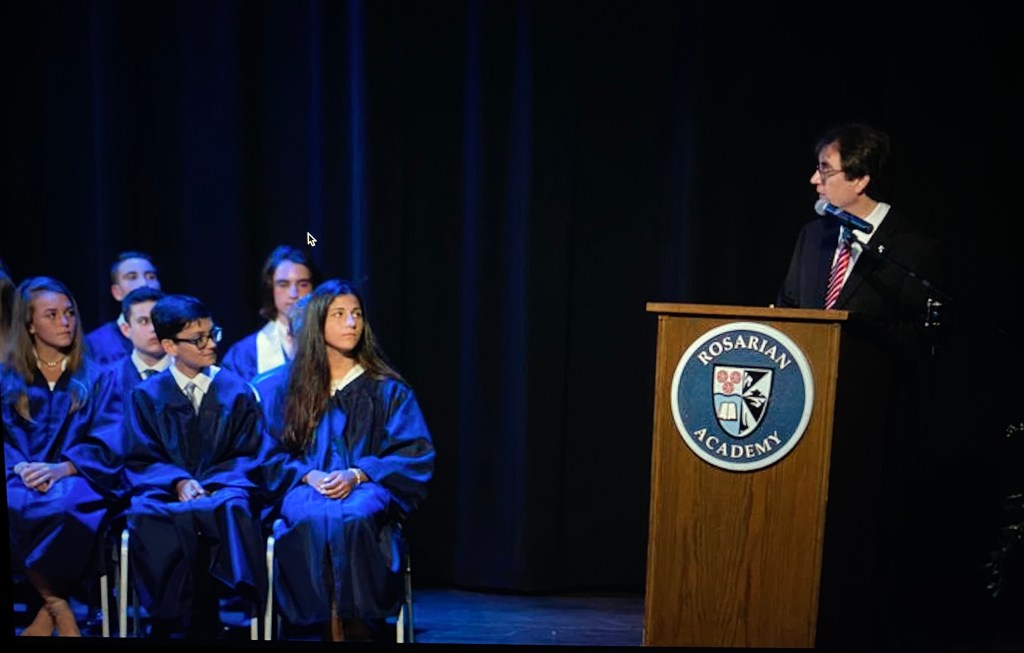
Photo: Returning to Rosarian Academy to share the commencement address a few years ago.
Link for the Mass readings for Wednesday, February 16, 2022

Each day is a new beginning, a new invitation for healing and reconciliation.
Today’s account from the Gospel of Mark is a continuation of what we read yesterday when Jesus convicted the Pharisees for demanding a sign. He recognized their hardness of heart and hypocrisy and with the opportunity of being together in the boat, Jesus seized on this encounter as a teachable moment. He wanted to warn those of his inner circle to be aware not to follow the same path of corruption when he enjoined them: “Watch out, guard against the leaven of the Pharisees and the leaven of Herod” (Mk 8:15).
The disciples missed the point as they focused on the literal reality that they only had one loaf of bread among them. Jesus was warning his followers about the danger of pride, seeking honor, power, and fame which had lead many of the Pharisees and Herod astray. To be his followers, striving to place themselves first would be not only the undoing of each of them but also this posture would undermine those they would be charged to care for.
Unfortunately, too many have not heeded this lesson that Jesus offered in today’s Gospel to his disciples regarding being aware of the corrupting leaven of many of the Pharisees and Herod. Just as the effects of original sin has wounded humanity, so it has also affected those in the Church. Throughout the ages, clergy and laity alike have succumbed to the temptations of placing our needs and focus on ourselves instead of God and who he calls us to serve.
Yet throughout the worst of corruption and abuse, the Church is still here. God continues to work through many who have and continue to be faithful to his invitation and follow his will in simple ways, living lives of quiet service. It is unfortunate that there are those who leave because they see the presence of hypocrisy, injustice, abuse, and corruption. Those who have the eyes to see and ears to hear what needs to be corrected are the very ones who need to stay to fight for the truth and healing that the Holy Spirit offers the wounded Body of Christ.
The Church is in need of healing and so are we. We are all interconnected. As one suffers, we all do. We all need to be aware of the sinful leaven that seeks to undo each of us. It is easy to point fingers but we will be on surer footing to bring about transformation and healing when we come to Jesus, spend some time with him in quiet, and be willing to be still long enough that he may reveal to us our sins. Not just the low hanging fruit but all the way down to the roots of our deepest pain, wounds, and traumas that feed the fruits of our sin. If don’t cut up the root, we will fall for the same temptations time and time again.
We do not embark on this journey alone. Through the Sacrament of Reconciliation, counseling as needed, conversations with trusted family and friends, we begin to dig up and cut away these deeply embedded roots. As we continue to trust God, with each faithful step, we will experience the healing balm of our loving Father’s tender care, his Son’s understanding and accompaniment, and warm touch of the love of the Holy Spirit that reaches into the depths of the wounds of our souls. This is how we can better allow God’s healing to work through us to provide healing for others so as to bring much needed healing to the wounded Body of Christ.
——————————————————
Photo: from Pixels-Pixabay
Link for the Mass readings for Tuesday, February 15, 2022
Are our hearts closed or open to the invitation of Jesus?
“Give me a sign!”
Often, when we ask for a sign, we have a preconceived notion of what we are seeking and we want God’s stamp of approval on it. The impetus is coming from us, seeking to bend the will of God to our will. More often this approach will end in frustration. The Pharisees in today’s account are asking for a sign. Jesus has already been preaching with authority, healing, casting out unclean spirits and demons, encountering the unclean and restoring them to the community and right worship, and this is not enough?
We can understand how: He sighed from the depth of his spirit and said, “Why does this generation seek a sign? Amen, I say to you, no sign will be given to this generation” (Mk 8:12). The majority of the Pharisee’s minds were set. Jesus knew there was nothing he could say or do to prove to them he was who he said he was; the kingdom of God at hand. If they had not the eyes to see and the ears to hear there was no argument, point, or sign that would have changed their minds. Jesus sighed from the depths of his spirit because their hearts were hardened such that they closed themselves off from the gift of the grace he sought to share. So he then got into the boat to go to the other shore, to share his message with others: “This is the time of fulfillment. The kingdom of heaven is at hand. Repent and believe in the gospel” (Mk 1:15).
The question for us today is, do we believe, do we really believe, that Jesus is who he says he is; do we believe that Jesus is “the way, the truth, and the life” (Jn 14:6)? Do we seek to bend God’s will to our own will or seek to align our will with his? The woman with the hemorrhage for twelve years, the woman whose daughter was possessed, the friends with the man with the withered hand, and the leper, did not ask for a sign, they asked for a healing. They trusted, believed, and risked getting closer to Jesus so as to encounter him despite the barriers in place to prevent them. In each of these cases, Jesus recognized their faith and each received the healing they sought.
In our discernment, we need to be aware of our intent. There is a subtle distinction, but it is important. Are we seeking proof, a sign, or are we placing ourselves in a posture of believing and seeking to understand God’s will, as Mary did when she asked, “How can this be” (Lk 1:34)? Are we demanding proof, a three-point plan from God before we follow his lead, or do we trust his invitation, and seek to understand how he wants us to act, knowing that he will reveal what we need to do each step of the way? Often times, if we knew the end result and full ramifications of his original request, our doubt would crush our spirit before we even started.
Let us embrace a posture of faith seeking understanding today, trust in Jesus, and seek to align our will with God our Father. May we make time to be still and enter a place of prayer and to open our hearts and minds to the leading of the Holy Spirit. May we with confidence, say in the words of Mary, “May it be done to me according to your word” (Lk 1:38), then arise to grasp the hand of her Son, Jesus, and face head-on that which is before us, to accomplish what he calls us to do, knowing that with Jesus, we can overcome any obstacle that is placed before us.
————————————————————————————–
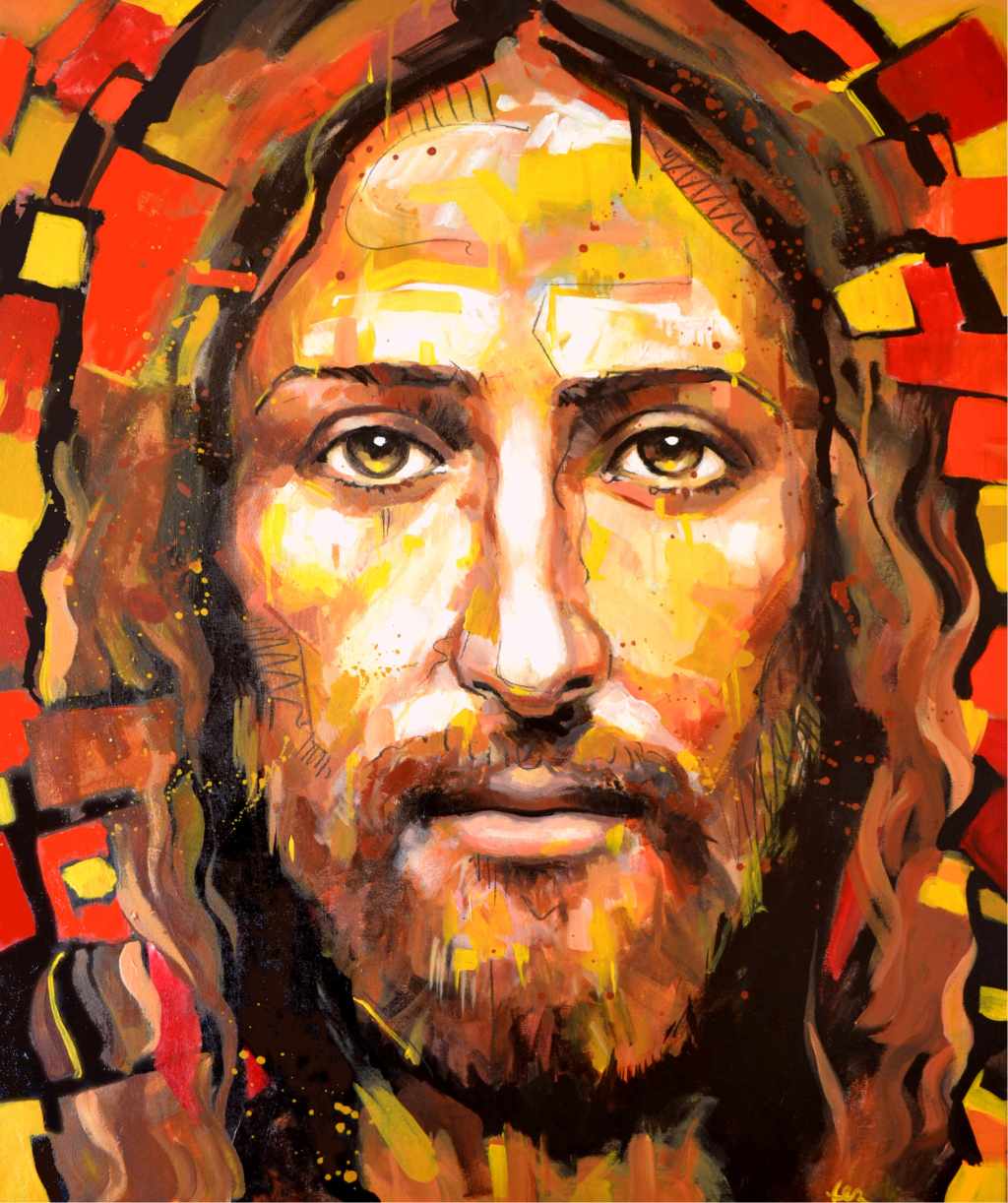
Photo: Fertoledo – “Rostro de Christo” Face of Christ – from cathopic.com
Link for the Mass readings for Monday, February 14, 2022
The love of God fulfills us and will never run out.
In today’s Gospel, Luke records Jesus sharing his sermon on the plain. Jesus is making a distinction: “Blessed are you who are now hungry, for you will be satisfied” and “Woe to you who are filled now, for you will be hungry.” Jesus is addressing that which truly satisfies and fulfills us as human beings.
Each of us ultimately want to be happy. If we follow the trail of any thought we entertain, decision or action we make, and that which we are willing to allow or bring into our presence, we can see at its root in each instance our seeking happiness. The challenge is to discern and determine which are apparent goods and which are true goods. What will truly fulfill us not just in the moment, but will satisfy us for the long term, and in Jesus’ presentation, what will satisfy us for eternity.
If we are full such that our hunger is satisfied, we have little if any desire to seek to satisfy our hunger. If we are constantly satisfying our hunger with those foods, activities and expending of our time in apparent goods, we may not be aware that we are filling ourselves with those things that are not truly satisfying, and when we hunger again, we try to keep filling ourselves with those things. We can eat a whole bag of potato chips, a half gallon of your favorite ice cream, a whole pizza, and find satisfaction in the moment, be full for the moment, but in constantly filling ourselves with such as these, over time our health will suffer, “Woe to you who are filled now, for you will be hungry.”
We can apply this to anything, our entertainment, occupation, how we spend our time, who we spend our time with, what we do with our time. At some point, we become aware that we are filling ourselves up with that which is not fulfilling, that which will continue to leave us empty, because nothing in the material or finite realm will satisfy. We have been created for something more, to be in relationship with God and one another.
The good news is that all of us are hungry for God. Are we are aware that is who we are hungry for? Many times I am thirsty, but go to get something to eat instead. The food does not satisfy because I have discerned poorly that which I truly needed, which was water. We need to resist the temptations of material and finite allurements which may be good in and of themselves, but not so if we place them as foundational to our happiness and fulfillment.
To find true fulfillment, we need to acknowledge our hunger for God, we need to trust in Jesus our Lord, and follow the promptings of the Holy Spirit. When we do so we will be, “like a tree planted beside the waters that stretches out its roots to the stream: it fears not the heat when it comes; its leaves stay green; in the year of drought it shows no distress, but still bears fruit” (Jeremiah 17:8).
Jesus is the wellspring that never dries up, and is the living eternal source that fulfills us. JoAnn and I spent a few years even before knowing that she was sick sorting through many of the material items that had been taking up space for years. We were able to let go of those material things, that at one time provided enjoyment, but had just been taking up space. Letting go and emptying is a good practice that helps us to be open to see what we are truly hungry for, which is God’s love. When we open out heart to receive the love of the Holy Spirit, we will be blessed because we can continue to draw from this eternal source of love through the joyful as well as the challenging times.
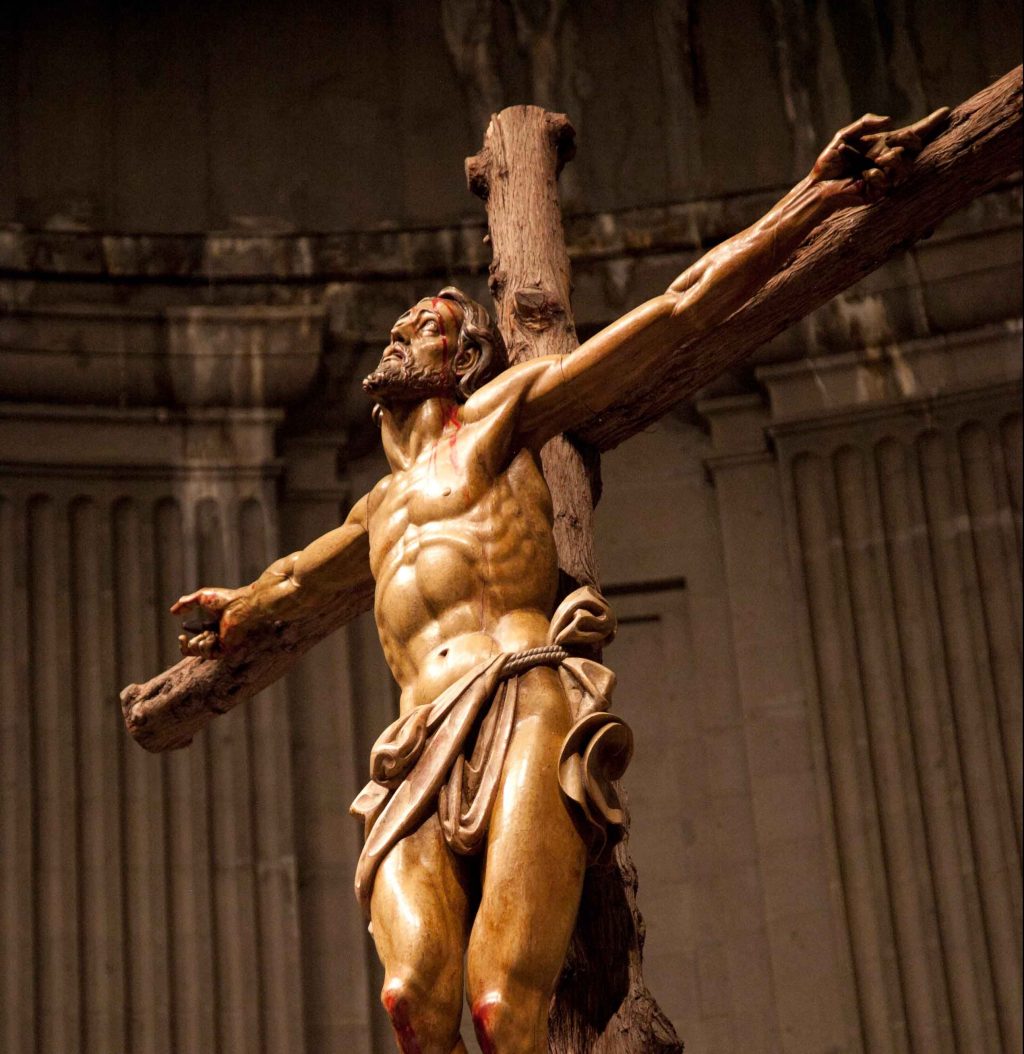
Photo by Matías Medina, Catholic.com. There is no greater love than these arms held open to receive us time and time again!
Link to the Gospel readings for Sunday, February 13, 2022
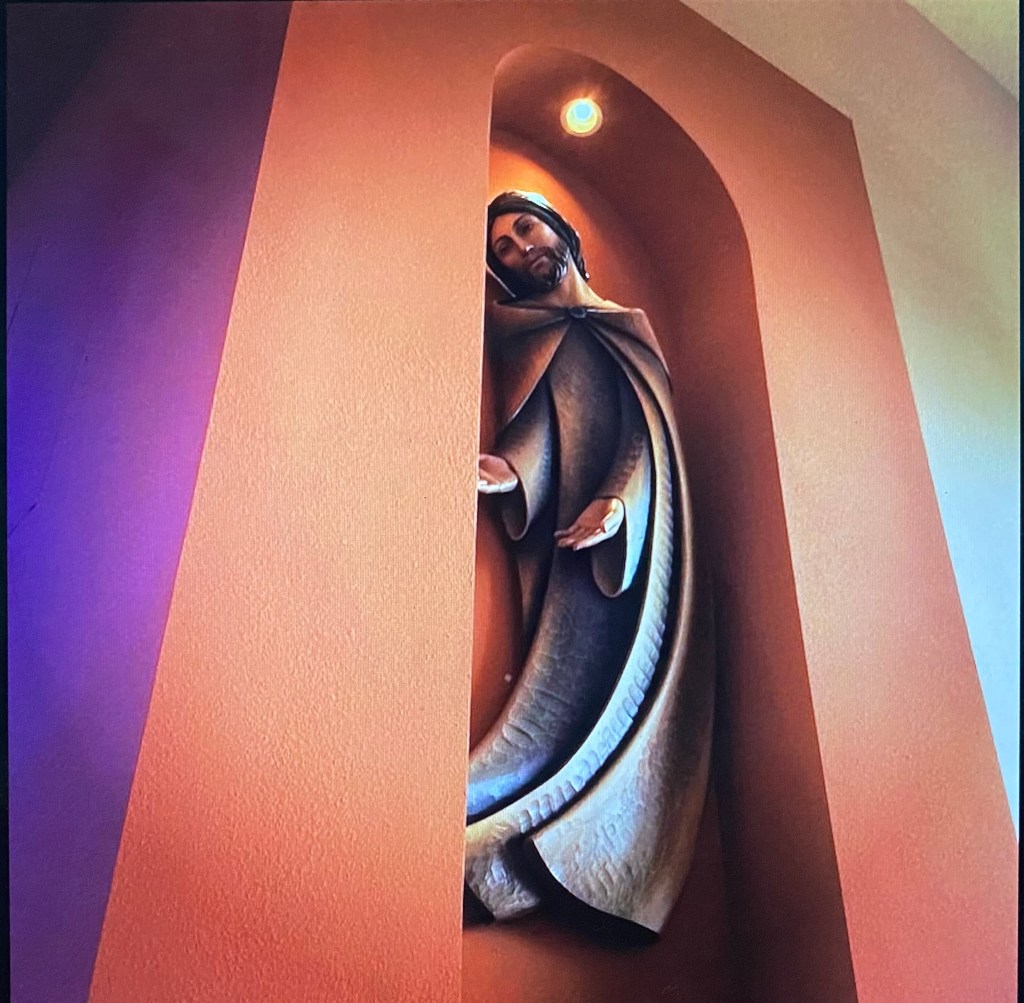
When Jesus asks, are we willing to give, no matter how small?
As Christians we are called to be disciples of Jesus, to learn his teachings, and follow his ways. We are also called to be apostles in that we are to go out, proclaim and share that he is who he said he is, and how he has affected our lives. Often when we are reminded of this message though, we may feel inadequate. We may question what it is that we can possibly offer in an effort to help build the kingdom of God. We may feel we have nothing to share, nothing to give, nothing to say, or that what the Lord asks of us, we do not know how to accomplish.
The disciples express similar feelings today for the latter point. Jesus shows concern for the thousands who had just listened to him for three days and are readying to depart. He is concerned that they are hungry and that some may collapse on their way home. The disciples look about bewildered as to how they could possibly feed the vast crowd. Then Jesus asked, “How many loaves do you have” (Mk 8:5)? They responded that they had seven loaves and two fish. Jesus would go on to feed, not only the whole multitude gathered, but when all ate their fill, seven baskets of bread fragments were left over.
We may not know how to take active steps to live our faith out in our daily lives, we may not even be aware of how to begin. On the other hand, we may have actually been engaged in service, in our vocation, but have started to coast, gotten complacent, and need to continue to strive to mature as a disciples and apostles.
Each day is a new opportunity to begin again, and a good way is to place ourselves in the presence of Jesus. If we have trouble visualizing him, we can look at a statue we may have, a picture, or an icon. Then take some deep breaths, meditate on our present life condition, and assess where there is a need in our own life as well as those of others. Once we are able to identify a concern, let us have ears to hear Jesus ask us, “What do you have, what can you offer?”
You may not have an immediate answer. Stay with the question for a period of time, take it with you throughout the day or days. Resist looking for the big, grandiose response. Ask yourself what you can offer no matter how small. What you give to Jesus in service and participation with him, he can multiply and bring about amazing results. The disciples only gave him seven loaves and two fish, what seemed insignificant to feed the thousands, and yet, Jesus multiplied the meager amount to feed all present with seven baskets left over. Jesus provides, Jesus works through us.
The question we need to answer is not are we worthy because we are not. The question we need to answer is, “Are we willing?”
Photo: Statue of Jesus in the Chapel of St Anthony at St Thomas University, Miami Gardens, FL
Link for the Mass readings for Saturday, February 12, 2022
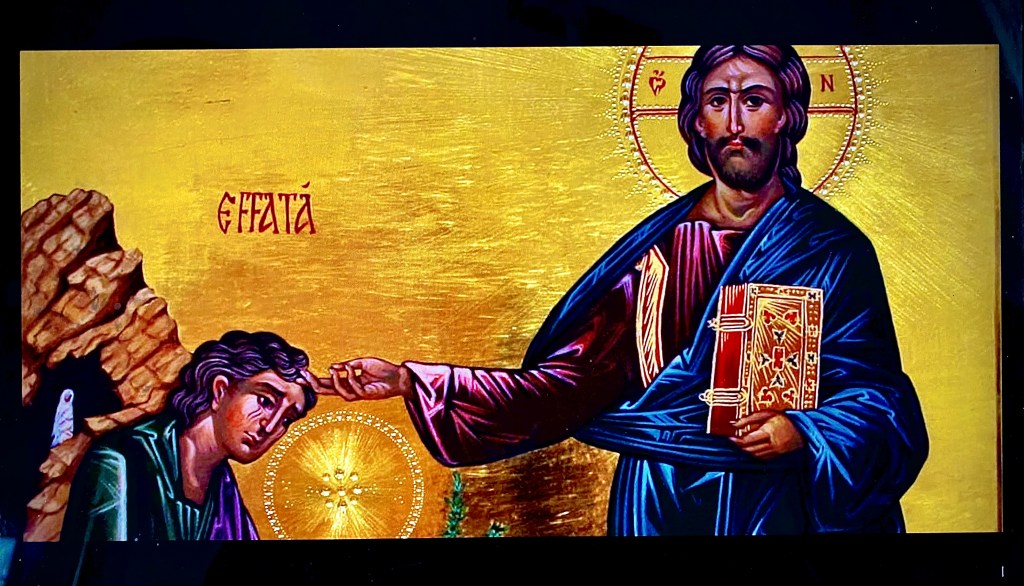
Ephphetha! May our ears and mouths be open to hear and speak God’s word!
Those who witnessed Jesus healing the man who was deaf with a speech impediment grasped something more than just the healing when they stated: “He has done all things well. He makes the deaf hear and the mute speak” (Mk 7:37). With these words, they were acknowledging the deliverance of Israel by the Lord, promised by the prophet Isaiah, when he mentioned how, “the eyes of the blind will be opened, the ears of the deaf will be cleared” (Isaiah 35:5).
The beauty of this healing may be missed by us in the modern age because of the graphic nature of the details used by Mark. Jesus places his fingers in the man’s ears, spits into his own hands, and then touches the man’s tongue. Jesus is mixing his own saliva with this man in need of healing. We don’t even share drinks from the same bottle anymore as we used to do when we were kids! Adding the fact that we are still in the midst of a pandemic, this imagery can seem incomprehensible!
Yet, what Jesus is showing is the intimacy of communion that he offers us. He gave the very essence of his own being that it would be mingled with this man. This physical teaching is an image or icon, of how the Son of God, in no way diminishing the fullness of his divinity, entered into the very real corporality of our humanity. He became one with us so that we can become one with him. This was true then and it is still true for us today!
We all suffer physical, emotional, psychological, and spiritual trials. But we also suffer from not being able to hear God’s word, and so are mute in speaking his word. Jesus, even if he does not provide a healing or an immediate solution to a trial, is present in our lives. We are invited to consciously resist the temptation of avoiding our own suffering, pain, or challenges and instead are invited to embrace and enter into them. We are not expected to do this alone, but to bring our need for healing to Jesus. In this way, we are aligning our suffering with his on the Cross. When we choose to offer up our pain and suffering on behalf of another, we participate in redemptive suffering. Others can experience relief and healing from our sacrifice in participation with Jesus.
This act of the will gives meaning to our suffering such that we do not endure what we are going through in vain. In this way, we face, head-on, that which rises before us, actualizing the guidance of Jesus as well as the advances of modern medicine, science, and psychology, embracing a posture that engages both faith and reason. Our approach will be best if we are more mindful and balanced with our discernment. Just masking struggles without dealing with the root causes will only prolong and possibly worsen the condition. I have experienced the benefits of both faith and science during my year of recovery from pneumonia.
Jesus seeks to heal us as he did the man in today’s Gospel of Mark by saying: “Ephphatha!” to us as well, so that we too can hear his word, speak his word, and be more present to and love one another. Jesus also wants to heal others through us. With ears more open to the voice of God, we become more aware of the needs of others. The best gift of healing we can offer to one another is to be present and really listen to and hear them, such that they have experienced being heard and loved.
——————————————————————————————-
Picture: Icon of Jesus healing the man deaf and mute – Artist unknown.
Link for the Mass reading for Friday, February 11, 2022
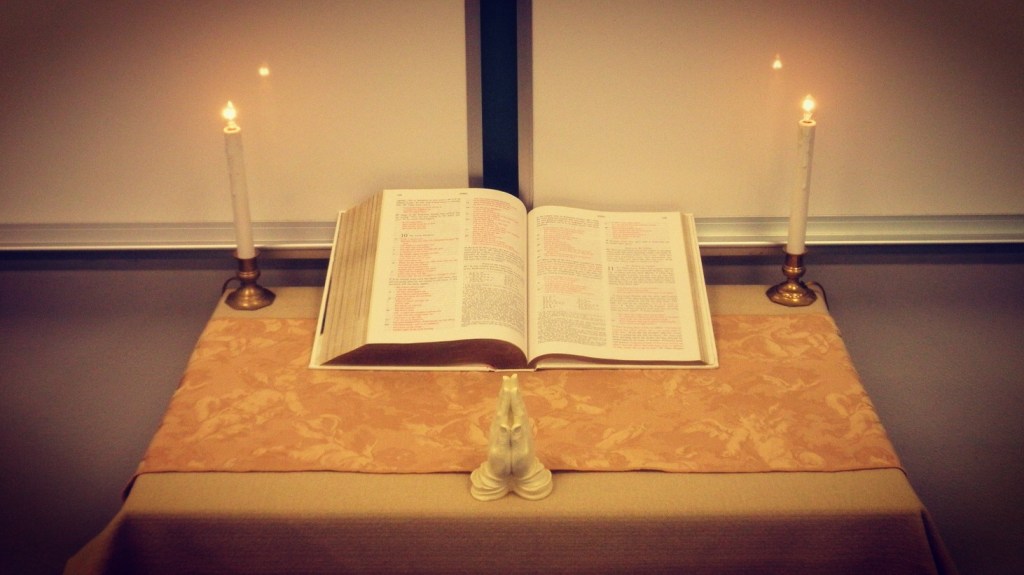
Do we believe that Jesus still heals today?
In today’s encounter between Jesus and the Syrophoenician woman, we can observe again the crossing of societal norms by both the woman and Jesus. The woman, very much like the woman who had been hemorrhaging for twelve years, was desperate and approached Jesus. She was willing to risk breaking the social taboo of speaking with Jesus and just walking into the home where Jesus was staying for the sole purpose that her daughter would be healed.
Jesus meets her with the derogatory language of equating her with a dog, considered one of the most unclean of animals by Jews: “Let the children be fed first. For it is not right to take the food of the children and throw it to the dogs” (Mk 7:27). This woman would have none of Jesus’ rebuke, she wasn’t leaving without receiving healing for her daughter, even if that meant she was putting her life in danger. Her retort, “Lord, even the dogs under the table eat the children’s scraps”, emphasized this point. It was also the key that opened the door for the disciples and us to witness a consistent pattern with Jesus.
Both the woman with the hemorrhage (cf. Mk 5:25-34) and the Syrophoenician woman from today’s account had the faith and courage to approach Jesus. The outcome of this encounter was also similar to one Jesus had with another gentile, the Roman centurion, who said that he was not worthy for Jesus to enter under his roof. In both accounts, Jesus healed solely by his word from afar. What is important to Jesus is the person’s faith and belief that Jesus was who he said he was!
Do we have the courage, faith, and belief in Jesus as shown by each of these three people seeking out Jesus? Are we willing to take the risk of crossing our own societal norms to draw closer to Jesus? When we let nothing hinder our stride closer to Jesus, including relinquishing the reigns of being our own masters, acknowledging that God is God and we are not, believing that Jesus is truly the Son of God and that he is still present and active in our lives, miracles still do happen! Jesus said that if we have faith but the size of the mustard seed, we can move mountains (cf. Mt 17:20).
If you or someone close to you are dealing with some conflicts, challenges, trials, or tribulations; if something, someone, or your own fear or anxiety is keeping you from making a deeper commitment to surrendering your life to Jesus; if there are opposing forces that feel as big as mountains; be not afraid and trust in Jesus. Just come as you are to Jesus, lay your burdens at his feet, and take his hand. With Jesus all things are possible. We just need the courage to believe that our Lord is present with us especially in the midst of our trials. Jesus has not left us as orphans. Jesus is who he says he was then and continues to be today. Jesus the Christ, the Son of God our Savior and Redeemer, is present, is the kingdom of God at hand, and will see us through our trials, step by faithful step.
Photo: Focal point at the front of my classroom at Cardinal Newman a few years back. May the light of the Gospel guide us each day!
Link for the Mass reading for Thursday, February 10, 2022
 Spiritual Stepping Stones