Reflections on the Gospel Reading for the Day

The Shepherd calls, will we follow?
“At the sight of the crowds, his heart was moved with pity for them because they were troubled and abandoned, like sheep without a shepherd” (Mt 9:36).
There is much that pulls at us for our time and attention. Jesus witnessed the anxieties, struggles, pain, and feelings of being lost regarding those in his midst. Are we so different today? Jesus knows the Father, he knows the joy and fulfillment of what being in a full relationship with him entails. Jesus saw then and sees in us now how lost we are, how easily distracted and diverted we are, how many things we put before our relationship with God, and he “is moved with pity.”
Jesus’ heart goes out to us, he yearns to be one with us, he loves us, but in that very act of love, he risks. He loves us so much, that he is willing to let us choose ourselves, others, or a myriad of other pursuits over him. Jesus invites us to the joyful experience of developing a relationship with him so we can come to know his Father, while at the same time he does not impose himself on us. We are given the whole world to choose from or we can choose him. Who do we put first? Is God a priority in our life? If we find that God is at best an after-thought, or at worst a no thought, instead of getting to know God better, what is it that we are choosing over him?
Jesus invites us, but too often we miss, ignore, or do not follow through on his invitation. Too often we choose other pleasures, distractions, diversions, temptations, and/or apparent goods. With time and experience, we may come to see the emptiness of the lure of these worldly promises, as well as see that our attachments to these often lead to many of our troubles, trials, stresses, and anxieties. We may also get in touch with our feelings of unfulfillment, abandonment, and being alone, because there is only one answer to our innermost longing, and that is God.
I am not advocating for a rejection of the material world. All that God has created is good. We are human beings and a part of God’s glorious creation. Nor do I believe that we are souls trapped in this body waiting to be released upon our death. As human beings, we are a unique unity of body and soul. The key to our fulfillment is choosing to put God first and then we can better discern that which needs to fall away or how to reorder that which will stay so they are in their proper place and purpose.
Fr. Thomas Dubay writes that the “one who seeks delight in God alone finds peace and joy no matter what happens” (Dubay 1989, 154). Today might be a good day to take a moment to be still and evaluate where we are in our lives and to ponder whose we are. Jesus offers to lead us, just as he has led his disciples through the ages. Those of every age have experienced trials and tribulations and found the promises of this world fleeting. What made the difference for the saints was that they said yes to the call of the Shepherd. How will we answer the Shepherd’s invitation today?
Photo: by Kat Jayne from Pexels
Dubay, S.M., Thomas. Fire Within: St. Teresa of Avila, St. John of the Cross, and the Gospel on Prayer. San Francisco: Ignatius Press, 1989.
Link for the Mass readings for Tuesday, July 5, 2022
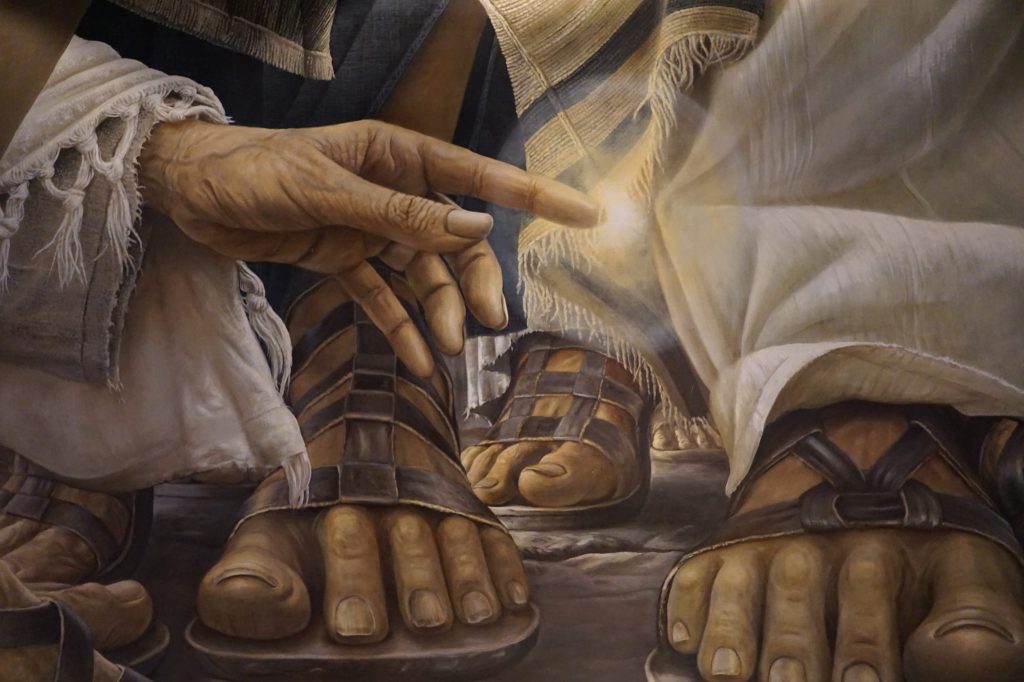
“If only I can touch his cloak, I shall be cured.”
Today’s reading is one of my favorite Gospel accounts. This is a miracle story within a miracle story. The account begins with an official requesting that Jesus come to bring back to life his daughter who has died. Jesus “rose and followed him”, and while on the way, a woman comes and touches the tassel of Jesus’ cloak, is healed, and the story continues on to describe how Jesus brings the daughter of the official back to life and there is no more mention of the woman.
What stands out for me is not the raising of the officials daughter, but the healing of the woman. Her whole life is changed by her encounter with Jesus. She had been suffering with her condition and seeking help but received none for twelve years. And for that whole time, she was also considered ritually unclean because of her ongoing hemorrhaging. She must have also been very weak resulting from the continual blood loss and to many she was considered all but dead.
This woman must have been on the verge of losing all hope, when Jesus drew close. She was quite aware that to approach a male in public was forbidden and what was even worse, because of her condition, she was not allowed to come close or to touch anyone. Yet, she moved forward. She must have experienced such anxiety and fear arise with each step. If she was caught she could be ridiculed, admonished, or even stoned to death, or worse, nothing about her condition would change. Step by faithful step, she drew closer to Jesus and reached out to touch the tassel of his cloak.
She could have slipped away, just as she came. Yet, “Jesus turned around and saw her, and said, ‘Courage, daughter! Your faith has saved you.’ And from that hour the woman was cured” (Mt9:22). Jesus felt the healing power go out from him to the woman and instead of admonishing or correcting, he acknowledged the courage and faith she displayed. Because she was willing to come close despite all the inner and outer turmoil that whirled around her to the contrary, this woman who was all but the walking dead was given new life!
This woman’s encounter with Jesus is a wonderful one for us to meditate upon. She did not stop seeking a way for healing. She persisted, and when the moment came, she moved forward to come close to Jesus. May we too, no matter what we face have the courage of this woman to reach out to Jesus for his healing power and strength.
True freedom comes when we trust in Jesus’ daily invitation to say yes to his Father and no matter what anxieties, fears, doubts, challenges, trials, or tribulations swirl about us, be as persistent and as courageous as this woman and trust in Jesus so as to be healed and empowered by the love of the Holy Spirit to live our life to the full, today and all days!!!
Happy Fourth of July everyone. My prayers are with you.
Photo: Accessed from usml.edu
Mass readings for Monday, July 4, 2022
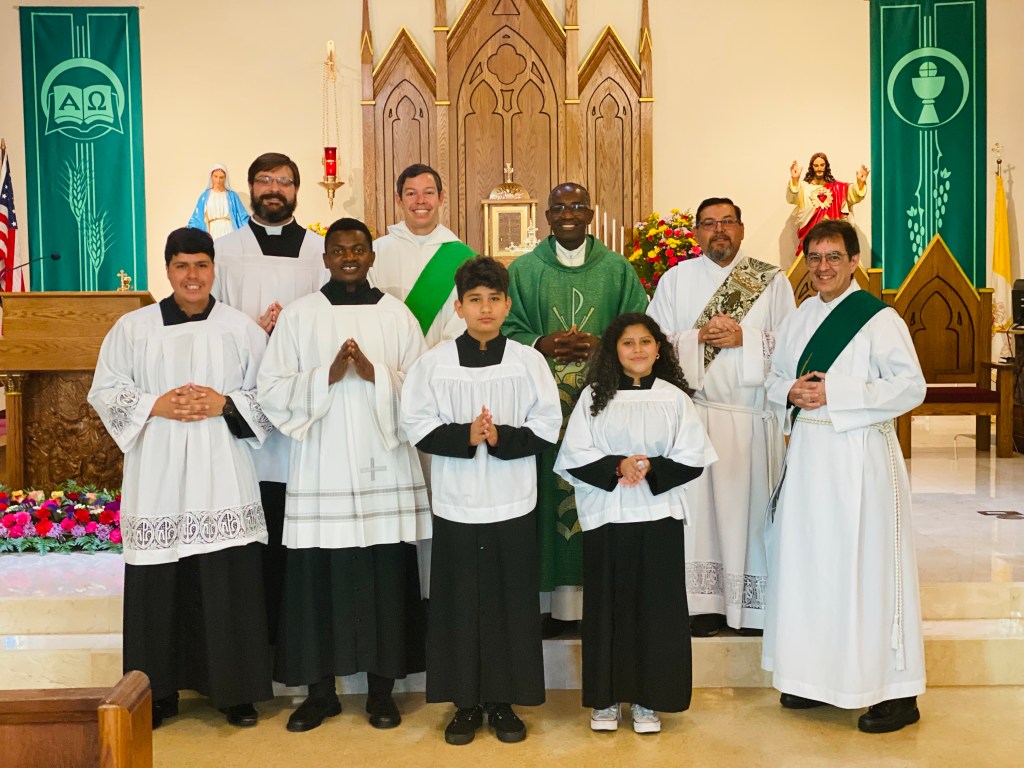
“Every baptized man and woman is a mission.” – Pope Francis
“At that time the Lord appointed seventy-two others whom he sent ahead of him in pairs to every town and place he intended to visit” (Lk 10:1). Jesus did not stop with this action, he continued and continues to call people to himself and sends them on mission to proclaim the same words: “The kingdom of God is at hand for you” (Lk 10:9).
To be a disciple of Jesus is to be both about maintaining the Church he instituted and going out on mission. This is why at the end of each Mass the deacon or priest in the absence of a deacon will say, “Go and proclaim the Gospel of the Lord” or three other formulas of being sent to be missionaries in our communities. This is not a call for clergy and religious only but for all of the baptized.
Pope Francis continues to ask us to renew our commitment to our missionary awareness. “This missionary mandate touches us personally: I am a mission, always; you are a mission, always; every baptized man and woman is a mission. People in love never stand still: they are drawn out of themselves; they are attracted and attract others in turn; they give themselves to others and build relationships that are life-giving. As far as God’s love is concerned, no one is useless or insignificant. Each of us is a mission to the world, for each of us is the fruit of God’s love.”
There is much here in the Pope’s words to meditate upon and put into action. We are not just to go out and do missionary work, to evangelize and share the Gospel, we are to embody mission. We “are a mission.” At the moment of our conception we exist as a unique individual already distinct from our parents. We are endowed with dignity and worth just by the fact that we exist.
A foundational part of the Good News is to continue to embrace the wonder and dignity of all life, to allow ourselves to be loved by our Creator again, to embrace the free gift of his love, and to go out on fire with and express the joy and love of being fully alive. We are to give ourselves to others through our willingness to encounter, accompany, and serve one another in love with the purpose of building “relationships that are life-giving.”
As seminarians of the Diocese of Palm Beach, we have been able to experience a taste of today’s Gospel. The eight of us have been sent out together and apart to different parts of the diocese to experience and serve. We have visited and experienced our northern diocese through the parishes of St. Helen, St. Sebastian, Our Lady of Guadalupe Mission, the pastoral center of Juan Diego, St. Lucie, and Sacred Heart. This past week we went south and west to stay at St. Philip Benizi in Belle Glade and visited St. Mary in Pahokee.
We prayed together, served at Masses, summer camps, parish social gatherings, Eucharistic adoration, retreats, youth groups, and assisted in particular needs of the parishes. It has been awesome to experience how God is working through the priests, deacons, religious, and parishioners of our diocese.
When we are touched by the wonder and love of God, respect the dignity of life from conception, through all stages of life, until natural death, we come to recognize that “no one is useless or insignificant.” Each and EVERYONE of us are a unique gift to the world that has never been nor will ever be again. Jesus has called us to himself with the purpose to send us out on mission. The time to be, to live, to love is now, for: “The kingdom of God is at hand” (Lk 10:9). Let us go forth this day as missionary people, as contemplatives in action, in peace, to glorify the Lord by our life.
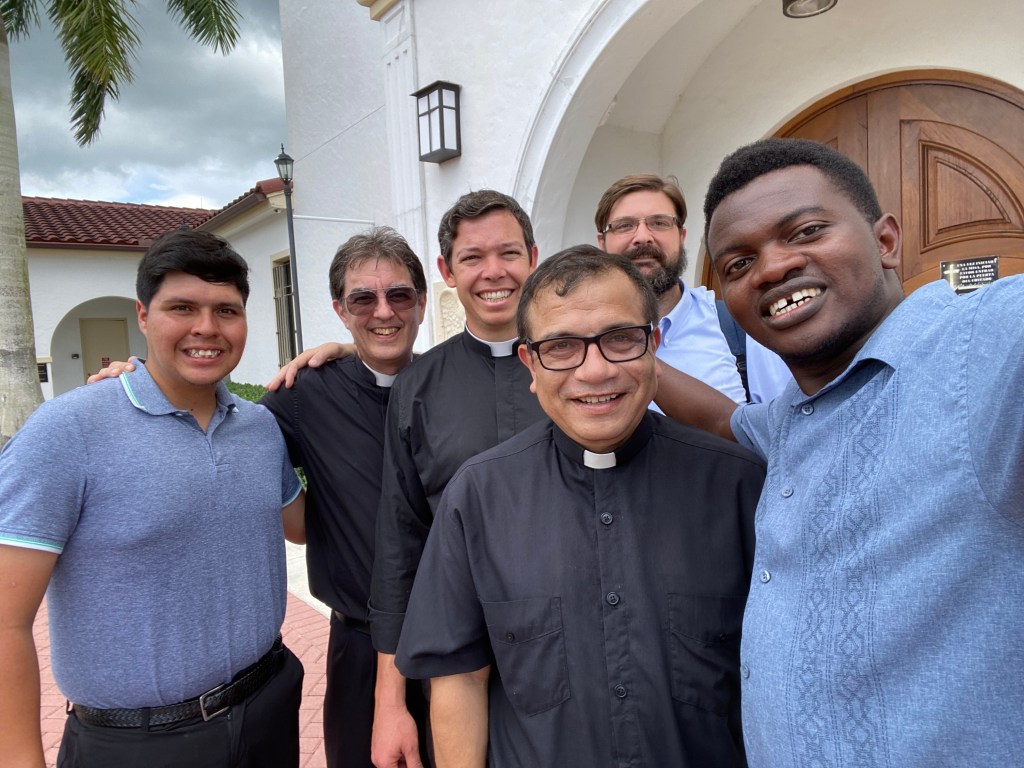
Photo: We were blessed to spend the week assisting in the mission of Fr. Norbert at St. Philip Benizi in Belle Glade this past week.
Pope Francis: Message of His Holiness Francis For World Mission Day 2019:
Link for the Mass readings for Sunday, July 3, 2022
Are we willing to receive new wine?
“Rather, they pour new wine into fresh wineskins, and both are preserved” (Mt 9:17).
Mark, Matthew, and Luke all record the reference of pouring new wine into fresh wineskins. What Matthew adds is, “and both are preserved.” Luke adds: “[And] no one who has been drinking old wine desires new, for he says, ‘The old is good.’”
The Gospel authors are reflecting on the tensions of those who would reject Jesus and those who would follow him and his new way. The new wine is to accept the Gospel, the Good News of the kingdom of God in their midst, and to do so means to change one’s mind and heart. “The tension, and often incompatibility, between the old and the new is part of every religious tradition and attends every change within that tradition. Matthew and Luke wrestled with it and adapted it to their community situation. Contemporary Christians have no less a challenge” (The Gospel of Mark, Donahue, SJ, p. 109). Matthew shared with his community that Jesus is the new Temple, the old had been destroyed in 70 AD. Following him in fact meant that both the old and new covenants would be preserved. Jesus did not come to abolish the law and prophets, but raises what went before him to a higher level.
We are invited to wrestle as well. The Church is called to change, to be transformed by the Living God. Many say the Church needs to change this and that, not realizing that we are the Church, the People of God, the Body of Christ. If the Church is to mature and grow each of us is to embrace offer of the transformation love of God, being made anew through the guiding presence of the Holy Spirit. This invitation is a call to let go of those habits, lifestyles, behaviors, mindsets, attachments, and addictions that are weighing us down or worse holding us in bondage and slavery to our sin, keeping us separated from God. Much of the material and finite things we hold onto prevents us from receiving the new life God wants to pour into us.
Jesus has come to set us free from our enslavement to sin by inviting us to try some new wine which consists of contemplating upon and living the message of his teachings and actions as recorded in the Gospels. We do not have to be afraid of the change and transformation Jesus is calling us to experience. As St Irenaeus, the second-century bishop of Lyons is attributed to have written: “The Glory of God is man fully alive!” Jesus is inviting us to live our lives and live them to the full!
To become new wineskins, we are called to let go of those selfish and sinful inclinations that keep us constricted and rigid. We are also called to move beyond our comfort zones, ones that have truly been good but were not intended to be the end goal. When we love as Jesus loves, we are expanded and opened to receive the new wine Jesus wants to pour into us. We are called to go beyond the foundation of our identities that we have found safety and comfort in and become free to be people of integrity. Our identity gives us roots but our integrity gives us wings to fly.
I have enjoyed teaching very much and each year has gotten even better, but as I discerned over the past few years how to begin living again without sharing my life with JoAnn, I discerned between eight different options. What rose to the top three after some time was taking some time off to rest and renew, to continue teaching, or to pursue the priesthood. My decision came down to asking God what he wanted me to do, and I heard in the quiet of my heart to pursue the priesthood.
Each time we come to God in stillness, he will reveal to us that which distracts us from going deeper. As we are more and more conformed to Jesus, who we are remains intact as the false self begins to be burned away. We expand and become more of our authentic and true self, when we let go of our biases, prejudices, and fears of being truly who God calls us to be. The biggest challenge comes when we are called to grow beyond wonderful positions, work places, and/or experiences. Jesus did not come to abolish but to fulfill, to call us higher.
Photo: Pentecost Sunday with our pastor, Fr. Don, during my last full weekend at St. Peter Catholic Church before entering the seminary summer program. Glad to be back over the next few days for a little break!
Donahue, John R. S.J., and Daniel J. Harrington, S.J. The Gospel of Mark. Vol. 2 of Sacra Pagina, edited by Daniel J. Harrington, S.J. Collegeville, MN: Liturgical Press, 2002.
Parallel Scriptural accounts: See Mark 2:22, Matthew 9:16-17 and Luke 5:37-39
Link for the Mass readings for Saturday, July 2, 2022
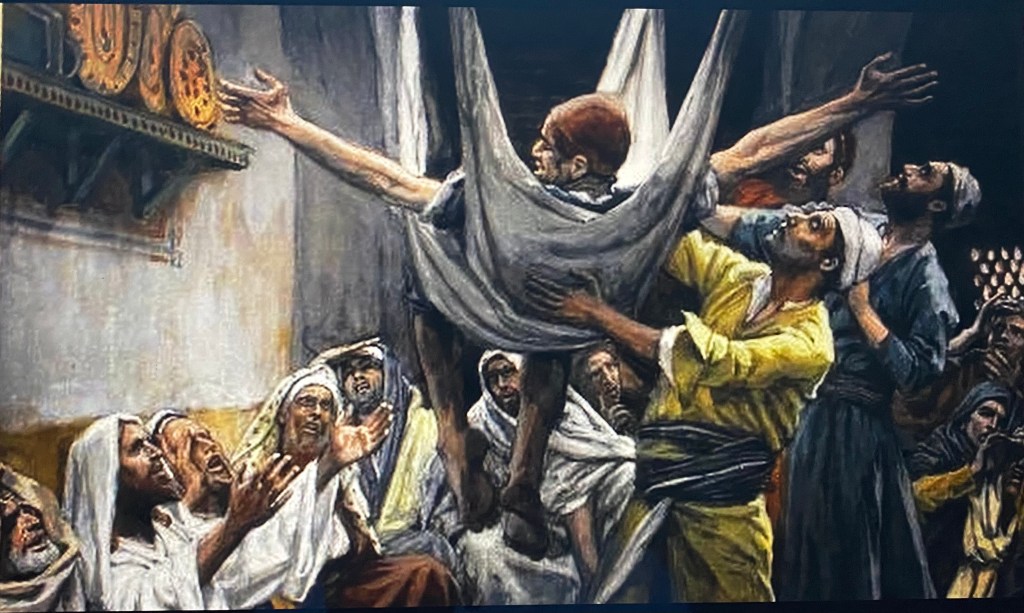
God has created us to be aware, to care, and to help others.
And there people brought to him a paralytic lying on a stretcher. When Jesus saw their faith, he said to the paralytic, “Courage, child, your sins are forgiven”(Mt 9:2).
Matthew’s account of this scene is much simpler than Mark and Luke’s, but the point is the same. The person paralyzed received healing because some people were willing to bear his weight and creatively bring him to Jesus. In neither of the three Gospel accounts do we know who the people are that bring this man to Jesus for healing. Were they family, friends, or neighbors? It does not matter. They were aware of someone in need, they believed Jesus could heal him, and they put forth the effort to bring this man to Jesus.
Are we like the people in today’s Gospel; are we aware, do we care? St. Mother Teresa often said that people are “not only hungry for bread – but hungry for love, naked not only for clothing – but naked for human dignity and respect, homeless not only for want of home and bricks, – but homeless because of rejection.” If we are living our faith, indifference to the needs of others is not an option. Rationalizing why we ought not to care, or worse giving in to our fears and prejudices so as to dehumanize and reject others in need are counter to the call of Jesus.
How is God speaking to our consciences; how is he moving our hearts? There are so many who are hurting and suffering. Let us not get trapped into criticizing others for reaching out to help in a different way than we feel called. We just need to be honest about where God is leading us and act as the four in our Gospel reading today did. Be aware, be willing to meet the need we see, access our personal gifts of creativity, and bring them to Jesus. By collaborating with Jesus in this way miracles can and still do happen. Structures of inhumanity and injustice can be turned around.
Pope Francis has been consistent and clear about the dignity of all life. He tweeted in 2013: “It is God who gives life. Let us respect and love human life, especially vulnerable life in a mother’s womb.” During Mass on Sunday, January 14, 2018 he shared: “Migrants and refugees don’t represent just a problem to be solved, but are brothers and sisters to be welcomed, respected and loved.” On June 3, 2020, Pope Francis said, “My friends, we cannot tolerate or turn a blind eye to racism and exclusion in any form and yet claim to defend the sacredness of every human life”.
The Lord hears the cry of not just a select few but all those in need. Whose cry do we hear and who are we willing to help?
Painting: Healing of the Paralytic – James Tissot
See also Mark 2:1-12, Matthew 9:1-8 and Luke 5:17-26
Link for the Mass readings for Thursday, June 30, 2022

We are to decrease and Jesus is to increase.
“No. He will be called John” (Lk 1:60).
With these simple words, three inter-related points arise. First, Elizabeth is beginning to shift the momentum of original sin. Eve was tempted by the serpent to eat of the fruit that God had told her and Adam not to eat of, yet she did. Adam did not support her nor step in during her dialogue but remained silent in the face of the pressure placed upon Eve. Both of them slipped into sin by not following the will of God.
At the time of the birth of Elizabeth’s son, there was cause for celebration, for Elizabeth was past child-bearing years. The day had come to have the boy circumcised and named, her relatives and neighbors had gathered around with great excitement and there appeared to be a unanimous decision to name the boy after his father. Elizabeth did not, like Eve, cave to the pressure and temptation surrounding her. Unlike Adam who lost his voice at the time he needed to speak up, Zechariah found his voice, and had Elizabeth’s back. Both Elizabeth and Zechariah knew what God wanted them to do and were faithful to follow through despite any cultural pressure and established norm to the contrary.
The second point is already alluded to in the first, and that is how Elizabeth and Zechariah were faithful to God amidst the familial and social pressure placed on them. Some may be removed by such familial pressure when naming a child, but for this time, Elizabeth despite the pressure held her ground and stood firm that the boy would be named John. Ignoring her, the people deferred to Zechariah, the boy’s father, thinking he would have more sense, but he, ignoring the paternal cultural pressure, supported Elizabeth. The point here is not so much the name, but the following of the will of God in the face of pressure to do the opposite.
This brings us to the third point and that is the maturation in moving from identity to integrity. Culture and traditions are not sacred, but God is. Elizabeth and Zechariah faced a lot of familial and social pressure to conform, yet they chose to be true to God, to be true to themselves, and they chose integrity over their identity.
The very simple account of Elizabeth and Zechariah naming their child John in opposition to the pressure offers for us a way to counteract the rising tide of polarization and conflicts that we face in our own country today. Identity provides safety, support, and security. It fuels one of our deepest pangs of hunger and that is to belong, to be a part of something bigger than ourselves. We can find our identity in family, friendships, our religious traditions, culture, political affiliations, common interests, clubs, activities, and hobbies. But our identity, which provides us with security and stability is good but can also be a trap.
We want to belong so much, the drive is so strong, that we may have made decisions, acted in ways, and supported others, that go against who we are just so that we can belong. We may have known what God wants from us, heard the whispers of his voice in our conscience, yet were pulled by the louder voices of our group. We are sometimes so ingrained by our identity that we are being strangled and suffocated by it.
In today’s Gospel account, Elizabeth and Zechariah were true to the will of God over and against those placing pressure on them. More often though, being a person of integrity does not go so well. Their own son, who would grow up to be John the Baptist, would lose his life by speaking truth to power.
John would also show his integrity when he said, “I must decrease and he must increase” (cf. John 3:30). John was talking about Jesus who embodies the moral courage that we all need today. Though more than just a model of a life well-lived, more than just a word on the page, Jesus is the Word of God. Jesus is present to us now, to guide and lead us, to empower us with the same love that he embodies, such that when we invite him into our lives, we too can be transformed to live a life of truth, moral courage, and integrity.
Becoming less, like John the Baptist, and allowing Jesus to be more by working through us, will help us to act and speak up for those that are being belittled, demeaned, and/or dehumanized. We can then transcend the ranks of identity and rise to the heights of integrity, especially when it means standing up to those in our “group.” Protecting police officers, priests, and/or political leaders who have abused their power at the expense of others for the sake of protecting the identity of the institution or our place in it not only adds further abuse but weakens the institution. While at the same time, casting a net of guilt by association over all in any group is also unjust. We also may be shaming those who could be the very ones to help to bring about necessary and sustainable change.
Being people of integrity, calls us to speak for those who have been abused and not afforded basic human dignity. We are to protect those who might be at risk and/or those who have been or are being abused, oppressed, and/or prevented equal access. This provides a necessary step in providing support for those needing healing, allows for the planning and enacting of the necessary reforms to end the risk of further abuse and create more equitable access.
All of which will also strengthen the integrity of those within the construct of institutions that are put in place to empower the very people they serve. We are to hold each other accountable while at that same time be willing to work toward a reconciliation that will arise through mutual respect, openness to dialogue, collaboration, and reconciliation.
————————————————————————–
Photo: Infant John the Baptist with the Lamb – painted by Bartolomé Esteban Murillo. St John the Baptist on the Solemnity of your nativity, pray for us.
Link for the Mass readings for Thursday, June 23, 2022
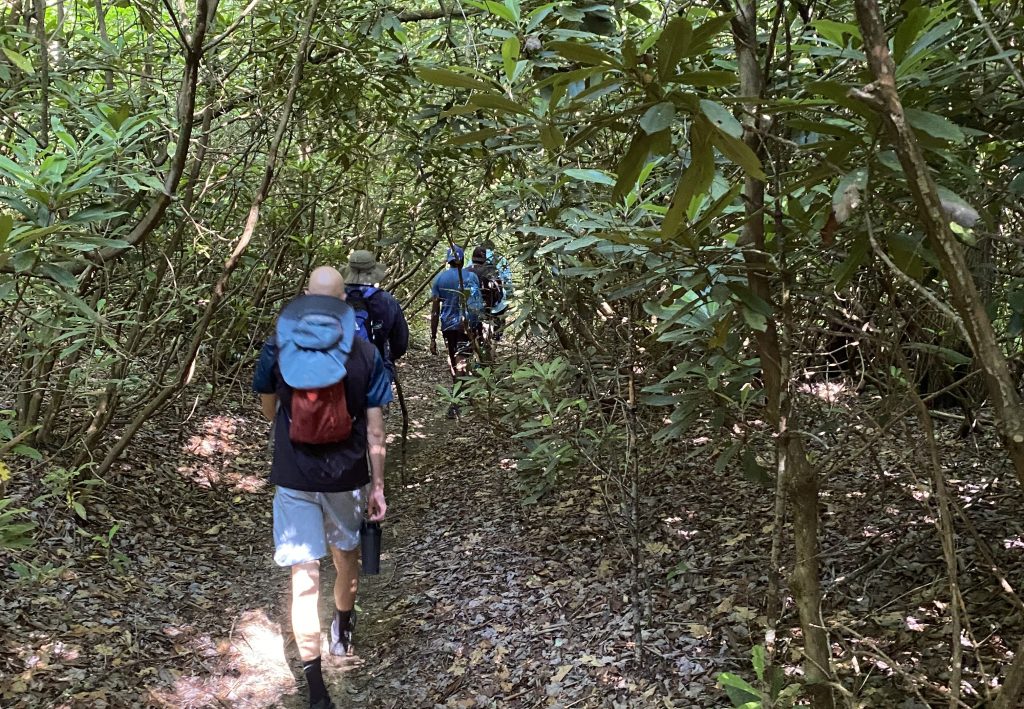
“How narrow the gate and constricted the road that leads to eternal life.”
“Enter through the narrow gate; for the gate is wide and the road broad that leads to destruction, and those who enter through it are many. How narrow the gate and constricted the road that leads to life. And those who find it are true” (Mt 7:13-14).
Jesus meets us where we are in our present state of life. He accepts us as we are at this very moment. At the same time, Jesus does not want us to just settle and to merely get by, surviving day by day. Instead, he encourages and guides us to be fully actualized. He calls us to perfection, to holiness, to be saints! He sees in us, as he did in his disciples and apostles, the promise of our potential and who his Father calls us to be. We each have a unique gift or gifts to offer to the world, each and every one of us.
One way of interpreting entering the narrow gate is that we need to say no to those apparent goods that we find initially inviting but soon realize that they are empty promises, can burden us, weigh us down, and worse lead us to addiction and enslavement. To pass through the narrow gate, we need to say yes to that which will truly bring us happiness, fulfillment, and true freedom and this means we need to say no to supporting our false ego and turning the focus in upon ourselves. We need to instead be willing to expand and go out of ourselves and will the good of and accompany others.
Jesus will help us in seeking and discerning his will. Spending time in prayer can often reveal the sources of our worry, anxiety, or fear; pride, judgment, or prejudice; sinful actions, harmful habits, and/or addictions. We need not deny or run from them. Instead, acknowledge whatever arises with Jesus, and then allow him to provide healing and transformation. This will not be a one-time, done now for all activity, but a daily, disciplined commitment and practice of discernment and examination of our conscience.
We need to continually open our hearts to the Holy Spirit such that he will give us the courage to discern between apparent and authentic goods in our lives. In our time of prayer, we can imagine placing our hand in Jesus’ hand as if we were a small child and allow him to lead us to experience the love, mercy, and grace of our ever-present God and Father. What Jesus leads us to do, he will also give us the strength and resources to bring to completion, which ultimately will be a life of communion with God and one another in this life and into the next.
———————————————————————-
Photo credit: Our recent 8 and a half mile hike traversing many narrow paths, but together we made it there and back again!
The Mass readings for Tuesday, June 21, 2022
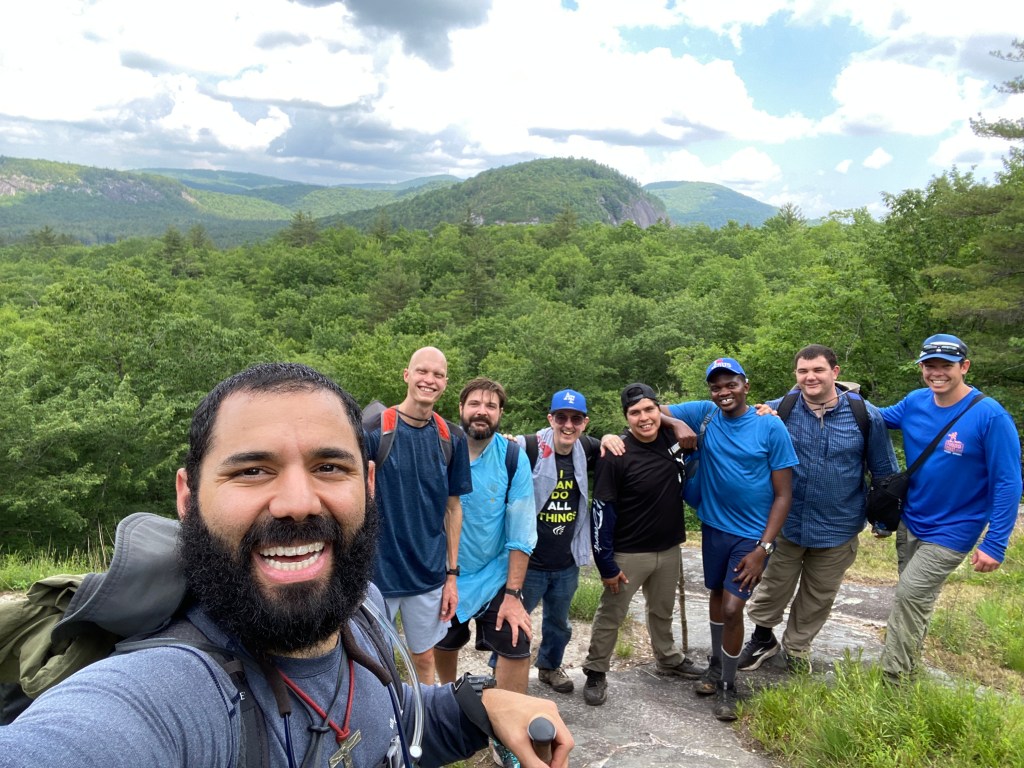
Help us Lord, to remove the log in our own eyes, so as to serve you and others in your love.
For many of us, judging one another is almost as automatic as breathing. As we encounter someone, instant internal judgments arise. We judge looks, clothes, actions, inactions, homes, cars, and material items. We judge our family, spouses, friends, colleagues, classmates, leaders, enemies, celebrities, as well as those different from us and those on the peripheries. Much of what gets our attention when we take the time to think about it is what Jesus is addressing in today’s Gospel, negative judgments.
Jesus said to his disciples: “How can you say to your brother, ‘Let me remove that splinter from your eye,’ while the wooden beam is in your eye? You hypocrite, remove the wooden beam from your eye first; then you will see clearly to remove the splinter from your brother’s eye” (Mt 7:4-5).
There are positive judgments that bring about effective change for the good. In a court case, our hope is that the judge is learned in the law and guides the lawyers and jury in ways of sound judgment such that justice with mercy is served. For us to do likewise in our everyday interactions with one another, Jesus shares that we need to remove the wooden beam from our eye first before we are able to remove the splinter in another’s.
Jesus is leading us to experience transformation. He is inviting us to change our hearts such that they are no longer hardened by negative judgments of others based on our biases and prejudices, but softened, such that they are open to the mercy and love of Jesus. This does not mean that we accept any and all behaviors, actions, and inactions from ourselves and others. Jesus does not do this either. Jesus accepts ALL people as we are and where we are, with mercy. He is willing to enter our chaos, to embrace any and ALL of us who will receive the invitation of his healing embrace, and through his love Jesus accompanies and walks with us, leading us from our slavery of sin to that which is True, Good, and Beautiful.
We participate in the life of Jesus when we allow him to heal us from our own limitations of self-centered perceptions, from the denial and suppression of our anxieties and fears that lead to the developing of our biases and prejudices. Then we will begin to see others as God sees them, as human beings endowed with dignity because ALL people have been created in the image and likeness of God.
We participate in making our realm of influence a better place when we allow God to love and to bestow his mercy upon others through us. We participate in Jesus’ work of redemption when our judgments toward ourselves and others are not condemnations but convictions that help to empower, build, and lift up our brothers and sisters.
We participate in taking the log out of our own eye and assisting to remove the splinter in another’s eye when we are willing to admit our shortcomings, weaknesses, and failures, and then learn and grow from those experiences. We are then in a better position to be able to accompany others in their own chaos, to journey side by side, willing to help each other to be transformed into who God is calling us to be.
These steps will begin when we are willing to lay down our gavels of judgment, biases, and prejudices and instead, with open hearts on fire with the love and mercy of the Holy Spirit, offer our hands to one another with an invitation to walk hand in hand, arm in arm, so to be about building each other up.
Photo: Summer seminarian program with Fr. Daniel and my seminarian brothers, hiking in Glenville area of SC.
Link for the Mass readings for Monday, June 20, 2022
 Spiritual Stepping Stones