Reflections on the Gospel Reading for the Day
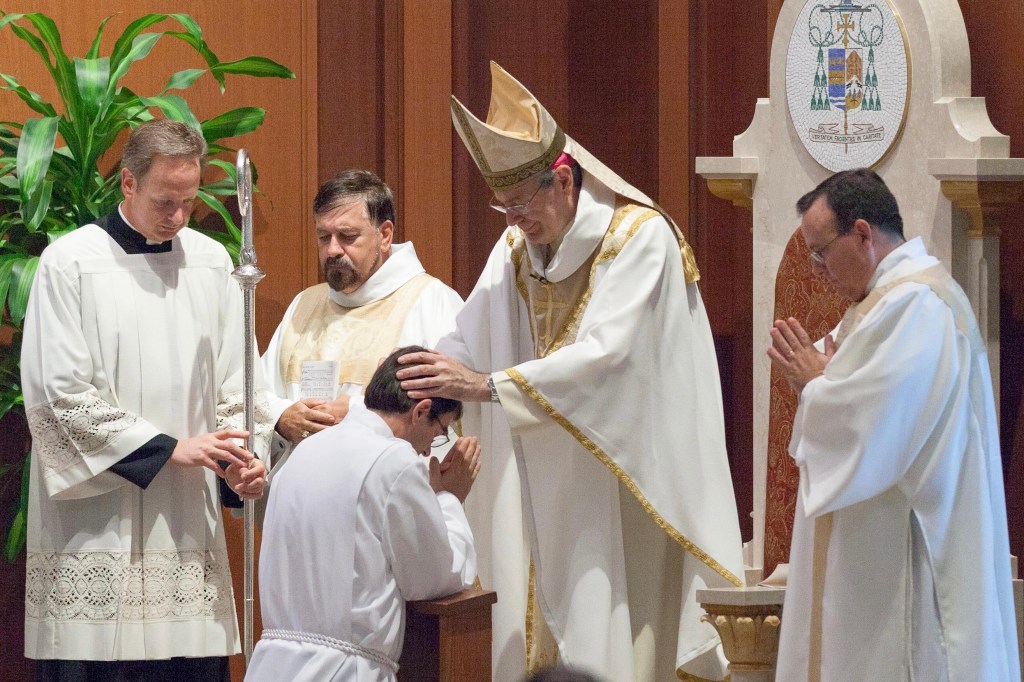

“Jesus has opened up heaven for us in the humanity he assumed.” – St. Irenaeus
At that time Jesus cured many of their diseases, sufferings, and evil spirits; he also granted sight to many who were blind (Luke 7:21).
Once the public ministry of Jesus began, a big part of his ministry was healing. This healing often brought people from a posture of being on the outside looking in, to returning to become again part of the community socially and spiritually. Typically, those with physical ailments were considered to have offended God in some way or ritually unclean. Many in this state, such as lepers were even required to keep at a distance, away from others, for to touch someone in this state would render them ritually unclean.
The healing touch of Jesus brought more than physical renewal as it also opened the door for people’s relationships with family, friends, and God to be restored. The healing miracles of Jesus were also a foretaste of the eternal kingdom of his Father where there is no longer pain, suffering, and separation, where our relationship with God will ultimately be reconciled.
People may wonder if Jesus still heals today. I say absolutely! There are many accounts of people who have been physically, mentally, and spiritually healed, even beyond scientific explanation by calling upon his name. There are also many, like myself, who have prayed for a healing that was not granted in the way we sought in prayer. Though my wife, JoAnn, was not healed from pancreatic cancer in this life, she is now free from her suffering and pain. She has received the ultimate healing so as to be experiencing a deeper relationship with God on her eternal journey and interceding on our behalf.
The physical healings of Jesus were precursors of the ultimate healing he came to bestow upon each and every one of us. Even death is not an end nor does it have the final word. The Son of God entered into our human condition to become one with us in our humanity so that we can become one with him in his divinity in this life, where he conquered death, so that we can continue our relationship with him for eternity where we will experience more intimately the love of the Holy Spirit and look upon God the Father face to face.
Photo: JoAnn, in her early twenties, experiencing the light of the sun, and now hopefully experiencing the radiance of the Son.
Mass readings for Wednesday, December 15, 2021
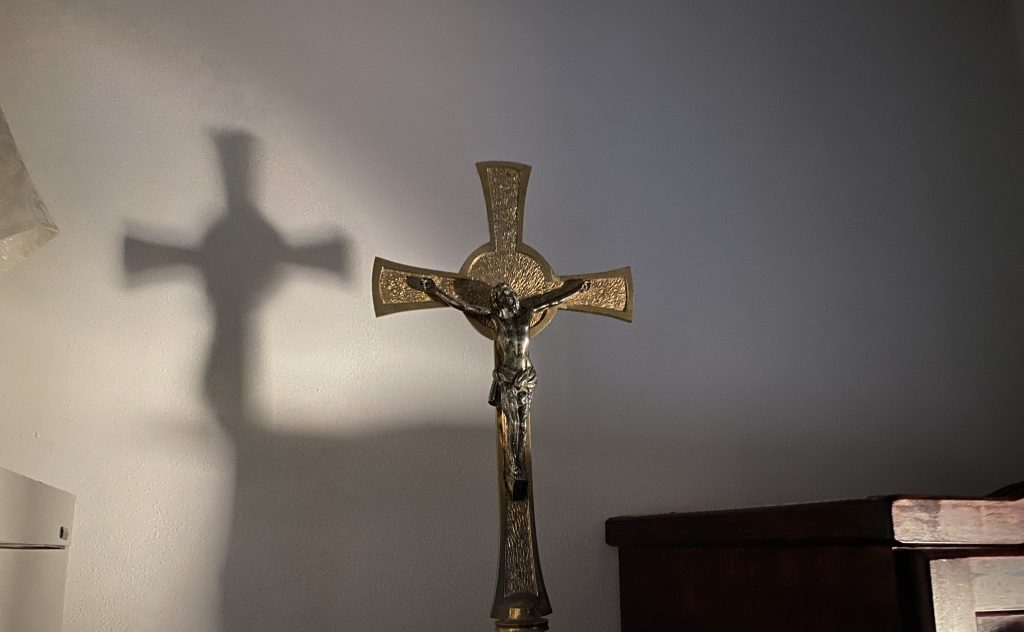
Will we take up our cross today to participate in our work in the vineyard?
In today’s Gospel, Jesus offers a parable of two sons who are each asked by their father to work in the vineyard. After Jesus shares this short account he asks: “Which of the two did his father’s will?”
They answered, “The first” (cf. Mt. 21:28-32).
The first did his father’s will even though initially he said no. Jesus then goes on to share how tax collectors and prostitutes are like this son. They are because they believed in what John the Baptist was requiring of them, they were preparing for the coming of the Messiah and so they were able to recognize him when he was in their midst. They said no initially to God’s offer but they have said yes now and followed through.
Regarding the chief priest and the elders, Jesus compared them to the son who said yes initially but then did not follow through on their promise.
The question for us today is, “How are we answering to God’s invitation?” Are we saying yes and then not following through, no but now on track, or no and no, or yes and yes?
Advent is the time to discern where we are in our walk with God. This is not a time to be mopey and guilt ridden if we don’t believe we are living up to our potential. If we do that, then we are still not putting God’s love into action. We are still focused on ourselves. The key is to recognize where we are, say yes to the invitation to begin again and start moving with God to be about the work in the vineyard. It is not as important what we say as what we do.
We may have many grand plans and ideas, but until we begin to put those ideas into action, nothing happens.This is also true in our spiritual life. If we are not consistently moving forward, we are moving backward. If we want to improve our relationship with God and be better disciples of Jesus, our first step is to commit to turning our hearts and minds to God in prayer and meditation daily, to slow down, open our ears to hear his word, and then show up.
Starting small by setting a short period of time in the same place each day and then showing up is how we begin our work in the vineyard. By doing so, we are able to hear what God is asking of us. Once we hear his voice, then we have a choice to say yes or no. If yes, then we have a choice to act or not.
Which son or daughter are you? The first, the second, or an un-offered third who says yes and then acts? What we have or have not done, where we are now, is not as important as how are we going to act going forward? Each moment is a yes or no to taking up our cross and following Jesus or not.
Photo: Processional cross as the sun rose a few days ago before morning liturgy.
Mass readings for Tuesday, December 14, 2021
It is important to authentically share what we believe while allowing others to do the same.
The question raised by “the chief priests and the elders of the people” regarding what authority Jesus was teaching was not an uncommon question. Rabbis and teachers often began their presentations by sharing with their listeners who was their teacher. It would have been from the authority they received from them that they taught.
Jesus did not do so for his authority came directly from God. Those questioning Jesus knew this and wanted Jesus to say it publicly so as to charge him with blasphemy by putting himself on the same level as God. Jesus did not give them the satisfaction. Instead of answering their question, Jesus asked one of his own. “Where was John’s baptism from? Was it of heavenly or of human origin” (Mt: 21:24)?
The answer given by the chief priests and elders to the question posed by Jesus showed their weakness. They were the shepherds of the people of Israel, yet they would not speak the truth. Instead, they offered an answer that was calculated and weighed out by taking a quick opinion poll among themselves. Their answer was lukewarm, “We do not know.”
In answering this way, their authority as leaders was diminished. For if they were the religious guardians and guides, why could they not answer the simple question regarding the origin of John’s baptism?
Do we weigh our answers solely on a perceived response or do we speak the truth? We want to be liked, respected, to belong and to fit in, which is healthy, but sometimes we feel uncomfortable speaking what we know because we fear another’s reactions. If we are to be people of integrity, if we are to live out our baptismal call as prophets, there will be times that we need to resist the perceived and real pressures we feel, face the conflicts that arise, and speak what we know God would have us say at the moment.
As we do so, we need to remember to speak from a place of understanding and love. It is better to engage in a dialogue, not just mutually imposed monologues. Also, a good reminder is to follow the lead of Jesus and ask more questions rather than offer more pronouncements. Our goal in any encounter is not to impress but to express the truth and allow others to do the same. We can grow from one another when we are willing to listen. We can actually move from talking past or shouting over one another, or the other extreme of avoiding talking altogether, when we are willing to engage in respectful dialogue even when we disagree.
Jesus, please forgive us for the times when we have not spoken honestly or not been open to listening and hearing the perspective of another. Help us to call on you to guide us and give us the courage and words to speak with charity no matter what pressures we face and give us the ears to hear as well.
———————————-
Let us pray for one another that we may think, listen, speak, and act in each situation as God directs us. Photo credit: Jack McKee
Link for the Mass readings for Monday, December 13, 2021
Will “sneaky Jesus” touch your heart this Advent?
Today we celebrate the third week in Advent. Each week we are presented with a particular theme to meditate upon. The first week is hope, last week was peace, this week is joy, and next week will be love.
We will find joy as we conform our life to the Jesus we remember and the Jesus who we encounter each day. We also find joy when we are transformed from a posture of turning in upon our self, only looking within at our own needs, and instead also be willing to look out to be aware of the needs of others and then move to be of help to them.
We see John leading the crowds to this place of joy today. They come to him to participate in a baptism of repentance, a changing of their heart and mind, but John also leads them deeper and outward. Not only is their heart and mind to be changed but their actions as well.
Those who have two cloaks are to share the second with one who has none and the tax collectors are to stop collecting more than what they are prescribed. Even the soldiers have come to John and he guides them: “Do not practice extortion, do not falsely accuse anyone, and be satisfied with your wages” (cf. Lk 3:10-14).
What John is presenting to the crowds is what we call today, solidarity. Pope Francis echoes John in his writings and talks. In his exhortation, Evangelii Gaudium, Joy of the Gospel, Pope Francis writes: “Each individual Christian and every community is called to be an instrument of God for the liberation and promotion of the poor, and for enabling them to be fully a part of society. This demands that we be docile and attentive to the cry of the poor and come to their aid.”
We must be willing to hear and see those who are in need around us. We must be willing, as was Moses, to follow the lead of God who hears the cry of the poor and will move us to serve in our own unique way.
There are models for us to see even in our own day. Those who hear the cry of the poor and respond.
Sr. Norma Pimentel, MJ, has been working on the US border in Texas for some thirty years helping to provide aid and support for those crossing the border. She was touched very soon after her profession as a sister when border patrol agents brought families to her convent. She recognized that Jesus called her to provide hospitality and protect those in need. She is working with city officials and border patrol to help transform minds and actions so to prevent and counter such tragic events as separation of families and children and the tragic deaths of people seeking a better life, risking all to find it. “Scripture comes to life and our faith becomes flesh,” Sr. Norma said. “It is not until you find yourself in front of the face of the immigrant child or mother that you will understand this. It is a moment of realizing we are all one human family.”
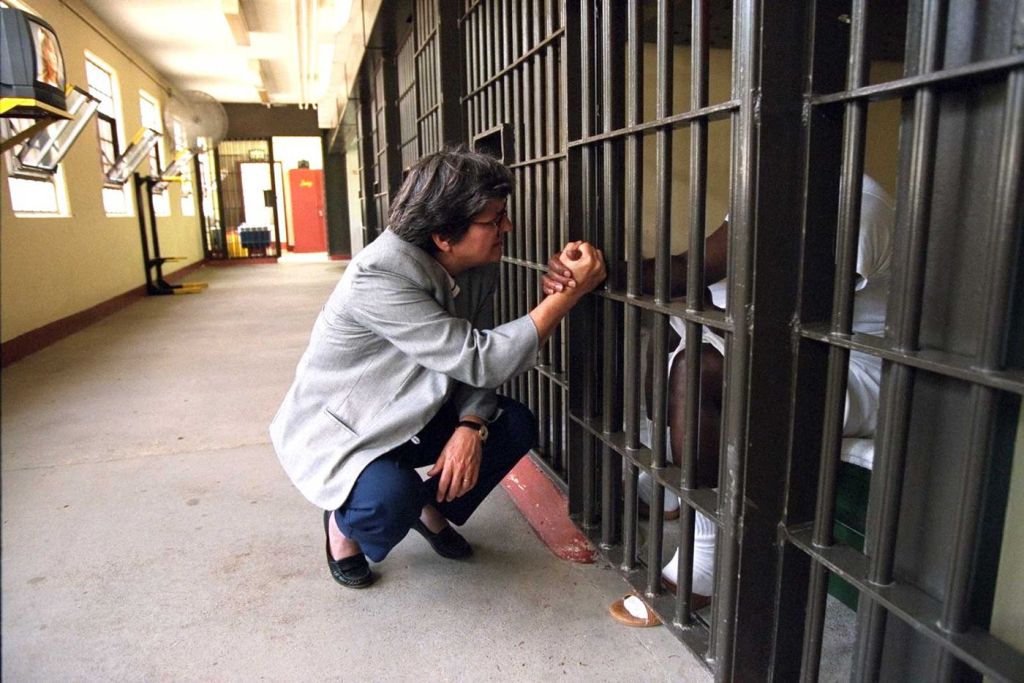
Another shining light is Sr. Helen Prejean of the Congregation of St Joseph who has been a spiritual director to inmates of death row for decades. Her work became well known when she published her book, Dead Man Walking, in the mid nineties. Sr Helen has also been a strong advocate for the abolition of the death penalty. “I saw the suffering and I let myself feel it… I saw the injustice and was compelled to do something about it. I changed from being a nun who only prayed for the suffering world to a woman with my sleeves rolled up, living my prayer.”
Each of these two women, Sr. Norma Pimentel and Sr. Helen Prejean, encountered the person, and “sneaky Jesus” as Sr. Helen has called him, imparted his grace upon them and led them to encounter the dignity of those who were treated as though they had none. They were able to feel their plight and they heard their cry, then reached out to provide needed help and support. They model for us how to be contemplatives in action.
As God’s grace expanded within them, they became champions and a voice for those without a voice. They embodied the definition of solidarity as defined by Pope Francis which “refers to more than a few sporadic acts of generosity. It presumes the creation of a new mind-set that thinks in terms of community and the priority of the life of all, over the appropriation of goods by a few.”
John the Baptist shows us in today’s Gospel from Luke that joy is found in the transformation of our minds and hearts that lead us to action. Are we willing to allow the grace of “sneaky Jesus” to transform us such that we become people of compassion and service, that recognize the dignity of all people, and resist rationalizing or being indifferent to the plight of those who are in need? Come Lord Jesus, set our hearts on fire that we may see who you call us to be and who you call us to serve.
Sr. Helen Prejean, photo credit: Getty Images
Link to audio Jesuitical interview with Sr. Helen Prejean: https://www.americamagazine.org/faith/2018/12/14/sister-helen-prejean-fought-death-penalty-and-won
Link for the Mass reading for Sunday, December 12, 2021

Are we willing to play our part in passing on the greatest story ever told?
The disciples who asked the question, “Why do the scribes say that Elijah must come first?” (Mt 17:10) were Peter, James, and John, who had just witnessed the transfiguration of Jesus. They were walking down from the Mount of Transfiguration, tradition identifying this mountain as Mt. Tabor, and the context of the question had to do with, Moses and Elijah, who they saw with Jesus as he revealed to them his divinity.
As the disciples were attempting to digest this Mystery of the Transfiguration that they had just witnessed, they were drawn back to what they knew, the interpretations of the scribes. Most likely what they were referring to were the accounts in the Books of Sirach and Malachi. In Sirach 48:10 we too can read that, “You [Elijah] are destined, it is written, in times to come to put an end to the wrath before the day of the Lord, to turn back the hearts of the fathers toward their sons, and to re-establish the tribes of Jacob.” In the last chapter of the Book of Malachi, which is incidentally the last lines of the Christian Old Testament ordering of the canon, are the words: “Remember the law of Moses my servant, which I enjoined upon him on Horeb, the Statutes and ordinances for all Israel. Lo, I will send you Elijah, the prophet, before the day of the Lord comes, the great and terrible day” (3:22-23).
Moses in this encounter represents the Torah, the Law or Teachings, and Elijah represents the line of prophets. Elijah also, as we can read in 2 Kings 2:11, was taken up by God into heaven, amid “a flaming chariot and flaming horses… and Elijah went up to heaven in a whirlwind”, and, it was believed, that he was to return again at the appointed time when the Messiah would come. Jesus clarified for his disciples that John was indeed the new Elijah. In the revealing of his divinity to Peter, James, and John, Jesus showed that he was the fulfillment of the salvific paths forged by Moses, Elijah, the line of prophets, and John the Baptist.
Jesus is the fulfillment of the Law and Prophets, and he is our fulfillment as well. We are invited to prepare the Way of the Lord in our hearts and minds, to become less so that Jesus can become more, as well as to help prepare the way for others. When I began to attend church again in my late teens, I went to the Congregational Church that was about a half-mile walk from our home. At the end of that first service I attended, the interim pastor made an appeal for Sunday School teachers. One of the things he said was that we do not know who Jesus’ Sunday School teacher was and he referenced that we could be teaching Jesus and not be aware.
We were not to take him literally, but his point was that we had the responsibility to continue to pass on the Greatest Story ever told. Also, his appeal was an avenue for the Holy Spirit to speak through him to me, and although I refused the invitation the first week, I returned and accepted the invitation the following week. What might Jesus be inviting you to do this Advent? Trust his invitation.
My yes to teaching Sunday School, not knowing the first thing about what I was doing, thinking I was too young and way too inexperienced, would eventually, through different twists and turns, lead me back home to the Catholic Church, to becoming a teacher, a deacon, and me writing you today and continuing to share the message of John the Baptist, Jesus, and the Apostles: “This is the time of fulfillment. The kingdom of God is at hand. Repent, and believe in the Gospel” (Mk 1:15).
———————————————————
Photo: First Congregational Church of East Windsor, one of the early stepping stones that led me to where I am today. Accessed from: http://fcceastwindsor.com/
Link for the Mass readings for today, Saturday, December 12, 2021
Let us be faithful to the Gospel.
Jesus compared “this generation” to children who could not be satisfied. For when the flute was played for them they did not dance, when the dirge was played they did not mourn. There was no pleasing them no matter what. Jesus drew the parallel to the present bystanders who acted as fickle as the children. They criticized John as being possessed for practicing fasting and asceticism. They then criticized Jesus as a glutton and a drunkard for his table fellowship with all who were willing.
In today’s Gospel account, Jesus could have been addressing his detractors as well as his disciples. He encouraged his followers to be wary not to wallow in the mud of fickleness, but also to be clear that their preaching and teaching was to be based on being a dispenser of his truth and the will of his Father and not the reaction of the people, for “wisdom is vindicated by her works” (Mt 11:19). Just as Jesus taught that false prophets would be revealed over time by their fruits (cf. Mt 7:16), so those who were true to his teachings would be vindicated, if not fully in this life, certainly then in the next.
Pope Francis said that “The first thing for a disciple is to be with the Master, to listen to him and learn from him” (Francis 2014, 15). Let us pray for open hearts and minds eager and willing to hear the word of Jesus our Master and the courage to act upon his leading in our everyday circumstances. To do so, we must first slow down our pace and quiet our minds sufficiently enough so that we can even hear his word. We also need to discern the difference between his voice, our own, and the many other distractions, diversions, and temptations we hear. God himself speaks to us in so many ways; directly in the silence of the heart, through others, spiritual direction, small groups, fellowship, through the Bible, as well as our culture, and influences, as well as through his creation.
More often than not, we may not definitively know if what we hear or experience is coming from God. Yet, remaining paralyzed and doing nothing is not an option. We can find support and confirmation from Scripture and Tradition, others who are wise and practiced in following God, we can reassess our guidance, and then act. If we are wrong, we learn from our mistakes and begin again. If we are on the mark, this helps us to build our confidence in recognizing God’s voice. What we do not want to do is remain indecisive out of fear or anxiety, from the perceived reaction that will come. Nor do we want to remain indifferent to action.
Another important step in discipleship is that we are not to seek to impress, but to express. Adulation and acclaim for ourselves are not what we are to be about. Our intent is to become less so that Christ becomes more. We are also to resist moralizing and condemning others while instead being willing to meet people where they are, accompany and break open the word in practical ways so they see the benefits of having God in their lives. The invitation and life of a disciple of Jesus is not an easy one. Will we follow?
We need not be afraid that we don’t have what it takes, because we don’t at the start. Just as in learning to walk, our beginning attempts more often than not ended with a thud and us sitting on the floor or ground looking up. Yet, we got up, and with continued practice, we gained strength, balance, made corrections, and so began to gain confidence and the ability to move forward upright, step by wobbly step. Dr. Martin Luther King, Jr. put it more eloquently when he spoke to students at Spelman College in April of 1960. “If you can’t fly then run, if you can’t run then walk, if you can’t walk then crawl, but whatever you do you have to keep moving forward.” So it is in anything we do, but especially in the spiritual life. If we are not moving ahead we are falling behind.
Jesus, please help us to know you and your voice so we may follow the will of God. Grant us the courage to walk with you, that we may risk whatever the reaction of others may be as we offer your truth with love and mercy. Set a spark in our soul so that above all we begin, one step at a time, hand in hand with you to serve those you bring to us. Help us to move forward and allow God to happen in our interactions with one another.
—————————————————————————–
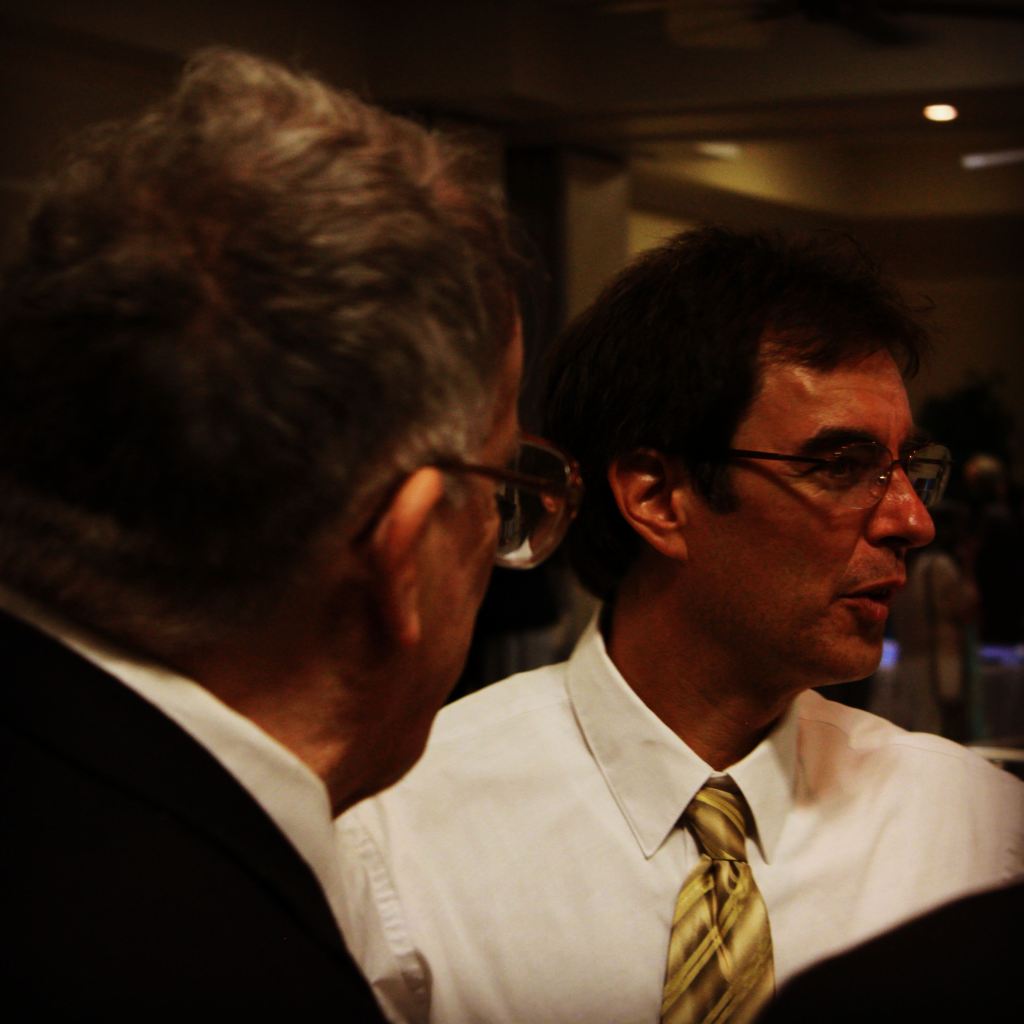
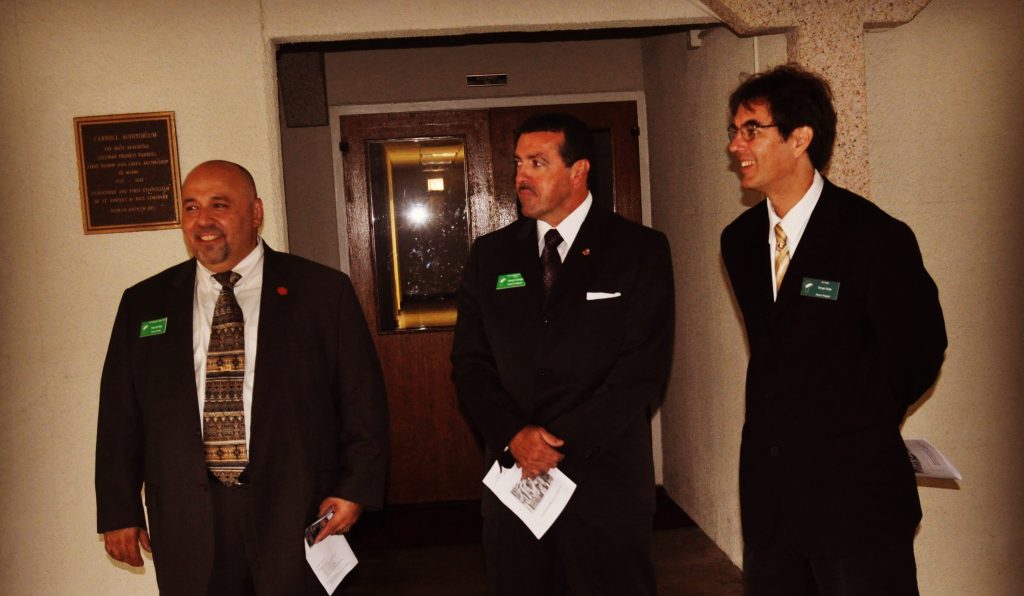
Photo: Day of installation as Lector with my classmates Pete and Hank. During the service we were told: “Take this book of holy Scripture and be faithful in handing on the word of God, so that it may grow strong in the hearts of his people.” – from the Rites, Volume Two.
Francis, Pope. The Church of Mercy: A Vision for the Church. Chicago: Loyola Press, 2014.
Link for today’s Mass readings for Friday, December 13, 2019
Let us recommit to our vows.
“Amen, I say to you, among those born of women there has been none greater than John the Baptist; yet the least in the Kingdom of heaven is greater than he” (Mt 11:11).
Jesus shared that there has been no greater than John the Baptist. John is a bridge from the Old Covenant to the New. To say that John and Jesus played significant roles in ushering in the Kingdom of heaven is an understatement. For they both preached the same message of repentance, of the need for all to recognize how they had turned away from God and needed to turn back to God. This is a key invitation for us as well during the preparatory seasons of Advent and Lent. May we have the ears to hear!
John lived a life of asceticism giving all to God, rejecting the material comforts of his time, choosing to live in the wilderness, and relying solely on the divine providence of God. He followed in the line of the prophets and he did so with full-throated confidence and fearlessness. Many were moved by his words and came to repent. John though ministered not to put himself on a pedestal, his role was to prepare the way for the coming of the Messiah. He was to assist in ushering in the Kingdom of heaven, as he himself was not the Kingdom. John knew well, Jesus was to increase and he was to decrease (cf. Jn 3:30). John’s words of speaking truth to power also led to his martyrdom. The death of John signaled the time for Jesus’ public ministry to begin.
Jesus recognized the contribution and place of John in his Father’s plan, yet he also shared how “the least in the Kingdom of heaven is greater than he.” The reason Jesus made this claim was that John’s baptism was one of repentance. The Baptism Jesus instituted was one of new life. Through our being baptized in the name of the Father, and of the Son, and of the Holy Spirit, we have been given a new life and are incorporated into his Mystical Body.
Through our Baptism, we, in participation with Jesus, become priests, prophets, and kings. As a part of the common priesthood, we are to sacrifice our time, giving of ourselves in prayer and worship; our talent, embracing the unique gifts God has given us to share; and our treasure, being good stewards of the blessings God has given.
As prophets, we are to speak the word of God, speak truth to power as John and Jesus did, we are to be the voice of the voiceless and stand for up for the human dignity of all those who are vulnerable or mistreated from the moment of conception, through each stage of life, until natural death.
We are to be servant kings, resisting the temptation to seek our own power, glory, fame, and riches, and instead surrender ourselves to the will of our Father, and like his Son wash the feet of those in need. There is no service of our brothers or sisters that we ought to feel is beneath us in reaching out in love, which is to will the good of each other.
Advent is our time to repent, to recommit, to rediscover the wonderful relationship we are invited to embrace and are called to share: The infinite, divine love of God the Father, God the Son, and God the Holy Spirit, whose name we have been baptized in.
One of the things I miss about Covid is not being able to dip my finger into the holy water before Mass. Until the return of the water, each time we pass the baptismal font we can still bless ourselves and remember why we dipped our finger in the holy water before Mass. We make the Sign of the Cross, so as to recommit ourselves to our baptismal vows. We also can still do the same action when we leave because we leave as priests, prophets, and kings to go forth into our realm of influence to love one another as Jesus loves us, with an all-embracing, unconditional love!
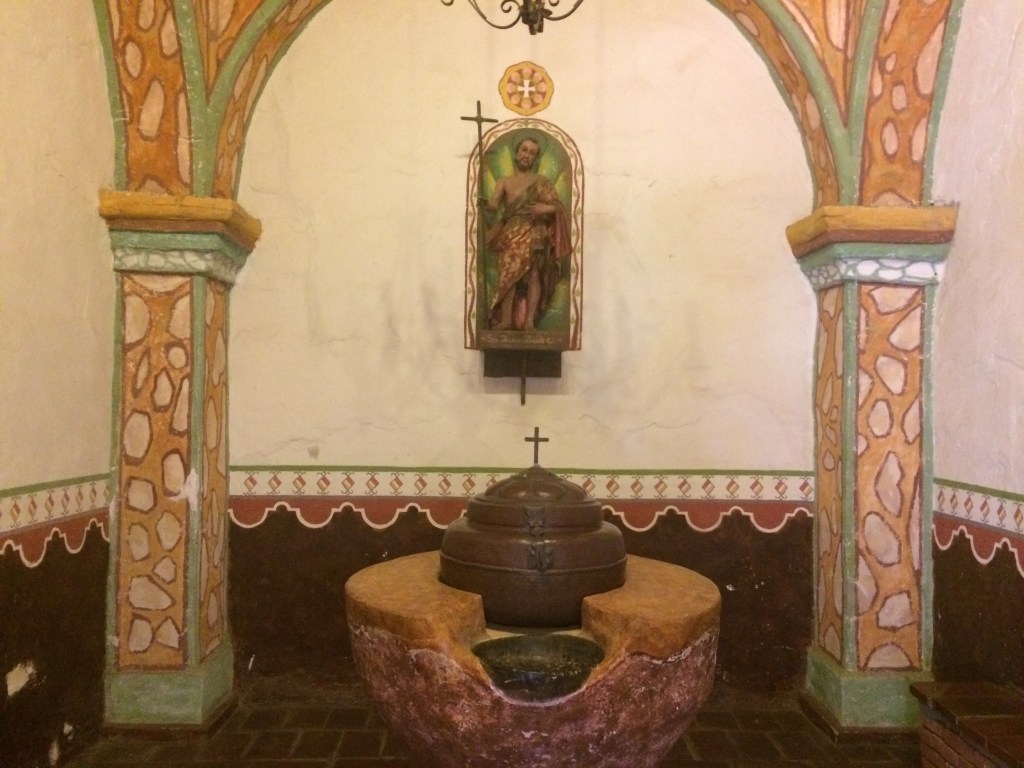
Photo: Baptismal font with a statue of John the Baptist, from Mission San Luis Rey de Francia, Oceanside, CA
Link for the Mass readings for Thursday, December 9, 2021
“Hail Mary, full of grace.”
Mary, full of grace and the model of discipleship, is on display in today’s reading from Luke’s Gospel. In a mystical encounter, the angel Gabriel shared with Mary that she would bear the “Son of the Most High” (Lk 1:32). Mary heard clearly what Gabriel said though she did not fully comprehend. Who could? So Mary asked, “How can this be, since I have no relations with a man” (Lk 1:34)?
This is a different question than what Zechariah, the father of John the Baptist, asked of Gabriel in a similar situation: “How shall I know” (Lk 1:18)? Zechariah was looking for a sign, he sought proof. Mary, through her faith in God, sought to understand what God required of her, so she combined her faith and her reason. While she pondered, the whole of the cosmos held its breath for her response.
When Mary said, “Behold, I am the handmaid of the Lord. May it be done to me according to your word” (Lk 1:38), a weary world wounded by sin, exhaled with relief, for the long-awaited savior would now come to redeem what had been lost. Mary, in her obedience, undid the Sin of Origin committed by Adam and Eve in their disobedience.
Mary, help us to ponder your yes, your willingness to follow the will of God and to give birth to our savior. Help us to ponder what this reality means to us and our lives. Help us to be disciples like you, resisting a knee jerk reaction of rejecting outright what we do not understand and choose instead to be open to the possibilities available to us that are beyond the realm of our senses and limitations.
May we too, like you, seek understanding instead of demanding proof. Help us to understand that this surrender is not a practice in limiting ourselves to mere superstition but an embracing of the fullness of what it means to be human, so to embrace the reality of our physical as well as our spiritual natures, and allowing ourselves to be expanded by God beyond our finite limitations.
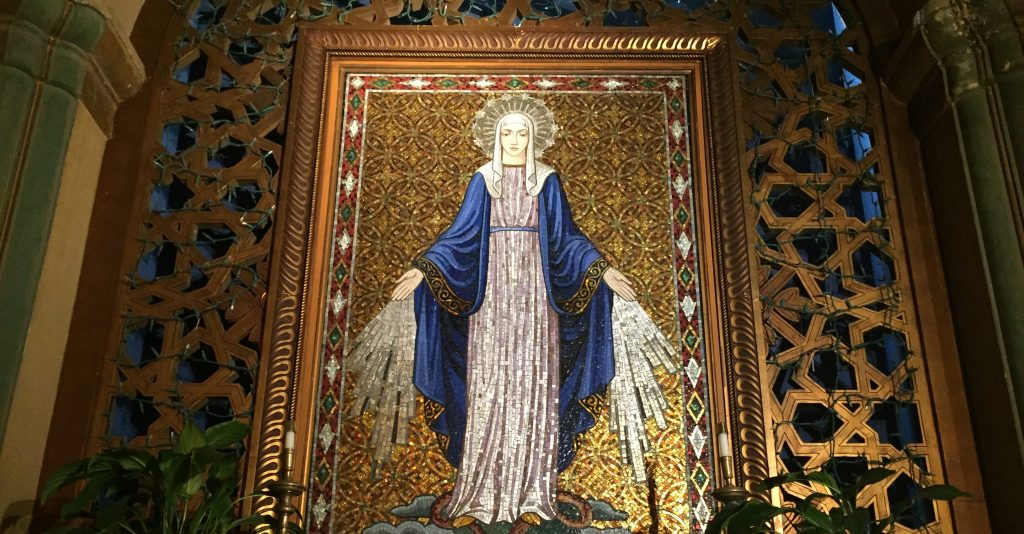
Photo of Mary, side altar at the Mission Dolores Cathedral, San Francisco from my visit there about two years ago.
Link for the Mass readings for Wednesday, December 8, 2021

 Spiritual Stepping Stones