Reflections on the Gospel Reading for the Day

It really is ok to work together.
The Apostle John attempted to prevent someone from casting out demons in Jesus’ name because he was not one in their “company”, he was not one of those handpicked by Jesus as one of the Twelve. This person casting out demons in Jesus’ name was not like Simon the Magician (see Acts 8:9-25) who sought to buy the power of God from the Apostles to perform feats to boost his own fame and ego, this person was doing what the apostles were doing and in the proper way, by invoking the name of Jesus.
Jesus said to him, “Do not prevent him, for whoever is not against you is for you” (Lk 9:50). The important part about being a disciple is surrendering ourselves to the will of God. This was a consistent point Jesus pointed out to his followers time and time again. Being a disciple of Jesus had nothing to do with whether or not someone was in or out of their company, or whether or not they were related to Jesus, as is recorded just in the last chapter of Luke 8:21, “My mother and my brothers are those who hear the word of God and do it.”
Jesus, in today’s Gospel, is pointing out the danger of groupthink for its own sake. This is something we desperately need to get in our present-day and age. What is important is not putting our self, our family, our tribe, our party, our nation first. What is important is putting God first.
The man in today’s Gospel did not rely on his own strength or willpower but called on the name of Jesus to cast out demons. John was getting hung up that this man wasn’t one of them, wasn’t in their company, and he was doing what they were called to do. John may have also been a bit miffed that this man was doing a better job of it as well.
I say the more the merrier! There is much that needs to be done, there is too much pain and suffering in the world, and we are losing precious resources and hours by fighting amongst ourselves, instead of actualizing the unique and diverse gifts each of us has. We have much more in common with one another than we have differences.
There are ways to diminish the growing polarization and division within and without of the Church and the best way to begin is to be willing to cast aside our protective and defensive postures, make a commitment to respect the dignity of each person we encounter and strive ourselves to be people of virtue, integrity, and holiness. Paraphrasing Jesus, whoever is not against us is for us.
Photo by burak kostak from Pexels
Mass readings for Friday, September 27, 2021

How we think, speak and act matters.
What we think, say, do or do not do, has consequences for ourselves and others. The smallest act of kindness, like suggesting, as Jesus did in today’s Gospel, of giving someone a drink of water goes a long way. That may seem like a small and insignificant gesture, but according to Water.org, 785 million people do not have access to safe drinking water. That is equivalent to one out of every nine people on earth not having ready access to a drink of clean water. Women and girls are especially affected as they can spend up to six hours a day seeking and returning home with water.
Mni Wiconi is a Lakota phrase that means water is life. The phrase is a recognition of the sacredness of water and that water is the life blood for creation and those of us who walk on this earth. Pipelines carry oil with the promise of jobs and the illusion of self sufficiency for a time. Yet fossil fuels are a finite source. Oil leaks and spills threaten sacred land and water resources coming not only from the Missouri River but any oil leakage could also dramatically impact the The Mni Wiconi Rural Water Supply System. This water resource covers a 150-mile area that begins at the Oahe Reservoir and ends at the Pine Ridge Indian Reservation. Drinking water is provided by this system for some 25,000 plus tribal members as well as non-reservation communities.
Prior to the installation of the Mni Wiconi system in 2008, many suffered from health problems caused by contaminated water. The reality that there are people who do not have access to just the basic needs of survival, such as access to clean water or that it is threatened, or not corrected in a timely manner like those residents who have suffered in Flint, Michigan, is a unacceptable.
The most serious of sins in this regard is not bothering to care. Jesus shared clearly, as is recorded in Matthew (cf. chapter 25), that what we do to the least of our brothers and sisters, we do to him. He also shared with Saul on the road to Damascus (cf. Acts 9), “Saul, Saul, why are you persecuting me?”
God has created us such that we are interconnected with one another. How one thinks, speaks, and acts ripples out to touch all people and all creation. This is why Jesus uses such graphic, hyberbolic words in today’s Gospel, such as “If your hand causes you to sin, cut it off. It is better for you to enter into life maimed than with two hands to go into Gehenna, into the unquenchable fire” (Mk 9:41-50). Jesus does not literally mean that we are to cut off our hand or foot, or pluck out our eye, if we sin, but he is showing us the seriousness of our sin.
We can see the horrific affects at play in our fallen world. Life is hard, too many suffer from the effects of selfishness, pride, greed, abuse of power, and violence. May we resist contributing to or shutting ourselves off from the reality of abuse that is committed to the dignity of any person or our mother earth. When we engage in thoughts, words, and actions that are demeaning or dehumanizing; when we rationalize and justify behavior that goes against our Gospel values and our conscience; when we remain silent, we play a part in contributing to the condition of original sin that plagues our world, and we are going against God’s plan for what we pray for in the Our Father, “May your kingdom come, may your will be done on earth as it is in heaven.”
We need to take a deep breath, slow down enough to sit still so that we can hear God in the silence of our hearts and be willing to allow Jesus to shine his light, that we may better see with the eyes of our conscience, better see the lies, the half-truths, and apparent goods that we have been allowing to have free reign in our life. As they are revealed, may we pluck them out, even the smallest of sins, and dash them on the rock of Christ.
No one is justified in belittling, demeaning, dehumanizing, or abusing anyone, for “it would be better for him if a great millstone were put around his neck and he were thrown into the sea” (Mk 9:42). May we follow Jesus today and give someone in need some water to drink, literally as needed, and figuratively in the sense of being aware of the needs of others, by praying for and being present with concrete and practical support, while at the same time, holding those accountable who have harmed others in any way. Let us be better stewards and caretakers of each other, our water, our land, and natural resources. Mni Wiconi! Water is Life!
———————————————————————
Photo accessed from: Quotemaster.org quote from and picture of Sitting Bull
Link for the Mass readings for Sunday, September 26, 2021

What is our ultimate horizon?
The term horizon is often defined as where the earth and sky meet. This is actually an apparent horizon or sensible horizon because we see an apparent plane based on our observation point. If we are able to broaden our viewpoint and look beyond the present location we are standing at on the earth, say from the space shuttle, we could then experience a rational or celestial horizon: where the great circle of the celestial sphere whose plane passes through the center of the earth is parallel to the celestial horizon of a given position. Journeying deeper into space we could discuss event horizons, the boundaries marking the limits of black holes.
Before delving any deeper and getting lost in space, let’s return to earth and today’s Gospel where Jesus stated: “Pay attention to what I am telling you. The Son of Man is to be handed over to men” (Lk 9:44). What Jesus is doing with this statement is presenting the horizon of the cross, the place where heaven and earth meet, where the physical and the spiritual, where the finite and infinite meet.
Many of Jesus’ followers were and are still confounded by the cross. As Paul wrote to the Church at Corinth: “For Jews demand signs and Greeks look for wisdom, but we proclaim Christ crucified, a stumbling block to Jews and foolishness to Gentiles, but to those who are called, Jews and Greeks alike, Christ the power of God and the wisdom of God” (1 Cor 22-23).
Paul echoes what Jesus was talking about in today’s Gospel and that was his imminent fate and our ultimate horizon, death. None of us will be able to avoid the final result of our mortality. Jesus taught both through his words and in his death that to be truly free we need to be willing to lose our life to gain it. We have to face and walk through our deepest fears to grow. Our life is not lived until we give it away.
I have come to experience that the more willing we are to face the reality of our own death, the less likely we are to take the time we have for granted, and the better we can live our lives here and now. During our final four months together, JoAnn and I experienced God’s grace because we faced the reality that her time was near, we embraced the gift of the time we had together, and through the prayers of so many, we experienced the infinite presence of the love of God in our midst.
There is so much we can experience and enjoy through the world around us, but if we only limit ourselves to the merely empirical, only to that which we can experience with our physical senses, we limit ourselves. We are transcendental beings and what makes us fully human, alive, and fulfilled is an embrace of both the physical and the spiritual, of both reason and faith, the horizon where the finite and infinite meet, where earth and heaven are one. This union happens in Jesus Christ, fully human and fully divine, and those who die with him will also rise with him.
Photo: by Josh Sorenson from Pexels
Mass readings for Saturday, September 25, 2021
Jesus is to always be at the center.
Jesus asked his disciples about who people said that he was and Peter, through the revelation of God answered, “the Christ of God” (Lk 9:20). Jesus then responded that “The Son of Man must suffer greatly and be rejected by the elders, the chief priests, and the scribes, and be killed and on the third day be raised” (Lk 9:22).
Jesus is indeed the Christ, the Messiah, the Son of the Living God. Yet, that meant many things to many people who were awaiting the coming of the Messiah. For most, they were hoping for a military leader to come to lead them and overthrow the Roman occupiers. As soon as Peter made his statement, Jesus clarified what kind of Messiah that he would be, a suffering servant.
The reality that the Messiah, Jesus, was the suffering servant, willing to give his life on the Cross for all of humanity and creation, is also true for all who have followed him and would walk the path following him today. If we seek to be a disciple of Jesus, our steps will also lead us to the Cross. We must be willing to be martyrs, witnesses of our faith, in our everyday experiences and encounters. This does not necessarily mean that we will give our life, but it does mean that we are to empty ourselves so as to be more available to the needs of others.
Our discipleship will be ultimately expressed in love, in our willing the good of the other who is in need. We must resist the temptation to turn in on ourselves such that we embrace our ego, our anxiety, fear, prejudices, and biases. Instead, we are to keep our mind and heart open to the leading of the Holy Spirit who will reveal to us the ways, no matter how small, that we can love and serve.
We also need to resist seeking to conform God to our will and our image. Jesus calls us not to contract but to expand, to go out from ourselves to love God with our whole mind, heart, and strength and to love our neighbors as ourselves. This dying to self, to be crucified with Christ, is to be expressed in all aspects of our lives. We are not to be one way for one hour at Church on Sunday and the rest of our time live like Sunday never happened. We are to surrender ourselves to Jesus and be Jesus for others in every action, decision, and encounter we engage in. Christianity is not about compartmentalization, but it is about transformation and conformation to the Body of Christ!
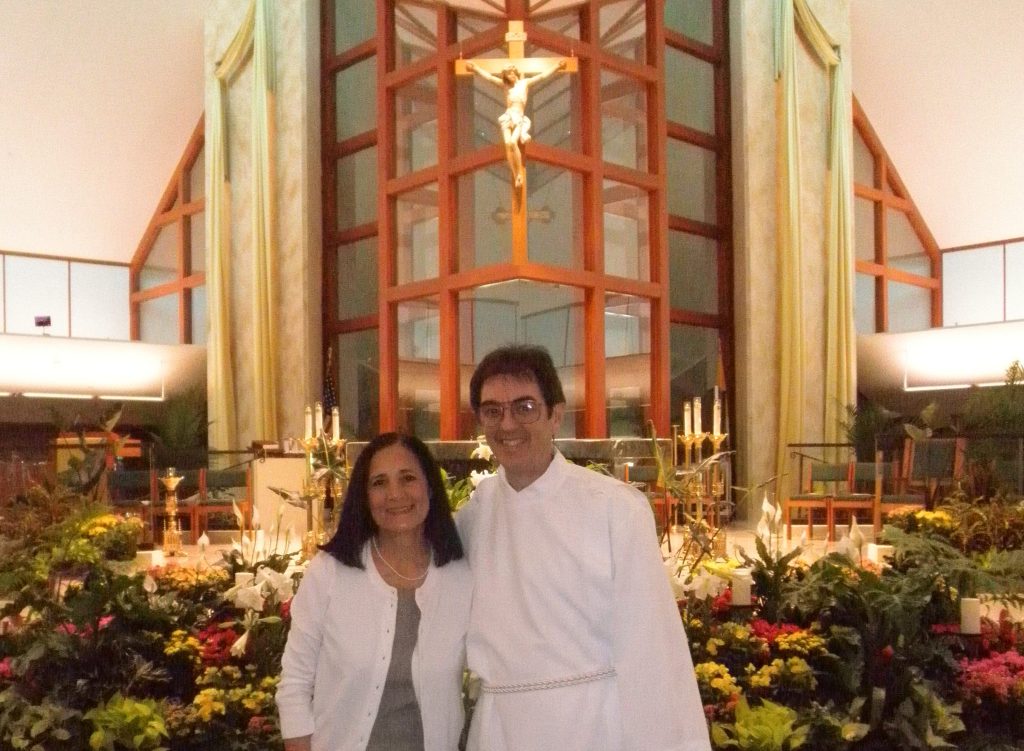
Photo: Volunteering at Rosarian Academy Auction some time ago. Keeping Jesus, the crucified Messiah, at the center of our lives helped us to grow in our love for God, each other and those he sent us to serve.
In coming to know Jesus, we come to know what we truly need to heal.
‘Who then is this about whom I hear such things?'” And he kept trying to see him” (Lk 9:9).
Herod Antipas, the ruler over Galilee and Perea, heard stories about Jesus. The range of his thoughts, expressed by Luke, is confusion to curiosity. Herod may have started to feel concern over the possibility of a growing revolt, some guilt for his execution of John the Baptist, or just curiosity to see what this man was all about. Could this Jesus accomplish even half of the things Herod had heard about him? One question that did not seem to cross Herod’s mind was, did he have any interest in changing his life and becoming a follower of Jesus?
Herod was not the only one in Luke’s Gospel who asked questions about who this man Jesus was. Nor did the asking of those questions die with Jesus on the cross. They continued after his resurrection and ascension, they continued into the first centuries of the Church, which led to the calling of the first ecumenical councils which dealt directly with who Jesus was, and they continued in each following century and continue today. There are even at present in some academic circles, the question arising as to whether Jesus even existed at all.
One could ask why this question about Jesus persists? One answer is that we are finite beings seeking to understand an infinite Mystery. The full comprehension of the reality of Jesus existing as fully human and fully divine, dying on the cross, conquering death through his resurrection and ascending to the Father transcends even the wonderful intellect and ability to reason that we have been blessed with. Also, Jesus’ invitation is a universal but personal one. Each person has to encounter Jesus for her or himself.
Jesus called the Twelve, one by one as well as Mary Magdalene, St. Irenaeus, St Thomas Aquinas, St Francis and Clare of Assisi, St Catherine of Siena, St Teresa of Avila and St John of the Cross, St Ignatius, St Mother Teresa, Thomas Merton, Dorothy Day, and he calls each one of us as well. He did not call us to just merely embrace a new philosophy, a new ethical way of life, or even a new religion. Jesus called and calls us to be a part of his Body, the Mystical Body of Christ.
Who is Jesus, Herod asks in today’s Gospel? It is a good question for us to ask as well. For me, Jesus is the Christ, the Son of the living God, who became incarnate, becoming one with us in our humanity so that we could become one with him in his divinity. This same Jesus who called others through the ages invites us to follow him today as well and he continues to walk this journey with us whether we say yes or no to his invitation. We are just aware of and receive more of his help when we say yes.
Life with Jesus isn’t perfect and we will at times echo St Teresa of Avila, who stated after she was thrown from a carriage into a mud puddle, “If you treat your friends this way, it is no wonder you have so few.” But we will, as did Teresa, also experience moments of inexpressible joy, of wonder and exhilaration, and feel blessed when Jesus works and loves through us.
The question of why JoAnn died has come up off and on over the past two years, though I do not entertain it too much. I am not sure that in this life the answer would be sufficient anyway. I will certainly make a point to sit down with Jesus when he calls me home and we can discuss it then with more perspective.
I have been focusing more on seeking what Jesus and JoAnn want me to do now. JoAnn was often concerned, especially during the school year, that I did not get enough rest. I am sure that she is still concerned! In the middle of the night a few days before she died, I heard her ask the hospice nurse if I was sleeping. She wasn’t concerned about herself but again looking out for my welfare.
I can still hear JoAnn’s gentle and loving voice from that night and maybe I need to listen better to her and Jesus speaking through her. It was one of the last phrases I remember JoAnn saying. There is a lot of work to do but seeking a better balance in our lives is important. Sufficient rest and enough sleep are important, as is being kinder and gentler with ourselves and each other.
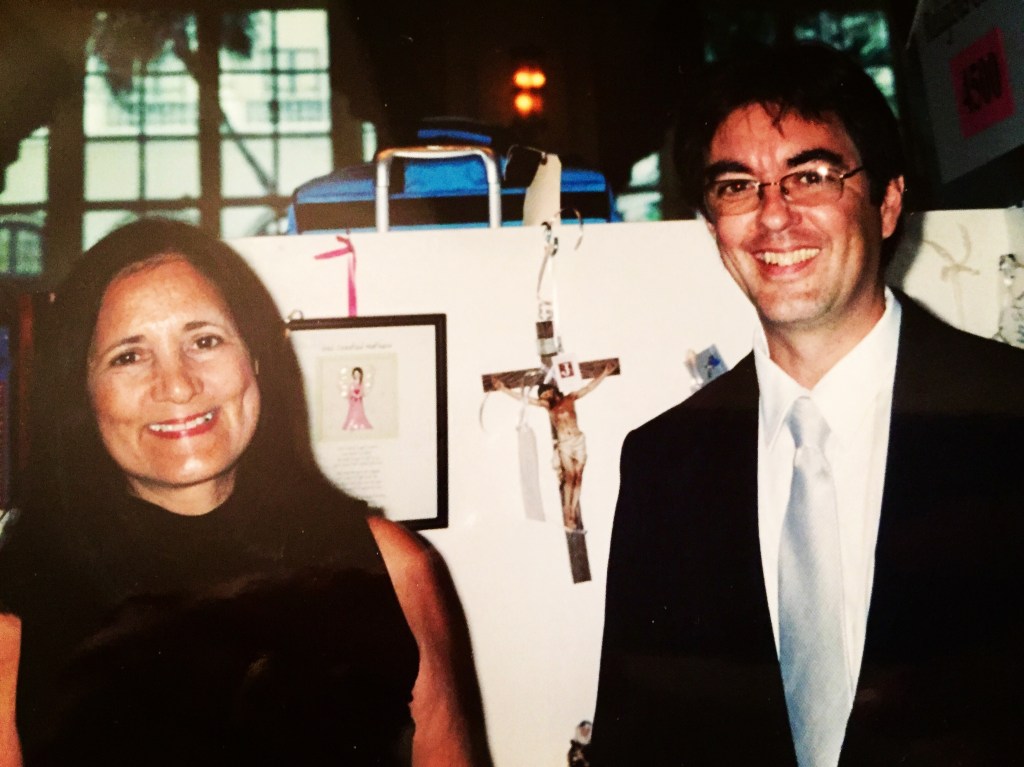
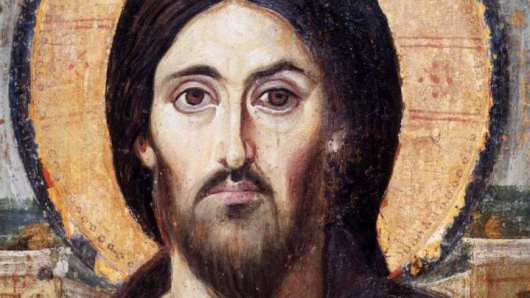
6th-century icon of Jesus
Mass readings for Thursday, September 23, 2021
We can trust that where God leads we will find fulfillment and meaning.
“Jesus summoned the Twelve and gave them power and authority” (Lk 9:1).
Jesus summons us as he did the Twelve and empowers us for ministry in his name. The expression of our service is unique to each of us. Many resist exploring or entering into a deeper commitment to their faith because they are anxious or afraid that God may call them to something that they would never want to do, or that they couldn’t conceive they were capable of. Initially, there may be some trepidation even when we are clear of the direction God wants us to move in, but that may come more from our hesitancy to change and move out from our comfort zone. Ultimately, God wants for us what we want for ourselves; to live a life of fulfillment, joy, and meaning.
God knows what and with whom we will experience fulfillment. The challenge for us is to come to know this for ourselves as well. The work of discipleship begins by accepting the invitation of God to walk with him and trust that he knows what he is doing and where he is leading! No matter what our age, we are never too young or too old to begin or recommit to the journey along the path of discipleship. One good practice is to reflect on our dreams and desires, bring them to God in prayer, and imagine ourselves embracing what we desire.
When I first joined the Franciscans to study for the priesthood in the early ’90s, I would imagine from time to time my ordination day, especially in our second year as we were thinking about taking temporary vows. When I did so, a puzzling result consistently arose. I did not imagine feeling any excitement or joy. So, a year and a half into formation, I decided to take a leave of absence. I had asked to take off a year, but the minimum time for a leave of absence was two.
Though I balked at first about the two-year time frame required, I came to respect the wisdom of my formation director. It was in my second year away, that I realized that my vocational path was leading me to the Sacrament of Matrimony and not Holy Orders. About eighteen months after I made that decision I met JoAnn. As our relationship grew and we began to talk about marriage, whenever I envisioned our wedding day I felt excitement and joy. Each year together has been better than the one before. Though JoAnn left this life far too soon, knowing what I know now after twenty-three years of marriage, I would ask her to marry me all over again!
God has a plan for each and every one of us, he knows what will fulfill us, and he loves us more than we can ever imagine. When we ponder our dreams and desires, and as we investigate, research, explore potential outcomes and continue to pray and discern each step, we will come to see that as we align ourselves with God’s will that makes all the difference. We are not alone in this process and we have a God who can see the full picture, where we see only a small part.
There will be fits and starts, missteps and slips, doubts as well as confirmations, and desolations as well as consolations. The key through it all, is to remain faithful, to continue to trust in Jesus who called us. He will continue to accompany us along the way, he will give us the resources and strength we need, and he will send the Holy Spirit to empower and transform our lives. We need to remember that this process is not just for ourselves alone. We are transformed by the gift of God’s love to go out and share the invitation we said yes to with others.
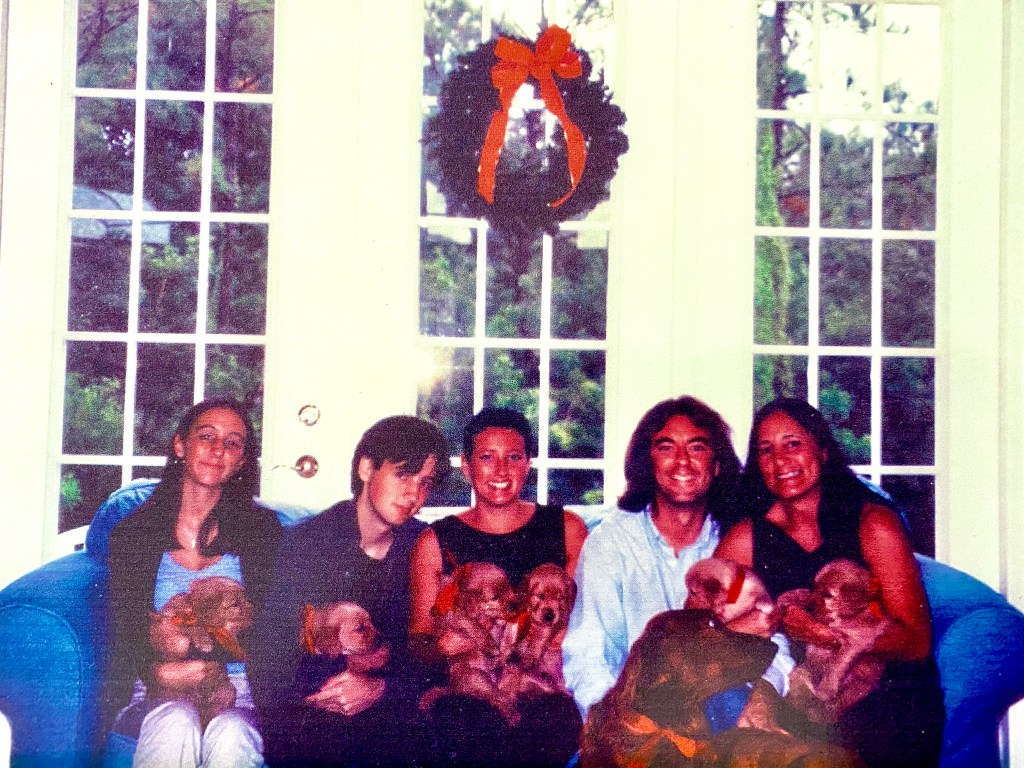
Photo: Following God’s discernment led me to JoAnn, family, and puppies! Picture from Christmas about 2002.
Link for the Mass readings for Wednesday, September 22, 2021
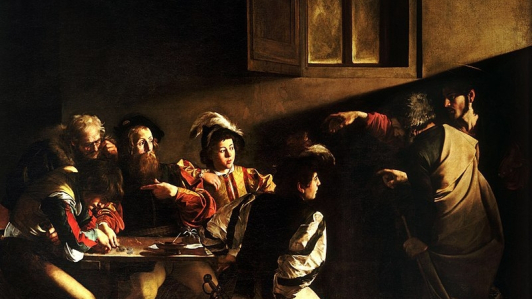
Jesus calls, what is our answer?
“While he was at table in his house, many tax collectors and sinners came and sat with Jesus and his disciples” (MT 9:10).
We as the Church, followers of Jesus, still have much to learn from him. Today’s reading provides another wonderful example. Once Jesus begins his public ministry he is constantly on the go. Going to where? Meeting people where they were, in the midst of their daily lives as he did with Matthew in today’s Gospel reading. And what is the response to Jesus calling Matthew, a tax collector, and then partaking in table fellowship with other tax collectors and sinners? The Pharisees question the disciples about his practice and curious onlookers follow at a distance. But to those who have, maybe for the first time in their lives, been respected as fellow human beings, feel hope. A hope that there actually may be a path leading in from the peripheries. A hope that they no longer have to be on the outside looking in. A hope that they, for the first time in their lives might finally belong.
Jesus is shown time and again encountering the person as they are in their present circumstances and the chaos of their lives. He welcomes, is present, and embraces each person as they are. He invites people to be part of something greater than their self-absorbed posture, to actualize their potential and embrace a life of meaning and purpose. The only requirement is that they are willing to: be loved, be human, be free, and once experiencing this encounter, share what they have received with others.
Do we: deny or mask our own fears, stoke our own pride believing that we can take care of ourselves without the help of anyone else, seek false truths and the glittering lures of power, wealth, pleasure, and honor for our security and satisfaction, that in the end leave us empty, attached, and/or addicted? Or are we willing to have: the humility to recognize our sinfulness, our need for Jesus and receive his love, so as to let go of our bondage to false illusions of security, and realize that we are, at the deepest core of our being, a living, craving hunger and desire to be loved by God and others, so that we too may love in return?
Are we are willing to risk being vulnerable and open our hearts to Jesus? If so, we will experience the love, fulfillment, and belonging we seek in the very depths of our souls. This is the fulfillment that no other pursuit or person can bring. We do this best as Jesus did, by being willing to enter into the lives of others, by resisting judging and instead, accepting another as they are for who they are, by being present and willing to accompany our fellow brothers and sisters.
Jesus said, “I desire mercy, not sacrifice” (Mt 12:7). Mercy, as I have quoted Fr. James Keenan, S.J., before, “is the willingness to enter into the chaos of another.” Jesus is willing to enter into the chaos of our lives. Are we willing to let him in, be loved by him, to be called like Matthew, so we can love others and enter into the midst of their chaos as well?
——————————————————
Painting: The Calling of St. Matthew, Michelangelo Merisi da Caravaggio, 1600
Link for the Mass readings for Monday, September 21, 2021

May we be willing to shine our light and welcome others.
Jesus said to the crowd: “No one who lights a lamp conceals it with a vessel or sets it under a bed; rather, he places it on a lampstand so that those who enter may see the light” (Luke 8:16).
God blesses us freely without cost, he gives himself to us. He has done great things for us and he is the source of our joy! We do not earn nor is there anything that we can do to gain God’s grace. But we can lose the gift we have been given. This happens either by refusing what has been offered, or once accepting and receiving, not doing anything with our gift. If we are people of faith in name only, but not followed by action, we are concealing the light we have been given.
Since being diagnosed with Covid and pneumonia in January, I have not been able to exert myself in any physical way for the past eight months. Now that I have been improving, I am in a position to begin walking and exercising again. I am so far away from any habit of either and demands to my time during the school year are high, it has been hard to begin again. I have a biopsy this Thursday and once I receive word on the results, probably sometime next week, I plan to begin to exercise and go for walks again, beginning easily and slowly.
Life can also interupt our spiritual practices. If we do not exercise our faith, we will receive signs of spiritual atrophy. To not even acknowledge the presence of God in our life, the free gift of his invitation to be in a relationship with him, we will experience limitations in our lives. For whether we believe in God or not, we hunger to be in communion with him and one another, so we will be looking for other apparent avenues of happiness that will fall short of fulfilling us. If we do accept that there is a God, yet don’t participate in worship, fellowship, service,meditation and prayer, we are not much better off. I can believe that my car will get me to where I want to go, but if I do not put the key in the ignition, turn on the engine, and put the car in drive, I will remain stationary.
If we claim to be people of faith, we need to put our faith into action. That means on a daily basis we need to spend time meditating and praying, reading the Bible, studying our faith through spiritual reading, CDs, DVDs (I at first wrote cassettes and videotapes!) and/or podcasts. We need to consistently participate in worship, the sacraments, and be engaged in service with one another. As we do so, we will begin to reflect Jesus to others and so be able to see God at work in our everyday experiences and better collaborate with him in all we do.
In allowing the light of Jesus to shine through us, we also need to resist the tendency to privatize our faith, while at the same time resisting getting in someone’s face. Instead, we need to be present, caring, understanding, supportive, and willing to accompany one another, even others of no or different faith traditions. Building relationships with one another in our community, schools, work places, and areas of activities are a good first step.
Jesus has given his life for us, and he continues to be present to us. May we be open to being conformed today and each day by his love and mercy. We do so by consciously turning away the temptations of sloth, indifference, prejudice, and fear, and instead seek to encounter one another. Jesus is willing to enter the chaos of our lives. May we too be willing to do the same for one another by seeking in each interaction to radiate the presence of Christ’s light, so as to shine with actions of patience, understanding, support, joy, and hospitality in such a way that anytime we come together, God happens.
hoto by Gursharndeep Singh from Pexels
Link for the readings for Monday, September 20, 2021
 Spiritual Stepping Stones