Reflections on the Gospel Reading for the Day

Our thoughts, words, and/or actions can rupture or build up relationships.
The Sermon on the Mount was most likely not one long discourse, but a gathering together of Jesus’ teachings. Just as with itinerant preachers, speakers, and lecturers of today, this material recorded in Matthew most likely was not only shared at one time. Jesus probably shared different segments of these teachings at different locations throughout his ministry, and in slightly different ways depending on the group he was speaking with. Also, the Gospel writers would want to highlight different aspects of his teachings for their audiences.
As was presented yesterday, Jesus made it clear that he did not come to abolish the law or the prophets but he came to fulfill them. With the beatitudes, Jesus offered practical ways in which we can find fulfillment and happiness. In today’s account, he introduces the first of six antitheses. With these apparent contrasting statements, Jesus is providing for his disciples the way to avoid the trap that some of the religious leaders of his time fell into: “I tell you, unless your righteousness surpasses that of the scribes and Pharisees, you will not enter into the Kingdom of heaven” (Mt 5:20).
The scribes and Pharisees that Jesus was talking about were those who believed that they were following the letter of the law, but their hearts were not changed. They may have been adhering to the external provisions of the law, but were not changed themselves, their hearts were hardened, they were focused more on their own access to honor and power. They were also imposing strict adherence to the law without providing the support or means for others to achieve what the law imposed. The law became more important than the dignity or value of the person. Jesus recognized the law, but also realized that it was in place to help to provide guidance and discipline so one could better resist the temptations of our fallen nature. The law was to be a foundation to be built upon, not the end goal in and of itself.
Just as children need clear boundaries and structures in place to provide a clear path toward healthy development, this is also true for those of us growing and maturing in our faith. We need to learn to crawl, to build strength and balance before we can take those first wobbly steps. With continued support, we are then able to walk and soon run. Jesus is not only providing the means to go through each of these stages in our faith life, figuratively teaching each of his disciples and us today to not only crawl, walk, and run but to also be able to fly!
The Beatitudes and six antitheses are challenging because each one of them goes counter to much of the way the structure of our fallen world has been governed for centuries. If we are to catch the fire that Jesus has come to set, we need not only to read, pray, meditate, and contemplate upon on the teachings of the Sermon on the Mount, we need to also see their relevance and practicality to our time and place today, and begin to put them into practice. As Christians, our faith ought not to be shaped and informed by our culture, but we are to be shaped and conformed by the Gospel of Jesus the Christ, so to shape and inform our culture.
Today we start with the first antithesis: “You have heard that it was said to your ancestors, You shall not kill; and whoever kills will be liable to judgment. But I say to you, whoever is angry with his brother will be liable to judgment, and whoever says to his brother, Raqa, will be answerable to the Sanhedrin, and whoever says, ‘You fool,’ will be liable to fiery Gehenna (Mt 5:21-22). The seeds of anger begin to sprout in our mind from our knee jerk reaction to a perceived or actual threat, from our hearts hardened by prejudgments, prejudices, and/or a reflection of our level of spiritual immaturity.
Jesus addresses the known provision against murder. He then builds a hedge around the Torah. If one does not want to break the law, another is imposed so as to protect one from even getting close to breaking the first. If we can resist the temptations of our reactions and instead make decisions based on mindfulness and loving one another, such that we resist the temptation to criticize, judge, demean or dehumanize another, then there is little chance for our anger to grow into wrath, that left unbridled could lead to murdering someone.
Jesus is saying that our words matter, that they have the power to destroy or to create. Calling someone Raqa, Aramaic for a block-head or idiot, and then calling someone a fool, would “be liable to fiery Gehenna” (Mt 5:22). How much more egregious are we today? How polarized we have become inside and outside of the Church because of the level of demeaning words, tone, and language that is spoken, condoned, and justified? This has a ripple effect that poisons our culture, politics, and Church with growing hateful rhetoric, overt expressions of prejudice, and violence?
Instead of painting two dimensional caricatures of one another, we can change for the better when we are willing to spend time with and get to know each other. Jesus challenges us to encourage, empower, and respect the dignity of each person. When we resist a pharisaical approach to the law and instead recognize the value and dignity of each person, we will have a better chance of building relationships and so be more willing to serve, support, and accompany one another. We will also be more apt to reform policies and structures that are not just for a select few but that respect the dignity of each person in the womb, after birth, and at each stage and condition of life until natural death.
May we all take some time today to reflect on Jesus’ teaching about how we think, speak to and about, and act toward one another. May we examine our conscience and seek forgiveness for those times we have thought, condoned, or justified thoughts, words, and/or actions that have been belittling, dehumanizing, and demeaning directly from us or others and we said nothing to hold others accountable.
Jesus, please impart within us your infusing power of justice, love, and mercy so that we will be more inspired to live out your teachings in our daily lives. Help us to strive to build bridges of encounter grounded in mutual respect, support, empowerment, and accompaniment with our brothers and sisters, no matter our race, ethnicity, creed, and/or gender, and to commit to building a culture of life and dignity for all, not in some abstract utopian way, but in the concrete moments of our everyday experiences, one person and one encounter at a time.
——————————————————————–
Photo: Living the Gospel by building a bridge of friendship
Link for the Mass readings for Thursday, June 10, 2021
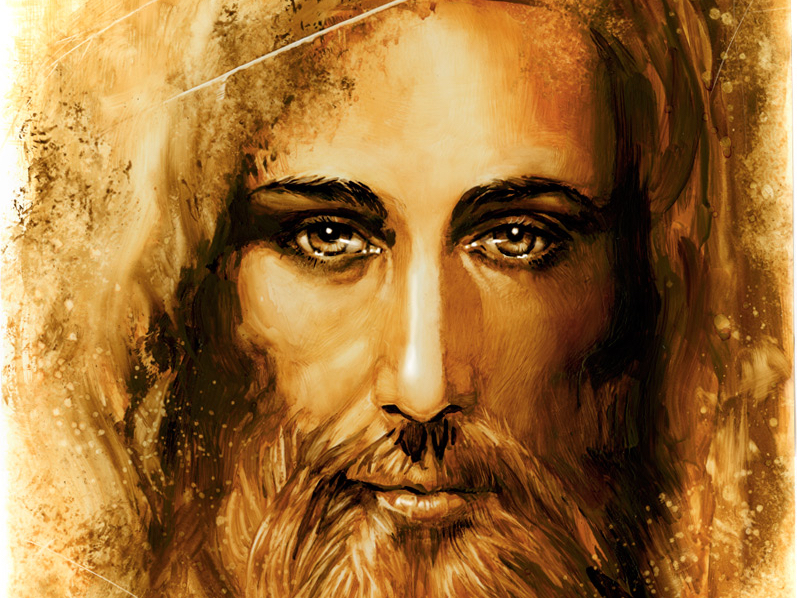
Jesus invites to participate with him that we might fulfill the law and be a light for all.
Jesus said to his disciples: “Do not think that I have come to abolish the law or the prophets. I have come not to abolish but to fulfill” (Mt 5:17). Jesus was a devout Jew, he grew up practicing and understanding the law and the prophetic tradition. We see evidence of that when, at twelve, he is found by his parents among the teachers and scholars discussing the law with understanding and wisdom. Jesus in his public ministry very much speaks with authority, as God, calling the people of Israel back to the law, both those who have turned away from God as well as those who used the law as a bludgeon and for building a wall to keep others out.
Jesus shows time and again that being true to Torah is about building relationships with God and others. He extends his hand, person to person, as a bridge for people to come to God, and he calls out the religious leaders who have utilized the law to build walls, to keep people out. Jesus healed on the Sabbath, Jesus forgave sins, Jesus touched lepers and he ate with tax collectors, prostitutes, and sinners, those on the peripheries, not because he was being willy-nilly with the law, but because he was showing by his lived example that the greatest commandment of the law was and is to love God with all his mind, heart, and strength and to love his neighbor as himself.
This practice goes right to the foundation of who God created us to be. All of humanity has been created in God’s image and likeness. Each of us is endowed with dignity by the very fact that we exist as a son and daughter of God. In Jesus, we see that the highest observance of the law of God is to love. Jesus met each person where they were and accompanied them. That also meant calling out those who misused the law by keeping others at arm’s length. Jesus did the opposite. As the Son of God, Jesus became one with us in our humanity, so that we could become one with him in his divinity. Jesus offered others his arms extended outward, inviting others to enter into his loving embrace. He would show this fully on the cross, where he opened his arms wide to embrace all peoples of every race, ethnicity, and gender.
Jesus built on the law and the prophets, because he was the fulfillment of them, and in doing so, he gave the law its greater context. The foundation of the law and the prophets were founded in love, meaning its highest expression, which is to will the good of the other as other. This means that the law is not like a stagnant pool, where we grasp onto the law and tradition for its own sake, but the divine law of God is rather like a running stream, it is always fresh and being renewed by the Holy Spirit.
What Jesus ushered in, was the reign of God, which was possible through the foundations laid by those who had gone before him: Abraham, Isaac, Jacob, Joseph, the judges and prophets, David, and those who answered the call of God to serve in his name. From a person, Abraham, to a clan, a loose gathering of twelve tribes and then a nation, Israel, God called a people to himself to shine the light of his will to others. Then at the appointed time, he sent his Son, to be one with the people he called to draw all nations to himself so that all created in his image and likeness were invited to come to be one with him, the God of all creation.
Our joy and fulfillment take shape as we are transformed by the love of God. As we build on the traditions of our faith that give us a solid foundation, we must resist holding on to them so tightly that they strangle us and suck the life out of us. That which leads us to encounter and renew our relationship with Jesus in love is what we are to embrace and share. That which has become stagnant and no longer is an avenue for affirming life must be pruned.
The love and mercy of God extended by the presence of Jesus among us is not a watering down of the law and the prophets. I would suggest that it is not only the fulfillment of them, but also that they are harder to put into practice and demand a closer walk with Jesus. This is so because we cannot fulfill a life of love and mercy on our own. We can only fulfill Jesus’ invitation to love and be able to enter into the chaos of another if we are transformed by his love and continue to allow Jesus to be present to others and love them through us.
God’s love invites us out of the darkness of our own sin and withdrawing into our own false sense of self-control and protects us from becoming over zealous moralizers. We become healed when we are humble enough to trust the movement of the Holy Spirit in our lives, are willing to confess how we put our own self-interests, fears, and prejudices first and become contrite – ackowledging the sorrow for the hurt we have caused others, and become less drawn to making excuses and protecting the false self of the ego. Through participating in the life that Jesus invites us, we drink from the living stream of his love, we grow into the freedom of being true to ourselves and who God calls us to be, while at the same time, we are to be a light and support for others as we accompany each other on our journey together.
——————————————————————————–
Painting: by Melody Owens – The original painting is 11″x14″ gouache.
Link for the Mass readings for Wednesday, June 9, 2021
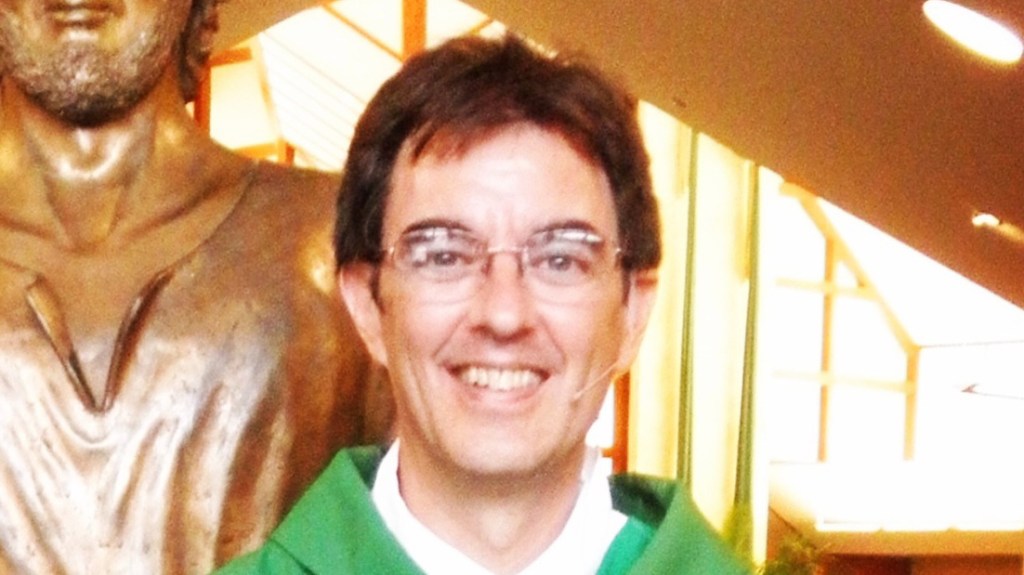
A simple smile can help to bring light into another’s darkness.
We have returned to the season of Ordinary Time. The focal point of this season expressed in the readings chosen from the Gospels will be on the life and teachings of Jesus. Our series of readings for the next few weeks will be a return to Jesus’ Sermon on the Mount. In today’s account, Jesus encourages his disciples to be “the salt of the earth” and “the light of the world” (cf. Mt 5:13-16).
This call continues to ring true for us today as his disciples. We too are to be “salt” and “light”. Salt has two major properties, preservation and flavor. Jesus emphasizes the aspect of salt being seasoning that one puts on food, which enhances its flavor. Light allows those to see in the darkness. How then can we be salt and light?
We begin by remembering that we are an Alleluia people, meaning that we are a people grounded in hope and joy because we who die with Christ will rise with him. Also, our faith is not just for us alone, we are to go out and share it with others, we are to bring Jesus to others. Pope Francis, in the very first line of his apostolic exhortation, Evangelii Gaudium, writes: “The joy of the gospel fills the hearts and lives of all who encounter Jesus. Those who accept his offer of salvation are set free from sin, sorrow, emptiness, and loneliness.”
The Pope is not saying that when we accept Jesus into our lives and develop a relationship with him that all will go our way, there will no longer be conflict or pain and that our life will now be perfect. What he means is that Jesus is the very embodiment of love and the light that leads us away from the darkness of our sin. Jesus is present and accompanies us in our pain and sorrow, and assures us that we are not alone. Jesus is the one who fulfills the longing of our heart’s deepest desire, he reveals to us our meaning and vocation in life. Jesus brings us hope and offers his hand to lead us through our darkest nights of despair and trauma.
We who have experienced the healing balm of the presence of Jesus in our life, have grasped his hand for strength, have leaned on his shoulder to cry on, and experienced the joy of our encounter with him, are to be present to others in the same way. We are to be salt by bringing the joy of Jesus to all those we encounter. Too many who claim to be Christian, walk with a cloud of gloom around them, they have become salt that has lost their flavor. Instead of drawing others to the gospel, they have withdrawn within themselves and push people away.
I am not the most extroverted of people and was more introverted in my youth. In my freshman or sophomore year of college, I heard a talk on cassette given by St Mother Theresa. She mentioned reaching out to others with a smile. I still remember the first time of risking to smile at someone after hearing Mother’s encouraging words. I was walking up the sidewalk toward the parking garage on campus. I do not remember if the person I smiled at returned the smile, yet I do remember that day as a key moment in my faith journey. Having heard of how to share the light of God’s love with another, and then to follow through with the courage to do so, filled me with joy, and it continues to make a difference in my life and hopefully, the lives of others.
How can we be salt and light in our everyday experiences? I would recommend beginning by smiling at those we encounter. This we can do even from six feet away and it need not only be limited to those we feel comfortable with or like either. We can share a smile with those we may have had conflicts with and even those for whom we may feel a bias or prejudice. This is only a small beginning, but it draws us out from our own self-centered focus and directs our attention toward willing the good of another.
A simple, yet genuine smile can work wonders for someone who begins to believe that no one cares or has the time of day for them. This is true for the recipient as well as the giver. If you have felt like you have lost some of your flavor or if you are not sure how to be a light for others, next time you catch the eye of another, smile.
In this small act, we also say to the person on the receiving end of our smile that we care enough to notice them, that they are loved just for being present in that moment. They have worth and dignity just for who they are. A simple, sincere smile can bring a little flavor to someone in a sour mood, as well as a little light to someone in a very dark place. These days we can certainly use a few more smiles. Even behind a mask, the eyes still smile.
———————————————————-
Photo: A smile for your day, may you receive it and pass it on!
Mass readings for Tuesday, June 8, 2021

We need to hunger and thirst for the dignity, not just for the select few, but for all.
The Beatitudes, like the Ten Commandments, are boundaries that define us as the children and inheritors of God’s will and blessing. We have been created to be disciplined, so to strive for freedom of excellence. Those who are disciplined to practice and train for hours have the freedom, are blessed, to play the violin, guitar, or a French horn. I still possess the same guitar my father gave me when I was seven. I can pick it up and play some notes, but because of my lack of discipline in practicing daily, I do not have the freedom nor am I able to experience the joy my father does when he plays his guitar.
This holds true for any endeavor in the arts, sports, business, family, or our spiritual life. We become truly happy and we are blessed by God when we actualize and develop the gifts he has given us through our practice and discipline. Over time, with continued collaboration with God, we will experience the freedom to put these gifts into action.
The Beatitudes that Jesus presents to us today as recorded by Matthew in his Gospel offer us opportunities to experience meaning, fulfillment, and joy. Each of them is worthy of a reflection in their own right, but for today, let us look at the fourth Beatitude which is appropriate in our present climate.
“Blessed are they who hunger and thirst for righteousness, for they will be satisfied.” The righteousness Jesus is referring to here is the justice of God. In the fullness of time, God will make all things right. We will most likely not see the full measure of justice for all people in our lifetime this side of heaven. Yet, with so much injustice all around us, we are not to just put our heads in the sand and do nothing. We are to follow the hunger and thirst God stirs up within us to discipline ourselves and work for justice, which is to give everyone their due.
We need to ask ourselves which right to life issues do we rationalize and which bring us to tears and move our hearts with compassion? Whose cry do we hear and who do we weep for: the unborn whose life ends before they are born; unarmed African Americans and people of color killed by police officers; the increasing epidemic of missing and murdered Native American and Alaskan women; the 215 indigenous children recently found buried at a Catholic mission school in BC; people fleeing war and violence denied entry into our country or worse separated from their families; Asians and Pacific Islanders being physically abused and killed; those who die each day from gun violence; the exponential number of our youth dying from addiction; the vast number of people who die because of lack of access to adequate health care…?
What is the most horrific of the above mentioned, as well as the many more that I didn’t, is that life issues have become politicized. Each one is a human dignity issue. To attempt to rationalize or justify any one issue weakens a consistent ethic of the dignity of all life. We begin to bring about change by becoming aware, educating ourselves, coming to understand the plight of, and building relationships with those whose cries we hear but even more importantly those we do not.
Being willing to enter into dialogue with someone who has a different or opposing, point of view is an important first step. Prayer is also not only necessary but imperative to bring about systemic change because through authentic prayer our hearts and minds are transformed from our biases and prejudices such that we are moved by the love of the Holy Spirit to treat each person with the respect they deserve. Love demands that we do not remain silent nor support justice for a select few, but speak and act on behalf of the human dignity for all.
Photo: Jordan Marie Brings Three White Horses Daniel of the Lower Brule Sioux runs many races including the 2019 Boston Marathon to bring awareness to the issue of MMIW – Missing and Murdered Indigenous Women. She wears the red hand symbol of the movement which stands for, “We will not be silenced.” (photo – Devin Whetsone)
Link for the Mass readings for Monday, June 7, 2021
Article from Navaho-Hopi Observer about women running to bring awareness to MMIW
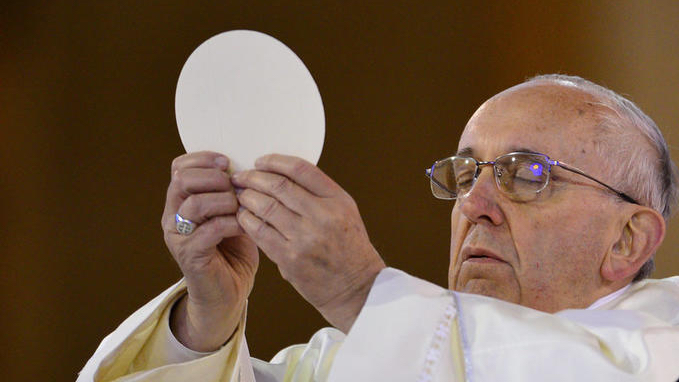
“Take it; this is my body.”
The closing line of the Gospel of Matthew reads: “And behold, I am with you always, until the end of the age” (Mt 28:20). One of the ways Jesus fulfills this promise is by being available to us during each and every Mass where he becomes present to us again in the Eucharist. He is truly present after the bread and wine have been consecrated through the power of the Holy Spirit working through the priest. Jesus shares his final meal with his disciples, as we read in today’s Gospel from Mark, and during that meal he says, “Take it; this is my body.” Then he says, “This is my blood of the covenant, which will be shed for many” (cf. Mk 14:22-24).
This scriptural account is also echoed in Matthew 26:26-29, Luke 22:15-20, 1 Corinthians 11:23-25, and John 6:51-58. Jesus came to be with us so we could be one with him. The first step was the Incarnation, where the Son of God became man and entered our humanity, then he was willing to be the lamb that was slain for our salvation, and his sacrifice is re-presented during each Mass in which we consume his very Real Presence while still in the appearance of bread and wine.
What happens during the Eucharistic Rite is that the priest calls down the Holy Spirit and the accidental form of bread and wine remain the same, but the substance of these same elements are transformed into the Body and Blood of Jesus Christ. The same Jesus who was present with the apostles at the Last Supper is present again, and we enter into communion with his very being, so to be conformed to him, to be one with him, to receive his divinity so we can become God through our participation in his life.
That is the intellectual expression of what is happening, but for me, the moment of the reality of the Eucharist came when JoAnn and I moved to Florida. We soon started going to Church at Jupiter First Congregational Church. We attended for about five years. The music was phenomenal, the sermons engaging, I became involved in leading a Bible study for teens, and we were involved in adult classes. I found though that in the final few years that I was leaving the services depressed. In our adult breakout sessions, I found that there were many other Catholics attending and sharing their concerns and frustrations with the Catholic Church. I found myself defending and attempting to help people understand the different issues they had and realized, if I was defending the Church so much, maybe it was time to return.
One, Sunday sometime around 2006, after leaving service, I drove across the street to St Peter Catholic Church, walked in and sat down in the back of what is now the fellowship hall (which we will all be back in for the summer while renovations take place in the main sanctuary) and as the service began I wept. It was like coming home. I returned again the next week and the same emotional experience happened. I would come to realize that what I was missing was Jesus present in the Eucharist. I haven’t looked back, and I have found that my life has become more fulfilled and my relationship with God has continued to grow ever since.
Jesus promised to be with his disciples and us in saying that he would be with us always. He has kept that promise in being present in the Eucharist. We can experience him in his Word proclaimed and Real Presence provided in each Mass we attend; attending each Sunday or daily. No matter how crazy or insane the world gets, no matter how much we are struggling, no matter who lets us down or is not there for us, no matter what trial, tribulation, state of confusion or sin we are in, Jesus will be there for us. We can come up to receive and consume him or receive his blessing.
Even outside of the Mass Jesus is reposed in the tabernacle. We can come to him to pray, to just look at him while he looks at us, to spend time in adoration and contemplation, to come to him that he might speak to us in the silence of our hearts. Jesus has not forsaken us nor left us orphans. Jesus is present to us and for us. Come to Jesus and find some rest, strength, courage, acceptance, affirmation, and/or love. What you find you need in the depth of your soul Jesus will provide in his presence.
Photo: Pope Francis celebrating Mass in Brazil, source – Buda Mendes / Getty Images
Link for the Mass readings for Sunday, June 5, 2021
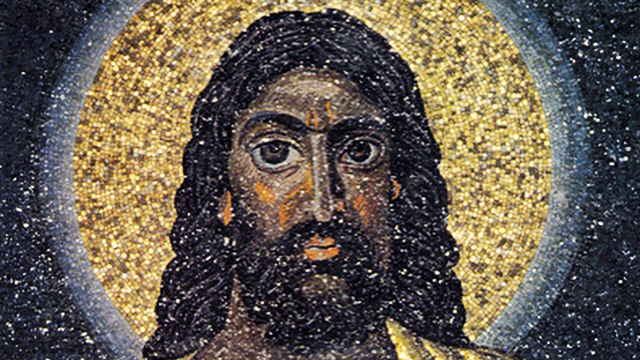
Jesus is holding up a mirror, who do we see?
In our Gospel reading from Mark, there appear to be two separate accounts. In the first, we witness Jesus’ critique of the scribes, and in the second, the generosity of a poor widow is emphasized. There could not be a starker contrast between the two. Jesus points out those scribes with the primary motivation of self-aggrandizement, “who like to go around in long robes and accept greetings in the marketplaces, seats of honor in synagogues, and places of honor at banquets” (Mk 12:38-39). They make a lofty show of themselves, yet, what is worse is the following verse. “They devour the houses of widows and, as a pretext, recite lengthy prayers” (Mk 12:40).
The implication is that certain scribes used their position not to edify, provide care for, and lead widows closer to God, but instead chose to exploit them for their own selfish gain. As Jesus finished his rebuke of the scribes, he then observed those making contributions at the treasury of the Temple. A poor widow donated two coins. No one, except Jesus, noticed. Jesus called his disciples to him and said, “Amen, I say to you, this poor widow put in more that all the other contributors to the treasury. For they have all contributed from their surplus wealth, but she, from her poverty, has contributed all she had, her whole livelihood” (Mk 12:43-44).
Jesus commends this woman for her generosity. She does not make a fancy show of what she is doing, she quietly and simply gives all that she has. Is Jesus sharing his critique of the scribes just moments before related to this expression of generosity by the widow? Could she have done so through the influence of one of these scribes? We are not told why she gives all she has, but her willingness to do so is clearly on display.
Often in the Gospels, Jesus holds up a mirror, especially to those in positions of religious authority who place their focus on themselves, their own gain, and prestige, instead of their service to the poor and those in need. Those like Matthew and Zacchaeus, though not scribes but tax collectors, embraced Jesus’ invitation of repentance, were willing to make a 180 degree turn from their old ways of self-service, and instead were willing to change and begin anew.
Will we be like the unnamed scribes and Pharisees who were not willing to look in the mirror that Jesus held before them, more interested in supporting their place of entitlement and privilege, and be unwilling to change? Or, will we, as did Matthew and Zacchaeus, allow our consciences to be convicted, be willing to repent and rend our hearts so to be moved and more willing to love, so to stand alongside our brothers and sisters in need?
We are receiving a clear message through this pandemic and from Jesus that what affects one of us, affects all of us or as Bruce Lee stated, “Under the sky, under the heavens, there is but one family.” If one among us is hurting, we are all hurting. We can do better to help one another.
Photo: Closeup of a mosaic of Jesus in the apse of the Basilica of St Cosmas and Damien in Rome.
Link for the Mass readings for Saturday, June 5, 2021
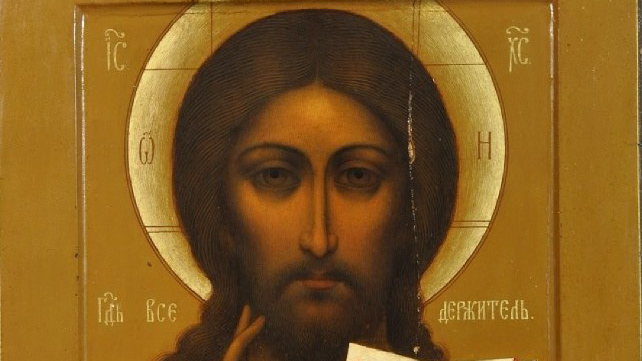
Iesous Kyrios – Jesus the Christ is our Lord.
The opening scene from today’s Gospel from Mark opens with Jesus teaching in the temple area. He poses this question to those gathered, “How do the scribes claim that the Christ is the son of David” (Mk 12:35)? The question that Jesus is offering engages in the Jewish debate regarding the promise of the Messiah or Mashiach in Hebrew, the Christ or Christos in Greek. Messiah or Christ is not a surname but a title meaning anointed one.
One interpretation of the long-awaited Messiah was a kingly figure descended from King David. Son of David is a common Messianic title. The blind Bartimaeus called out to Jesus using this title (cf. Mk 10:46-48). Jesus then quotes the beginning of Psalm 110 as he goes deeper. “David himself, inspired by the Holy Spirit, said: The Lord said to my lord, ‘Sit at my right hand until I place your enemies under your feet’” (Mk 12:36).
This statement can be a little confusing, especially if you are hearing this word proclaimed and not reading it closely. The first Lord referred to by Jesus has a capital letter “L”and the second lord has a lower case “l”. The reason for this is that in the original Hebrew the sacred name of God was not to be uttered or written. Instead, the Hebrew Adonai, meaning Lord, would be used to refer to God. The use of the word lord with a lower case “l” could refer to a military leader like King David.
In this very short account from Mark today, Jesus deftly addresses some of the titles floating around about him, Messiah, Son of Man, Son of David, and with his final question, “David himself calls him ‘lord’; so how is he his son” (Mk 12:37). This One to follow David would be even greater than the expectations of these messianic titles because he actually preceded David and so is even greater than the genetic heir to David. Jesus is saying that he is the Son of God and he is Lord.
This not only far surpasses even the highest ideal of messianic hope but would also be a direct challenge to the occupying Romans. For in the ancient Greek, of which Mark is written, Kyrios, means Lord. For the Romans, Caesar is Lord. Jesus is challenging the worldly establishment by saying that he, not Caesar, is Lord.
Jesus, soon after these words, will participate in his suffering, death, resurrection, and ascension, where he will return to be seated at the right hand of God his Father. The enemies that will be subjected under his feet will be sin and death, each of which he will defeat.
This is why Jesus is our hope even and especially during our troubled times. Jesus is our Lord not any emperor, president, or worldly leader. It is he to whom we are to place our trust, to follow. It is Jesus as our Lord who will lead us to freedom from our bondage to addiction, racism, sin, suffering, and ultimately even our death.
Photo of an icon of Jesus accessed from link
Link for the Mass readings for Friday, June 4, 2021

When we put God first, our relationships with ourselves and each other fall into place.
In today’s Gospel from Mark, one of the scribes approached Jesus and asked him, “Which is the first of all the commandments” (Mk 12:28). This may have been a challenge to Jesus or it may just have been a valid question of one seeking the Truth. Scribes were the experts in securing and making known the Torah. They could read and write, a skill not only used for protecting and passing on the faith, but also for the daily tasks of commerce and contract writing.
This question of the scribe was one that was asked often by those who sought how best to live out the Torah. Not only were there the Ten Commandments, but throughout the Torah, there were 613 prescribed laws! A common debate that was often entered into was which were the most important to follow to be faithful, as well as the minimalist approach, being, which were the most important to be followed so someone could just get by?
Jesus replied, “The first is this: Hear, O Israel! The Lord our God is Lord alone! You shall love the Lord your God with all your heart, with all your soul, with all your mind, and with all your strength. The second is this: You shall love your neighbor as yourself. There is no other commandment greater than these.” With this response, Jesus drew first on Deuteronomy 6:4-5 and then regarding loving your neighbor, Leviticus 19:18. By answering in this way, Jesus stated that when we orient our lives to who God has created us to be, which is to Love God first, place God at the center instead of ourselves, we can then better love our neighbors and ourselves.
St Augustine, the bishop of Hippo (354-430), echoed Jesus’ “Greatest Commandment” by stating that we can love God and do whatever we want. The order of that statement is aligned to the commandment Jesus gave. God is first. The problem many of us have is that we place ourselves first, and seek to bend God’s will to our own. We look to flip the words to, do what I want and God will love me. It is true that God will love us, but we will not experience his love, for when we place ourselves first we will have disconnected ourselves from our relationship with him.
When we shift our orientation to seeking God first, such that he is the foundation of our life, our world opens up. Many of us are wounded by our own sin and the sin of others. We retreat into defensive postures and actualize defense mechanisms to survive. These may be good and necessary at the moment, but the challenge is that if we continue to live in a posture of survival mode, we are merely existing.
God wants us to strive to be fully alive by actualizing our vocation and the truth of who we have been created to be. This becomes a reality when we recognize our need for and open ourselves up to receive God’s love. When we do so, we can then receive his healing balm of forgiveness, love, and mercy. Once we begin to experience each we will begin to see ourselves and others, not from our own limited perspectives where we can slip into defensive postures that may feed our biases and prejudices, but from the greater breadth and depth of how God sees us as his children, made in his image.
God reaches out to us in so many ways to tell us that he loves us more than we can ever imagine. Unfortunately, when we are diverted and distracted by other false pursuits apart from his will we limit our experience of this love. Yet, God’s love for us remains unconditional. God loves us as we are, right now, right at this moment. We just need to take some time to sit, breathe, and be willing to accept the gift of being loved for who we are as well as embrace the fullness of who he has created us to be as mental, physical, emotional, sexual, and spiritual human beings. We need to resist repressing any aspect of who we are and allow God access to all aspects of ourselves, so as to become more whole and more alive.
Through embracing God’s healing forgiveness, love and mercy and being engaged in the fullness of our humanity, we can begin to relax our defensive postures. We can become advocates for healing the division, dehumanization, and polarization in our realm of influence in person and online. By not being limited by our biases and prejudices and refusing to project blame and/or shame on others we can be more open to encounter and accompany one another as human beings, and then better be able to experience our differences not as obstacles but gifts for our mutual growth.
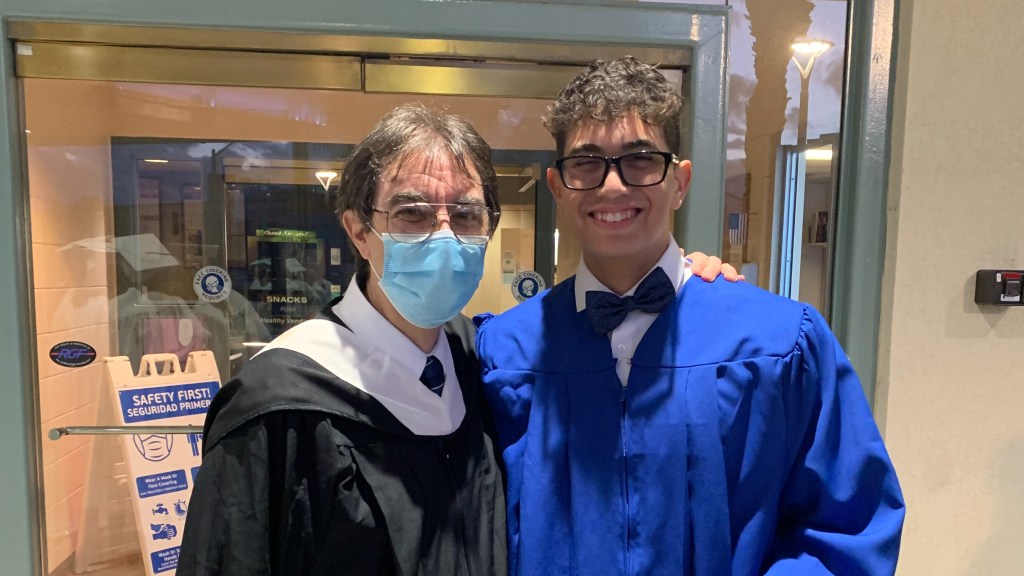
Photo: We are all called to love God, ourselves, and our neighbors as ourselves by willing each other’s good!
Link for the Mass readings for Thursday, June 3, 2021
 Spiritual Stepping Stones