Reflections on the Gospel Reading for the Day
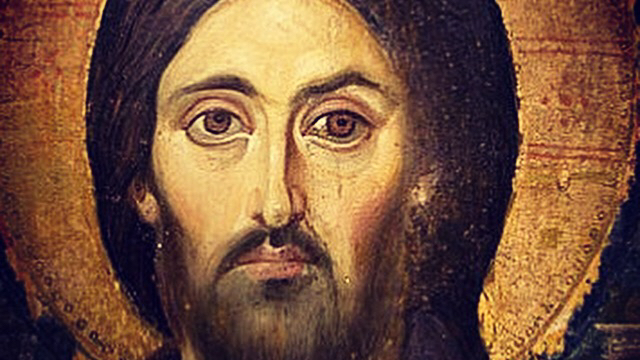
Jesus, can he really be of help today?
Jesus asked, “Who do people say that the Son of Man is” (Mt. 16:13)?
Peter answers Jesus by saying that Jesus is: “The Messiah, the Son of the Living God” (Mt: 16:16). In other words, Jesus is Emmanuel, God with us.
What does Peter’s response have to do with our lives? What about this pandemic we are still immersed in? Jesus is the Christ the Son of the living God. This means Jesus is one with us. The infinite reality of God is present within each human being that exists because Jesus became one with us so that we can be one with him. We have been created in God’s image and likeness and this is true from the moment of our conception through each stage of life until natural death. The unfortunate effects of Orignal sin are that our image has been distorted and our likeness to God has been lost.
Jesus experiences our suffering personally. Whatever we may be going through, sickness, the effects of Covid and pneumonia, loss of job, financial stress, conflict, lack of access to adequate health care, or even the lack of being treated with and afforded the basics of human dignity; such as those of Asian descent living in our country who have faced the astronomical increase of violence directed at them for no rational reason. Even the suffering of the death of those we hold close to our heart, Jesus experienced. Jesus experienced the fullness of the human condition. He feels our anxiety, fear, and pain.
Our own personal challenges, trials, and tribulations as well as the ongoing polarization and division in our country and Church will continue as long as we refuse to see the dignity present in each and every person we encounter. Human beings are not: illegal, to be objectified, property to be used, to be abused, or to be disposed of. Difference in viewpoint our outlook does not mean we are enemies. We can work to limit the effects of Covid if we wash our hands often and don’t touch our face, wear masks, social distance, and receive vaccinations if we are able to access them. We can provide work and access to adequate health care as well as reduce the scourge of racism, when we have the will to resist seeking scapegoats and instead work together for the common good of all.
We need to ground ourselves in the life of and place our trust in Jesus Christ, the Son of the living God, and turn to him in prayer, with our anger, our doubt, our pain, and our yearning for justice, mercy, and protection for the most vulnerable among us. Our prayer, if it is true, will lead us to act in the way God leads us to support the dignity of life at every stage. We need to respect, be present to, and support those around us and while we strive for change, we can find some comfort in the words of Fr. James Martin, S.J.: “Life is stronger than death. Love stronger than hatred. Hope is stronger than despair. Nothing is impossible with God.”
—————————————————————————–
Photo: 6th century icon from St Catherine’s Monastery
The final quote came from a talk given by Fr. James Martin, S.J. given on April 22, 2014, titled On Pilgrimage with James Martin, SJ, Fordham University.
Link for Mass readings for Monday, February 22, 2021
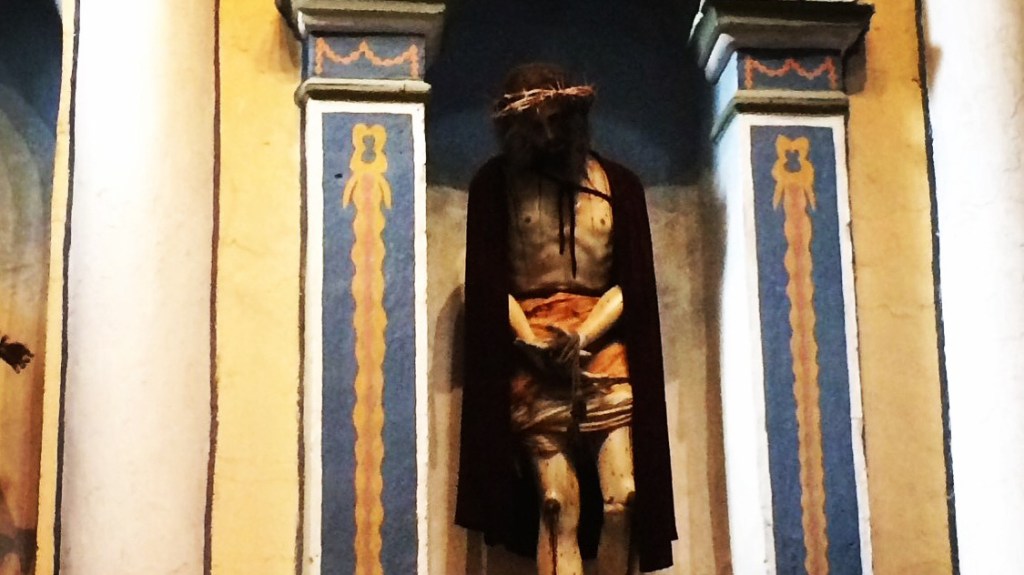
How do we treat each other? Do we demean or empower?
“The Spirit drove Jesus out into the desert, and he remained in the desert for forty days, tempted by Satan” (Mark 1:12-13). Jesus experienced the temptations of Satan, the one who tempted Adam and Eve, the father of lies, the accuser, the slanderer. Satan is one who seeks division and we dismiss the reality of his presence at great risk. On the other hand, we give him more power than he deserves. Jesus is tempted, but unlike Adam and Eve, he does not give in. Jesus remains grounded in the will of his Father and so Satan has no power over him.
We need to remember that the weakest Christian is more powerful than Satan himself because we can call on the name of Jesus. This is not some magic incantation, but when we call on the name of Jesus, he is present with us, the fullness of his humanity and his divinity. God has given Jesus the name above every other name so that as his word is spoken, every knee shall bow in heaven and on earth (cf. Philippians 2:9-10). Just as a floodlight shines in the darkness, the darkness gives way to the light. This is even more true with Jesus. Where he is, no evil can remain.
I had a dream some eight to ten years ago now, I am not sure of the exact time, but it is still just as vivid. I was sitting on a couch on the first floor of a house. The scene shifted so that I was seeing myself sitting on the couch from above and then my view was redirected to the attic. I witnessed a misshapen, dark figure rummaging through old boxes and newspapers. He embodied pure evil. I was then back in my body and knew this creature was moving out of the attic and coming down the stairs to the room I was sitting in. My heart was pounding and I felt petrified as I heard his steps drawing closer. I was frozen in fear. In a few more moments, he came into view. What I saw was not the figure in the attic, but just a man, but I knew it was him. As he continued closer my fear increased then a hymn came to mind. He stopped the moment I began to sing, my fear began to dissipate and I woke up.
Evil tends to present itself at first as an apparent good, as attractive, as normal. Otherwise, we would reject it outright. Satan and his demons are active through whispers and nudges, they look for our weaknesses and through the same tactics as peer pressure, seek to inject their poison and manipulate our actions. I am not talking about possession here, I am just talking about their divisive influence. The most dangerous evil is the one masked in faith. Someone who can speak the verses of a Bible and quote chapter and verse does not a Christian make. The devil can do the same thing (See the parallel accounts today’s Gospel of Mark – Mt. 4:1-11 and Lk 4:1-13).
Each day we need to examine our conscience and assess honestly who we are serving. As with the Parable of the Talents, we cannot sit on our hands and do nothing like the wicked servant. That is the most effective tool Satan has, that he can influence us to do nothing in the face of the dehumanization of the person in all of its forms. We rationalize different reasons why we might support what we know is unacceptable in ourselves as well as others, then we begin the slide into gossip, prejudicial, and/or divisive talk, that lead to actions, such as the centurions who placed a robe and crown of thorns on the bloody, scourged body of Jesus and mocked him, an innocent man.
May the icon of Jesus mocked be a light that reveals to us all those, even in the smallest of ways, who have been belittled, demeaned and/or degraded in our thoughts, and through our words, and/or actions, and those we have supported for doing the same, because what we do to the least among us, we do it to Jesus (cf. Mt 25:35-45). Let us seek God’s forgiveness for the part we have played in spreading the darkness of the father of lies by our actions and/or inactions.
When we are divided, talking at or over each other, we will not solve the smallest issue, let alone the big issues facing us. There are no quick fixes and it will take a unified effort to be able to listen to each other and work together to find solutions to the many problems we have. One shift we need to make is to reclaim, in the words of Joseph Cardinal Bernardin who was the archbishop of Chicago from 1982-1996, a consistent ethic of life. Jesus calls us to recognize the dignity of the person. From the moment of conception until natural death and at each stage in between, we are called to empower each person we encounter, and seek to bring about reconciliation and unity in our realm of influence. Protecting the dignity of the person needs to be our starting point in addressing any policy issue.
Do we fall short? Yes, all of us do every day. We need to resist beating ourselves up because that is another trap, another lie. We need to review our thoughts, actions, and words with humility. We can thank God where we have said yes to his will and followed through on acting where he has led us, where we have loved, as well as ask for forgiveness for where we have come up short. May we begin each day seeking to give our life, more and more to our loving God and so leaving less and less room for the allurements of Satan. When tempted, call on the name of Jesus, or sing in his name! As St Augustine wrote, the one who sings prays twice.
Photo: Jesus covered with purple robe and crown of thorns, side chapel in the Mission San Luis del Rey de Francis, Oceanside, CA
Link for the Mass readings for Sunday, February 21, 2021.
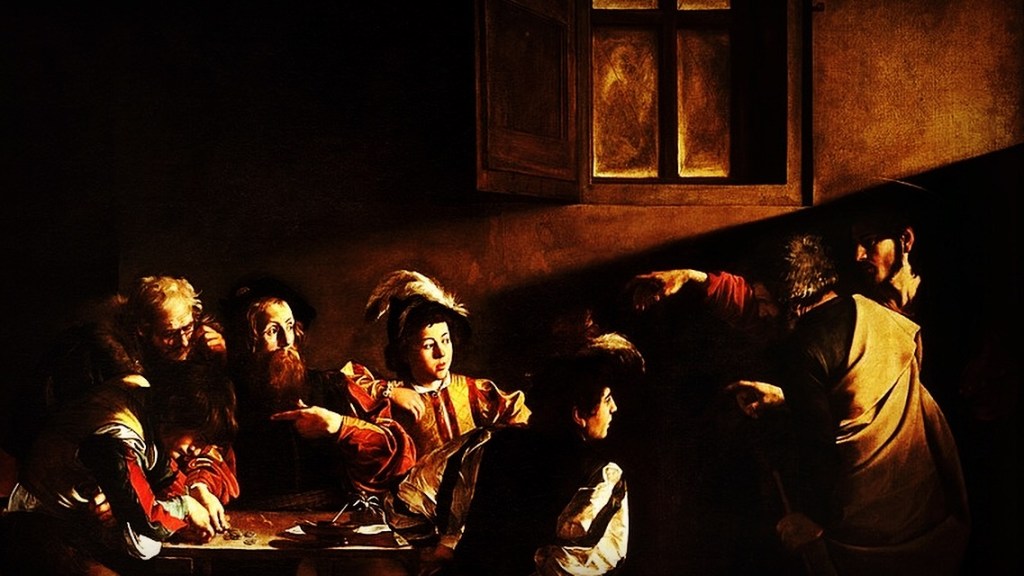
God loves us more than we can ever mess up.
Think about how good we feel after coming to be on the other side of healing from a bad cold or the flu, recovering from a twisted ankle, a broken collar bone, or other health conditions. We experience a feeling of wholeness that was missing during the midst of our suffering where we may have pondered a time or two whether or not we would ever get better.
The same can be said for estranged relationships. There is a distance of separation that can be agonizing, an inner gut-wrenching experience that gnaws away at us. We wonder if there can ever be a coming back together. When there is reconciliation, forgiveness, and amending of the brokenness of relationships, we can experience such a relief, lightness and joy, that we never imagined possible while in the midst of the gut wrenching angst, conflict and separation.
Sin separates us from one another, and unchecked sin can build and multiply like cancerous cells. The Pharisees and the scribes questioned why Jesus was eating with tax collectors and sinners, and Jesus replied: “Those who are healthy do not need a physician, but the sick do. I have not come to call the righteous to repentance but sinners” (Lk 5:32).
Jesus is truly a light in the darkness. For Levi and his friends, who just settled for the path they were on, thinking and feeling, this is the best it was going to get, were given a choice, an invitation, a new way. A great celebration of fellowship ensued in Levi’s home because these men and women, who had been outcasts, who were separated from the greater community were forgiven, welcomed, and embraced. They were loved by Jesus as they were. They did not have to change first for Jesus to call Levi and gather with them.
They were welcomed into the kingdom and reign of God. Their ticket to reconciliation and healing was accepting the invitation of Jesus, to receive and experience his love and welcome. Levi and the other sinners did not run from the light of Jesus, but were willing to recognize their need for healing, were willing to repent, to turn away from their prior ways of life and so were reborn!
They were divinized because of their willingness to participate in the life of Jesus. Levi would continue to follow Jesus such that it was no longer he who lived, but Christ who lived in him (cf. Galatians 2:20)!
Jesus invites us each day, as he invited Levi in today’s Gospel, to follow him. We are given the same invitation and opportunity for healing and for discipleship. Will we resist rationalizing and justifying our sinful thoughts, actions, and habits, welcome the light of Jesus that reveals our venial and mortal sins, and admit that we are in need of healing, and repent so to be forgiven and released from all the energy we have expended in protecting and hiding from ourselves and our God who loves us more than we can ever mess up?
Quietly spending time daily, especially in the evening and recalling our day, by asking Jesus to reveal to us those ways in which we have not lived according to his will is a wonderful practice. Those sins we call to mind we can confess on the spot and Jesus will forgive us. As we recognize recurring actions or more serious sins, we will need a more direct human encounter by embracing the Sacrament of Reconciliation. Reconciliation is a gift of mercy and healing where we can experience firsthand the healing grace of Jesus.
Jesus loves us as we are. Yet holding on to our sin, keeps us at a distance from experiencing the greater breadth and depth of his love. We only need to be willing to be contrite, to embrace sorrow for the harm we have inflicted with our personal sins, and go to the Divine Physician in our time of prayer and/or Reconciliation. Once absolved, the heavy weight is lifted and we are healed. We are then better able to engage in penance to atone for our sins committed, better able to forgive others as we have been forgiven, and to love as we have been loved!
——————————————————————–
Photo: The Calling of St. Matthew (also known as Levi) by Carravagio, 1599-1600. Wonderful work to meditate upon for Lent!
Link for the Mass readings for Saturday, February 20, 2021
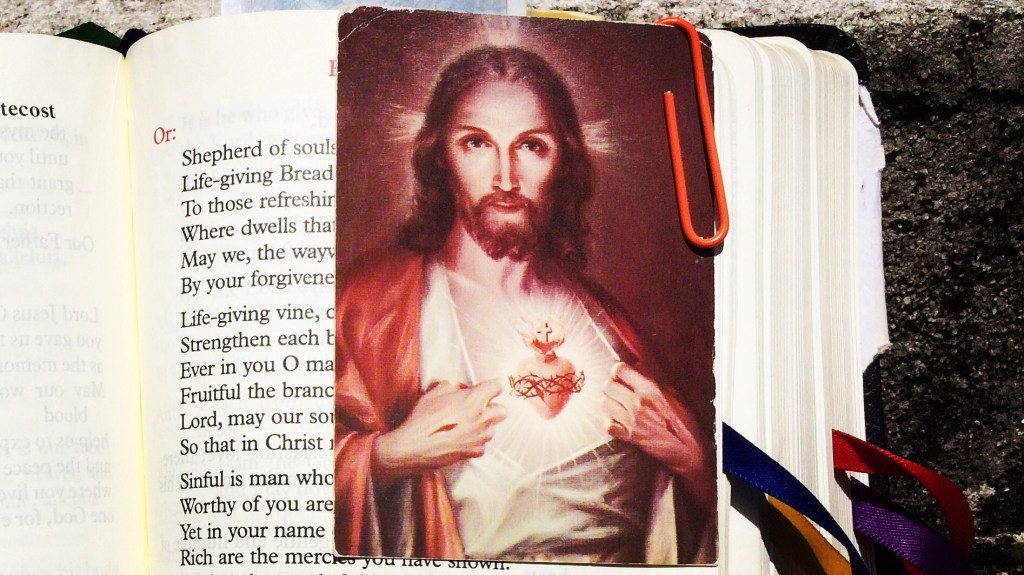
Aligning ourselves with the rhythm of the beating of the Sacred Heart of Jesus will help us in our discipline of fasting.
Today is February 19, 2021 A.D. The letters, AD, stand not for after death or analog to digital, but Anno Domini. This is a Latin phrase that means in the year of our Lord. We are living in the age of the Church, as well as in between the time when Jesus experienced his life, suffering, death, resurrection, and ascension into heaven until he will come again.
In the Gospel of Matthew, we read today about the account of Jesus comparing himself to a bridegroom: “The days will come when the bridegroom is taken away from them, and then they will fast” (Mt 9:15). In a sense, the bridegroom has been taken from us, in another sense, he is closer to us now than he was when he was with his disciples when he walked the earth. The fullness of his reign though will not be consummated until Jesus comes again, but while we wait, when we are willing to set aside other distractions and be still, we can hear and feel the beating of his Sacred Heart.
We need food for our survival, but we don’t need as much as we think we do! Fasting from food is not the only focus of our Lenten fast. The discipline of fasting provides an opportunity to keep our passions in check. By resisting the impulse of instant gratification, we are able to better discern between apparent goods and the actual Good in our lives. When we are able to navigate through the maze of distractions, temptations, and allurements on a physical level, we can begin to go deeper into the spiritual reality to begin to expose some of the demons that we feed, such as “distrust, apathy, and resignation” that Pope Francis talked about in his Ash Wednesday homily a few years ago.
Pope Francis mentioned that these three demons “deaden and paralyze the soul of a believing people.” He continued by stating that: “Lent is the ideal time to unmask these and other temptations, to allow our hearts to beat once more in tune with the vibrant heart of Jesus.”
When we are willing to discipline our impulsiveness, to slow down, to take a breath, to be more mindful, we can begin to see more clearly our complacency, contempt, and indifference. We can then be more open to God’s invitation to enter into a relationship with him and each other. We can then better assume the posture of John the Apostle by resting our head on the chest of Jesus (cf John 13:25), such that our hearts will beat in the same rhythm as his Sacred Heart.
This is the gift of contemplation that drives us to service. This is the same rhythm that beat in the prophet Isaiah who reminds us in today’s first reading what true fasting is all about: “releasing those bound unjustly, untying the thongs of the yoke; Setting free the oppressed, breaking every yoke; Sharing your bread with the hungry, sheltering the oppressed and the homeless; Clothing the naked when you see them, and not turning your back on your own” (Isaiah 58:6-7).
————————————————————————
Photo: A helpful bookmark from my breviary
Link for Pope Francis homily:
https://aleteia.org/2018/02/14/pope-francis-offers-a-worksheet-for-lent-check-it-out/
Link for the Mass readings for Friday, February 19, 2021
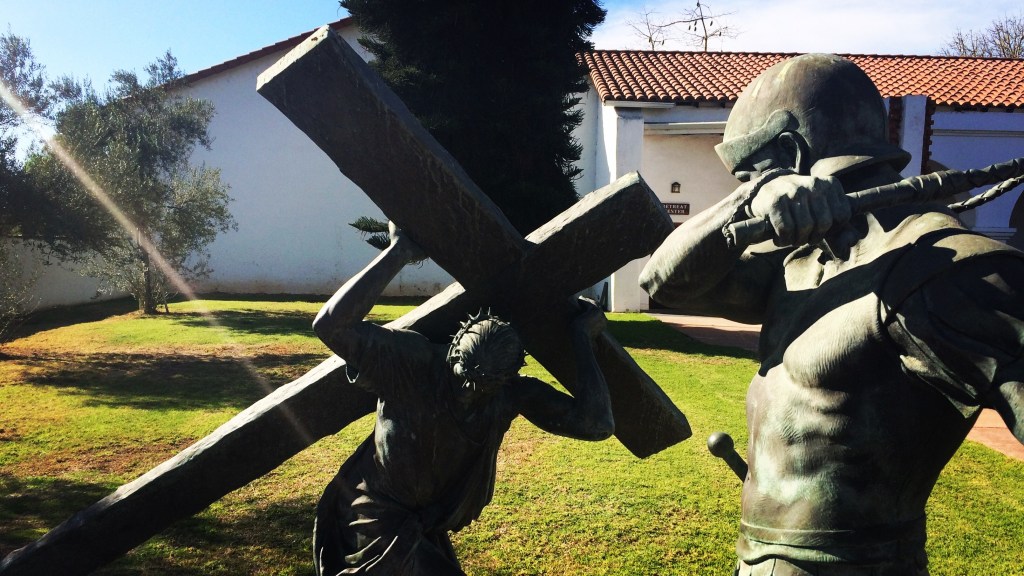
Let us too take up our cross this Lent.
Jesus said to his disciples and all who could hear him: “If anyone wishes to come after me, he must deny himself and take up his cross daily and follow me” (Lk 9:23). We can best take up our cross daily by putting into practice the three pillars of Lent offered yesterday, which are almsgiving, prayer, and fasting. These disciplines aid us in resisting the temptations of pride, power, pleasure, honor, and wealth.
Giving ourselves some time to be still and to breathe deeply is a good action to begin Lent. From this place of letting go and just stopping from everything else, we can then pray about how we can put these pillars of Lent into practice for these next forty days. If forty days are too much, think about the next week, or even just today.
As we make steps to slow down and be still, we will also need to be aware of our own resistance. We also need to be more aware of our sinful inclination to be indifferent or fearful of being present to those in need within our reach. Praying and seeking the help of God to give us the discernment and the eyes to see who among us are in need, and the courage to act and to give of ourselves to others can also be a good start.
Returning to prayer throughout the day will help to establish a habit and rhythm of prayer. This often is accomplished best when we schedule set times to meditate on the readings of Lent, to be still and rest in the Lord before the Eucharist in adoration or present in the tabernacle, pray the rosary, walk or sit among the beauty of God’s creation, and/or spend some quiet time reading a spiritual book, or the life of a saint. It is also good to just be silent and still. While at work, it can be as simple as stopping for a few moments at set times, say every three hours, to take a breath, and repeat a verse or short prayer, such as, “God come to my assistance, Lord make haste to help me.”
Each day it is also helpful to evaluate what we consume, what time and energy we expend, and discern, what we can fast from. Define the types of food that really aren’t healthy for us, what activities that we can let go of so we can devote more time to practices that empower, encourage, and lift up others as well as ourselves. We can fast from thinking, speaking, or acting in any way that is unkind, belittling, or demeaning.
When we put something in place that will help build a foundation for a closer walk with Jesus we are taking something out of our life that could lead us astray. Jesus guides us in today’s Gospel to take up our cross and follow him, meaning we are to discipline ourselves so as to free ourselves from that which enslaves us.
We can take up our cross today when we make time to pray, to be still, and follow God’s will. We can take up our cross when we fast from any negative, demeaning, or derogatory thoughts, words, and actions and replace them with thoughts, words, and actions that are encouraging, hopeful, and loving. We can take up our cross when we embrace opportunities to give of our time, talent, and treasure to build up and provide access to those around us. Let us take up our cross today and each day during this season of Lent so to know better the One who died on the cross for us, the One who gave his life for us that we might have life and have it to the full!
——————————————————-
Photo: Jesus with the Cross, Mission San Luis del Rey de Francia, Oceanside, CA
Link for the Mass readings for Thursday, February 18, 2020.
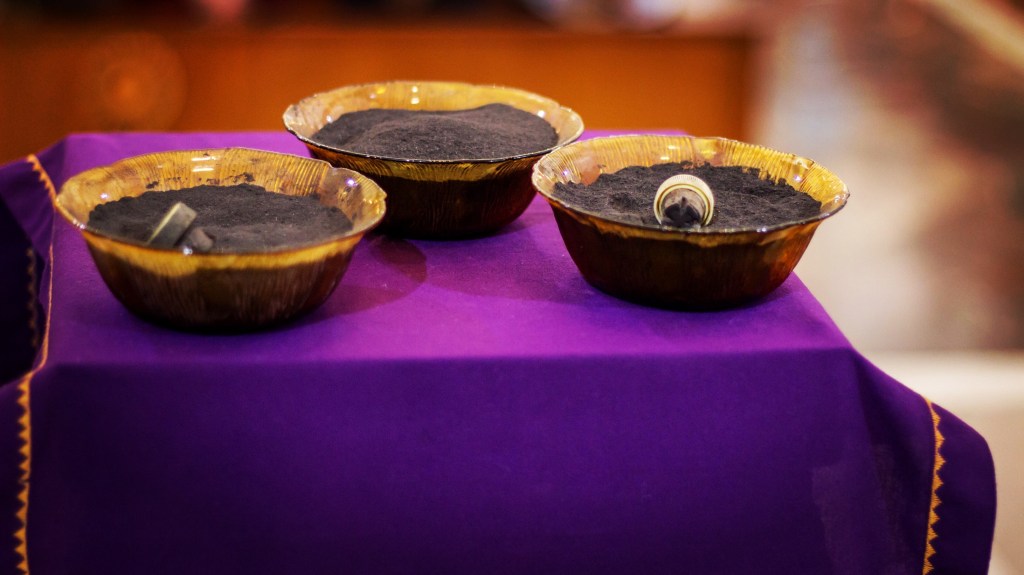
Why ashes? Why Lent?
In our Gospel reading from Matthew today, Jesus presents us with the three pillars of Lent: almsgiving, prayer, and fasting. With each pillar, he cautions his disciples to resist the temptation of engaging in these spiritual practices such that the focus is placed on us, such that we believe we ought to receive accolades for our efforts. The purpose of almsgiving, prayer, and fasting is to grow in true humility, which is placing ourselves in a posture of surrendering our will to God, to come to a place within our being that we can love as Jesus loves us, to will the good of the other as other for their own sake, not seeking anything in return.
We give to others not “to win the praise of others”, not even to receive thanks, but specifically because another is in need of our help. We pray, not “that others may see” us, to puff ourselves up, but to empty ourselves into the arms of our Father, recognizing how dependent on him we really are. We fast not “to look gloomy like the hypocrites”, so to draw attention to ourselves, but we fast to discipline ourselves such that we are not enslaved to our passions. We discipline ourselves, so as to walk on the path of freedom for excellence and engage in the fullness of the life God made us for.
Today as you receive your ashes sprinkled upon your heads, and even if there are those reading who do not (like myself), we are reminded that from dust we have come and to dust, we will return. We are created, finite beings, that are given a limited time to live our life on this earth. This is important to acknowledge so that we resist the temptation of taking our life, the gift of our time on this earth, for granted.
We are also reminded to repent and believe in the Gospel. Jesus, help us to recognize and to be contrite for our sinful thoughts, words, and actions and reveal to us the empty promises of our distractions and temptations. Through our participation in almsgiving, prayer, and fasting, help us to experience our restlessness, and seek not to appease it with finite, material things that will not last, but to come to recognize that our fulfillment will come only when we find our rest in the One who has made us for himself, our loving God and Father who awaits us with arms wide open.
——————————————————————-
Photo credit: https://www.cathopic.com/arito
Link for the Mass readings for Ash Wednesday, February 17, 2021

“Watch out, guard against the leaven of the Pharisees and the leaven of Herod.”
Today’s account from the Gospel of Mark is a continuation of what we read Saturday when Jesus convicted the Pharisees for demanding a sign. He recognized their hardness of heart and hypocrisy and with the opportunity of being together in the boat, Jesus seized on this encounter as a teachable moment. He wanted to warn those of his inner circle to be aware not to follow the same path of corruption when he enjoined them: “Watch out, guard against the leaven of the Pharisees and the leaven of Herod” (Mk 8:15).
The disciples missed the point as they focused on the literal reality that they only had one loaf of bread among them. Jesus was warning his followers about the danger of pride, seeking honor, power, and fame which had lead many of the Pharisees and Herod astray. To be his followers, striving to place themselves first would be not only the undoing of each of them but also this posture would undermine those they would be charged to care for.
Unfortunately, too many have not heeded this lesson that Jesus offered in today’s Gospel to his disciples regarding being aware of the corrupting leaven of many of the Pharisees and Herod. Just as the effects of original sin has wounded humanity, so it has also affected those in the Church. Throughout the ages, clergy and laity alike have succumbed to the temptations of placing our needs and focus on ourselves instead of God and who he calls us to serve.
Yet throughout the worst of corruption and abuse, the Church is still here. God continues to work through many who are faithful to his invitation and follow his will in simple ways, living lives of quiet service. It is unfortunate that there are those who leave because they see hypocrisy, injustice, abuse, and corruption. For it is those of us with eyes to see and ears to hear that need to stay and help to fight for the true expression of the Church. Even when cries for reform may be stifled and frustrations may arise time and again, we must remain persistent and lean on Jesus to give us the strength and clarity on how best to proceed to heal his wounded Body.
At the same time, we need to be aware of the sinful leaven that would seek to undo each of us. It is easy to point fingers. We will be on surer footing when we choose God over our own self-serving pursuits, seek to live simple and holy lives, while seeking to be aware of the needs of others, and work to serve, protect, and empower the dignity of those in our midst each day.
——————————————————
Photo: Sunrise outside in the courtyard of St. Peter Catholic Church last July.
Link for the Mass readings for Tuesday, February 16, 2021
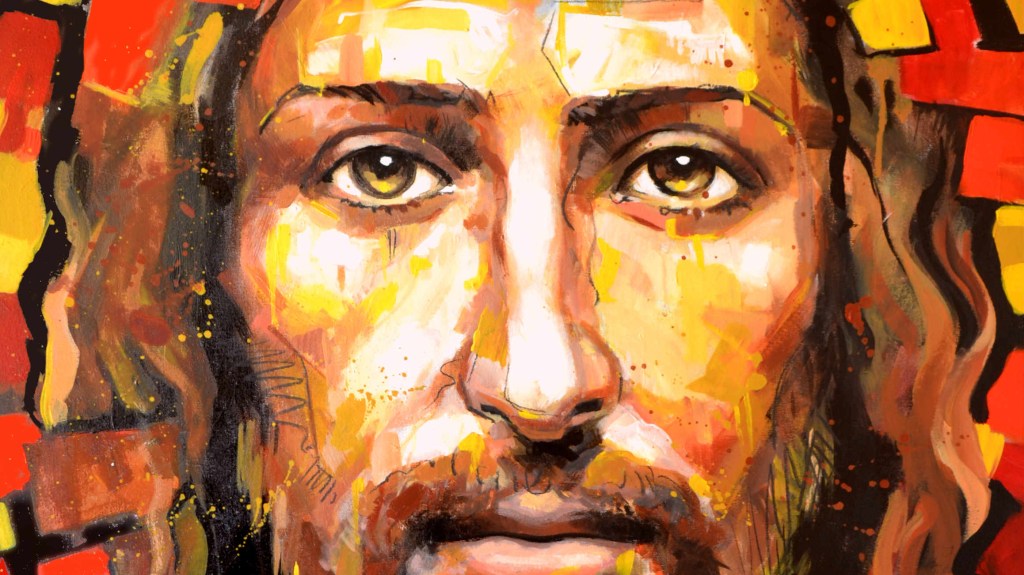
Are our hearts open or closed to Jesus?
“Give me a sign!”
Often, when we ask for a sign, we have a preconceived notion of what we are seeking and we want God’s stamp of approval on it. The impetus is coming from us, seeking to bend the will of God to our will. More often times than not this approach will end in frustration. The Pharisees in today’s account are asking for a sign. Jesus has already been preaching with authority, healing, casting out unclean spirits and demons, encountering the unclean and restoring them to the community and right worship, and this is not enough?
We can understand how: He sighed from the depth of his spirit and said, “Why does this generation seek a sign? Amen, I say to you, no sign will be given to this generation” (Mk 8:12). The majority of the Pharisee’s minds were set. Jesus knew there was nothing he could say or do to prove to them he was who he said he was; the kingdom of God at hand. If they had not the eyes to see and the ears to hear there was no argument, point, or sign that would have changed their minds. Jesus sighed from the depths of his spirit because their hearts were hardened such that they closed themselves off from the gift of the grace he sought to share. So he then got into the boat to go to the other shore, to share his message with others: “This is the time of fulfillment. The kingdom of heaven is at hand. Repent and believe in the gospel” (Mk 1:15).
The question for us today is, do we believe, do we really believe, that Jesus is who he says he is; do we believe that Jesus is “the way, the truth, and the life” (Jn 14:6)? Do we seek to bend God’s will to our own will or seek to align our will with his? The woman with the hemorrhage for twelve years, the woman whose daughter was possessed, the friends with the man with the withered hand, and the leper, did not ask for a sign, they asked for a healing. They trusted, believed, and risked getting closer to Jesus so as to encounter him despite the barriers in place to prevent them. In each of these cases, Jesus recognized their faith and each received the healing they sought.
In our discernment, we need to be aware of our intent. There is a subtle distinction, but it is important. Are we seeking proof, a sign, or are we placing ourselves in a posture of believing and seeking to understand God’s will, as Mary did when she asked, “How can this be” (Lk 1:34)? Are we demanding proof, a three-point plan from God before we follow his lead, or do we trust his invitation, and seek to understand how he wants us to act, knowing that he will reveal what we need to do each step of the way? Often times, if we knew the end result and full ramifications of his original request, our doubt would crush our spirit before we even started.
Let us embrace a posture of faith seeking understanding today, trust Jesus, and seek to align our will with God our Father. May we make time to be still and enter a place of prayer and to open our hearts and minds to the leading of the Holy Spirit. May we with confidence, say in the words of Mary, “May it be done to me according to your word” (Lk 1:38), then arise to grasp the hand of her Son, Jesus, and face head-on that which is before us, to accomplish what he calls us to do, knowing that with Jesus, we can overcome any obstacle that is placed before us.
————————————————————————————–
Photo: Fertoledo – “Rostro de Christo” – Face of Christ – from cathopic.com
Link for the Mass readings for Monday, February 15, 2021
 Spiritual Stepping Stones