Reflections on the Gospel Reading for the Day
God is present in the midst of our everyday experiences.
John the Baptist sent his disciples to Jesus to ask him whether or not he was the Messiah. Jesus answered their inquiry with the concrete expressions of what was happening. “Go and tell John what you hear and see: the blind regain their sight, the lame walk, lepers are cleansed, the deaf hear, the dead are raised, and the poor have the good news proclaimed to them. And blessed is the one who takes no offense at me” (Mt 11:4-5).
The ministry of Jesus was and continues to be today one of personal contact. Christianity is not merely a philosophical idea or even a particular theology. It is a faith tradition of an encounter with the Messiah, the Christ, the Son of the living God. We are walking through Advent to remember again that a light has shone in the darkness, and the darkness did not overcome it (cf. Jn 1:5).
Sometimes we can be weighed down by the darkness, the negativity, horror, and destruction we see all around us. The world certainly appears to be in a real mess at times. One of the most common critiques and a valid one at that is if there is a loving God, why does he allow such horrible things to happen, especially to the innocent?
The Scriptures are clear, all that God has created is good. Evil is a deprivation of the good. It is an absence or distortion of the good that God has made, like a cavity in a tooth. The healings and miracles of Jesus we read about, as he himself describes in today’s Gospel, are the beginning overture of the restoration of that which was lost. God comes to us in our everyday lives and circumstances with the intent to save us, to make things right again for everyone.
No matter what darkness we may be experiencing or witnessing this Advent, let us look for the light of Jesus shining in the midst of it. I can’t offer you a sufficient answer as to why God allows some bad things to happen or why he heals some and not others.
My heart still aches with the loss of JoAnn, I can’t stop thinking about her, and I have no answer as to why she is no longer with us. I also know that my sight is limited and that in God’s plan he, as he did with allowing his Son to die on the Cross, will bring about a greater good in the fullness of time. I also know that he has not left me to suffer alone. I have felt his comforting presence through the support and prayers of family and friends, his closeness, and gentle touches from JoAnn.
This Advent we are not to only look for that light in the darkness, but be that light in the darkness for others. We are to allow Jesus to shine through us, to allow his love to be present in each encounter we experience. We are just passing through this world and need to remember this is not all there is, but there is a life of fulfillment to come. What we see now is just but a hazy image of what is to come in the fullness of the height, depth, and breadth of God’s plan.
The healings in today’s reading, as well as those throughout the gospels, are but a foreshadowing of the victory to come that has been won for us in Christ. As we continue to live in the in-between time of the first coming of Jesus at his birth and his second coming again, let us continue to resist the temptation of despair and be hopeful, let us not give in to doubt but be faithful, and let us refuse to allow fear to be our guide and instead be people who radiate God’s love. This is what Advent is all about!
—————————-
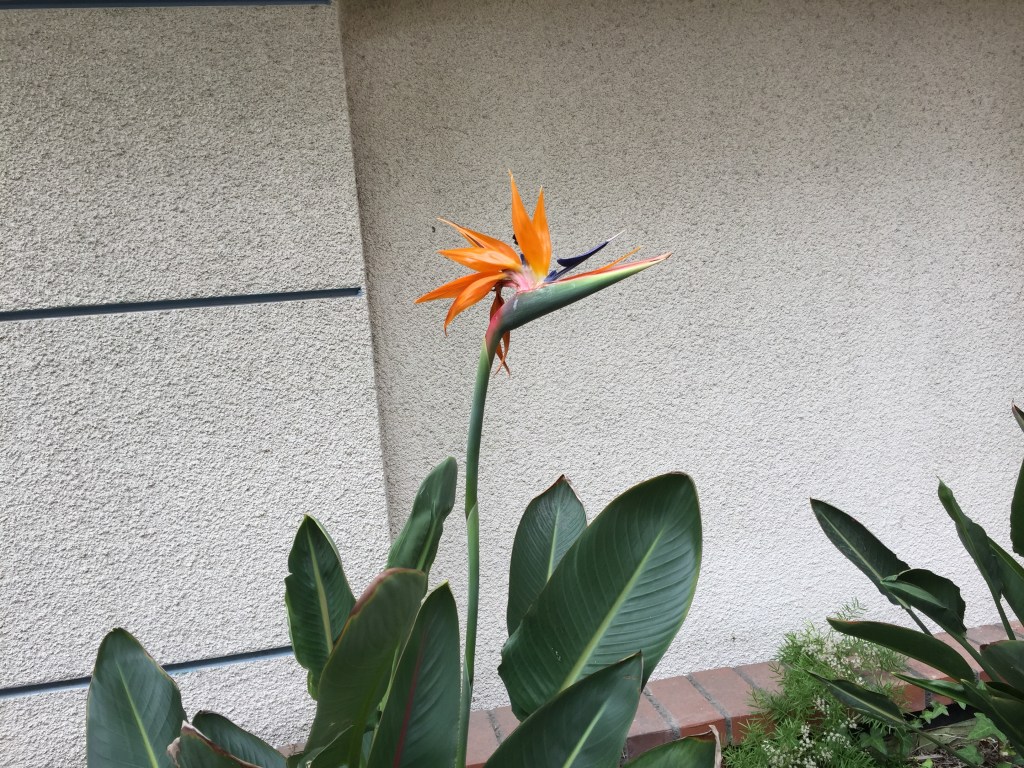
Photo: Flower that bloomed in the meditation garden outside our LA apartment the week before I returned home to Florida.
Link for the Mass readings for Sunday, December 15, 2019
Jesus, the fulfillment of the Law and the Prophets, invites us to join him in his mission.
The disciples who asked the question, “Why do the scribes say that Elijah must come first?” (Mt 17:10) were Peter, James, and John, who had just witnessed the transfiguration of Jesus. They were walking down from the Mount of Transfiguration, tradition identifying this mountain as Mt. Tabor, and the context of the question had to do with, Moses and Elijah, who they saw with Jesus as he revealed to them his divinity.
As the disciples were attempting to digest this Mystery of the Transfiguration that they had just witnessed, they were drawn back to what they knew, the interpretations of the scribes. Most likely what they were referring to were the accounts in the Books of Sirach and Malachi. In Sirach 48:10 we too can read that, “You [Elijah] are destined, it is written, in times to come to put an end to the wrath before the day of the Lord, to turn back the hearts of the fathers toward their sons, and to re-establish the tribes of Jacob.” In the last chapter of the Book of Malachi, which is incidentally the last lines of the Christian Old Testament ordering of the canon, are the words: “Remember the law of Moses my servant, which I enjoined upon him on Horeb, the Statutes and ordinances for all Israel. Lo, I will send you Elijah, the prophet, before the day of the Lord comes, the great and terrible day” (3:22-23).
Moses in this encounter represents the Torah, the Law or Teachings, and Elijah represents the line of prophets. Elijah also, as we can read in 2 Kings 2:11, was taken up by God into heaven, amid “a flaming chariot and flaming horses… and Elijah went up to heaven in a whirlwind”, and, it was believed, that he was to return again at the appointed time when the Messiah would come. Jesus clarified for his disciples that John was indeed the new Elijah. In the revealing of his divinity to Peter, James, and John, Jesus showed that he was the fulfillment of the salvific paths forged by Moses, Elijah, the line of prophets, and John the Baptist.
Jesus is the fulfillment of the Law and Prophets, and he is our fulfillment as well. We are invited to prepare the Way of the Lord in our hearts and minds, to become less so that Jesus can become more, as well as to help prepare the way for others. When I began to attend church again in my late teens, I went to the Congregational Church that was about a half-mile walk from our home. At the end of that first service I attended, the interim pastor made an appeal for Sunday School teachers. One of the things he said was that we do not know who Jesus’ Sunday School teacher was and he referenced that we could be teaching Jesus and not be aware.
We were not to take him literally, but his point was that we had the responsibility to continue to pass on the Greatest Story ever told. Also, his appeal was an avenue for the Holy Spirit to speak through him to me, and although I refused the invitation the first week, I returned and accepted the invitation the following week. What might Jesus be inviting you to do this Advent? Trust his invitation.
My yes to teaching Sunday School, not knowing the first thing about what I was doing, thinking I was too young and way too inexperienced, would eventually, through different twists and turns, lead me back home to the Catholic Church, to becoming a teacher, a deacon, and me writing you today and continuing to share the message of John the Baptist, Jesus, and the Apostles: “This is the time of fulfillment. The kingdom of God is at hand. Repent, and believe in the Gospel” (Mk 1:15).
———————————————————
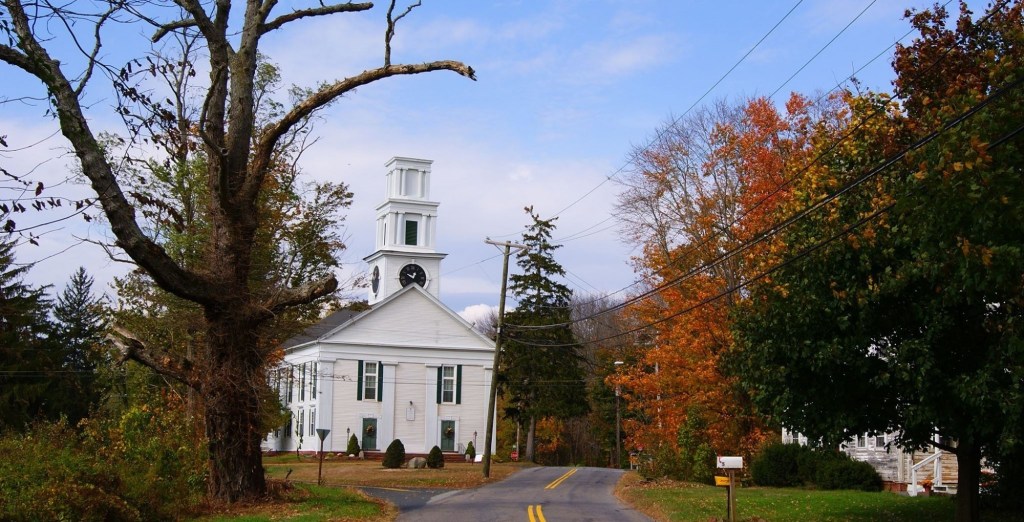
Photo: First Congregational Church of East Windsor, one of the early stepping stones that led me to where I am today. Accessed from: http://fcceastwindsor.com/
Link for the Mass readings for today, Saturday, December 14, 2019
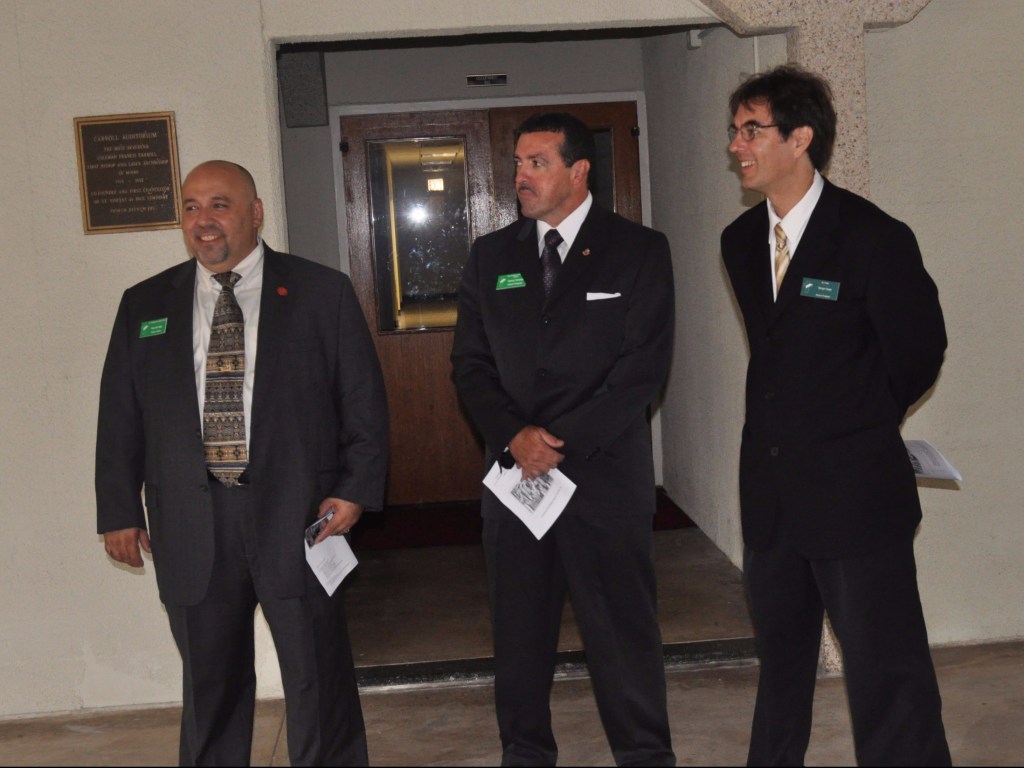
“Be faithful in handing on the word of God, so that it may grow strong in the hearts of his people.”
Jesus compared “this generation” to children who could not be satisfied. For when the flute was played for them they did not dance, when the dirge was played they did not mourn. There was no pleasing them no matter what. Jesus drew the parallel to the present bystanders who acted as fickle as the children. They criticized John as being possessed for practicing fasting and asceticism. They then criticized Jesus as a glutton and a drunkard for his table fellowship with all who were willing.
In today’s Gospel account, Jesus could have been addressing his detractors as well as his disciples. He encouraged his followers to be wary not to wallow in the mud of fickleness, but also to be clear that their preaching and teaching was to be based on being a dispenser of his truth and the will of his Father and not the reaction of the people, for “wisdom is vindicated by her works” (Mt 11:19). Just as Jesus taught that false prophets would be revealed over time by their fruits (cf. Mt 7:16), so those who were true to his teachings would be vindicated, if not fully in this life, certainly then in the next.
Pope Francis said that “The first thing for a disciple is to be with the Master, to listen to him and learn from him” (Francis 2014, 15). May we pray for open hearts and minds eager and willing to hear the word of Jesus our Master and the courage to act upon his leading in our everyday circumstances. To do so, we must first slow down our pace and quiet our minds sufficiently enough so that we can even hear his word. We also need to discern the difference between his voice, our own, and the many other distractions, diversions, and temptations we hear. God himself speaks to us in so many ways; directly in the silence of the heart, through others, spiritual direction, small groups, fellowship, through the Bible, as well as our culture, and influences, as well as through his creation.
More often than not, we may not definitively know if what we hear and how we are being moved is coming from God. Yet, remaining paralyzed and doing nothing is not an option. We can find support and confirmation from Scripture and Tradition, others who are wise and practiced in following God, then we can reassess our guidance and then act. If we are wrong, we learn from our mistakes and begin again. If we are on the mark, this helps us to build our confidence in recognizing God’s voice. What we do not want to do is remain indecisive out of fear or anxiety, from the perceived reaction that will come. Nor do we want to remain indifferent to action.
Another important step in discipleship is that we are not to seek to impress, but to express. Adulation and acclaim for ourselves are not what we are about. Our firm intent is to become less so that Christ becomes more. We are also to resist moralizing and condemning others while instead be willing to meet people where they are, accompany and break open the word in practical ways so they see the benefits of having God in their lives. The invitation and life of a disciple of Jesus is not an easy one. Will we follow?
We need not be afraid that we don’t have what it takes, because we don’t at the start. Just as in learning to walk, our beginning attempts more often than not ended with a thud and us sitting on the floor or ground looking up. Yet, we got up, and with continued practice, we gained strength, balance, made corrections, and so began to gain confidence and the ability to move forward upright, step by wobbly step. Dr. Martin Luther King, Jr. put it more eloquently when he spoke to students at Spelman College in April of 1960. “If you can’t fly then run, if you can’t run then walk, if you can’t walk then crawl, but whatever you do you have to keep moving forward.” So it is in anything we do, but especially in the spiritual life. If we are not moving ahead we are falling behind.
Jesus, please help us to know you and your voice so we may follow the will of God. Grant us the courage to walk with you, that we may risk whatever the reaction of others may be as we offer your truth with love and mercy. Set a spark in our soul so that above all we begin, one step at a time, hand in hand with you to serve those you bring to us. Help us move forward and allow God to happen in our interactions with one another.
—————————————————————————–
Photo: Day of installation as Lector with my classmates Pete and Hank. During the service we were told: “Take this book of holy Scripture and be faithful in handing on the word of God, so that it may grow strong in the hearts of his people.” – from the Rites, Volume Two.
Francis, Pope. The Church of Mercy: A Vision for the Church. Chicago: Loyola Press, 2014.
Link for today’s Mass readings for Friday, December 13, 2019
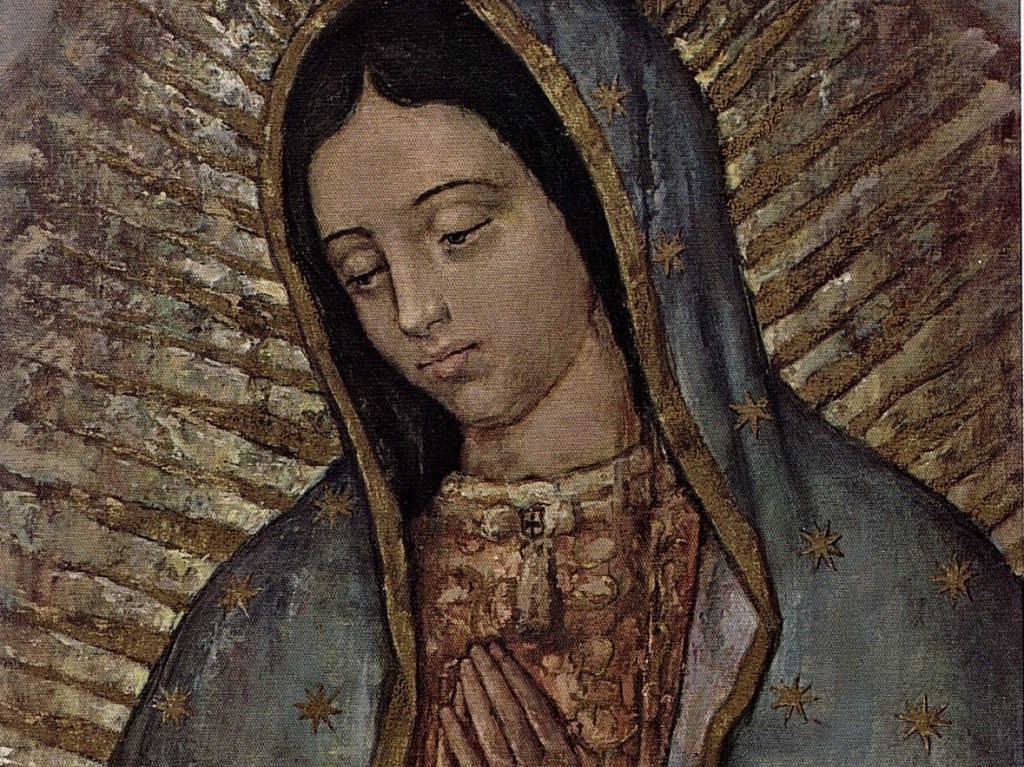
Encountering God brings us the gift of reconciliation and joy!
“Mary set out and traveled to the hill country in haste” (Lk 1:39). Why? Because she was filled with joy. She had just experienced an incredible encounter with the angel Gabriel telling her that she was to bear the “holy, Son of God” (Lk 1:35). She also learned that her relative Elizabeth, who had been barren, was six months pregnant. Who better to understand and appreciate what she had gone through than Elizabeth? When we hear good news we want to share it with someone, especially when we believe another will fully appreciate our experience.
Is there a time when you felt overjoyed about something that you felt like you were going to burst and you couldn’t wait to share your experience? A memory may have already started forming in your mind, a smile and glow may be radiating from your eyes as you re-experience that moment.
One such graced encounter I had was when I was in my early twenties and dealing with a heavy personal issue. I was living in Sharon, Connecticut at the time and had an opportunity to go to the Shrine of Divine Mercy in Stockbridge, Massachusetts to participate in a penance service. I walked up hesitantly to a kind-looking, elderly, polish Marian priest. His name alludes me now, but not his face. He radiated invitation and mercy. After a few stammering words, I let loose and shared what I had been dealing with. When he offered absolution, I felt the burden physically lift, I felt almost like levitating. Then a surge of joy welled up in me that lasted for days.
There is a great gift in sharing a burden with a trusted friend or family member, being heard and supported, and/or receiving absolution from a priest. We need to resist the temptation of turning within ourselves, trusting in the lie that we can handle our conflicts, challenges, and trials all on our own. There is a pearl of great price, God’s healing grace, that is available to us when we share our journeys with one another. In this way, we come to realize concretely that we do not have to go through our pain and suffering alone!
Many of us are struggling with a lot, and sometimes we are not at our best, nor do we make our best decisions, we react instead of act, we get caught in the momentum of behavior that we know is not acceptable, and we continue to slide. The key is not to beat ourselves up and walk around feeling guilty. There are enough people who would be happy to sign up to do that. Instead, we need to choose to practice a healthy sense of guilt, examine our conscience, be mindful, and able to admit when we have done something inappropriate or wrong.
That is the key to reconciliation, embracing the humility to admit our sin, to be contrite – sorry for what we have done, not upset or defensive because we got caught, and to follow the counsel of James: “Therefore, confess your sins to one another, and pray for one another so that you may be healed” (James 5:16). Then when we have experienced the joy of forgiveness, of reconciliation, may we be like Mary, and go in haste to share with others the wonderful gift we have received and invite them to do the same!
Photo: “Are you not under my shadow and protection? Am I not the source of your joy? Are you not in the hollow of my mantle, in the crossing of my arms?” – Our Lady of Guadalupe to Juan Diego. Our Lady of Guadalupe, Pray for us!
Link for the Mass readings for Tuesday, December 12, 2019
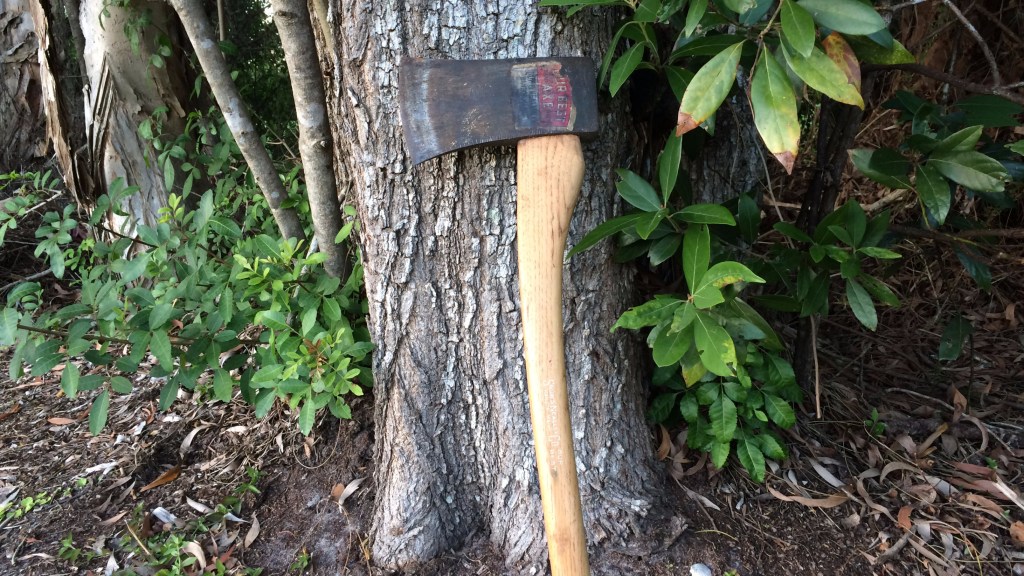
Advent is a time to step back, reassess, take a breath, and sharpen our “ax.”
Verses that we read, such as: “Come to me, all you who labor and are burdened, and I will give you rest” (Mt 11:28) really hit the spot, they arrive at the right time. I am sure that if you are reading these words you may also welcome Jesus’ invitation. Yet what is the labor and burden that we need to rest from? If you are like me who work in education, or a student, as the final weeks of the semester come to a close, there are exams to correct and to take. Of course, those at the university level may have just finished and are feeling the relief of arriving home to embrace the rest. Others in other occupations also work long hours, and sometimes, two or three jobs, just to get by. How about overseeing the care of the home and dealing with family issues that can be enormous, especially at this time of year?
Is the burden, the weight of all that has to be done to prepare for Christmas, the decorating, putting up lights, shopping, buying presents, cooking, baking, writing and mailing Christmas cards crushing you under the weight?
Unfortunately, there are way too many who are not so much burdened by work but the lack of access to gainful or meaningful employment. They are burdened with keeping the bills paid and a roof over their heads as the temperatures fall. Some have no home or family, they are burdened with getting from day to day, seeking ways to get food, clean clothes, a place to wash and relieve themselves. Christmas cards are a distant thought. Many others are burdened and living in fear that they or their family member or members may be deported.
Speaking of fear, how many of us are burdened by fear, anxiety, stress, and strain from a myriad of swirling reasons? Concerns about our family, community, country, and the world are a burden that can weigh heavily. Advent and Christmas, even when life is more stable, are still times in which many buttons are pressed and many stressors are triggered. What is the adage that is offered when family and friends gather? Resist talking about politics, religion, and… we all can add a few others.
If you are feeling weary and worn this Advent Season, take some time to just stop and take a slow, deliberate breath. Notice your shoulders coming out of your ears. Embrace the invitation of Jesus and rest in him. Allow the burdens to come to mind, then visualize yourself giving them to Jesus, open yourself to his guidance, ask to be open to help, and seek who may be best able to assist you in any particular situation. If you are burdened by any sins, rest in Jesus and confess to him, avail yourself of the Sacrament of Reconciliation. Jesus will forgive you and bring you a lightness and fresh start!
Our God “does not faint or grow weary, and his knowledge is beyond scrutiny. He gives strength to the fainting; for the weak he makes vigor abound” (Isaiah 40:28-29). We do not have to deal with anything alone. We have help and support. My friend, Pastor Jerry Scott, taught me years ago a life lesson which I still return to, more often in my fifties than in my twenties. When a person is chopping down a tree, exerting a lot of energy and effort, but finding the results insufficient, he or she needs to realize that they need to step back, take a breath, and sharpen their ax. With a little rest, renewal, and a sharpened blade, the job can be accomplished in half the time.
We need to figuratively do the same daily with each of our endeavors. We need to resist just putting our head down and plowing through with blinders on. We need to instead take some time to stop and assess from time to time what we need, where we need help, how are we truly fulfilled, and yoke ourselves to Jesus for his guidance and strength. As Jesus carries the burden with us, as we follow his will, we can work smarter instead of harder. In developing a pattern and place of trust and hope in him, seeking his guidance and direction this Advent, we will renew our strength and soar as with eagle’s wings; we will run and not grow weary, we walk and not grow faint (cf. Isaiah 40:31)!
Photo: My ax, which you can see is in some desperate need of sharpening!
Link for today’s Mass readings for Wednesday, December 11, 2019
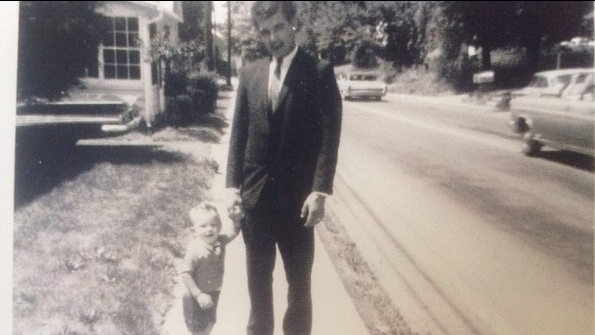
This Advent, may we be willing to be carried like a lamb or a young child led by a parent’s hand.
“What is your opinion? If a man has a hundred sheep and one of them goes astray, will he not leave the ninety-nine in the hills and go in search of the stray” (Mt 18:12)?
Many of those Jesus asked and us reading or hearing this Gospel today might share our opinion that the man leaving the ninety-nine to find the one would not be a wise choice. Jesus again appears to be turning the normal order of things upside down in painting a word picture of God’s folly. This parable clearly shows the abundant and extravagant love of his Father for each and every one of us. The act of this shepherd can appear not only unreasonable but unbelievable.
Yet, this is not the feeling to the one who is lost. This extravagant love is a relief. It is the love that we can only experience if we are willing to resist slipping into judgment and pride, as did the elder son who was not willing to forgive his brother who was lost but found. The father loved him with the same love, but he closed himself off from it.
What God wants is for us to be happy, to be fulfilled, to be fully alive, and he is willing to risk us going astray such that we can come to realize the emptiness in any pursuit that ultimately does not bring us closer to him. God does not wish for any one of us to be lost. He constantly coaxes, invites, and urges us to fulfill who he created us to be. He guides us along as a parent urging his child to walk. Yet, though he lovingly implores us along, we can be distracted, turn, crawl away, and go in a different direction.
Have we taken our eyes off of our Father? Have we crawled away from his invitation? No matter how far we believe we are from him, he has always been close, following, watching, ready for us to turn back to him. When we do turn back, he is there waiting for us, urging us to rise and walk into his open embrace.
May we remember this Advent that God is eternally present, for he loves us more than we can ever mess up, he loves us more than we can ever imagine, and he refuses to define us by our worst choices and moments. He has sent his Son to extend his hand out to us. Let us take his hand and let him lead us back into the loving embrace of our Father.
Photo: Hand in hand with my father.
Link for the Mass readings for Tuesday, December 10, 2019
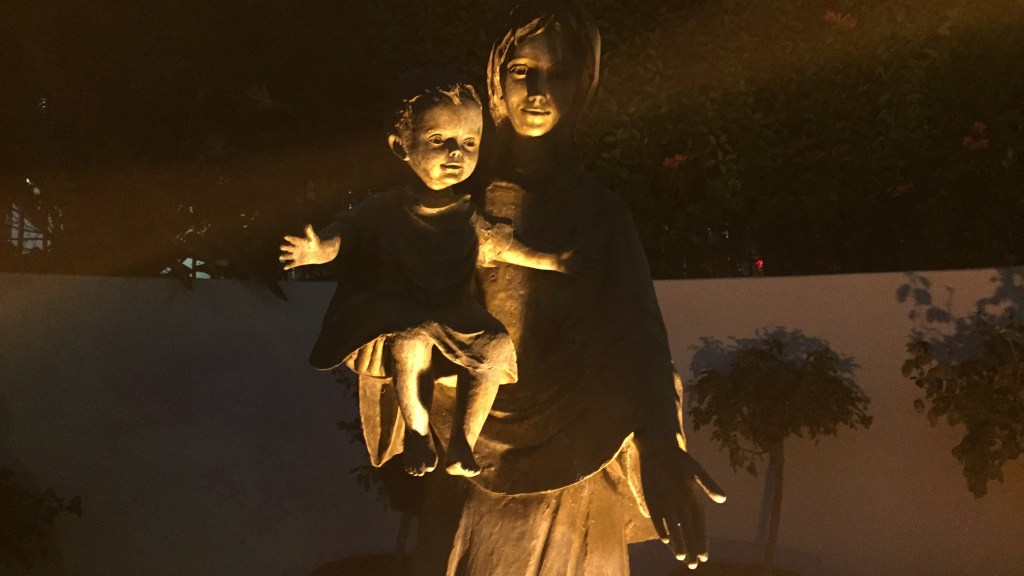
“May it be done to me according to your word.”
Mary, full of grace and the model of discipleship, is on display in today’s reading from Luke’s Gospel. In a mystical encounter, the angel Gabriel shared with Mary that she would bear the “Son of the Most High” (Lk 1:32). Mary heard clearly what Gabriel said though she did not fully comprehend. Who could? So Mary asked, “How can this be, since I have no relations with a man” (Lk 1:34)?
This is a different question than what Zechariah, the father of John the Baptist, asked of Gabriel in a similar situation: “How shall I know” (Lk 1:18)? Zechariah was looking for a sign, he sought proof. Mary, through her faith in God, sought to understand what God required of her, so she combined her faith and her reason. While she pondered Gabriel’s response, the whole of the cosmos held its breath for her response.
When Mary said, “Behold, I am the handmaid of the Lord. May it be done to me according to your word” (Lk 1:38), a weary world, wounded by sin exhaled with relief, for the long-awaited savior could now come to redeem what had been lost. Mary, in her obedience, undid the Sin of Origin committed by Adam and Eve in their disobedience.
Mary, help us to ponder your yes, your willingness to follow the will of God and to give birth to our savior. Help us to ponder what this reality means to us and our lives. Help us to be disciples like you, resisting a knee jerk reaction of rejecting outright what we do not understand and choose instead to be open to the possibilities available to us that are beyond the realm of our senses and limitations.
May we too, like you, seek understanding instead of demanding proof. Help us to understand that this surrender is not a practice in limiting ourselves to mere superstition but an embracing of the fullness of what it means to be human, so to embrace the reality of our physical as well as our spiritual natures, and allowing ourselves to be expanded by God beyond our finite limitations.
——————————————————————–
Photo: Mary and Jesus on the grounds of the convent of Sister Disciples of the Divine Master, Los Angeles, CA where I would go to adoration and pray the evening office with the sisters.
Link for the Mass readings for Monday, December 9, 2019

He will baptize you with the Holy Spirit and fire.
I am baptizing you with water, for repentance, but the one who is coming after me is mightier than I. I am not worthy to carry his sandals. He will baptize you with the Holy Spirit and fire (Mt 3:11).
John is speaking here of the baptism of repentance that he is offering. The people are coming to him, not to the Temple, the formal place of worship, but to the wilderness. John represents an answer to the hunger of the people. He is the embodiment of the prophet who has returned. He speaks for God and the people are willing to listen and follow him because of his authenticity.
John the Baptist is clear that he is not the long-awaited Messiah, he is just the precursor. He is preparing the way of the Lord. He is preparing the hearts and minds of the people to turn away from their sin and self-centered ways so that they can recognize him when he comes.
The baptism of Jesus was and is different than John’s. It is a baptism not just of repentance, but also of the Holy Spirit and fire. The baptism of Jesus will be wholly transformative. Fire consumes and transforms that which it touches and the Holy Spirit is often symbolized by fire. But the transformative fire of the Holy Spirit is love.
Love is an expanding, unitive force. It is a direct counter to the self-focused, curving in upon oneself and divisiveness of the fallen nature of our humanity. Love is an act of the will and draws us out to be engaged with the betterment of others. When we experience the love of God we are changed and transformed. This is not a one time be all encounter, but one that is to be experienced and shared time and time again. The more we share the love of God the more we receive.
John the Baptist is reminding those coming to him and us who read the Gospel of Matthew today that none of us are worthy of God’s love. We do not deserve it nor can we grasp it for ourselves. We must be willing to receive the Holy Spirit on his terms, not ours. We are simply to say yes to the invitation to receive the love of God, allow him to expand us beyond our limitations, and share what we have received with others.
Photo: Taking advantage of some cooler Florida weather and enjoying some quiet time by the fire three nights ago.
Link for the Mass readings for Sunday, December 8, 2019