Reflections on the Gospel Reading for the Day

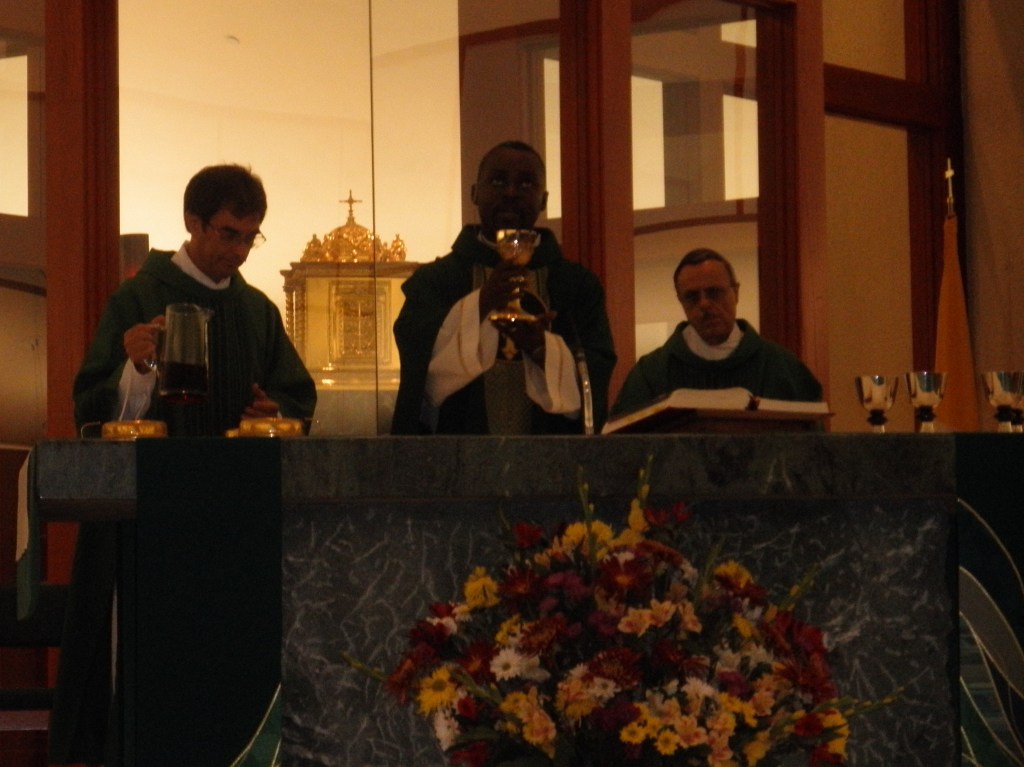
Jesus is the gate between heaven and earth.
And he said to him, “Amen, amen, I say to you, you will see heaven opened and the angels of God ascending and descending on the Son of Man” (Jn 1:51).
Jesus, in making this comment to Nathaniel, was referring to the incident where the patriarch Jacob had a dream in which he saw angels ascending and descending on a ladder from heaven to earth. Jacob was in awe from the experience and believed that he was at “the gate of heaven” (cf. Genesis 28:12-17). Looking carefully at Jesus’ comment, we see again the image of the angels ascending and descending, as with Jacob, but the difference is that that ladder coming down from heaven is not seated upon the earth, but “on the Son of Man”. This is a title Jesus used for himself often.
Jesus is the gate between heaven and earth. Jesus will state later in John 14:6 that he is “the way and the truth and the life” and that no one comes to the Father except through him. The glorious moment when the Son of God took on flesh and became a man, the Son of God became one with us. This was not just so that thirty years later he could lead, model, teach, and perform exorcisms and miracles for their own sake. It was as St Irenaeus taught, that Jesus became one with us so that we could become one with him and in doing so opened up heaven for us in the humanity he assumed.
Heaven and earth are joined in the presence of Jesus. This is a mystery of the glory and wonder that we can partake in at each celebration of the Mass. We do not attend just to take up space and fulfill an obligation, but to experience again in the sacrificial offering of Jesus “on earth as it is in heaven.” We share in the heavenly banquet. We participate in the divine communal dance of Love between the Father and the Son and the Holy Spirit. We pray for our needs and for others, we intercede for the salvation of the whole world. We are empowered by his own Body and Blood in the Eucharist to minister to his broken and wounded Body in the midst of a fallen world. Filled from this glorious feast we are then sent forth to be Jesus’ hands and feet to the world.
I invite you to attend Mass this weekend. If you don’t have a parish home, have been away for awhile, there’s no time like the present to begin again. If you are not Catholic, are curious, and seeking a place to worship, join us as well. Just introduce yourself when you come into the sanctuary at the front entrance and seek out our welcoming kiosk and our greeters will help to get someone to sit with you to accompany and guide you. For times, directions, and if you are unable to attend in person you may click on the picture link that says Watch for our live online streaming of the Mass. Here is the address to our homepage: https://www.stpetercatholicchurch.com/ .
Come and experience angels ascending and descending on the Son of God!
———————————————————————
Photo: My first Mass about five years ago with Fr. Jean and Deacon Stephen
Link for the Mass readings for Saturday, September 29, 2018: http://www.usccb.org/bible/readings/092918.cfm
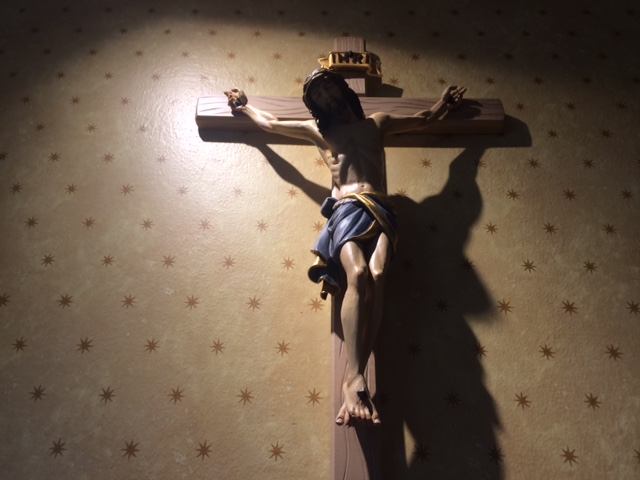
The Way of Jesus, is the Way of the Cross.
Jesus asked his disciples about who people said that he was and Peter, through the revelation of God the Father answered, “the Christ of God” (Lk 9:20). Jesus then responded that, “The Son of Man must suffer greatly and be rejected by the elders, the chief priests, and the scribes, and be killed and on the third day be raised” (Lk 9:22).
Jesus is indeed the Christ, the Messiah, the Son of the Living God. Yet, that meant many things to many people who were awaiting the coming of the Messiah. For most, they were hoping for a military leader to come to lead them and overthrow the Roman occupiers. As soon as Peter made his statement, Jesus clarified the Messiah that he would be, the suffering servant.
This reality that Jesus was the suffering servant, willing to give his life on the Cross for all of humanity and creation, is also true for all who would walk the path following Jesus. If we seek to be a disciple of Jesus, our steps will also lead us to the Cross. We must be willing to be martyrs, witnesses of our faith in our everyday experiences and encounters. This may begin with prayer, worship, and study but our discipleship will be ultimately expressed in love. We must resist the temptation to turn in on ourselves such that we embrace our ego, our anxiety, fear, prejudices and biases.
We need to resist seeking to conform God to our will, and instead be willing to go out from ourselves to love God with our whole mind, heart, and strength and love our neighbors as ourselves. This dying to self, our self centered stance is to be crucified with Christ, and is to be expressed in all aspects and areas of our life. We are not to be one way for one hour at Church on Sunday and the rest of our time live like Sunday never happened. We are to surrender ourselves to Jesus and be Jesus for others in every action, decision, and encounter we engage in. Christianity is not about compartmentalization, but it is about transformation and conformation to the Body of Christ!
Photo: New crucifix in the chapel and Cardinal Newman
Link for the Mass readings for Friday, September 28, 2018: http://www.usccb.org/bible/readings/092818.cfm
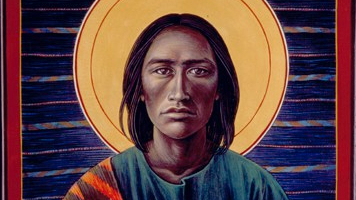
Who is this man, Jesus?
“‘Who then is this about whom I hear such things?'” And he kept trying to see him” (Lk 9:9).
Herod Antipas, ruler over Galilee and Perea, heard stories about Jesus. The range of his thoughts, expressed by Luke, are confusion to curiosity. Herod may have started to feel concern over the possibility of a growing revolt, some guilt for his execution of John the Baptist, or just curiosity to see what this man was all about and if this Jesus could accomplish even half of the things Herod had heard about him. One question that did not seem to cross Herod’s mind was if he had any interest in changing his life and becoming a follower of Jesus.
Herod was not the only one in Luke’s Gospel who asked questions about who this man Jesus was. Nor did the asking of those questions die with Jesus on the cross. They continued after his resurrection and ascension, they continued into the first centuries of the Church, which led to the calling of the first ecumenical councils which dealt directly with who Jesus was, and they continued in each following century and continue today. There are even at present in some academic circles, the question arising as to whether Jesus even existed at all. The answer to whether or who Jesus is matters.
One could ask why does this question about Jesus persist? One answer is that we are finite beings seeking to understand an infinite Mystery. The full comprehension of the reality of Jesus existing as fully human and fully divine, dying on the cross, conquering death through his resurrection and ascending to the Father transcends even the wonderful intellect and ability to reason that we have been blessed with. Also, Jesus’ invitation is a universal but personal one.
Jesus called the Twelve, one by one. Jesus called Mary Magdalene, St. Irenaeus, St Thomas Aquinas, St Francis and Clare of Assisi, St Catherine of Siena, St Teresa of Avila and St John of the Cross, St Ignatius, St Mother Teresa, Thomas Merton, Dorothy Day, and he calls each of us to himself as well. He did not call us to just merely embrace a new philosophy, a new ethical way of life, or even a new religion. Jesus called and calls us to be a part of his Body, the Mystical Body of Christ.
Who is Jesus? Jesus is the Christ, the Son of the living God, who became incarnate, who became one with us in our humanity so we could be one with him in his divinity. May we say yes to his invitation and continue to walk this journey together. Life with Jesus isn’t perfect, and we will at times echo St Teresa of Avila, who stated after she was thrown from a carriage into a mud puddle, “If you treat your friends this way, it is no wonder you have so few.” But we will also experience moments of inexpressible joy, of wonder and exhilaration, and feel blessed when Jesus works through us, and loves through us to be present for and help others. Let us be grateful for this journey with Jesus and continue to look forward to what lies ahead as we are perfected in Jesus! If there are any on of you sitting on the fence, jump on down, and come along!
—————————————————————————
Not only have their been questions about who Jesus is, there have been many pictorial representations of Jesus. Here is one painting from Fr. John Giuliani – Indigenous Jesus.
Link for the Mass readings for Thursday, September 27, 2018: http://www.usccb.org/bible/readings/092718.cfm
God calls us, each in our own unique way.
“Jesus summoned the Twelve and gave them power and authority” (Lk 9:1).
Jesus summons us as he did the Twelve and empowers us for ministry in his name. The expression of our service is unique to each of us. Many resist entering into a deeper commitment to their faith because they are anxious or afraid that God may call us to something that we would never want to do, or that we couldn’t conceive we are capable of. Initially, there may be some trepidation if we are clear of the direction God wants us to move in, but that may come more from our hesitancy to change and move out from our comfort zone. Ultimately, God wants for us what we want for ourselves; to live a life of joy, meaning, and fulfillment.
God knows clearly what will fulfill us, give us meaning, and bring us happiness. The challenge for us is to come to know this for ourselves as well. The work of discipleship begins by accepting the invitation of God to walk with him and trust that he knows what he is doing! No matter what our age, we are never too young or too old to begin or recommit to the journey along the path of discipleship. One good practice is to reflect on our dreams and desires, bring them to God in prayer, and imagine ourselves embracing what we desire.
When I first joined the Franciscans to study for the priesthood in the early 90’s, I would imagine from time to time my ordination day, especially in our second year as we were thinking about taking temporary vows at the end of the year. When I did so, a puzzling result consistently arose. I did not imagine myself as feeling any excitement or joy. So, a year and a half into formation, I did not feel ready to take temporary vows, and decided to take a leave of absence. I had asked to take off a year, but the minimum time for a leave of absence was two years.
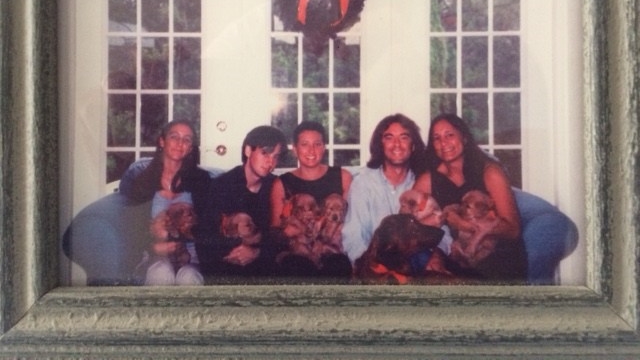
Though, I balked at first about the two year time frame required, seeking only one, I came to respect the wisdom of my formation director. After a year, I would have gone back. It was in my second year of leave that I realized that my vocation of service was leading me to the Sacrament of Matrimony and not Holy Orders. About eighteen months or so later I met JoAnn. As our relationship grew and we began to talk about marriage, whenever I envisioned our wedding day I felt excitement and joy! I am still excited twenty two years later, twenty three this May, that we made a commitment to each other to share our journey together!
God has a plan for each and everyone of us, he knows what will fulfill us, and he loves us more than we can ever imagine. When we ponder our dreams and desires, and as we investigate, research, explore potential outcomes, and continue to pray with God and discern each step, we will come to see that as we align ourselves with God’s will that makes all the difference. Our loving God and Father has sent Jesus to lead us and give us what we need to serve him.
There will be fits and starts, missteps and slips, doubts as well as confirmations, and desolations as well as consolations. The key through it all, is to remain faithful, to continue to trust in Jesus who called us. He will continue to accompany us along the way, he will give us the resources and strength we need, and he will send the Holy Spirit to empower and transform our lives so we can be an advocate to bring this invitation of transformation to others. We are never alone.
Photo: Following God’s discernment led me to family! Picture from Christmas about 2002
Link for Mass readings for Wednesday, September 26: http://www.usccb.org/bible/readings/092618.cfm
Related to Jesus?
He said to them in reply, “My mother and my brothers are those who hear the word of God and act on it” (Luke 8:21).
There are many popular genetic testing kits that are advertised on TV and through the internet. People have asked me is it possible to be a blood relation to Jesus. Jesus’ reply today can help you to save some money. What is important is not blood relation, but “those who hear the word of God and act upon it.” God is to be first, even before family. We may experience a subtle shudder from this statement, but to those of Jesus’ time it would have been apoplectic. Family meant everything in the Ancient Near East.
Jesus is not making the point that we disregard family. Jesus is making the point that if we are to be authentically present to our family this will come about best by following the will of God. As we deepen our relationship with Jesus and put his teachings into action, we begin to bear the relational fruits of patience, understanding, kindness, love, joy, and peace. Would not our familial relationships be better if we were more patient, understanding, kind, loving, joyful, and peaceful with one another? Jesus taught and showed from his own life that the path to fulfilling and intimate relationships flourish when we put God first. For as we grow closer in relationship with him we also do so with those in our family.
Jesus’ point in today’s Gospel is that our “family” is to transcend bloodline, tribe, or nation. Any of “those who hear the word of God and act upon it” are spiritually akin to Jesus the Christ. The point is not that we may have a genetic, lineal relation with Jesus, but that when we live and act according to his Father’s will, we are part of the universal family of God’s grace and mercy and our relationship with him and one another grows as we continue to bear the fruits of the spirit. Instead of talking and shouting at one another, let us be willing to dialogue and seek to build bridges of a common accord with one another. As brothers and sisters, let us seek to be more understanding, to be more willing to walk and accompany one another. Let us love one another as Jesus has loved and loves us!
Link for today’s reading: http://www.usccb.org/bible/readings/092518.cfm
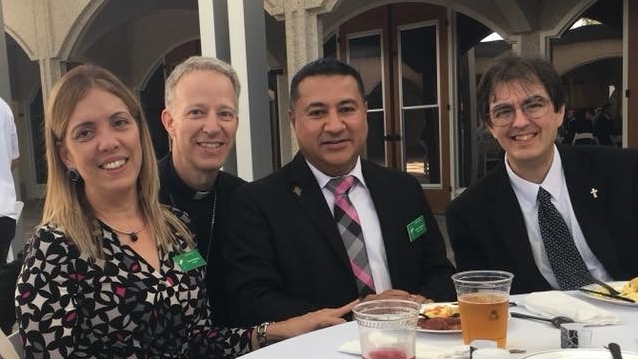
Photo: My family in Christ, Edwin, at his installation as an acolyte this past Sunday, his wife Rosa, and Bishop William Wack, C.S.C.

Receiving and radiating Christ’s Light to one another
Jesus said to the crowd: “No one who lights a lamp conceals it with a vessel or sets it under a bed; rather, he places it on a lampstand so that those who enter may see the light” (Luke 8:16).
God blesses us freely without cost, he gives himself to us. He has done great things for us and he is the source of our joy! We do not earn nor is there anything that we can do to gain God’s grace. But we can lose the gift we have been given. This happens either by refusing what has been offered, or once accepting and receiving, not doing anything with our gift. If we are people of faith in name only, but not followed by action, we are concealing the light we have been given.
Since our Golden Retrievers have passed away, our last of three, Lexi, just a little over a year ago, the little exercise I did walking with them is now almost non existent. Premature aging of my heart, weight gain, lower back and body ache, as well as a series of pulled muscles over the course of last year, were all subtle hints that my lack of attention to exercise was exacting a cost on my health. This past summer, I started to stretch daily and implement a series of exercises that, though not consistent, have been helpful and I have been able to see an improvement in my health.
The same can be said for our faith. If we do not exercise our faith, we will receive signs of spiritual atrophy. To not even acknowledge the presence of God in our life, the free gift of his invitation to be in relationship with him, we will experience some limitations in our life. For whether we believe in God or not, we hunger to be in communion with him and one another, so we will be looking for other apparent avenues of happiness that will fall short of fulfilling us. If we do accept that there is a God, yet don’t participate in worship, fellowship, service, and prayer, we are not much better off. I can believe that my car will get me to school in the morning, but if I do not put the key in the ignition, turn on the engine, put the car in drive, I will remain in our driveway watching the sunrise.
If we claim to be people of faith, we need to put our faith into action. May we daily: spend time in prayer, read Scripture, study our faith through spiritual reading, cd’s, dvd’s (I at first wrote cassettes and videotapes!) and/or podcasts. May we consistently participate in worship, the sacraments, and serve one another. May we reflect and so be able to see God at work in our everyday experiences and better collaborate with him in all we do. May we also resist the tendency to privatize our faith, while at the same time resist getting in someone’s face. Let us be present, care, understand, support, and accompany one another, even others of no or different faith traditions.
Jesus has given his life for us, and he continues to be present to us. May we be open to being conformed today and each day by his love and mercy. Let us resist the darkness of the temptations of sloth, indifference, prejudice and fear, and instead seek to encounter one another, to realize how much more we have in common than not. As Jesus is willing to enter the chaos of our lives, may we too be willing to do the same for one another. May we seek in each interaction to radiate the presence of Christ’s light, so to shine with patience, understanding, support, joy and hospitality in such a way that anytime we come together, God happens.
Photo: Johannes Plenio
Link for today’s readings:
http://www.usccb.org/bible/readings/092418.cfm

Jesus, set our soul on fire with your love, and burn away our sin.
James, from our second reading today, asks a question that unfortunately needs to be asked in every generation.
Where do the wars and where do the conflicts among you come from?
James gives us a place to start:
Beloved: Where jealousy and selfish ambition exist, there is disorder and every foul practice.
Conflict and division come from the disordering of our thoughts, desires, passions, words, and actions. There is something a bit off kilter with us. This disorder or dis-orientation is caused by our choosing our self over God. This stance of turning in upon ourselves, saying we are the center of the universe and all is to revolve around us comes from the condition of Original Sin which weakens and wounds our human nature. This condition is grounded in the belief that we can save ourselves.
We seek the truth, we seek to be happy and we seek to be fulfilled but we follow false promises, substitutes that are apparent goods that appeal to our egotism, our pride and our fear. St Thomas Aquinas, the thirteenth century Dominican doctor of the Church, categorizes these four substitutes or temptations that lead us astray from our proper orientation to God. These are:
Pleasure, Wealth, Power and Honor
In and of themselves there is nothing wrong with any of these four, but when we make any or all of them into an idol, when we pursue them as a means to provide our stability, satisfaction and fulfillment, we will be led astray.
Pleasure feels good, it brings us instant gratification. The problem is that once the external agent or stimulus of the pleasure ends, so does the experience, and it leaves us empty and wanting more.
Wealth promises us that if we just have enough money we can get whatever we want, do whatever we want, we can be safe and secure. But again, we will still experience that deep hunger within us that cannot be fed by that which is finite or material.
Power has the promise of access, of controlling the unpredictability of life’s challenges, yet, as the Catholic historian and moralist, Lord Acton, wrote: “Power tends to corrupt and absolute power corrupts absolutely.”
Honor, closely linked with power, we played out in our present day, the tremendous cult of celebrity that is sown into the very fabric of our society. So many seek their fifteen minutes of fame, no matter how they can get it.
We witness the Apostles in today’s Gospel, the closest to Jesus and his teaching, falling for the temptations of power and honor as they argue among themselves who is to be the greatest among them. The even deeper sadness of their debate is that they are engaged in it, just after Jesus has explained to them that he will be handed over and killed. The Apostles are so ensnared in the hierarchical structure of the society of their time that they fail to have the empathy and compassion to be present to Jesus as he shares with them his horrific fate. We too fall into indifference, lack of empathy, and slowing down enough to be present and accompany others.
We witness time and again, from the ancient times to today, the effects of Original Sin. The English convert to Catholicism, GK Chesterton, wrote that, “original sin… is the only part of Christian theology which can really be proved” (Orthodoxy). We can see it in the streets, we can see it in the news, we can see it looking back at us in the mirror.
Original Sin is real and we ignore or deny it at our own peril. We must resist its lure and acknowledge that we cannot save ourselves, we cannot find happiness, security, joy and fulfillment in any finite or material pursuit. While at the same time, we can also acknowledge that even though Original Sin is real, even though we have been wounded and battered by its effects, we have not been overcome, we are not totally corrupt or destroyed by it.
We have been created good by God, and the embers of that goodness remain in each and every one of us. The embers still smolder, just awaiting to be stoked and set ablaze.
God has created us as a living, craving, hunger and desire to be one with God and one another and this is true for the atheist and the mystic alike.
The antidote to the poison of Original Sin is Jesus the Christ. He, the Son of God, the Second Person of the Holy Trinity, who became one with us so that we can become one with him. In our Baptism we are cleansed from the condition of Original Sin and are indelibly marked, we are conformed to the very being of Jesus. We become part of his Body.
Yet, while freed from the bondage of Original Sin by our Baptism, we are still tempted to return to the place of our slavery, like the Hebrew slaves yearning for Egypt, like Lot’s wife looking back to Sodom and Gomorrah. We need to keep our eyes focused on looking ahead, to the that which is above. Jesus shares with his Apostles in today’s Gospel that we are to turn the pursuit of pleasure, wealth, power, and honor on its head when he states that: “If anyone wishes to be first, he shall be the last of all and the servant of all.” Only a relationship with God will bring us happiness and fulfillment.
We begin our path of walking as disciples by becoming like the small child that Jesus brought into their midst. The child in ancient Palestine was nothing. He had no status, no significance, no wealth, power, or honor. Each child was completely dependent on their parents. This is to be our starting point in being a disciple. We need to reject the notion outright that we can heal ourselves and admit that we need Jesus to restore us to our relationship with our Father and place our sole dependence in him for everything. God, not self, is to be our end goal.
As James wrote, “the wisdom from above is first of all pure, then peaceable, gentle, compliant, full of mercy and good fruits, without inconstancy or insincerity. And the fruit of righteousness is sown in peace for those who cultivate peace.”
May we support and accompany one another as we seek to deepen our journey with Jesus. May we be willing to serve, to give of our time, talent and treasure to build up the Kingdom here on earth. May we be willing to gather and join a small group, so that we can feel the support and encouragement so to realize that we do not have to walk alone. May we be open to pray to the one who created us, read the Bible to enter into those who have experienced turning away from and encountering God, and read the lives of the saints, those who are now where we seek to one day be! May we participate in the sacraments and life of the Church, and above all, share our stories of faith with those in our realm of influence and invite others to join us on our journey.
We are one Body in Christ. All of us want to be happy, fulfilled, to belong and to be a part of something greater than ourselves. This is who God created us to be. St Augustine realized this when he wrote: “You have made us for yourself, O God, and we are restless until we rest in you.” It is never too late to come to realize that God loves us more than we can ever mess up. God loves us more than we can ever imagine. God is our hope, he is our goal, he is the answer to our deepest desire.
Let us cast off jealousy, fear, pride, and selfish ambition, and instead prepare our hearts, minds and souls to receive Jesus in our time of prayer, service, in his very real presence in the Eucharist celebrated today at Mass, so to be forgiven, healed, renewed, reconnected, and find the fulfillment we have been created for. And once we receive and experience his unconditional love, may the embers of our soul ignite with the flame of his love such that we can recognize the wonderful diversity of the Body of Christ in those we encounter and be willing to embrace and respect the human dignity of one another in each and every one of our interactions this week.
Photo by Jennifer Moore from Pexels
Link for the Mass readings for Sunday, September 23, 2018: http://www.usccb.org/bible/readings/092318.cfm
Bearing mature fruit from the seeds of God’s Word!
“The seed is the word of God” (Lk 8:11).
Jesus expressed in his parable of the sower the ways in which we lose the germination opportunity or coming to bear fruit of the seed that has been sown. The devil “comes and takes away the word from their heart that they may not believe or be saved.” This can be observed with those who fixate on mere scientism or empiricism, and so denounce any spiritual or transcendental experience as a coincidence, or dismissed as offering no empirical substance, no proof, thus explaining away any trace of spirit.
Others “receive the word with joy but have no root.” Some encounter God, experience deep emotion and connection in the moment, but once the emotion wanes, once the pleasure experienced ends, they move onto other pursuits, other experiences. Still others receive for a time God’s word, come to a place of germination and even sprouting, experience new growth, but “are choked by the anxieties and riches and pleasures of life, and they fail to produce mature fruit.”
Each of us at different times fall prey to each of the above examples Jesus offers in his parable from today’s Gospel. Are minds and hearts can be closed, we can be distracted, we are busy, we seek merely accomplishing and moving on to the next activity or item on the list, anxieties and fears can keep us caught in indecisiveness, we are lured by temptations and apparent goods, but if we ever want to experience mature fruit, we must “embrace [the word] with a generous and good heart, and bear fruit through perseverance.”
Do we read a book just to get done, do we go to church just to say we went, do we visit or call relatives, friends, to say we have accomplished our duty, do we go to work or school just to get to Friday? To be fully alive we need to be present in the experience of what we are doing, we need to embrace a mindfulness and deeper experience of what we do. To do that we need to slow down a bit more and breathe. Then maybe we can read and hear, so to come to understand and put into practice what has been presented to us. This is true for good fiction as well as non-fiction, and poetry. This is even truer when we are reading the Bible. We need to meditate and contemplate, not just read a passage, close the cover and move on as if nothing ever happened.
When we go to church, in person or online, may we absorb one or two lessons, from a prayer, a hymn, the word, or preaching, that we can take with us and think about and apply in the coming week. In this way, when we leave we are not just leaving, but going forth to proclaim the Gospel in our lives. When we communicate and visit with friends and family, may we be present, and open to their needs, willing to hear their stories, their experiences. May we also be willing to be present to those friends and family we have not yet met and in the past have just walked by or over. In our work, our dedication to school as a student, our entry into retirement, let us resist the attitude of just getting through the day and instead seek meaning in what we do. Let us embrace the joy of the gift of life we have been given.
May we actually stop this Saturday, take some deep breathes, be still and know that God is present, waiting for us to do so. Allow him to speak to us in the depths of our hearts. Maybe by doing so, we might be a little more present and mindful throughout the course and events of today. Maybe we will be a bit more aware of the seeds, God’s Word, that he has sown in our lives. When we are, may we nurture them, be patient with the process of germination and growth, and fertilize them with our perseverance and discipline of prayer, worship, service, this coming week and the weeks to follow.
From this simple beginning of a little quiet rest with God, the roots of our relationship with him will have an opportunity to go deeper and take a firmer hold in our lives. Soon we will begin to experience the first sprouting, buds, then maturing fruits of love, patience, goodness and kindness to harvest from those seeds God has sown in our lives!
—————————————————————–
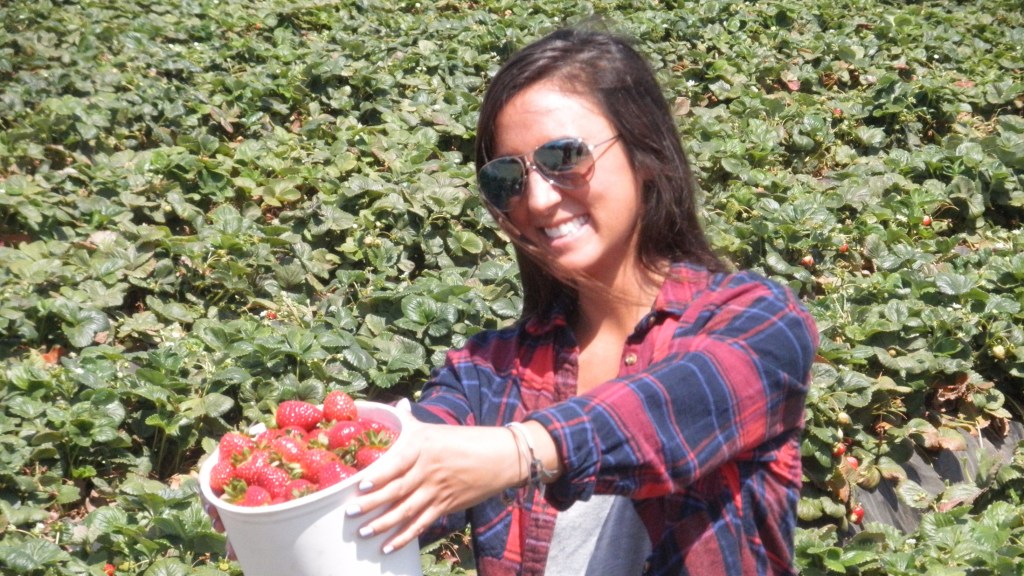
Photo: Mature strawberries from our picking them with Christy in California during our 2014 visit.
Link for the Mass readings for Saturday, September 22, 2018: http://www.usccb.org/bible/readings/092218.cfm