Family Affair

Herodias’ own daughter came in and performed a dance that delighted Herod and his guests (Mk 6:22).

Mark paints a word picture of a family: Herod, Herodias, and their daughter: ancient manuscripts differ as to whether she was Herod’s or Herodias’ daughter. Also, two times, in Mk 6:22 and 6:28, she is referred to in the Greek as korasion, meaning a young woman, as young as twelve years old (Donahue, 198). The setting is the banquet hall of Herod, the tetrarch or prince of Galilee. His high officials, military commanders, and the elites of Galilee were all gathered to celebrate Herod’s birthday. This is a royal, opulent family.

The daughter comes out to dance for Herod. Her dance delights Herod and he grants her anything she wants. Following the counsel of Herodias, she asks for the head of John the Baptist on a platter. The reason for this request was because Herodias held a grudge toward John because he stated that it “is illegal for you to be married to your brother’s wife” (Mk 6:18). Herod was distressed at the daughter’s request, but granted John’s death sentence to save face before his honored guests. The execution was swift, the head of John was brought on a platter, given to the girl, who then brought it to her mother.

Now, as I was reading this account again on the USCCB link posted below, I glanced to the right side of the web page at an advertisement for a book called, The Fragrance of Family Life. Clicking on the image of the book revealed this blurb: “This guide will help you share prayer time with your children, parents, grandparents, and all those whom the Lord has placed in your life.” On the cover of this book was a painting of a peasant family, clearly meaning to represent Joseph, Mary, and Jesus.

Could there be any two starker images? One family as corrupt, conniving, and malicious as can hardly be imagined and another as faithful, pure, and holy as can be hoped for. Families, like all of us, are not perfect, they are a bit messy. We do the best we can to support and love one another. Hopefully, most of our families fall somewhere in between, and hopefully closer to, the Holy Family than the Herodians.

The best we can do as family is to: accept each family member for the unique gift and person they are, make it known we are praying or thinking about one another, commit to support and encourage one another, forgive one another, continue to communicate with one another and even when we disagree respect one another, and no matter what bumpy roads or stormy seas of trial our families are going through or may go through, and you catch yourself shouting out: “Jesus, Mary, and Joseph”, just remember to add, “Pray for us” after your invocation. Bottom line: no matter how much we mess up, may we always agree that when the smoke clears, we will love and be there for one another.

For all our families, and especially those in Texas, on this his memorial day, we ask St John the Baptist to pray for us. From our family to yours, God bless you!


Link for today’s Mass reading:

http://www.usccb.org/bible/readings/082917.cfm

Donahue SJ, John R. and John R.Harrington SJ, Daniel J. 2007. “The Gospel of Matthew”. In vol. 1, Sacra Pagina Series, edited by Daniel J. Harrington. Minnesota, Liturgical Press, 2002.

 

Embrace Contrition and Reconciliation

“Woe to you, scribes and Pharisees, you hypocrites. You lock the Kingdom of heaven before men” (Mt 23: 13).

Context, in any reading of the Gospels, or any scriptural text, is important, but certainly with today’s reading. Our country is already experiencing enough division, polarization, and racial unrest as it is. These comments have too often been used to fuel anti-Semitic rhetoric. We need to remember that Jesus is Jewish. “The criticisms are leveled with those of power and/or influence as in the prophetic denunciations, not against the whole people of Israel. The aberrations denounced by Jesus were also denounced by other Jewish teachers in the rabbinic tradition. The goal of the denunciations is to highlight the error, to preserve others from it, and perhaps to bring those who err to the way of righteousness” (Harrington, 327).

Those who would use these verses to denounce people of the Jewish faith tradition, just for being Jewish, would be acting in the same way as those to whom Jesus was convicting. Jesus was speaking to the specific actions of specific leaders he had encountered who were using their power and influence for their own means and agendas. The hypocritical behavior that Jesus brought to light unfortunately still exists in our civil and religious leadership, though not all. It is why so many people are disillusioned with our religious and civic institutions.

We seek truth and authenticity because these two qualities are foundational for building trust and relationships. St. Augustine, whose feast we celebrate today, wrote, “You have made us for yourself, O Lord, and we are restless until we rest in you.” He experienced a life without God and with him, and regretted the days he had resisted his invitation. It is unfortunate how many today have not come to embrace the words of Augustine, because of their experiences with those, who in the name of Christ, have “locked the kingdom of heaven” before them.

It is very easy to point fingers at others and how hypocritical they are, but Jesus is also speaking directly to each one of us. How have we erred? In what areas of our life have we allowed past hurts and wounds, anxieties and fears, prejudicial and judgmental attitudes, to limit us from living a more authentic life aligned with the teachings of Jesus. We all fall short in living the “Way, the Truth, and the Life” (cf Jn 14:6), but the good news is that when we have the humility to be contrite, to recognize and to be sorry for the hurt we have caused, to admit when we have been wrong, we have a loving Father with arms wide open to embrace us, comfort, and heal us.

May we speak up, out, and against any act that diminishes or denounces the dignity of another, while at the same time, resisting the temptation to do so in a way that diminishes those who inflict division and hate. Jesus invites us to convict, yes, as he and the long line of prophets have done, with the intent of winning back our brother or our sister, with the intent of making a commitment to contrition and reconciliation.


Link for the Mass readings of the day:

http://www.usccb.org/bible/readings/082817.cfm

Harrington, S.J., Daniel J. “The Gospel of Matthew, vol. 1.” In Sacra Pagina, edited by Daniel J. Harrington, S.J. Collegeville, MN: Liturgical Press, 2007.

But Who Do You Say that I Am?

“But who do you say that I am” (Mt 16:15)?

This question is just as important to us today as it was when Jesus asked his disciples the same question some two thousand years ago. The answer is wide and varied as attested to in the many books written about Jesus and the many denominations who claim to follow him. There is also a vast array of pictures, paintings, documentaries, and movies. Through each medium, we are given a view of the Jesus of history or the Christ of faith, some emphasizing more the humanity of Jesus and others more the divinity of Jesus, and some a balance of the both the human and the divine. Debate has continued as to whether Jesus was God or only human, to did he ever really exist at all?

When I taught fifth and sixth grade students at Rosarian Academy, each Easter Season, I assigned my students the task of drawing a picture of the Resurrected Jesus. I quickly noticed a common characteristic of their artistic renditions: Jesus consistently did not have a beard. At first, I started to hand back the pictures to say they needed to add a mustache and beard, but quickly stopped myself. I realized I had made a mistake. This is how they saw Jesus from their perspective at their age.

The way we talk about and express Jesus may actually say a lot more about us than Jesus. The portrait I posted above is the Walter Sallman painting he titled, “Head of Christ”. I chose it because this was the portrait of Jesus I grew up with in our home and when I close my eyes and talk to Jesus this is the image that most comes to mind for me.

Seeking to know Jesus better, as my wife can attest, I have two book shelves with books just on Jesus, though for this blog, and at this time, I have gone back to the earliest, primary sources, the Gospels. I have read the daily Mass readings each day, prayed with them, and shared a bit of my reflections with you. Hopefully, what I have shared has provided some food for prayer, reflection, and practice.

“But who do you say that I am?” is an important question to meditate on from time to time. I invite you to do so this Lord’s Day and through the week. Please feel free to post your response. I would be interested to read how you answer Jesus’ question.


Link for today’s Mass Readings:

http://www.usccb.org/bible/readings/082717.cfm


Little Things with Great Love

“The greatest among you must be your servant. Whoever exalts himself will be humbled;
but whoever humbles himself will be exalted” (Mt 23:11-12).

Jesus warns us to resist the sin of pride, where we place ourself as the focal point. We seek to be the center of the gravitational pull within our realm of influence. Through our subtle and not so subtle actions, we can embrace this temptation to live a life of look at me, look at me! Desiring to be affirmed is not a bad thing, but that ought not to be our primary motivation for our actions.

The center of our focus ought not to be us, but God. For in choosing our own self determination, free of God’s guidance, is the height of pride. God does not seek to limit us but to inspire us, so that we may actualize the fullness of who he has created us to be. The spirit and council of St Mother Teresa often was not to seek to do great things but to do little things with great love.

Growing up with an introverted and shy nature, I spent much of my youth in my own world. In college, I took a psychology course and thought it would be interesting to work in a hospital. A close friend of mine, Steve, shared with me that his mother was a nurse in a nursing home in our hometown. That summer, after my freshman year finished, I applied for the job as a certified nursing assistant and was hired.

The first resident I assisted was named Margaret. She rolled passed me in her wheelchair and a particular odor followed. The aide I was training with caught my eye and I realized this would be my first solo attempt of service. I redirected and guided her to the toilet, which was in a small closet sized area in between two adjoining bedrooms. It was a particularly hot day, and as I removed Margaret’s depends, I found quite the surprise. For the next fifteen minutes as I washed her midsection and perineal area, I sweat, teared up, and repeatedly fought back the urge to gag, while all the while Margaret sang. Once cleaned up and in a fresh night gown, I helped her into her bed, tucked her in, and then Margaret said, “Give me a kiss lover.”

Others may have run for the door and never looked back. I stayed, and for the next four to five years experienced the wonderful gift of serving the many residents who drew me out of myself and into their worlds. What started out as a job became an extended family.

God presents us with opportunities daily in which we can be present and give of ourselves to others. We just need to be open and resist that urge to put our self first and foremost. I invite you to serve in little ways with great love and I pray that you may encounter your Margaret!


Link for the Readings of the Mass for today:

http://www.usccb.org/bible/readings/082617.cfm

Perichoresis!

When the Pharisees heard that Jesus had silenced the Sadducees, they gathered together, and one of them, a scholar of the law, tested him by asking, “Teacher, which commandment in the law is the greatest?” He said to him, “You shall love the Lord, your God, with all your heart, with all your soul, and with all your mind. This is the greatest and the first commandment. The second is like it: You shall love your neighbor as yourself. The whole law and the prophets depend on these two commandments.” (Mt 22:34-40).

Jesus, in response, was not just throwing up a cloud of theological dust into the eyes of the Pharisees. His answer to, “which commandment in the law is the greatest?” was drawn directly from the Torah. Jesus quoted from Deuteronomy 6:5 and Leviticus 19:18 and merged the two verses together as one unit. His purpose was to emphasize the point that what was to be the greatest aspiration for humanity was to love God and to love our neighbor as ourself, not either/or. Jesus again was showing that he did not come to abolish the law and the prophets, but that he came to fulfill them (cf. Mt 5:17).

In this statement, Jesus also revealed the foundation of reality, the Trinitarian communion of love. For the immanence of God – God within himself – has always been, always is, and always will be a communion of love. God the Father loves the Son, God the Son receives the Father’s love and in return loves God the Father, and God the Holy Spirit is the love expressed and shared between God the Father and God the Son. The overflow and abundance of this perichoresis, or divine dance of trinitarian communion, has loved creation into existence.

That means God has loved us into existence too! We who have been created in his image and likeness, are created as capable of loving him, and one another. Thus, as God has loved us so we are invited to mirror on earth the love that is shared in Heaven. It is through our participation in the love of Jesus that we can live up to his command to love our enemies, best expressed in the parable of the Good Samaritan (Lk 10:29-37).

Bask in the love of God today. Thank him for giving us our life. Take each opportunity that arises to share the love that is the source of our existence with those we encounter. If we catch the eye of another smile. If someone says, “How are you today?” say, “Better that you asked.” If someone interrupts you, let everything go for that moment and be really present to that invitation of encounter. Go out of your way to do some random acts of kindness, especially for that someone who ordinarily and regularly gets under your skin. Oh what joy! God’s supply will never run out, so today, go for it! Perichoresis!

“Dance, dance, wherever you may be
I am the lord of the dance, said he
And I lead you all, wherever you may be
And I lead you all in the dance, said he.”

Today, let God’s love reign free!


Link for today’s Mass readings:

http://www.usccb.org/bible/readings/082517.cfm

Chorus from the hymn: Lord of the Dance by Sydney Bertram Carter

“Come and See.”

But Nathanael said to him, “Can anything good come from Nazareth?” Philip said to him, “Come and see” (Jn 1:46).

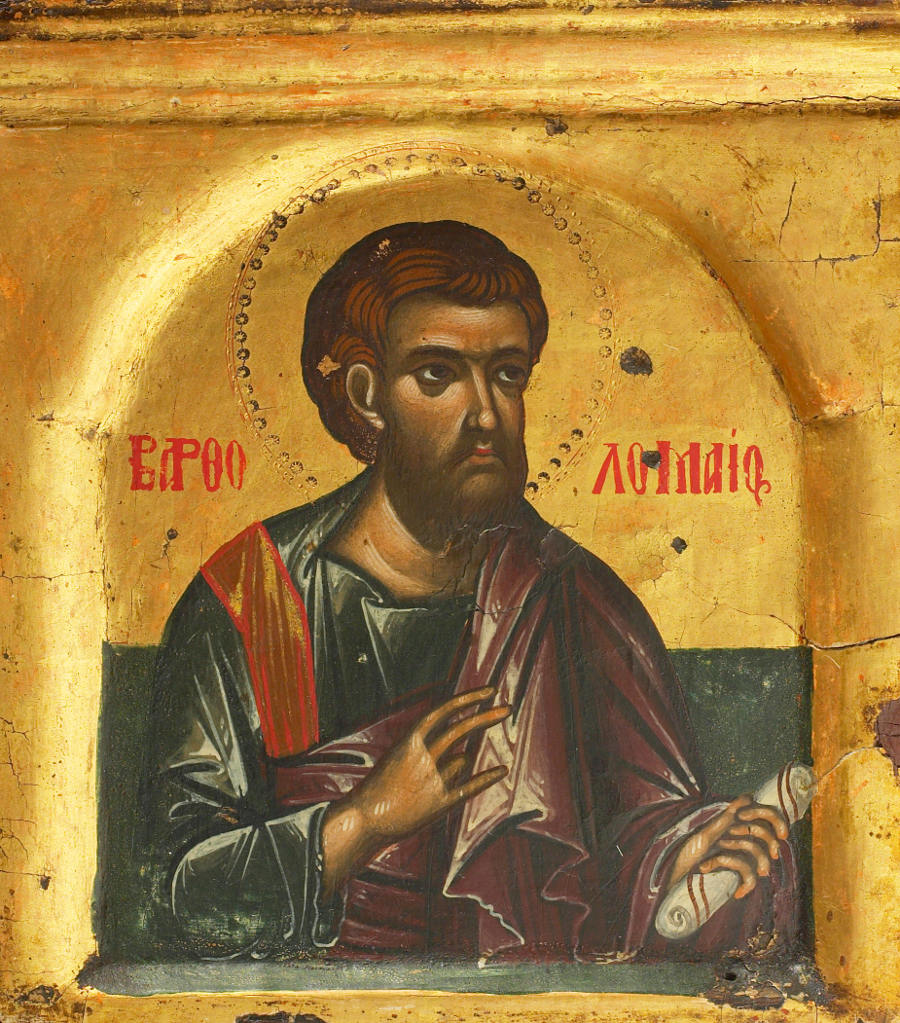
Some biblical scholars believe that Nathanael is the same man as the Apostle Bartholomew, who is mentioned in Matthew, Mark, Luke, and Acts. He was initially doubtful regarding Philip’s invitation to see Jesus. Why? Because of where he came from. Nazareth was a small peasant village with a population of about 1,600 (Meier, 317) people. I don’t think its small size would be the main reason for Nathanael’s snarky assessment of Jesus’ hometown, though he certainly had some reason to believe that nothing good could come from Nazareth. The more important point is that Nathanael did not allow his prejudice to keep him from following Philip’s invitation to “Come and see.”

Nathanael would not only “come and see”, but after Jesus shared how he first saw Nathanael under the fig tree, Nathanael claimed that Jesus was “the Son of God… the King of Israel” (Jn 1:49). What he was able to see in Jesus, Jesus’ own townsfolk of Nazareth were not able or willing to see. Though, like the other Apostles, Nathanael was off the mark regarding the kind of messiah Jesus would be. Jesus would not be the warrior king but the suffering servant of Isaiah. Jesus also told Nathanael that he would “see greater things than this” (Jn 1:50). As Francis Moloney added: “Faith based on miracles will not suffice; something more is needed. This greater faith will enable all disciples to see the revelation of the heavenly in Jesus, the Son of Man” (Harrington, 57).

Though we do not know much more about Nathanael other than the encounter described above, we know he encountered and followed Jesus becoming one of the Twelve. There is speculation that he traveled to India to spread the Gospel he received. Most likely he encountered those who had the same doubt that anything good could come from the One from Nazareth. There would be those who refused to believe and beheaded him, but before his martyrdom, some, though initially doubtful, would also come and see and come to believe.

May we follow the way of Nathanael by resisting the temptations of our own doubts and prejudices so to open our hearts and minds to “come and see” Jesus in those we meet today. St Bartholomew, on this your Feast Day, pray for us!


Link for today’s Mass readings:

http://www.usccb.org/bible/readings/082417.cfm

Meier, John P. A Marginal Jew, vol. 1 : The Roots of the Problem and the Person. New York: Yale University Press, 1991.

Moloney, S.D.B., Francis J. “The Gospel of John, vol.4.” In Sacra Pagina, edited by Daniel J. Harrington, S.J. Collegeville, MN: Liturgical Press, 1998

Grateful for God’s Generosity?

Jesus told his disciples this parable: “The Kingdom of heaven is like a landowner
who went out at dawn to hire laborers for his vineyard… (Mt 20:1).

At dawn, nine, noon, three, and five o’clock the landowner hired day laborers to go into the field to work to bring in the harvest. Many, familiar with this parable, find themselves a bit bemused or even bewildered at the ending, when they read or hear that the landowner had his foreman pay everyone the same pay. The immediate cry is, “That is not fair!” Anyone one who responds this way is focused on those who started at dawn, worked all day, and were paid the same as the ones who started at five o’clock.

Those laborers who started at dawn agreed to a certain wage and the owner paid that agreed amount. As the landowner attempted to explain “to one of them in reply, ‘My friend, I am not cheating you. Did you not agree with me for the usual daily wage” (Mt 20:13)? What is missed, if someone is feeling as perplexed as some of the dawn laborers, is the generosity of the landowner.

We see this similar scene of generosity given and played out in some of Jesus’ other parables. The older son who refused to listen to his father’s invitation to come in to share in the celebration of the feast when his wayward brother had been lost but now was found (Lk 15:11-32); the man who was forgiven his entire debt from the king and then when he had the same opportunity to forgive one who owed him, did not (Mt. 23-35); and the Good Samaritan (Lk 10:25-37).

Each of these parables are dealing with the generosity and rich mercy of God. There is a reason Jesus shared this parable after warning about the dangers of riches. Jesus is inviting the disciples and us to be generous with our time, talent, and treasure. He is also calling us out of our group think or tribal mentality. He is showing us that God’s invitation is for all. God has been very generous with us, do we begrudge the generosity he shows another? Do we fall into the camp of the older brother unwilling to be grateful for the return of his brother, the servant unwilling to show mercy to a debtor, or the priest and pharisee that took the long way around the wounded man on the road? Or are we grateful for God’s mercy, seek to share it, and rejoice with the Father when one accepts his offer and receives his grace, even at the eleventh hour?


Today’s Mass Readings:

http://www.usccb.org/bible/readings/082317.cfm


Life is a Gift.

“Who then can be saved?” Jesus looked at them and said, “For men this is impossible, but for God all things are possible” (Mt 19:25-26).

The disciples are “greatly astonished” about Jesus’ comments about how difficult it would be for the rich to enter heaven. Their astonishment came from the belief system that many Jews had at the time. Those who had wealth did so because they had been blessed by God for following his commandments. Just remember the rich young man’s attitude from yesterday. He had followed God’s commands and was blessed with riches, but Jesus turned his world upside down when he asked the man to give up all he had and follow him.

Jesus attempted to help the man and his disciples to understand that what we have is a gift from God, starting with our life, our very existence. He is our very sustenance and fulfillment. A problem arises when we place our security in material things instead of God who provides them for us. If our security is dependent on material things we are always going to be left unfulfilled, attached, and/or addicted, and so like the rich man, unwilling to give of ourselves to those in need, because we are afraid we won’t have enough. Also, when we look to our own effort and work ethic, we can build a reliance on our self alone, we are putting our self as the supplier of our security instead of God. Pride then becomes a dangerous idol. We think and start to believe that we don’t need God because we can do well enough on our own.

The disciples asked who then can be saved? If we can’t buy, earn, or achieve our way into heaven, how will we get there? Jesus is clear. For men this is impossible, because there is no means for us to get there on our own. But for God all things are possible. Our salvation is a free gift. We are to be grateful for what we have been given, accept, and recognize the source of the gift. In this way, we can share freely from what we have, because God, who is our source, is unlimited. What is primary then is deepening our relationship with him and collaborating with him. As we do so, we have the proper orientation to encounter one another in love.

What is essential in our life is not what we have, but who we have built relationships with. Time goes fast. This life we have been given is good, but it is also finite, and fragile. Let us not take each other for granted, let us make the time to love God and each other. “Let us encourage one another while it is still today” (Hebrews 3:13).


Link to the Mass Readings of the Day:

http://www.usccb.org/bible/readings/082217.cfm

Photo credit: Jack McKee

So Close! How About You?

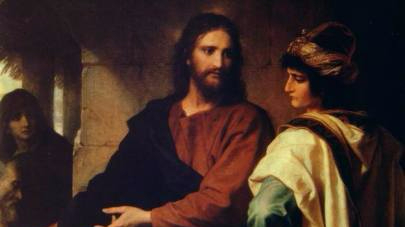
A young man approached Jesus seeking to know what he must do to attain eternal life. Jesus shared that the key to entrance was to keep the commandments. The man asked which ones he was to follow, a reasonable request as there were 613 commandments to choose from! Jesus gave him six: do not kill, commit adultery, steal or bear false witness; do honor his father and mother, and love his neighbor as himself (cf. 19:18-19). The man affirmed that he had followed them all. Then he asked that next question, “What do I still lack” (Mt 19:20)? I can feel the disciples wince, see the mouth of Jesus curl into a smile while his left eyebrow raises. Mark is more eloquent than me: “Jesus looked at him, and loved him…” (Mk 10:17).

Jesus said to him, “If you wish to be perfect, go, sell what you have and give to the poor,
and you will have treasure in heaven. Then come, follow me.” When the young man heard this statement, he went away sad, for he had many possessions (Mt 19:21-22). He was so close! Jesus saw the one thing that was keeping this man from following Jesus, and gave him the opportunity to renounce what he had, give to the poor and have eternal life, which was what his original request was. It is what we all have been created for, “You have made us for yourself, O Lord, and our hearts are restless until they rest in you” (St Augustine, Confessions). The young man knew what he needed to do, but was too attached to his wealth to let go, so he walked away sad.

Now faithful reader, may you find your quiet space, enter the stillness, and draw up the image of the disciples and Jesus watching the rich man walk away sad. Slowly, they turn their eyes to you. Ask Jesus, what it is that you need to let go of. What are you holding onto that is keeping you from giving yourself to the One who is Good? Jesus looks at you and loves you, and says, “If you wish to be perfect, …” How do you respond?

———————————————–

Link for Reading of the Day, Monday, August 21, 2017:

http://www.usccb.org/bible/readings/082117.cfm

Painting by Heinrich Hofmann

Encounter the Dignity of Humanity

[A] Canaanite woman of that district came and called out, “Have pity on me, Lord, Son of David! My daughter is tormented by a demon” (Mt 15:22).

I wrote about the encounter of Jesus and the Canaanite woman on August 9. Our Sunday reading for today takes up Matthew’s account again. Today I would like to go a little deeper. In Jesus’ encounter with the Canaanite woman, Jesus revealed through three responses, some of the darker sides of our fallen, human nature. But in his fourth, he also identified the way to resist these three sinful tendencies.

When the Canaanite woman called out to the Son of David to have pity on her, Jesus first responded with Silence. His silence can represent the indifference we feel toward those not like us. We ignore their very presence, as if they don’t exist. In the early nineties, while I was in the novitiate with the Franciscans of Holy Name Province, we toured an impoverished inner-city area in Philadelphia. One of the local friars pointed up to the elevated tracks as the commuter train headed past us toward the heart of the city. He shared how the majority of those commuting into the city had no idea of the need, pain, and struggles of those down here below, like the homeless mother and her three young children that I had met. Are we aware of those in need around us, or do we ride that same Elevated Train of Indifference?

The disciples approached Jesus and asked that he send the woman away. Jesus replied: “I was sent only to the lost sheep of the house of Israel” (Mt 15:24). Jesus’ response can represent the dangers of tribalism and nationalism, and how it can taint our perception regarding how we perceive those outside of our group. Those we consider as not one of us, we see as less than human. A Lakota elder, Fire Hawk, who became like family to me in my early twenties shared how in his youth, he thought about being a priest. He voiced his interest, and was told that it was not possible because he was an Indian, and after receiving one too many baths in which he was scrubbed down in bleach and water, to wash the red out, he gave up on the idea. If we are aware of those in need around us, do we not help because someone has a different national, religious, political, racial, ethnic, or gender identity?

The woman increased her boldness and walked directly up to Jesus and did him homage and asked him directly for help. Jesus’ third response:  “It is not right to take the food of the children and throw it to the dogs” (Mt 15:26). In this derogatory statement, Jesus’ third response can reveal the power of our words and symbols that we use to belittle, demean, and dehumanize. When we place labels on others and begin to believe them, we begin to see others as less than human. Not only do we refuse to help the other, we make them the enemy that must be put in their place. This path can lead to the horrific scenes witnessed in Charlottesville last week. Before we slip into the defensive posture that it can’t happen here. Let us remember, two years ago, April 18, 2015, in our community of Jupiter, three white teens were out “Guat-hunting”, their phrase, looking for Guatemalans to rob. That night they found a Guatemalan young man, 18 year-old Onesimo Marcelino Lopez-Ramos, a son and brother. After their encounter, Onesimo was bludgeoned to death with a rock. Are we aware that our attitudes matter, our words matter and our actions matter?

The Canaanite woman retorted, “Please, Lord, for even the dogs eat the scraps
that fall from the table of their masters.” Jesus’ responded: “O Woman, great is your faith” (Mt 15:28)! This final statement can reveal to us that there is an antidote to indifference, tribalism, and dehumanization and that is the love expressed by the Canaanite woman for her daughter. She crossed social boundaries, side-stepped indifference, refused to be sent away, risked ridicule, and possible abuse and death, because she would not be denied until her daughter was healed. She did not get defensive, did not fight back, because she did not think of herself. She thought only of the welfare of her daughter.

What is Jesus saying to us? We are to see each other as human beings, as sacred beings created in his image and likeness by the same God and Father of us all. Jesus demands that we meet darkness with light, and hate with love, and that in everyone we encounter, we reach out to them with that same love and mercy he bestows on us. We are to will the good of the other as other, no matter who they are. This day I invite you to choose faith, hope, and the greatest of these, love, to meet the needs of those who are hurting in our midst.

Let us examine our conscience as we prepare to receive Jesus, truly present in the Eucharist. May he shine the light of love in the darkest, most wounded areas of our souls to reveal to us what demons we need exorcised. May he heal and strengthen us for the mission he has prepared for us. As we receive Jesus today and place him on our tongue, may we go forward with a commitment to use our tongue to form words of encouragement, empowerment, affirmation, and prayer. May St Peter Catholic Church and all our homes, in the words of Isaiah, “be called a house of prayer for all peoples.”


Link for today’s readings: Twentieth Sunday in Ordinary Time, August 20, 2017

http://www.usccb.org/bible/readings/082017.cfm