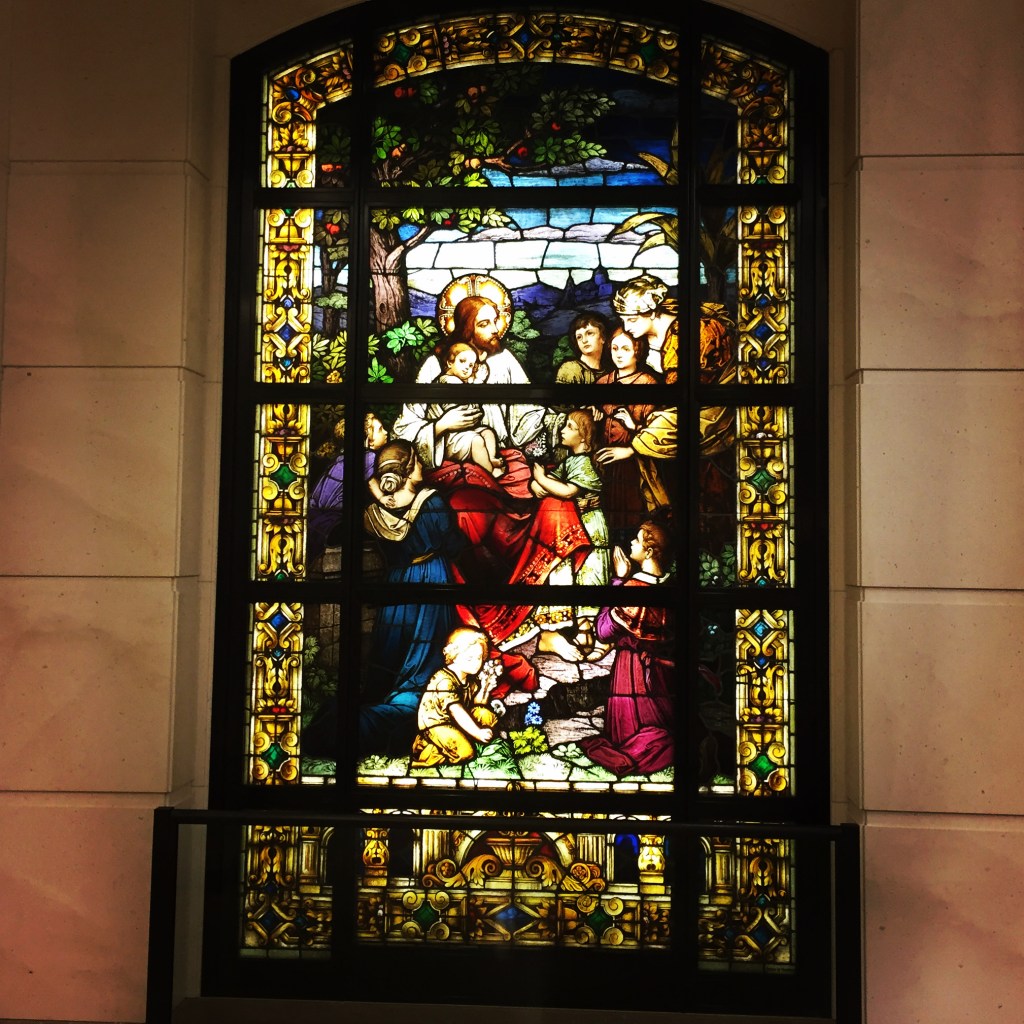
Fear not, let us trust in Jesus and invest our talents.

“Then the one who had received the one talent came forward and said, ‘Master, I knew you were a demanding person, harvesting where you did not plant and gathering where you did not scatter; so out of fear I went off and buried your talent in the ground. Here it is back'” (Mt 25: 24-25).

When I first began the journey of reading and seeking to put the teachings of Jesus into practice in my later teens and early twenties, I struggled with this verse of Jesus’ Parable of the Talents, not because I didn’t relate to it, but instead because I did! I sided with the servant who buried his talent in the ground and did not understand what he did wrong.

What the servant did made sense to me, he kept his master’s talent safe and returned what he had been given. Historically, burying was considered a safe and acceptable practice in ancient Palestine when protecting someone else’s money. Even in reading carefully back to the beginning of the parable, I could see no reference to investing the talents. Though in the Gospel of Luke, there is an explicit demand to “trade with these until I come” (Lk 19:13). What is Jesus saying?

Jesus offers a microcosm of salvation history, the thread of which has been woven through all Sacred Scripture from Genesis to Revelation. God, through his sovereign will, has consistently called, calls today, and will continue to call into the future a people to himself. This is echoed in today’s first reading where Paul writes three times, “God chose”. He chose the foolish, the weak, the lowly and despised of the world such that what is shared coming from each of this is to be seen clearly as a gift coming from God and not man. This is so that neither of them could boast in their own effort, but in God alone.

In each age, God has bestowed upon humanity the generous gift of his grace, inviting us to receive and share in his very life, which is what we have been created for. This is a free gift, to be freely accepted or rejected. Once received though – no matter how little we choose to receive, we are directed to share what we have been given. Through a life lived of accepting, receiving, giving back to God and to one another, we are given even “greater responsibilities”.

In receiving the gift of God, himself, and sharing what he has given, ultimately his love, for God is love (1 John 4:16), we not only mirror on earth, albeit dimly, but share in the divine communion of the love between God the Father, God the Son, and God the Holy Spirit. To reject this gift outright, or to receive some of the benefits and not to share, we cut ourselves off from the very life force and source of our being.

We can see this pattern emerge in this parable. The master gives his servants talents. All accept what they have been given, five, two, and one. Two received and multiplied their talents. The third refused and kept it to himself. The master returns, commends and rewards the two, then berates and even takes the little the one had been given and gives it to the one who had more.

The message of The Parable of the Talents is as clear as it is challenging. John P. Meier summarizes that “Jesus is insistent; along with sovereign grace, serious demand, and superabundant reward comes the possibility of being condemned for refusing the demand contained in the gift. Indeed, one might argue that no aspect of Jesus’ teaching is more pervasive in the many different streams of the Gospel tradition, and no aspect is more passed over in silence today” (Meier 2016, 309).

God has created us and all of creation from the abundant outpouring of his love. Will we reject the gift of his love and invitation of communion? Will we receive, yet not actualize who we are called to be for our self and others because we would rather merely just exist, willing to be lured and entrapped by the temptations of anxiety, fear, apparent goods, and half-truths? Will we give in to the fear, too afraid to risk, to go out from ourselves to serve others? Or, will we appreciate the gift of our life and say thank you for the breath that we breathe and then be willing to expand the love we have received? Will we embrace who God calls us to be, to love in kind, to will the good of others in the unique way God calls us to serve, whoever they may be?

I have lived the life of the wicked servant who buried his talent out of fear. I have embraced the sin of sloth and resisted opportunities to share what God has given me to invest. This was no path to fulfillment, but an experience of separation from the fullness of the One who wants so much more. To live a day to day existence adrift and dulled, is certainly not the way I hope to spend another day.

I was faced with a choice about two and a half years ago. To finish out the school year at Cardinal Newman HS and take a year off to collapse and rest or to pursue the priesthood. I asked God what he wanted me to do. I heard in the silence of my heart, “Priesthood”. It was a gentle but clear affirmation. My shoulders sank, but the embers of my soul were set alight!

I chose not to turn away from God’s call, I chose not to bury his gift in the sand. I chose instead to trust in Jesus and invest the talents he gave me and once given the green light entered seminary. The talents I invested in that time are already reaping incredibly as I have been serving as a priest these past two months. I experience and share the love I receive from God daily in celebrating Mass, preparing and sharing homilies, writing and uploading these reflections, entering the lives of families to share the sacraments of the anointing of the sick, funeral Masses, confessions, spiritual direction, counseling, and dinners.

A big part of why I am where I am today is because of my wife, JoAnn. She supported me and encouraged me every step of the way to come out of my shell, to learn to trust, to take risks, and she constantly challenged me to break out of my comfort zone. She modeled for me the act of giving of herself to others, especially our children. But not even just those closest to her.

She often would complement something someone was wearing in her everyday encounters, she loved to give little gifts, wrote simple notes of affirmation, and the embodiment of her selfless giving was in her final week of life when she made sure that the Hospice nurses caring for her had something to eat, to drink, and that they were warm enough because we had to keep the AC cool because of her spikes in temperature. She even insisted that one of the nurses wore one of her sweaters. I am confident that when JoAnn began her journey from this life to the next, God welcomed her with the words, “Well done, my good and faithful servant.”

That support continued during my time in the seminary. I was blessed with guidance, spiritual direction, support, acceptance, and love, along with the studies, deeper time of prayer, the Sacrament of Reconciliation, and healing beyond anything I imagined possible when I first drove my truck through the open gates of St. Vincent de Paul Seminary. Resisting to bury my talent but again to invest for all it was worth has made all the difference.

We need not fear. Jesus does not expect too much of us. He invites, gives, and yes is demanding, but at the same time empowers and provides the support and energy we need to invest the talents given and to bring about a greater return. Our response is to allow the light of Jesus to shine through us as a prism in our own unique way that we may dispel any darkness and division in our realm of influence. As anxiety and fear may arise and seek to derail what God is calling us to do, may we embrace, breathe, rest, receive, and abide in God’s love and love God and each other. In the words of Jesus and St John Paul II who echoed them as he began his pontificate: “Be not afraid” (Mt 14:27). Let us use the time we have been given to invest our talents well.

———————————————————————————-

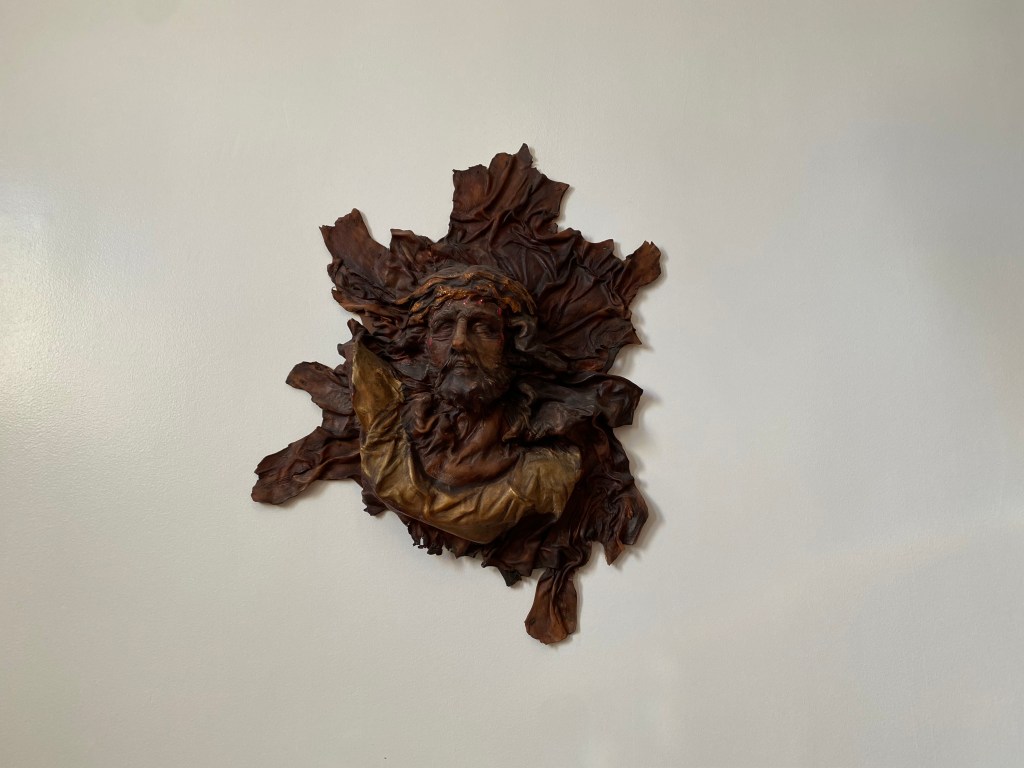
Photo: The talents Jesus gave me as I entered the gates of St. Vincent de Paul Regional Seminary as a seminarian June 8, 2022, I invested and are being multiplied now. Prayers continuing for my SVDP family as they are revving up to start another year!!!

Meier, John P. A Marginal Jew: Probing the Authenticity of the Parables. Vol. 5. New Haven: Yale University Press, 2016.

Link for the Mass readings for Saturday, August 31, 2024

“We proclaim Christ crucified”!

“The foolish ones said to the wise, ‘Give us some of your oil, for our lamps are going out.’ But the wise ones replied, ‘No, for there may not be enough for us and you. Go instead to the merchants and buy some for yourselves'” (Mt 25: 8-9).

Jesus is doing more here in this parable than introducing prudent discipleship. The wise and foolish virgins are representative of those invited to participate in the wedding feast, those invited to participate in the kingdom of heaven. They who have their lamps burning brightly do so because they are living their faith in practice and reflecting the light of Jesus as they witness their faith to others. They cannot give their oil though. Each person must receive the invitation of Jesus and decide to live their faith and put it into practice in their own lives.

No one can do this for them. The foolish virgins are those that are not prepared or ready because they lack the commitment, the discipline, and the actual living out of their life of faith. This is shown starkly when the foolish virgins come to the locked door. They are not allowed in to participate in the wedding feast because the groom, Jesus, does not know them. They are members of the community in name only, not by putting their faith into practice through prayer, worship, and good works.

We gain some insight that the wise and foolish for Jesus has a different connotation than what the world deems to be wise and foolish. St. Paul in his letter to the Church at Corinth wrote that “the message about the cross is foolishness to those who are perishing, but to us who are being saved it is the power of God” (I Cor. 1:18). The cross was not only a horrific symbol of oppression, it was a sign of the finality of death. To the world the cross showed that Jesus could not be the messiah, for he could not even save himself.

The imagery of the cross was still raw for the first few centuries and was depicted rarely in early Christian art. And yet, in one of the earliest accounts of the New Testament we have Paul not just discussing but proclaiming victory in the cross: “We proclaim Christ crucified” (I Cor. 1:22). A foolish and absurd statement in the view of the world, yet one of foundational wisdom to the disciple and apostles of Christ.

This was and continues to be the banner call of the Christian. Jesus died, and yet conquered death and rose again. This is a statement of faith that we can only make an ascent to through our belief and experience of, trust in, and deepening our relationship with, the one who died, conquered death and rose again. St. John Chrysostom (349-407) wrote that: “For the Apostles themselves came in not by wisdom, but by faith, and surpassed the heathen wisemen in wisdom and loftiness, and that so much the more, as to raise disputes is less than to receive by faith the things so far” (p. 249, The Word on Fire Bible).

Our faith is not a blind faith that we dumbly believe and follow along like lemmings. It is our reason seeking understanding and allowing God’s grace to build on our nature. Our faith grows as did the Apostles, through our encounter and lived experience with Jesus. Just like any other relationship, we build our relationship with Jesus through time spent with him. If we want to know Jesus more intimately, we need to  make consistent time to spend with him in prayer, in the Mass and sacraments, and in serving one another as our starting points.

Jesus was clear that we do not know the time or hour of his return, but if we are faithful and trust in him in everything, when he does return, we, like the wise virgins, will know him and be allowed to enter the wedding feast.


Photo: The crucifix, our sign of victory – St. Peter Catholic Church, May 4, 2024.

Link for the Mass readings for Friday, August 30, 2024

Word on Fire Bible: Acts, Letters, and Revelation. Park Ridge, IL: Word on Fire Ministries, 2022.

Like John, may we be faithful to God and his will.

Herodias’ own daughter came in and performed a dance that delighted Herod and his guests (Mk 6:22).

Mark paints a word picture of a family: Herod, Herodias, and their daughter: ancient manuscripts differ as to whether she was Herod’s or Herodias’ daughter. Also, two times, in Mk 6:22 and 6:28, she is referred to in the Greek as korasion, meaning a young woman, as young as twelve years old (Donahue 2002, 198). The setting is the banquet hall of Herod, the tetrarch or prince of Galilee. His high officials, military commanders, and the elites of Galilee were all gathered to celebrate Herod’s birthday. This is a royal, opulent family.

The daughter comes out to dance for Herod. Her dance delights Herod and he grants her anything she wants, even up to half his kingdom. Following the counsel of Herodias, she asks for the head of John the Baptist on a platter. The reason for this request was because Herodias held a grudge toward John because he stated to Herod that it “is illegal for you to be married to your brother’s wife” (Mk 6:18). Herod was distressed at the daughter’s request but granted John’s death sentence to save face before his honored guests. The execution was swift, the head of John was brought on a platter, given to the girl, who then brought it to her mother.

This is not the ideal image of the family that we hopefully aspire to. John’s upbringing as we learn from Luke had a different experience. His mother, Elizabeth, and father, Zechariah, were devout Jews. They raised their son as a person of integrity, and we can see from today’s reading of Mark the extent to which he was willing out his prophetic role in speaking truth even if it would mean his death. John was willing to give his life, rather than compromise his principles. This stands in stark contrast to Herod Antipas who, with little contemplation about what he was doing, acted quickly in giving the order to end the life of John in such a brutal fashion.

Could there be any two starker images of family life than in today’s Gospel? One family as corrupt, conniving, and malicious as can hardly be imagined and another as faithful, pure, and holy as can be hoped for. Families are not perfect, and life together is a bit messy. May we support and love one another the best we can. Hopefully, most of our families fall somewhere in between, and hopefully closer to John’s family than to the Herod’s.

Even when life goes well, familial relationships can be difficult and challenging. We are at our best when we strive to accept, support, and see each other as God sees each of us: as a unique and unrepeatable gift. Even though sometimes we would like to return the gift to sender, we need to consistently pray for one another and pray together when possible, commit to be present and encourage, forgive, keep the lines of communication open, (which means listening as well as speaking), and even when we disagree, respect one another, and give each other space as needed.

No matter how bumpy the road of life gets or how high the waves of trials and tribulations toss us about, may we follow the lead of St John the Baptist and strive to be faithful to God and his will for our lives. May we stand up for each other, those in our families by blood as well as those relationships God has given to us by his grace. Even in our imperfections, may we commit to accompany, love, and be there. Remaining steadfast in our trust in God, we will grow closer to him as well as each other.

For all families, and especially those who are struggling with their own unique challenges right now, in any and all forms, we ask St. John the Baptist on this his feast day to pray for us and our families.


Photo: Icon of St. John of the Baptist, Monastery Icons.

Donahue SJ, John R. and Daniel J. Harrington SJ. The Gospel of Matthew, in Sacra Pagina Series, vol. 1. Ed. Daniel J. Harrington. Minnesota: Liturgical Press, 2002.

Link for the Mass readings for Thursday, August 29, 2024 

May God’s peace be with you.

“May the Lord of peace himself give you peace at all times and in every way. The Lord be with all of you” (2 Thessalonians 3:16).

Peace at all times” – is what Paul praying for the Church of Thessalonica and us reading these words today possible? It actually is. When we are connected to the source of this peace. When are separated, no.

St. Peter walked on the water when he held the gaze of Jesus with his. Once he took his eyes of Jesus and looked to the storm, then he began to sink. When he then called out to Jesus, Jesus’ hand was there to lift him up. But for that moment, Peter walked on the water. For brief moments, we may not have experienced walking on water, but hopefully, we have been able to experience some of the peace of the Lord that Paul wants to impart upon us.

To move toward always experiencing our Father’s peace, that means we need to be in God’s presence at all times. The good news is that God has been, is, and will always be with us. He is the ground of our very being. He is not in competition with us but is the source of our very being. The more of his presence and love that we receive, we become more of who he is calling us to be.

We actually can see God and experience his peace in all things because he is the ground of everything that exists. Even evil? Yes, because evil is not a thing. Evil is a deprivation of the good, like a cavity that corrupts the good of the tooth. The key is resisting all the diversions, distractions, and temptations that pull our attention away from keeping our focus on God first and foremost and growing in our relationship with him.

Even when we are going through challenges or difficulties, we can experience peace when we seek Jesus in the midst of the storm and keep our eyes on him. As we do so, even if the healing does not come, the trial does not cease, or the situation does not correct itself instantly, we can trust that Jesus is with us and will see us through. In placing our trust in Jesus no matter what, in continuing to turn to him, there lies the source of our peace and our strength to endure.

This is a peace that surpasses all understanding because God’s grace builds on our nature. He meets us where we are and lifts us up beyond anything we can imagine possible. In trusting in God, stress will still arise, we will still be concerned, but the key is that we don’t add onto it by continuing to churn over in our minds worst case scenarios that may or may not even happen.

For this moment, let us take a few breaths, place our trust and focus on Jesus, and build from there. Peace and all God’s good be with you this day!

—————————-

Photo: Rosary walk view from Veteran’s Memorial Island, Vero Beach, FL.

Link for the Mass readings for Wednesday, August 27, 2024

Jesus shine in our darkness and set us free.

Jesus said, “Woe to you, scribes and Pharisees, you hypocrites. You are like whitewashed tombs, which appear beautiful on the outside, but inside are full of dead men’s bones and every kind of filth. Even so, on the outside you appear righteous, but inside you are filled with hypocrisy and evildoing” (Mt 23:27-28).

How many of us spend an inordinate amount of time regarding physical externals? Washing, makeup, the right clothes, the correct scents, teeth whitening, plucking, nipping, and tucking. How about time spent exercising through gym memberships, home exercise equipment, physical trainers, sports, stretching, running, or cycling. How about time spent towards a career through education, updating, professional learning, seminars, webinars, and networking. There are other categories that I can add, and the point is that there is not anything necessarily wrong with any of the above in moderation and each in balance are healthy practices.

Though if external activities are all we are investing our time and energy in, then Jesus has a point. We may “appear beautiful on the outside” with great looks, a body that doesn’t quit, and a career to die for, but what is going on inside? Are we empty, unfulfilled, achieving goal after goal, yet feeling adrift or hollowed out? Do we have all the right social skills and etiquette down, know the right things to say in public, we have friends in the hundreds on our social media accounts, yet we feel alone and not a part of anything meaningful?

Worse yet, do we go to Church, say the right prayers, are active in ministry, tithe, are members of boards, involved in the community, and doing some great works of charity, but when the door is closed, and no one is looking… what kind of “hypocrisy and evil doing” are we up to? It is easy to stay focused on Jesus chewing out the Pharisees, yet, Jesus is calling us to more. He shines his light on the imperfections and shadow sides of us as well.

We can spend our time whitewashing the outside, projecting a perfect image, while chasing the finite and material pursuits alone, which will more than likely leave us feeling anxious, restless, unsatisfied, and tired. Maintaining and protecting a false image on any level is exhausting. Instead, let us take a good look at the time we invest, where we focus our energies, examine our conscience, and assess the health of our relationship with God, family, friendships, our vocation instead of occupation, and our service to those within and beyond our intimate circle.

Making time for prayer, meditation, study, worship, exercising, eating healthy, discerning, and giving of ourselves in service helps to build a firmer foundation for developing the inside, who we truly are, and how God sees us. Making time to rest, renew, and reflect on the core of who we are in the depths of our soul will help us to face those areas we may be hiding from, those areas in need of healing or repentance.

Instead of attempting to project a perfect persona, we will do better to be in touch with our weaknesses, our faults, sins, wounds, and prejudices so that we may no longer defend, rationalize, and or compensate for them but in humility seek truth, healing, and reconciliation. By doing so, we can become free from those unresolved and most likely unconscious hurts and traumas that we may be denying, covering over or up for. We can then feel safer and more comfortable in our own skin.

It feels much better to be free to be who God has seen us to be from our very beginning. To be able to receive God’s love as his beloved daughter or son as we are and rest there is a great place to abide. Yet, it is not easy and takes courage to be able to not only invite Jesus to shine the light in our own darkness, but to also be able to let go, ask for help when needed, confess as necessary, and experience the pain we may have been holding onto and even maybe have defined ourselves by for years.

The light that Jesus shines is soft and his invitation to transformation is gentle. He will lead us only as fast as we are willing to go. Then with each baby step of our journey of healing, we will become more accepting, patient, understanding, and forgiving of ourselves and others because we will come to realize that we are not perfect, we don’t have all the answers, we really are not in control of anything, and that the world does not revolve around us. When we accept this truth and we are set free!

————————————————

Photo: Quiet time on Riomar Beach, Vero Beach, FL.

Link for the Mass readings for Tuesday, August 27, 2024

Let us not lock but open the door to heaven for ourselves and others.

“Woe to you, scribes and Pharisees, you hypocrites. You lock the Kingdom of heaven before men” (Mt 23: 13).

Context, in the Gospels, or any scriptural text, is important, but certainly with today’s reading. Our country is already experiencing enough division, polarization, and racial unrest. These comments have too often been used to fuel anti-Semitic rhetoric. We need to remember that Jesus is Jewish. “The criticisms are leveled with those of power and/or influence as in the prophetic denunciations, not against the whole people of Israel. The aberrations denounced by Jesus were also denounced by other Jewish teachers in the rabbinic tradition. The goal of the denunciations is to highlight the error, to preserve others from it, and perhaps to bring those who err to the way of righteousness” (Harrington 2007, 327).

Those who would use these verses to denounce people of the Jewish faith tradition and for being ethnically Jewish, would be acting in the same way as those for whom Jesus was convicting. Jesus spoke to specific actions of specific leaders he had encountered who were using their power and influence for their own means and agendas. The hypocritical behavior that Jesus brought to light unfortunately still exists. It is why so many people are disillusioned with our religious and civic institutions and leaders.

We seek truth, authenticity, and transparency because these qualities are foundational for building trust and relationships. St. Augustine, whose feast we celebrate this coming Wednesday, wrote in his Introduction to his Confessions, “You have made us for yourself, O Lord, and we are restless until we rest in you.” He experienced a life without God and with him. He regretted the days he had resisted God’s invitation. It is unfortunate how many today have not come to embrace the words of Augustine, because of their experiences with those, who in the name of Christ, have “locked the kingdom of heaven” before them.

It is easy to point fingers at others and how hypocritical they are, but Jesus is also speaking directly to each one of us. How and where have we erred and been hypocritical? In what areas of our lives have we allowed past hurts and wounds, anxieties and fears, prejudicial and judgmental attitudes, to limit us from living a more authentic life aligned with Jesus’ life and teachings? We all fall short in living the “Way, the Truth, and the Life” (cf Jn 14:6), but the good news is that when we have the humility to be contrite, to recognize and to be sorry for the hurt we have caused, to admit when we have been wrong, we have a loving Father with arms wide open to embrace, comfort, lead us to reconciliation, and offer us forgiveness and healing.

When we allow Jesus to show us our faults, sins, and shortsightedness, confess them, and practice penance, he will forgive and transform our lives. We will then have more credibility when we speak up, out, and against any act that diminishes or denounces the dignity of another. While at the same time we need to resist the temptation to do so in a way that diminishes those who inflict division and hate.  Jesus invites us to convict others and hold them accountable as he and the prophets did, while at the same time:

We need to be careful that when we convict we don’t condemn, we hold ourselves accountable as we convict others with the intent of winning back our brother or our sister. Our goal is not to humiliate, degrade, and/or shame, but to lead them to a place of contrition and reconciliation, such that we all will strive to be people of integrity, transparency, and holiness. By doing so, we will not lock the doors of heaven with our hypocrisy but will open them with the keys of our authenticity, faith, humility, and the love that Jesus has given us.


Photo: View above St. Peter Catholic Church, as I was getting ready to head home after JoAnn’s funeral Mass, internment, and reception.

Link for the Mass readings for Monday, August 26, 2024

Harrington, S.J., Daniel J. The Gospel of Matthew, vol. 1, in Sacra Pagina, Ed. Daniel J. Harrington, S.J. Collegeville, MN: Liturgical Press, 2007.

“Whoever eats my flesh and drinks my blood has eternal life.”

All the readings for today’s Mass demand a choice.

Joshua has led the Israelites through the Jordan River as Moses had led the people through the Red Sea. God had cleared the way such that the people were getting ready to settle in the new land. It was not by the might of their military that they prevailed. To thrive in this new land, they needed to fulfill the promise of Abraham, God would make of Abram a great nation if he and his descendants would be faithful to him alone.

Joshua, now nearing his death, called the people to decide. Who were they going to worship and dedicate their lives to? The gods that the true God defeated to win their freedom and the idols they were still holding onto from their time of enslavement in Egypt, were they going to serve the gods of the new land they were now going to inhabit, or were they going to follow Joshua and his household and “serve the LORD” (Joshua 24:15).

The people chose to serve the LORD and Joshua established a covenant with God and the people. Although, their faithfulness would not last as the following accounts in the book of Judges attests.

In our second reading, Paul outlines to the Church of Ephesus the ideal covenant of marriage. Unfortunately, the phrase that often puts a screeching halt to this reading is: “wives are to subordinate to their husbands” What is missed is the line before in which Paul writes, “Brothers and sisters: be subordinate to one another out of reverence for Christ.” And the words after “wives are to be subordinate to their husbands as to the Lord.” And, “Husbands, love your wives, as Christ loved the Church and handed himself over to her to sanctify her” (cf. Eph. 5:21-32).

The language and ideals that Paul presents are about the self-sacrificial nature that a man and woman are to approach the sacrament of marriage. A better translation of the original Greek for hypotasso, is surrender or to entrust oneself to. They are to surrender, trust each other, and serve one another with their whole selves holding nothing back. They are to love one another unconditionally as Christ loves his Church, and this union of self-gift to one another can then result in the beautiful gift from their union which is a third person, a child.

This intimacy and union of love is a communion of persons that mirrors the trinitarian communion of the Father, and the Son, and the Holy Spirit. Where this breaks down is our fallen nature. The knee-jerk reaction to “wives are to be subordinate to their husband in all things” is because of the horrific abuses in the time of Paul writing this letter up to and including our present day. Paul is not talking about a power differential regarding who is to be first, who is to be the boss. He is reminding husbands that they are to love their wives as they are to love Christ and their very selves, and reminding wives that they are to respect their husbands as they respect Jesus and themselves. Also, women are not to be submissive to men generically, but to their husband specifically with the responsibility and communion that entails in their mutual self-surrender.

Do the first and second readings then have anything to do then with our final installment of the Bread of Life Discourse we have been journeying through these past four weeks? Very much so! First and foremost, in our lives, every day and every moment, we need to decide, who are we going to serve. Are we going to serve the enemy, who seeks to enslave and kill us? Are we going to serve our unassisted, fallen nature, where we decide to walk this journey alone apart from God? Or will we decide with Joshua and his household to serve the LORD?

Will we lower the bar of marriage and define it by our weaknesses, our failings, our fallen nature, or give our lives to Jesus, make a covenant with him, enter into a sacramental bond so that he becomes the center of our marriages. Do we recognize that each of us as members of the Church are the bride of Christ? Jesus meets us in our imperfections and sin, he empowers us to be faithful, so that we give of ourselves fully, holding nothing back in self-sacrificial love, to allow his grace to build upon our fallen nature, and to raise us to the height of the beauty, fullness, and wonder of what God created marriage to be as Church and when a husband and wife give themselves to Jesus and each other in the Sacrament of Matrimony.

As with the Israelites that Joshua gathered around him, as Paul wrote to the Church in Ephesus, the crowd that has been “grumbling” and “disputing” among themselves about the teaching that Jesus has been presenting, have now come to the point in which they too need to make a choice.

The opening line of today’s reading does not bode well. “This teaching is difficult, who can accept it”(Jn 6:60)?

The teaching that they are talking about was the doubled down version of Jesus saying he was not just the bread of life come down from heaven, but that if the people wanted eternal life, the life we have all been created for, they had to believe in the words of Jesus we heard proclaimed last week, which is worth repeating in full:

“Amen, amen, I say to you, unless you eat the flesh of the Son of Man and drink his blood, you have no life in you. Whoever eats my flesh and drinks my blood has eternal life, and I will raise him up on the last day. For my flesh is true food and my blood is true drink. Whoever eats my flesh and drinks my blood remains in me, and I in him. Just as the living Father sent me, and I have life because of the Father, so also the one who feeds on me will have life because of me. This is the bread that came down from heaven. Unlike your ancestors who ate, and still died, whoever eats this bread will live forever” (Jn 6:54-58).

With each stage of his presentation, Jesus increases the vigor of his teaching. There is one last chance for those who might be hoping that Jesus is just speaking metaphorically. As Jesus explains further, he says, “It is the spirit that gives life, while the flesh is of no avail.” Is this then just a spiritual matter, so not really are they to eat the flesh after all? Before they could even ask, Jesus closes that last door. “The words I have spoken to you are Spirit and life” (Jn 6:63).

What words? “Those who ate my flesh and drink my blood abide in me.” The flesh he is referring to here, as is also seen elsewhere in this gospel and in the writings of St. Paul is referring to “the unassisted, fallen human nature” (Bergsma). The flesh, our fallen human nature is useless. Even at our best, we are finite and limited. We cannot grasp the things of the spirit with our intellect and senses alone. That is why so many here are struggling. They are not opening themselves up to the spiritual truth that Jesus is sharing. Referring to the flesh, humanity’s fallen nature, is different from when Jesus says that they will my flesh, and my blood.

When Peter, Bartholomew, and Martha say that Jesus was the Christ, the Son of the Living God. They got it, not because they were the best and brightest of the bunch. The light bulb went on because they had been in a relationship with Jesus, not just bystanders looking for miracles and signs. Like any good marriage and solid relationship, they trusted Jesus, even when they didn’t fully understand, and they were open to the move of the Holy Spirit speaking to them.

Jesus finished his discourse. This was no metaphor or figurative language. His message was clear, and the crowd understood exactly what he was saying. Now decision time. “Because of this many of his disciples turned back and no longer went about with him” (Jn 6:66).

The teaching was too hard, they could not make that leap of faith, or they could not trust Jesus even though they could not conceive of what he was talking about. The majority, like the rich man who was unwilling to sell all he had to follow Jesus, walked away. Jesus then turned to the twelve.

“Do you also want to leave?” Simon Peter answered him, “Master, to whom shall we go? You have the words of eternal life. We have come to believe and are convinced that you are the Holy One of God” (Jn 6:67-69).

Peter was not responding with any great insight. He nor the others who stayed did so not because they understood any better than those who had left what Jesus meant by eating his flesh and drinking his blood. The difference was that they had been through a lot with Jesus, they had developed a relationship with, and they trusted him. They decided to stick with and follow Jesus.

Now Jesus and the twelve turn to us. What will be our decision? Do we trust that God spoke creation into being out of the outpouring of his love? Do we believe that through Mary’s yes and the overshadowing of the Holy Spirit the Father sent his Son to take on flesh in the womb of Mary? Do we believe that Jesus is the Son of God who became human, who lived, taught, died, rose again, and ascended into heaven so that through the power of the Holy Spirit and Jesus’ words spoken in the first person by the priest he will again be present on the altar at each Mass?

Do we believe that the bread and wine become substantially, really and truly, the Body and Blood of Christ? Will we too walk away or will we, like Peter and the Apostles, trust in Jesus and continue this amazing journey by giving our lives to Jesus who gave his life for us, so that he could continue to nourish and transform us in his Body and Blood?


Photo: First time as a priest sharing the Body and Blood of Christ who is present in each consecrated host: First Mass of Thanksgiving, May 4, 2024, St. Peter Catholic Church, Jupiter, FL.

John Bergsma quote from The Word of the Lord episode for the 21st Sunday of Ordinary Time. St. Paul Center digital library, stpaulcenter.com .

Link for the Mass readings for Sunday, August 25, 2024

“Can anything good come from Nazareth?”

But Nathanael said to him, “Can anything good come from Nazareth?” Philip said to him, “Come and see” (Jn 1:46).

Many biblical scholars believe that Nathanael is the same man as the Apostle Bartholomew, who is mentioned in Matthew, Mark, Luke, and Acts. We see in today’s Gospel from John that his initial reaction to Philip’s invitation is doubt. Why? Because of where Jesus came from. Nazareth was a small peasant village with a population of about 1,600 people (Meier, 317). I don’t think its small size would be the main reason for Nathanael’s offering a bit of humor at the expense of Jesus’ hometown, though he must have had some reason to believe that nothing good could come from Nazareth. The more important point is that Nathanael did not allow his preconceived opinions of Nazareth to keep him from following Philip’s invitation to “Come and see.”

Nathanael would not only “come and see”, but after Jesus shared how he first saw Nathanael under the fig tree, Nathanael claimed that Jesus was “the Son of God… the King of Israel” (Jn 1:49). What he was able to see in Jesus, Jesus’ own townsfolk of Nazareth were not able or willing to see. Nathanael was willing to see beyond his initial and limited perspective. Though, like the other Apostles, Nathanael was off the mark regarding the kind of messiah Jesus would be.

Jesus would not be the warrior king, but the suffering servant of Isaiah. Jesus also told Nathanael that he would “see greater things than this” (Jn 1:50). Francis Moloney articulated that: “Faith based on miracles will not suffice; something more is needed. This greater faith will enable all disciples to see the revelation of the heavenly in Jesus, the Son of Man” (Harrington, 57).

Though we do not know much about Nathanael other than the encounter described in today’s gospel, we know that he was willing to set aside his initial doubt and prejudice of Jesus’ hometown. He was willing to encounter, follow, and remain with Jesus to become one of the Twelve. He was willing to accept the proposal of the Groom, the Lamb of God and become the bride of Christ that is richly presented in our first reading from Revelation.

There is speculation that he traveled to India to spread the Gospel he received. Most likely he encountered those who had a doubt that anything good could come from the One from Nazareth. There would be those who refused to believe and so he was killed. Yet, before and after his martyrdom, some, though initially doubtful, some like Nathanael, came, saw, and believed.

St Bartholomew, son of Tholami; Nathanael, gift of God, pray for us that we may resist the temptations of our own biases, doubts, and prejudices, so to open our hearts and minds to “come and see” Jesus in those we meet today, especially in the distressing disguise of the poor. Help us not only to resist judging others because of where they come from, the color of their skin, or their beliefs but instead grow in our faith so that we too come to see in each encounter a person, a child of God, a brother or a sister journeying with us along the way.


Painting: The Apostle Bartholomew by Rembrandt 1657

Meier, John P. A Marginal Jew, vol. 1 : The Roots of the Problem and the Person. New York: Yale University Press, 1991.

Moloney, S.D.B., Francis J. “The Gospel of John, vol.4.” In Sacra Pagina, edited by Daniel J. Harrington, S.J. Collegeville, MN: Liturgical Press, 1998

Link for the Mass readings for Saturday, August 24, 2024

We have been loved into existence to love in return.

When the Pharisees heard that Jesus had silenced the Sadducees, they gathered together, and one of them, a scholar of the law, tested him by asking, “Teacher, which commandment in the law is the greatest?” He said to him, “You shall love the Lord, your God, with all your heart, with all your soul, and with all your mind. This is the greatest and the first commandment. The second is like it: You shall love your neighbor as yourself. The whole law and the prophets depend on these two commandments.” (Mt 22:34-40).

Jesus, in response, was not just throwing up a cloud of theological dust into the eyes of the Pharisees. His answer to, “which commandment in the law is the greatest?” was drawn directly from the Torah. Jesus quoted from Deuteronomy 6:5 and Leviticus 19:18 and merged the two verses together as one unit. The emphasis being that the greatest aspiration for humanity is to love God and to love our neighbor as ourselves, not either/or. Jesus again was showing that he did not come to abolish the law and the prophets, but that he came to fulfill them (cf. Mt 5:17).

In this statement, Jesus also revealed the foundation of all reality, the Trinitarian communion of love. For the immanence of God – God within himself – has always been, always is, and always will be a communion of love. God the Father loves the Son, God the Son receives the Father’s love and in return loves God the Father, and God the Holy Spirit is the love expressed and shared between God the Father and God the Son. The overflow and abundance of this perichoresis, or divine dance of trinitarian communion, has been the loving of creation into existence out of this infinite, outpouring of love.

We as God’s created beings have been loved into existence too! We are loved and capable of loving him and one another in return mirroring on earth the love that is shared in Heaven. It is through our participation in the life of Jesus that we can live up to his command to love even our enemies, best expressed in the parable of the Good Samaritan (Lk 10:29-37).

May we make time each day to receive, rest, rejoice, and reside in the love of God, who is Love. From this experience of being loved, may our thoughts, words, and actions flow. When conflicts or challenges arise, we can resist responding from defensive reactions, refuse to retaliate in kind when faced with any negativity, and renounce any temptations that seek to divert, distract, and distance us from the love of God that we have received.

Let us take care of ourselves and each other. Life, even at its best, is fragile and can slip away from us in the blink of an eye. With each opportunity that arises, say yes to sharing the love with which we have received from God and help each other when and where we are presented with opportunities to do so.

When catching the eye of another we can offer a smile. If someone asks how we are, we can respond by saying that we are better because they asked. When interrupted, we can take a breath and embrace the invitation for engagement. We can intend this morning to seek opportunities to do some random acts of kindness, especially for that someone who ordinarily and regularly gets under our skin. We can reach out to someone for whom we know is going through a lot, not to fix them, but just to be present, to listen. Jesus met people person to person, loved them in that moment of encounter, and began from there.

Perichoresis! Today, may we intentionally choose to participate in the dance of God’s trinitarian Love and allow his Love to reign free in our lives to overflowing.


Picture: Sharing our smiles with you today, one from heaven and one from earth!

Link for the Mass readings for Friday, August 23, 2024

Are we ready, willing, and properly attired to attend the Son’s feast?

The Kingdom of heaven may be likened to a king who gave a wedding feast for his son” (Mt 22:2).

Throughout the Gospels, Jesus not only talked about feasts, but he is recorded as often celebrating table fellowship. Those he ate with ranged from people who were considered sinners and outcasts to the religious elite.

In the parable from today’s Gospel, Jesus presented a wide range of reactions to the invitation offered by the king through his servants. Some are so caught up in their own lives, that they are not able or willing to break away, others reject the invitation outright and do so violently, by mistreating and even killing the servants of the king. Then others, the good and bad alike, welcome the invitation.

God invites, but we must be willing to change our hearts and minds to see the invitation for what it is, an eternal gift. Those who refused were unwilling to change their plans, as well as others who, with hearts of stone, were outright hostile, willing to abuse and even kill the servants.

Near the end of the parable, Jesus presents a curious fellow that the king found present at the banquet without the proper attire. This is not a literal indictment of not wearing the proper clothes. The wedding garment imagery may be a recognition of a willingness to receive the benefits of the invitation without a yes to the responsibility involved with the invitation of transformation.

We are invited to participate in the banquet of eternal life with God. The invitation is freely given, yet it requires that we dress for the occasion of participating in the banquet of a king. This dress is no material garment of fine linen and gold embroidery, but our willingness to repent, to put into practice the words of the prophet Ezekiel: to allow God to sprinkle clean water upon us such that we will be cleansed from our impurities and idols. To be willing to give to God our hearts of stone so that he may give us a new heart and a new spirit, that we may live by his statutes and observe his decrees (cf. Ezekiel 36:25-27).

The wedding garment we wear is our willingness to be cleansed by God and to receive a new heart and spirit, so that we can participate in the banquet of his Son, the first born of the new creation.

God the Father offered an invitation to an eternal banquet to the judges, the prophets, the people of Israel, to be one with him that they might shine brightly before all so to make his will and glory known to the world. In God’s timing, he sent his Son to fulfill that mission of invitation and to be with us in our present moment and in our present condition in life. Jesus meets us where we are right now in our everyday experiences and tells us that “the feast is ready.”

This is an invitation to begin again, to turn away from our selfish ways, to receive a new heart and a renewed spirit. God invites us too, but we need to be willing to let go, to change our hearts and minds, to be transformed and perfected through our participation in the life of Jesus and the purifying fire of the Holy Spirit.

Our yes demands accountability, we can’t just show up dressed for the part and take up space. Our ultimate attire is the transformation from within in which our posture changes from a curving in upon ourselves to an openness and willingness to be transformed by God’s love, so that we will follow his will without hesitation and devote our time, discipline, talent, and treasure to serving at the banquet and inviting others to attend.


Photo: JoAnn and me enjoying an event at St. Vincent de Paul Regional Seminary back in 2013. May she now be celebrating with Jesus, Mary, and the saints at the heavenly banquet.

Link for the Mass readings for Thursday, August 22, 2024