Reflections on the Gospel Reading for the Day
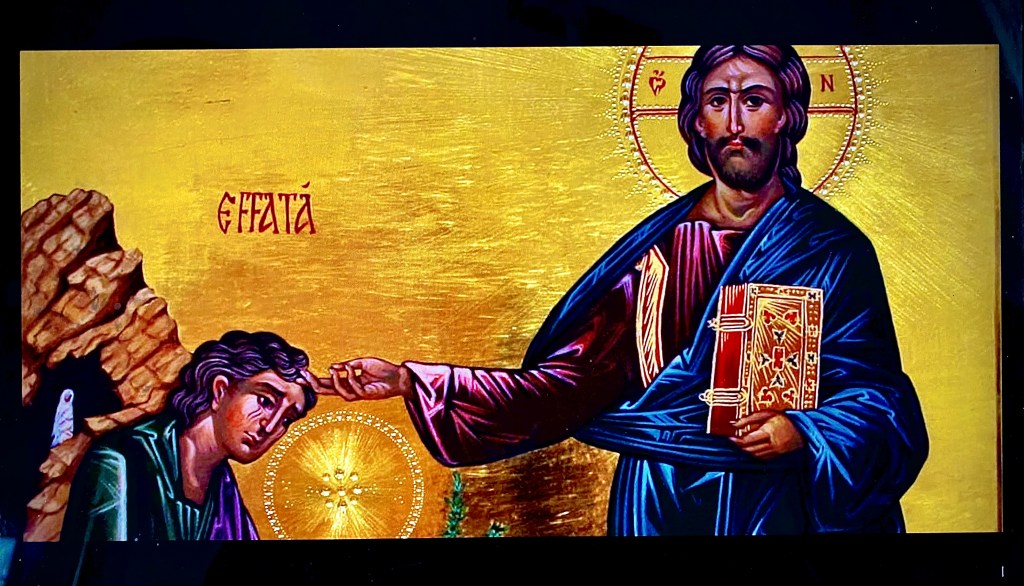
Do we believe that Jesus still heals today?
In today’s encounter between Jesus and the Syrophoenician woman, we can observe again the crossing of societal norms by both the woman and Jesus. The woman, very much like the woman who had been hemorrhaging for twelve years, was desperate and approached Jesus. She was willing to risk breaking the social taboo of speaking with Jesus and just walking into the home where Jesus was staying for the sole purpose that her daughter would be healed.
Jesus meets her with the derogatory language of equating her with a dog, considered one of the most unclean of animals by Jews: “Let the children be fed first. For it is not right to take the food of the children and throw it to the dogs” (Mk 7:27). This woman would have none of Jesus’ rebuke, she wasn’t leaving without receiving healing for her daughter, even if that meant she was putting her life in danger. Her retort, “Lord, even the dogs under the table eat the children’s scraps”, emphasized this point. It was also the key that opened the door for the disciples and us to witness a consistent pattern with Jesus.
Both the woman with the hemorrhage (cf. Mk 5:25-34) and the Syrophoenician woman from today’s account had the faith and courage to approach Jesus. The outcome of this encounter was also similar to one Jesus had with another gentile, the Roman centurion, who said that he was not worthy for Jesus to enter under his roof. In both accounts, Jesus healed solely by his word from afar. What is important to Jesus is the person’s faith and belief that Jesus was who he said he was!
Do we have the courage, faith, and belief in Jesus as shown by each of these three people seeking out Jesus? Are we willing to take the risk of crossing our own societal norms to draw closer to Jesus? When we let nothing hinder our stride closer to Jesus, including relinquishing the reigns of being our own masters, acknowledging that God is God and we are not, believing that Jesus is truly the Son of God and that he is still present and active in our lives, miracles still do happen! Jesus said that if we have faith but the size of the mustard seed, we can move mountains (cf. Mt 17:20).
If you or someone close to you are dealing with some conflicts, challenges, trials, or tribulations; if something, someone, or your own fear or anxiety is keeping you from making a deeper commitment to surrendering your life to Jesus; if there are opposing forces that feel as big as mountains; be not afraid and trust in Jesus. Just come as you are to Jesus, lay your burdens at his feet, and take his hand. With Jesus all things are possible. We just need the courage to believe that our Lord is present with us especially in the midst of our trials. Jesus has not left us as orphans. Jesus is who he says he was then and continues to be today. Jesus the Christ, the Son of God our Savior and Redeemer, is present, is the kingdom of God at hand, and will see us through our trials, step by faithful step.
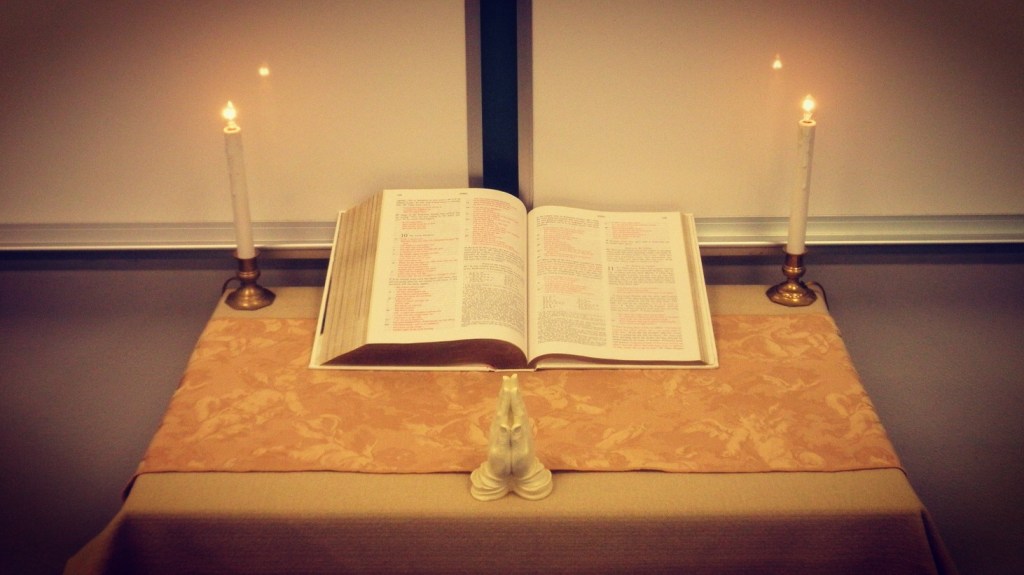
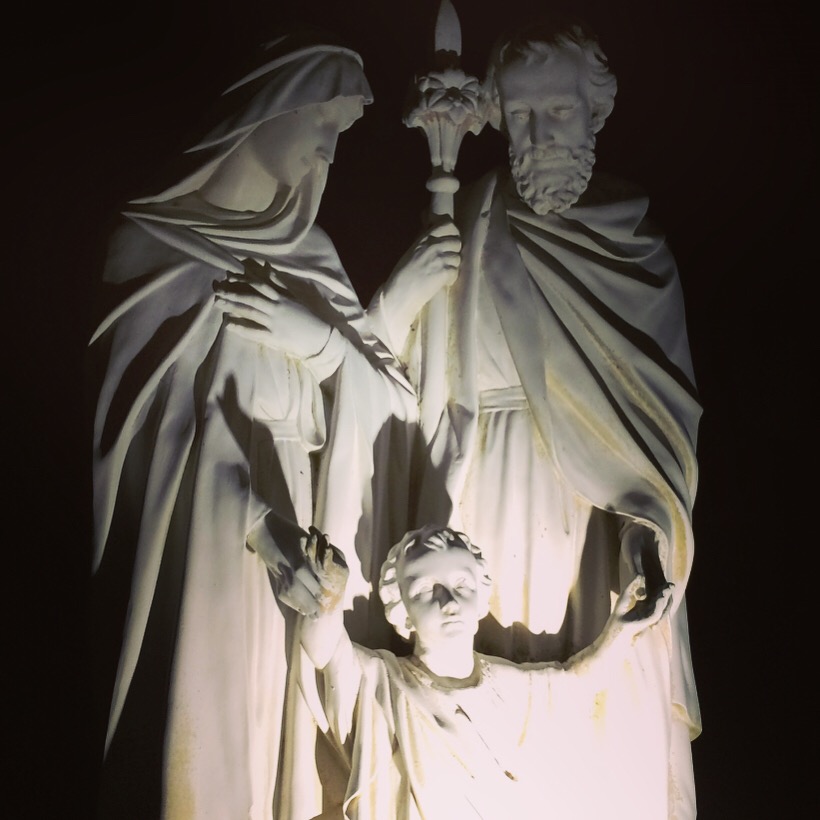
Photo: Focal point at the front of my classroom at Cardinal Newman a few years back. May the light of the Gospel guide us each day!
Link for the Mass reading for Thursday, February 10, 2022
What we think and speak will lead to our actions.
“[W]hat comes out of the man, that is what defiles him” (Mk 7:20).
Jesus offers a list in today’s gospel of what can be unleashed from within and then directed out toward another. These are examples of what defiles us because, at some level, we make the decision to think about, speak, and put into action those thoughts, words, and actions.
To resist the temptation to defile ourselves and others, we can follow the lead of the writer from the letter to the Hebrews who offered a wonderful verse, which I pray each morning in my recitation of the Liturgy of the Hours: “Encourage each other daily while it is still today” (Hebrews 3:13). There are many that we will encounter or hear about each day that will do the exact opposite.
Our goal each moment is to resist spending any time or energy in supporting any thoughts, words, or actions that demean, belittle, or dehumanize. We can call those out who do so, stand up for those impoverished from these attacks who do not have a voice, but we must not succumb, engage, or in any way be lowered to the negativity unleashed. Otherwise, we become an agent in perpetuating the same vileness and poison already unleashed.
Our thoughts, words, and actions matter because we are all interconnected, and even what we ruminate upon can be projected onto our faces and directed out toward another without saying one word. Thoughts entertained can lead to words and actions that wound. We need to approach each moment more mindfully such that we resist reacting, and instead take a slow breath, then think and pray about our response. The only time our silence can be harmful is when we refuse to stand up to others when they disregard the dignity of a person.
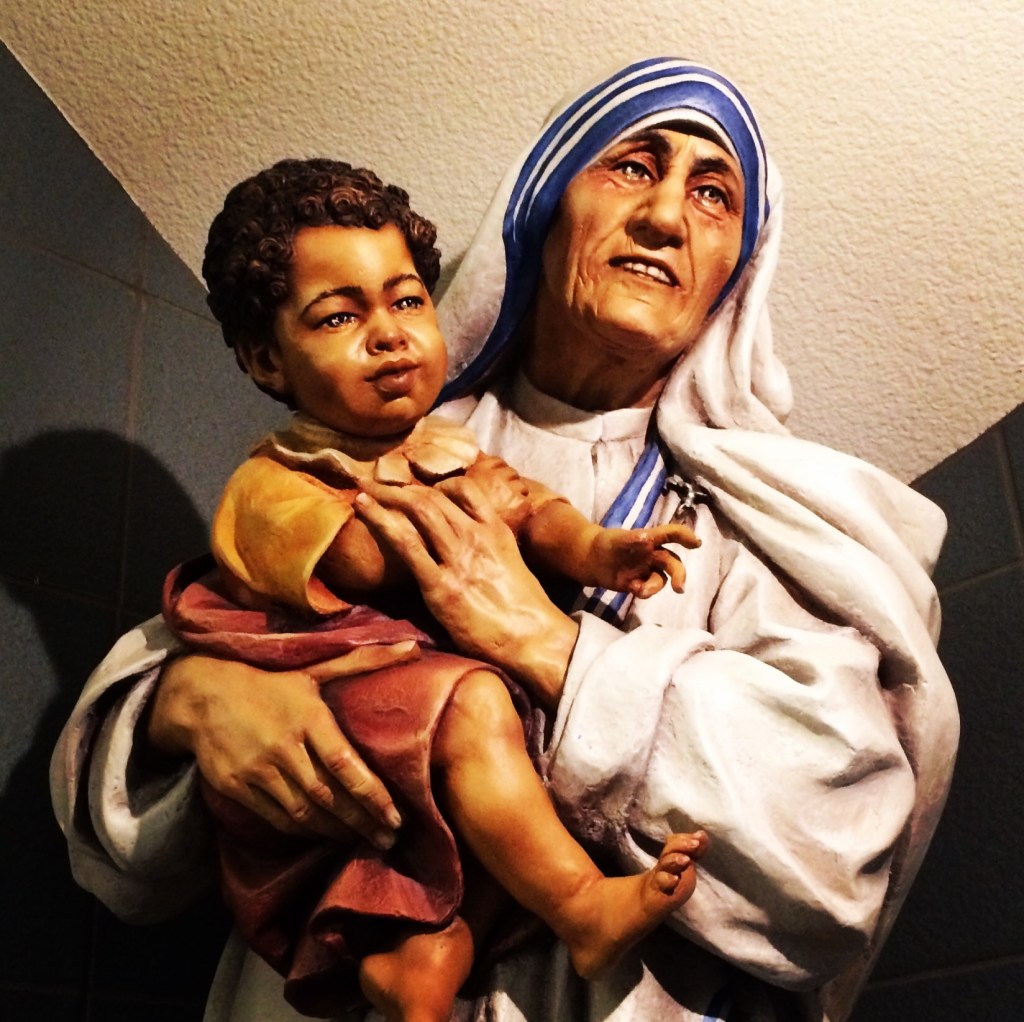
Let us choose this day to align our thoughts, words, and actions with those of Jesus. We can follow St Mother Teresa of Calcutta’s five-finger gospel as a reminder: “You did it to me.” What we say and do to the least of our brothers and sisters, we say and do to Jesus (cf. Mt 25:35-45). This begins when we resist defiling ourselves by never letting evil talk pass our lips and instead think, speak, and act in ways that empower, convict, and build up others.
Our effort is strengthened when we choose to forgive any negativity hurled at us, and meet it with a posture of compassion that seeks to understand the perspective of the hurler. In our efforts, we are not alone when we call upon the help and strength of Jesus as we strive to become ambassadors of his transforming love.
————————————————————————————————-
Photo: St Mother Teresa of Calcutta, in the sanctuary at St Peter Catholic Church
Link for the Mass readings for Wednesday, February 9, 2022

There is a unique balance between the rules and the freedom of play.
Jesus reacted to the criticism of not observing ritual washing prior to eating that was leveled at him from the Pharisees and scribes by recalling the tradition of the Prophets through the words of Isaiah: “This people honors me with their lips, but their hearts are far from me” (Mk 7:6). For Jesus, following the law for the law’s sake is an empty act. What is important is encountering God, experiencing his love and forgiveness, developing a relationship with him, being transformed by him, and restoring what has been lost of being created in his image and likeness, so as to be able to glorify him by serving others and inviting others into communion with him. Jesus challenged the hyper scrupulosity and exactitude of the rules that had nothing to do with being humble servants of God.
Just laws and practices are those that are enacted to build up and empower ourselves and others through discipline and clear boundaries. They help keep us from being enslaved to our passions and sins and instead lead us to freedom for excellence, for fulfillment, and to experience a heart on fire with an ever-growing love that yearns for a relationship with God and each other, like a deer for running streams.
As with any game we play, there are rules and regulations, there are referees and officials to keep order. When the rules enforced encroach on the flow of the game, such that they inhibit the freedom of play, the game is stunted. When there is no enforcement, the game quickly devolves into chaos. When the rules are consistent, they provide the structure and boundaries that limit abuse, allow for the game to flourish, and the players to experience the freedom to actualize their potential, and as such, there is the experience of the true, the good, and the beautiful.
The first time I saw people skate, I was enraptured. I think I was seven. My father was working on a project at our local ice rink and even though we were not there to skate, I refused to leave until he took me on the ice. It didn’t matter that the only skates to rent that fit my feet were figure skates. It didn’t matter that my first attempt was a dismal failure. What mattered was that I made it to the ice and the joy of that experience carried me as I learned the rules of balance, how to stop and what a toe kick was and was not for. Soon I had the freedom not only to skate but to join a hockey team. The freedom and joy I felt any time I skated or played hockey, I still carry with me to this day.
The Church, when we are at our best, is the same. We don’t lead with the rules and moralizing, but instead, we share our time, presence, and the joy of our faith. We empower and support one another as we enter into the play between our finite freedom and God’s infinite freedom. We are built for a relationship with God and one another and as our relationship matures, we start to learn and share the finer points of our life of faith. We experience the meaning of why we do what we do and why certain thought patterns and actions lead us either away from or closer to God. There is a unique balance between the rules and the freedom of play.
Loving someone does not mean we allow them to do whatever they want, but in willing their good, we offer invitations, options, and establish boundaries that will provide opportunities for growth, maturity, and authentic freedom. We are going to make mistakes, I have made plenty. The key is recognizing that we are on a journey together. As we walk together, we support and learn from one another. In this way, the boundaries and rules we follow are meant to set a foundation for healthy relationships and actualizing who God invites us to be; joyful, human beings that are fully alive!
———————————————————————————
Photo: About eight or nine, living the dream on the ice! I still have my hockey skates. Still hoping to get back on the ice!
Link for the Mass readings for Tuesday, February 8, 2022.

The Church needs to draw close as Jesus does.
“Whatever villages or towns or countryside he entered, they laid the sick in the marketplaces and begged him that they might touch only the tassel on his cloak; and as many as touched it were healed” (Mk 6:56).
The people of Jesus’ time were in need of healing, hungry to draw closer to God, often searching, wandering, and wounded. This is just as true for us today. Though Jesus is not as visible to us as he was to those in the land of Gennesaret, he is just as present if not closer. We who receive Jesus in his Word proclaimed and through his Body and Blood, we who receive his healing, mercy, and grace are sent forth to bring Jesus to others.
We are not to go home as if nothing of any significance just happened in our gathering as the Mystical Body of Christ at Mass. Jesus does not send us to walk around with an air of superiority over others, to judge and condemn people, to refuse to help people because we feel they deserve the condition they are in, that they are illegal, that they chose their lifestyle, that they are lazy and just need to pull themselves up by their own bootstraps. Jesus was and is not indifferent to the plight of others.
Pope Francis was asked in an interview by Fr. Antonio Spadaro, S.J., in 2013, “What does the church need most at this historic moment?” And Pope Francis answered, “that the thing the church needs most today is the ability to heal wounds and to warm the hearts of the faithful; it needs nearness, proximity. I see the church as a field hospital after battle.” We need to be “near”, in the same “proximity”, to bear Christ to one another: “The church sometimes has locked itself up in small things, in small-minded rules. The most important thing is the first proclamation: Jesus Christ has saved you. And the ministers of the church must be ministers of mercy above all.”
Jesus, please help us to be present, to come near, and bring your love, mercy, forgiveness, and be willing to enter into the chaos of one another. Help us to resist the temptation to keep others at a distance and refuse to be indifferent to the needs of those you bring to us in their time of need. May we too, in the words of Pope Francis, go out to “heal the wounds and to warm the hearts of the faithful” by being willing to accompany others in their sorrows, anxiety, trials, and tribulations.
People are really hurting all around us. Help us to let go of the need to fix them or fix their problems. Jesus, help us instead to be present, to listen, to hear, and to be open to allow the Holy Spirit to speak through us at the appropriate time, so that, in the end, we do not prevent people from encountering Jesus, but provide a means for them to encounter the divine physician and be healed..
—————————————————————————————————————
Photo: Class of 2017 expressing some pre-Covid nearness and proximity!
Spadaro, S.J., Antonio. “A Big Heart Open to God: An interview with Pope Francis”. America Magazine. September 30, 2013 Issue: https://www.americamagazine.org/faith/2013/09/30/big-heart-open-god-interview-pope-francis
Link for Mass readings for Monday, February 7, 2022
May we be willing to go deeper.
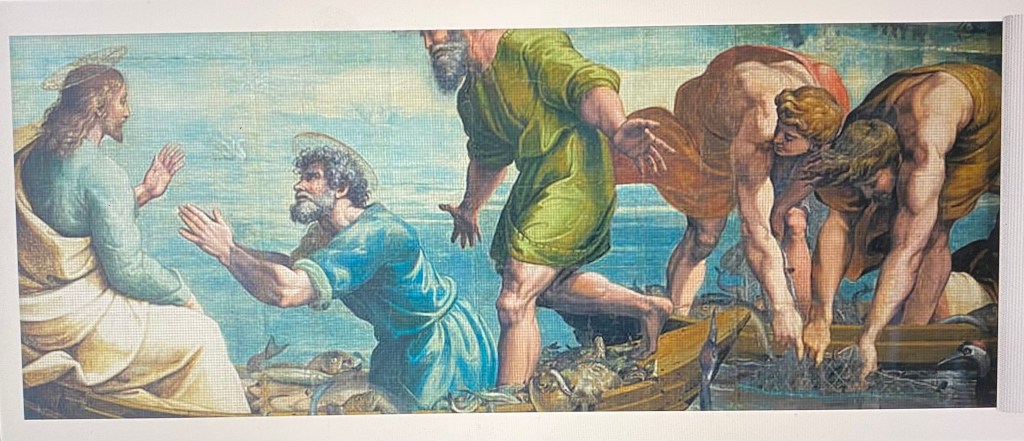
In today’s Gospel from Luke, Peter did not chase Jesus away when he first got into his boat uninvited. Even though he was probably exhausted and discouraged from the night’s failure and wanted to just finish cleaning his nets and go home, Peter then followed Jesus’ request and allowed him to use his boat to preach from. Once completing this task, Jesus pressed further, and invited Peter to: “Put out into deep water and lower your nets for a catch” (Lk 5:4). Again, Peter followed this invitation instead of protesting and was blessed with a super abundant catch such that his boat began to sink.
Jesus comes to us in the same way he came to Peter. He meets us in the midst of our everyday lives. So often we think or feel that it is our initiative that draws us closer to God, when in fact, the initiative is God’s. Our very desire to pray, to seek out God is already an awareness, a recognition of his invitation to draw close. God speaks to us in the silence of our hearts, through quiet invitations and experiences, and each time we are aware, and each time, as did Peter, we say yes to his invitation we grow in our relationship.
Jesus comes to us as we are, loves as we are. We become aware of our sin and faults as we allow Jesus more access to our lives. As we put out into the deep, we are blessed by the grace and wonder of God’s glory present in our lives. For just as Peter experienced the miracle of the abundance of fish filling his nets, he became more acutely aware of the divinity of Jesus in his midst and as the light reveals those things hidden, the sin of Peter was revealed and he confessed: “Depart from me, Lord, for I am a sinful man” (Lk 5:8).
The deeper and more intimate our relationship grows with Jesus the more our own sin is revealed to us. We then have a choice, we can deny, rationalize or justify it, or follow Peter and confess our sin. As we face and confess our sin and weakness, we resist settling for mediocrity, we grow in holiness, humility, and receive more of the light, love, and grace of Jesus such that we can grow beyond our fear, grow deeper in our relationship with him, so to better allow ourselves to be agents of his grace and mercy in the lives of those he brings into our realm of influence.
——————————————————–
Painting: The Miraculous Draft of Fishes by Raphael, 1515-1516
Link for the Mass readings for Sunday, February 6, 2022

Give yourself some time to rest with Jesus for awhile.
After hearing the accounts of the missionary trip, Jesus invited his apostles to step away from the crowds “to a deserted place [to] rest awhile” (Mk 6:31). Jesus is showing the apostles the importance of balance. There are times to serve and times to recharge, to reconnect, and spend some quiet and reflective time with him. Jesus is our model, our guide and teacher, but he is at the same time more than that. Jesus is the source and sustenance of who we are as a living craving, hunger, and desire to be one with God and each another. As the deer longs to refresh itself from the waters of a running stream, we long to be nourished by the living water, Jesus, and this is true for the atheist as well as the mystic alike, for each and every one of us, whether we are aware of this reality or not.
Our thirst for communion can be stifled because it is so easy to be caught up in our day to day schedule, life’s demands, and even sometimes survival. There is so much that needs to be done, and at the same time, there are so many distractions and diversions that vie for our energy and attention. In today’s Gospel, the intent of Jesus is to get away with his apostles for some rest and renewal. They get in a boat to do just that, yet the crowd that they thought they had left behind has arrived on the other side before they did! “When Jesus disembarked and saw the vast crowd, his heart was moved with pity for them, for they were like sheep without a shepherd; and he began to teach them many things” (Mk 6:34). So much for being able to “rest away for awhile”! Or maybe the boat ride across was that moment of rest.
I continue to be challenged, as I am still recovering from pneumonia a year later, not overextending myself during the school week. By the time Friday comes, I feel pretty wiped out. One of the practices that sustains me is making time daily to pray and meditate.
Choosing five to ten minutes to be still, to rest in the Lord, may not seem like much but it can make a huge difference. Our challenge is to be able to discern and develop a healthy balance that becomes fruitful through aligning our will with Jesus’. When we intentionally put God first and make the time each day to spend with him, often there is a serendipitous alignment that we experience throughout the day that we did not think possible at the outset. This is especially true during moments when we may have felt that we did not have the time.
I invite you to give yourself a five-minute retreat. Read today’s Gospel slowly and reflectively. Then step into and sit in the boat with Jesus and his disciples. Breathe in deep, let your head fall back to feel the breeze of the Sea of Galilee, feel the warmth of the sun on your face, and experience the rhythm of the boat on the water. Does Jesus remain silent and rest with you? Does he begin to teach, and if so, what does he share? In your time of quiet, do you have questions for him, what do you ask, and what is his answer?
Enter into the experience, and when the boat comes to shore, go forth into the day renewed such that your heart and Jesus’ heart beat as one. You too will be moved with compassion to serve others. From such periods of renewal, we can better embrace interruptions in our days with the heart and compassion of Jesus, such that each encounter becomes an opportunity to serve.
—————————————————————-
Photo: On the ferry to Coronado Island, CA, June 2014. Enjoying a little downtime.
Link for the Mass readings for Saturday, February 5, 2022

Jesus has consistently shown moral courage and we would do well to follow his lead.
The king was deeply distressed, but because of his oaths and the guests he did not wish to break his word to her (Mk 6:26).
The king referenced in today’s Gospel is the tetrarch, Herod Antipas, one of the sons of Herod the Great. He reveals the weakness of his character when he calls for the beheading of John the Baptist. He made a decision regarding the life of another person to protect an oath that he should never have made to the daughter of his wife, and ought to have stood up and shared that the dignity of the life of John the Baptist was worth more than his foolish promise.
We, unfortunately, have seen too much of this kind of leadership on the secular as well as the religious stage. Too many people who are in positions of power from the smallest to the highest levels of governance have made choices that are not in the best interest of the people they are to serve nor have they sought to stand up for and empower the dignity of the person but instead have chosen to protect self-interest, seek self-preservation, or sell out to immediate expediency.
Too many are ready to protect their ego, institutions, party, tribe, at the expense of the dignity of the unborn, children, immigrants, those of a different gender, race, ethnicity, and/or class. Jesus did the opposite. Jesus called children, who were being prevented to come to him to be healed, he raised the daughter of Jairus back to life, Jesus offered hospitality to the tax collectors, Matthew and Zacchaeus, Jesus acknowledged the faith of the Canaanite woman, the woman with a hemorrhage, and stood up for the woman caught in adultery.
Time and again, Jesus showed the moral courage to stand up for and empower those who were considered as other, those on the peripheries, those considered somehow less. He ultimately did so again for all of humanity, when he was willing to be nailed to the Cross for each one of us, to die and conquer death, that each one of us might have life, and have it to the full. May Jesus empower us to grow in moral courage so we too will stand up for the dignity of the person at all stages of development from the womb to the tomb, and implore that our leaders do the same.
Painting: “Forgiven” by Yongsung Kim, Jesus showing his moral courage in standing up for the woman caught in adultery.
Link for the Mass readings for Friday, February 4, 2022
Jesus calls and sends us to serve one another.
The rejection of Jesus by those in his hometown did not slow down his mission. We can imagine that Jesus knew what he was going to do already, but en route wanted to stop by to see if any from his “native land” would like to participate in his public outreach. Apparently, no one did, so without missing a beat, Jesus went ahead and, “summoned the Twelve and began to send them out two by two and gave them authority over unclean spirits” (Mk 6:7). Jesus summons us and sends us out as well.
At the end of each Mass, we are sent, just as the Apostles, to proclaim the Good News! All of us as the Body of Christ, believers in Jesus the Christ, the baptized, are to live as his disciples and bear witness to how Jesus has transformed our lives. This is best done by acknowledging that God is the center of our lives and recognizing, empowering, and standing up for the dignity of each person that we have been given the grace to encounter. This is to be foundational in the way we think, speak about, speak to and act toward one another. Our call of evangelization is also unique, for each one of us has a particular charism and gift that the Holy Spirit imparts within us.
Jesus is the one who calls, sends, and empowers us for mission. We are sanctified, made holy, when we say yes to his will, participate in the sacramental life and in his life of service. Jesus not only teaches with authority, but he also calls and sends us with that same authority. We are to rely on the divine providence of our Father, meaning he will prepare us and provide that which we need to accomplish the task he has given us, and he will also send the Holy Spirit and others to provide help, aid, guidance, and support. We see this over and over again in the lives of the saints.
At first sight, we may not agree with God’s choosing, his choosing us, or the others he sends to help us! Yet, we only need to recall what he accomplished with the Apostles, remembering the simple beginnings they came from and the wonders they accomplished in Jesus’ name. We also need to remember that God does not see as we do, for we are often misled by appearances “or lofty stature” but God sees into the depths of the heart. He sees the character and potential of each of us (cf 1 Samuel 16:7).
Let us be about building up the reign of God, be willing to be empowered by Jesus and those he brings into our lives, as well as be willing to empower, encourage, and support others. May we pray and be open to what God is calling us to do to serve him, to be willing to encounter others and will their good without seeking anything in return.
—————————————————————————
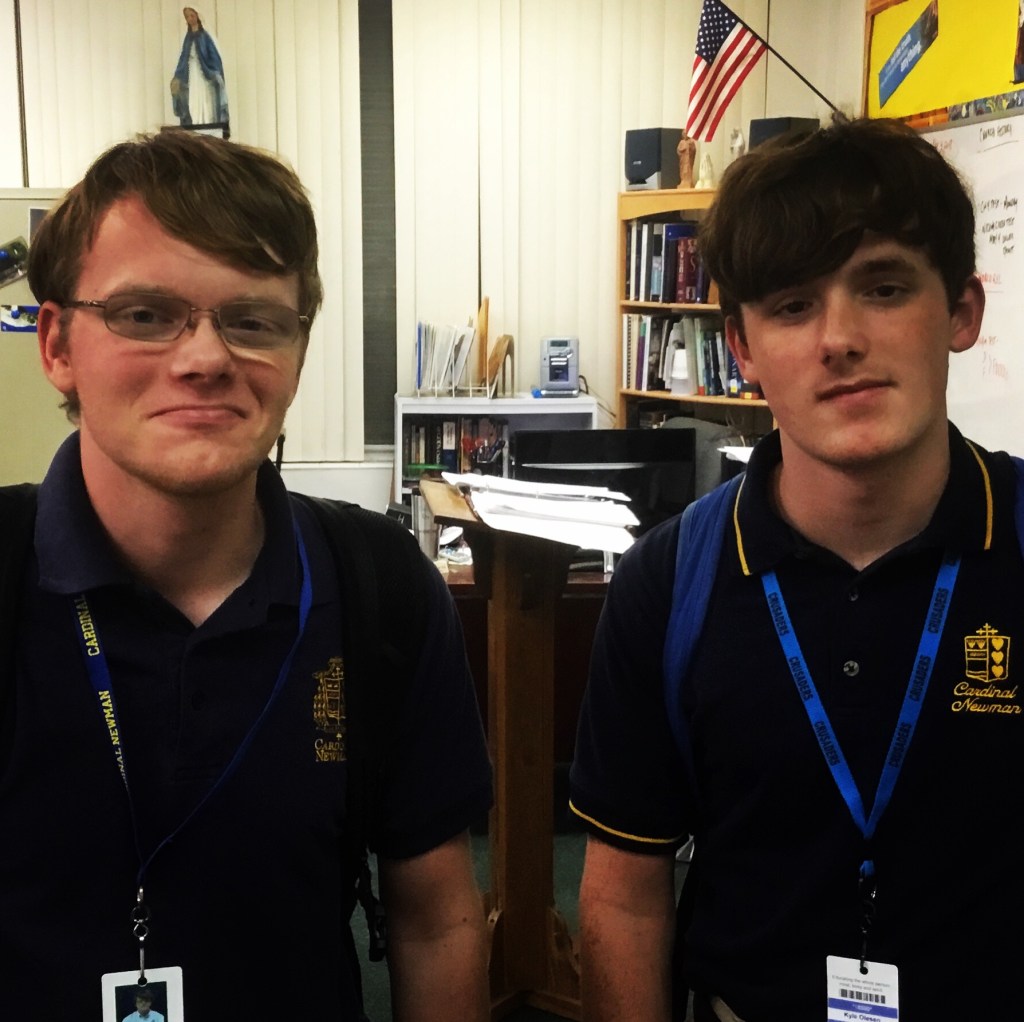
Photo: Two fine young Crusaders of integrity just before graduation a few years back!
Link for Mass readings for Thursday, February 3, 2022
 Spiritual Stepping Stones