The words of today’s Gospel from John is an answer to Jesus’ healing of the man at the pool of Bethesda. The issue at hand for those who are incensed by Jesus’ healing is that he has done so on the Sabbath. Jesus does not help his case with his critics for he says he healed on the Sabbath because he was directed to do so by his Father: “For just as the Father raises the dead and gives life, so also does the Son give life to whomever he wishes” (Jn 5:21). Jesus does not make concessions with those who oppose his actions of healing. He clearly states the truth about who he is, the Lord of the Sabbath. For those not believing Jesus is who he says he is, this is blasphemy of the highest order. This is why they are plotting to kill him.
So too in our own age, there are many ways to express our understanding and belief about who Jesus was then and is today. If you haven’t thought about Jesus beyond his name in a while, about who he really is and why he is relevant to our lives, then allow St. Athanasius, the bishop of Alexandria, who lived from 297 to 373 AD, to offer a point to ponder today. Athanasius held firmly to and taught with conviction that Jesus, “the Son of God became man so that we might become God” (Catechism of the Catholic Church, 480). This statement is an acknowledgment that we cannot be saved on our own merits, through our own will power and discipline alone. We become the fullness, we actualize who we are created to be, through our participation in the divinity of Jesus the Christ.
That Jesus is the second Person of the Holy Trinity who became one with us in our humanity so that we can become one with him in his divinity is something worth thinking about today. There is much writing and discussion about how many people are leaving the Church, while at the same time still hungry, I would say starving for a deeper, intimate relationship with God. This is true for those who leave as well as those who remain whether they could or would articulate it in that way. Could it be that we have left the roots of who we are, that we are followers of Jesus Christ, yes, but have we forgotten who he is and who we are?
May we spend some time meditating on and returning periodically to the words of St. Athanasius throughout the day and this week: “For the Son of God became man so that we might become God.”
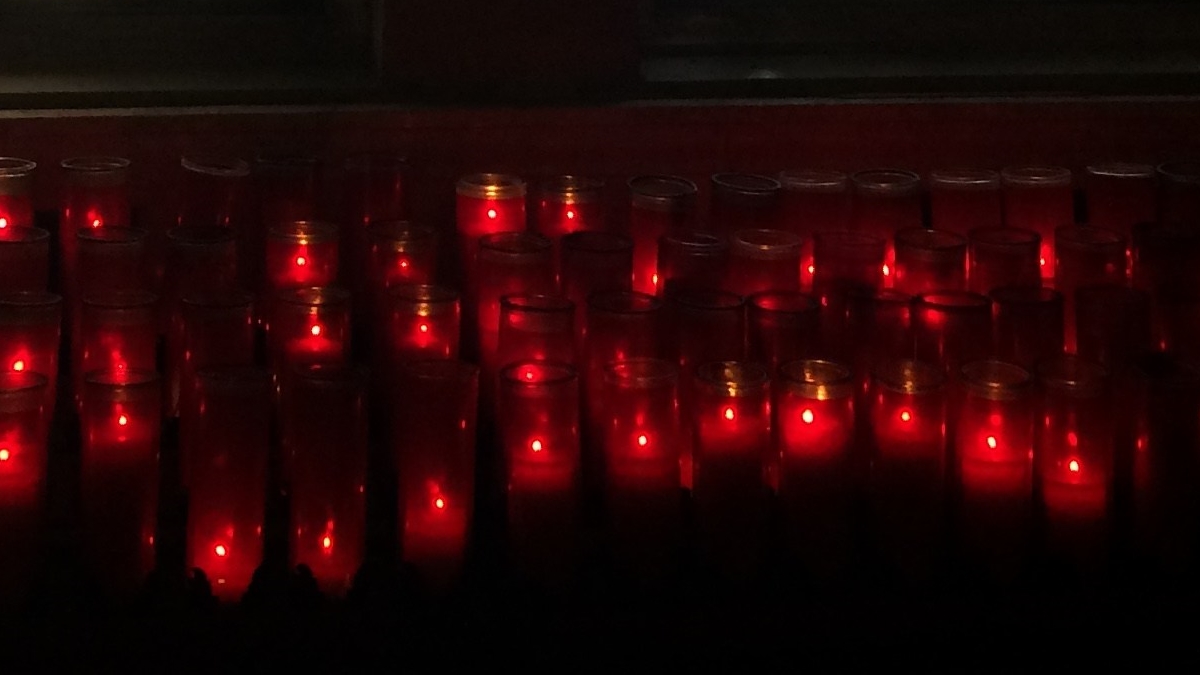
Photo: Side altar of St. Therese of Lisieux at St Edwards, Palm Beach, FL
Link for the Mass readings for Wednesday, March 14, 2018: