How are we who mourn blessed?
“Blessed are they who mourn, for they will be comforted” (Mt 5:4).
So many have died over the past year and a half from Covid, too many from violence, so many from unexpected diagnosis of cancer and health incidents and vehicular accidents. Another word for blessed is happy. How do the families and friends of those who have died feel blessed when they learn of the death of a loved one? From a theological reference, one response can be that Jesus shared these words from the perspective of the eschatological event, his second coming at the end of time and that we can rely on the hope that Jesus died for us all and we will rise with him on the last day.
This is our hope and this is true, but I also believe that Jesus was also speaking about our day to day experiences as well. Jesus said, as is recorded in Mark 1:15, “This is the time of fulfillment. The kingdom of God is at hand.” Jesus, is the kingdom at hand, just an outstretched arm away. Those of us who mourn will be blessed, will find comfort when we resist running away, or denying the agony and pain that threatens to overwhelm us and instead allow ourselves to experience the grief and the suffering of our loss. It is in the very embracing of our pain and suffering that we come to encounter Jesus with his arms wide open.
By experiencing the depth of our sorrow and allowing ourselves to grieve and mourn in the loving embrace of Jesus, we can release this unbearable weight and begin to heal. If we ask God or anyone near us why someone dies we may not receive a sufficient answer. His Son though, who suffered the agony, loss, pain, and hurt as we do, understands what we are feeling. His presence and closeness will be the strength we need to guide us through the many ups and downs, fits and starts, of our emotional roller coaster. Just like having a surgical amputation, our life will never be the same, but we will heal and be able to live again.
Today, we celebrate the gift of the Communion of Saints on this All Saints Day. The saints understood and lived the message and truth of the Gospel that Jesus has risen. They have lived their life to the full and have gone before us to the true land of promise, our heavenly home, and from there they cheer us on, encourage us, and intercede for us.
Jesus suffered and persevered through the cross, then into and conquered death. We need not fear death because through our life in Jesus, death no longer has any power over us. Yes, we mourn the loss of those no longer with us in this reality, yet we also rejoice in their new life in Christ. St Paul of the Cross, taught: “The world lives unmindful of the sufferings of Jesus which are the miracle of miracles of the love of God. We must arouse the world from its slumber.” Let us then not run from but enter into our pain and mourn so that we may experience God’s comfort, peace, healing, and yes, even blessing and happiness.
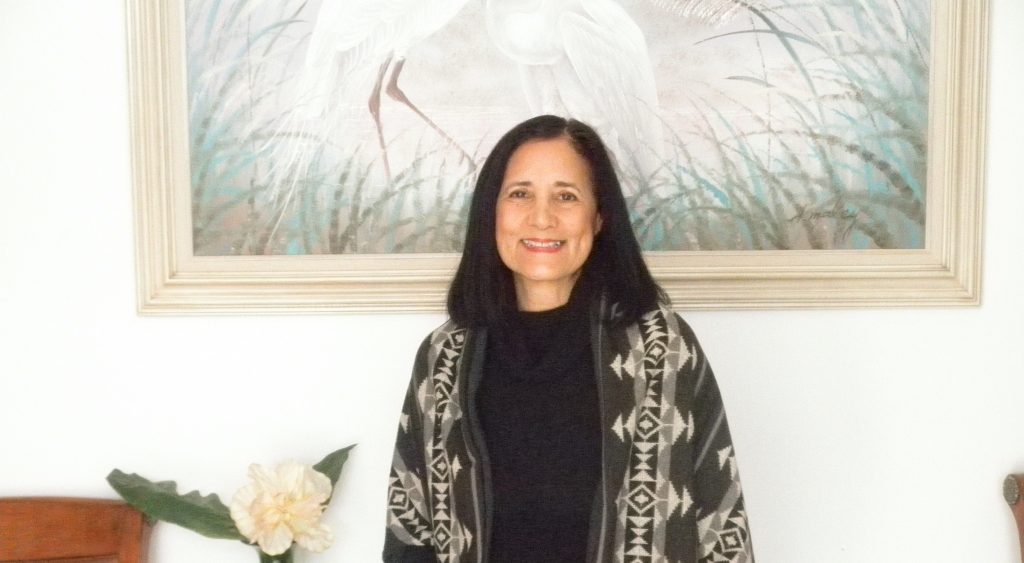
I felt JoAnn share with me, just hours after her death, that she would be closest to me and our kids when we were doing those things that made us happy. Jesus, the saints, and JoAnn remind us that we are not alone in our suffering.
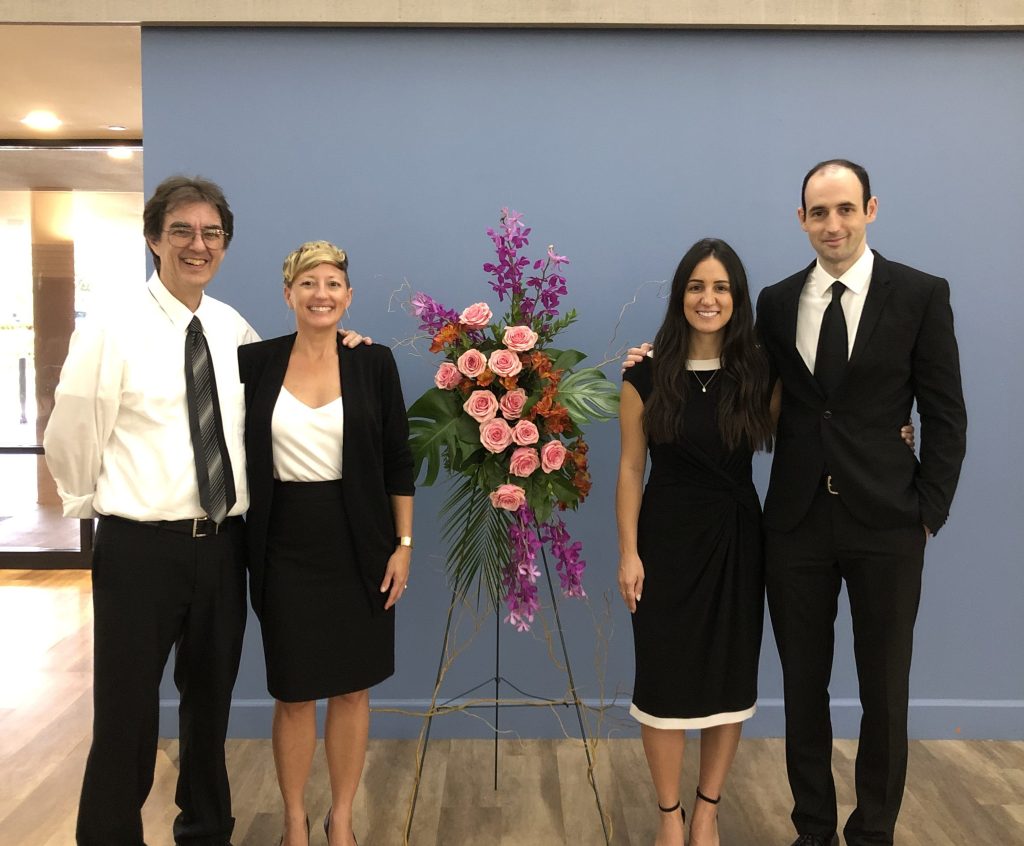
Photo: Celebrating JoAnn’s life at the reception after her funeral Mass.
The source for the quote is from St Paul of the Cross: https://passionist.org/st-paul-of-the-cross-passionist-founder/
Link for the Mass readings for Monday, November 1, 2021
We begin to love by smiling and welcoming one another.
“Hear, O Israel! The Lord our God is Lord alone! You shall love the Lord your God with all your heart, with all your soul, with all your mind, and with all your strength. The second is this: You shall love your neighbor as yourself” (Mk 12:29-31).
How do we actually live out this great commandment given to us by Jesus? How do we love God that we cannot see?
Our first step is to understand better the love that Jesus is talking about. St Thomas Aquinas teaches us that to love, is to will the good of the other. This is more than an emotion or a feeling. To love means to accompany, encourage, and be present to one another. The love that God offers us is unconditional, it is about service and sacrifice.
Jesus doesn’t just want us to maintain the Church, our family, our friends, or our ourselves, he has always called us to be a missionary Church, to go out from ourselves and love others as he loves us.
Many inside and outside of the Church have been wounded, yet her heartbeat is strong, because the lifeblood that flows through her veins comes from her Son, Jesus the Christ. So many of our brothers and sisters are walking away from the Church, but her children still hunger to be loved and to love, they still hunger to belong, to be a part of who God has created them to be. They have a curiosity and desire to learn and they want to know, to have their questions answered, and to find meaning and fulfillment.
If we are to be of help to others, we start by saying yes to the invitation of Jesus to receive the love of his Father. We are to kneel in his presence, sit at his feet, and allow the transforming love of the Holy Spirit to conform and shape us, to sculpt us in love. At the same time, we are called to learn and know our faith, recognizing that our belief is grounded in both faith and reason, so that we can share who we are as a child of God, and what we have learned with others with love, with joy, even in the midst of scandal and crisis. This is not a time to run away, but to stand up for what we believe in, to show, through our own life and commitment, that Jesus is the way, the truth and the life.
Jesus Christ is the center of the Church. He is present in the Word proclaimed, in his Body and his Blood that we receive, in the Sacraments, and he is present in each and every one of us. If we are struggling to see or experience God, the best way to begin is to reach out toward another in loving service.
We are brothers and sisters in Jesus. We hunger and crave to belong to God and one another, whether we are aware of this hunger and thirst consciously or unconsciously, and this is true for the atheist as well as the mystic alike. Jesus invites us to be his disciples and we do so by loving God with all our heart, with all our soul, with all our mind, and with all our strength, and by loving our neighbor as ourself.
Being a disciple of Jesus is about surrendering ourselves to the love of God, embracing and being conformed by his loving hands. We are then to share his love and joy with others through invitation, hospitality, welcoming, and meeting our brothers and sisters where they are, as they are, and accompanying, convicting not condemning, empowering, loving and protecting one another.
Even people who don’t practice a faith or have lost their faith, still feel the need to connect with God and find purpose to their lives. I invite you to receive and meditate on this message I now share with you today. Then share it with someone:
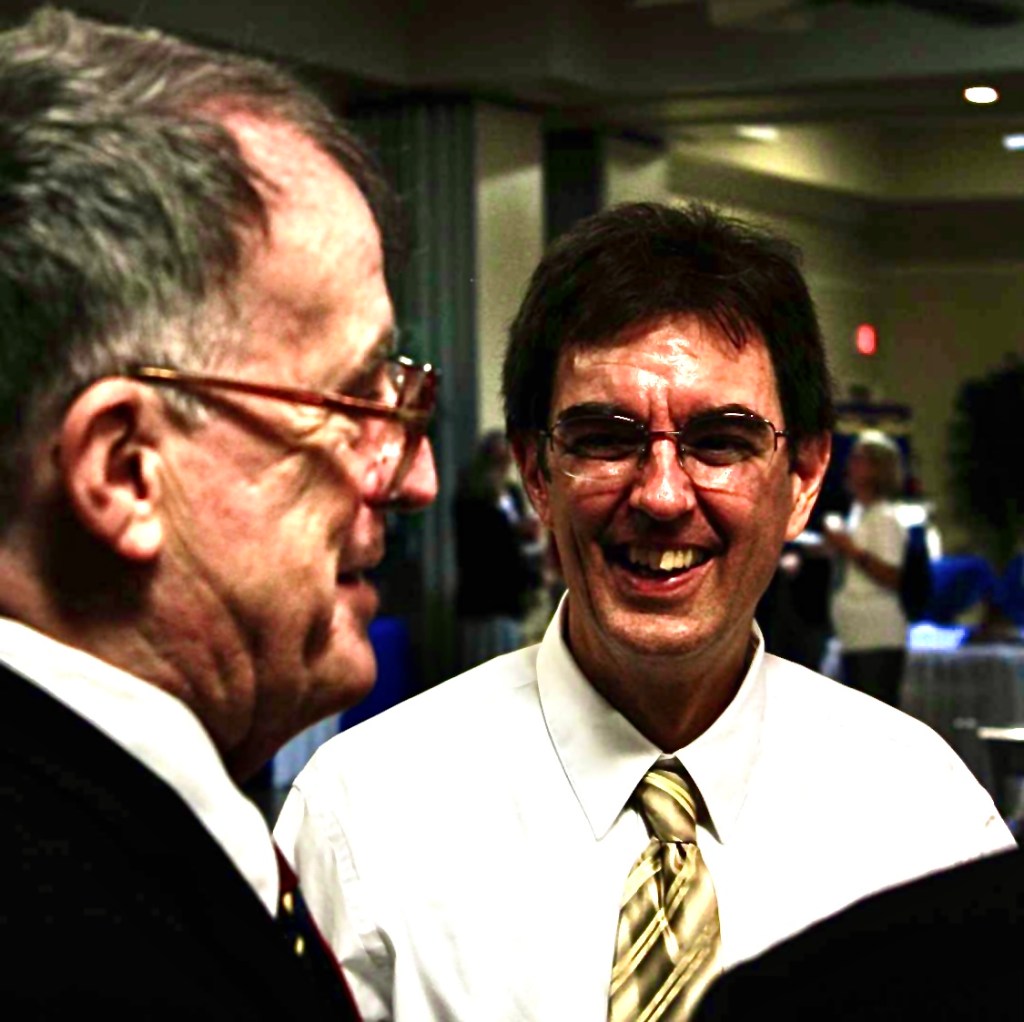
God loves you more than you can ever mess up. God helps you to see and know that you are not defined by your worst choices or mistakes. God loves you more than you can ever imagine. Then share a smile, even while wearing a mask because the eyes smile. In that very simple act of a smile, we are saying you matter to me, you have dignity, you are important, have value, and I love you.
Photo: Share a smile today – photo credit: Jack McKee
Link for the Mass readings for Sunday, October 31, 2021
Jesus has died for us, may we live for him.
“For everyone who exalts himself will be humbled, but the one who humbles himself will be exalted” (Lk 14:11).
With these words, Jesus ends his parable about people jockeying for seats of honor, when in fact it is the prerogative of the host to determine the seating. Jesus also addressed this same issue with the Apostles when James and John requested to sit, one on his right and the other on his left when he would come in his glory (cf. Mark 10:35-45). True humility is submitting ourselves to the will of God and acting as he directs such that he is given the primacy of place, not us.
A memory of mine from third grade sticks with me and that is the feeling one day of someone watching me in the classroom. The feeling was not my classmates or the teacher. I do not believe I was paranoid, nor do I now. What I think the experience was about was me starting to be aware of me from the outside of myself, kind of looking in at myself as I perceived others as seeing me.
Maybe this was the awakening of my ego. I am no psychiatrist, this is all speculation on my part, but I feel as if that memory and today’s Gospel reading has converged. Too often throughout my life I have made decisions seeking others’ approval and just as often, I have chosen my actions regarding perceived opinions, not actual decisions requested of me directly. These perceived opinions were much more subtle in nature, but also could multiply so to be debilitating at times when I sought to make a decision.
What I am coming to realize, is that it is more important to align myself with God’s will for my life. This does not mean that I am turning my back on family, friends, and colleagues, but in point of fact, by coming to a better understanding of God’s will, I am more authentic in my interactions with others instead of operating from a posture of appeasement, which is more disingenuous. In so doing, I am better able to be present to others for their needs and not my own.
What may have been going on with those at dinner seeking the closer seats to the host, what impelled James and John to want to sit at Jesus’ right and left when he came into his glory, was that they were seeking honor, prestige, glory, acceptance to feed their egos, their false senses of self. Jesus is teaching us to instead align our energy and seek God’s will and we will find the fulfillment and joy that we seek. This is the transformation we saw happen in Peter. He protected himself at the cost of denying Jesus three times but forgiven by the mercy of Jesus he gave himself in love to serve him and his Church unto his death.
May we seek freedom from indecision, mental distractions, and temptations that we entertain to protect our own ego. Let us pray instead for a clearer mind, heart, and spirit that can discern clearly the will of God, and the courage and confidence to act upon his leading without hesitation. May we surrender our ego to God, and as Mother Teresa is known for saying, become a simple pencil in God’s hand. Instead of seeking honor, recognition, and praise, let our intention rather be to follow God’s leading and to serve others unconditionally, willing their good. In dying to our ego-self, may we go forward today living for Jesus. In our baptism we have been crucified with Christ, so it is no longer we who live, but Christ who lives in us (cf. Galatians 2:20).
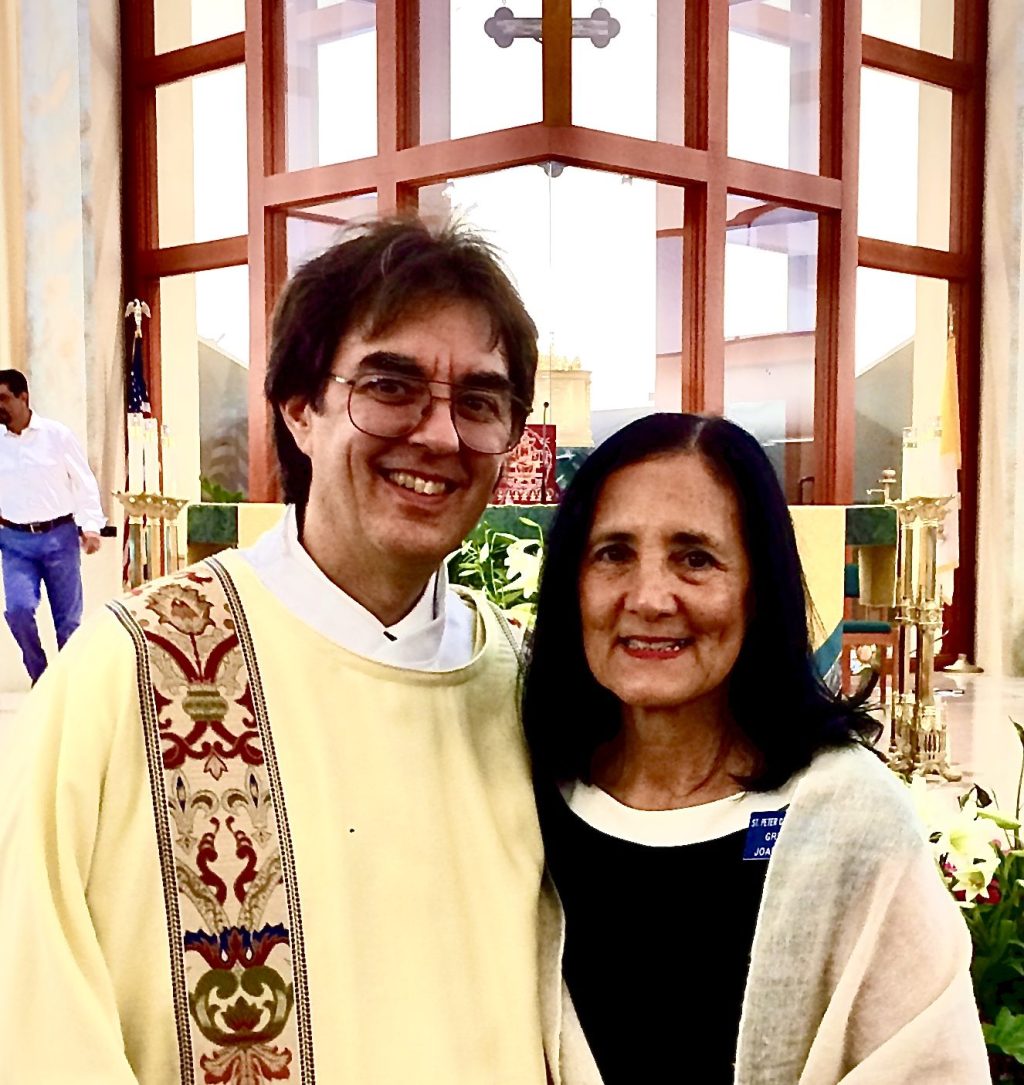
Photo: Easter 2017
Link to the Mass readings for Saturday, October 30, 2021
May we see the dignity that God sees in each and everyone of us.
“Who among you, if your son or ox falls into a cistern would not immediately pull him out on the sabbath day?” But they were unable to answer his question (Lk 14:5-6).
Jesus was again dealing with the issue to heal or not to heal on the Sabbath. Jesus was dining at the home of a leading Pharisee. While there, Jesus noticed a person suffering from dropsy. This English word is derived from the Greek word hydrōpikos which refers to the swelling caused by the retention of fluid, or edema (cf. Johnson, 223). If you have ever experienced swelling of the joints it can be uncomfortable at best and extremely painful or debilitating at worst, especially if one’s livelihood is dependent on hard labor.
Jesus again showed his keen awareness and compassion, yet, why does Jesus keep healing on the Sabbath? He knows it gets under the skin of the Pharisees, why doesn’t he just heal the day before or after the Sabbath? Jesus, in the line of the prophetic tradition, utilized these confrontations regarding Sabbath observance as teachable moments to make a point. Jesus wanted to help the Pharisees and others observing these interactions understand what it meant to know and follow the will of God. Ultimately, what Jesus proposed through his consistent healing on the Sabbath was that the dignity of the person is to be the barometer in guiding whether we are following the will of God or not. In the Gospel of Mark, Jesus stated that the Sabbath was made for people, and not people for the Sabbath (cf. Mark 2:27).
Jesus was not questioning the Sabbath, he was boring down on the core issue. The real debate was not about whether to heal or not, but what had been debated often in Jewish circles was how to define work. It was doing work that was to be avoided on the Sabbath. The further inference Jesus was making was that respecting the dignity of the person ought to be the starting point about making any decision, policy, or observed practice.
May we take time to reflect over the course of the past twenty-four hours. How did we treat those we interacted with in person, in traffic, or online? What we think about another directly or indirectly does make a difference in their and our welfare. If we find that we have been thinking, speaking, acting, or looking, in any way that has been less than kind, encouraging, or empowering, may we seek God’s forgiveness. Let us also pray for the grace to begin each day with a firmer intent to think, speak, act, and look at another with the primary intent of willing their good.
May we also pray for those who lead us in the secular as well as the religious arenas. As the G20 gathers soon to discuss best practices to address the climate, may each policy discussed at home and abroad be done so by beginning with the dignity of the person as the starting point. Building a culture of life starts person to person, but doesn’t just stop there. We also need to stand up when the dignity of our brothers and sisters are not respected in any way. Jesus does not only our inspire us to be aware of the needs of another, move us to compassion toward another, but he will also give us the courage to embrace and walk with one another so that we can move beyond our biases, judgments, and prejudices and embrace the gift of our diversity.
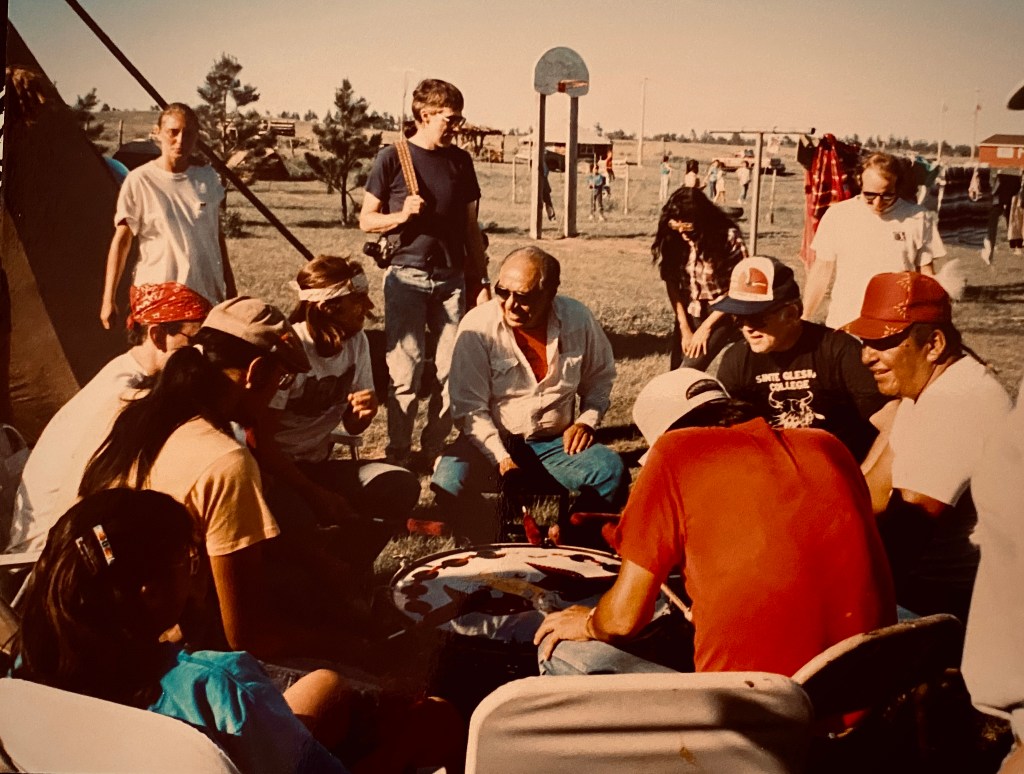
Photo: I’m drumming with Albert White Hat, Sr. (November 18, 1938 – June 13, 2013) and neighbors at the Lakota Summer Institute, Rosebud Reservation, SD. I believe in the summer of 1990. I feel blessed having had the opportunity to learn from and spend time with Albert that summer. He taught me a lot about respecting the dignity of the person.
Johnson, Luke T. 2007. “The Gospel of Luke”. In vol. 3, Sacra Pagina Series, edited by Daniel J. Harrington. Minnesota, Liturgical Press, 1991.
Link for the Mass readings for Friday, October 29, 2021
We don’t have to pray all night, but making time each day to pray is important.
Jesus went up to the mountain to pray, and he spent the night in prayer to God (Lk 6:12).
Jesus spent the whole night in prayer to God. What is prayer? All of us as human beings seek meaning and to belong. We desire security and stability, as well as direction and adventure. We want to be accepted, to love and to be loved and to experience meaningful relationships. These primary yearnings are present within us. Often though we confuse what we truly desire for temptations that ultimately leave us unsatisfied and more important ignore what will truly fulfill us: developing a relationship with God through prayer.
If you want to pray, you have already begun. The desire in and of itself to pray is prayer. The danger of reading about prayer is that we think we are praying. In the turning of the page or completion of the chapter, we feel as if we are accomplishing something, but we are only imagining how prayer can be. Peter Kreeft wrote: “It is tempting to remain in the comfortable theater of the imagination instead of the real world, to fall in love with the idea of becoming a saint and loving God and neighbor instead of doing the actual work, because the idea makes no demands on you” (Prayer for Beginners, 12).
There is a myriad of ways to pray and each practice will match each of our unique personalities. The key to prayer is to make a commitment to a time and a place to pray each day. Start with a timeframe, such as five minutes that you know you can do. Depending on the discipline of prayer you practice, your family, school, work, and/or ministerial demands will be indicators as to how much you might be able to increase the time you pray once you have built a consistent practice.
The amount of time that we dedicate to prayer is not as important as the commitment to pray each day. For me, attending Mass and the Liturgy of the Hours has been a consistent anchor since studying for the diaconate. The daily Mass readings, writing a reflection each day on them, and then sharing both with JoAnn was a practice we shared together each evening. After JoAnn’s death, and beginning about two years ago, I started meditating in the morning and the evenings. Before bed, I end the day praying and meditating with the mysteries of the Rosary and recently started to pray the Jesus prayer with a prayer rope.
JoAnn was less contemplative and more active in her prayer. She would speak to God as if speaking to a friend, we attended Mass together, and she experienced God in her daily activities and encounters with people. I too have found that seeing Jesus in those we encounter is a sign of our maturation in prayer. For the person is no longer other or one to be kept at arm’s length but a human being with dignity created in the image and likeness of God. This becomes more apparent when we spend time with one another.
St Therese of Lisieux offers us a good approach to prayer: “For me, prayer is a surge of the heart; it is a simple look turned toward heaven, it is a cry of recognition and of love, embracing both trial and joy” (CCC, 2559). No matter how we pray, our goal is that we don’t seek to bend God’s will to our’s but to allow our lives to be conformed to Jesus, that we encounter and build a relationship with him and each other, such that our experience of prayer matches St Augustine’s: “True, whole prayer is nothing but love” (Foster, 1).
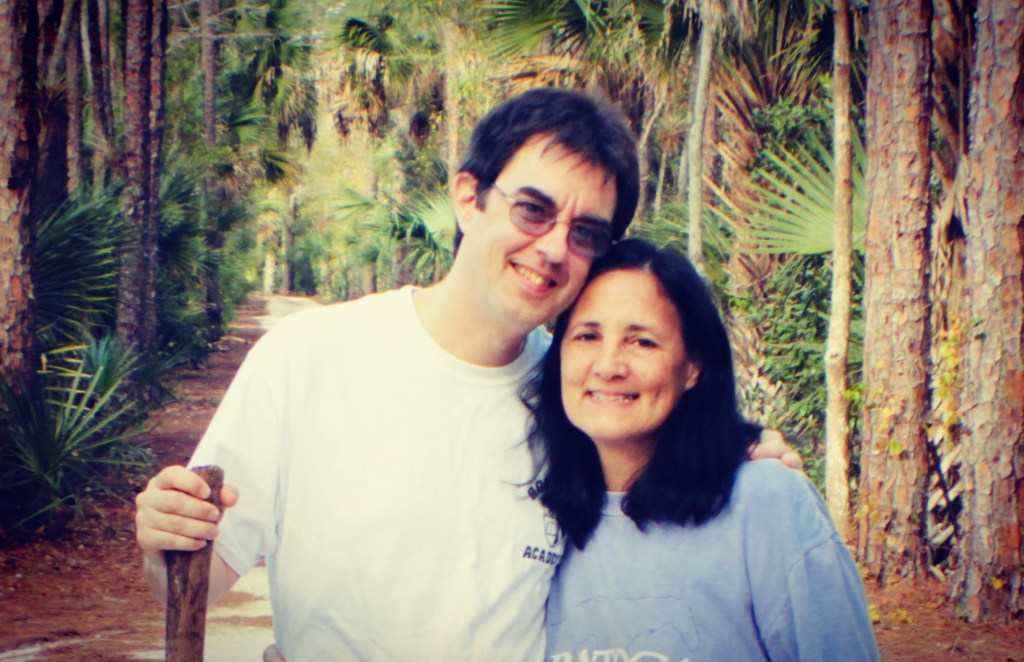
Photo: Taking a hike or walking with JoAnn was one of my favorite forms of prayer!
Foster, Richard J. Prayer: Finding the Heart’s True Home. NY: HarperCollins, 1992.
Kreeft, Peter. Prayer for Beginners. San Francisco: Ignatius Press, 2000.
Link for the Mass readings for Wednesday, October 28, 2021

To be willing to love, is to enter through the narrow gate.
He answered them, “Strive to enter through the narrow gate, for many, I tell you, will attempt to enter but will not be strong enough” (Lk 13:24).
Jesus offered this answer to the person who asked him, “Lord, will only a few be saved?” Jesus’ parables about it being easier for a camel to pass through the eye of a needle than for a rich man to enter heaven (cf Mt 19:24) and the rich man and Lazarus (Lk 16:19-31) also reveal to us that what we say and do in our lives regarding the welfare of others matter. Are we building walls or bridges regarding our relationship with God and one another, are we including or excluding?
There are many distractions, diversions, and temptations that pull at us. When we give in to them, we can strain or even break our relationships. Jesus said many will not be strong enough, and on our own he is right. St Paul also realized this, for he wrote, “I do not do the good I want, but I do the evil that I do not want” (Romans 7:19). How many of us could say the same?
Relationships are not easy in the best of circumstances, this is true on the human level as well as the spiritual. St Teresa of Avila, the 16th-century Spanish saint, and doctor of the Church, shared openly with Jesus once after being thrown from a carriage into a mud puddle, “If you treat your friends so poorly, it is no wonder that you have so few!” I relate to the honesty of this quote. My maternal grandparents had the same kind of open, unfiltered relationship with each other. To an outsider looking in, they would have missed the depth of love they had developed for one another for over sixty years and which continued to grow into their last days.
Authentic relationships demand that we go through the narrow gate of love. Love is more than emotions or feelings. We must grow in our willingness to sacrifice, to be committed, to be understanding and forgiving, to be present, to risk being vulnerable, to be honest, to respect boundaries, to share who we truly are with one another, free of any pretense or masks. On our own, we are not strong enough to persevere, but with God, we will remain faithful.
My grandmother told me to take the time we needed to get to know each other, but once we knew, not to wait too long. We didn’t. JoAnn and I were married six months after we started dating. Each of us brought our own baggage, wounds, and mistakes, yet each year was better than the one before because we grew closer to God. We became more patient and understanding, we empowered and were there for each other. At each of the crossroads that arose over our twenty-four years, we chose the narrow gate. We loved Jesus and each other and our relationship continued to grow.
Jesus invites each and every one of us to take His hand today and every day, so we can help others do the same. Who then will be saved? Not those who believe they are worthy, but those who are willing to enter the narrow gate, to love others as He loves us.
Photo: Visiting my grandparents before moving to Florida.
Link for the Mass readings for Wednesday, October 27, 2021
We may not be aware of how much a simple act of kindness and caring can make a difference.
In today’s Gospel from Luke, Jesus compares the Kingdom of God to a mustard seed and yeast. Each of these elements is not only small but they are tiny. Though with the proper environment, resources of sustenance, water, and sunlight, this seed will germinate, sprout, and grow into a large bush. Yeast, a single-celled organism, is the catalyst for assisting dough to rise, strengthen, and ferment, thus providing a more appealing and tasty bread.
Jesus offered these simple examples from everyday agrarian life that his listeners understood from experience. If we have planted seeds or made our own homemade bread, we could be in a better position to relate to these two small parables as well.
Throughout the Gospels, Jesus lives out the parables by engaging person to person. Jesus’ interactions happened concretely, through walking along the road and breaking of bread together, sharing stories, teaching, healing, and exorcising demons with his touch, and he still does so today. The smallest, genuine act of kindness or love can seem insignificant and may even go unnoticed by many, but it is important to the individual and can reveal dramatic results over time.
There is a story that expresses this point called, “A Simple Gesture” from the story collection, Chicken Soup for the Soul. The short tale describes how one day a boy named Mark was walking home from school and came upon another boy who had tripped and dropped all of his books and many other items. Mark offered to help carry some of the load of the other boy, who, as they walked home, found out was named Bill. They talked about common interests and when they approached Bill’s home, Bill invited Mark in for a Coke and to watch some T.V. They spent the afternoon together, then interacted on occasion for the rest of middle school and into their high school years.
Three weeks before their graduation, Bill asked Mark if they could talk. Bill shared that the reason that he had been carrying all of that stuff home on the day they had first met was because he didn’t want to leave a mess for anyone else to clean up. Bill had planned to commit suicide that evening. Bill continued to share that, after their original encounter and afternoon together, he realized that if he had killed himself that day he would have missed more opportunities to talk and laugh. Bill finished the conversation by saying, “So you see, Mark, when you picked up my books that day, you did a lot more. You saved my life” (Canfield and Hansen, 35-36).
Personal encounters were how Jesus helped others to realize that the Kingdom of God was at hand. Mark, in making the effort to help Bill pick up some of the personal items that he had dropped, helped to shift the momentum away from a potential suicide attempt. This action shows how Jesus can continue to work through us today.
Like a modern-day Good Samaritan parable, “A Simple Gesture”, helps us to see that when we are aware of opportunities to help and act with genuine care, no matter how small, we can have a dramatic effect on another’s life. The opposite is also true.
Many people have a lot on their plate, we may not be aware of even half of what others are going through. That is why we need to be attentive to the move of the Holy Spirit in our lives. He will lead us out beyond ourselves so that we notice others. In doing so, we become like the mustard seed, or the yeast, in another’s life. Through a smile, a hello, a bent ear to listen, what may appear to be minuscule or mundane at the moment, may, in fact, be life-changing and transforming.
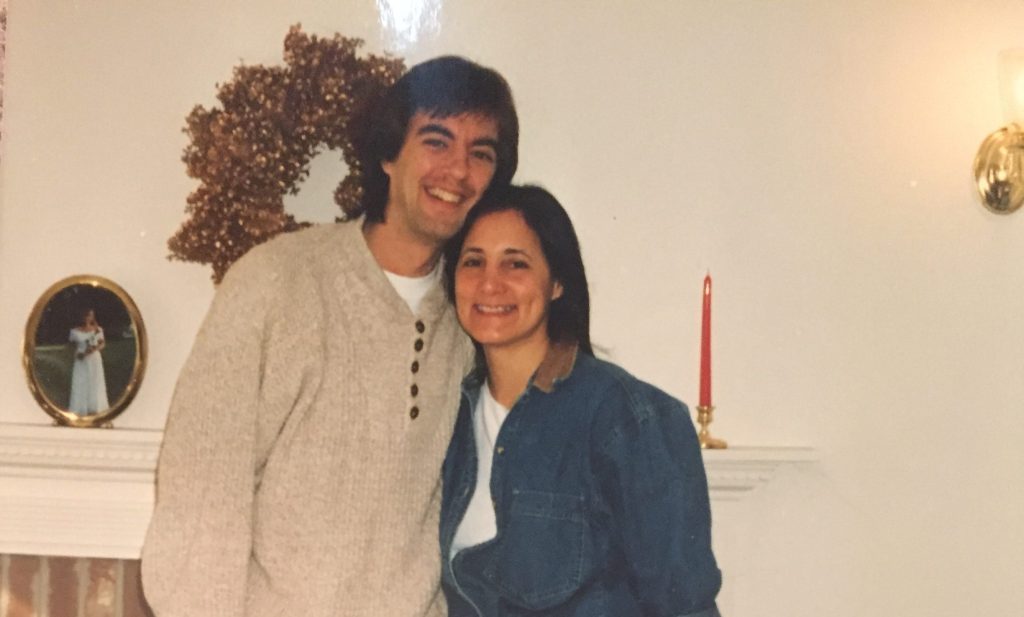
Photo: Back when we were still dating! Without JoAnn’s consistent kindness, caring, and support, I would not be where I am today.
Canfield, Jack, and Mark Victor Hansen. Chicken Soup for the Soul: 101 Stories to Open the Heart and Rekindle the Spirit. Deerfield Beach, FL: Health Communications, 1993.
Link for the Mass readings for Tuesday, October 26, 2021
We too can be agents of healing by following three steps.
Jesus was teaching in a synagogue on the sabbath. And a woman was there who for eighteen years had been crippled by a spirit; she was bent over, completely incapable of standing erect. When Jesus saw her, he called to her and said, “Woman, you are set free of your infirmity.” He laid his hands on her, and she at once stood up straight and glorified God (Lk 13:1013).
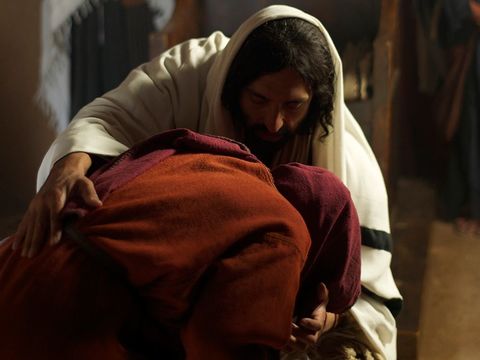
In reading this Gospel passage, we see again the compassion and mercy of Jesus. He was aware and saw the need of the crippled woman, called her to himself, she came, and through his words and the laying on of his hands, the woman was healed. He did so without hesitation, knowing that since he was healing on the sabbath this would bring further scrutiny and criticism. Yet, Jesus did not think of himself, he thought of the woman in need and made himself present to her.
Jesus is not only a model of service but also the very power as the Son of God that brings about healing. In today’s Gospel, Jesus was aware of the woman’s need. The first step in building a culture of life is to respect the dignity of each person we encounter and to be aware of their need. It is much easier to be unaware of or to operate from a position of – they brought the issue upon themselves. We can react with indifference, impatience, and/or contempt because we would rather not be bothered by another’s issues.
The next step is an invitation. Once Jesus becomes aware of the woman, he did not impose his will, even for her healing. Instead, Jesus invited her to come. We need to respect another’s option to say no to help and allow them to come on their own time and when they are ready. Though there are times, such as for those who are dealing with addiction, when there may be a need for more direct intervention and yet, healing will only begin when they are willing.
We need to resist being stumbling blocks to others in need of the healing presence of Jesus. We are all capable of accepting another where they are and as they are, we can will their good, and we can be a healing, understanding, and supportive presence. We can be a means of healing as were the four men who brought their crippled friend to Jesus and being undeterred from not having access by letting him down through a roof (see Mark 2:1-12 and Matthew 9:1-8). We are all called to bring the love and mercy of Christ to others and we also need to remember to be kinder and more gentle with ourselves. When there is awareness, invitation, acceptance of the invitation of Jesus, there can be healing.
Photo: from freebibleimages.org

 Spiritual Stepping Stones