Deepening our relationship with God will help us to deepen our relationship with our families.

What Jesus proposes is not an either/or statement, but is meant to be a both/and statement. The end goal of our life is to be in communion with God. To attain that goal, we need to not only acknowledge that God exists but also come to know and follow his will. As Jesus said, “For whoever does the will of my heavenly Father is my brother, and sister, and mother.” (Mt 12:50). The challenge is that there is so much that pulls at us for our attention, so much that reaches out to divert us. People, activities, material pursuits are all vying for first place for our minds, hearts, and souls.
The challenge and demands of family life are tremendous. We often read, hear, and experience ourselves, how much the family is being challenged in our modern age. Many of us strive to put family first in our lives. That ought to and needs to be a priority as healthy relationships require commitment, love, sacrifice, and persistence. What Jesus offers then seems to be counter-intuitive to that reality.
Jesus is approached, in the midst of is teaching, and told that his mother and brothers were there wanting to see him. We would think he would say, “Great! Bring them right in, I have a place reserved for them here, front and center!” Yet, I am sure that his comment, “Who is my mother? Who are my brothers” (Mt 12:49), raised a few eyebrows and hackles.
Jesus was not choosing his disciples over his family, he was clarifying that the primacy of place of God his Father is to be first and foremost. “For whoever does the will of my heavenly Father is my brother, and sister, and mother” (Mt 12:50). Families come in many different shapes and sizes, one size indeed does not fit all. Building our relationship with our heavenly Father is the foundation toward striving toward healthier relationships.
God first means that we become less and his Son becomes more, this means we come to truly experience the love of the Holy Spirit: sacrifice, willing to give of ourselves to each other, willing the good of each other, and making time for each other. As we deepen our relationship with God, balance will come into better focus. This is even truer for those in our family who say no to the invitation to building a relationship with Jesus. We need to resist the temptation of becoming defensive, imposing our will and God’s will on others. Instead, continually invite, but ultimately live our faith authentically, and others will see the transformation in us. Just as important, is that we will be able to be more present to our loved ones, be better equipped to accompany them, encourage, and support them as they need us.
Putting God first in our lives will help us with our family relationships. As we grow closer and deepen our relationship with Jesus, we mature and begin to experience the fruits of our relationship with him, which are love, joy, peace, patience, kindness, goodness, gentleness, and self-control (cf. Galatians 5:22-23). As we are putting these values into practice, we will be more present to and develop deeper relationships with our own family, while at the same time coming to experience a larger extended family, those beyond blood as well as the poor in our midst.
Who was the closest relationship Jesus had? Mary. Not because she gave birth to him, but because she was the premier model of discipleship. Would you like to deepen your relationship with your family? Follow Jesus’ invitation and with Mary let us begin our day and check-in often by saying, “May it be done to me according to your word” (Lk 1:38).

Photo: Leaning on God and each other last year in Los Angeles!
Link for the Mass readings for Tuesday, July 21, 2020


Are we willing to be bearers of God’s love, forgiveness, and mercy?

“An evil and unfaithful generation seeks a sign, but no sign will be given it except the sign of Jonah the prophet” (Mt 12:39).
Jonah is the prophet best known as the one who spent three days and nights in the belly of a whale, great fish, or sea monster, depending on your scriptural translation. Jonah ended up in that predicament because he refused to follow God’s direction to speak his message of forgiveness to the sworn enemies of Israel, the Ninevites. It would be like God asking one of us to fly out to the Middle East to meet with members of ISIS or Al-Qaeda and invite them to repent. Not only would we not believe they would want to repent, would we want them to even if they would? Also, whether they did or didn’t, would we be able to return from such a meeting with our heads intact?
These were probably some of the issues running through Jonah’s mind when he refused to follow God’s will. After swimming to shore, Jonah overcame his resistance and followed the command of the Lord, kept his head on his shoulders, and the people of Nineveh repented. Happy, happy, joy, joy! Not exactly. At the repentance of his enemies and God’s expression of mercy and forgiveness, Jonah said to God, “This is why I fled at first to Tarshish. I knew that you were a gracious and merciful God, slow to anger, rich in clemency, loathe to punish” (Jonah 4:2)”. Jonah shows his hardness of heart in that he did not want to go to Nineveh because he did not want his enemies to receive God’s forgiveness!
The scribes and the Pharisees asked Jesus for a sign and the sign of Jonah is what he gives them: The Ninevites, Gentiles, non-Jews, were willing to repent at the word of Jonah, and those scribes and Pharisees questioning Jesus, God’s chosen, were not willing to repent at the urging of one greater than Jonah, the Son of God, who was in their midst.
Jesus announced his ministry, as recorded in Mark 1:15, with the words: “The kingdom of heaven is at hand. Repent and believe in the Gospel.” That is again our invitation today, to examine our conscience by asking God to help us to recognize his presence among us, then reflect on what good God has done in our lives and give him thanks. Review the last day or two to see where God has called us to act. Where did we answer his call, where did we, like Jonah resist or refuse?
Someone greater than Jonah is in our midst today, he is Jesus the Christ. May we be willing to allow his love, mercy, and forgiveness to fill us, to soften our hardness of hearts. Pope Francis shared that, “God’s mercy is understood only when it has been poured out onto us, onto our sins, onto our miseries”. Once we are willing to repent and be healed we will be more willing to allow his love and mercy to flow through us to all those we meet in person and online. Even, and especially, those for whom we would rather not: those who get under our skin, grate on our nerves, and/or those who mirror to us our own biases and prejudices.
—————————————
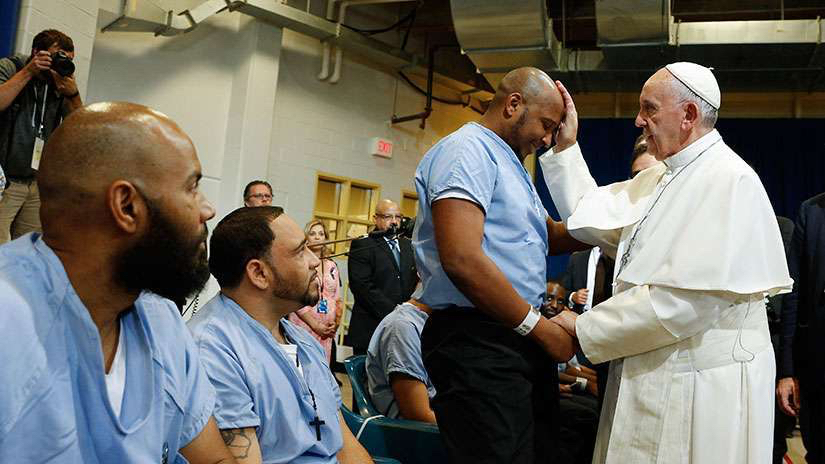
Pope Francis blesses a prisoner during his 2015 visit to Philadelphia – Photo credit – CNS photo/Paul Haring
Link for Pope Francis homily, October 6, 2015
Link for the Mass readings for, Monday, July 20, 2020

May we continue the work of Rep. John Lewis to build “The Beloved Community.”

The kingdom of heaven may be likened to a man who sowed good seed in his field. While everyone was asleep his enemy came and sowed weeds all through the wheat, and then went off” (Mt 13: 24-26). 
The enemy in the parable we attribute to being Satan. In Hebrew, Satan means adversary or one who opposes. Satan is not a god or Demi-god, nor did God create Satan. He created a high arch-angel named Lucifer, just as he did with Michael, Gabriel, and Rafael. Lucifer opposed the will of God and took the stance of being his adversary. Satan seeks to bring about disunity and division. 
God seeks to bring about unity and communion.
God did not nor does he create evil. God did not create Satan. Yet he allows evil. God did not create this pandemic, the division, nor the biases and racist attitudes some of us hold. Yet, he does allow these distortions of the good he promotes and invites us to participate in. Why? Because he loves us so much, angels and humans alike, that he is willing to risk that we will reject him. God is not a tyrant or a dictator. God loves us and wants us to choose him freely. 
Yet, there are times when all of us will reject him and his will for our lives as well as there are times that we will say yes to him. The hope is that over time we will say yes more than we say no. This is why God allows the wheat and the weeds to coexist. 
As humans, unlike wheat and weeds, we can change, we can mature, we can repent from our times of saying no and choose to say yes and walk a little closer with God. 
Probably the most honest prayer that I ever prayed happened after I overheard my parents deciding to get a divorce. I was about seven or eight. I told God in no uncertain terms, that if he allowed this to happen we would be through. I walked away from God, but he never left me. 
Through small ways, God continually reached out to me and during my late teens, I started to say yes again to his invitations. God encourages and invites each of us, just like a parent before his or her child. A mother or father encourages their small child to come to a wobbly stand and then to begin to take those first steps. If the child crawls away, the parent will go around and again meet the child in this intimate dance of love between the two that will eventually lead to the child learning to walk.
So, it is with our relationship with God. He has sent his Son to be one with us in our humanity so that we can become one with him in his divinity and share the infinite love between them who is the Holy Spirit. God is ever patient and ever-present. Yet, we often do not experience him in our lives, because we are preoccupied. We are distracted and diverted by so many other things or we are let down and disillusioned. 
Last April or May when we first received the diagnosis that JoAnn, my wife, not only had pancreatic cancer but that it had spread throughout her abdominal region. The prognosis did not look good, I said, “Here we are again God.”
This time I was not angry. JoAnn and I both received the grace of his peace and the closeness of his presence because we did not turn away from him, even though the outcome was not what either of us wanted. This wasn’t fair, this was a devastating reality, but we decided to accept what was before us and decided not to take the time we were given for granted. We were then blessed with four months of love and closeness.
From this experience and others, I have realized that there is very little that we are in control of in our lives. But we can decide how we are going to live our lives no matter the external circumstances that surround us.
Jesus invites us to be like wheat. We are invited to grow where we have been planted, to mature, and to bear fruit that will become the seed to be sown in the lives of others. By our willingness to will the good of each other, we love as God loves us. 
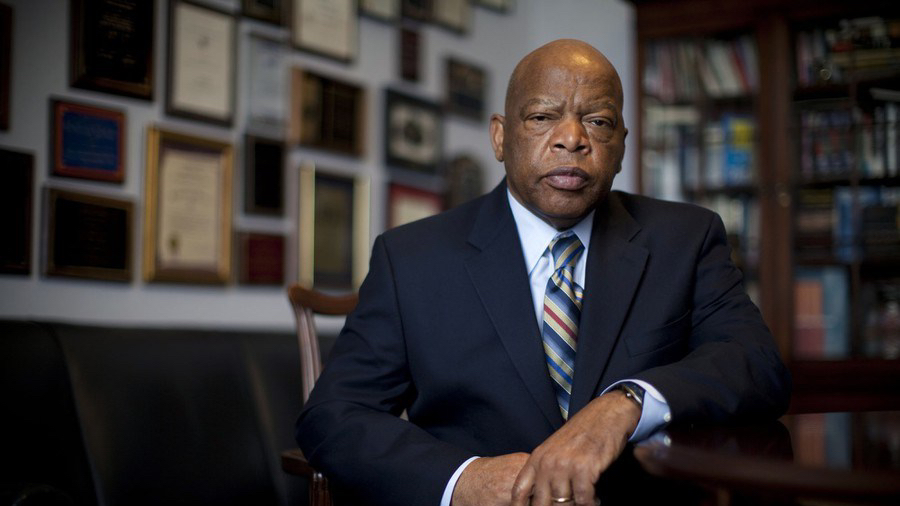
Representative John Lewis, who passed away yesterday at 80, certainly embodied this way of living. He was moved since his teens to put his faith into action and dedicated his life to building in his words “The Beloved Community.” To attain this goal he said, “[W]e must find a way to say to people that we must lay down the burden of hate.” 
We can do so when we are more mindful of our thoughts, words, and actions. Will each be hurtful and dehumanizing or empowering and loving? Will we seek to divide and isolate or to unite and bring people together? Will we choose to be weeds that choke and kill or healthy wheat that nourish and give life?
When we choose to be wheat, the Holy Spirit will help us despite our weaknesses to be models of hope. We can then encourage each other to turn away from entertaining demeaning and hateful attitudes and actions to committing instead to thinking, speaking, and acting toward ourselves and each other in ways that are kinder, more understanding, and compassionate.

Photo credit of John Lewis in his DC office in 2009 – Jeff Hutchens / Getty
Link for the Mass readings for Sunday, July 19, 2020

Make some time to withdraw, to be still, so that nothing may disturb you.

In today’s Gospel from Matthew, Jesus realized that: “The Pharisees went out and took counsel against Jesus to put him to death” (Mt 12:14). Jesus did not then start to plan how he would defend himself against their plot, he did not arm his supporters, nor is there any indication that Jesus let the fact that he was a marked man bother him. What did Jesus do with this bit of news?
“He withdrew from that place” (Mt. 12:15) and cured those who followed him. Was Jesus being a coward by withdrawing? No. Jesus was refusing to engage or give any of his time or energy to their negativity. He focused on what he was about and that was continuing the mission that God had sent him to achieve, which was to help bring about the salvation of humanity and the world and to call those who would work with him to continue his mission.
Many of us will hopefully not receive death threats, but many of us have and will witness and/or receive critical, negative, belittling, or dehumanizing looks, words, and outright actions to cause physical, mental, emotional or spiritual harm, just in the course of our daily interactions. For those of us who choose to practice publicly the teachings of Jesus, we may receive even more! Unfortunately, for many people of color, they cannot hide their physical appearance.
Our common response to the many forms of perceived or actual animosity directed toward us is to react. Our reactions generally are based on learned defense mechanisms we have adopted through our lives. Often when we react, we slip into survival mode, experience increased anxiety, defensiveness, anger as well as a myriad of other emotions. Ideally, as we mature in our faith, our response is to draw into the present moment, breath, and call upon God’s guidance to direct us such that we can act more mindfully and be advocates of God’s grace.
Many times the best way to diffuse negativity is to do as Jesus did in today’s Gospel, resist to engage in it altogether, and continue to be about enacting God’s will in our life. May we recall a time that we have taken offense and reacted in kind toward someone who pushed our buttons and got under our skin. Then seek to understand how we could have reacted differently in that situation and imagine ourselves doing so. May the Holy Spirit guide and help us to be more patient and understanding in the future.
Life is short in the best of scenarios, let us not take a day or moment for granted, nor give away our precious time to engaging in negativity. There are times that we do need to stand up and speak out, but that is a reflection for another time. Sometimes, we need to walk away and be still. During some quiet time today, I invite you to meditate on these words attributed to St. Teresa of Avila (1514-1582):
“Let nothing disturb you,
Let nothing frighten you,
All things are passing away:
God never changes.
Patience obtains all things.
Whoever has God lacks nothing;
God alone suffices.”

Photo: 2010 Hike, taking a walk is often a good way to decompress and leave negativity behind! Photo credit – Jack McKee
Link for the Mass readings for Saturday, July 18, 2020

Are we willing to enter into the lives of another, especially if they are different?

I say to you, something greater than the temple is here. If you knew what this meant, I desire mercy, not sacrifice, you would not have condemned these innocent men. For the Son of Man is Lord of the sabbath.” (Mt 12:6-8).
Jesus continues to rock established regulations and practices. Here he is challenging the understanding of the Sabbath itself when justifying the accusations leveled toward his disciples who were picking and eating grain on the Sabbath, and he does so in a profound way by saying that, “something greater than the temple is here.” Present in the heart of the temple, the area called the Holy of Holies, was the ark of the covenant. Atop the ark was the lid called the mercy seat of God. Jews believed that this was where God sat and when the blood of atonement was offered from sacrifices, God’s mercy was offered to the people. In the temple then, was the mercy seat, the very presence of God.
Jesus’ claim that he is greater than the temple is putting him on the same level as God. A blasphemous statement to say the least, unless of course, he is God. Jesus even doubles down by claiming that he is the Lord of the sabbath; Jesus is God!
In quoting Hosea 6:6: “I desire mercy, not sacrifice”, Jesus is not only saying that he is the something greater, but that his Way is something greater. One of the foundational points of the Way of Jesus is mercy. Through the incarnation, the Son of God dwelt among us, became one with us in our humanity. He restored our dignity in the midst of our brokenness. What Jesus said, in defending his disciples eating from the grains of wheat on the Sabbath, he is saying to us today: “What is owed to every human being on the basis of his or her human dignity is personal respect, personal acceptance, and personal care” (Kasper 2014, 202).
Each one of us, in our participation in the life of Jesus, strengthen our unity in the Body of Christ when we follow Jesus in bestowing acts of mercy on our neighbor. “The works of mercy are charitable actions by which we come to the aid of our neighbor in his [or her] spiritual and bodily necessities. Instructing, advising, consoling, comforting are spiritual works of mercy, as are forgiving and bearing wrongs patiently. The corporal works of mercy consist especially in feeding the hungry, sheltering the homeless, clothing the naked, visiting the sick and imprisoned, and burying the dead. Among all these, giving alms to the poor is one of the chief witnesses to fraternal charity: it is also a work of justice pleasing to God” (Catechism of the Catholic Church, 2nd ed. 2447).
What we need in our present situation when all appears to be unraveling around us is to be willing to respect the dignity of each person, interact with and care for people different than us, be willing to journey together, and allow God to happen. Reviewing what the spiritual and corporal works of mercy above are is a good place to start. Then praying about and deciding which one(s) to put into practice would be a good next step. We can write a broader and brighter chapter in the coming weeks and months ahead if we are willing to follow Jesus and lead with mercy, which is “the willingness to enter the chaos of another” (Keenan, 2015).
—————————————
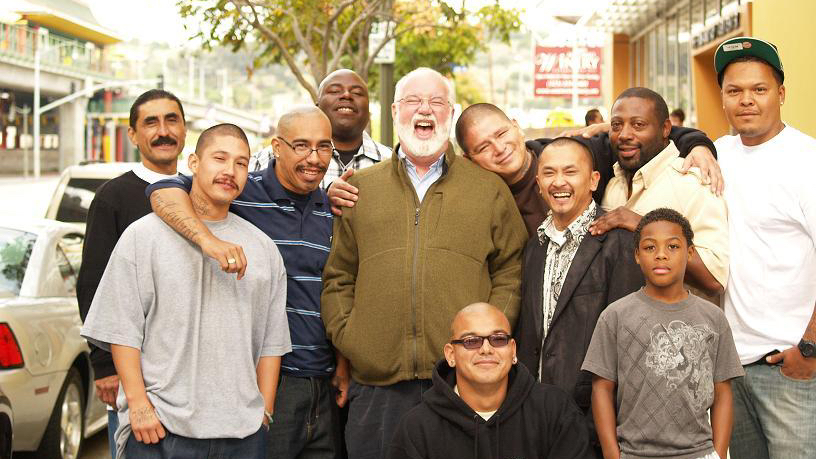
Photo: Fr. Greg Boyle, SJ, founder of Homeboy Industries has been willing to enter into the chaos of gang members since the 1980s.
Link for the Mass readings for Friday, July 17, 2020
Kasper, Walter. Mercy: The Essence of the Gospel and the Key to Christian Life. NY: Paulist Press, 2004.
Catholic Church. Catechism of the Catholic Church: Revised in Accordance with the Official Latin Text Promulgated by Pope John Paul II. Vatican City: Libreria Editrice Vaticana, 1997.
Keenan SJ, James. “The Scandal of Mercy Excludes No One.” Thinking Faith. December 4, 2015.

We need to remember that Jesus will help us. We are not alone.

Jesus said: “Come to me, all you who labor and are burdened, and I will give you rest” (Mt 11:28).
Scripture scholar, Fr. Daniel J. Harrington, SJ, states that in this passage Jesus’ invitation was given to those who are not yet his disciples, those Jews who do not yet believe in him and his way. He also intuits that Jesus is calling them from the heavy burdens laid upon them by the scribes and Pharisees and inviting them to accept his burden that is lighter (cf. Harrington, 167). We can read this in Matthew 4:3: “They tie up heavy burdens [hard to carry] and lay them on people’s shoulders, but they will not lift a finger to move them.”
The key to the conviction that Jesus levels against the Pharisees come from those who have experienced and Jesus witnessed that they impose the law, but do nothing to assist those they are teaching follow it. I would say the demands of Jesus are even more challenging than those of the Pharisees, Sadducees, or the scribes! I shared yesterday one of the six antitheses, here is another: “You have heard that it was said… whoever kills will be liable to judgment. But I say to you, whoever is angry with his brother will be liable to the judgment, and whoever says to his brother, ‘Raqa,’ will be answerable to the Sanhedrin, and whoever says, ‘You fool,’ will be liable to fiery Gehenna” (Mt5:21-22). Jesus is equating calling someone Raqa – an air-head, or calling someone a fool akin to murder. Our words can destroy or empower! We need to choose our words wisely.
The difference between Jesus and many of the religious leaders of his time is that Jesus, the Son of God in the fullness of his divinity, entered into the chaos of our humanity. As a human being, he walks among us and suffers along with us. He offers to yoke himself to us and so to carry the burden with us, making them lighter. Many impose burdens on us, we impose burdens on others, as did the Pharisees. We also impose them on ourselves and turn away from the invitation of Jesus’ help.
A handful of injuries I have suffered through the years were because I attempted to lift or carry something beyond my strength, instead of seeking assistance from another. I would think, “I can do it, I don’t need any help.” That is just the physical; there are also the mental and emotional burdens of anxiety, doubt, pride, fear, and worry that we burden ourselves with. This is not Jesus’ way. He offers a path for us to follow that leads us to joy, peace, and rest in this life and fulfillment in the next. No matter what pain, suffering, trial, and/or challenge we are facing right now, we do not have to go through it alone. We need to remember to reach out our hand to Jesus, and then we will find his hand already waiting there to grasp ours.
We will find rest not in going it alone but in our collaboration with Jesus. In aligning ourselves with God’s will, life isn’t necessarily going to be easier, but he will give us the strength and peace of mind not only to endure but experience joy while we do so. Let us take our first step together today, hand in hand with Jesus, and so find rest in knowing that we are not alone! Also, may we be kind to those in our midst with our words, actions, and faces. We need to resist the temptation of reacting and instead be present and understanding, for we are not aware of the burdens they themselves are carrying. Offer instead a simple smile as a start, which can make a heavy load just a little lighter.
—————————————
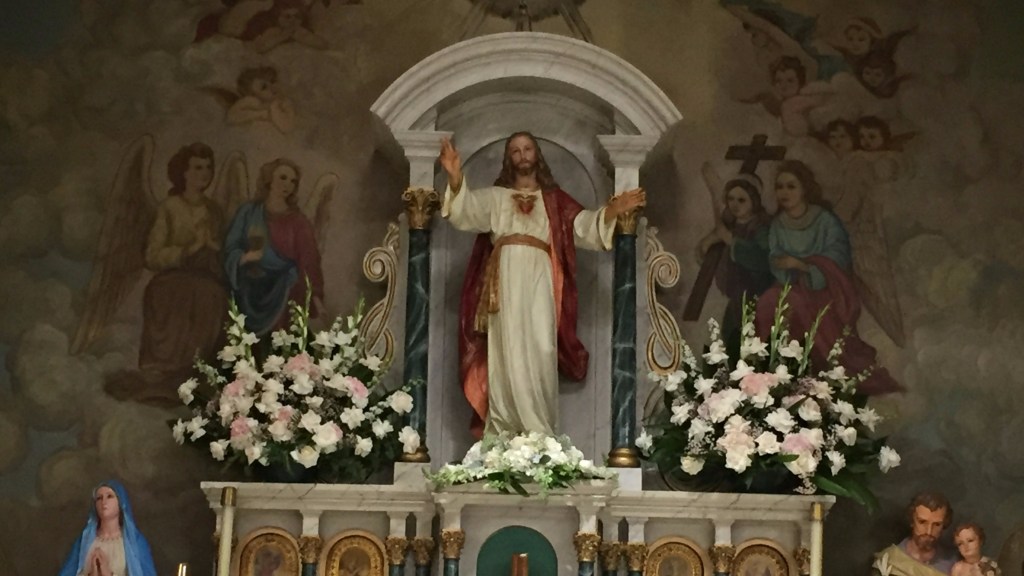
Photo: Jesus behind the altar of St Peter Italian Catholic Church, Los Angeles, where I attended some Masses last summer and fall.
Harrington, S.J. Daniel J. The Gospel of Matthew. Vol. 1 of Sacra Pagina, edited by Daniel J. Harrington, S.J. Collegeville, MN: Liturgical Press, 2007.
Link for the Mass readings for Thursday, July 16, 2020

Jesus calls us to continually clarify, renew, and deepen our faith.

“At that time Jesus exclaimed: ‘I give praise to you, Father, Lord of heaven and earth, for although you have hidden these things from the wise and the learned you have revealed them to the childlike’” (Mt 11:25).
Why did the wise and the learned, referring to some of the Sadducees, Pharisees and scribes, reject Jesus? One possibility is that Jesus challenged their idol of tradition. Even though Jesus did not come to abolish the law but to fulfill it (cf. Mt 5:17), the invitation to go deeper was and continues to be challenging. This is certainly highlighted in the six antitheses, Jesus shared during his Sermon on the Mount. Here is one such example: “You have heard that it was said, ‘An eye for an eye and a tooth for a tooth.’ But I say to you, offer no resistance to one who is evil” (Mt 5: 28). Offer no resistance to one who is evil? Not only hard to swallow for people of Jesus’ time, but for us today as well.
Jesus offered then and continues to offer us today the intimacy of the Trinitarian Love of God shared between Father, Son, and Holy Spirit. To be fully alive, to share in his Love, we need to resist being governed by our fear and holding blindly on to tradition for its own sake. Instead, we need to be open to growth, change, and renewal. Gerhard Lohfink, in his book, No Irrelevant Jesus, quotes the Polish philosopher Leszak Kolakowski: “A society in which tradition becomes a cult is condemned to stagnation; a society that tries to live entirely through revolt against tradition condemns itself to destruction” (Lohfink 2014, 2).
Many have left the Church because they feel we are too steeped in tradition, rules, and laws, but in their throwing the baby out with the bathwater, they have no secure ground or foundation, no anchor in their life. Others remain hunkered down entrenched in a bunker of tradition fearing the secular tide, holding on to tradition, not to Jesus. Both tendencies weaken us because we are choosing our self over accepting Jesus’ invitation to let go and enter into the living stream of the communal Love of the Trinity we can then share with one another.
Jesus sees our selfishness, our shortcomings, and our weaknesses, while at the same time, he sees the potential and unique charism present in each one of us. He meets us where we are, as we are, in our present condition, and from that starting point, he invites us to crawl, then to walk, to run, and eventually to fly – to experience and share the experience of his unconditional Love. We need to resist the extremes of rejecting tradition altogether or idolizing tradition alone, but instead build on the foundation we have been given; Jesus Christ: “The Way, the Truth and the Life” (cf Jn 14:6). Within the life of the Church, “we must not do away with its traditions, but at the same time, it must continually clarify, renew, and deepen them” (Lohfink 2014, 2).
May we entrust ourselves to the Holy Spirit and ask him to burn away those small “t” traditions that keep us from God, so to reveal to us those capital “T” Traditions, that which remains from his purifying fire of Love. In this way, we may come to know that which in reality is the foundation of our identity that leads us to become people of integrity. May we be open to receiving that which Jesus teaches and reveals to us, learn it, and put them into practice in our everyday lives.
—————————————
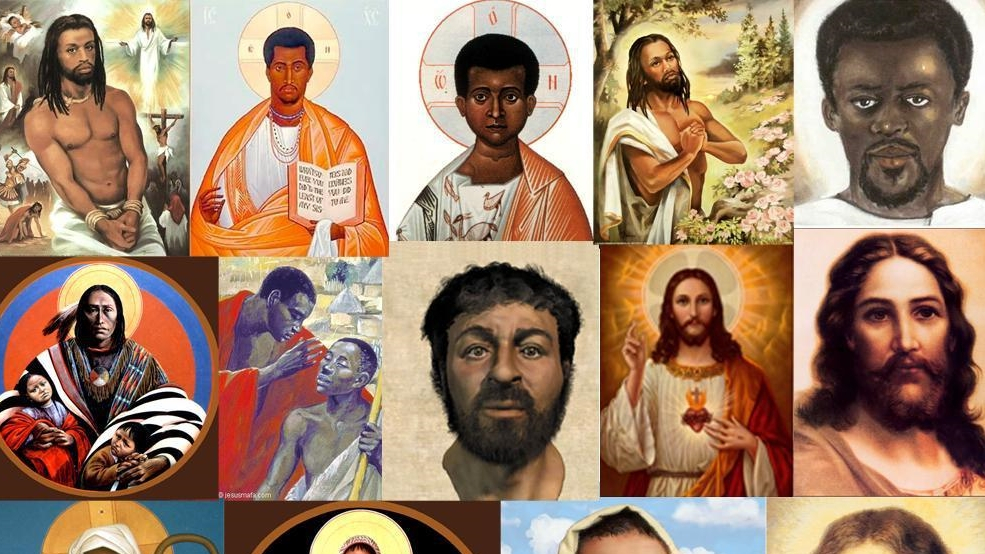
Photo: Collection of a few artistic representations of Jesus. Historically, Jesus was a Palestinian Jew, yet there have been wonderful, diverse depictions from many parts of the world. Which picture of Jesus do you most identify with?
Lohfink, Gerhard. No Irrelevant Jesus: On Jesus and the Church Today. Minnesota: Liturgical Press, 2014.
Link for the Mass readings for, Wednesday, July 15, 2020

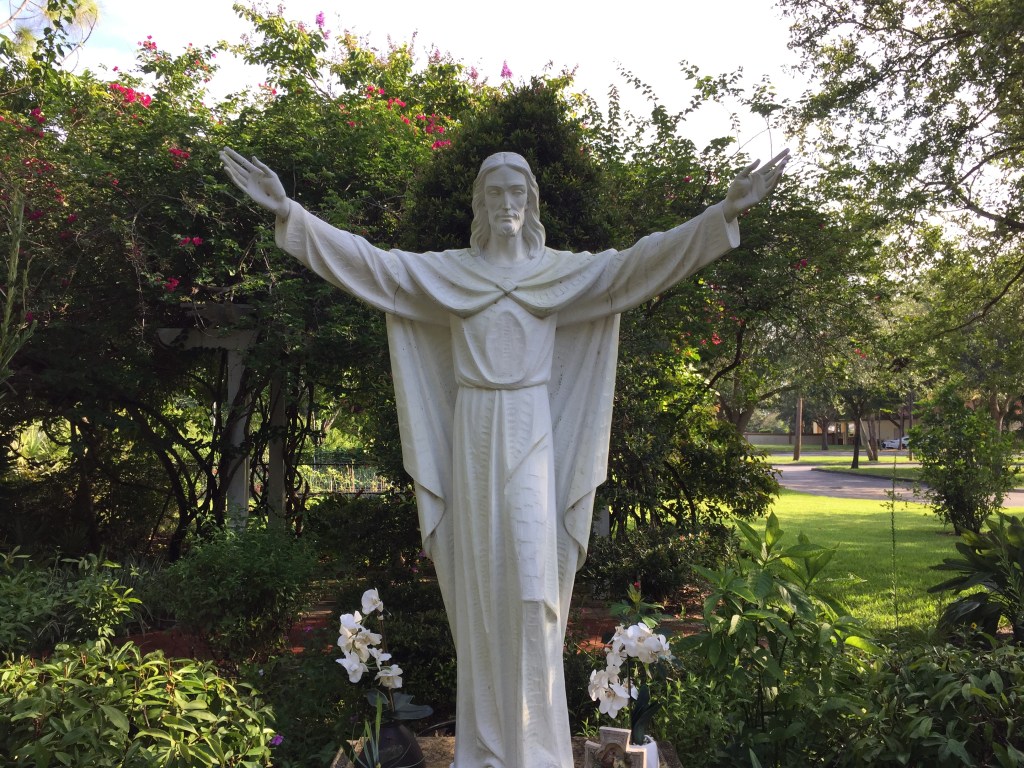
Jesus’ arms are wide open to receive us in the midst of our brokenness, fears, pain, and sin.

“Jesus began to reproach the towns where most of his mighty deeds had been done, since they had not repented.” (Mt 11:20).
Anyone who encounters Jesus is invited to change. Jesus shines the light of his love and mercy into the darkness of our own fallen nature, where we are wounded, sinful, and broken. He invites us to repentance, healing, and reconciliation. He invites us to actualize who we truly are. A wonderful invitation, but why would we turn away? The darkness may be too dark and the light may be too bright.
Facing our own darkness and brokenness is not easy and can be frightening as well as intimidating. That is why we are so vulnerable to temptations, distractions, and diversions. We are not able to sit still because we want to keep moving so as not to face our fear and pain, nor let go of our false senses of security, control, and the glitter of apparent goods. We also may not be able to accept the fullness of our goodness, of who God calls us to be, and the realization of who we really are.
Jesus invites us to stop, to breathe, to enter into his stillness and silence where we can hear the word of his Father and experience the love of the Holy Spirit. In this experience of silence, we come to encounter the choice to change our hearts and minds, to repent: to turn away from that which keeps us from growing closer in our relationship with God and becoming more fully alive.
God loves us more than we can ever mess up, more than we can ever imagine, and he does not define us by our worst mistakes. Jesus’ arms are wide open to receive us in the midst of our brokenness, fears, pain, and sin, but we must be willing to stop running and be still long enough to experience and feel his forgiving, loving, and healing embrace. At the same time, we need to be willing to accept who we truly are and called to be apart from our false sense of self. We are often too self-critical and judgmental.
As we begin to accept ourselves and become more comfortable in our own skins, we can be more understanding and supportive of others. Jesus invites us to participate in the same mission that he first announced when he began his public ministry:  “This is the time of fulfillment. The kingdom of God is at hand. Repent, and believe in the Gospel” (Mark 1:15).

Photo: Praying in the Rosary Garden at St Peter after morning Mass. Each day is a new opportunity to begin again with Jesus.
Link for the Mass readings for Tuesday, July 14, 2020

May the light of Christ be our guide in our troubled times.

“Do not think that I have come to bring peace upon the earth. I have come to bring not peace but the sword” (Mt 10:34).
Words to live by from the King of Peace. The reality of this statement is the reality of his mission. Jesus entered the lives of individuals. Some said yes to following him and some said no; some saying yes and no within the same family. The image of the sword represents how sharp and stark this choice could cut. If you do not think that is true, just look at the polarization in our country right now. The cut between democrat and republican bleeds quite deep right now.
During the time of Jesus and for most within the first generation of believers, there was not a luke-warm choice. You were either for Jesus or against Jesus. Unfortunately, today, for too many, the Gospel is being shaped more by politics than the Gospel shaping politics. To live as disciples of Jesus and to actively engage in living out the teachings of the Gospel, it is more important that we follow Jesus, putting him first before any politician or political party. The platforms of democrats, independents, libertarians, and republicans are all deficient in fully following the teachings of Jesus.
We who have chosen to follow Jesus need to speak truth to the issues and hold leaders accountable on all sides. Our starting point for any issue needs to be respecting, first and foremost, the dignity of the person from the moment of conception and everywhere in between until natural death as well as promoting a healthy stewardship of God’s creation. In that dialogue, dialogue not a monologue, we need to respect those to whom we share our views and be willing to also listen in turn. In actuality, listening first and more often is a good posture to assume. We can and will disagree, but we need to resist devolving into demonizing one another.
There are those who promote a right to choose, to choose to take the life of their own unborn, there are those who support taking children away from their parents for seeking asylum and weeks and months later still not returning them, and those refusing to welcome the refugee and the migrant fleeing from dire situations to discourage people coming into this country. There are those who say we can’t pray in our schools, while others say we can’t take a knee to protest the disproportionate unjust killings of people of color by our law enforcement agencies. Mass murders, including the death of students in our schools as well as the daily violence in our cities abound. The addiction rate of our youth in many rural and urban areas has reached epidemic proportions with little concrete help and support, while equal access to education, jobs, and health care is woefully unbalanced. Some say Black lives matter, while others say all lives matter. Some say wear masks, while others refuse to do so.
When Jesus said, “I have come to bring not peace but the sword” (Mt 10:34), he meant that we are not to settle for a false peace of appeasement to get along and water down the Gospel message. We must wield his sword, which is the Word of God, that speaks truth to power. When seeking to counteract a culture of death to build a culture of life, we must resist making political party affiliations and leaders into our idols and we must resist the urge to give in to our fears and prejudices. We must be willing to sit down and speak and listen to one another. We must share and listen to our experiences and our stories.
We must refuse to contribute to the dehumanization and demonization of others, nor are we to allow ourselves to fall into hopelessness, indifference, and/or despair. Instead, we are to be people of hope, mercy, and love in each and every encounter such that we promote a consistent ethic of life. The Word of God is to be the guiding reality in our time and generation and will be so when we immerse ourselves in the teachings of Jesus, apply them to our lives, speak the truth of the Gospel, pray for all of our leaders, for one another, and invite the Holy Spirit to give us the ears to hear, the words to speak, and the actions to engage in. Our starting point for each of the issues before us in our moment and time is to be: “Whatever you did for one of these least brothers of mine, you did for me” (Mt 25:40).
In following Jesus in these ways, and putting into practice the words of the Prophet Isaiah by ceasing to do evil, learning to do good, and making justice our aim (cf. Isaiah 1:15-17), we will cause disruption and face conflict but if we remain in the word of Jesus, when we respect each other as human beings, when we really listen to and are present to one another, we will begin to see that we are brothers and sisters, fellow human beings, and we will begin to move toward the reconciliation and healing our country is so desperately in need of.

Photo: Sunrise at St Peter Catholic Church. As the sun rises each day, may Jesus, the Son of God, rise in our hearts to be our guide.
Link for the Mass readings for Monday, July 13, 2020

God sows his seeds of love through those people and experiences he allows in our lives.

We are living in what appears to be constant turmoil. I don’t need to share a list of the hardships we are going through as they are all pretty apparent and many of us also have our own unique struggles that we are wading through. A few people have said to me that the world may be coming to an end or that we are in the end times. 
This same question of the end times even came up with the disciples. They asked Jesus when that day would come and Jesus said that only the Father knows the time or the hour (cf. Mt 24:36). I believe Jesus was saying then as he is saying to us now, that is the wrong question to be asking as a disciple. Spending time speculating about the end of the world is not to be our focus.
St Paul also chimes in when he writes to the Church in Rome, “Brothers and sisters: I consider that the sufferings of this present time are as nothing compared with the glory to be revealed for us” (Rom 8:18). From Paul to this day, each generation has had to face its own trials and tribulations. There is hope in that this life is not all that there is, but that does not mean we just indifferently endure and trudge through this life until the end.
There is a powerful scene in the movie, The Lord of the Rings, where one of the main characters, Frodo, a halfling, is speaking with Gandalf the wizard. Frodo was feeling overwhelmed with the task that he had been entrusted with which was to destroy a great ring of power. He turned to Gandalf and said: “I wish the Ring had never come to me. I wish none of this had happened.” To which Gandalf replied, “So do all who live to see such times but that is not for them to decide. All we have to decide is what to do with the time that is given to us.”
The Lord of the Rings was written by JRR Tolkien who personally witnessed the atrocities of the First World War. If you are looking for a good book or trilogy to read, I would highly recommend it. It is not only a powerful parable of hope, courage, and transformation, it is deeply Christological parable.
All of our readings today as well as what I have pointed out so far are interconnected with the principle that God works in small ways to affect and bring about change. No matter the time or season, his word does not come back void. This change is not just about some abstract ideal. What God offers each one of us is personal transformation. This comes forth rather powerfully in the Parable of the Sower.
The question Jesus poses is, “Do we have the eyes to see and the ears to hear when he comes close?”
There are happenings or incidences, I like to call them God-incidences, where Jesus is present and active in our lives, where he draws close to us each day. He is constantly being sown into our being through our interactions with one another and our experiences. We are invited to receive him, allow him to take root in our lives, and we are to share the fruit of his love as a result of our growing relationship with him.
Let me give you a few examples from my own life of seeds sown, of God-incidents, of Jesus drawing close.
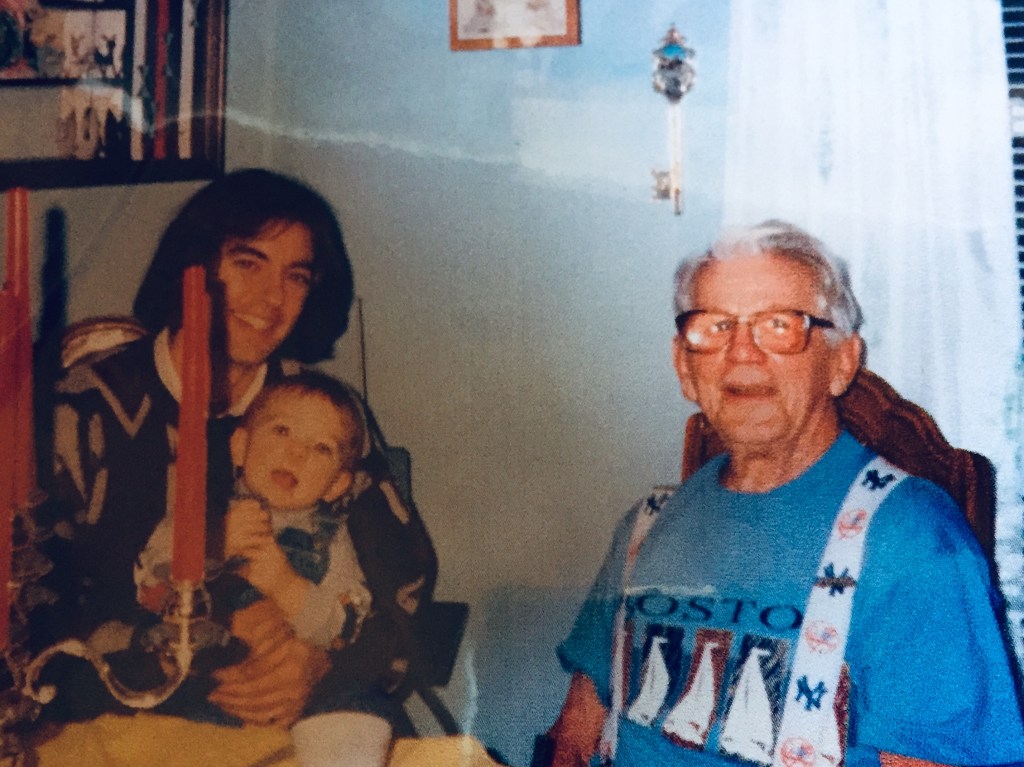
Growing up we would often share holidays with my mother’s parents. As we settled in around the table we would continue to visit as the last of the food was placed on the table. My grandmother would sit down, and if the conversation went on a little longer, she would say something along the lines of, “Ok old man, let’s go.” My grandfather would say in a mock wounded way, “Snucksie, I’m talking.” She would give him the look and then he would make the sign of the cross and pray the Our Father. Sometimes he read a short prayer from a little devotional. My grandfather also encouraged me to take time to be still and quiet and also passed on to me his love of books and reading.
Each of these were seeds that found good soil in my heart and mind. They impressed me and moved me deeply and I believe these were times when Jesus drew close. If we allow ourselves to recall, we can look back over the past years of our lives and see where Jesus has drawn close through the people and experiences he has allowed to happen in our lives. 
We are dealing with a lot right now. Even so, I learned from my wife, JoAnn, that life is short and we cannot take the time we have for granted, nor ought we waste time or expend energy in ways that are not helping us to be who God is calling us to be. We can be better than we are and that starts with ourselves and our willingness to be led not by our egos, but by Jesus. 
I invite you as my grandfather invited me to spend some time in silence and to be still each day, to allow God to speak to us in the silence of our hearts. Let go of the worries, the anxieties, the false promises, the lures, and half-truths, allow your hearts and minds to soften. Allow the seed of God’s Word, Jesus, to find root in your life. Allow the Holy Spirit to nourish you with his love. 
Even in these troubling times, we are not to be strangled by the growing uncertainties, divisions, and even expressions of inhumanity. Instead, we are to till the soil of our hearts and minds, remove the stones and weeds, thereby preparing rich soil that is open to receiving the seeds of God’s love. In this way, we will produce the rich fruit of his love so to empower and lift up those in our midst. 
It is our choice regarding which soil we want to have. As Gandalf said to Frodo, “All we have to decide is what to do with the time that is given to us.”

Photo: My grandfather, nephew Nick and me
Link for the Mass readings for Sunday, July 12, 2020