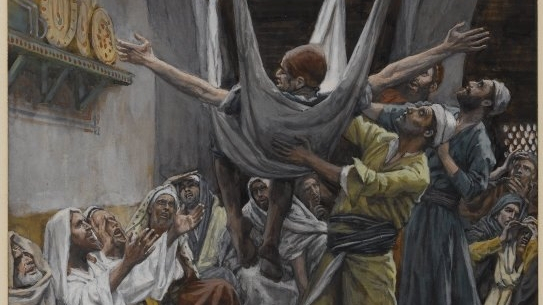
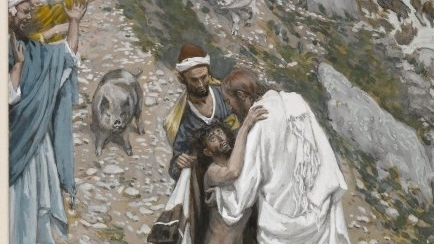
Jesus healed and sent the two demoniacs, as he sends us, to be agents of change.
Thereupon the whole town came out to meet Jesus, and when they saw him they begged him to leave their district (Mt 8:34).
After hearing of the healing of the demoniacs and the herd of swine rushing into the water, the townsfolk came out and begged Jesus to leave. This is also attested to in the Gospel of Mark 5:17. Luke adds that the people asked Jesus to leave because: “they were seized with great fear” (Lk 8:37). Jesus healed two demoniacs in Matthew’s account, one in the Mark and Luke accounts, and the people asked him to leave in all the accounts. Hearing of Jesus’ healing power to expel demons, that the swine ran into the seas, and hearing about his act of mercy and grace, would we too ask Jesus to leave?
Before answering, “No, of course not!” too quickly, how many times have our own judgments, prejudices, and self-centeredness, our own lack of understanding for the bigger picture, our own fear, been chosen over living the Gospel in our own lives? Is our life shaped by the Gospel message of Jesus? Do we wrestle with the challenge of how we are to love our enemies, to be perfect as our heavenly Father is perfect, to turn the other cheek, and to answer in practical, concrete ways, “What you do to the least of these: you do it to me?” Or, if we read or listen to the Gospels at all, do we seek to adjust Jesus’ message, to conform God to our will, to fit the message to our lifestyle, what works for us? Is the radiance of Jesus’ mercy, love and grace too bright for us such that we wince in pain, that we feel it is too much to bear, and we too say, “Go away!”?
In these slower summer days, may we make some time to read, slowly and prayerfully, each of the accounts of the healing of the Gadarene demoniacs in Matthew’s Gospel and the one demoniac in the Mark and Luke accounts. We will also notice with Mark and Luke that after the demoniac who was possessed with demons was healed, the man followed Jesus and asked to follow him. Jesus said to the man: “Go home to your friends, and tell them how much the Lord has done for you, and how he has had mercy on you” (Mark 5:19). The one who was so bound up by possession that he was out of his mind, still had some glimmer of hope that he could be healed and ran up to and prostrated himself before Jesus, was healed and freed. He then proclaimed the Gospel to the whole city.
In our reading and prayer, may we enter into this powerful account and also encounter Jesus. What still enslaves and binds us such that we continue to be separated from God and others? Will we give in to our fear and beg Jesus to leave us, or open our mind, heart, and soul to his healing word and touch? May we, as the man possessed did prostrate ourselves before Jesus, surrender to him, so to experience the healing mercy, love, and forgiveness of Jesus that we too may be free. Free to experience freedom for excellence, free to embrace who we truly are and who the Holy Spirit guides us to be.
Let us pray for each other that Jesus may forgive and free us as he freed the two demoniacs in today’s Gospel account from Matthew. May he free us from our fears, prejudices, tendencies to gossip, belittle, and dehumanize one another, and may we commit to align ourselves with Jesus, so to be more willing to encounter, embrace, accompany, encourage, and love one another. Our country may appear to be coming apart at the seams and getting darker each day, yet we are called to be contemplatives in action.
People of prayer, yes, but prayer leads us to act. Jesus calls us as he did the demoniacs who wanted to follow him. Jesus sent them home to their friends. We are sent to do the same, to be engaged, to share the love and mercy of Jesus, and be his agents of change and reconciliation in our own unique ways.
Painting: James Tissot, The Swine Driven into the Sea
Parallel accounts of today’s Gospel see: Mark 5:1-20, Matthew 8:28-34, Luke 8:26-39
Link for the Mass readings for Wednesday, July 1, 2020

No matter the strength of the storm, Jesus accompanies us.
As Jesus got into a boat, his disciples followed him. Suddenly a violent storm came up on the sea, so that the boat was being swamped by waves; but he was asleep (Mt 8:23-24).
Noah’s ark, as well as the boat in today’s Gospel pericope, has often been a symbol for the Church. The storms may rage without, but those who remain in the boat will be secure. The image of Jesus sleeping can also be a sign of the storms within the boat, within the Church – where it may appear that Jesus is absent.
We are human beings, made in the image and likeness of God, we are good, but we are also fallible and wounded by our sin. We are wounded by the very gift of the free will we have been given. God loves us so much he is willing to risk that we will choose to place other people, places, and things before him. We may often pursue the promises of wealth, fame, honor, and pleasure as substitutes instead of our true and abiding happiness which can only come from God. God does not cause our suffering, but he will allow us to reap the consequences of our choices.
Hopefully, we will learn from our mistakes and grow to realize that we need to remember that God is to be first in all we think, say, and do. Even in our darkest moments, even in the darkest moments of the Church, we need to remember that God has not abandoned us. When we are experiencing the storms in our lives that come from without caused by others or the storms from within caused by our own sinful choices, or anxieties, worries, and fear, Jesus may appear to be distant, he may seem to not even exist. Yet, just as Jesus was calmly sleeping in the boat with the disciples, he was present with them and he is present with us. Once the disciples turned to Jesus and implored his help, Jesus calmed the stormy sea.
Our focus on Jesus through the good times and the bad is the key. Our faith in Jesus grows as our trust and relationship in him grow. We just need to remember to turn to him in all our circumstances in life, to be thankful when all is going well and to seek his assistance when we need his help. This is what St Paul meant by praying unceasingly. Turning to God consistently is to be a regular practice in our daily lives and then when we are in need, we will know he is there.
This is to be true regarding our own mental storms of anxiety, whether we are dealing with conflict in a relationship, \ with some crisis physically, economically, or spiritually, or even while experiencing challenges that go far beyond just ourselves such as this present pandemic and racial unrest, the Church abuse crisis, the inhumanity inflicted upon our brothers and sisters on the border or the violence inflicted upon the Church throughout the world.
We need not even fear death because Jesus has conquered death. Jesus chided his disciples, who feared the worst, as they were tossed about in the boat on the raging sea, for having little faith. He knew they could have stilled the wind as he had done or that God would have helped them to ride the storm out. They just needed to place their focus on God instead of their fear.
In all of these areas and more, even when Jesus may appear to be asleep, or absent, even when he doesn’t answer our questions of, “Why?”, we just need to realize that he is present in our midst. When we do so, even while the waves of our trials and tribulation toss us about, we will be able to experience his peace, that peace that surpasses all understanding. As we deepen our relationship and continue to experience his peace we can then be a healing balm for those who suffer, a voice for the voiceless, and begin to harness the courage to speak truth to power.
———————————————-
Photo by Johannes Plenio from Pexels
Link for the Mass readings for Tuesday, June 30, 2020
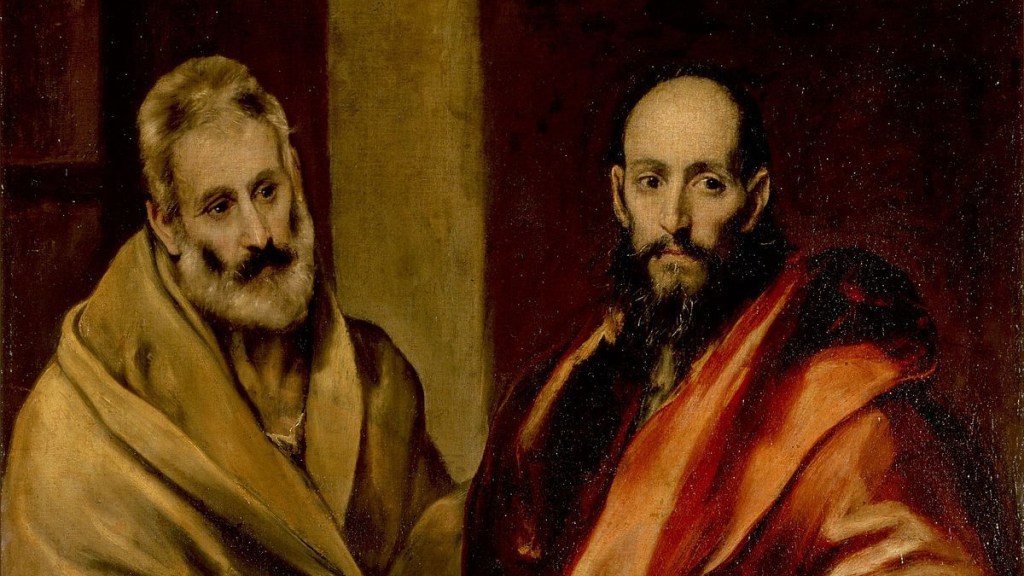
Peter and Paul encountered Jesus, have we?
Jesus said to his Apostles, “But who do you say that I am” (Mt 16:15)
Have we answered the same question that Jesus posed to his apostles for ourselves? Too often we move from this to that, one situation to another, putting out fires and moving from one crisis to another, or we are just seeking to make it through another day.
To be a Christian is not a call to stop living our lives, but it is an invitation to live our lives in, with, and for Jesus. We have been described as a People of the Book, along with Jews and Muslims. This is true, yet, even more so, we are a people of encounter; we encounter the Living Word, the Son of God, Jesus the Christ.
Peter and Paul encountered Jesus in their lives and were changed forever. We can encounter the same Jesus when we slow down enough to pray with the Word proclaimed in the Liturgy or read in personal prayer.
As a very simple example: except for the first Office of the day, in praying the Liturgy of the Hours, the prayer begins, “God come to my assistance, Lord make haste to help me.” I still need to embrace the depth of those words instead of too many times rotely passing through them as I begin my prayers, not really taking in what I am saying!!! How many times do we make the Sign of the Cross without being attentive to the profound act we have just engaged ourselves in?
Through invoking this prayer and making this sacramental gesture, we are inviting the Creator of all that exists to come to be a part of our lives. Each one is also a prayer we may lean on when tempted, stressed, worried or anxious. Each one is an affirmation of a commitment to resist giving in to a mindset of minimalism and fear. All things are possible when we mindfully choose to align ourselves with Jesus and participate in the communion of the Holy Trinity.
Peter and Paul both answered the question that Jesus posed. Peter as recorded in Mt 16:16, said, “You are the Christ, the Son of the living God.” and Paul in Acts 9:20 “proclaimed Jesus in the synagogues, that he is the Son of God.” Let us spend some time praying and meditating on how we will answer Jesus’ question: “Who do you say that I am?” How we answer this question makes a difference as to the kind of Christian we are and will be.
Saints Peter and Paul on this your feast day, pray for us!
Painting of Saints Peter and Paul by El Greco, 16th Century
Link for the Mass readings for Saturday, June 29, 2020
In our present time of uncertainty and unrest, let us commit to loving God and one another as he loves us.
We are continuing to experience times of uncertainty, upheaval, and unrest in our country right now. Our readings give us some guideposts for hope.
In our first reading from the Second Book of Kings, we are introduced to the Shunammite woman and the prophet Elisha. Upon their first meeting, the Shunammite woman invites Elisha to have dinner with her. There is no evidence that they knew each other at that point. She recognized his need after traveling and offered him hospitality. Their time together must have been positive because Elisha continued to visit with this woman and her husband each time he came through the area. Their friendship grew to such a point that she was even willing to have a room built for him to stay. Their relationship began with a simple gesture of empathy and hospitality.
We do not necessarily need to invite a stranger to live with us in our homes, but we can start with some smaller acts of reaching out to one another. When our kids would come home from California to visit, my wife, JoAnn, would take them to Publix to stock up on food for their stay. They were constantly amazed at how many of the workers there knew their mom. The reason for this was that JoAnn took small moments during each visit to interact with them. Initially, she would say hello and ask how they were doing, then slowly get to know a little more about their families and their lives. Instead of rushing through the store and taking the presence of the workers for granted, JoAnn saw real people with real lives and built relationships through small gestures of empathy.
In our Gospel reading, Matthew records Jesus saying to his apostles: “Whoever loves father or mother more than me is not worthy of me, and whoever loves son or daughter more than me is not worthy of me” (Mt 10:37). At first reading these words may seem to lead more to an ending his relationship with his apostles rather than strengthening it. Jesus is making two key points. One, he is restating the Ten Commandments in that our most important relationship, even more than our family, is to be with God. We are to put God first before all things and all people, even family. Second, Jesus is equating himself with God. As we deepen our relationship with Jesus we will grow closer to God and to each other.
To enter the diaconate program, the wife of the applicant must sign that she is in agreement with the process and that goes right up until ordination. Initially, JoAnn was not 100% on board when I was thinking about studying to be a deacon. With the challenges to my time already high because of the demands of my teaching schedule, formation would add more challenges. Yet, we both trusted that this was God’s will and we followed through with formation, to ordination and beyond. There were indeed challenging times, but we continued to keep God first in our lives and worked together, growing not only closer to God and each other but grew in our relationships here at St Peter and Cardinal Newman as well.
And finally, in our second reading, St Paul helps us to understand that our relationships even transcend death. For those of us who have been “baptized into Christ Jesus were baptized into his death” (Romans 6:3). Jesus has conquered death and he has risen and will die no more. This he promises to us as well. Those who have died with Christ shall rise with him. Death does not have the final say, Jesus does.
This Thursday will be 10 months since JoAnn died. We shared twenty-three wonderful years together. She taught me how to be less selfish, less contemptuous and judgmental, she taught me how to come out of myself and how to love. In the first few months after her passing, I was having trouble recalling memories of our time together and began to fear that I would forget her. Over the last month I realized that the sorrow and grief of loss was strong and I had been holding on too tightly to who I lost. As I have been healing and beginning to let go of my grip, I have started not only to experience some spontaneous memories like her laugh while doing the dishes one night, but feeling brief moments of her being close.
JoAnn had often tried to think of a business idea that we could all do as a family. Our youngest daughter, Christy, has been pursuing a creative, business idea over the past month and when I was thinking about that the other day while mowing the lawn, I felt this deep feeling of joy and warmth in my chest, and tears welled up in my eyes. I knew it was JoAnn’s joy that Christy was carrying on with her dream and adopting JoAnn’s entrepreneurial spirit.
So yes, we are continuing to experience times of uncertainty, upheaval, and unrest. Yet, we do not have to be defined by our external circumstances no matter how dire. What was true during the time of our biblical readings is still true for us today. God calls us to be in a relationship with him and each other, and the more we attend to both, the better we will weather the storms and the more joyful we will be even as we go through these trials together.
We can’t change the country and the world, but we can change ourselves. We can reach out to others in our realm of influence. Wherever and whenever we interact with people, we can make an extra effort to be understanding, kind, respectful, and hospitable. We can resist taking each other for granted and be more present and listen to one another and our stories. We can choose to see each other as God sees us as one human family.
Then as we begin to change, and those around us change that can begin to ripple out to begin to bring healing and reconciliation to the many who need to experience it. Life is short, even in the best of circumstances. God loves us more than we can ever imagine with a love that even transcends death. Let us make a deeper commitment today to love God and one another as God loves us.
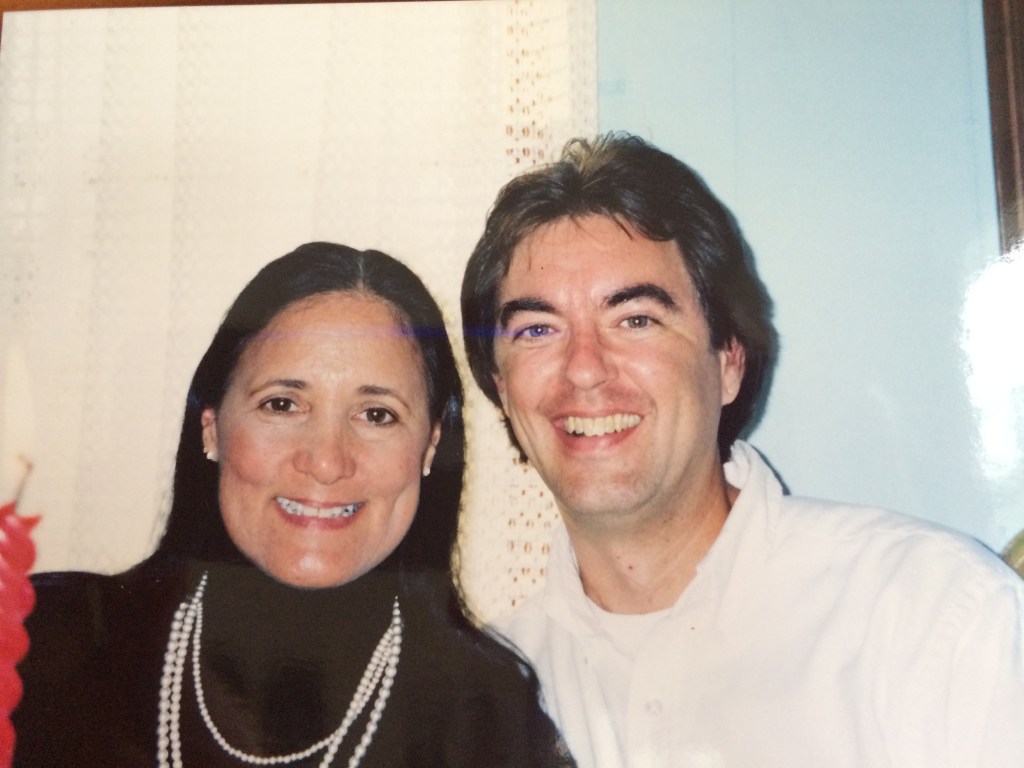
Photo: Thanksgiving some years ago…
Mass readings for Sunday, June 28, 2020
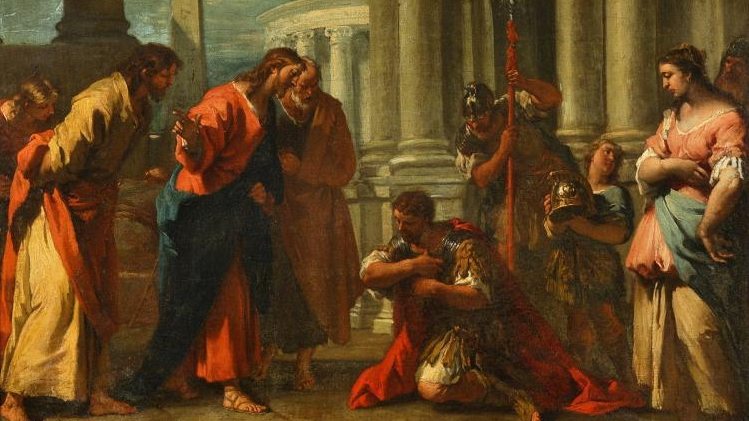
May we too have the faith of the centurion.
The centurion said in reply, “Lord, I am not worthy to have you enter under my roof; only say the word and my servant will be healed” (Mt 8:8).
After Jesus finishes his Sermon on the Mount, he comes down from the mountain. In the opening of chapter eight, we see two hearts open to God, a leper and a centurion. The centurion may or may not have been a Roman but he certainly was a Gentile. He, a member of an occupying army, was aware of the animosity many Jews felt toward him. Yet he, like the leper, approached Jesus.
Jesus saw in the leper, not revulsion, and in the centurion, not an enemy, but first and foremost, human beings in need, two persons with faith and belief. Reading on we see that Jesus also heals the mother-in-law of Peter and many who are possessed. Jesus reached out to them with a simple touch of his hand, with his healing words and in so doing brought to each of them the healing they sought. Jesus shows us that the kingdom of his Father is open to all who have faith and believe.
We are all wounded by sin and in need of the healing word and touch of Jesus in our lives. Jesus, who is already present to us, is also waiting for us to ask, and open our hearts and minds to him so to be healed, to be transformed by his love and mercy. We, like the centurion, can approach Jesus on behalf of others who are also in need of healing. Let us resist the temptation to judge anyone as unworthy to receive the grace, love, and mercy of Jesus but be willing to see the need of others, be willing to be present, and be of some assistance.
As God brings people into our lives, let us receive them as Jesus did: as fellow human beings, first and foremost, created in his image and likeness, regardless of another’s religious, ethnic, racial, political, social, gender, national, economic, refugee, immigrant, or enemy status. May we be healed from any revulsion, prejudice, or defining others with labels and instead be willing to allow Jesus to reach out through us to share his healing word or extend his healing touch to one another.
Painting: Sebastiano Ricci, 16th century Italy
Link for the Mass for Saturday, June 27, 2020

Are we willing to bring the light into our present darkness?
“Lord, if you wish, you can make me clean.” He stretched out his hand, touched him, and said, “I will do it. Be made clean” (Mt 8:2-3).
Jesus in reaching out and touching the leper would be considered ritually unclean for having touched the leper. Unless in that coming close and touching the leper he was healed.
There are many ways in which we consider others to be unclean and so deemed to keep at arm’s length. Doing so cuts us off from entering into a relationship with one another. We then begin to believe the stirring of thoughts swirling in our minds about the other person instead of getting to know another human being with their imperfections yes, but also their gifts.
Jesus was and continues to be willing to come close, to touch us and be a part of our lives intimately, to hear our stories, our fears, our struggles, and our pain. He also celebrates with us when we overcome, when we repent, when we love. When we are willing to do the same with each other, willing to close the gap and come close, to be a conduit of accompaniment and healing, we will begin to see healing in our families, communities, and beyond. Will we do it?
Photo: Evening walk a few nights ago
Link for the Mass readings for Friday, June 26, 2020

Receive the love of Jesus and pass it on.
“Everyone who listens to these words of mine and acts on them will be like a wise man who built his house on rock” (Mt 7:24).
Jesus speaks to us, in the Gospels, in the silence of our hearts, through our conscience, through the words of others, in our daily activities, and through creation which has been loved into existence through collaboration with his Father and the Holy Spirit.
We can be unaware of the words he speaks among us, we can hear his words but not listen, hear his words but ignore them, listen but not act upon them, or we can do with his words as Jesus encourages us to do. We can listen to the words of Jesus and put them into action. We can hear and let them come in through our minds and enter our hearts, where we can then be transformed.
Jesus became one with us so that we can become one with him. Not one with us, so that we can know about Jesus. Not one with us, so that we can say that we prophesy, cast out demons, do mighty works, cite Bible chapter and verse to show our knowledge or justify our behavior in his name. One with us so that we can become one with him.
Jesus meets us on our level and leads us up to his. Jesus has been doing just that in his Sermon on the Mount which we have been reflecting upon these past few weeks. If you are just coming in today or need a refresher, this gathering of teachings began in chapter five of Matthew and takes us up to today with chapter seven. Jesus presented us with the Beatitudes, that we are called to be salt and light, he built on the law and the prophets by giving us the six antitheses (You have heard it said, but I say to you…), he taught us to pray the Our Father, that we are to depend and place our trust in God and not the things of this world, we are to refrain from judging others, we are not to cast our pearls before swine, we are to do to others as we would have them do to us, we are to seek to enter through the narrow gate, and to be aware of false prophets.
These are but just some of the teachings of Jesus that we are to put into action if our house is to be built on solid rock. May we go back through chapters five, six, and seven of Matthew and see which teaching Jesus is leading us to ponder, meditate upon, and put into action.
If this list is a bit overwhelming, let us start with St Irenaeus who learned from St Polycarp, who learned from the beloved Apostle John who learned from Jesus. St Irenaeus taught that Jesus became one with us so that we can become one with him. Jesus entered our humanity so that we can participate in his divinity. Jesus invites us to be in relationship with him, to know him, so that we can know his Father, so that we can be one as Jesus and the Father is one. Jesus loves us as we are, and for who we are, right now at this very moment. Jesus loves us more than we can ever imagine. May we receive his love as we would receive a loving embrace, stay with it, savor it, so to return his love, by loving each other as he has loved us.
Photo: Building a firm foundation on the rock of Jesus!
Link for the Mass reading for Thursday, June 25, 2020
Identity helps us to belong, integrity gives our identity authenticity.
“No. He will be called John” (Lk 1:60).
With these simple words, three inter-related points arise. First, Elizabeth is beginning to shift the momentum of original sin. Eve was tempted by the serpent to eat of the fruit that God had told her and Adam not to eat of, yet she did. Adam did not support her step in during her dialogue but remained silent in the face of the pressure placed upon Eve. Both of them slipped into sin, by not following the will of God.
At the time of the birth of Elizabeth’s son, there was even more cause for celebration, for Elizabeth was past child-bearing years. The day had come to have the boy circumcised and named, her relatives and neighbors had gathered around with great excitement and there appeared to be a unanimous decision to name the boy after his father. Elizabeth did not, like Eve, cave to the pressure and temptation. Unlike Adam who lost his voice at the time he needed to speak up, Zechariah found his voice, had Elizabeth’s back and followed the will of God. Both Elizabeth and Zechariah knew what God wanted them to do and were faithful to follow through.
The second point is already alluded to in the first, and that is how Elizabeth and Zechariah were faithful to God amidst the familial and social pressure placed on them. Some may be removed by such familial pressure when naming a child, but for this time, Elizabeth despite the pressure held her ground and stood firm that the boy would be named John. Ignoring her, the people deferred to Zechariah, the boy’s father, thinking he would have more sense, but he, ignoring the paternal cultural pressure, supported Elizabeth. The point here is not so much the name, but the following of the will of God in the face of pressure to do the opposite.
This brings us to the third point and that is the maturation in moving from identity to integrity. Culture and traditions are not sacred, but God is. Elizabeth and Zechariah faced a lot of familial and social pressure to conform, yet they chose to be true to God, to be true to themselves, and they chose integrity over their identity.
The very simple account of Elizabeth and Zechariah naming their child John in opposition to the pressure offers for us a way to counteract the rising tide of polarization and conflicts that we face in our own country today. Identity provides safety, support, and security. It fuels one of our deepest pangs of hunger and that is to belong, to be a part of something bigger than ourselves. We can find our identity in family, friendships, our religious traditions, culture, political affiliations, common interests, clubs, activities, and hobbies. But our identity, which provides us with security, can also be a trap.
We want to belong so much, the drive is so strong, that we may have made decisions, acted in ways, and supported others, that go against who we are just so we can belong. We may have known what God wants from us, heard the whispers of his voice in our conscience, yet were pulled by the louder voices of our group. We are sometimes so ingrained by our identity that we are being strangled and suffocated by it.
In today’s Gospel account, Elizabeth and Zechariah were true to the will of God and won over those placing pressure on them by their family and neighbors. More often though, being a person of integrity does not go so well. Their own son, who would grow up to be John the Baptist, would lose his life by speaking truth to power.
John would also show his integrity when he said, “I must decrease and he must increase” (cf. John 3:30). John was talking about Jesus who embodies the moral courage that we all need today. Though more than just a model of a life well-lived, more than just a word on the page, Jesus is the Word of God. Jesus is present to us now, to guide and lead us, to empower us with the same love that he embodies, such that when we invite him into our lives, we too can be transformed to live a life of truth, moral courage, and integrity.
Becoming less, like John the Baptist, and allowing Jesus to work through us, we can act and speak up when there are those that are being belittled, demeaned, and/or dehumanized, no matter who it is that is doing so. We are called to transcend the ranks of identity and rise to the heights of integrity, even and especially when it means standing up to those in our “group.” Protecting police officers, priests, and/or political leaders who have abused their power at the expense of others for the sake of protecting the identity of the institution not only adds further abuse but weakens the institution.
Being people of integrity, we are to speak truth to power and seek to protect those who might be at risk and/or those who have been or are being abused, oppressed, and or prevented access. This provides the first necessary step in providing support for those needing healing, allows for the planning and enacting of the necessary reforms to reduce the risk of further abuse and create more equitable access. All of which will also strengthen the integrity of the institutions that are in place to empower the very people they serve.
————————————————————————–
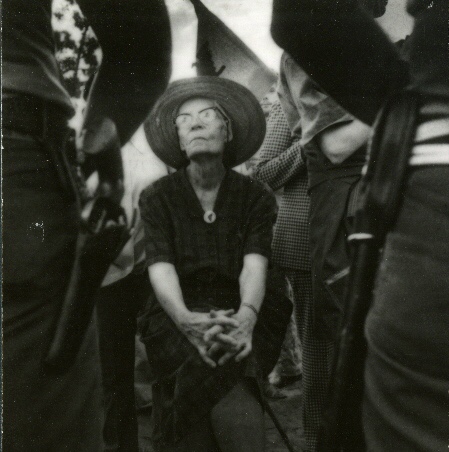
Photo: Dorothy Day speaking with police officers during her time picketing for rights of farmworkers in California in 1973. Credit – Bob Fitch.
Link for the Mass readings for Monday, June 24, 2020

 Spiritual Stepping Stones