
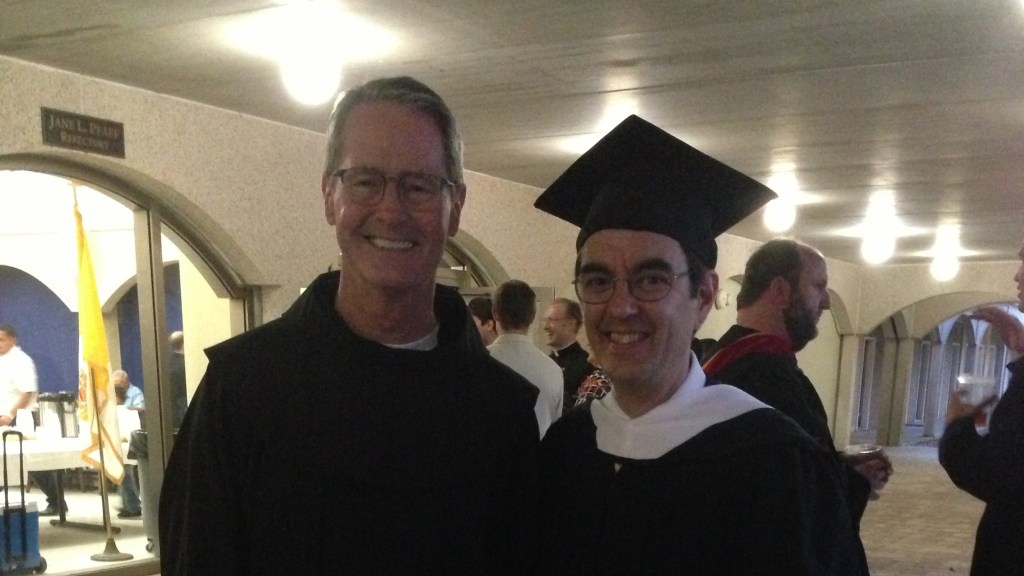
Being new wineskins means letting go of our fears, biases, and prejudices.
“Rather, they pour new wine into fresh wineskins, and both are preserved” (Mt 9:17).
Mark, Matthew, and Luke all record the reference of pouring new wine into fresh wineskins. What Matthew adds is, “and both are preserved.” Luke adds: “[And] no one who has been drinking old wine desires new, for he says, ‘The old is good.’”
The Gospel authors are reflecting the tensions of those who would reject Jesus and those who would follow him and his new way. The new wine is to accept the Gospel, the Good News of the kingdom of God in their midst, and to do so means to change one’s mind and heart. “The tension, and often incompatibility, between the old and the new is part of every religious tradition and attends every change within that tradition. Matthew and Luke wrestled with it and adapted it to their community situation. Contemporary Christians have no less a challenge” (The Gospel of Mark, Donahue, SJ, p. 109). Matthew shared with his community that Jesus is the new Temple, the old had been destroyed in 70 AD. Following him in fact meant that both the old and new covenants would be preserved. Jesus did not come to abolish the law and prophets, but raises what went before him to a higher level.
We are invited to wrestle as well. The Church is called to change, to be transformed by the Living God. Many say the Church needs to change this and that, not realizing that we are the Church, the People of God, the Body of Christ. If the Church is to mature and grow each of us is to embrace transformation, being made anew through the guiding presence of the Holy Spirit. This invitation is a call to let go of those habits, lifestyles, behaviors, mindsets, attachments, and addictions that are weighing us down or worse holding us in bondage and slavery to our sin, keeping us separated from God. Much of the material and finite things we hold onto prevents us from receiving the new life God wants to pour into us.
Jesus has come to set us free from our enslavement to sin by inviting us to try some new wine which consists of contemplating upon and living the message of his teachings and actions as recorded in the Gospels. We do not have to be afraid of the change and transformation Jesus is calling us to experience. As St Irenaeus, the second-century bishop of Lyons is attributed to have written: “The Glory of God is man fully alive!” Jesus is inviting us to live our lives and live them to the full!
To become new wineskins then, we are called to identify and let go of those selfish and sinful inclinations that keep us constricted and rigid. When we love as Jesus loves, we are expanded and open to receive the new wine Jesus wants to pour into us. We are called to go beyond the foundation of our identities that we have found safety and comfort in and become free to be people of integrity. Our identity gives us roots but our integrity gives us wings to fly.
Each time we come to God in stillness, he will reveal to us that which distracts us from going deeper. As we are more and more conformed to Jesus, who we are remains intact as the false self begins to be burned away. We expand and become more of our authentic and true self, when we let go of our biases, prejudices, and fears of being truly who God calls us to be.
Photo: With Fr. Bill Burton, ofm, 2013 graduation from St Vincent de Paul Seminary. Fr. Bill was one of the guides there that helped me to shed some of my old skin, so to better receive the new wine of the Gospel!
Donahue, John R. S.J., and Daniel J. Harrington, S.J. The Gospel of Mark. Vol. 2 of Sacra Pagina, edited by Daniel J. Harrington, S.J. Collegeville, MN: Liturgical Press, 2002.
Parallel Scriptural accounts: See Mark 2:22, Matthew 9:16-17 and Luke 5:37-39
Link for the Mass readings for Saturday, July 4, 2020
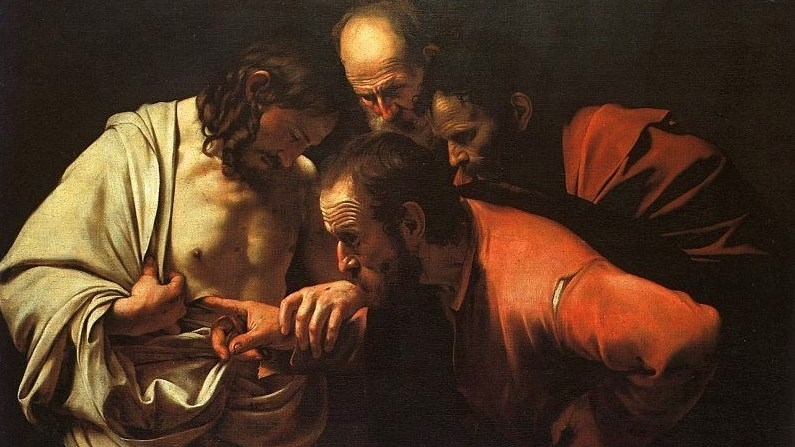
Jesus is calling us to be in relationship with him and one another.
Then Jesus said to Thomas, “Put your finger here and see my hands, and bring your hand and put it into my side, and do not be unbelieving, but believe.” Thomas answered and said to him, “My Lord and my God” (Jn 20:27-28)!
Thomas’ acclamation “My Lord and my God!” came from his touching the wounds of Jesus. Jesus, who had risen from the dead, had conquered death, and yet still bore the wounds of his Passion. This is a profound message to the Apostles, those Jesus sent to proclaim his Gospel, and for us who have been called to follow him today.
The Body of Christ is still wounded by the sin and division of our fallen nature that put him on the Cross. This reality is a reason that many doubt and do not believe today. Many decry, how can a loving God allow such suffering and pain, especially of the innocent? Blaming and scapegoating, or putting blinders on and keeping the messiness of life at arm’s length is not the answer. The path of a disciple, an apostle, is to first say yes to Jesus’ invitation to, “Come and follow me”, and then to allow ourselves to be led by Jesus into our own woundedness, while at the same time, enter into the pain and suffering of others. Immersed in the chaos of life, like Thomas and the other Apostles, we come to touch the wounded side of Jesus, where healing can begin.
Though the temptation is strong to deny, rationalize, or flee from the conflict, challenges, hurt, and pain that we and others are experiencing, we must resist. If we don’t embrace our or other’s trials we will not come to the root cause of them. We touch the wounded Body of Christ, as Thomas did today, when we are willing to touch one another, to be present and accompany those who bear his wounds, those who are vulnerable: the unborn, widows, orphans, those with chronic illness, the dying, refugees, immigrants, hungry, homeless, and those without access to clean water; those who suffer from addiction, poverty, depression, disease, oppression, prejudice, discrimination, dehumanization, racism, sexism, misogyny, unjust immigration policies, incarceration, those on death row, unemployment, underemployment, wage theft, human trafficking, domestic violence, slavery, violence, war, terrorism, and natural disasters. For what we do to the least among us, we do it to Jesus.
We can be easily overwhelmed with the suffering in our country, our world, or the personal challenges before us. Denial or indifference is not the answer. There is an act of balancing that Jesus calls us to participate in as we learn to love God, love others, and love our neighbors as ourselves. The answer is found when we are willing to encounter Jesus and follow his lead. This begins when we are willing to begin or continue to develop a relationship with him and one another.
We do not know where Thomas was when the Apostles first encountered Jesus after the Resurrection, but we do know he was not with Jesus. Apart from Jesus, we can do nothing, yet with Jesus, the one who conquered death, all things are possible! When we feel overwhelmed, helpless, or indecisive, we need to return to Jesus and acclaim with Thomas, “My Lord and my God!”
Jesus is present in our midst, just as he was with Thomas and the other Apostles. He invites us to be engaged in our unique way today to make our corner of the world a little better. We can reach out, even in our present state of social distancing and engage person to person, to share a smile – even with our eyes, we can provide a listening ear, make a call, send a text, FaceTime or ZOOM, and/or send a letter. (I received a wonderful card from a parishioner who saw my homily this past Saturday online and reached out.) Being willing to enter into the chaos of another’s life, to hear their story, their experience, and be willing to listen and be present is a good way to begin and sustain a relationship. This is a step that will help us to move in a more reconciliatory direction in our present time.
St. Thomas, on your feast day, pray for us!
Painting: The Incredulity of St Thomas by Caravaggio, 1601-1602
Link for the readings of the Mass for Friday, July 3, 2020
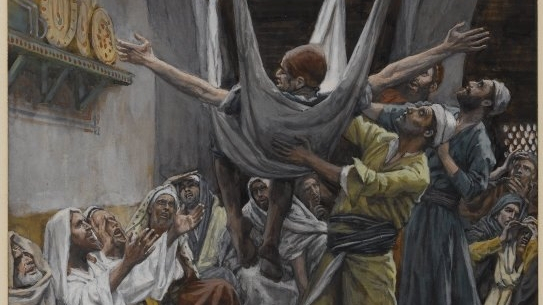
Are we aware and do we care to provide for those in need?
And there people brought to him a paralytic lying on a stretcher. When Jesus saw their faith, he said to the paralytic, “Courage, child, your sins are forgiven” (Mt 9:2).
Matthew’s account of this scene is much simpler than Mark and Luke’s, but the point is the same. The person paralyzed received healing because some people were willing to bear his weight and creatively bring him to Jesus. In neither of the three Gospel accounts do we know who the people are that bring this man to Jesus for healing. Were they family, friends, or neighbors? It does not matter. They were aware of someone in need, they believed Jesus could heal, and they put forth the effort to bring this man to Jesus.
Are we like the people in today’s Gospel; are we aware, do we care? St. Mother Teresa often said that people are “not only hungry for bread – but hungry for love, naked not only for clothing – but naked for human dignity and respect, homeless not only for want of home and bricks, – but homeless because of rejection.” If we are living our faith, indifference to the needs of others is not an option. We are not to rationalize why we ought not to care, or worse give in to our fears and prejudices so to dehumanize and reject others in need.
Are we aware, are we willing to care that there are human beings in need? How is God speaking to our conscience, how is he moving our hearts? If we feel called and moved to support the unborn – good, the refugee or immigrant – good, black people clamoring to be treated with dignity – good. There are so many who are hurting and suffering. Let us not get trapped into criticizing others for reaching out to help in a different way than we feel called. We just need to be honest about where God is leading us and act as the four in our Gospel reading today did; be aware of someone in need, be willing to meet that need, access our personal gifts of creativity, and bring them to Jesus as we are able. By collaborating with Jesus in this way miracles can and still do happen. Structures of inhumanity and injustice can be turned around.
We need to reject the temptation to turn away from another person in need, and instead respect the human dignity of those we encounter. Pope Francis is clear about the dignity of all life. He tweeted in 2013: “It is God who gives life. Let us respect and love human life, especially vulnerable life in a mother’s womb.” Pope Francis shared during Mass on Sunday, January 14, 2018: “Migrants and refugees don’t represent just a problem to be solved, but are brothers and sisters to be welcomed, respected and loved.” On June 3, 2020, Pope Francis said, “My friends, we cannot tolerate or turn a blind eye to racism and exclusion in any form and yet claim to defend the sacredness of every human life”.
The Lord hears the cry of the poor. Do we?
Painting: Healing of the Paralytic – James Tissot
See also Mark 2:1-12, Matthew 9:1-8 and Luke 5:17-26
Link for the Mass readings for Thursday, July 2, 2020
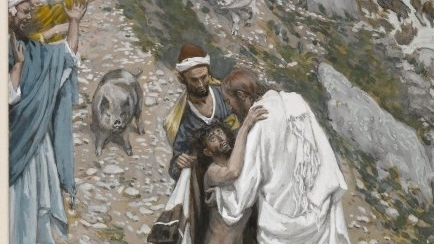
Jesus healed and sent the two demoniacs, as he sends us, to be agents of change.
Thereupon the whole town came out to meet Jesus, and when they saw him they begged him to leave their district (Mt 8:34).
After hearing of the healing of the demoniacs and the herd of swine rushing into the water, the townsfolk came out and begged Jesus to leave. This is also attested to in the Gospel of Mark 5:17. Luke adds that the people asked Jesus to leave because: “they were seized with great fear” (Lk 8:37). Jesus healed two demoniacs in Matthew’s account, one in the Mark and Luke accounts, and the people asked him to leave in all the accounts. Hearing of Jesus’ healing power to expel demons, that the swine ran into the seas, and hearing about his act of mercy and grace, would we too ask Jesus to leave?
Before answering, “No, of course not!” too quickly, how many times have our own judgments, prejudices, and self-centeredness, our own lack of understanding for the bigger picture, our own fear, been chosen over living the Gospel in our own lives? Is our life shaped by the Gospel message of Jesus? Do we wrestle with the challenge of how we are to love our enemies, to be perfect as our heavenly Father is perfect, to turn the other cheek, and to answer in practical, concrete ways, “What you do to the least of these: you do it to me?” Or, if we read or listen to the Gospels at all, do we seek to adjust Jesus’ message, to conform God to our will, to fit the message to our lifestyle, what works for us? Is the radiance of Jesus’ mercy, love and grace too bright for us such that we wince in pain, that we feel it is too much to bear, and we too say, “Go away!”?
In these slower summer days, may we make some time to read, slowly and prayerfully, each of the accounts of the healing of the Gadarene demoniacs in Matthew’s Gospel and the one demoniac in the Mark and Luke accounts. We will also notice with Mark and Luke that after the demoniac who was possessed with demons was healed, the man followed Jesus and asked to follow him. Jesus said to the man: “Go home to your friends, and tell them how much the Lord has done for you, and how he has had mercy on you” (Mark 5:19). The one who was so bound up by possession that he was out of his mind, still had some glimmer of hope that he could be healed and ran up to and prostrated himself before Jesus, was healed and freed. He then proclaimed the Gospel to the whole city.
In our reading and prayer, may we enter into this powerful account and also encounter Jesus. What still enslaves and binds us such that we continue to be separated from God and others? Will we give in to our fear and beg Jesus to leave us, or open our mind, heart, and soul to his healing word and touch? May we, as the man possessed did prostrate ourselves before Jesus, surrender to him, so to experience the healing mercy, love, and forgiveness of Jesus that we too may be free. Free to experience freedom for excellence, free to embrace who we truly are and who the Holy Spirit guides us to be.
Let us pray for each other that Jesus may forgive and free us as he freed the two demoniacs in today’s Gospel account from Matthew. May he free us from our fears, prejudices, tendencies to gossip, belittle, and dehumanize one another, and may we commit to align ourselves with Jesus, so to be more willing to encounter, embrace, accompany, encourage, and love one another. Our country may appear to be coming apart at the seams and getting darker each day, yet we are called to be contemplatives in action.
People of prayer, yes, but prayer leads us to act. Jesus calls us as he did the demoniacs who wanted to follow him. Jesus sent them home to their friends. We are sent to do the same, to be engaged, to share the love and mercy of Jesus, and be his agents of change and reconciliation in our own unique ways.
Painting: James Tissot, The Swine Driven into the Sea
Parallel accounts of today’s Gospel see: Mark 5:1-20, Matthew 8:28-34, Luke 8:26-39
Link for the Mass readings for Wednesday, July 1, 2020

No matter the strength of the storm, Jesus accompanies us.
As Jesus got into a boat, his disciples followed him. Suddenly a violent storm came up on the sea, so that the boat was being swamped by waves; but he was asleep (Mt 8:23-24).
Noah’s ark, as well as the boat in today’s Gospel pericope, has often been a symbol for the Church. The storms may rage without, but those who remain in the boat will be secure. The image of Jesus sleeping can also be a sign of the storms within the boat, within the Church – where it may appear that Jesus is absent.
We are human beings, made in the image and likeness of God, we are good, but we are also fallible and wounded by our sin. We are wounded by the very gift of the free will we have been given. God loves us so much he is willing to risk that we will choose to place other people, places, and things before him. We may often pursue the promises of wealth, fame, honor, and pleasure as substitutes instead of our true and abiding happiness which can only come from God. God does not cause our suffering, but he will allow us to reap the consequences of our choices.
Hopefully, we will learn from our mistakes and grow to realize that we need to remember that God is to be first in all we think, say, and do. Even in our darkest moments, even in the darkest moments of the Church, we need to remember that God has not abandoned us. When we are experiencing the storms in our lives that come from without caused by others or the storms from within caused by our own sinful choices, or anxieties, worries, and fear, Jesus may appear to be distant, he may seem to not even exist. Yet, just as Jesus was calmly sleeping in the boat with the disciples, he was present with them and he is present with us. Once the disciples turned to Jesus and implored his help, Jesus calmed the stormy sea.
Our focus on Jesus through the good times and the bad is the key. Our faith in Jesus grows as our trust and relationship in him grow. We just need to remember to turn to him in all our circumstances in life, to be thankful when all is going well and to seek his assistance when we need his help. This is what St Paul meant by praying unceasingly. Turning to God consistently is to be a regular practice in our daily lives and then when we are in need, we will know he is there.
This is to be true regarding our own mental storms of anxiety, whether we are dealing with conflict in a relationship, \ with some crisis physically, economically, or spiritually, or even while experiencing challenges that go far beyond just ourselves such as this present pandemic and racial unrest, the Church abuse crisis, the inhumanity inflicted upon our brothers and sisters on the border or the violence inflicted upon the Church throughout the world.
We need not even fear death because Jesus has conquered death. Jesus chided his disciples, who feared the worst, as they were tossed about in the boat on the raging sea, for having little faith. He knew they could have stilled the wind as he had done or that God would have helped them to ride the storm out. They just needed to place their focus on God instead of their fear.
In all of these areas and more, even when Jesus may appear to be asleep, or absent, even when he doesn’t answer our questions of, “Why?”, we just need to realize that he is present in our midst. When we do so, even while the waves of our trials and tribulation toss us about, we will be able to experience his peace, that peace that surpasses all understanding. As we deepen our relationship and continue to experience his peace we can then be a healing balm for those who suffer, a voice for the voiceless, and begin to harness the courage to speak truth to power.
———————————————-
Photo by Johannes Plenio from Pexels
Link for the Mass readings for Tuesday, June 30, 2020
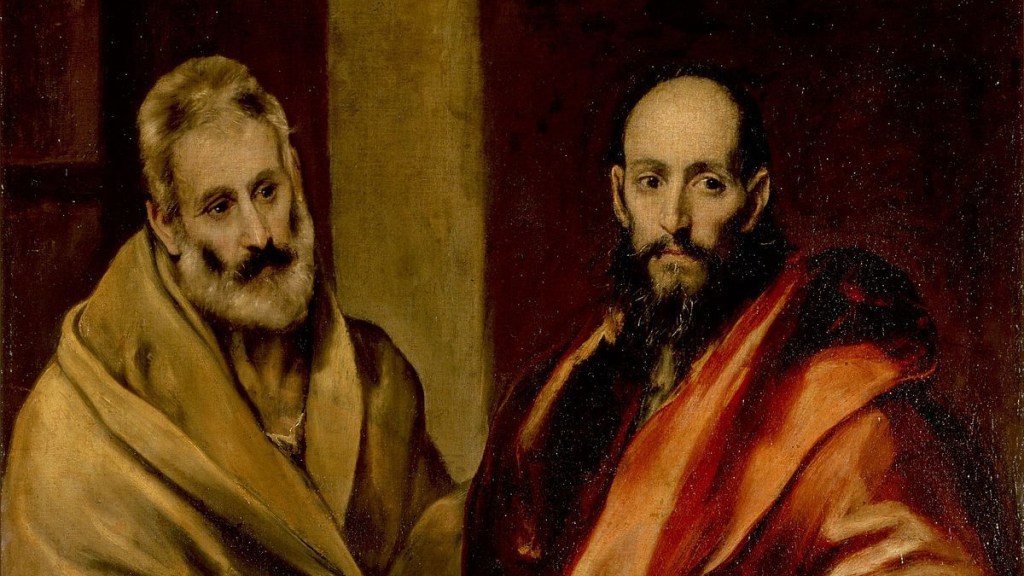
Peter and Paul encountered Jesus, have we?
Jesus said to his Apostles, “But who do you say that I am” (Mt 16:15)
Have we answered the same question that Jesus posed to his apostles for ourselves? Too often we move from this to that, one situation to another, putting out fires and moving from one crisis to another, or we are just seeking to make it through another day.
To be a Christian is not a call to stop living our lives, but it is an invitation to live our lives in, with, and for Jesus. We have been described as a People of the Book, along with Jews and Muslims. This is true, yet, even more so, we are a people of encounter; we encounter the Living Word, the Son of God, Jesus the Christ.
Peter and Paul encountered Jesus in their lives and were changed forever. We can encounter the same Jesus when we slow down enough to pray with the Word proclaimed in the Liturgy or read in personal prayer.
As a very simple example: except for the first Office of the day, in praying the Liturgy of the Hours, the prayer begins, “God come to my assistance, Lord make haste to help me.” I still need to embrace the depth of those words instead of too many times rotely passing through them as I begin my prayers, not really taking in what I am saying!!! How many times do we make the Sign of the Cross without being attentive to the profound act we have just engaged ourselves in?
Through invoking this prayer and making this sacramental gesture, we are inviting the Creator of all that exists to come to be a part of our lives. Each one is also a prayer we may lean on when tempted, stressed, worried or anxious. Each one is an affirmation of a commitment to resist giving in to a mindset of minimalism and fear. All things are possible when we mindfully choose to align ourselves with Jesus and participate in the communion of the Holy Trinity.
Peter and Paul both answered the question that Jesus posed. Peter as recorded in Mt 16:16, said, “You are the Christ, the Son of the living God.” and Paul in Acts 9:20 “proclaimed Jesus in the synagogues, that he is the Son of God.” Let us spend some time praying and meditating on how we will answer Jesus’ question: “Who do you say that I am?” How we answer this question makes a difference as to the kind of Christian we are and will be.
Saints Peter and Paul on this your feast day, pray for us!
Painting of Saints Peter and Paul by El Greco, 16th Century
Link for the Mass readings for Saturday, June 29, 2020
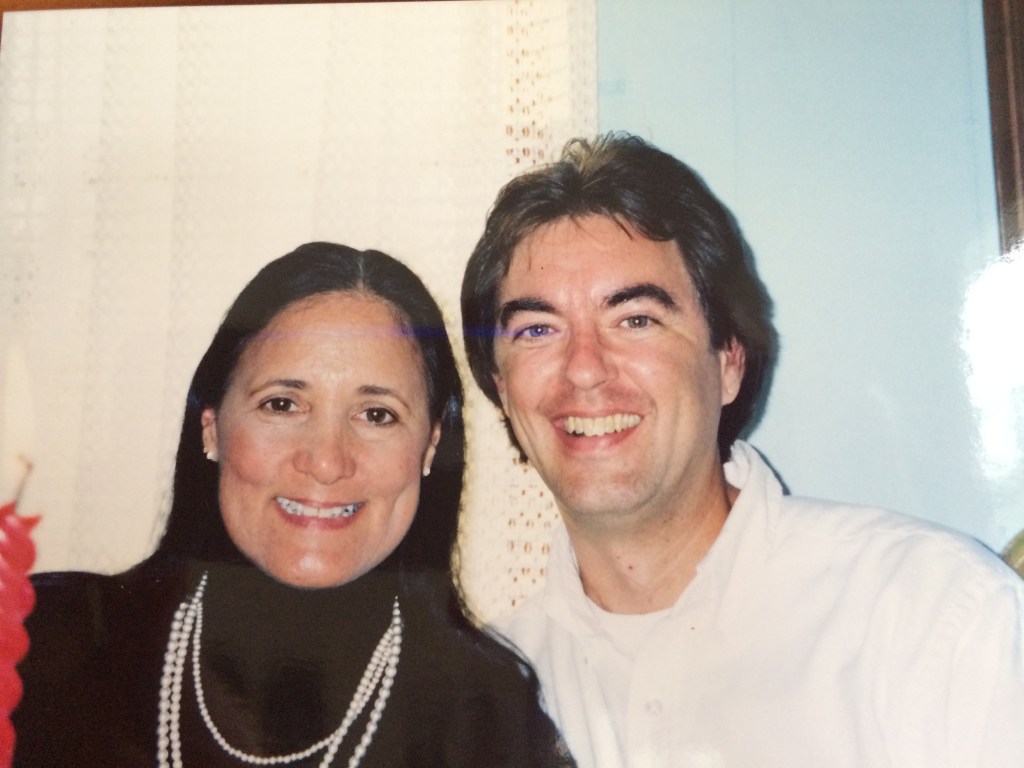
In our present time of uncertainty and unrest, let us commit to loving God and one another as he loves us.
We are continuing to experience times of uncertainty, upheaval, and unrest in our country right now. Our readings give us some guideposts for hope.
In our first reading from the Second Book of Kings, we are introduced to the Shunammite woman and the prophet Elisha. Upon their first meeting, the Shunammite woman invites Elisha to have dinner with her. There is no evidence that they knew each other at that point. She recognized his need after traveling and offered him hospitality. Their time together must have been positive because Elisha continued to visit with this woman and her husband each time he came through the area. Their friendship grew to such a point that she was even willing to have a room built for him to stay. Their relationship began with a simple gesture of empathy and hospitality.
We do not necessarily need to invite a stranger to live with us in our homes, but we can start with some smaller acts of reaching out to one another. When our kids would come home from California to visit, my wife, JoAnn, would take them to Publix to stock up on food for their stay. They were constantly amazed at how many of the workers there knew their mom. The reason for this was that JoAnn took small moments during each visit to interact with them. Initially, she would say hello and ask how they were doing, then slowly get to know a little more about their families and their lives. Instead of rushing through the store and taking the presence of the workers for granted, JoAnn saw real people with real lives and built relationships through small gestures of empathy.
In our Gospel reading, Matthew records Jesus saying to his apostles: “Whoever loves father or mother more than me is not worthy of me, and whoever loves son or daughter more than me is not worthy of me” (Mt 10:37). At first reading these words may seem to lead more to an ending his relationship with his apostles rather than strengthening it. Jesus is making two key points. One, he is restating the Ten Commandments in that our most important relationship, even more than our family, is to be with God. We are to put God first before all things and all people, even family. Second, Jesus is equating himself with God. As we deepen our relationship with Jesus we will grow closer to God and to each other.
To enter the diaconate program, the wife of the applicant must sign that she is in agreement with the process and that goes right up until ordination. Initially, JoAnn was not 100% on board when I was thinking about studying to be a deacon. With the challenges to my time already high because of the demands of my teaching schedule, formation would add more challenges. Yet, we both trusted that this was God’s will and we followed through with formation, to ordination and beyond. There were indeed challenging times, but we continued to keep God first in our lives and worked together, growing not only closer to God and each other but grew in our relationships here at St Peter and Cardinal Newman as well.
And finally, in our second reading, St Paul helps us to understand that our relationships even transcend death. For those of us who have been “baptized into Christ Jesus were baptized into his death” (Romans 6:3). Jesus has conquered death and he has risen and will die no more. This he promises to us as well. Those who have died with Christ shall rise with him. Death does not have the final say, Jesus does.
This Thursday will be 10 months since JoAnn died. We shared twenty-three wonderful years together. She taught me how to be less selfish, less contemptuous and judgmental, she taught me how to come out of myself and how to love. In the first few months after her passing, I was having trouble recalling memories of our time together and began to fear that I would forget her. Over the last month I realized that the sorrow and grief of loss was strong and I had been holding on too tightly to who I lost. As I have been healing and beginning to let go of my grip, I have started not only to experience some spontaneous memories like her laugh while doing the dishes one night, but feeling brief moments of her being close.
JoAnn had often tried to think of a business idea that we could all do as a family. Our youngest daughter, Christy, has been pursuing a creative, business idea over the past month and when I was thinking about that the other day while mowing the lawn, I felt this deep feeling of joy and warmth in my chest, and tears welled up in my eyes. I knew it was JoAnn’s joy that Christy was carrying on with her dream and adopting JoAnn’s entrepreneurial spirit.
So yes, we are continuing to experience times of uncertainty, upheaval, and unrest. Yet, we do not have to be defined by our external circumstances no matter how dire. What was true during the time of our biblical readings is still true for us today. God calls us to be in a relationship with him and each other, and the more we attend to both, the better we will weather the storms and the more joyful we will be even as we go through these trials together.
We can’t change the country and the world, but we can change ourselves. We can reach out to others in our realm of influence. Wherever and whenever we interact with people, we can make an extra effort to be understanding, kind, respectful, and hospitable. We can resist taking each other for granted and be more present and listen to one another and our stories. We can choose to see each other as God sees us as one human family.
Then as we begin to change, and those around us change that can begin to ripple out to begin to bring healing and reconciliation to the many who need to experience it. Life is short, even in the best of circumstances. God loves us more than we can ever imagine with a love that even transcends death. Let us make a deeper commitment today to love God and one another as God loves us.
Photo: Thanksgiving some years ago…
Mass readings for Sunday, June 28, 2020
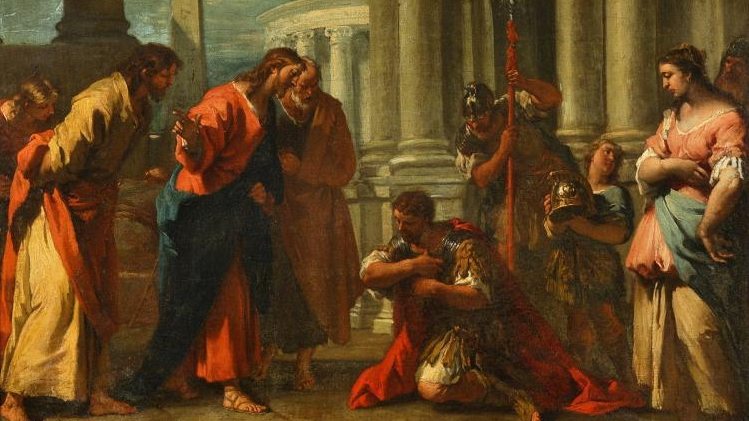
May we too have the faith of the centurion.
The centurion said in reply, “Lord, I am not worthy to have you enter under my roof; only say the word and my servant will be healed” (Mt 8:8).
After Jesus finishes his Sermon on the Mount, he comes down from the mountain. In the opening of chapter eight, we see two hearts open to God, a leper and a centurion. The centurion may or may not have been a Roman but he certainly was a Gentile. He, a member of an occupying army, was aware of the animosity many Jews felt toward him. Yet he, like the leper, approached Jesus.
Jesus saw in the leper, not revulsion, and in the centurion, not an enemy, but first and foremost, human beings in need, two persons with faith and belief. Reading on we see that Jesus also heals the mother-in-law of Peter and many who are possessed. Jesus reached out to them with a simple touch of his hand, with his healing words and in so doing brought to each of them the healing they sought. Jesus shows us that the kingdom of his Father is open to all who have faith and believe.
We are all wounded by sin and in need of the healing word and touch of Jesus in our lives. Jesus, who is already present to us, is also waiting for us to ask, and open our hearts and minds to him so to be healed, to be transformed by his love and mercy. We, like the centurion, can approach Jesus on behalf of others who are also in need of healing. Let us resist the temptation to judge anyone as unworthy to receive the grace, love, and mercy of Jesus but be willing to see the need of others, be willing to be present, and be of some assistance.
As God brings people into our lives, let us receive them as Jesus did: as fellow human beings, first and foremost, created in his image and likeness, regardless of another’s religious, ethnic, racial, political, social, gender, national, economic, refugee, immigrant, or enemy status. May we be healed from any revulsion, prejudice, or defining others with labels and instead be willing to allow Jesus to reach out through us to share his healing word or extend his healing touch to one another.
Painting: Sebastiano Ricci, 16th century Italy
Link for the Mass for Saturday, June 27, 2020

 Spiritual Stepping Stones