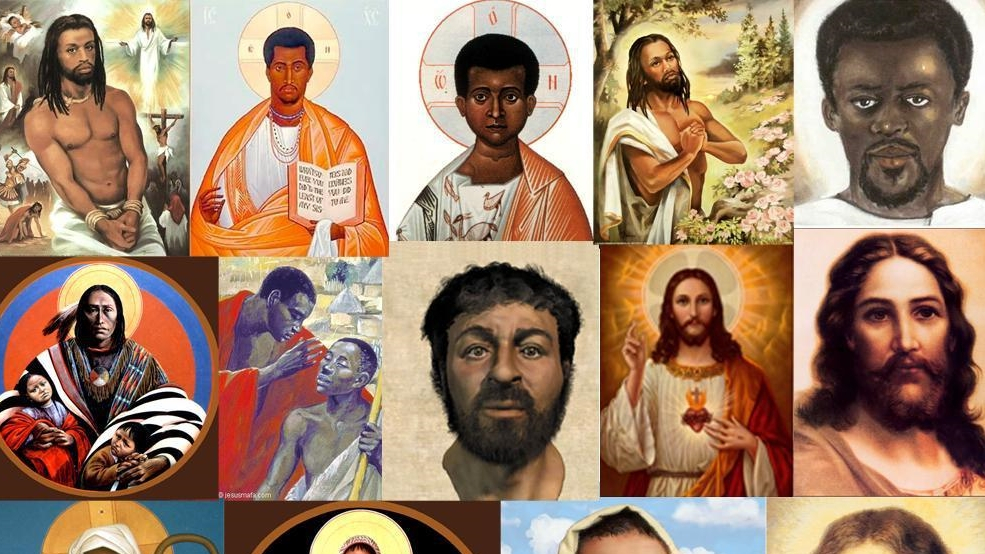
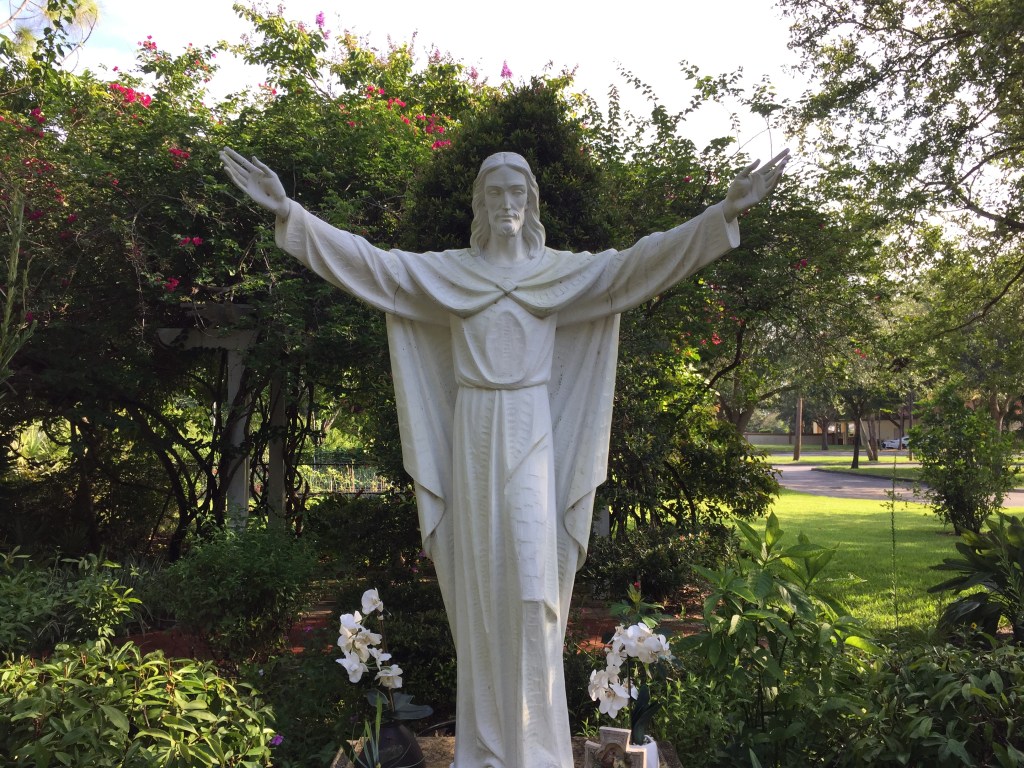
Jesus’ arms are wide open to receive us in the midst of our brokenness, fears, pain, and sin.
“Jesus began to reproach the towns where most of his mighty deeds had been done, since they had not repented.” (Mt 11:20).
Anyone who encounters Jesus is invited to change. Jesus shines the light of his love and mercy into the darkness of our own fallen nature, where we are wounded, sinful, and broken. He invites us to repentance, healing, and reconciliation. He invites us to actualize who we truly are. A wonderful invitation, but why would we turn away? The darkness may be too dark and the light may be too bright.
Facing our own darkness and brokenness is not easy and can be frightening as well as intimidating. That is why we are so vulnerable to temptations, distractions, and diversions. We are not able to sit still because we want to keep moving so as not to face our fear and pain, nor let go of our false senses of security, control, and the glitter of apparent goods. We also may not be able to accept the fullness of our goodness, of who God calls us to be, and the realization of who we really are.
Jesus invites us to stop, to breathe, to enter into his stillness and silence where we can hear the word of his Father and experience the love of the Holy Spirit. In this experience of silence, we come to encounter the choice to change our hearts and minds, to repent: to turn away from that which keeps us from growing closer in our relationship with God and becoming more fully alive.
God loves us more than we can ever mess up, more than we can ever imagine, and he does not define us by our worst mistakes. Jesus’ arms are wide open to receive us in the midst of our brokenness, fears, pain, and sin, but we must be willing to stop running and be still long enough to experience and feel his forgiving, loving, and healing embrace. At the same time, we need to be willing to accept who we truly are and called to be apart from our false sense of self. We are often too self-critical and judgmental.
As we begin to accept ourselves and become more comfortable in our own skins, we can be more understanding and supportive of others. Jesus invites us to participate in the same mission that he first announced when he began his public ministry: “This is the time of fulfillment. The kingdom of God is at hand. Repent, and believe in the Gospel” (Mark 1:15).
Photo: Praying in the Rosary Garden at St Peter after morning Mass. Each day is a new opportunity to begin again with Jesus.
Link for the Mass readings for Tuesday, July 14, 2020

May the light of Christ be our guide in our troubled times.
“Do not think that I have come to bring peace upon the earth. I have come to bring not peace but the sword” (Mt 10:34).
Words to live by from the King of Peace. The reality of this statement is the reality of his mission. Jesus entered the lives of individuals. Some said yes to following him and some said no; some saying yes and no within the same family. The image of the sword represents how sharp and stark this choice could cut. If you do not think that is true, just look at the polarization in our country right now. The cut between democrat and republican bleeds quite deep right now.
During the time of Jesus and for most within the first generation of believers, there was not a luke-warm choice. You were either for Jesus or against Jesus. Unfortunately, today, for too many, the Gospel is being shaped more by politics than the Gospel shaping politics. To live as disciples of Jesus and to actively engage in living out the teachings of the Gospel, it is more important that we follow Jesus, putting him first before any politician or political party. The platforms of democrats, independents, libertarians, and republicans are all deficient in fully following the teachings of Jesus.
We who have chosen to follow Jesus need to speak truth to the issues and hold leaders accountable on all sides. Our starting point for any issue needs to be respecting, first and foremost, the dignity of the person from the moment of conception and everywhere in between until natural death as well as promoting a healthy stewardship of God’s creation. In that dialogue, dialogue not a monologue, we need to respect those to whom we share our views and be willing to also listen in turn. In actuality, listening first and more often is a good posture to assume. We can and will disagree, but we need to resist devolving into demonizing one another.
There are those who promote a right to choose, to choose to take the life of their own unborn, there are those who support taking children away from their parents for seeking asylum and weeks and months later still not returning them, and those refusing to welcome the refugee and the migrant fleeing from dire situations to discourage people coming into this country. There are those who say we can’t pray in our schools, while others say we can’t take a knee to protest the disproportionate unjust killings of people of color by our law enforcement agencies. Mass murders, including the death of students in our schools as well as the daily violence in our cities abound. The addiction rate of our youth in many rural and urban areas has reached epidemic proportions with little concrete help and support, while equal access to education, jobs, and health care is woefully unbalanced. Some say Black lives matter, while others say all lives matter. Some say wear masks, while others refuse to do so.
When Jesus said, “I have come to bring not peace but the sword” (Mt 10:34), he meant that we are not to settle for a false peace of appeasement to get along and water down the Gospel message. We must wield his sword, which is the Word of God, that speaks truth to power. When seeking to counteract a culture of death to build a culture of life, we must resist making political party affiliations and leaders into our idols and we must resist the urge to give in to our fears and prejudices. We must be willing to sit down and speak and listen to one another. We must share and listen to our experiences and our stories.
We must refuse to contribute to the dehumanization and demonization of others, nor are we to allow ourselves to fall into hopelessness, indifference, and/or despair. Instead, we are to be people of hope, mercy, and love in each and every encounter such that we promote a consistent ethic of life. The Word of God is to be the guiding reality in our time and generation and will be so when we immerse ourselves in the teachings of Jesus, apply them to our lives, speak the truth of the Gospel, pray for all of our leaders, for one another, and invite the Holy Spirit to give us the ears to hear, the words to speak, and the actions to engage in. Our starting point for each of the issues before us in our moment and time is to be: “Whatever you did for one of these least brothers of mine, you did for me” (Mt 25:40).
In following Jesus in these ways, and putting into practice the words of the Prophet Isaiah by ceasing to do evil, learning to do good, and making justice our aim (cf. Isaiah 1:15-17), we will cause disruption and face conflict but if we remain in the word of Jesus, when we respect each other as human beings, when we really listen to and are present to one another, we will begin to see that we are brothers and sisters, fellow human beings, and we will begin to move toward the reconciliation and healing our country is so desperately in need of.
Photo: Sunrise at St Peter Catholic Church. As the sun rises each day, may Jesus, the Son of God, rise in our hearts to be our guide.
Link for the Mass readings for Monday, July 13, 2020
God sows his seeds of love through those people and experiences he allows in our lives.
We are living in what appears to be constant turmoil. I don’t need to share a list of the hardships we are going through as they are all pretty apparent and many of us also have our own unique struggles that we are wading through. A few people have said to me that the world may be coming to an end or that we are in the end times.
This same question of the end times even came up with the disciples. They asked Jesus when that day would come and Jesus said that only the Father knows the time or the hour (cf. Mt 24:36). I believe Jesus was saying then as he is saying to us now, that is the wrong question to be asking as a disciple. Spending time speculating about the end of the world is not to be our focus.
St Paul also chimes in when he writes to the Church in Rome, “Brothers and sisters: I consider that the sufferings of this present time are as nothing compared with the glory to be revealed for us” (Rom 8:18). From Paul to this day, each generation has had to face its own trials and tribulations. There is hope in that this life is not all that there is, but that does not mean we just indifferently endure and trudge through this life until the end.
There is a powerful scene in the movie, The Lord of the Rings, where one of the main characters, Frodo, a halfling, is speaking with Gandalf the wizard. Frodo was feeling overwhelmed with the task that he had been entrusted with which was to destroy a great ring of power. He turned to Gandalf and said: “I wish the Ring had never come to me. I wish none of this had happened.” To which Gandalf replied, “So do all who live to see such times but that is not for them to decide. All we have to decide is what to do with the time that is given to us.”
The Lord of the Rings was written by JRR Tolkien who personally witnessed the atrocities of the First World War. If you are looking for a good book or trilogy to read, I would highly recommend it. It is not only a powerful parable of hope, courage, and transformation, it is deeply Christological parable.
All of our readings today as well as what I have pointed out so far are interconnected with the principle that God works in small ways to affect and bring about change. No matter the time or season, his word does not come back void. This change is not just about some abstract ideal. What God offers each one of us is personal transformation. This comes forth rather powerfully in the Parable of the Sower.
The question Jesus poses is, “Do we have the eyes to see and the ears to hear when he comes close?”
There are happenings or incidences, I like to call them God-incidences, where Jesus is present and active in our lives, where he draws close to us each day. He is constantly being sown into our being through our interactions with one another and our experiences. We are invited to receive him, allow him to take root in our lives, and we are to share the fruit of his love as a result of our growing relationship with him.
Let me give you a few examples from my own life of seeds sown, of God-incidents, of Jesus drawing close.
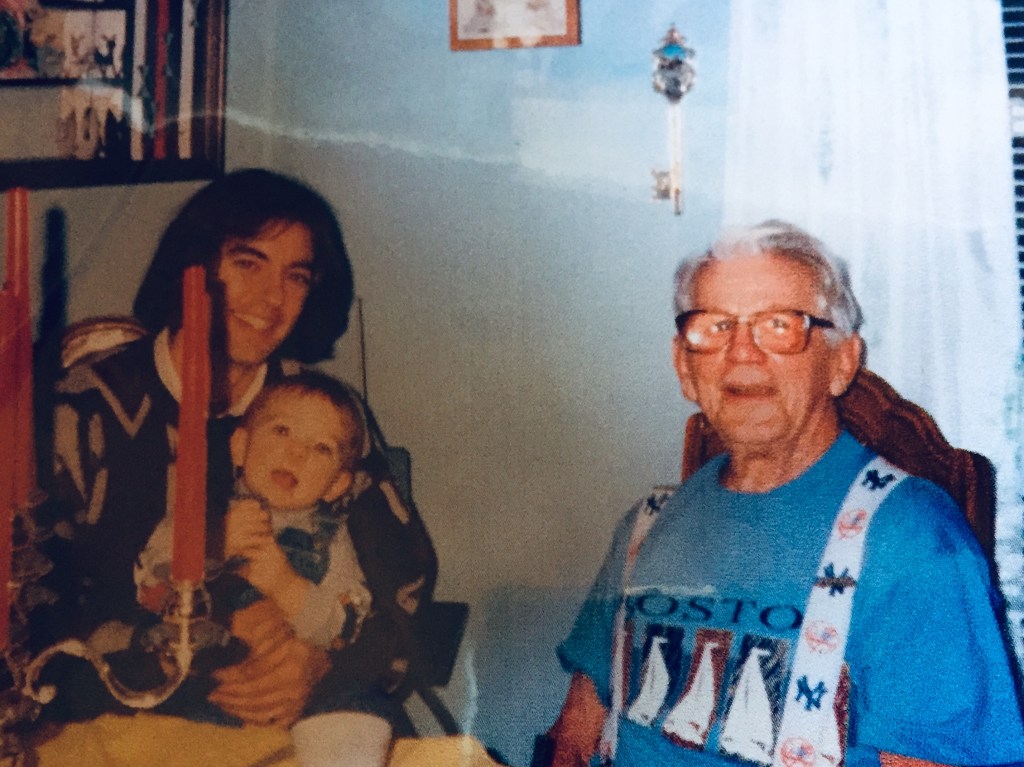
Growing up we would often share holidays with my mother’s parents. As we settled in around the table we would continue to visit as the last of the food was placed on the table. My grandmother would sit down, and if the conversation went on a little longer, she would say something along the lines of, “Ok old man, let’s go.” My grandfather would say in a mock wounded way, “Snucksie, I’m talking.” She would give him the look and then he would make the sign of the cross and pray the Our Father. Sometimes he read a short prayer from a little devotional. My grandfather also encouraged me to take time to be still and quiet and also passed on to me his love of books and reading.
Each of these were seeds that found good soil in my heart and mind. They impressed me and moved me deeply and I believe these were times when Jesus drew close. If we allow ourselves to recall, we can look back over the past years of our lives and see where Jesus has drawn close through the people and experiences he has allowed to happen in our lives.
We are dealing with a lot right now. Even so, I learned from my wife, JoAnn, that life is short and we cannot take the time we have for granted, nor ought we waste time or expend energy in ways that are not helping us to be who God is calling us to be. We can be better than we are and that starts with ourselves and our willingness to be led not by our egos, but by Jesus.
I invite you as my grandfather invited me to spend some time in silence and to be still each day, to allow God to speak to us in the silence of our hearts. Let go of the worries, the anxieties, the false promises, the lures, and half-truths, allow your hearts and minds to soften. Allow the seed of God’s Word, Jesus, to find root in your life. Allow the Holy Spirit to nourish you with his love.
Even in these troubling times, we are not to be strangled by the growing uncertainties, divisions, and even expressions of inhumanity. Instead, we are to till the soil of our hearts and minds, remove the stones and weeds, thereby preparing rich soil that is open to receiving the seeds of God’s love. In this way, we will produce the rich fruit of his love so to empower and lift up those in our midst.
It is our choice regarding which soil we want to have. As Gandalf said to Frodo, “All we have to decide is what to do with the time that is given to us.”
Photo: My grandfather, nephew Nick and me
Link for the Mass readings for Sunday, July 12, 2020
Becoming like Jesus, we become more loving.
Jesus said to his Apostles: “No disciple is above his teacher, no slave above his master. It is enough for the disciple that he become like his teacher, for the slave that he become like his master (Mt 10:24-25).
Following the teachings and guidance of Jesus was hard for his apostles and disciples then and it is for us now. To live as authentic disciples, we need to learn and put his teachings into practice. That means more than reading some of his teachings: love God with your whole heart, mind, and soul and your neighbor as yourself, turn the other cheek, and what you do to the least of my brothers, you did it to me, and acknowledging, that, “That is some good stuff!” Then just moving on to the next thing on the to-do list.
Living as a disciple also happens in a public way, which means public scrutiny. One thing we all have in common as human beings is that we want to belong, to fit in, and to be a part of. We risk rejection and ridicule by following Jesus and living as his disciple because we run up against our own fallen nature and the fallen nature of others. Jesus said he would be sending us as sheep among wolves and in today’s reading, he announces that we are not to be afraid of those who kill the body. Not exactly the kind of encouragement many of us look for.
Yet, Jesus affirms more than once in today’s Gospel that we are not to be afraid. He is the most important relationship we will develop. He cares for us, just as he cares for the sparrows, but even more. He knows us by name and we are his, we belong to him. God, our loving Father, has known us not only before we were born, but before all creation began. We are not alone. As we risk, grow in confidence, and begin to live our life in alignment, in relationship with Jesus, we begin to become unified with him so to feel a joy and a fulfillment that is unmatched.
One of the keys to living the Christian life is understanding that it is more than a philosophy, a set of teachings, or a theology. Being a Christian means building our relationship with a person such that we become unified, one with him. Jesus is that person, and turning to him, through our ups and downs, and in risking to share our stories of faith with others, we invite others to join us, because as we develop our relationship with him, we also are to build relationships with others. Some will decline, some will sneer, some will be outright hostile, and yet some will say yes.
What is important is that we stay true to Jesus and follow his lead, then we will be truer to ourselves and who we have been created to be. In being willing to share our faith journey with others, in bringing Jesus to others that he may minister and be present through us, we come to experience the fulfillment and joy of the relationship with him that we have been created for.
As we become more unified with Jesus, we will experience deeper and fuller relationships because we are less turned in upon ourselves and we will begin to be more present, patient with, and open to giving of ourselves to others. We will also experience the wonder and connectedness to God’s creation in a deeper way because we begin to not only see the footprints of God in the beauty of his creation, but we will see the natural world and each other through his eyes.
In “becoming like the teacher” we are not just modeling his teachings, we are becoming deified, we are becoming one with God while at the same time becoming more authentically ourselves through our participation in the life of Jesus through the love of the Holy Spirit. Following Jesus will not mean we will gain all the answers to life, but it does mean Jesus will be present with us as we journey through all of the ups and downs that we experience. I still have no answer from God as to how JoAnn was struck with or why JoAnn died from pancreatic cancer, but we both experienced the peace of his presence as well as a deeper unity between each other during our final months together.
————————
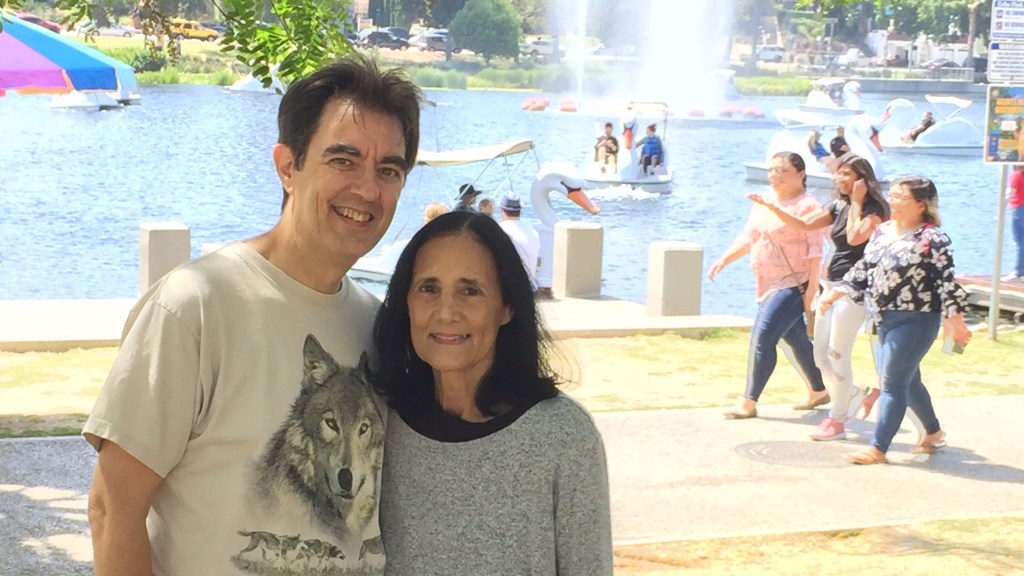
Photo: Enjoying each other and some of God’s creation mid-July last year at Echo Park in Los Angeles.
Link for the Mass readings for Saturday, July 11, 2020
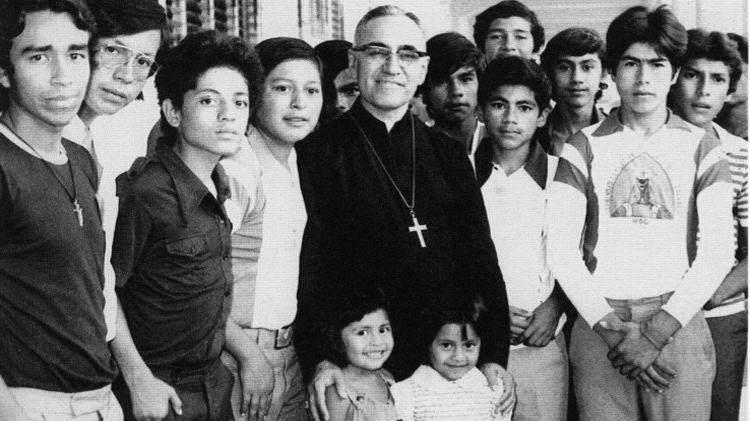
St Oscar Romero: “Each one of you has to be God’s microphone.”
“… you will be led before governors and kings for my sake as a witness before them and the pagans. When they hand you over, do not worry about how you are to speak or what you are to say” (Mt 10:18-19).
Can you feel the anxiety building within his followers? I can! Presented with the possibility of being dragged before family, peers, and local governance can be daunting. The stomach acid begins to swirl and butterflies take flight often before I preach before fellow believers!
When sharing the teachings of Jesus, speaking about and/or defending our faith, anxiety arises because we are risking that the message, and more so, we, will not be received. This is because we are focusing more on our self. When Jesus invites us to speak of our faith he is asking us to express and not to impress. Jesus seeks to expand us beyond our limitations and draw us into the Love of his Trinitarian communion. The Holy Spirit, the Love shared between the Father and the Son, who casts out all fear, accompanies us and will provide what we need to accomplish the task before us, to give us the words to speak, even in the midst of anxiety or fear. We need to learn to trust him. As Mark Twain wrote: “Courage is not the absence of fear. It is acting in spite of it.”
One of the most powerful prayers during the Mass is during the Communion Rite at the end of the Lord’s Prayer: “Deliver us, Lord, we pray from every evil, graciously grant peace in our days, that, by the help of your mercy, we may be always free from sin and SAFE FROM ALL DISTRESS, as we await the blessed hope and the coming of our Savior, Jesus Christ” (Bold letters mine).
Our anxieties and fears often present us with the temptation to be indifferent, indecisive, and/or to look the other way when the dignity of others are infringed upon. The feeling can be suffocating and choking, yet St. Oscar A. Romero (1917-1980), of San Salvador, who was assassinated for publicly confronting the oppressive military in his diocese reminds us in his book, The Violence of Love, that, “There is no dichotomy between man and God’s image. Whoever tortures a human being, whoever abuses a human being, whoever outrages a human being abuses God’s image, and the church takes as its own that cross, that martyrdom.”
When the dignity of any person or people is infringed upon, in any way, we are called to speak up and act on behalf of those that are belittled, demeaned, dehumanized, or even killed. At the first moment that the smallest anxiety, worry or fear sends out its tendrils to grasp at and choke us, we are to seek the strength of the Holy Spirit, and trust that he will give us the words and the courage to speak what he would have us to say and guide us in the actions we are to take. In this way, we are to “be God’s microphone” so to allow the light of Jesus shine through us to expose the darkness of dehumanization, oppression, and fear.
Photo: Archbishop Saint Oscar A. Romero with the youth of San Salvador.
Link for the Mass readings for Friday, July 10, 2020
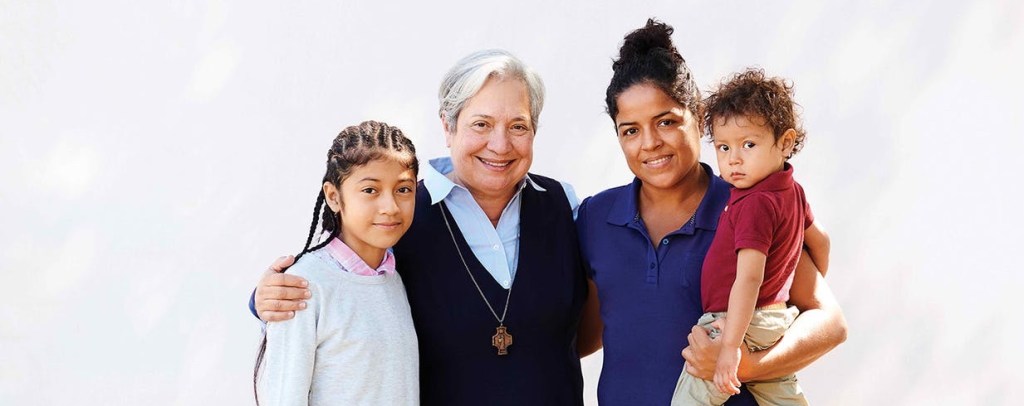
Sr. Norma Pimentel – a model of receiving and giving without cost.
“Without cost you have received; without cost you are to give” (Mt 10:8).
We cannot buy the grace of God, we do not earn our way into the kingdom of heaven. God’s grace and presence are freely given, without cost and without our effort. As with any gift, the joy and fulfillment come from the willingness to receive and open the gift.
God has given us the gift of his Son. We have the choice to say yes or no to receiving him in our life, each and every moment, each and every day. When we say yes to receiving Jesus into our life he does not come to dwell with us for our sake alone, we are invited to freely share him with others. The Second Vatican Council renewed this call for evangelization. We are to, as did the Apostles, his disciples, and each following generation, say what he said, do what he did, and live how he lived, yet in our own unique and individual expression. Just like a bright light that shines through a prism, depending of the unique angle of the cut, a different color will emanate forth. Just so are we to be, reflecting the light of God in our daily experiences with our own unique color.
We say what Jesus said when we use our words to empower, affirm, heal, and to convict but not condemn. We do what Jesus did: when we build relationships and engage in respectful encounters and dialogue with one another. This also happens when through our acts of hospitality, mercy, forgiveness, healing, and being present, we attend to the needs of others, especially the most vulnerable in our midst.
We are to live as Jesus did. We are to be holy ourselves in every aspect of our conduct, as St. Peter wrote, “for it is written, ‘Be holy because I [am] holy’” (cf. 1 Peter 1:15-16). We begin to grow in holiness when we recognize, repent, choose no longer to be governed by, and seek healing from our own fears, pride, selfish and ego-centered ways of living. We grow in holiness when we say yes to receiving the gift of the purifying fire of the Holy Spirit to come into our lives to purge us from our indifference and fears so that we become aflame with love. In this way, we will shift our posture from the stiff arm of keeping others at a distance and instead open our arms wide to embrace each other, to love one another by giving of ourselves without cost.
Sr. Norma Pimentel, M.J., executive director of Catholic Charities of the Rio Grande Valley, provides an example for us today of how we can live a life dedicated to “giving without cost”. She has allowed Jesus to minister through her as an advocate for the voiceless along the Texas/Mexico border. Sister Norma has been working with asylum seekers, immigrants, and refugees since the 1970’s by providing welcome, hospitality, and shelter, showing those seeking aid, that hope is still possible and that Jesus does care for their plight. Sr. Norma reflected recently on the beginning of her vocation by stating that, “During those first years of my religious formation, I quickly learned the importance of living out our faith by how we welcome and protect those that need us, especially the vulnerable stranger in our midst.”
Jesus may or may not be calling us to the border, but he is inviting all of us to be open to receive the gift of the touch of his embrace, to be loved by him. In our willingness to receive the gift of his love, we will begin to see each other with his eyes, to see each other as human beings, created in the image and likeness of his Father. Jesus is calling us to love each other, to draw close as he has done with us, and accompany one another and see the value of human dignity in each person.
We cannot be indifferent to the cries of the vulnerable and the poor. We may be called to work for an end to the abhorrent and inhumane treatment of our brothers and sisters on our southern border, to stand up and speak out against racial injustice in all of its overt and covert forms, to speak up for the unborn, or the many ways human dignity has been diminished. Each of us are to construct our own unique bridges of encounter and accompaniment helping to restore dignity where it has been taken. “Without cost you have received; without cost you are to give” (Mt 10:8).
Photo: Sister Norma with Zuleyka, Lucrecia, and Camilo Lopez, Guatemala taken by Peter Yang, accessed from Texasmonthly.com
Link for the Mass readings for Thursday, July 9, 2020

We are chosen to be bearers of God’s love for one another.
“As you go, make this proclamation: ‘The Kingdom of heaven is at hand” (Mt 10:7).
Empowered by Jesus, the Apostles were sent to proclaim that the Kingdom of heaven is at hand, that the God of all creation is present in our midst, and seeks to restore a relationship with his fallen creatures. The Apostles are to continue Jesus’ saving act of healing, restoring, and reconciling humanity’s relationship with God, through word but more so in and through deed.
Salvation history has been experienced through God’s encounter and interaction with individuals. At the appointed time, his Son continued God’s work of salvation. The Apostles, followed Jesus who devoted himself to people, “accepting them, receiving them into fellowship with him and granting them forgiveness of sins. The power of his affirmation is to be found in his attention to the concrete individual, in particular to the despised, the abused, the sinner, but also involving himself with people in a very personal way… in giving himself away to them” (Gnilka 1997, 111).
We are called to do the same. Empowered by Jesus, we are not to bring about some abstract utopian ideal, but we are sent to enter into the chaos of the lives of real, concrete individuals in our midst and on the margins in a very personal way. The Gospel is not just for a select few but for everyone. This is just as true in our present moment. We are called to resist feeding our fears, prejudices, and pride, but instead come to a place of contrition, sorrow for the hurt we have caused others, for our actions and omissions, for failing to reach out in love.
Jesus, help us to be more present, accepting, understanding, kind and forgiving and send us to bring your light, love, mercy, and fellowship, to more authentically spread your proclamation: “The Kingdom of heaven is at hand!” Help us in our encounters to be conduits of God’s love when we come together.
Photo: We are called to empower and lift one another up!
Gnilka, Joachim. Jesus of Nazareth: Message and History. Massachusetts: Hendrickson Publishers, 1997.
Link for the Mass readings for Wednesday, July 8, 2020
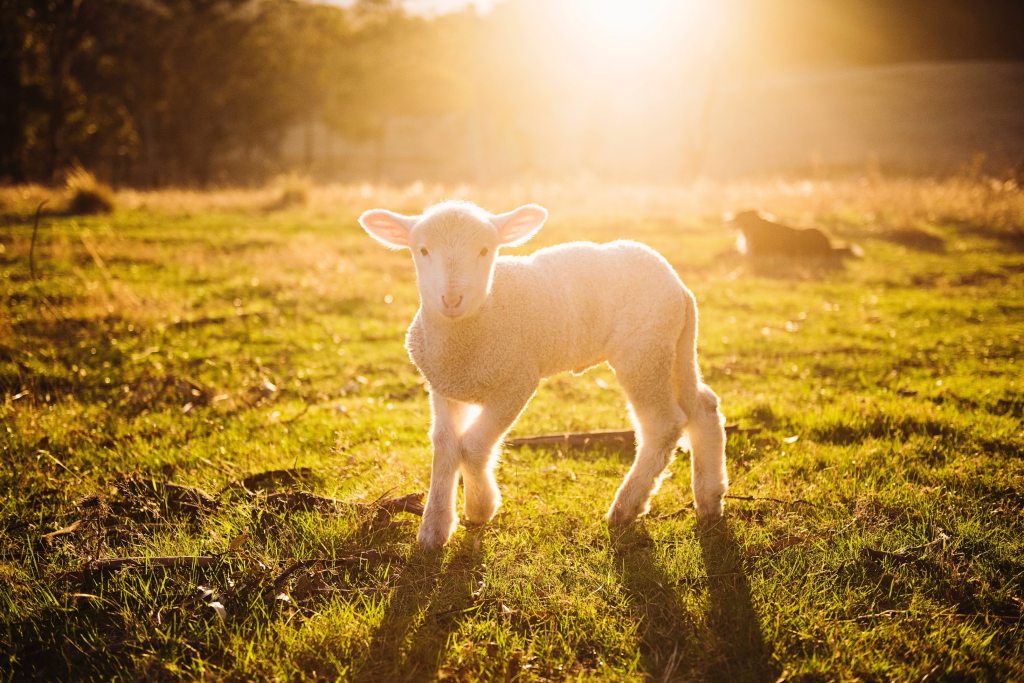
Feeling anxious, overwhelmed, with no direction? Follow the call of the Shepherd.
“At the sight of the crowds, his heart was moved with pity for them because they were troubled and abandoned, like sheep without a shepherd” (Mt 9:36).
There is much that pulls at us for our time and attention. Jesus witnessed the anxieties, struggles, pain, and feelings of being lost regarding those in his midst. Are we so different today? Jesus knows the Father, he knows the joy and fulfillment of what being in a full relationship with him entails. Jesus saw then and sees in us now how lost we are, how easily distracted and diverted we are, how many things we put before our relationship with God, and he “is moved with pity.”
Jesus’ heart goes out to us, he yearns to be one with us, he loves us, but in that very act of love, he risks. He loves us so much, that he is willing to let us choose ourselves, others, or a myriad of other pursuits over him. Jesus invites us to enjoy developing a relationship with him so we can come to know his Father, while at the same time he does not impose himself on us. We are given the whole world to choose from or we can choose him. Who do we put first? Is God a priority in our life? If we find that God is at best an after-thought, or at worst a no thought, instead of getting to know God better, what is it that we are choosing over him?
Jesus invites us, but too often we miss, ignore, or do not follow through on his invitation. Too often we choose other pleasures, distractions, diversions, temptations, and/or apparent goods. With time and experience, we may come to see the emptiness of the lure of these worldly promises, as well as see that our attachments to these often lead to many of our troubles, trials, stresses, and anxieties. We may also get in touch with our feelings of unfulfillment, abandonment, and being alone, because there is only one answer to our innermost longing, and that is God himself.
Fr. Thomas Dubay writes that the “one who seeks delight in God alone finds peace and joy no matter what happens” (Dubay 1989, 154). Even in the midst of all we are going through right now, Jesus offers to lead us, just as he has led his disciples through the ages. Those in every age have experienced trials and tribulations. What made the difference for the saints, was that they said yes to the call of the Shepherd. How will we answer the Shepherd’s invitation today?
Photo: by Kat Jayne from Pexels
Dubay, S.M., Thomas. Fire Within: St. Teresa of Avila, St. John of the Cross, and the Gospel on Prayer. San Francisco: Ignatius Press, 1989.
Link for the Mass readings for Tuesday, July 7, 2020
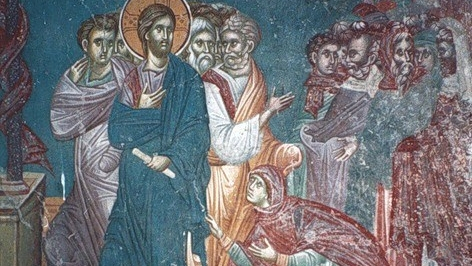
 Spiritual Stepping Stones