“The Father loves the Son and has given everything over to him.”
The question that arises and is foremost regarding Christianity above all else is, “Who is Jesus?” How this is answered has a lot to do with what we believe. John the Baptist addresses this question to his disciples, who are concerned that Jesus is growing in popularity over and above John. In today’s Gospel we read a summary of John’s reflection on the understanding of Jesus as: the one who “comes from above” and the one who “comes from heaven is above all”; this one “testifies to what he has seen and heard” and he is sent by God to speak “the words of God”; he is also generous in that he “does not ration the gift of the Spirit”; and the Son is loved by the Father and God “has given everything over to him”.
The author of today’s summary account in the Gospel of John declares in each of these phrases that Jesus is the Son of God who has come from above, he has come to reveal the truth about the Father and is able to do so because he has seen and has an infinite relationship with him. He preaches the Gospel, the Good News, that God loves us, that he seeks and has always sought, to be in communion with us, his created beings. Jesus has come to reveal the Love of the Father and that his love is unlimited.
The proclamation that Jesus is the Messiah, is not just revealed in the Gospel of John, but all of the other Gospels, Matthew, Mark, and Luke, as well as the epistles and books of the New Testament. Jesus, as the Son of God, is also the key to unlocking the Hebrew Scriptures, and we can see how the Torah, the Prophets and the Writings all point to Jesus as well. Jesus shared this outline of salvation history with Cleopas and the other disciple on the road to Emmaus, such that their hearts were burning within them while Jesus spoke and opened the scriptures to them (cf. Lk 24:32).
John the Baptist gets who Jesus is. Jesus is the Son of the Living God and he offers a model for us to follow when he shared with his disciples: “He must increase; I must decrease” (Jn 3:30). May we spend some time in quiet reflection today by pondering these phrases from the Gospel today regarding who Jesus is. Which one calls to you?
“The one who comes from above is above all.”
“The one who comes from heaven is above all.”
“He testifies to what he has seen and heard.”
“For the one whom God sent speaks the words of God.”
“He does not ration his gift of the Spirit.”
“The Father loves the Son and has given everything over to him.”
When we have finished, what is our response? Do we disobey or discount that Jesus is who he says he is or do we “accept his testimony” and “certify that God is trustworthy”? If we “accept his testimony”, are we willing to decrease, such that he will increase his influence in our life. Do we believe that Jesus is the Christ, the Son of the Living God?
————————————————————————-
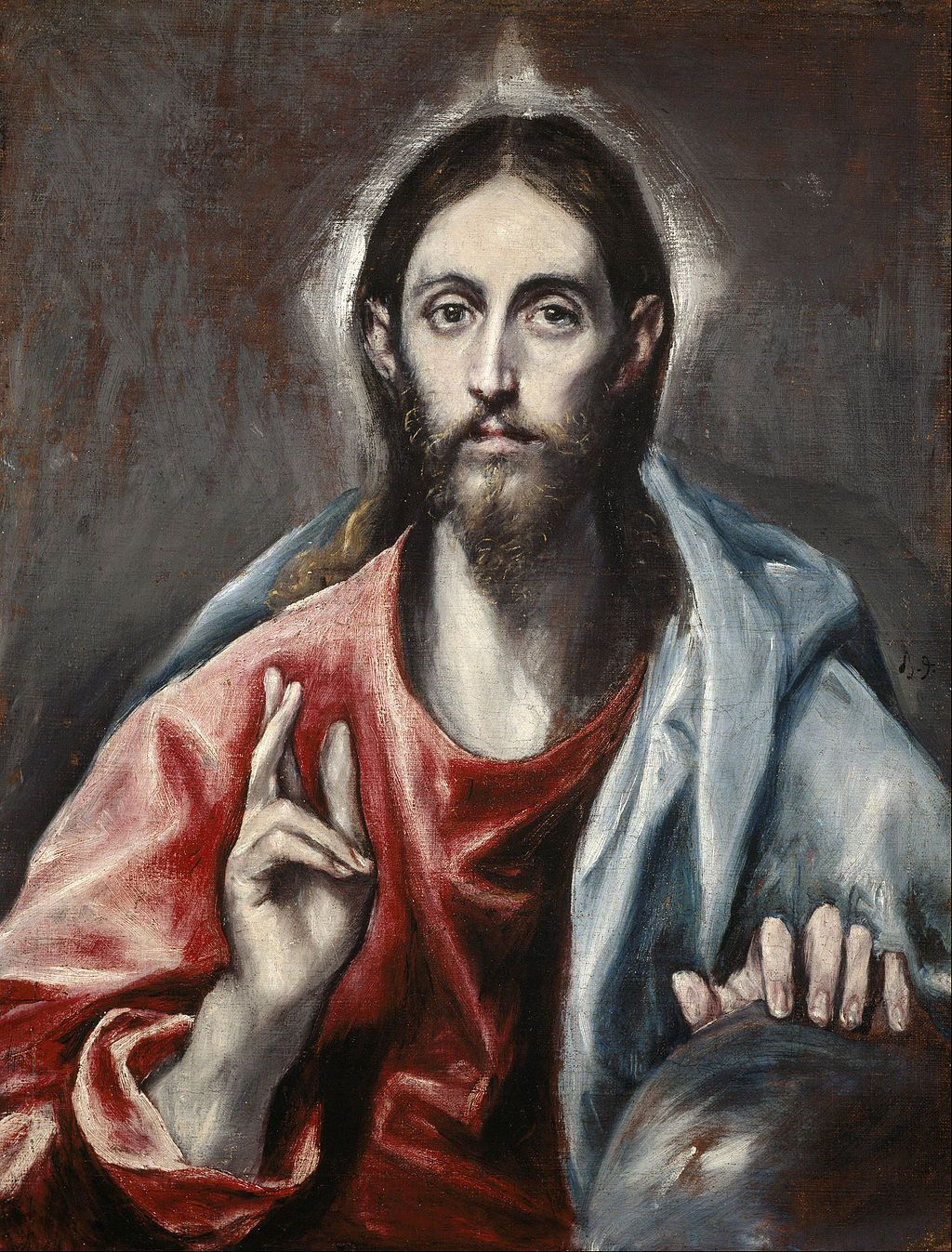
Painting: Christ Blessing (‘The Savior of the World’), by El Greco, 1600
Link for the Mass readings for Thursday, May 2, 2019: http://www.usccb.org/bible/readings/050219.cfm

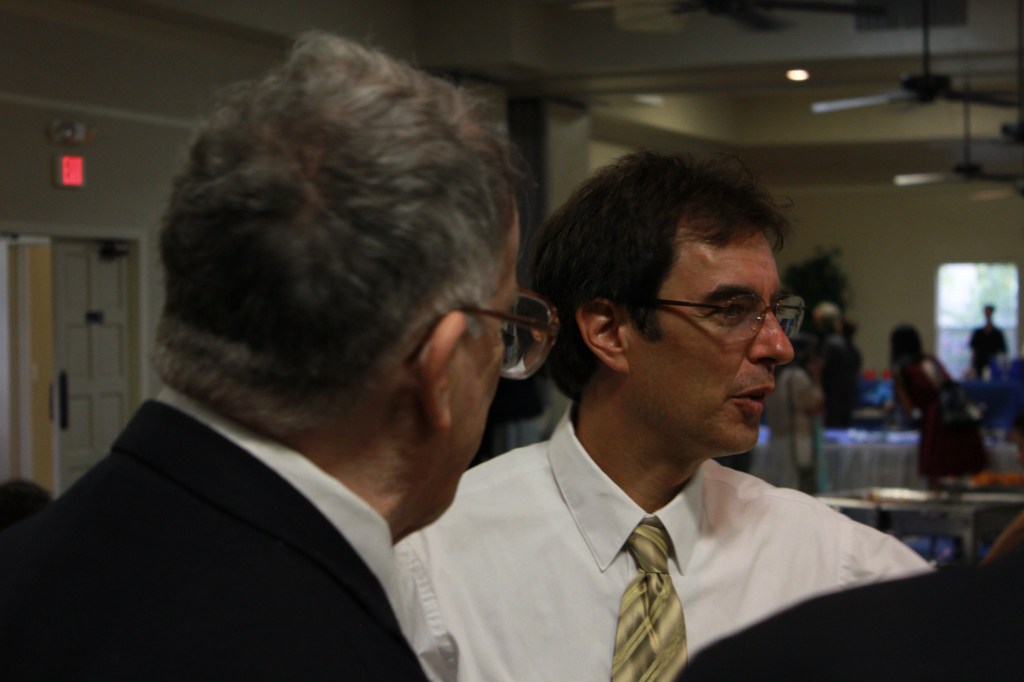
We are called by Love and sent to love others as we have been loved.
Jesus continues his conversation with Nicodemus in today’s Gospel from John. In the opening verse, Jesus outlines why he came into the world: “God so loved the world that he gave his only-begotten Son, so that everyone who believes in him might not perish but might have eternal life” (Jn 3:16). God has created us out of love and shepherds us out of love. God loves what he has created, and in his order and timing he sent his Son to enter humanity to become one with us. Jesus meets and loves us even in the depths of our greatest sin, and invites us to come out of the shadows and dark recesses of turning in on ourselves, of living in fear and sin. He invites and encourages us to come into the warmth and radiance of his light to be healed and to come home to God.
Loving means to risk being rejected. Jesus entered humanity as we all did, in the utter vulnerability of the womb. His very life was at risk from the moment of his conception. Mary, a young woman, betrothed to Joseph, in a time and culture in which a woman found to be with child, not from her husband, could be stoned to death. Mary could have made a different choice, Joseph could have made a different choice, but both of them chose to follow the will of God. They resisted the temptation to close in upon themselves and make an isolated decision based on their own needs, anxieties, and fears. While of all of creation held its collective breath, Mary and Joseph trusted God, they chose the light, they chose to protect the life, the life of the Son of God.
“Whoever believes in him will not be condemned, but whoever does not believe has already been condemned, because he has not believed in the name of the only-begotten Son of God” (Jn 3:18). Jesus did not come to condemn, he came to redeem, to save, to love us into eternity. This love is not an imposition, but an invitation. For love to be real, it must be truly free. Free to the full extent that it can be rejected. To love is to risk rejection. Otherwise, what is experienced by the other is coercion, manipulation, pressure, but it is not love. The Son of God entered the womb of Mary risking rejection by her, Joseph, and/or their extended family. The only difference between Jesus in the womb and Jesus who ministered to those on the margins was that he was smaller and more vulnerable. Those who, like Mary and Joseph, believe will come to have eternal life, and those who do not have already been condemned, not by God but by themselves.
Those rejecting God have been invited to receive his love also, but for reasons they may or may not be aware of say no. We who follow Jesus are to be his presence of love among those we encounter, even those who shy away or reject him. We may be the only Bible someone ever reads. We are not to protect only the vulnerability of the unborn, but the born as well. We as Christians are not just pro-birth, but we are also pro life, meaning that each of us has a charism of who we are called to reach out to and touch with the love of Jesus, to be present to those who God brings into our life. We can think, speak, and act by respecting the dignity of each person we encounter, in person and online, supporting a consistent ethic of life from the moment of conception until natural death, and for each unique gift of a person’s development and growth in between.
“God so loved the world that he gave his only-begotten Son, so that everyone who believes in him might not perish but might have eternal life” (Jn 3:16). We, even in our brokenness, imperfections, and sin, are loved as we are by Jesus. We are free to reject or accept his love, but as Pope Francis wrote: “We are called to be holy by living our lives with love and by bearing witness in everything we do, wherever we find ourselves.”
Love is not something abstract, it is very concrete. Love is our willingness to will the good of the other as other. As we receive and experience the love of Jesus, we are called by this love and sent by Jesus to love every person we encounter in our realm of influence, as he loved us, person to person. No one is other from God’s perspective. If there are those that we might not necessarily include in everyone, may we be willing to allow Jesus to love them through us, until we can see them as God sees us, as a child of his, loved more than we can ever imagine!
————————————————————————
Photo: My maternal grandparents, Helen and Bernard Morcus, models of love
Link for article on Gaudete et Exultate (“Rejoice and Be Glad”):
https://www.americamagazine.org/faith/2018/04/09/pope-francis-new-exhortation-jesus-wants-us-be-saints
Link for the Mass readings for Wednesday, May 1, 2019: http://www.usccb.org/bible/readings/050119.cfm
Through Jesus we are deified!
Jesus continues to teach Nicodemus and with these words, “No one has gone up to heaven except the one who has come down from heaven, the Son of Man” (Jn 3:13), Jesus expresses the truth about who he is, the Christ, the Son of the Living God. From all eternity and for all eternity the Son is begotten not made. The Son has always existed with the Father and at the appropriate time, the Father called and sent his Son to be one with us so that we can become one with him.
We have been loved into existence by the outpouring of the love between God the Father, God the Son and the Love that is shared between them, God the Holy Spirit. This Son, the second person of the Trinity is the one who entered into our humanity. He came to invite us back to himself, to show us where we have strayed, so that we may correct the course of our journey back to who we have been created to be. We have been created to be in communion with God and one another.
Jesus, the Son of God became incarnate, took on flesh, and entered into our human condition that we would be deified, transformed into the very life of God by our participation in the life of Christ. This is why Jesus tells Nicodemus that we are to be born from above, because through our baptism we are born again as sons and daughters of God the Father. The one who has come down from heaven has, as St Irenaeus wrote, “opened up heaven for us in the humanity he assumed.”
Our life is about being willing to be loved into existence and to love in return. Our life is a gift given to us by God such that we can receive his love and share it with others. Let us embrace this gift, the gift of our life, resist taking this precious gift for granted, and love others today in our own special and unique way, as Jesus has loved us from the beginning, more than we can ever imagine and more than we can ever mess up!
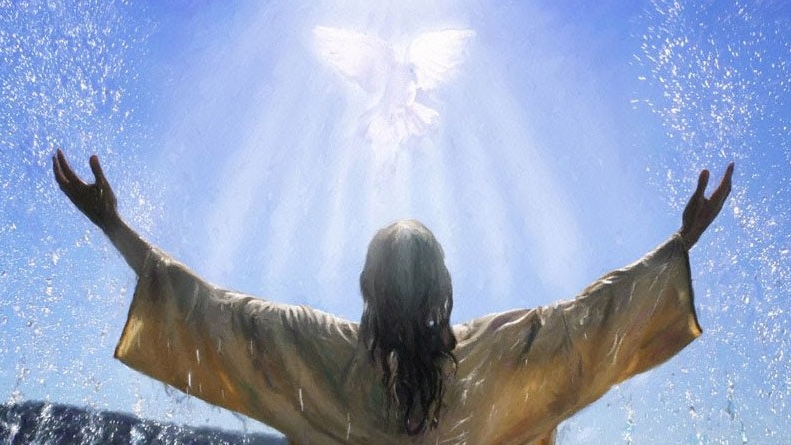
Jesus rising from the waters of his baptism, photo accessed online search
Link for the Mass readings today: http://www.usccb.org/bible/readings/043019.cfm

In “being born from above” we enter into the very Love of God himself.
Today’s reading from the Gospel of John presents us with Nicodemus “a teacher of Israel” struggling to understand what Jesus meant when he said, “You must be born from above.” Jesus attempted to clarify for Nicodemus with an analogy of the wind, yet this still did not help. Jesus went on to explain how much of a problem it was if Nicodemus and the leaders of Israel did not understand things that are concrete and plainly in view: “If I tell you about earthly things and you do not believe, how will you believe if I tell you about heavenly things?”
Thinking at that point that Jesus would soften his message he instead deepened his discussion, talking about how no one has gone up to heaven except the one who has come down from heaven, that the same Son of Man would be lifted up as Moses lifted up a snake in the desert, and God sent his only Son so that all might have eternal life. If Nicodemus’ head wasn’t already spinning with Jesus’ born from above statement, the follow up statements would have really done it.
What Jesus conveyed to Nicodemus, his Apostles, and disciples, as well as anyone in earshot, and ongoing for generations up to us this present day is that Christianity is not Gnosticism, some secret sect of knowledge that is past on for a select, elite few. Neither is Christianity a form of dualism or Manicheism such that our body and all that is material is bad and we need to shed the physical as soon as possible to attain the fullness of our potential through the absolute embrace of the spiritual only. Nor is Christianity Pelagianism, where we just need the proper discipline, will power, and persistence to follow the teachings of Jesus.
Jesus offers us a universal invitation for all to “be born from above”, which means to be baptized in his name, to follow him into his death, to die not to our material self, but our false sense of self, to our sin, our pride, that attitude and disposition that strives to set apart, diminish, devalue, dehumanize and polarize, and to rise with him. In being born from above, we receive the offer of divinity and so, instead of rejecting our humanity, embrace the fullness of our humanity. The grace of God builds on our nature, the goodness of the creation he has made and formed into existence with his love. We accomplish this the same way Mary, the Apostles, Mary Magdalene, the disciples, and Nicodemus did. We answer the call to holiness and sanctity. We say yes to Jesus and give him all we are and recognize all that we have is a gift from God the Father.
Day by day we are to accept to be lead by the hand of Jesus, the first born of the new creation and participate with him by offering our hand to others. May we resist the temptation to put up barriers, to keep others at arms length. We are all, every one of us, invited to become saints through our participation in the life of Jesus.
I agree with Pope Francis who in his exhortation, “Gaudete et Exsultate” (“Rejoice and Be Glad”), that we cannot “claim to say where God is not, because God is mysteriously present in the life of every person, in a way that he himself chooses, and we cannot exclude this by our presumed certainties. Even when someone’s life appears completely wrecked, even when we see it devastated by vices or addictions, God is present there. If we let ourselves be guided by the Spirit rather than our own preconceptions, we can and must try to find the Lord in every human life.”
God is present in our life. May we embrace the gift of our baptism, so to understand what Jesus was teaching Nicodemus, that we have been born from above. Through our dying and rising in Christ, we have better access and a share in the breath and life of the Holy Spirit. In this way we are transformed and made new by the Holy Spirit, the very Love of God. This is a gift to be shared so that we all may draw deeply from this spring of living water.
————————————————————————–
Painting: Nicodemus talking to Jesus, William Brassey Hole
Link for article on “Rejoice and Be Glad”:
https://www.americamagazine.org/faith/2018/04/09/pope-francis-new-exhortation-jesus-wants-us-be-saints
Link for the Mass readings for Monday, April 29, 2019: http://www.usccb.org/bible/readings/042919.cfm
May the Divine Mercy of Jesus be with you.
The disciples had locked themselves in a room out of fear of further persecution from the Jewish leadership. Jesus was crucified and as their followers they must have believed they would be next. They were also ashamed of having turned away from Jesus during his time of dire need. Amidst the heavy weight of fear, despair, and shame, Jesus “came and stood in their midst”. Their reaction of amazement and fear of Jesus’ judgement could only just begin to form in their minds because as Jesus came and stood in their midst [he] said to them, “Peace be with you.”
Jesus forgave them for their betrayal, for not being there for him. He did not appear to his followers to rub their nose in their shame or to tell them he told them so. Jesus came among them and immediately bestowed upon them his mercy. He then commissioned them to be his Apostles as he said: “Receive the Holy Spirit. Whose sins you forgive are forgiven them, and whose sins you retain are retained.” As Jesus is the Son of God, he has the power to forgive, and he is now sending his Apostles to be bearers of his forgiveness and mercy as he works through them.
Thomas, though not present on this first encounter, is present the following week and seeing the marks on Jesus hands and his side, he too believed, saying, “My Lord and my God!” Thomas too became an agent of mercy and reconciliation.
Today, we still have access to the gift of God’s mercy and forgiveness instituted by Jesus as is recorded in today’s Gospel of John. This is a gift of healing made available to us, like the Eucharist, so that we may continue to experience Jesus, our Lord and our God, working in our life. When we come to the priest, we are coming to those, who in an unbroken apostolic succession, have continued to be bearers of Jesus’ forgiveness and mercy. It is to Jesus, through our priests, that we confess, and that we hear the words of and receive absolution.
On this Divine Mercy Sunday, may we spend some quiet time with today’s Gospel and imagine ourselves in the locked room with the disciples. Experience Jesus appearing in our midst as he says, “Peace be with you!” Allow the radiating light of his mercy and forgiveness to wash over and through our whole being. Let us call to mind those sins that have kept us bound, visualize them as words floating up and out of us and dissipating in the radiance of Jesus’ white and red rays emanating from his merciful heart. May we allow ourselves to be transformed by the love and forgiveness of Jesus.
Having received the forgiveness and mercy of Jesus in the healing sacrament of Reconciliation, Jesus sends us out to practice mercy and forgiveness with others. May we react less and breath deeply more. Instead of adding fuel to the fire of negativity, let us seek to be an advocate for healing and reconciliation. May we also take some time today to think of someone who could benefit from the presence of Jesus through our being present to them, someone who may need “to hear God’s good news of forgiveness and love” (Francis, 25). We are not able to absolve someone of their sin, but we can forgive, make an effort to reach out to others in prayer and in person, and allow the love and mercy of Jesus to flow through us to those in our midst. Alleluia!
—————————————————————————————–
Painting: The first image of the Divine Mercy painted representing St. Faustina’s vision by Eugene Kazimirowski, 1935
McCann, Deborah. 30 Days of Reflections and Prayers: What Pope Francis Says About Mercy. New London, CT: Twenty-Third Publications, 2015.
Link for the Mass readings for Sunday, April 28, 2019: http://www.usccb.org/bible/readings/042819.cfm

We are to believe in, live out and share the Gospel each day.
Today’s reading from the Gospel of Mark, 16:9-16, is commonly called, “The Longer Ending.” Most ancient manuscripts of Mark end at 16:8. Whether this Gospel ended there or the original ending was lost is not definitively known. Many biblical scholars also recognize in these verses a different writing style, so attribute this longer ending to a different author. This ending recounts that Mary Magdalene and the two disciples on the road to Emmaus met the risen Jesus. When both Mary and the two disciples share their experiences with the eleven, they are not believed, and “later, as the eleven were at table, he [Jesus] appeared to them and rebuked them for their unbelief and hardness of heart”
How many times had Jesus rebuked the Pharisees for being hard of heart? Now he is saying the same to the eleven for not believing the accounts of Mary and the two disciples. We do not have a reason for their unbelief and maybe that is well and good, because that gives us the opportunity to ponder for ourselves, when has someone brought us a message from Jesus and we responded to them with hard hearts and were unbelieving? Are there certain people we would not believe no matter what good news they had to share with us?
Jesus does not belabor the point. His rebuke helped them to see that as his followers their hearts needed to be open to him working through others, as he told John when someone was casting out demons in Jesus’ name, “whoever is not against us is for us” (cf. Mk 9:40).
Christianity is not a secret sect, it is a universal call and proclamation meant to be shared with all. We are celebrating this Easter Octave, and we continue to do so each year, the fullness of the Paschal Mystery, that the Son of God became incarnate, entered into our human condition, lived, suffered, and died, conquered death, and rose again, for all of humanity and creation.
This was no mere resuscitation. Jesus conquered death and became the first born of the new creation and invites us to participate in his reign of the kingdom of heaven. This is the Good News he wanted his eleven to proclaim when he said to them, “Go into the whole world and proclaim the gospel to every creature” (Mk 16:15).
Jesus is calling us to do the same, as brothers and sisters, working in solidarity, not for a select few in our pew, but for all in our realm of influence. We are to build relationships by bringing the light, joy, and love of Jesus to each individual that we meet, person to person. Let us also be open to God working through others and receive his message from them as well! Alleluia!!!
———————————————————————
Photo: class of 2104 ready to bring the Gospel to university!
Link for the Mass readings for Saturday, April 27, 2019: http://www.usccb.org/bible/readings/042719.cfm

Mistakes are necessary for our growth, Jesus is necessary for our transfiguration!
There are a handful of incidents in today’s Gospel reading from John that refer back to encounters Jesus had with his Apostles before his death and resurrection. Jesus waits on the shore as seven of his disciples; Peter, Thomas, Nathanael, James, John, and two others, return from a night of fishing. This is reminiscent of when Jesus first came to Andrew and Simon, James and John as they were casting and mending nets and he invited them to follow him.
The disciples return with their nets empty, and Jesus suggests that they cast their net over the right side and they quickly find that they “were not able to pull it in because of the number of fish.” Peter had this experience in one of his first encounters with Jesus when he had been fishing all night and Jesus made the request to put out into the deep water, and that time they were able to fill both boats.
After their great catch “of one hundred fifty-three large fish” John told Peter that the Lord was the one who had instructed them. Just as when Jesus approached his disciples that night walking on the stormy waters, Peter jumped out of the boat and walked on water until he took his eyes off Jesus and began to sink. Peter again “jumped into the sea.” When Peter and the disciples came to shore “they saw a charcoal fire.” The most recent event with another charcoal fire was outside the gate where Jesus was led for his judgement. To keep warm Peter joined the servants and slaves huddled around a charcoal fire. It was at that charcoal fire that Peter denied Jesus. The final scene in today’s account was when Jesus offered cooked fish and bread to his disciples, this is reminiscent of Jesus feeding the five thousand with two loaves and a few fish.
Throughout our life we will have encounters with people and experience incidents that we have experienced before. We may not have been as present as we have wanted to be when attempting to comfort someone, we may have given in to temptation we regretted, or we may have been involved in some task and made a mistake, just as Peter had denied Jesus three times at that charcoal fire. Peter wept when he heard the cock crow. The sound brought back Jesus’ prediction, brought to light Peter’s own denial and cowardice. How many times must he have berated himself, as we have done when we have sinned, fallen short of our goals, or made mistakes?
Making mistakes and taking risks, are necessary for learning and growing in any endeavor in life. Jesus does not want us to beat ourselves up when we fall short or fail. What is required for maturation is an honest assessment of the situation, and then a movement to correct and learn from our mistakes. Often we overcompensate in the beginning, but as we remain persistent we reach a healthy balance.
A concrete example of this was my first experience with bowling. The first time I walked on the lane, took aim, and released the ball, I threw it into the left gutter, and then the next throw went into the right gutter. Eventually, my adjustments were less drastic and I was able to strike more pins than hurl my ball into the gutter. The same is true for our everyday lives.
Jesus returns to be with his disciples after his resurrection, he meets them in very similar settings as he had before his death. All of his disciples failed him, yet Jesus did not condemn them. Jesus helped to show them how far they have come since he first called them, while at the same time helping them to see how far they still have to go to actualize their potential. Jesus is not only their teacher, but the divine source of their own transformation.
Jesus guides and empowers us with his love and encouragement, to help us to move beyond our own self, so hopefully, we will be a little more present to someone the next time we are in a position to provide comfort or understanding, have greater resolve when tempted, and be able to identify our sins and mistakes as well as learn from them.
Jesus has risen again, appeared to his disciples to guide them, encourage and empower them to be who God has called them to be. Jesus offers us the same teaching, guidance, and power shared from the wellspring of his humanity and divinity that we will be able to also access when we choose to accept the free gift of his grace and participate in his life. Our repentance and Jesus’ forgiveness goes beyond helping us to become better people. Through the love of Jesus, our minds, hearts, and souls change, we are transfigured, and conformed to Jesus and his life of resurrection. This is good news to share not only in word but in deed. Alleluia!!!
————————————————-
Photo: Bowling in the Bronx, my pre-novitiate year with the Franciscans of Holy Name, around 1991, just missed the spare…
Link for the Mass readings for Friday, April 26 2019: http://www.usccb.org/bible/readings/042619.cfm
Jesus has risen, conquering death so that we may thrive in this life and the next! Alleluia!!!
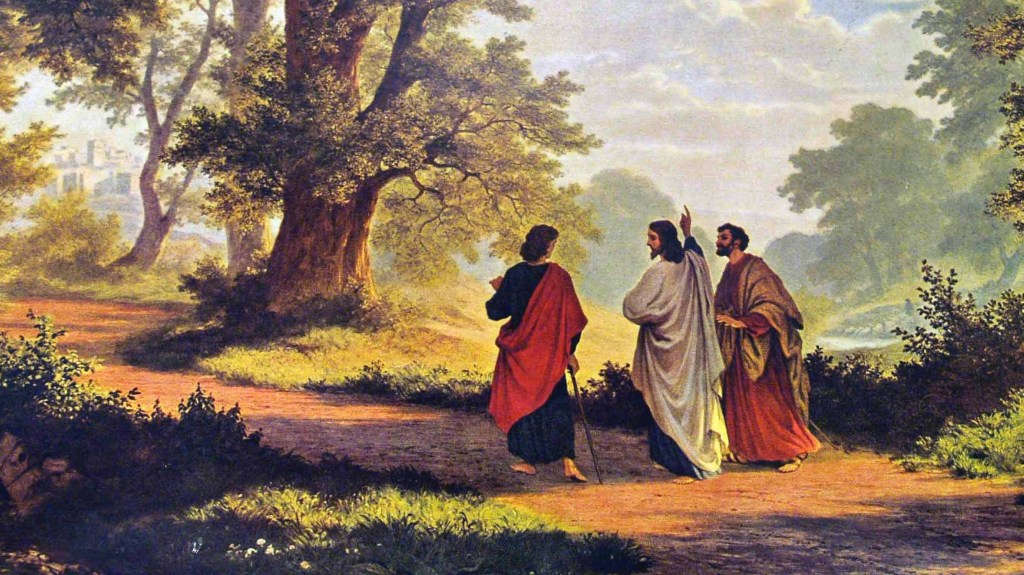
Just as Jesus came among Cleopas and the other disciple on their road to Emmaus, Jesus does so again as the pair was recounting their encounter with the risen Jesus. What Jesus does differently in this interaction is that he clarifies that he is not a ghost, that he is not mere spirit. Jesus said to those gathered around him, “Look at my hands and my feet, that it is I myself. Touch me and see, because a ghost does not have flesh and bones as you can see I have” (Lk 24:39). He then requested some fish and he ate and talked with his disciples as he had done so during their time together before his crucifixion and resurrection.
We have heard about the resurrection of Jesus, maybe for years, but it is important not to get complacent with the amazing miracle that this is. Also, we need to resist the temptation to diminish in any way the significance, that Jesus was transfigured physically. Jesus, was and continues to be a hypostatic union, meaning that he is one divine person, fully divine, subsisting in two natures, the human and divine.
The humanity of Jesus through his resurrection was fully actualized and transcended the limitations of the three dimensional realm that he had experienced in his humanity before. This is how he could disappear after making himself known in the breaking of the bread and how he will come through a locked door to interact with his disciples.
The relevance of the bodily resurrection of Jesus for us, is that he, in dying and conquering death, is now the reality of who we will one day be. We will be fully actualized as God has created us to be. The good news is that we do not have to wait to go to heaven for this process to begin! The path of becoming fulfilled and whole begins in this life, now, as we accept Jesus as our Lord and Redeemer. Jesus in his encounter with his disciples from today’s reading from Luke, continues the message he began at the beginning of his ministry, which is one of repentance and forgiveness.
In our baptism we were born again as part of the new creation given to us by the death and resurrection of Jesus, the gift and life of our humanity has been redeemed. Each day we are to live in humility, calling to mind our sins and repenting daily. Jesus will forgive us, and as we receive his mercy and forgiveness we are to offer the same to others. Jesus suffered and died for each and every one of us, and he also seeks to live through us. Jesus is the foundation and source of our life and salvation. Jesus has come to show us that we are not in competition with God, but that his Father, our Father, seeks to be in solidarity with us.
A statement attributed to the second century Church Father, St. Irenaeus of Lyon, highlights this reality: “The glory of God is the human being fully alive.” We do not need to merely exist or survive. Instead, may we live our life in participation with Jesus the Christ and thrive! Alleluia!!!
——————————————————-
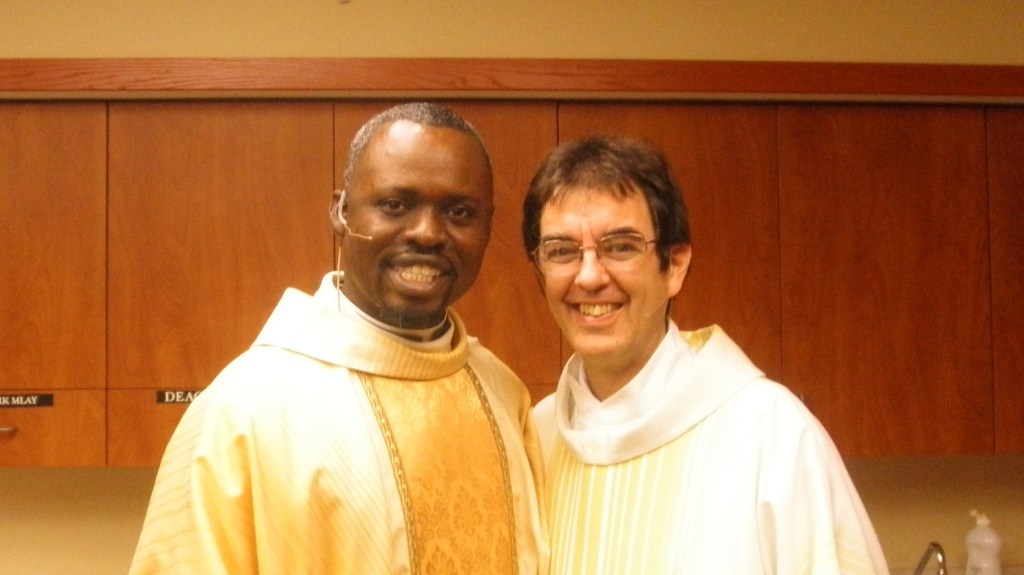
Photo: Me and Fr. Jean, I believe from my first Christmas Mass serving as a deacon.
Link for the Mass reading for Thursday, April 24, 2019: http://www.usccb.org/bible/readings/042519.cfm
 Spiritual Stepping Stones