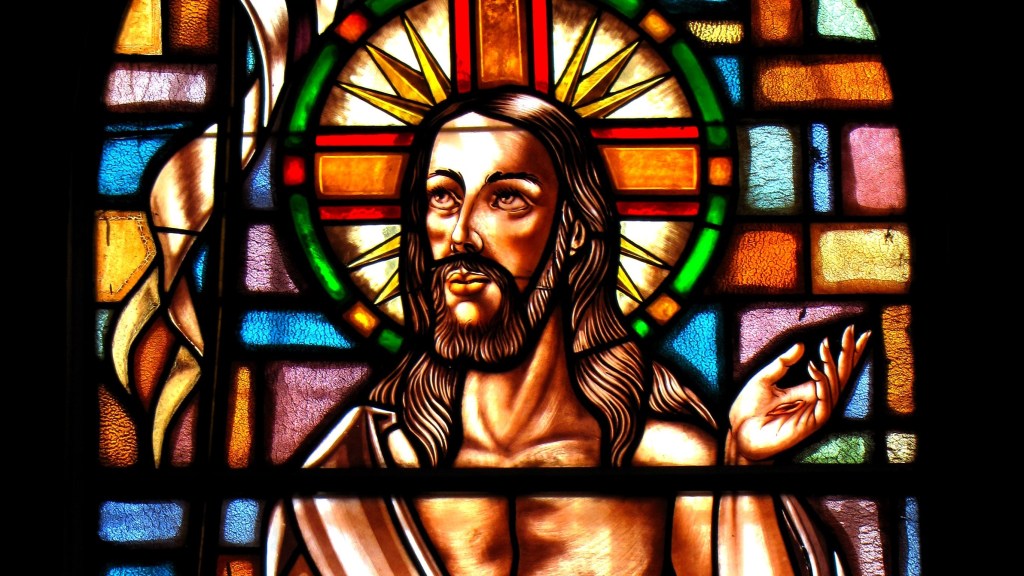
Jesus has conquered death and has risen! Alleluia!!!
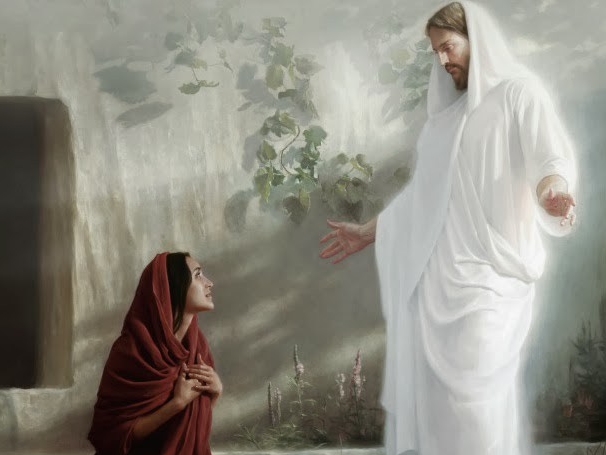
Mary Magdalene and the other Mary were bewildered from their encounter with the angel and the empty tomb. As they ran to get the news to the disciples, they were also dealing with mixed emotions, feeling both “fearful yet overjoyed,” (Mt 28:8) when in the midst of their travel they were greeted by Jesus. Jesus assured them and sent them to, “tell my brothers to go to Galilee, and there they will see me” (Mt 28:10). Off the pair went to share the message that Jesus had risen!
At the same time, some of the guards who witnessed the event at the tomb, took a different way and headed into the city to meet with the chief priests. They relayed the incident about the earthquake and the angel appearing to them and the two women. After deliberating, the chief priests and the elders paid the guards a large sum to perpetuate the tale that his disciples took Jesus away.
Who would be believed, the two women or the guards? Apparently both! Mary Magdalene and the other Mary fulfilled their first apostolic role and passed on Jesus’ message to his disciples for them to meet him in Galilee. Galilee was where the public ministry of Jesus began. They would all go back to the beginning. The tale spread by the guards would also be believed, because by the time of the writing of the Gospel of Matthew, the community, to which he wrote, were aware that, “this story has circulated among the Jews to the present day” (Mt 28:15).
Did Jesus really rise again from the dead as the angel, Mary Magdalene and the other Mary claim or was this an elaborate plot by the disciples of Jesus to stage his resurrection, as the guards portrayed? How we answer these questions ought to make a difference in our lives. If we say yes, that we believe in Jesus and that he rose again, do we live our lives any differently than those who say they don’t believe?
We, as followers of Jesus who rose again, are to be like the angel and each Mary. We are to be an Alleluia people, allowing the risen Christ to proclaim through us to those facing death, hope and life; to those living in the darkness of sin and addiction, light and a new direction; to those who are weak and indifferent, empowerment and inspiration. Each day, during this Easter Season, may we become less so that the risen Jesus, who is our Way, our Truth, and our Life, becomes more.
—————————————————————–
Photo credit: Luis Ca from http://www.cathopic.com
Link for the Mass readings for Monday, April 22, 2019: http://www.usccb.org/bible/readings/042219.cfm
Happy Easter!
“Where, O death, is your victory? Where, O death, is your sting” (1 Cor 15:55)? Jesus has conquered death and given us new life in him! Alleluia.
Thank you for joining me on the spiritual steppingstones journey this past year, whether it be through my blog, Facebook, Instagram, LinkedIn, or Twitter. Be assured of my daily prayers for your intentions – whether you have let me know you are reading along or not!
Let us pray for those who have lost their lives in the Sri Lankan attacks as well as all those who suffer from the scourge of violence in all its forms.
I pray that you all and those you hold close have a blessed Easter Season.
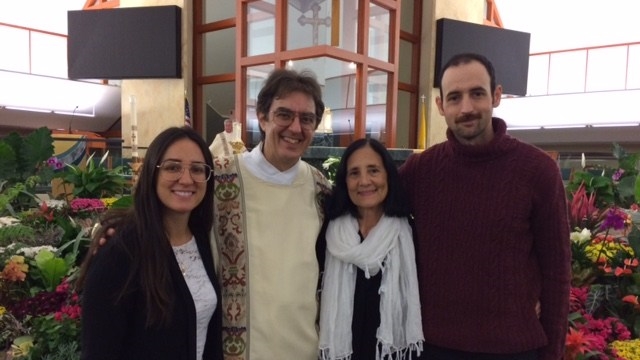
Happy Easter from my family to yours!
Photo: After the Easter Vigil last night- thank you Giovanna for taking the picture!
Jesus has risen, he has risen indeed!
Mary of Magdala comes to the tomb during the early hours of morning while it is still dark and finds the stone rolled away. She runs to Peter and John to share with them the news, that: “They have taken the Lord from the tomb, and we don’t know where they put him” (Jn 20:2). Peter and John retrace the steps of Mary, running to find the tomb empty as well. All three are stunned because, “they did not yet understand the Scripture that he had to rise from the dead” (Jn 20:9).
How can we blame them? Do we fully understand the reality and fact that Jesus has risen from the dead? There is conjecture today that Jesus did not really die, but woke up three days later, aching all over from the excruciating effects of the crucifixion. Others say that the accounts of the resurrection were mass hallucinations, or that the Gospel accounts of Jesus rising from the dead are mere myth. These propositions do not stand up to the fact that Jesus, fully God and fully man died, entered death, and conquered it. In so doing he entered into a new life, a new reality. Jesus, in becoming the first born of the dead, was transfigured from the three dimensional reality that we all know and experience, such that he now resonates at a higher pitch, in a higher dimensional reality. Jesus is the first born of a new creation!
All of human history changed in that tomb because of this new fact of the resurrection of Jesus. How this has happened is indeed a mystery, but in our seeking understanding, we will fall short and be frustrated if we only approach the mystery of God in the same way that we tackle a problem to be solved. The Apostles and disciples of Jesus struggled to find meaning and understanding about how Jesus crucified was now gone from the tomb. They came to understand the Mystery of the Resurrection, as they would the mystery that Jesus is fully human and fully divine, when they encountered Jesus again. The Mystery of the Resurrection is not a problem to be solved, but a person to encounter, a relationship to embrace, as it was for the Apostles and is so for each of us.
Faith seeking understanding is grounded in having an encounter with a person, Jesus the Christ, the Son of the Living God. Pope Francis writes: “The joy of the Gospel fills the hearts and lives of all who encounter Jesus. Those who accept his offer of salvation are set free from sin, sorrow, inner emptiness and loneliness” (Francis, 9).
Today during the Mass when we enter the sanctuary and each time we dip our fingers into the baptismal or holy water font, we renew our baptismal vows. Each day may we renew our commitment to open our hearts and minds to Jesus who is the Christ, who has truly risen – Alleluia, Alleluia!!!
We are an alleluia people, meaning that even in our trials, loneliness, confusion, suffering and sin, we are a people endowed with hope, because we have not only been loved into existence, we have been loved into the promise of eternity, where suffering and death is no more!
May you all have a blessed and joyous Easter Sunday and Easter Season. May God bless and infuse you and all you hold dear in your heart with a soul on fire with his Love and Joy this day, and all days into eternity! Alleluia! Alleluia!
————————————————–
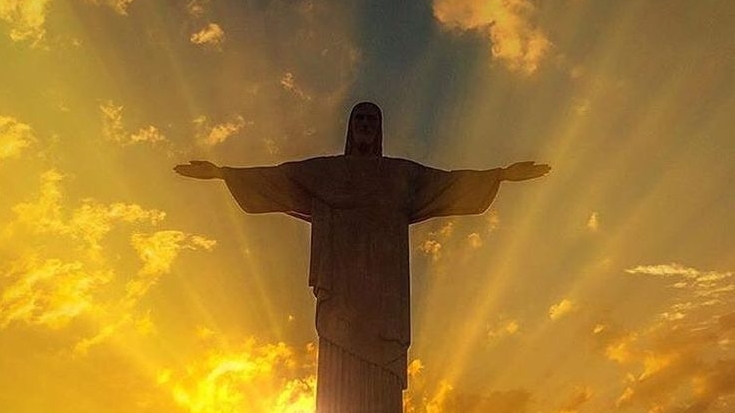
Photo: Christ the Redeemer statue – Rio de Janeiro, Brazil
Francis. Evangelii Gaudium, Joy of the Gospel, Libreria Editrice Vaticana. Frederick, MD: The Word Among Us Press, 2013.
Link for Mass readings for Easter Sunday, April 21, 2019: http://www.usccb.org/bible/readings/042119.cfm
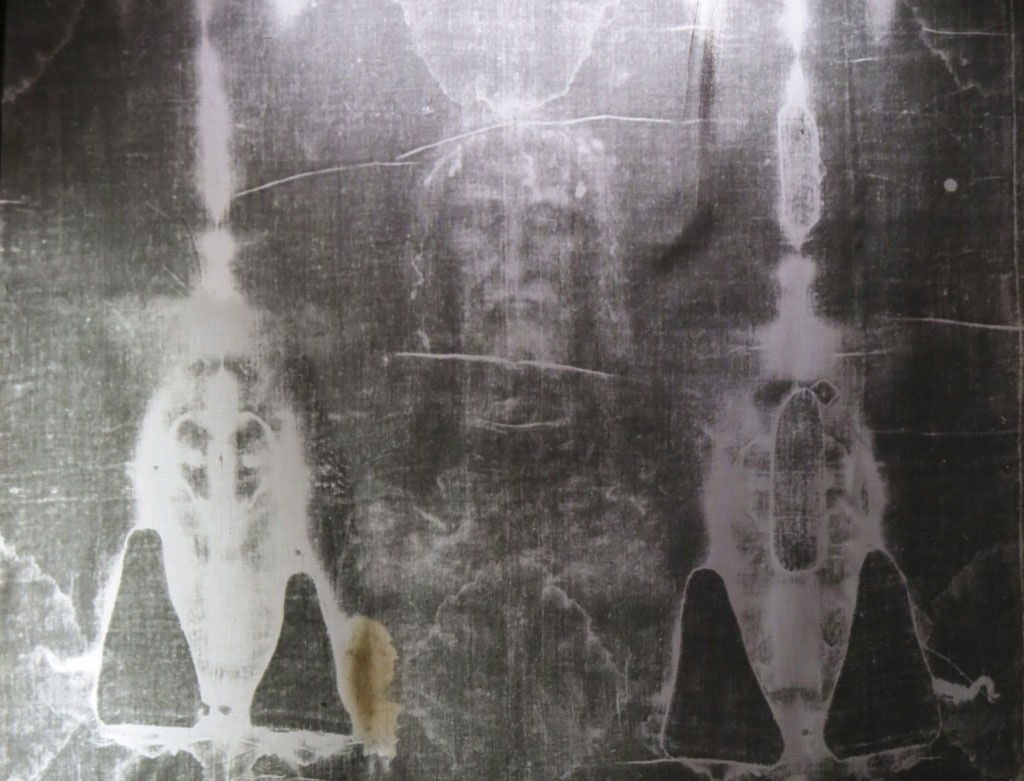
Even in the darkest tomb, the light of Christ shines and will not be overcome.
The first Holy Saturday. Complete darkness, arid earth, no sound. The body remained as immobile as the stone he was placed upon by Joseph of Arimathea and those who attended to him: “Having bought a linen cloth, he took him down, wrapped him in the linen cloth and laid him in a tomb that had been hewn out of rock. Then he rolled a stone against the entrance to the tomb” (Mk 15:46).
How long did Jesus lay there, as cold as stone? What was he experiencing? Had he continued his descent to the agonizing depths of God forsakenness? Did he descend all the way to depths of hell as we recite in the Apostle’s Creed, to bring some sense of comfort to those who had rejected his Father, or even to bring release to Adam and Eve, originators of the Fall, as the Church Fathers proclaimed?
At some point during Holy Saturday, in the greatest of darkness, when all seemed lost, the stretch of separation from God the Father and God the Son reached its limit, the Love that exists between them, the eternal bond that always has and always will be, the Holy Spirit, called the Son back. The dead body on the slab, was not merely resuscitated as if in one great breath he returned to the living and was alive again. A piercing light shone in that dark tomb, Jesus was transformed beyond anything humanity had ever experienced before, so to become the first born of the new creation. Jesus had, still fully human and fully divine, entered into the fullness of death, conquered it, and rose again in a transcending moment to experience a new reality, a different dimension than what we experience now in our three dimensional realm.
We may be experiencing darkness, the feeling of being alone, betrayed, afraid, or not understood. We may be dealing with conflicts, tribulations, tragic news, or addictions to such an extent that we do not even know how to pray or what to pray. In these moments of darkness and feeling separated, overwhelmed, know that we are not alone. The one who conquered death on this day in the tomb is present with us. We just need to remember to call upon his name, “Jesus.” If that is all we can say or pray, then just keep repeating his name.
Even the threat of death no longer has power over us, for Jesus, whose name we invoke, conquered death in the tomb. May we grasp the outstretched hand of the Risen One, our liberator, our Lord and Savior, and be willing to be led by him into his promise of freedom, wholeness, fulfillment in this life and on into eternity into the next. In calling on the name of Jesus, moment by moment, we are transformed by the Love of the Holy Spirit that brought Jesus back from utter God forsakenness.
No matter how dark it may appear, there is a light that shines in the darkness, and the dark cannot or will not overcome it. Let us trust in Jesus this Holy Saturday, allow ourselves to be loved and healed by his tender mercy and care, so to enter the Easter Season as it begins tonight with the Easter Vigil more committed to love as he has loved us.
———————————————————-
Image of the Shroud of Turin accessed online

“Where, O death, is your victory?”
Jesus was betrayed, arrested, falsely accused, tried, scourged, and beaten. Jesus carried his cross, was crucified, and with his words, “It is finished” (Jn 19:30), Jesus died. The gift of a crucifix is that it represents for us the moment of the death of Jesus. Having a crucifix is not a morbid fascination with death, nor a rejection of his resurrection. The crucifix is not a magic talisman, but a sacramental, that helps us to remember the reality of what the Son of God, who became one with us, did. Jesus embraced humanity all the way even unto his death, giving his life for us that we might have the opportunity to be born again, to be one with him, and live with him forever. Without the crucifixion, there would have been no resurrection.
On this Good Friday, let us spend time in venerating Jesus on the Cross, meditating before a crucifix, before this expression of the most intimate act of Love ever expressed in human history. This icon expresses the wonderful bestowal of the grace of God upon humanity, in that it reminds us that we have a God who has experienced and understands betrayal, loss, suffering, pain, anguish, and even death. Jesus is relevant to our lives because he meets us in the chaos of our lives.
In making time to be still and look upon the cross upon which he died, seeing his body slumped and lifeless, we can call to mind the times we have been betrayed, the struggles, trials, pains, sorrows, loss that we have or are enduring right now. Through any of the above, with each conflict or experience of injustice, we can be comforted in knowing that Jesus understands because he has experienced them all.
Making time to gaze upon the crucifix in times of fear, anxiety, temptation or indecision, can give us the strength and courage to endure or go through what lies before us. Jesus with his arms outstretched represents for us his eternal welcome, that he loves us more than we can ever mess up and he loves us more than we can ever imagine.
When we resist running from our trials, our suffering, and our pain, and instead face them, we will find that Jesus is waiting for us with his arms outstretched and wide open. Jesus meets us in the midst of our chaos, in the depths of the whirlwind of our deepest hurts, struggles, and confusion, when and where we need him most.
This is why we venerate Jesus on the cross today, this is why today is Good Friday, so we remember that death does not have the final word, for Jesus conquered death. This is why we can say with St. Paul, “Where, O death is your victory? Where, O death is your sting” (1 Cor 15:55). Jesus did not leave us orphans when he died on the Cross. Jesus conquered death for us and became the first born of the new creation. We are not alone. Jesus is present with us in whatever we may be dealing with, now, always and forever.
——————————————————————–
Photo: Outside St Peter Catholic Church, Jupiter, FL after Holy Thursday Mass – “Where, O death, is your sting?”
Link for the Mass readings for Good Friday, April 18, 2019: http://www.usccb.org/bible/readings/041919.cfm
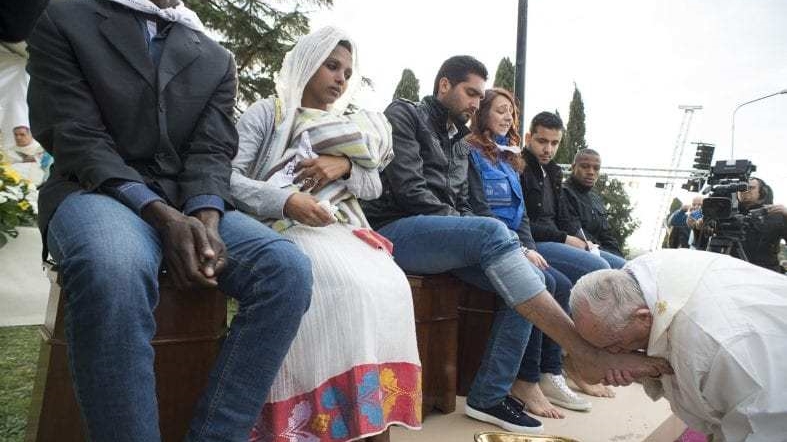
“Do you realize what I have done for you?”
One of the key focal points of the last supper narrative in the Gospel of John is Jesus washing the feet of his disciples. Washing feet was certainly a custom in the ancient Near East, for either people walked bare foot or wore sandals. In either event, people’s feet became quite sore and dirty getting from here to there. Washing of the feet was a hospitable way to welcome guests into one’s home, though this action was the most menial of tasks and often performed by slaves or servants.
After washing his disciples’ feet and sitting down, Jesus said to them, “Do you realize what I have done for you? You call me ‘teacher’ and ‘master,’ and rightly so, for indeed I am. If I, therefore, the master and teacher, have washed your feet, you ought to wash one another’s feet” (Jn 13:13-14). Jesus is sharing with those who will carry on his message and ministry that they are not to feel so high and mighty that they are above other’s in their being called to follow him. The Apostles, those who are sent by Jesus, are to look at their ministry as seeking how best to serve others, not seeking to be served themselves.
This evening at the Mass of the Lord’s Supper, select members of the parish will come up and have a foot washed by the priests, following the model set by Jesus washing his disciples feet. This is to remind all of us, as members of the Church that we are all an integral part of the Body of Christ. We are at our best when we are willing to serve one another, support one another, and lift one another up. This is to be true when all is well and rosy, in addition to when conflict and challenges arise in the messiness of daily life.
Pope Francis has stepped the imagery of this practice up. In his first year as Pope, he washed the feet of those who were staying in a youth detention center, including women and Muslims. He has washed the feet of people of other faith traditions, prisoners, the elderly and disabled, as well as migrants. This year Pope Francis will be washing the feet of twelve inmates who are housed in the Casa Circondariale di Velletri prison.
The best way we can exemplify Jesus’ lesson of washing his disciple’s feet is to resist the temptation of pride. Our life is not about us, we are not the center of the universe. We need to walk away from the table presenting a buffet of the false substitutes for God: pleasure, wealth, fame and power. Everything really does not revolve around us.
A disciple of Jesus who got this right is the Pope’s namesake, St. Francis of Assisi, who though he may not have written the following words, certainly embodied them in the way he lived his life. A good way we can fast from pride, to figuratively wash one others feet is when we: “not so much seek to be consoled as to console, to be understood as to understand, to be loved as to love, for it is in giving that we receive, it is pardoning that we are pardoned, and it is in dying [to our self] that we are born to eternal life.”
Jesus never tires of loving, forgiving, and serving us, may we strive to do the same in our encounter and willingness to accompany one other.
————————————————————
Words quoted from Peace Prayer of St Francis. History and words of prayer can be accessed at: https://franciscan-archive.org/patriarcha/peace.html
Photo: Pope Francis with Asylum Seekers in Castelnuovo di Porto, north of Rome 2016. (Credit: CNS photo/L’Osservatore Romano.) Accessed from: https://cruxnow.com/vatican/2019/04/18/holy-thursday-source-of-many-iconic-images-of-pope-francis/
Link for the Mass readings for Holy Thursday, April 18, 2019: http://www.usccb.org/bible/readings/041819-evening.cfm

It is never too late to change course.
As Jesus and his companions shared the Passover, Jesus offered this morsel, “One of you will betray me” (Mt 26:21). I am sure that this bitter herb shifted the mood of the meal. Each apostle asked if they were the one to betray him. There is no recorded response, though the assumption is that Jesus says no to each, except for one.
A unique feature about this exchange was that each of the disciples in asking Jesus if they would betray him, prefaced their request by calling him Lord. In doing so, they acknowledged that Jesus was the Messiah. When Judas addressed Jesus he called him Rabbi. He did not acknowledge Jesus as his Lord. Could this be a tell regarding why Judas was willing to turn Jesus over because he did not believe Jesus to be the Messiah, that he too believed Jesus to be a blasphemer?
Jesus’ response to Judas was an affirmation of truth: “You have said so” (Mt 26:25).
Jesus offered this affirmative response two other times, confirming each time the truth presented to him by Caiaphas that he was the Messiah and then later with Pilate, when he asked Jesus if he was the king of the Jews. In answering in the affirmative to Judas, was Jesus giving him the opportunity to look at himself in the mirror? Jesus knew that Judas would betray him, he did not have to make this point known. Judas could have remained silent, yet he asked, as did the others who went before him. Could he have been contemplating shifting his prior determination of betrayal? Was Jesus inviting Judas to acknowledge what he had agreed to do, confess, change course, and ask for forgiveness?
Judas chose his course of action to betray Jesus, and unfortunately, even with Jesus’ intervention, Judas was not able or willing to stop what he had started. Judas fulfilled his agreement with the chief priests to turn him over. Often we set a similar course of action and even when Jesus makes an attempt to intercede on our behalf, we do not slow down enough to hear, that is one of the dangers of not making time regularly to be still, to pray for God’s discernment.
God speaks to us in the silence of our heart, but too often we are focused on other things to be able to hear. We can allow fear, anxiety, pride, prejudice, or anger to be our guide. We can be too blind to see or too determined to do it our own way, regardless of the consequences. Our interpretation of our experience may be that the momentum is already too strong to turn around. That it is too late to change course.
We need to know in the depth of our being, that it is never too late to change course, to make amends, to repent, and to turn back to God. The first step is being willing to be still or aware enough to hear or see his guidance. The second step is to be willing to look in the mirror and see what Jesus presents to us, accept what we see, and then seek his forgiveness. Yet, sometimes we feel we are digging ourselves into a hole that we can’t escape from. The answer is that we need to just stop digging, put the shovel down. Jesus will meet us in in the deepest of the holes we have dug and lift us out.
————————————————————–
Photo: A still point, hiking in Torrey Pines, CA 2014 visit
Link for the Mass readings for Wednesday, April 17, 2018: http://www.usccb.org/bible/readings/041719.cfm
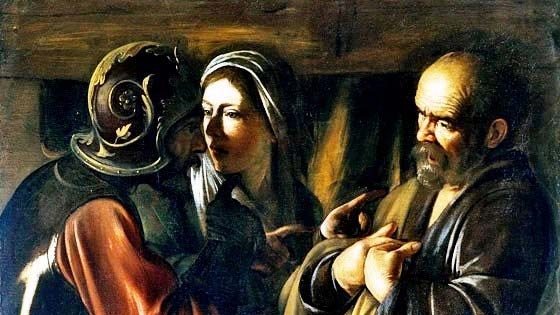
Betrayer yes, yet forgiven!
The Gospel reading for today from John is painful on two fronts. First, Jesus said to Judas, “What you are going to do, do quickly” (Jn 13:27). Did their eyes meet at that moment, was there an unspoken appeal from Jesus to Judas, or had that already been settled in Jesus’ full surrender in the Garden of Gethsemane? Judas aligned himself with Satan and set his course, and removed himself from Jesus and his companions and it was night.
The second front appears at the end of today’s reading. Despite Peter’s apparent full endorsement of Jesus and promise to even lay his life down for him, Jesus predicted that “the cock will not crow until” Peter will deny him “three times” (Jn 13:38). The momentum of utter betrayal builds. Judas will agree to turn Jesus over for thirty pieces of silver. He will betray the Son of God, yet in so doing, Judas will play his part in salvation history.
Judas will set in motion Jesus’ arrest that will culminate in his crucifixion. Peter will come to deny Jesus three times as Jesus predicted. I cannot think of any experience worse than the pain of betrayal. Yet, how is it that we betray Jesus each day? Remember what he taught us, “What you did not do for one of these least ones, you did not do for me” (Mt 25:45). Who and how have we betrayed Jesus in our lives? This is an important question to ask, and what is even more important is that we not only answer it honestly, but seek forgiveness and resist the temptation of isolating ourselves in our sin and pride.
Judas separated himself, cut himself off from Jesus and his companions. He came to realize his sin, though he did not seek forgiveness, but isolated himself further and took his life. Peter, also regretted his sin, his cowardice, he wept when he heard the cock crow, but he also trusted, and later affirmed his love for Jesus three times, atoning for his three denials and was forgiven.
This Holy Week we can choose to walk the path of Judas or Peter. With each humble step may we come to see how our spirits are often willing but our bodies are weak, that we have been wounded by others and acted in kind, so falling short of who God has called us to be in what we have done and what we have failed to do.
Through our awareness of our unworthiness though, may we resist isolating and beating ourselves up, but instead recognize that Jesus has not come for those who are worthy, but for those who are willing to be forgiven and to be healed. In this way we can learn from Peter, that we have betrayed Jesus also, but he is willing to forgive us too, so that we will become wounded healers as well!
——————————————————————-
Painting: Denial of St Peter by Caravaggio, 1610
Link for the Mass reading for Tuesday, April 16, 2019: http://www.usccb.org/bible/readings/041619.cfm

 Spiritual Stepping Stones