
Tonight, the sun will begin to set on our Lenten Season.
A core group within the leadership of Israel have decided. They will not deny themselves, their power, prestige, their place. They will not take up their cross and follow Jesus, the way, the truth, and the life. They will not allow the teaching and momentum of the growing number of those following Jesus to continue unchecked. As Passover drew nearer, thousands of people were coming to Jerusalem to purify themselves for the great feast.
This meant the Romans would have many more centurions in place to keep the peace. The division and commotion that Jesus was causing could cause conflict and unrest and then a swift and violent retribution from the Roman presence. The Sanhedrin, the Jewish High Council, followed the lead of the high priest, Caiaphas, who said, “You know nothing, nor do you consider that it is better for you that one man should die instead of the people, so that the whole nation may not perish” (Jn 11:49-50). With these words, they began to plan how to put to death the carpenter of Nazareth.
With the words of Caiaphas, the sun began to set on the life of Jesus. These words even affect us still today as they usher in the sunset of our Lenten observance. The gift of our liturgical readings allows us to relive the story of our faith. Lent has given us a time to reflect, to meditate on who Jesus is. Is he just a carpenter, another teacher or holy man from the past, or is he that, but someone so much more, the Son of God who became one with us in his humanity so that we can become one with him in his divinity?
Do we see his teachings and life as a threat as did the Sanhedrin? Do we like our life the way it is, such that we do not want Jesus to come into our home and start turning over the tables and disrupting our order and comfort? Or do the Gospels cut us to the heart and inspire us to shake off our complacency, our indifference, our cynicism, so to be inspired to acknowledge our sins, to repent, and to begin anew?
As Holy Week begins with the Vigil Mass for Passion Sunday may we meditate on the words of Caiaphas, “consider that it is better for you that one man should die instead of the people, so that the whole nation may not perish” (Jn 11:49-50). Caiaphas did not know what he proclaimed would be so true, that the one, Jesus, would die, not only so the nation would not perish, but that all humanity would not perish.
Jesus died for you and for me that we might have life and have it to the full. As the sun sets this evening, may it not be just another rotation of the earth on its axis, but an opportunity to commit once again to die to our false selves, our egos, our self-centered postures, so to take up our cross and follow Jesus into Holy Week.
———
Photo: California sunset
Link for the Mass readings for Saturday, April 13, 2019: http://www.usccb.org/bible/readings/041319.cfm
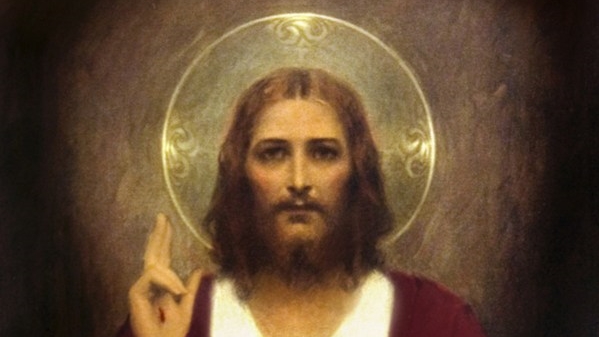
Is Jesus a blasphemer or the Son of God?
Two groups of Jews emerge in today’s Gospel account. There are those who are about to stone Jesus for blasphemy and those who begin to believe. The first group does not recognize the good works that Jesus has done as coming from the Father, nor his reasoning that “even if you do not believe me, believe the works, so that you may realize and understand that the Father is in me and I am in the Father” (Jn 10:38). They listen to the claim that Jesus is making but they refuse to accept the fulfillment of the assertion: Jesus is the Son of God.
The more that Jesus seeks to help them to understand that he is who he says he is, the more they dig in their heels. They leave the stones on the ground but then move to have him arrested. Jesus evades their grasp and moves to the region across the Jordan where John first baptized. John did not preach in the Temple precincts either, even though he was the son of a priest. John followed the lead of God to prepare the way for Jesus and his eternal priesthood. The Temple would no longer be the seat of God, for Jesus would be the new living Temple.
Jesus returned to the place of his baptism, where he joined in solidarity with sinful humanity. This visible image of consecration revealed what happened silently in his conception and birth: the Son of God took on flesh and became man to open up heaven for us in the humanity he assumed. As people came to John in the Jordanian wilderness, so too, people came to Jesus. Not all would reject his message. Many came to him and said, “John performed no sign, but everything John said about this man was true.” And many there began to believe in him (Jn 10:41-42).
The question that arises for us as our steps take us closer to Palm Sunday and Holy Week is to which group of Jews recorded in today’s Gospel account do we align ourselves with? Do we label Jesus as a blasphemer or accept that Jesus is the Son of God? The scriptural record does not reveal indifference as an option, does not leave any room for Jesus being only human; a good teacher, a wise man, or a revolutionary radical.
We either accept Jesus is fully human and fully divine or we don’t. If he isn’t who he claimed to be, God, then Christianity is a sham. If we accept that Jesus is the Christ, the Son of the Living God, then our thoughts, words, actions, and even our faces need to reflect that truth.
A good way to begin each day is affirming this fact and stating, “Jesus I believe in you, I need you,” and asking him what works of the Father he would have us offer in his name this day? May we have the openness of mind and heart to hear his words and the courage to act upon his guidance, so to be living stones, radiating the light of the living Temple of Jesus the Christ, the Son of the Living God to those we encounter today.
————————————————————————-
Painting credit: Sacred Heart of Jesus by CB Chambers
Link for the Mass readings for Friday, April 12, 2019: http://www.usccb.org/bible/readings/041219.cfm
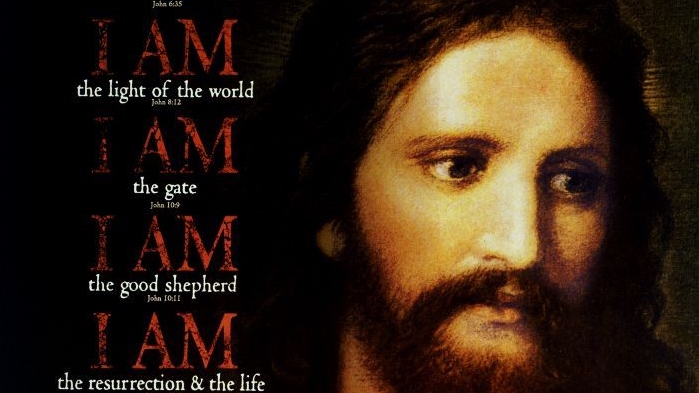
Trust that Jesus is who he says he is!
Jesus’ listeners “picked up stones to throw at him” (Jn 8:59). Though less violent, this interaction has some similarities found in Jesus’ Bread of Life discourse (cf. John chapter 6), where Jesus made the statement, that, “I am the bread of life” (Jn 6:48). In both cases the people do not understand what Jesus is sharing and yet Jesus doubles down on his points.
In John 6, Jesus holds firm to the truth that his followers will consume him and in today’s Gospel Jesus does not equate himself as being just a representative of God, a prophet or a rabbi, but that he in fact is God when he states: “Amen, amen, I say to you, before Abraham came to be, I AM” (Jn 58). With these words, Jesus has just done the unthinkable, he not only has spoken God’s sacred name, which is not to be uttered because it is considered too holy to do so, he equates this sacred name, “I AM”, with himself. Jesus is making his point very clear, that he is God. During the Bread of Life discourse people walked away from him because they were repulsed and most likely considered him mad, here they believe he is speaking blasphemy. The reactions would be appropriate in both cases, unless, Jesus is who he said he is.
As his listeners then, we too have a choice to believe or disbelieve in Jesus. One option that is off the table, if we give the Gospel accounts any rational reading, is that Jesus presented himself as just another teacher, philosopher, prophet, or guru. Jesus, during his public ministry, is consistently embroiled in conflict, which is evident in all four Gospels because Jesus presents himself as God incarnate. Jesus heals on the Sabbath because he is the Lord of the Sabbath, Jesus is the Bread of Life, Jesus is: “I AM.”
The Apostles struggle to make sense of the words and actions of Jesus and we also struggle with our understanding of who God is and who Jesus is. We may have doubts, concerns, and unanswered prayers and/or questions. To walk the path of discipleship is not to walk with constant assurance, for we walk by faith and not by sight (cf. 2 Corinthians 5:7). Walking by faith does not mean we throw up our hands, toss out all reason, and believe blindly. Dr. Holly Ordway defined faith as “trust based on a reasoned knowledge of the evidence.” Faith means that we trust that Jesus is who he claimed himself to be based on the scriptural evidence, our own experiments with the truth based on these claims and our experiences of him today.
Jesus calls and we follow. He does not give us the full picture, but as we step out trusting in his call, he will reveal to us each step of the way what we need to know. He will be present and work through us as we continue to turn our life over to him and one another more and more each day. When we begin to doubt, we can lean on Peter’s claim, “Master, to whom shall we go? You have the words of eternal life. We have come to believe and are convinced that you are the Holy One of God” (Jn 6:68-69). Peter made this claim based on his experience and trust in his relationship with Jesus. Our relationship and belief in Jesus will also grow to the same depth, moment by moment, with each yes to the invitation of Jesus, the Holy One of God.
———————————————————————————-
Photo: Accessed from Pinterest
Holly Ordway’s quote comes from Lesson 2: Bridging the Meaning Gap in her course: Imaginative Apologetics which can be accessed by registering for the Word on Fire Institute, the home page of which can be accessed: https://wordonfire.institute/
Link for the Mass readings for Thursday, April 11, 2019: http://www.usccb.org/bible/readings/041119.cfm
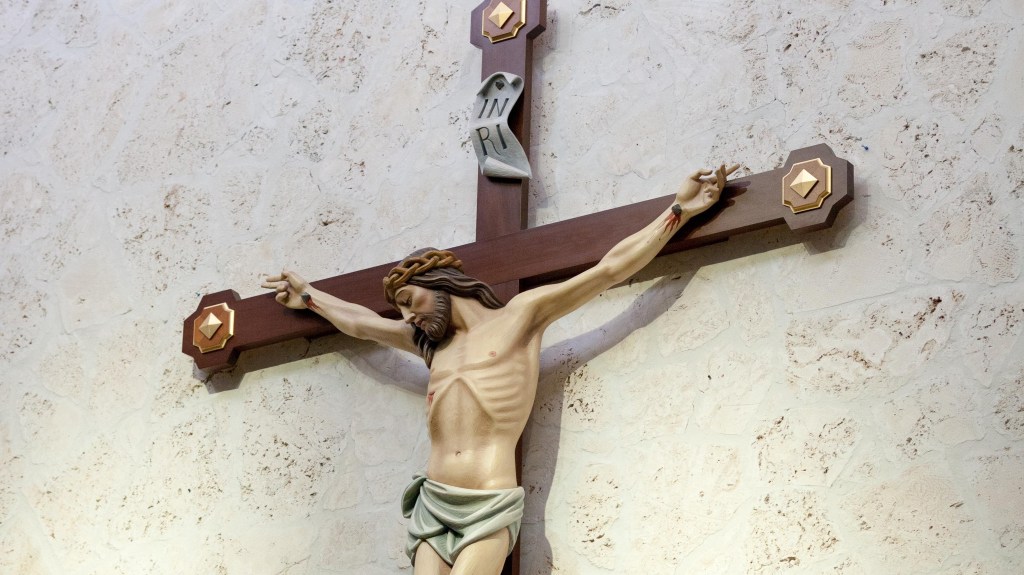
We are sinners in need of a Savior.
It is interesting to note that in today’s Gospel reading from John, Jesus spoke to those who “believed in him” (Jn 8:31). But the more he talked, the less they seemed to understand who he was: “If you remain in my word, you will truly be my disciples, and you will know the truth, and the truth will set you free.” His listeners balked at the word “free”, asserting that because they are ancestors of Abraham they have never been enslaved by anybody.
In the United States of America, freedom is also highly valued. Many of us would probably react very much in the same way. We may have different ways of expressing why we feel that we are free, but we would certainly assert that we are not enslaved to anybody or anything.
Jesus’ words ring just as true then and today: “Amen, amen, I say to you, everyone who commits sin is a slave of sin.” Jesus shined his light on the truth that many of us do not see, which is our enslavement to sin. If we truly seek to be free, then we need to acknowledge this point. What many of us claim to be freedom, doing whatever we want to do, when we want to and how we want to do it, is not true freedom. We cannot even hear the clanking of the chains or feel the weight of the shackles chaffing at our skin as we raise and shake our fists while asserting our freedom.
The response to Jesus’ statement of “who commits sin is a slave of sin” is not to hide, deny, rationalize, attack or flee, but to embrace the truth that Jesus is placing before us. In this way we allow his light to expose the darkness in our heart where sin speaks and we say yes. In this way, the thoughts, words and actions that we put before God are revealed.
When Pope Francis was asked, “Who is Jorge Mario Bergoglio?” he answered, “I am a sinner, but I trust in the infinite mercy and patience of our Lord Jesus Christ, and I accept in a spirit of penance.” We are all sinners because we all in some form or fashion place idols before God. This is not a negative or defeatist attitude, quite the contrary. When we call out our sin in truth, we can be free from it. When we think our life is about us first and foremost, and ignore or rationalize our sin we are enslaved by our sin, such that it chokes and threatens to undo us. Then we experience its debilitating effects and attempt to free ourselves, yet the process becomes likened to a Chinese finger trap. The more we pull to escape, the tighter the grasp.
We become freed from our sins by acknowledging that we are sinners, that we cannot be freed by our efforts alone, and that we need the mercy of Jesus. We need a savior. Jesus accepts us as sinners, as we are. We do not have to be perfect or have our house in order for him to come to be present with us, for he is already waiting for us. We do not need to be worthy, we just need to be willing to open the door when he knocks, and invite him into the chaos of our lives so to heal us with his grace, love and mercy. “So if the Son frees you, then you will truly be free.” Let Jesus in today and all days!
——————————————————————
Link for interview with Pope Francis from America Magazine, September 30, 2013:
https://www.americamagazine.org/faith/2013/09/30/big-heart-open-god-interview-pope-francis
Photo: Crucifix in the sanctuary of the cathedral, St Ignatius of Loyola, PBG, FL
Link for the Mass readings for Wednesday, April, 9 2019: http://www.usccb.org/bible/readings/041019.cfm
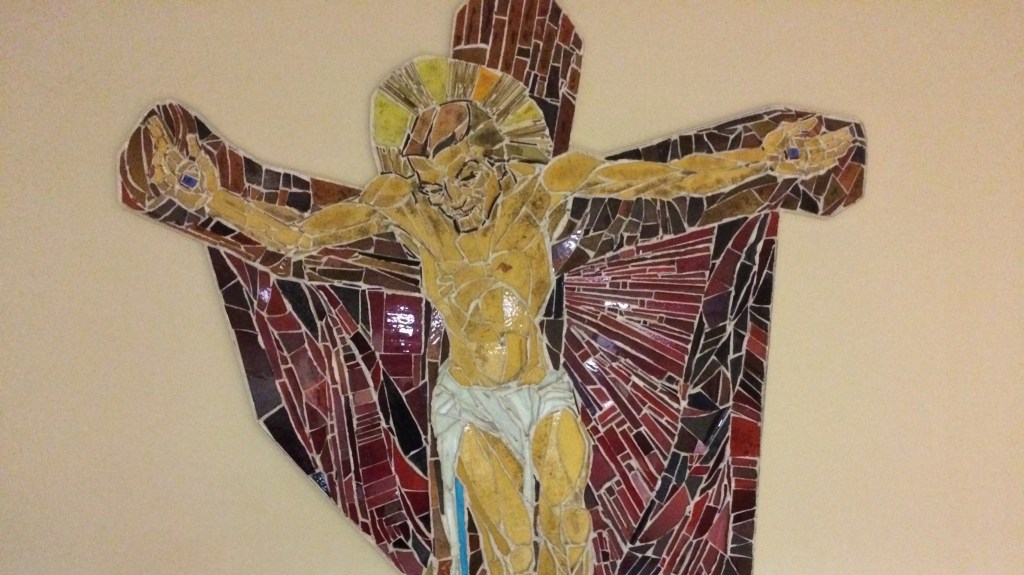
Jesus was lifted up for us, so that we could be freed from that which binds us to what is below.
Jesus seeks again to help the Pharisees to understand who he is. In the preceding section of today’s Gospel of John, the Pharisees do not believe in his claim of being “the light of the world” because he testifies on his “own behalf, so [his] testimony cannot be verified” (Jn 8:13). The point being made here is that for verification there must be support given by two or three valid witnesses (cf. Deuteronomy 19:15). Jesus states that he testifies on his own behalf as does his Father who sent him (cf. Jn 8:19). His witness in this matter is God.
Jesus continues in today’s Gospel account to attempt to help the Pharisees and those gathered around them to understand who he is and what is about to transpire in his crucifixion. Jesus shared that God the Father sent him and continues to be with him. He has not left Jesus alone because Jesus maintains the intimacy of their relationship as he follows the will of his Father and will continue to do so all the way to being lifted up on the Cross.
Those listening to Jesus do not understand, they asked if he was talking about killing himself. Often throughout the ministry of Jesus many, even his Apostles, do not understand what Jesus taught, and that was because they were trying to make sense of what he said from a purely material and finite reality. Jesus invited them to seek a deeper understanding by sharing that he is from above and they were from below. They were needing to be born from above, to open their mind and hearts to him, as Simon Peter did when he came to realize that Jesus was the Christ, the Son of the living God. Jesus gave those he taught a choice. They could die in their own sin, or repent and choose to live in participation with him.
Discipleship is a journey. We will not come to understand Jesus from one instance or encounter. Even Saul, who had an amazing experience and encounter with Jesus and changed his name to Paul, would take about three years to digest the significance of what happened to him that day on the road to Damascus. So will it be with us. We need to resist the world’s craving for instant gratification, especially regarding the growth of our discipleship.
We will mature in our faith journey as we acknowledge and repent from our sin, hear his call, believe in Jesus, remain committed to him, and walk with Jesus day by day and follow the will of his Father as he did. The gift of the liturgical seasons is that as we walk each year with Jesus and assess our growth. Like a finger making an upward spiral motion, we come again and again to the same point each year, and hopefully, we are higher up that spiral each time.
Sometimes it is hard to see change in the day to day, but overtime with the gift of hindsight, we can discover that we indeed have made a closer walk with Jesus a reality. If we can honestly assess that this is not so, it is not too late to begin again, to repent from that which keeps us bound to this world and turn our gaze to what is above. Jesus made his choice to follow the will of his Father, to be lifted up, and to die on the cross for us as we are right now. We too have been given a choice. We can hold tight to our sins or leave them at the cross. We can reject or believe and follow Jesus. We can die from our sins or live with Jesus for eternity.
——————————————–
Picture: Mosaic of Crucifixion from Our Lady of Florida Spiritual Center, Palm Beach Gardens, FL
Link for the Mass readings for Tuesday, April 9, 2019: http://www.usccb.org/bible/readings/040919.cfm
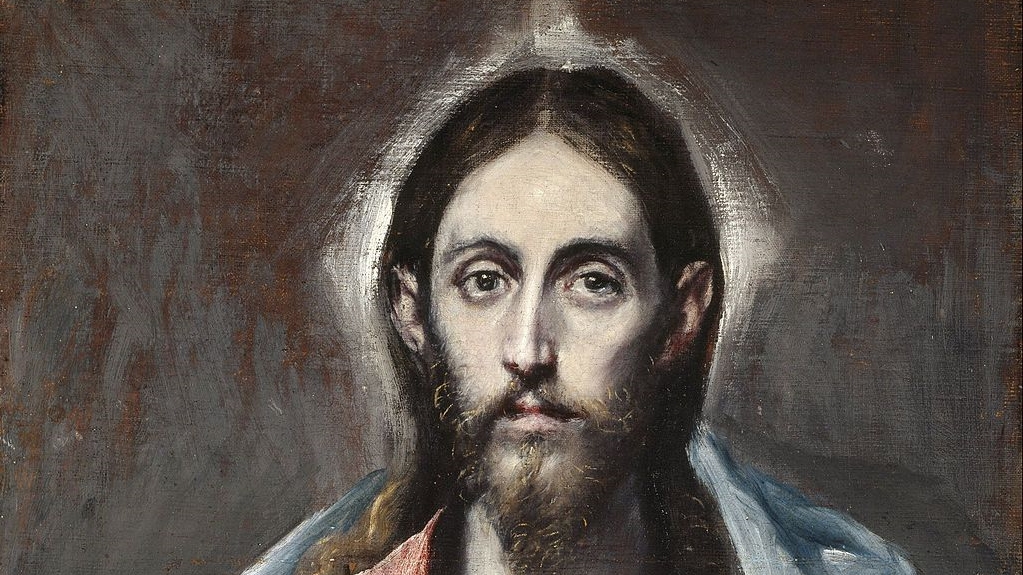
“I am the light of the world.”
Each of us suffers from some sort of spiritual cataracts or blindness. We see through the film of anxiety, fear, judgment, prejudice, defensiveness and the like. Jesus has come to heal our blindness such that we can see each other as he sees us, as children of God. “I am the light of the world. Whoever follows me will not walk in darkness, but will have the light of life” (Jn 8:12).
Jesus made this statement after the incident of the woman brought to him that was caught in adultery. Jesus said at the climax of that encounter, to the scribes and Pharisees, those who had come to hear him, and presumably his disciples, “Let the one among you who is without sin be the first to throw a stone at her.” Everyone had left for all have sinned. None of us are worthy to stand in the presence of God.
Yet, they came back, even the Pharisees. Jesus is the light of the world that shines in our darkness. He reveals to us darkness in our heart and our sin. Yet, what matters to Jesus is not our worthiness but our willingness to repent. Are we willing to see not only our own sin and to be healed of it, but are we willing to see the shortcomings and needs of others and instead of judging them, are we willing to accompany them and allow Jesus to be present through us?
We have a choice to make each day. We can see others through the filters of our fallen nature, our limited perspective, or we can see others through the light of Jesus. We can see ourselves and others as children of God made in his image and likeness, so to see each other with eyes of understanding, forgiveness, love and mercy.
Painting – El Salvador, El Greco – 1608-1614
Link for the Mass readings for Monday, April 8, 2019: http://www.usccb.org/bible/readings/040819.cfm
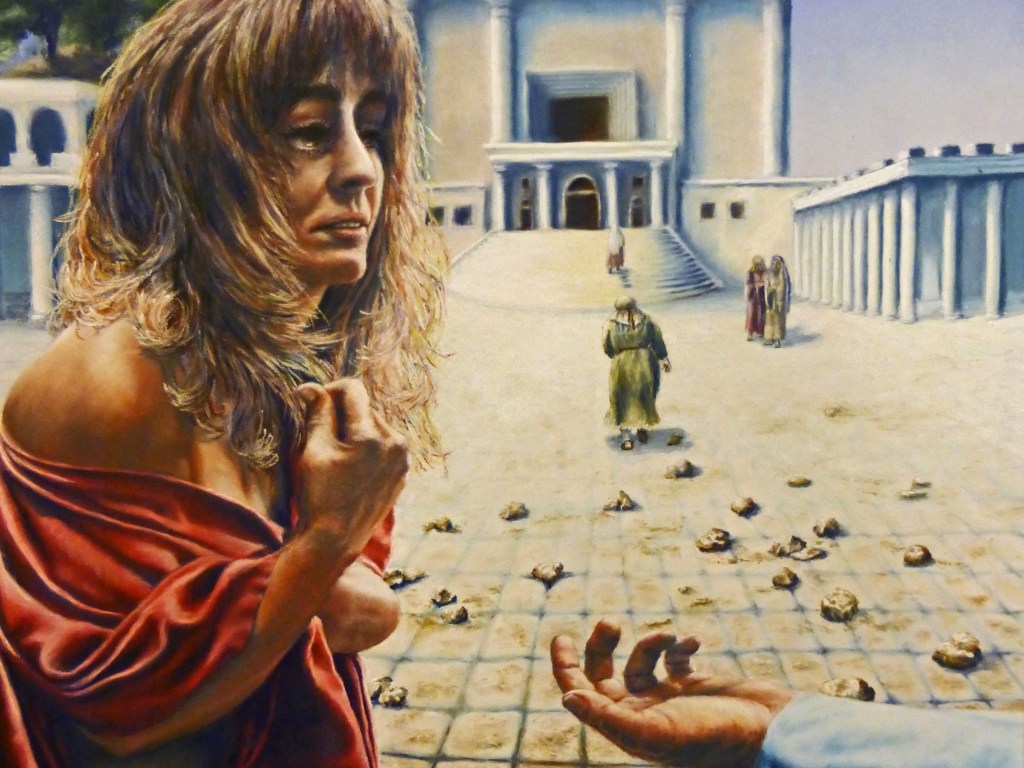
Jesus meets our misery and shame with love and mercy.
In today’s Gospel account from John, many people gathered around Jesus in the temple area and were sitting and listening to him, when a horrific display of human wickedness breaks in as, “the scribes and the Pharisees brought a woman who had been caught in adultery and made her stand in the middle” (Jn 8:3).
This act of depravity is worse if we spend any time thinking about this verse. This was a calculated plan hatched by the scribes and Pharisees. They had been watching this woman for the opportune time to break in an catch her, using their own words of accusation, in “the very act of committing adultery” (Jn 8:4). If this group was this calculated and malicious, they would not have probably even given her the opportunity to put her clothes on, but grabbed her and brought her to the temple area.
The shame that this woman must have had to endure as she was dragged openly and publicly through the streets was made worse because this crowd brought her to the temple area. The temple was where people came to give sacrifice to atone for their sins and to worship God. What was worse was that the dehumanization of this woman most likely had nothing to do with bringing her to repentance, but had all to do with demeaning her for their own twisted ends to trap Jesus.
The Pharisees and scribes hatched this plot just to trap Jesus in what they believed was a fool proof way to bring charges against him. If Jesus did not follow the law of Moses and condemn her to be stoned, he could be charged for speaking out against the Mosaic law. If he did condemn her, he would have lost face in front of all those who had come to listen to him preach as he often had done about the mercy and forgiveness of God his Father.
The response of Jesus was to give some visual aid to another of his teachings of taking the log out of your own eye before you seek to remove the splinter in another’s (cf. Mt 7:5). Jesus bent down and began to write on the ground with his finger (Jn 8:6). We do not know what Jesus wrote in the dirt that day. St Augustine proposed that he was writing the sins of those gathered around him as they were waiting for his judgment.
This makes sense, for when Jesus stood up he said, “Let the one among you who is without sin be the first to throw a stone at her” (Jn 8:7). Jesus then knelt back down and continued to write on the ground. One by one, starting with the elders, the accusers, and even those who had gathered to listen to Jesus that morning, all walked away.
Jesus stood to find only the woman standing before him. This is the first time he addressed her. He asked where her accusers were, and “Has no one condemned you?” She replied with three simple words, “No one, sir.” And Jesus replied, “Neither do I condemn you. Go, and from now on do not sin any more” (Jn 8:8-11). Jesus did not seek to inflict any more shame on this woman but instead he forgave her.
Jesus and the woman stood facing each other in the temple area, a stone’s throw away from where the Mercy Seat of God was present in the temple, Jesus met this woman’s shame and misery with mercy and forgiveness. He cleansed the temple of the hypocrisy of the Pharisee and scribes who had darkened the temple area that day. He did convict the woman of her sin, but did so in a way that respected her dignity, unlike those who hauled her out publicly to humiliate her for their own malicious purposes, but in private, when all had gone.
In that act of love and mercy, I can imagine, that the woman who had been dragged through the streets, humiliated, and full of shame, who also feared that her death was imminent, walked away from her encounter with Jesus crying not just with tears of relief, but with tears of joy, having been healed and empowered by Jesus. She walked away born again, a new creature, formed and fashioned by the love of God.
How do people walk away after they encounter us? Do they feel belittled, dehumanized, and demeaned, or understood, empowered, and redeemed? Jesus meets our misery and shame with love and mercy, we are to do the same with each other.
————————————————————–
Painting: The Woman Caught in Adultery by Jean Carter Kimble
Link for the Mass readings for Sunday, April 7, 2019: http://www.usccb.org/bible/readings/040719-yearc.cfm

This Lent, breath more and react less.
Jesus is recorded a few verses before (cf. 7:37-39) today’s Gospel speaking about quenching the thirst of those gathered around to listen to him. The thirst he is talking about fulfilling is a spiritual thirst, that thirst which we all desire to be refreshed by, that which we have been created to receive; the thirst to belong, to be in communion, to be loved and to love in return. Jesus speaks of coming to those who thirst to be refreshed with: “Rivers of living water [that] will flow from within” (Jn 7:38). Jesus spoke of the day when he would send the Holy Spirit to well up from within the soul of each who would follow him. All who participate in the life of Jesus would come to experience too the love shared between God the Father and God the Son, who is God the Holy Spirit.
Some who heard Jesus speaking in this way were deeply moved, they believed him to be the Prophet, others believed him to be the Messiah. Yet, there were those who could not see past their own prejudice. They heard his teaching, may have even been moved as well but said, “The Messiah will not come from Galilee, will he” (Jn 7:41)? Remember Nathaniel’s first reaction when Philip had told him that they had found the Messiah? Nathaniel asked if anything good could come out of Nazareth (cf. Jn 43-47). As I mentioned in prior reflections, Jesus was also rejected because he was looked down upon because of his trade as a tekton, carpenter or day laborer.
Why the region of Galilee, the town of Nazareth itself, would be disparaged is a matter of speculation. The fact was that there were those, unlike Nathaniel, that could not see past their initial prejudices. Even though Jesus spoke and taught with authority, though as the Temple guards who were sent to arrest him said, “Never before has anyone spoken like this man” (Jn 7:46), and even when Nicodemus spoke out rationally, requesting they hear Jesus out and give him the opportunity to make his case, there were those in authority and among the people who could or would not hear Jesus, who were unwilling to change, and so closed themselves off to the invitation to receive the gift of the love of God. Their charge was that he was not from Bethlehem, he was not of the line of David, case closed.
Lent is about change. Jesus’ primary message from the beginning of his ministry was: “This is the time of fulfillment. The kingdom of God is at hand. Repent and believe in the Gospel” (Mk 1:15). To be able to receive the living water, the Holy Spirit welling up within us that Jesus has promised, we must repent, change our hearts and minds from that which puts a kink in the flow.
We must come to terms with our ingrained, prejudicial attitudes, our limitations of thought that prevent us from seeing as God sees, otherwise we become like a stagnant pool. Change requires being humble enough to identify our sinful attitudes, actions, grudges, and habits that bind us and tie us into all kinds of contortions. We can dig in our heals like those in today’s Gospel and refuse to give Jesus the time of day, or we can follow the lead of Nicodemus and the Temple guards so to listen and hear Jesus out.
Repent and believe in the Gospel that you may have access to the living water that Jesus seeks to provide us. This is the love shared between him and his Father, who is God the Holy Spirit. When we can breath more and react less from our selfish postures, our defensive stances, and our rash impulses, we are better able to experience being loved by God in the moment. As we turn away from our sin and open ourselves up to Jesus, we receive this living water, the Holy Spirit, welling up within us. Being nourished by him, we are to then love others, even those for whom we may never have thought possible.
———————————————————————————-
Photo: Thumbs up for breathing more and reacting less so to love others as God loves us 😉
Link for the Mass readings for Saturday, March 6, 2019: http://www.usccb.org/bible/readings/040619.cfm

 Spiritual Stepping Stones