
Take courage and share the talents God has given.
“Then the one who had received the one talent came forward and said, ‘Master, I knew you were a demanding person, harvesting where you did not plant and gathering where you did not scatter; so out of fear I went off and buried your talent in the ground. Here it is back'” (Mt 25: 24-25).
I used to struggle with this verse of Jesus’ Parable of the Talents, not because I didn’t relate to it, but because I did. The problem was that I sided with the servant who buried his talent in the ground. What the servant did made sense to me, he kept his master’s talent safe and returned what he had been given. Historically, burying was considered a safe and acceptable practice in ancient Palestine when protecting someone else’s money. Even in reading carefully back to the beginning of the parable, I could see no reference to investing the talents. Though in the Gospel of Luke, there is an explicit demand to “trade with these until I come” (Lk 19:13). What is Jesus saying?
Actually, Jesus in this parable, offers a microcosm of salvation history, the thread of which has been woven through all of Sacred Scripture from Genesis to Revelation. God, through his sovereign will, has consistently called, calls today, and will continue to call into the future a people to himself. In each age, God has bestowed upon humanity his generous gift of grace, inviting us to receive and share in his very life, which is what we have been created for. This is a free gift, to be freely accepted or rejected. Once received though – no matter how little we choose to receive, we are directed to share what we have been given. Through a life lived of accepting, receiving, giving back to God and to one another, we are given even “greater responsibilities”.
In receiving the gift of God, himself, and sharing what he has given, ultimately his love, for God himself is Love, we not only mirror on earth, albeit dimly, but share in the divine communion of the love between God the Father, God the Son, and God the Holy Spirit. To reject this gift outright, or to receive some of the benefits and not to share, we cut ourselves off from the very life force and source of our being.
We can see this pattern emerge in this parable. The master gives his servants talents. To one he gives five, to another two, and to a third he gives one. All accept what they have been given. But differ in what they do with the gift. The first two double what they have been given, and the third buried what he had been given. Two have received and multiplied their talents, the one refused to and kept it to himself. The master returns, commends and rewards the two, then berates and even takes the little the one had been given and gives it to the one who had more.
The message of this parable is as clear as it is challenging. John P. Meier summarizes that, “Jesus is insistent; along with sovereign grace, serious demand, and superabundant reward comes the possibility of being condemned for refusing the demand contained in the gift. Indeed, one might argue that no aspect of Jesus’ teaching is more pervasive in the many different streams of the Gospel tradition, and no aspect is more passed over in silence today” (Meier 2016, 309).
God has created us and all of creation from the abundant outpouring of his love. Will we reject the gift of his love and invitation of communion? Will we receive, yet not actualize who we are called to be for our self and others because we would rather merely just exist, willing to be lured and entrapped by the temptations of anxiety, fear, apparent goods, and half truths? Will we give in to the fear, too afraid to risk, to go out from ourselves to serve others? Or, will we appreciate the gift of our life and say thank you for the breath that we breathe? Are we willing to expand the love we have received by being willing to share, to multiply our talents, to embrace who God calls us to be, to love in kind, to will the good of others in the unique way God calls us to serve, whoever they may be?
I have lived the life of the wicked servant who buried his talent out of fear. I have embraced the sin of sloth and resisted opportunities to share what God has given me to invest. This was no path to fulfillment, but an experience of separation from the fullness of the One who wants so much more. To live a day to day existence adrift and dulled, is certainly not the way I hope to spend another day. I am trusting more in the love of God, seeking to discern and follow his will, though at times, I still do so with indecision and trepidation. I do better when I reach out and seek the hand of Jesus and accept to be led by him. I have risked and fallen, made mistakes and duffed up time and again, but have learned, persevered, and each year of life there is a little less of me and a little more of Jesus shining through.
We are not alone. What Jesus invites us, gives us, and yes, demands us to do, he will at the same time provide the support and energy we need to carry out the task given to us and to bring it to fulfillment. God has something for us to do, a talent or two to invest. May we allow the light of Jesus to shine through us as a prism in our own unique way so to dispel the darkness of our current political, social, and Church climate. May we not be afraid to be who God calls us to be. May we not be afraid to love and to be loved. May we, in the words of Jesus and St John Paul II who echoed them as he began his pontificate:
“Be not afraid” (Mt 14:27).
———————————————————————————-
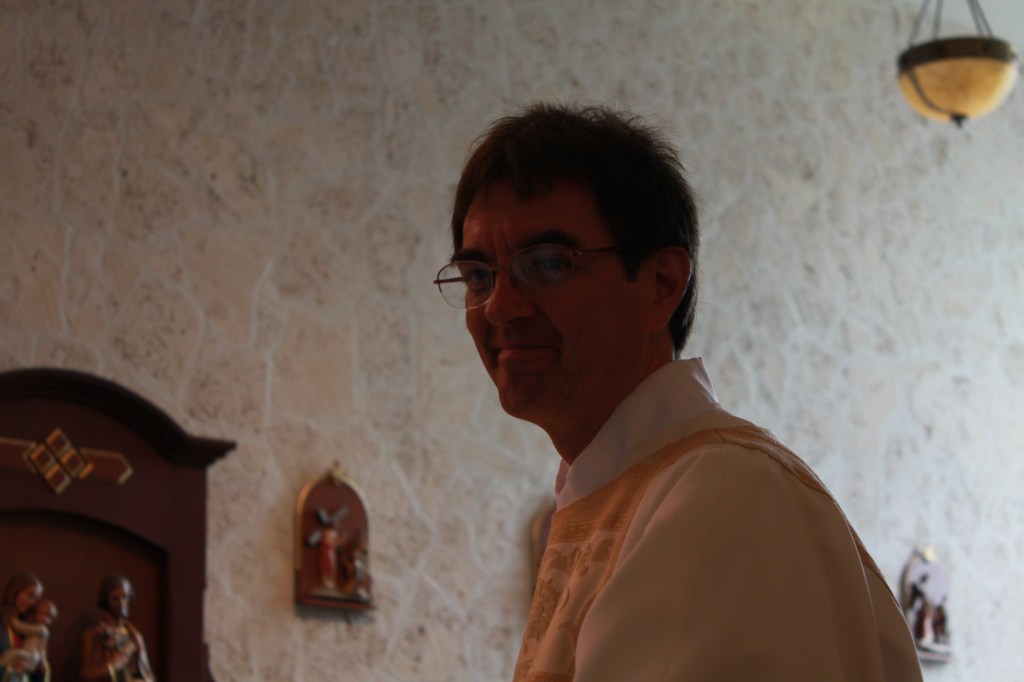
Photo: Invited to seek ordination, took the risk, said yes, and haven’t looked back since 😉 Picture taken by Jack McKee during ordination 2013.
Meier, John P. A Marginal Jew: Probing the Authenticity of the Parables. Vol. 5. New Haven: Yale University Press, 2016.
Link for the Mass readings for Saturday, September 31, 2018: http://www.usccb.org/bible/readings/090118.cfm

Are our lamps ready?
“The foolish ones said to the wise, ‘Give us some of your oil, for our lamps are going out.’
But the wise ones replied, ‘No, for there may not be enough for us and you. Go instead to the merchants and buy some for yourselves'” (Mt 25: 8-9).
The above verse comes in the midst of Jesus’ Parable of the Ten Virgins. The bride groom has been delayed in his coming so the virgins fall asleep. When they awake, five are prepared with oil for their lamps and five are not. From a first reading of this verse, we can be struck by the unwillingness of the wise not wanting to share their oil with the foolish.
The key to the lanterns being full or empty of oil had to do with the effort or lack thereof regarding those involved. All have been invited to the wedding feast, some are prepared and some are not. The oil in the parable may represent the invitation to relationship and discipleship with Jesus.
We cannot build a relationship with Jesus for others nor can others build a relationship with Jesus for us. No matter how full our lamps are, no matter how much of a blessing we find in our relationship with Jesus and our faith community, and no matter how we desire Jesus to have a relationship with our family members, friends, and colleagues, we cannot build that relationship for them. We cannot share our oil with them.
Also, if we do not have a relationship, or are resisting going deeper in discipleship, and we see others experiencing the joy, fulfillment, and fruits of a relationship with Jesus, and would like to have what others have, in the same vein, they can’t give us their relationship either. They cannot give us their oil. We need to be open to the invitation of the bridegroom, we need to be willing to develop a relationship, to do our part. Jesus could be knocking on our door, but if we do not open it and let him in, he will not impose upon our free will to refuse to answer.
Two examples may help to bring the point home. In Acts 8:9-24 there is the account of Simon the magician and in Acts 3:6 there is an example from Simon Peter. Simon the magician witnesses the works of the Holy Spirit moving through Philip, Peter, and John. He offers Peter money to be able to do what they did and Peter strongly rebukes Simon. Money can’t buy love, nor can it buy the fruits of the Spirit experienced by those who have developed an intimate relationship with Jesus. Regarding Simon Peter, in the account from Acts 3:6, Peter comes upon a crippled beggar and states that he has neither gold nor silver, but what he did have he would give him: “In the name of Jesus Christ the Nazorean, [rise and] walk.” The man was healed and walked.
Simon the magician’s lamp was empty, because he spent years building himself up, putting himself first, and saw God’s grace as a means for his own self aggrandizement. Simon Peter’s lamp had been filled with oil from having learned at the Master’s feet, having gone with him through the crossroads, the storms, his own failures, betrayals and humility and repentance, so to be empowered by the Holy Spirit at Pentecost, and willing to give what he had received to others.
The bridegroom has invited us to participate in the wedding, the union of Jesus and his Church. The time of his return is not yet, but we need to be prepared. May we resist sloth and self interest, and be willing to fill our lamps by being about the work of developing our relationship with Jesus and in the words of Mary, doing what he tells us!
We can’t fill other’s lamps, but we can invite others to fill their own. May we be present to those in our realm of influence where they are, assist in their need, share our faith, offer to pray with and for them, invite them to fellowship, study, and worship, be a living witness, and offer the same invitation we have received to fill our lamps to be ready for the bridegroom’s return.
————————————————————
Photo: oil lamp and Bible
Link for the Mass readings for Friday, August 31, 2018: http://www.usccb.org/bible/readings/083118.cfm
May we be faithful and prudent stewards.
“Who, then, is the faithful and prudent servant, whom the master has put in charge of his household to distribute to them their food at the proper time” (Mt 24:45)?
Jesus is calling us to be that “faithful and prudent steward” and the household we are to serve is our own homes, churches, communities, states, countries, and world. For the world is our home and those we serve are our brothers and sisters. Jesus’ call is a universal call to solidarity. We are all invited to be united in this effort for and with one another because we are all created in the same image and likeness of our loving God and Father.
God has created us, not as automatons or robots, or drone worker bees. He has created us as unique persons, one of a kind, distinct wonders that have never been nor will ever be again. Within our uniqueness there is also the gift of diversity. We are not intended to be separate from one another, for God has created all of us to be interconnected, to be loved and to love. What affects one, affects all.
Jesus clearly emphasizes this distinction in his parable, often called the Judgment of the Nations, when he stated: “Lord, when did we see you hungry and feed you, or thirsty and give you drink? When did we see you a stranger and welcome you, or naked and clothe you? When did we see you ill or in prison, and visit you?” And the king will say to them in reply, “Amen, I say to you, whatever you did for one of these least brothers of mine, you did for me” (Mt 25: 37-40).
Being faithful and prudent stewards, means being aware of and willing to attend to the needs of the hungry, the thirsty, the stranger, the naked, those ill, and/or imprisoned, as well as so many others in need. How do we even begin to address the tremendous number of people who are hurting? First and foremost, may we resist being limited by numbers, but instead meet and engage with one person at a time. May we resist judging someone as other but instead see a brother or sister; may we resist tribalism and nationalism, and instead be guided by integrity to reach out to fellow human beings in Jesus’ distressing disguise; and may we not be limited by our prejudices regarding ethnicity, race, and/or religion and instead see people in need.
Not all of us will be moved in the same way or for the same cause, but let us be open to God who will guide us regarding how best we can serve, help, reach out, and give of ourselves to others. We can be most open when we have the humility to confess those areas of our brokenness in which we have turned within ourselves. May we reveal where we suffer from anxiety and fear that prevents us from stretching beyond our comfort zones, acknowledge where we have been unaware or indifferent, and/or even admit that we still harbor prejudice, intolerance, or bias.
As we are forgiven, as we experience the love and mercy of Jesus, let us draw strength from him, begin to see the dignity present in one another, begin to see others as God sees them, and begin to take steps to encounter and love one another. We will be faithful and prudent stewards as we respect the dignity of each person we meet, in thought, word, and deed.
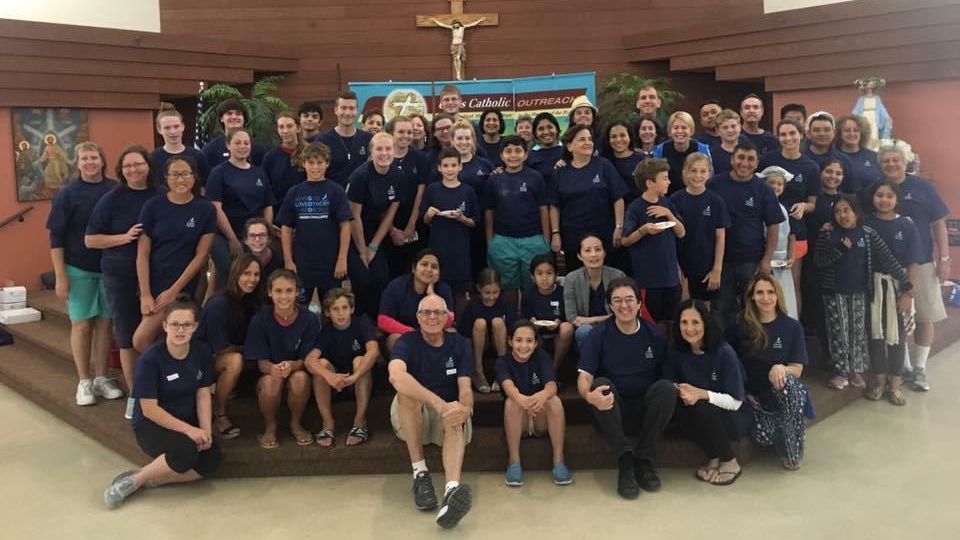
Photo: Participating in our first Hunger Challenge collaborative with St Peter and Cross Catholic Outreach a little over a year ago.
Link for the Mass reading for Thursday, August 30, 2018: http://www.usccb.org/bible/readings/083018.cfm
All in the Family
Herodias’ own daughter came in and performed a dance that delighted Herod and his guests (Mk 6:22).
Mark paints a word picture of a family: Herod, Herodias, and their daughter: ancient manuscripts differ as to whether she was Herod’s or Herodias’ daughter. Also, two times, in Mk 6:22 and 6:28, she is referred to in the Greek as korasion, meaning a young woman, as young as twelve years old (Donahue 2002, 198). The setting is the banquet hall of Herod, the tetrarch or prince of Galilee. His high officials, military commanders, and the elites of Galilee were all gathered to celebrate Herod’s birthday. This is a royal, opulent family.
The daughter comes out to dance for Herod. Her dance delights Herod and he grants her anything she wants. Following the counsel of Herodias, she asks for the head of John the Baptist on a platter. The reason for this request was because Herodias held a grudge toward John because he stated that it “is illegal for you to be married to your brother’s wife” (Mk 6:18). Herod was distressed at the daughter’s request, but granted John’s death sentence to save face before his honored guests. The execution was swift, the head of John was brought on a platter, given to the girl, who then brought it to her mother.
This is not the ideal image of the family that we hopefully aspire to. John’s upbringing as we learn from Luke, had a different experience. His mother, Elizabeth, and father, Zechariah, were devout Jews. They raised their son as a person of integrity and we can see from today’s reading of Mark the extent to which he would do so. John was willing to give his life, rather than compromise his principles. This stands in stark contrast to Herod Antipas who, with little contemplation about what he was doing, acted pretty quickly in giving the order to end the life of John in such a brutal fashion.
Could there be any two starker images? One family as corrupt, conniving, and malicious as can hardly be imagined and another as faithful, pure, and holy as can be hoped for. Families are not perfect, but most, if not all are a bit messy. We do the best we can to support and love one another. Hopefully, most of our families fall somewhere in between, and hopefully closer to, John’s family than to the Herodians.
Even when life goes well, it can be difficult and challenging. The best we can do as family is strive to accept and support each member for the unique gift and person we are, make it known that we are praying and thinking about one another, commit to be present and encourage one another, be willing to forgive one another, continue to communicate with one another, and even when we disagree, may we agree to respect one another.
No matter how bumpy the road of life gets or how high the waves of trials and tribulations toss us about, may we support each other to follow in the line of St John the Baptist to strive to be people of integrity. May we stand up for the dignity of ourselves and others no matter what. Even when we mess up, may we commit to accompany, love and be there for one another.
For all families, and especially those who are suffering from abuse in any and all of its forms, on this his memorial day, we ask St John the Baptist to pray for us.
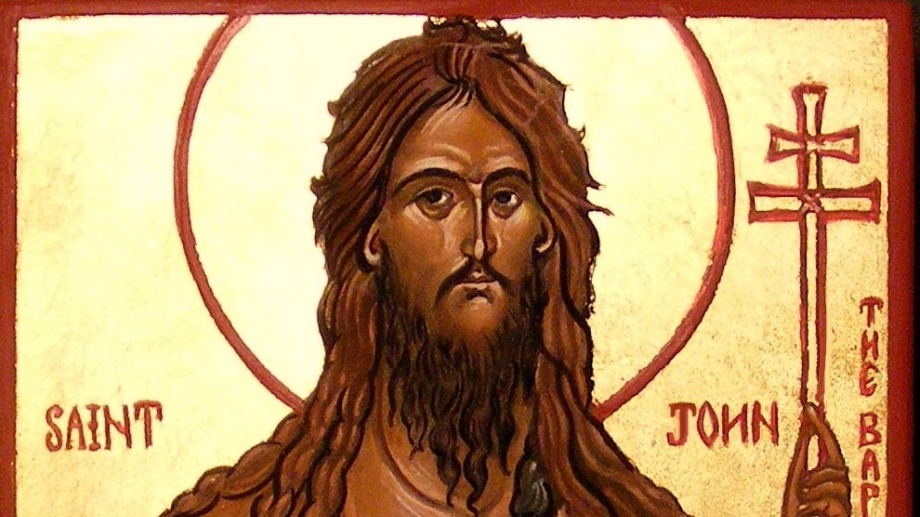
Photo: Icon of John the Baptist accessed from: https://thejoecatholic.org/?p=3700
Link for the Mass reading for Wednesday, August 29, 2018: http://www.usccb.org/bible/readings/082918.cfm
Donahue SJ, John R. and Daniel J. Harrington SJ. The Gospel of Matthew, in Sacra Pagina Series, vol. 1. Ed. Daniel J. Harrington. Minnesota: Liturgical Press, 2002.
Woe to you who have abused and covered up.
The most recent reports of clergy abuse in Chile, recent revelations about Cardinal McCarrick, and the grand jury report exposing the decades of abuse inflicted upon over a thousand children in the dioceses of Pennsylvania are horrific and devastating. Devastating first and foremost to those who have been gravely wounded physically, emotionally, and spiritually, as well as for those families who have accompanied their loved ones through these years of trauma, and for the deep wound it has left in the Body of Christ.
The Gospel readings from the past week have been ringing out and denouncing such atrocities. Yesterday and today, overtly so, as we witness Jesus calling out those scribes and Pharisees who have abused their power and positions: “Woe to you, scribes and Pharisees, you hypocrites. You cleanse the outside of cup and dish, but inside they are full of plunder and self-indulgence” (Mt 23:25). What has unfortunately been plundered, has been the innocence of our youth.
Jesus bestowed dignity on the vulnerable youth of his day, when he chided his disciples for not allowing the children to be brought to him for a blessing (cf. Mt 19:13-15). Jesus modeled the proper treatment of children and at-risk adults time and again throughout his ministry, and as disciples of Christ, first and foremost, we too are to stand up for and protect the dignity of each person, but especially the most vulnerable among us. There is no defense for these horrific actions, nor the coverup that has made these reports all the more egregious.
The majority of the reports revealed abuses that happened prior to the first significant waves of revelations of 2002. Since that time, many dedicated lay people and clergy have been diligently working together, to protect at-risk adults and children, to implement strategies and programs of awareness, to educate parents, children and all who work with children and at-risk adults in our dioceses across the country.
Yet, as this most recent wave reminds us, each diocese needs to bring to light, be transparent, and open records of abuse as far back as they have them and not wait for others to go digging. Those who have been responsible for acts of abuse, those who have been complicit in covering up their actions or shuffling priests around, no matter their level within the hierarchy, need to step down from public ministry.
There needs to be accountability and true contrition. There can no longer be a practice of covering up heinous crimes and abusers to protect the identity of the institution of the Church. We are the Body of Christ, and where one suffers, we all suffer. Jesus Christ promoted integrity over identity. Jesus called out those who were not living up to the principles of empowering the dignity of others, to keeping others at arm’s length, even Peter, who in one breath Jesus hailed his profession of faith and in the next he accused him as acting like Satan for opposing the reality of his path to the cross (cf. Jn 16:13-23).
The dignity of the person is to be placed before any institution. It is hard to deal with these recent or any revelations of abuse. What will help is to know that we are not helpless, nor alone. The Church is the People of God, the corner stone is Jesus the Christ, and we are all in this together. We need to pray for, while at the same time provide full access for those who have been abused that may receive healing, mentally, physically, spiritually and socially. Part of that process will be to allow them to share their stories which need to be told and heard. We also need to continue to be vigilant in protecting places that provide settings for children and at-risk adults from predators.
We need not leave the Church because of those who sin, we all fall short of the glory of God. We need not be paranoid either, but we do need to be clear to put boundaries and proven protective practices in place, we need to be aware to watch for warning signs regarding those that do not respect boundaries. We need to also be fully open and cooperative with revealing the abuses enacted in the past. To those who are still hiding in the shadows, remember that Jesus said, “There is nothing hidden that will not become visible, and nothing secret that will not be known and come to light” (Lk 8:17). May there be full transparency and accountability so that there can be avenues opened wide for healing, forgiveness and reconciliation. Let us strive to be people of integrity, building a true culture of life, that respects, protects, empowers, and stands up for the dignity of all.
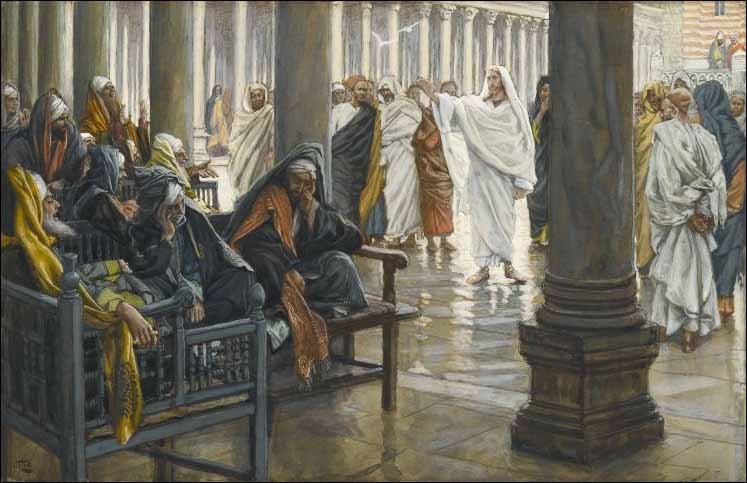
Photo: “Woe to you Scribes and Pharisees” – James Tissot, late 19th century
Link for the Mass reading for Tuesday, August 28, 2018: http://www.usccb.org/bible/readings/082818.cfm
Conviction, Contrition, and Reconciliation
“Woe to you, scribes and Pharisees, you hypocrites. You lock the Kingdom of heaven before men” (Mt 23: 13).
Context, in any reading of the Gospels, or any scriptural text, is important, but certainly with today’s reading. Our country is already experiencing enough division, polarization, and racial unrest as it is. These comments have too often been used to fuel anti-Semitic rhetoric. We need to remember that Jesus is Jewish. “The criticisms are leveled with those of power and/or influence as in the prophetic denunciations, not against the whole people of Israel. The aberrations denounced by Jesus were also denounced by other Jewish teachers in the rabbinic tradition. The goal of the denunciations is to highlight the error, to preserve others from it, and perhaps to bring those who err to the way of righteousness” (Harrington 2007, 327).
Those who would use these verses to denounce people of the Jewish faith tradition, just for being Jewish, would be acting in the same way as those for whom Jesus was convicting. Jesus spoke to the specific actions of specific leaders he had encountered who were using their power and influence for their own means and agendas. The hypocritical behavior that Jesus brought to light unfortunately still exists in our civil and religious leadership, though not all. It is why so many people are disillusioned with our religious and civic institutions.
We seek truth, authenticity, and transparency because these qualities are foundational for building trust and relationships. St. Augustine, whose feast we celebrate tomorrow, wrote in hid Introduction to his Confessions, “You have made us for yourself, O Lord, and we are restless until we rest in you.” He experienced a life without God and with him, and regretted the days he had resisted his invitation. It is unfortunate how many today have not come to embrace the words of Augustine, because of their experiences with those, who in the name of Christ, have “locked the kingdom of heaven” before them.
It is very easy to point fingers at others and how hypocritical they are, but Jesus is also speaking directly to each one of us. How have we erred? In what areas of our life have we allowed past hurts and wounds, anxieties and fears, prejudicial and judgmental attitudes, to limit us from living a more authentic life aligned with the teachings of Jesus. We all fall short in living the “Way, the Truth, and the Life” (cf Jn 14:6), but the good news is that when we have the humility to be contrite, to recognize and to be sorry for the hurt we have caused, to admit when we have been wrong, we have a loving Father with arms wide open to embrace us, comfort, lead us to reconciliation, and heal us.
May we follow the lead of St Augustine’s mother, St Monica, whose memorial we celebrate today. She guided her son, convicted him, did not judge him, but prayed for his conversion. May she intercede on our behalf, that we may be open to being conformed to Jesus, while at the same time be willing to speak up, out, and against any act that diminishes or denounces the dignity of another, as we resist the temptation to do so in a way that diminishes those who inflict division and hate. Jesus invites us to convict others and hold them accountable as he and the prophets who came before him did with those not fulfilling and unfortunately also abusing their roles of leadership. The intent is to win back our brother or our sister, by leading them to a place of contrition and reconciliation.
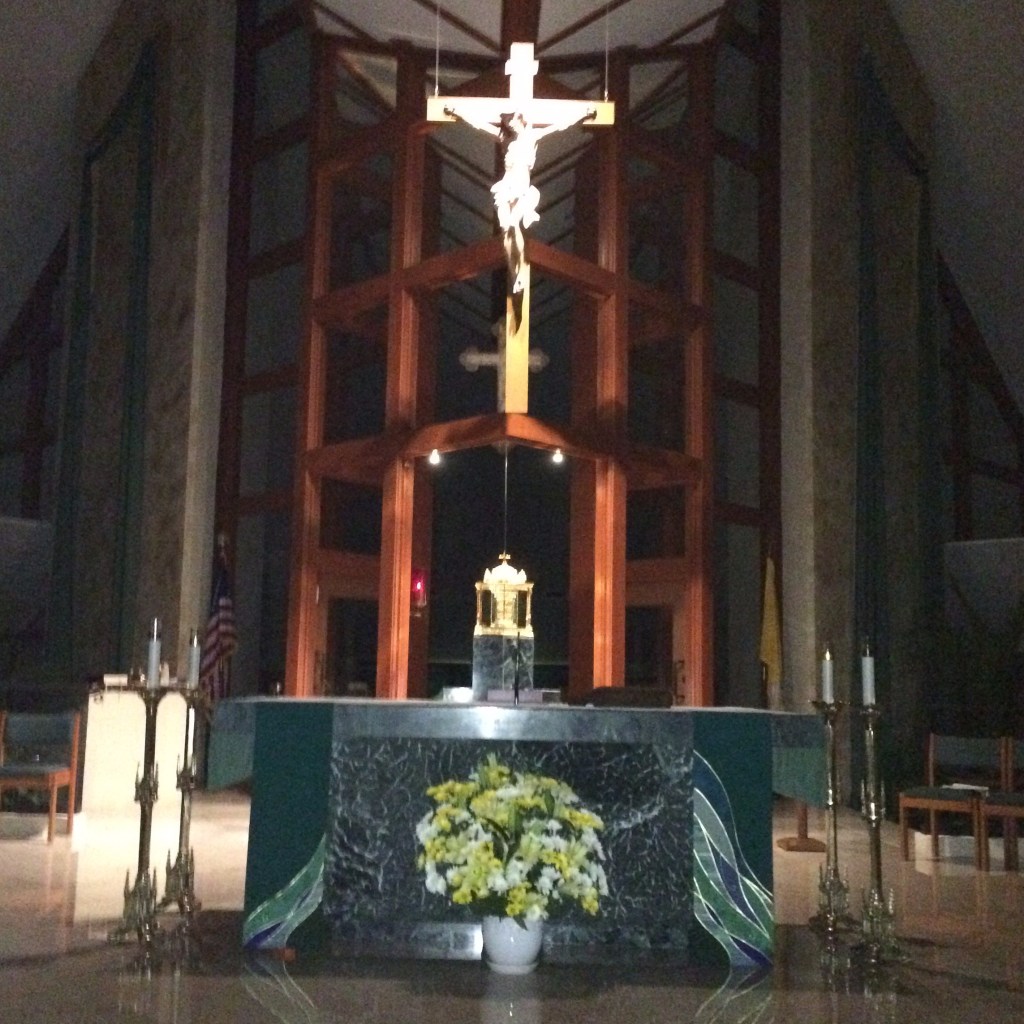
Photo: Sanctuary of St Peter Catholic Church, early morning before Mass. St Monica, just before she died, asked her sons to remember her at the altar of the Lord wherever they may be.
Link for the Mass readings for Monday, August 27, 2018:
http://www.usccb.org/bible/readings/082718.cfm
Harrington, S.J., Daniel J. The Gospel of Matthew, vol. 1, in Sacra Pagina, Ed. Daniel J. Harrington, S.J. Collegeville, MN: Liturgical Press, 2007.
The Body of Christ
Even though Jesus had fed the five thousand and they were satisfied and there was plenty more where this gift of grace came from. Even though they followed Jesus to Capernaum seeking a sign, the discourse regarding eating his Flesh and drinking his Blood was just too far of a stretch for these followers to take. In fact: Not only did many of the disciples of Jesus who were listening say, “This saying is hard; who can accept it” (Jn 6:60)?, many of his disciples walked away from Jesus at that point.
Jesus had gone too far. Even though just a day before they were ready to embrace him as the Messiah and move to make them their king, they could or would not believe because they did not fully comprehended who Jesus said he was, the One from above, who was sent by the Father. They had not yet developed a deep enough relationship with him such that, even though this teaching was unimaginable, unintelligible, as well as abhorrent, they couldn’t continue to stay with him any longer. Jesus didn’t adjust his words, recalibrate his meaning, didn’t go after them. Jesus spoke the truth with blunt force and let them accept or reject the invitation he offered.
Jesus then offered the same clear choice to the Twelve, “Do you also want to leave?” Simon Peter answered him, “Master, to whom shall we go? You have the words of eternal life. We have come to believe and are convinced that you are the Holy One of God” (Jn 6:67-69). Peter’s response is one of faith and trust. I am sure that Peter and the other eleven reacted in the same way, but their relationship was on solid enough ground such that they were able to still trust in Jesus. They believed he was who he said he was, “the Holy One of God.”
May this be our response as well. When we find some of Jesus’ teachings hard to digest, hard to put into practice, we need to resist the temptation to walk away. Instead may we follow Mary’s model of pondering, as she did when Gabriel shared she would bear the Savior of the world. She did not fully comprehend what the message meant, but she trusted God and said yes. May we follow Peter, who consistently, dealing with mixed emotions and doubts, impulsive behavior, putting his foot in his mouth on more than one occasion, remained firm in his belief in Jesus because he trusted that Jesus was the “Holy One of God”.
When we do not understand, may we dialogue with each other, read commentaries and the teachings of the Church to better understand the context, but above all, go directly to Jesus, bring our concerns and questions to him. May we consistently pray and be open for his answer, even directly from Jesus himself in the silence of our hearts. Often times we experience an aha!, or eureka moment from another person sharing an insight from a different perspective. We come to understand better the teachings of Jesus through graced moments of revelation when we remain trusting and open to God.
Peter kept the lines of communication open with Jesus. He misunderstood early on more than he understood, yet, he did not leave Jesus. Peter kept coming back. The persistence of Peter and his openness, as evidenced in today’s Gospel, when he answered Jesus regarding the option to walk away from him or not, Peter said: “Master, to whom shall we go? You have the words of eternal life” (Jn 6:68), is what allowed him to also be open to God speaking through him when he replied to Jesus’ question, “Who do you say that I am?” and Peter replied that Jesus was “the Messiah, the Son of the Living God” Jesus followed with the words, “flesh and blood have not revealed this to you, but my heavenly Father” (cf. Mt 16:16).
That is exactly the point. In seeking to understand Jesus, his teachings and his Way, especially when they are hard, may we trust that he will accompany us each step of the way. Jesus does not give us burdens just for the sake to bear them, nor will he leave us to carry them alone. The gospels are very clear on this. Where Jesus invites us to go and what he requires us to do, he will provide the grace, strength and perseverance we need, when we are willing to trust in him and call upon his help.
The grace of God builds on our nature, Jesus meets us where we are and leads us to actualize our potential and intellectual capacity to understand. He does not want us to be blind followers, but to be engaged critically with what he demands while at the same time trusting in the will of his Father. Our intellect and reason will take us to wonderful heights, but only so far. Jesus speaks to us in human words, but also through “spirit and life” (Jn 6:63). To come to understand the teachings of Jesus such that the Eucharist is his real presence, we need to access both our faith and reason.
Jesus is not asking us to do anything he himself has not done. Jesus requested that the cup of death his Father asked him to drink could be taken away, a hard teaching if there ever was one, but Jesus was willing to submit his human will to the will of his Father. He was able to do so because Jesus trusted his Father and knew he would bring about a greater good.
Jesus gave his life, died and in so doing conquered death, transcending the time and space of our present dimension so to be present to us in the Sacrament of the Eucharist as he promised and as is recorded that he would do in John chapter 6. May we take some time to read this chapter meditatively over this week and ask God to reveal to us the fullness of the gift that Jesus offers to us daily, himself. Jesus lives. Jesus is the first born of the new creation, and he wants to not only lead us to eternal life, but impart his life in us that we may experience the Love and Mercy of his Father now, so to be one with him in this life and for all eternity! Let us trust and believe in the Risen One, for he has the words of eternal life. Amen?
Amen. Amen.
I’m alive, I’m alive,
Because he lives.
Amen. Amen.
Let my song join the One that never ends.
Because he lives.
– Verse from Matt Maher’s song, “Because He Lives (Amen)”.
———————————————————————-
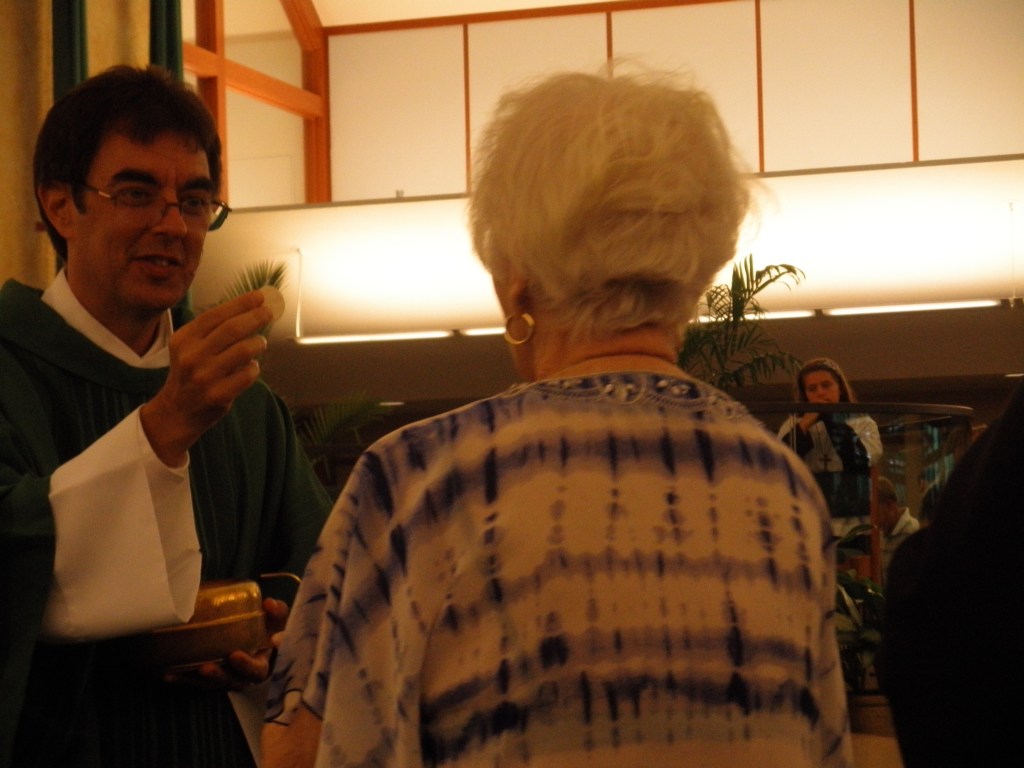
Photo: Serving Jesus at my first Mass after ordination
Because He Lives (Amen), Matt Maher, from cd: Saints and Sinners, 2015
Link to music video: Music video by Matt Maher performing Because He Lives (Amen) [Official Lyric Video]. (C) 2014 Provident Label Group LLC, a unit of Sony Music Entertainment
https://www.youtube.com/watch?v=PBvU7arNhQs
Link for the Mass readings for Sunday, August 26, 2018: 2018: http://www.usccb.org/bible/readings/082618.cfm
May we serve each other with Joy!
“The greatest among you must be your servant. Whoever exalts himself will be humbled; but whoever humbles himself will be exalted” (Mt 23:11-12).
Jesus warns us to resist the sin of pride, where we place our self as the focal point instead of God. This happens when we seek to be the center of the gravitational pull within our realm of influence. Through our subtle and not so subtle actions, we can embrace this temptation to live a life of, “Look at me, look at me!” Desiring to be affirmed is not a bad thing, but that ought not to be our primary motivation for our actions. Ultimately, we will be better served when we seek our affirmation from God.
Choosing our own self determination, free of God’s guidance, is the height of pride. God does not seek to limit us, but to inspire us, so that we may actualize the fullness of who he has created us to be. The spirit and council of St Mother Teresa often was not to seek to do great things but to do little things with great love. I came across a cassette tape of one of her talks during my freshman year of college. Her words started to plant a seed in my soul that urged me to look out beyond myself toward others.
Growing up with an introverted and shy nature, I spent much of my youth in my own world. In my second semester of that same year, I took a psychology course and thought it would be interesting to work in a hospital. A close friend of mine, Steve, shared with me that his mother was a nurse in a nursing home in our hometown. That summer, when the semester ended, I applied for the job as a certified nursing assistant and was hired.
The first resident I assisted was named Margaret. She rolled passed me in her wheelchair and a particular odor followed. The aide I was training with caught my eye and I realized this would be my first solo attempt of service. I redirected and guided her to the toilet, which was in a small closet sized area in between two adjoining bedrooms. It was a particularly hot day, and as I removed Margaret’s depends, I found quite the surprise. For the next fifteen minutes as I washed her midsection and perineal area, I sweat, teared up, and repeatedly fought back the urge to gag, all the while Margaret sang. Once cleaned up and in a fresh night gown, I helped her into her bed, tucked her in, and then Margaret said, “Give me a kiss lover.”
Others may have run for the door and never looked back. I stayed, and for the next four or five years, I experienced the wonderful gift of building relationships with the many residents and coworkers who drew me out of myself and into their worlds. What started out as a job became an extended family.
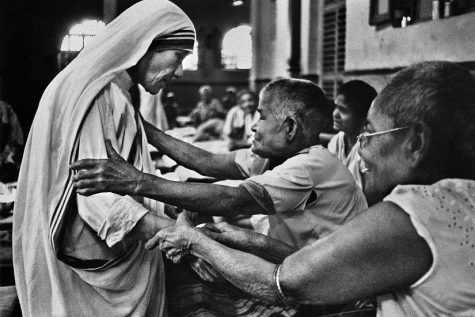
God presents us with opportunities daily, and often moment by moment, in which we can choose our self or we can choose to be present and give of ourselves to others. May we resist the urge to put our self first, to turn within ourselves out of anxiety or fear of risking to love, and instead pray for the courage to be open to the opportunities of grace God gifts us with. May we be willing to serve in little ways with great love, one person, one encounter at a time. I pray that you may encounter your Margaret! For Margaret helped me to live what St Mother Teresa taught me: “Love only can become our light and joy in cheerful service of each other” (Teresa 2010, 355).
Photo of St Mother Teresa accessed from: https://www.firstpost.com/living/mother-teresas-life-and-legacy-are-celebrated-in-new-collection-of-raghu-rais-photos-3464492.html
Mother Teresa. Where There Is Love, There is God. Edited by Brian Kolodiejchuck, M.C. NY: Doubleday, 2010.
Link for the Mass readings for Saturday, August 25, 2018: http://www.usccb.org/bible/readings/082518.cfm
 Spiritual Stepping Stones