Invitation, Encounter, Invitation

In our Gospel reading for today we get a glimpse of a blueprint for discipleship: invitation, encounter, invitation.
Invitation: “John was standing with two of his disciples, and as he watched Jesus walk by, he said, “Behold, the Lamb of God” (Jn 1:35). John points out Jesus to Andrew and the other disciple and they answer his invitation to follow Jesus.
Encounter: The two disciples of John catch up to Jesus. Jesus turned and saw them following him and said to them, “What are you looking for?” They said to him, “Rabbi” — which translated means Teacher —, “where are you staying?” He said to them, “Come, and you will see.” Jesus turns to the disciples and asks them the question, “What are you looking for?” They are asking for his location of habitation, recognizing that is where he would gather his followers to teach. Their intent, once finding his whereabouts, may have also been to visit him at another time. Jesus though invites them to: “Come, and you will see.” From this initial encounter, both are willing to follow Jesus and spend the day with him.
Invitation: Andrew, having encountered and spent the day with Jesus, upon leaving went and “found his own brother Simon and told him, “We have found the Messiah” — which is translated Christ —. Then he brought him to Jesus. Having encountered and experienced Jesus, he went to share the good news with his brother. Andrew, who had earlier in the day been invited, now became the inviter.
This pattern is the same for us. We are invited to encounter Christ and experience him in a unique, intimate, and personal way. Do we hear the invitation? If we do hear it, do we dismiss or allow other priorities or distractions to keep us from doing as Andrew had done, follow Jesus? Or do we recognize the invitation and follow, encounter, and experience Jesus the Messiah, the Christ?
When we do encounter and experience Jesus we are to invite others to come and see the living Son of God in our midst. A few examples of how we can do this is to share a story of how Jesus has touched our life, share a Bible passage that has moved you, a book that has transformed your life, a cd or you tube video that has touched you. Invite another to worship with you at Mass, to share in a ministry you are involved in, to join a small group you might be involved in, make time to communicate each other’s needs and pray together, accompany another in their need.
If you aren’t engaged in any of the above, I invite you to give one or two an opportunity, and as you encounter Jesus, then like Andrew go out and invite another. Ultimately, we need to be open to the leading of the Holy Spirit, for he will lead us in ways of invitation and encounter that we can experience and then share. The key is having a heart, mind, and soul open to encounter Jesus and one another, then be willing to let go, and be willing to allow God to happen.

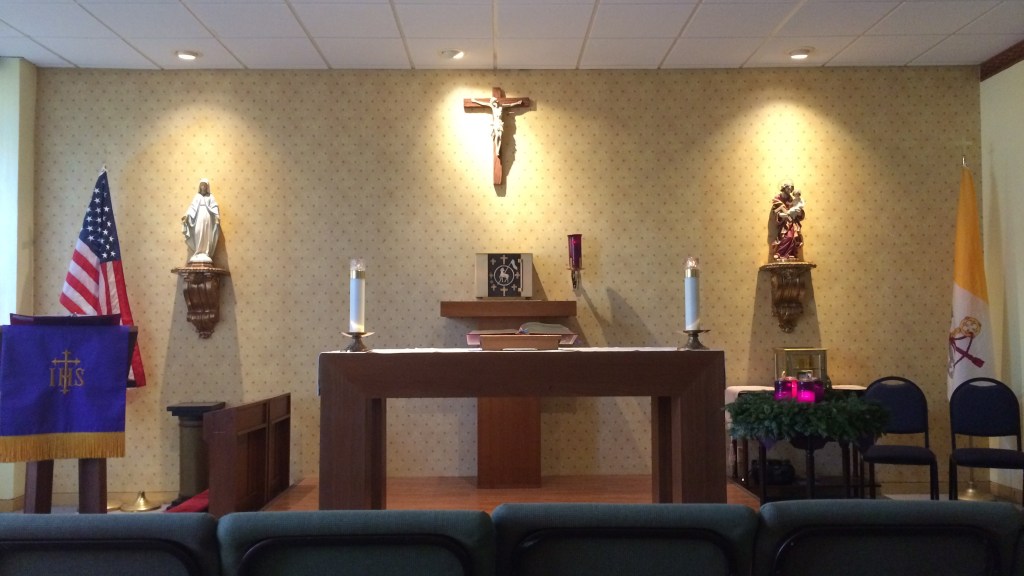
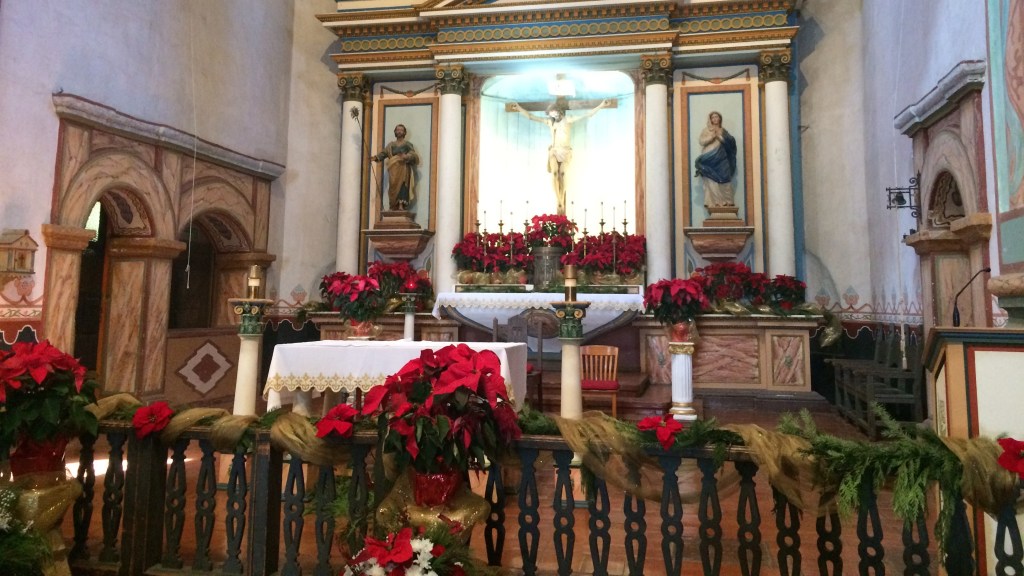
Photo: Sanctuary in Mission San Luis Rey de Francia

Link for today’s Mass readings for Sunday, January 14, 2018:

http://www.usccb.org/bible/readings/011418.cfm
 

Invitation For Communion: For All

Tax collectors were disliked, even despised by many in ancient Palestine because they were considered unclean, as were lepers and sinners. They were cast in this net because there were those who abused their position. A tax collector had a responsibility to pay a fixed amount to the occupying power of Rome, but then could keep as a commission anything he collected over and above that fixed amount. The majority of the population already just getting by, paying a temple tax, and the Roman tax, then finding out their local tax collector was taking more than their fair share, did not make for feelings of endearment.
Jesus surprises all who had come to hear him teach when he not only invites Levi, also known as Matthew, to follow him, but then they have dinner together. We are witnessing yet again another healing miracle. Jesus provides an opportunity of bridging divides by inviting someone to his inner circle to turn away from one way of life to begin anew, to: “Repent and believe in the gospel” (cf. Mk 1:15). The Pharisees question his choice of table fellowship companions. It is not clear if the Pharisees are eating with them or are on the outside looking in. The other curious point is that the Pharisees are conversing with Jesus’ disciples. So both groups are together witnessing the communal exchange.
Whichever is the case, that they were engaged in the meal together or observing from afar, not quite sure if they were wanting to participate, they could not have been at too great a distance because Jesus could hear their concerns. Jesus then responded: “Those who are well do not need a physician, but the sick do. I did not come to call the righteous but sinners” (Mk 2:17). The Pharisees, and possibly some of his disciples, were not a part of the intimacy of this communion because of their own unwillingness to accept those that Jesus invited to share a meal with, to accept that they were sinners also in need of healing.
Jesus forgives and offers mercy to all who are willing to receive it. He offers an invitation of intimacy and communion as the one who is ushering in the kingdom of God. He is offering healing and transformation. The only requirement is to say yes to be with him, to be willing to come into his light and be loved. From this encounter then our relationship with him can grow if we have the humility to acknowledge our sinfulness so to be healed and come into the fullness of who God calls us to be and so to share the invitation of blessing and healing we have received with others.
We can see overtones of the Parable of the Prodigal Son found in Luke (cf. Lk 15-32) at play in this scene presented by Mark in today’s Gospel, where those who have been lost, the tax collectors and sinners, have returned and are now enjoying a time of feasting and fellowship, while the Pharisees and disciples are keeping themselves at a distance, like the eldest son, unwilling to forgive, to accept the invitation. Instead they choose to judge, to hold onto their pride of place. They too are invited to embrace this gift that their brothers have been offered a chance to be transformed and healed by the love of Jesus, yet, their hardness of heart keeps them set apart instead of sharing in communion. Jesus invites us today to be in communion with him. Do we say no because he allows sinners and others that are underserving to be a part of the banquet or are we thankful of his mercy, recognizing that if he is willing to forgive others, he will forgive our own sinfulness? May we embrace the opportunity for healing and transformation and so share the invitation!
With many biblical passages, this one offers a wonderful opportunity to place ourselves in the scene. Mark presents Jesus teaching the people though he does not tell us anything about what Jesus shared. Knowing what follows, we might ask ourselves, “What might Jesus have taught about before going directly to Levi at the custom’s post?” Could he have been talking, as Matthew adds in his parallel account, about how Amos preached about how God desires mercy and not sacrifice (Mt 9:12)?
Let us sit with the opening line for a time and see what Jesus shares. Then as Jesus moves to the custom post, follow him and the others. What is our reaction to Jesus calling the tax collector Levi to follow him as one of his Apostles? Are there sins that others commit that we find easy to forgive, others that we find hard to forgive? Do we accept the invitation to table fellowship with the motley crew, stay at a distance, or walk away? With the gift of these readings that we have been graced with, it is important that we make the time to ponder them, to invite Jesus into our reading, and to encounter him as did those we read about. This is a wonderful spiritual practice that can bring us much joy and bring us into communion with the Physician. No RSVP needed, just come, open up your Bible and join the feast!

Photo: Mission San Luis Rey de Francia, Oceanside, CA

Link for today’s Mass reading for Saturday, January 13, 2018:

http://usccb.org/bible/readings/011318.cfm

Iēsous Kyrios, Jesus is Lord!

When it was known that Jesus was in the vicinity, people came. They came to hear him teach, because he taught with authority, he taught in ways that were practical as well as demanding, he confirmed the foundational principles of Judaism, while at the same time he called out abuses in leadership. Jesus came not to abolish the law but to fulfill it. That meant that he did not water down the message of God, but raised the standards even higher than they had been before under the leadership and legacy of Moses. Unlike some of the Pharisees though, Jesus did not just add heavy burdens to leave the people to carry on their own, Jesus accompanied those he challenged, he carried the weight of our sin, all the way to Calvary. Jesus also healed and cast out demons.
If Jesus had a business card to hand out as people gathered it would have had written on it his first words recorded by Mark in his Gospel: “This is the time of fulfillment. The kingdom of God is at hand. Repent, and believe in the gospel” (Mk 1:15). The time of fulfillment is indeed at hand in the presence of the Son of God made flesh. The entrance to that kingdom is measured by a willingness to turn away from self and turn back to God. Those who are open to change and transformation, who are in touch with their hunger and yearning, recognizing that there is more to life than what they experience in the here and now are drawn to Jesus. This is why his house in Capernaum is full to overflowing.
When Jesus returned to Capernaum after some days, it became known that he was at home. Many gathered together so that there was no longer room for them, not even around the door, and he preached the word to them (Mk 2:1-2).
We can clearly see that there is a movement afoot in just these first two chapters of Mark. Another key verse from Mark is the very first line of his Gospel: “The beginning of the gospel of Jesus Christ [the Son of God]” (Mk 1:1). This is an amazing line, unless we read the words only, missing its proper contextual background. Those reading or hearing these words in the first and early second century would have grasped Mark’s intent immediately. There are two words in that verse that would have leapt off the pages or the lips of the reader; gospel and Christ.
The geopolitical powerhouse lording over Israel at the time of the life of Jesus was Rome. The house of Caesar was its head. Augustus Caesar was emperor at the time of the birth of Jesus and Tiberius Caesar was during most of the adolescence and adult life of Jesus. The term gospel, euangelion in Greek, meant good news. This gospel was spread throughout the Roman empire by messengers on two occasions, at the behest of the emperor; on his birthday and after great military victories. Christ, or Christos in Greek, meant the anointed one. The only ones who were anointed were emperors, kings, and priests.
Mark was making a very clear point with this opening verse, the proclamation of the good news is that Jesus is the Christ the anointed one, not Caesar. It is not Caesar Kyrios, Casaer is Lord, but Iēsous Kyrios, Jesus is Lord! This verse is treasonous in the face of Caesar, but a subversive rallying cry for the followers of Jesus then and today. Yet Mark was not calling for a military coup, or power play, as has been seen from age to age.
Jesus the Christ is our Lord. He is the one to whom we bow when we hear his name, not any emperor, president, prime minister or political party. We are not called to take up arms but to repent, to turn back to God, to resist the path of self-centeredness, and instead to love – to will the good of others. Let us repent then, and surrender to the Son of God, so to be transformed from the darkness of revenge, hate, pride, and division, and instead be conformed to the Body of Jesus the Christ our Lord, so to uphold the dignity of our brothers and sisters from the moment of conception until natural death.
Iēsous Kyrios! This is good news!
________________________________________
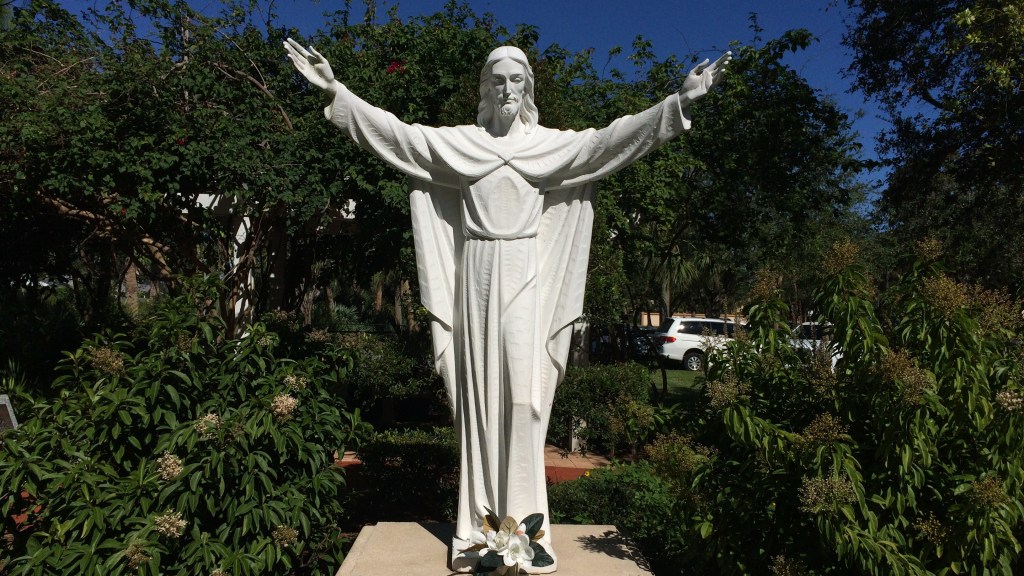
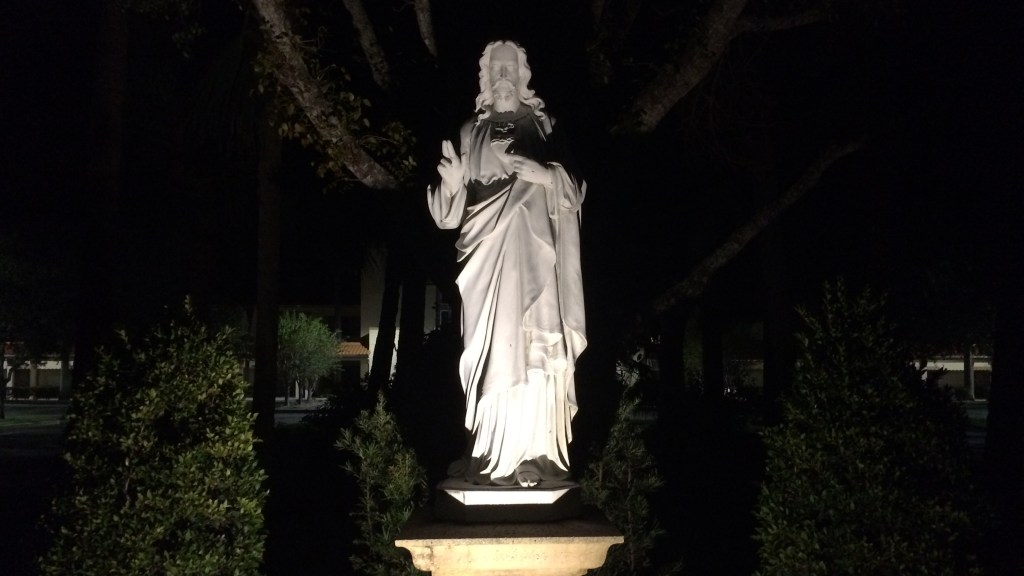
Photo: Jesus in the Rosary Garden at St Peter Catholic Church, Jupiter, FL

Link for the Mass reading for Friday, January 12, 2018: http://usccb.org/bible/readings/011218.cfm


Let us Be Moved With Compassion

A leper came to him and kneeling down begged him and said, “If you wish, you can make me clean” (Mk 1:40).
The term of leprosy, used during the time of Jesus, was a more general way to describe various issues pertaining to the skin such as, open wounds, sores, skin flaking, as well as much more severe and chronic conditions. Today we use it more specifically to refer to Hansen’s disease, a chronic infectious disease caused by a rod-like bacterium named Mycobacterium leprae (PubMed Health).
Those dealing with such skin conditions were deemed as unclean. They were to live outside of their village, town, or city; wear ragged clothes, their hair needed to be unkempt. If anyone came close to them, they were to yell out that they were unclean, so there would be no chance of human contact. Lepers were exempt from any communal religious practice and the common opinion held was that those in this situation deserved it because of some sin that they committed. Those with chronic or recurring conditions could be in a state of exile for the entirety of their life. The experience was like a living death because they were being isolated from all societal interaction.
When Jesus comes within distance of the leper he is quite aware of the cultural and societal context. This leper does not keep his place, he does not follow the societal norms. Instead of warding off Jesus and urging him to keep his distance, because any contact with Jesus would then make him unclean, he approaches Jesus and kneels before him. Jesus does not reprimand him, and he, like the leper, also does not follow social protocol: “Moved with pity, he stretched out his hand, touched the leper, and said to him, ‘I do will it. Be made clean'” (Mk 1:41).
The leper is healed at the moment of contact, his death sentence is commuted, his opportunity for worship and communal life is restored. This simple act of healing the leper is in fact a microcosm of the Jesus’ ministry. The Son of God, moved with compassion, touched us in the most intimate of ways by becoming one of us in our humanity. In embracing our human condition, he provides the opportunity for restoring us from our exile from God and one another, building a bridge to cross the wide chasm of our sin that separated us. In his willingness to touch the leper, Jesus was a living icon of how he, as the Son of God was willing to walk among us, accompany us, experience our pain, suffering, and separation, while offering us healing, so we in turn could become instruments of healing for one another.
We are to not shun those on the peripheries, nor, God forbid, are we to support social prejudices, injustices, and structures that isolate and exile others. We are called by Jesus to be open to walking in solidarity with our brothers and sisters. We need to be asking ourselves, who are the ones that are living on the peripheries among us today, those we push into positions of shouting unclean when we come near?
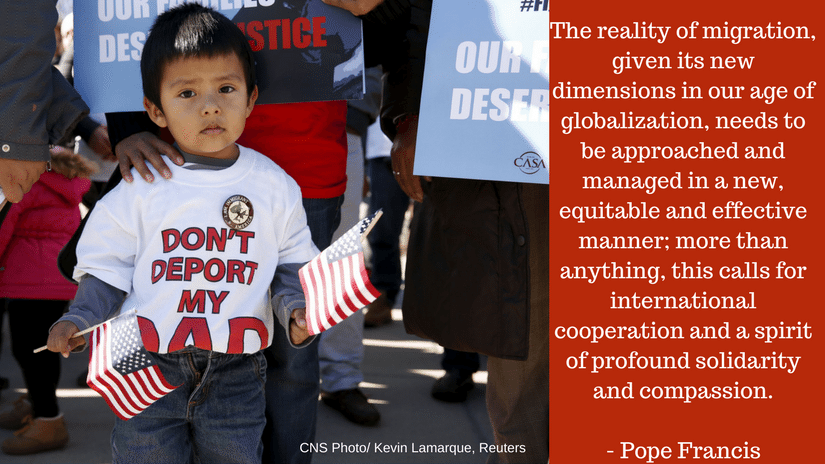
As the Church recognizes National Migration Week this week from January seventh to the thirteenth, may we spend some time to imagining the plight of the too many “migrants, including immigrants, refugees, children, and victims and survivors of human trafficking” (Justice) that are struggling for basic subsistence, seeking to belong, to be a part of a community. Unfortunately, many find themselves in the same place as the leper in today’s biblical account, feared, exiled, pushed to the peripheries, and kept at arm’s length.
May we pray to have the compassion of Jesus to see migrants and all those who are on the outside looking in, not as others, but as one of us. May we open our hearts and minds to see the dignity of one another and like Jesus not shy away, but embrace the opportunity to reach out to touch another, to accompany another. May we be open to ways in which we can, leave our protective shells, risk going out to the margins within our own communities with “a spirit of profound solidarity and compassion” (Pope Francis).

Photo: Accessed from:

https://justiceforimmigrants.org/migrationmonday/

PubMed Health. “Hansen’s Disease (Leprosy).” https://www.ncbi.nlm.nih.gov/pubmedhealth/PMHT0027942/

Justice for Immigrants. “National Migration Week 2018 (January 7-13).” https://justiceforimmigrants.org/take-action/national-migration-week/

Link for Mass readings for Thursday, January 11, 2018:

http://usccb.org/bible/readings/011118.cfm

Seek God’s Guidance and Courage

There is a danger when we read a comment from Scripture such as when Jesus, “cured many who were sick with various diseases, and he drove out many demons” (Mk 1:34). The danger is that we may not believe we are capable of healing like Jesus so we don’t do anything active with our faith. We also might think that Jesus is divine, so of course there is no way we can measure up to what he has done. An even worse line of thought would be to disbelieve that the healings of Jesus happened at all, that they are all made up, and they never really happened.
What we need to keep in perspective is that Jesus had a specific mission to accomplish, and yes he was divine, but what I shared over and over again through the Christmas Season was that he was also fully human. He had a specific mission from his Father, for his Apostles, and he has one for us as well. Jesus himself proclaimed: “Amen, amen, I say to you, whoever believes in me will do the works that I do, and will do greater ones than these, because I am going to the Father” (Jn 14:12). Not only does Jesus say we can do works such as these but even greater ones! Jesus has a plan for our life, a part for us to play, and he will empower us with that which we need to accomplish his goals.
Another challenge can be pride. We may want to heal like Jesus, for the purpose of our own aggrandizement, so people look at us, not God. That was the sin of Simon the magician, who saw the Apostles healing, just as Jesus had, and offered payment to them for the power to accomplish the same (cf. Acts 8:9-25). The other problem is wanting to do something grandiose before we are ready, or doing something beyond our own unique gift and charism.
There is a charism of healing in the Church. I do not have it, but I know God heals through others. What is more important in our lives of discipleship is surrendering our will to God’s will and aligning ourselves with the vocation he calls us to complete. There is some way for all of us to contribute. Throughout the Bible we can view how it is that God invites, and begins with those he invites in very small and humble ways – Jesus himself began his days on this earth wrapped in swaddling clothes in a feeding trough, as vulnerable and humble a beginning as there can be!
May we begin today with a moment of prayer, coming to a place of quiet and stillness, and asking God to direct us in our daily encounters and actions to make Jesus present to others, as well as for the willingness to see Jesus in others. Then let us be open to those opportunities of interruptions, needs that arise, people in our midst that simply need our presence, a smile, an active listening ear. There is so much need we won’t have to look very far. We just need to be open and willing to receive God’s guidance and courage to act when he presents us with the opportunities to do so, to love, to will the good of others in our midst.

Photo: Cardinal Newman Chapel, where I begin each day of the school year seeking God’s guidance and courage

Link to Mass readings for Wednesday, January 10, 2018:

http://usccb.org/bible/readings/011018.cfm

Reading the Bible, a Good Way to Begin the New Year

The liturgical calendar of the Church is marked by seven seasons: Advent, a season of preparation for Christmas; Christmas, the time when we celebrate the Incarnation, the birth of the Son of God who became human; Ordinary Time, derived from the word ordinal, as in ordinal numbers in which we celebrate and reflect upon the life and teachings of Jesus. Lent is another preparatory season with a special emphasis on repentance as we prepare to celebrate the premier Season of Easter, but before the Easter explosion of Alleluia, there is the Easter Triduum, three days in which we celebrate the suffering, crucifixion, and death of Jesus. During the Easter Season we rejoice that we are Christians because of the real fact that Jesus conquered death and rose from the dead. The liturgical calendar then rounds out the year with the second season of Ordinary Time.
The Church also divides the liturgical readings of the Bible up into a three year cycle for Sunday readings and a two year cycle for week day readings in a text called the lectionary. This book, actually a four volume set, is a gathering of specific biblical accounts read on specific days, each day of the year. Through the three year cycle one can then be exposed to the vast depth and breadth of Sacred Scripture, the Old and the New Testaments. In this way we can experience again and again what is hidden or concealed in the Old while at the same time discovering what is revealed in the New. Immersing ourselves in these daily readings is a powerful way to come, not to only understand Jesus better, but to come to know, and be transformed by, him.
These two paragraphs serve as a preface to clarify that as we start the Season of Ordinary Time, there is nothing ordinary about it! As I shared above, this is the time we reflect on and celebrate the life and teachings of Jesus. Our participation in the scriptural and liturgical life provides for us a foundation to better live as disciples of Christ. I am not writing or implying that we are to only read what the Church prescribes on these days alone, but just that we have been given a wonderful opportunity to build a solid foundation for our life. We certainly need to go beyond and read, study, and pray the Bible on our own, be involved in small group Bible studies, enroll in courses, as well as read solid commentaries.
With that said, let us return to the Gospel reading of the day from Mark. One point that struck me from today’s passage (actually, more did, but let’s go with this one!) was the fact that Jesus “taught them as one having authority and not as the scribes” (Mk 1:22). What does Mark mean here? Mark is relaying to us that the way the scribes taught and discussed their sacred texts was by quoting various trusted interpreters, those who had the weight of authority to do so. Jesus was quoting no one. He spoke from his own authority.
The Gospel of John picks up this authority right from the beginning of his Gospel. “In the beginning was the Word, and the Word was with God, and the Word was God” (Jn 1:1). Jesus Christ is the Word, the Logos in Greek. Who would have more authority to speak about the word of God, than the Logos, the Word, himself!
If you haven’t read the Bible ever, have not for a long time, or have been away for awhile. I invite you to read the Gospel of Mark at your own pace, say five to ten minutes a day. What may be even better is to read a short section at a time and just meditate on the word from the Word. See what Jesus is revealing to you. It is the shortest of the four Gospels, it is quick moving, and action packed. Mark will give James Patterson a run for his money! More importantly, though, the reason I invite you to join me is: “This is the time of fulfillment. The kingdom of God is at hand. Repent, and believe in the Gospel” (Mk 1:15).
As questions or comments arise, I am sure others do as well, send your them along, let us continue to journey along the stepping stones together with the intent of drawing closer to our loving God and Father.

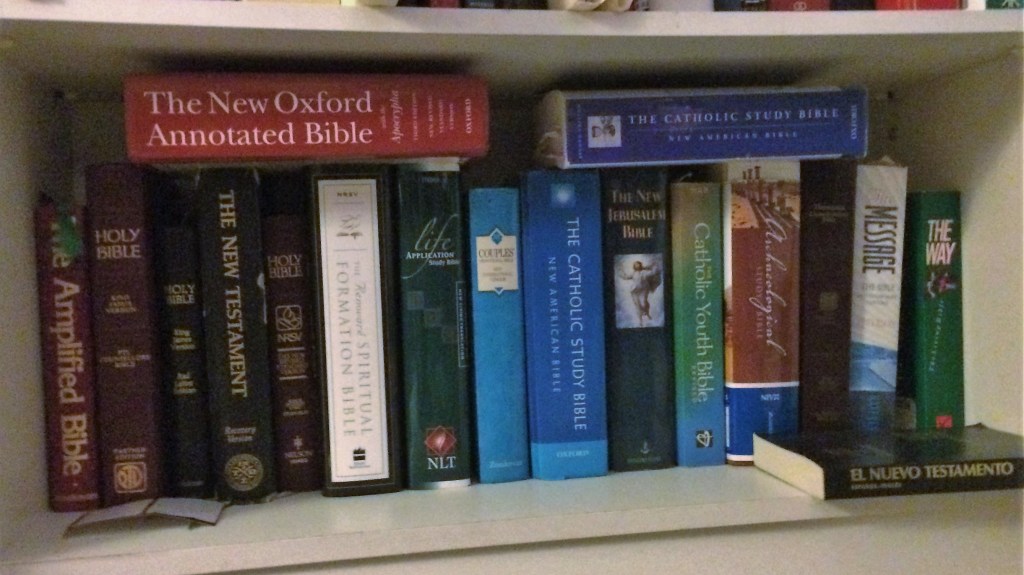
Photo: One of my bookshelves

Link for today’s Mass reading for Tuesday, January 9, 2018:

http://www.usccb.org/bible/readings/010918.cfm

Let us Live out our Baptismal Call

In reading today’s Gospel from Mark you might recognize that it is the same one from just two days ago, Saturday, January 6.  Today we celebrate the feast of the Baptism of the Lord and the ending of the Christmas Season. From the timeline of the synoptic Gospels, Mark, Matthew, and Luke, this is a significant step in the life of Jesus for after his baptism, he will immediately go into the desert for forty days and then he will begin his public ministry.
In reflecting on our baptismal vows, (You may refer back to or read the comments I made on January 6 – Let Us Recommit to our Baptismal Vows in which I paraphrased some of the statements from the Rite of Baptism for Children.) we ought to see this feast as important to us as well. Again, Jesus was not participating in baptism as an act of repentance, he was joining in solidarity with us in our sinfulness. Jesus came to redeem us, to save us, to help to reconcile our fractured relationship with his Father.
This reality that the Son of God, non-being, Infinite Act of Existence, became a finite, human being and then even assumed our sinfulness, while remaining sinless in the act of John’s baptism of repentance, should blow our minds! The pure, unblemished, Lamb of God began the process that would end in his death on the cross. He was willing to participate in this baptism, in this crucifixion because he loved his Father and was willing to follow his Father’s will all the way. He was willing to show unconditional love for us, by giving his life for us, not because we are perfect, but sinners who had fallen away from the love of his Father.
We have a choice each and every day, each and every moment. We can turn our back on God our Father and listen to false promises, apparent goods, and give in to temptations that satisfy for the moment but leave us empty. We can live a life for our self alone working toward an eternity of eternal separation from the one who loves us more than we can ever know. Or, we can choose to participate in the plan that God has for us and to follow Jesus in the way he has revealed. We can actualize our potential and experience the joy and meaning of a life of fulfillment that is working toward a life of eternity with God while at the same time helping others to live the same.
How come Jesus never sinned? Because he never said no to his Father, he always said yes. Jesus’ baptism made a difference.  Our Baptism, in which we were indelibly marked, eternally conformed to Jesus, made a difference. But our Baptism, our being born again, born from above, is just the beginning, just as it was for Jesus. God the Father has a part for us to play in bringing about his kingdom. It does not matter how small. We are called to be holy, we are called to be saints. Each and every one of us, each and every day, we are invited to say yes to God’s will and commit to building up his kingdom.
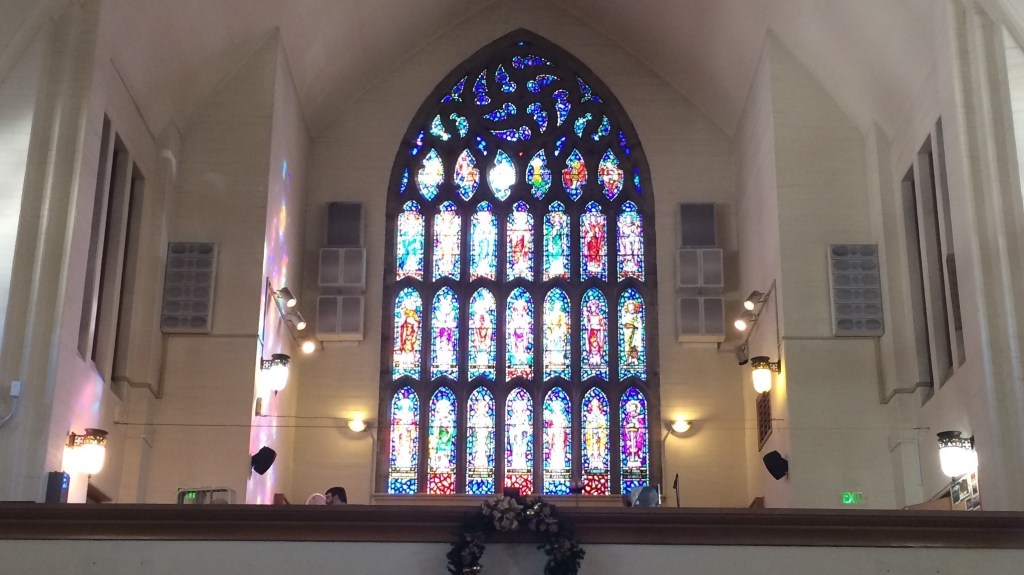
We are not alone in this endeavor. The saints in a stained glassed window, with the light shining through, are not just there for adornment. They are examples of those, who sinners and imperfect like us, made a decision one day that their Baptism mattered, that they were going to say yes to God, that day, and each day that followed. They allowed the light of Christ to shine through them to others. We can do the same, as the saints cheer us on. Jesus also continues to remain present with us, he has sent the Comforter, the Love of the Holy Spirt to give us the guidance, the ears to hear, and the courage to act. All that needs to happen for us to begin to live out our baptismal call is to say yes, today, tomorrow, and the next day to the will of our Loving God and Father.

Photo: Stained glass window of saints who said yes to God: St Augustine Parish, Culver City, CA

Link to today’s Mass reading for Monday, January 8, 2018:

http://usccb.org/bible/readings/010818.cfm

Epiphany, Following the Light of Christ

When Jesus was born in Bethlehem of Judea, in the days of King Herod, behold, magi from the east arrived in Jerusalem, saying, “Where is the newborn king of the Jews?
We saw his star at its rising and have come to do him homage” (Mt 2:1-2).
At some point as they approached Jerusalem, the magi lost track of the star, did it become cloudy, did they close in on the city during the day, did they believe it was proper protocol that in entering the city they ought to check in with Herod first before proceeding? We don’t know. But somehow these magi were led by a star with the belief that they were to pay homage to the king of the Jews in a distant land.
What drew them from their home miles away? What inspired them to leave the comfort of their everyday routine? This was no easy journey, and it was a risky adventure. Yet something or someone inspired them, invited them to come. They said yes. And though they were misdirected for a time, when they left the audience of King Herod and resumed their pilgrimage, they again saw the star, and were “overjoyed” (Mt 2:10).
That joy must have multiplied when they prostrated themselves before the baby king. The one who they risked and sought for they had now found, the goal was accomplished. In reality, their journey had only begun. Their lives would be forever changed and they would go back a different way than they came. The magi would not return to Herod, nor would they return home quite the same. They would not return from this journey and just go back to business as usual. The magi carried within them the encounter of the Christ; the light that drew them, they now carried inside of them. They would proclaim him in the East. And because they did so, I sit here typing this reflection and you are reading it. The magi did what they were called to do, to encounter the Christ and bring his light to the world. They and those who followed the same invitation are why we are still able to hear this same message today.
Today is the feast of Epiphany, and it is on this day that we celebrate that the King of the Jews, Jesus the Christ, has made his salvation known to the whole world. The manifestation of God’s glory came to the Jews first and then to all the Nations who are invited to walk by this light. The Son of God has become one of us and one with us so that all people are given the offer to be saved. We too are invited.
May we like the magi put the light of Christ first in our life. Let us seek each day to encounter him and his plan for our life. Distractions and temptations for the many appealing and apparent goods will reach out to grasp us, yet to put Jesus first will help all other priorities fall into their proper order and place.
Bishop Robert Barron in his new book writes about becoming part of God’s, using the Swiss theologian, Hans Urs von Balthasar’s word, “Theodrama”. God is directing all of creation, all of the cosmos, and we too have a part to play. “The key” Bishop Barron states, “is to find the role that God has designed for us, even if it looks like a bit part… When, through faith, we see every moment and every creature as an ingredient in the divine plan, when we know that there is a gracious providence at work in the universe, we live in joyful surrender and with a great sense of wonder.”
This is what the Epiphany is about. Jesus manifesting his light to us so that we can finally come to see that we are not the center of the universe, but he is. “When we decenter the ego, and live in exciting and unpredictable relationship to God, we realize very clearly that our lives are not about us. And that’s a liberating discovery” (Barron, 164-165).
May we take a moment and follow the lead of the magi, and prostrate ourselves before our Lord and Savior. Let us lay face down and surrender to him our all and when ready, rise again forever changed, ready to go forth and proclaim the Gospel of the Lord!

Photo: Full moon setting west of our home. May we be similar, as the moon reflects the light of the sun, may we play our part in God’s Theodrama and reflect the light of Christ to others.
Barron, Robert and John L. Allen Jr. To Light a Fire on the Earth. New York: Image, 2017.

Link for today’s reading of the Mass for Sunday, January 7, 2018:

http://www.usccb.org/bible/readings/010718.cfm


Let Us Recommit to our Baptismal Vows

On coming up out of the water he saw the heavens being torn open and the Spirit, like a dove, descending upon him. And a voice came from the heavens, “You are my beloved Son; with you I am well pleased” (Mk 7:10-11).
The communion of divinity and humanity are revealed as Jesus comes up out of the water. Jesus, the Son of God, rises, God the Holy Spirit descends, and God the Father speaks. The heavens are torn open, God’s immanence, God within himself, the Trinitarian Love is expressed. Heaven and earth kiss, as “Jesus opens up heaven for us in the humanity he has assumed” (St Irenaeus). Just as at his crucifixion, “The veil of the sanctuary was torn open in two from top to bottom” (Mk 15:38), the holy of holies, the very seat of God is opened to us, there is no longer a separation from us and God.
Jesus has come to restore what which was lost at the Fall. In coming to be baptized, Jesus is not being cleansed of his sin, because he is free of sin. Jesus takes upon himself the sin of the world, our sin, and just as Moses led the Hebrews through the Red Sea, Jesus leads us to freedom from our sin. By our Baptism in the name of the Father, and of the Son, and of the Holy Spirit, we are restored, we are redeemed. Heaven, paradise is opened up for us again.
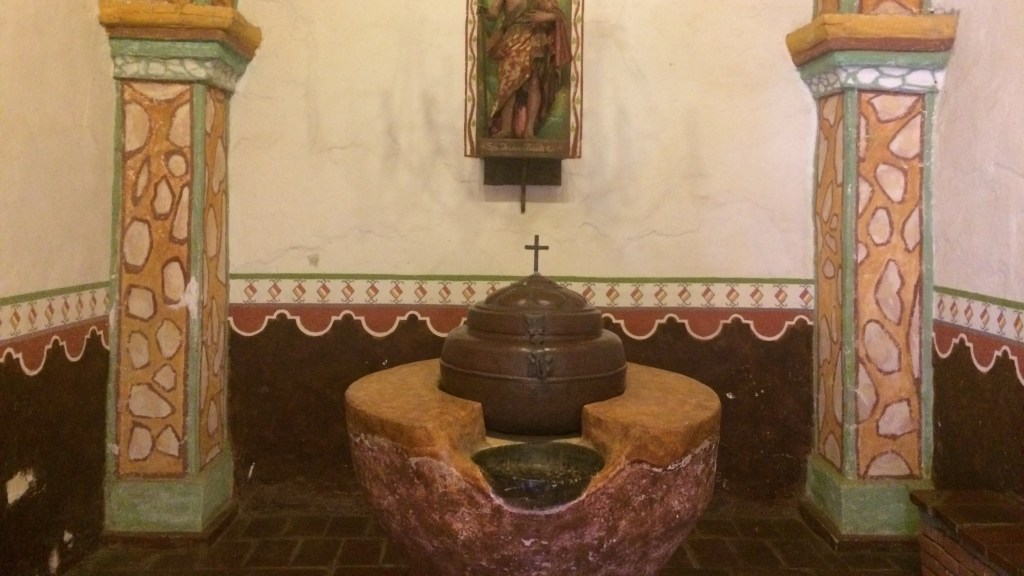
Today as we remember Jesus’ baptism, may we recall the significance of our own. Each time that we dip our fingers into the holy water at church, may this not just be a mindless act, but a remembrance of our baptism when we were bathed in the light of Christ and given new life. When we were freed from Original Sin and made to be a temple of the house of the glory of the Lord such that the Holy Spirit now dwells within us. Let us remember the commitment that we or our parents and God parents made on our behalf, to reject Satan, all of his works, and empty promises, to reject sin and the glamor of evil and to refuse to be mastered by sin.
May we also recommit ourselves to believe and follow God, the Father Almighty, creator of heaven and earth; to believe and follow Jesus Christ his only Son our Lord, who was born of the Virgin Mary, was crucified, died, and was buried, rose from the dead, and is now seated at the right hand of the Father; to believe and follow the Holy Spirit, the holy catholic Church, the communion of saints, the forgiveness of sins, the resurrection of the body, and the life everlasting.
It is in this faith and in the name of the Father, and of the Son, and of the Holy Spirit that we have been baptized and that we are now to serve as priest, prophet, and king and bearers of his light to the world. May we continue to be by transformed and live by his Word so that as angels ascended and descended on Jesus, we too may be an avenue where heaven and earth meet for those we interact with in our every day lives. For as did Jesus heard, we too are God’s children in whom he is well pleased.

Photo: Baptismal font, Mission San Luis Rey de Francia, Oceanside, CA

Link for today’s Mass readings for Saturday, January 6, 2018:

http://www.usccb.org/bible/readings/010618.cfm


“Everybody’s got a hungry heart”

Philip found Nathanael and told him, “We have found the one about whom Moses wrote in the law, and also the prophets, Jesus, son of Joseph, from Nazareth” (Jn 1:45). Philip’s statement that “we have found the one” is interesting, because if you read just a few verses earlier in verse 43, Jesus, when he decided to go to Galilee, is the one who found Philip. And we then see, as happened in yesterday’s account with Andrew, Philip goes to share about his encounter with another, and finds Nathanael.
Philip, as did Andrew, shows that he also does not fully comprehend the fullness of who Jesus is. He does believe him to be the promised Messiah that they have been waiting for, but as with all the Apostles, they would not come to a full realization of what this meant beyond their preconceived notion of who the Messiah was until after the Resurrection, Ascension, and the coming of the Holy Spirit at Pentecost. Nathanael, himself hesitates because of his prejudicial, knee jerk  reaction, “Can anything good come from Nazareth?” This is most likely a sarcastic response, a dig, meant to be humorous! These small examples are wonderful expressions of the imperfections of the Apostles, which is good news indeed for us!
The Apostles and those who encounter Jesus do so from the context and construct of their present life and understanding. It takes time for them as they watch him, live with him, and experience him, to come to realize that he is who he claims to be: fully God and fully man. Jesus is not just a mingling of the two, not just fifty percent human and fifty percent God. He is fully God and fully man. Jesus does not expect them to grasp this on their first meeting either. Jesus encounters each person where they are, in the midst of their woundedness, sinfulness, and chaos, but he sees their potential, he calls them to a higher level.
Nathaniel does follow Philip and is stunned that Jesus saw him under the fig tree. Jesus sidesteps Nathanael’s moment of wonder and mentions to him, and so to all who follow him that they “will see greater things than this” (Jn 1:50). Jesus here is, “stressing the need to transcend contemporary messianic expectations. Faith based on miracles will not suffice; something more is needed. This greater faith will enable all the disciples to see the revelation of the heavenly with Jesus, the Son of Man” (Moloney, 57). This deeper spiritual maturity of knowing Jesus as the Son of God and the Son of Man, will come about with more time, as they continue to develop their relationship with Jesus, especially as they experience the fullness of his Paschal Mystery.
As Jesus found Philip, he looks to find each one of us today in 2018 as well. He finds us as we are, in our confusion, sin, and imperfections, and he loves us anyway. As in the parable of the shepherd leaving the ninety-nine sheep to find the one, Jesus seeks for each one of us (cf. Lk 15:1-7). At the same time we are searching, longing for him. As U2 sings, “I still haven’t found what I’m looking for”, Bruce Springsteen sings, “Everybody’s got a hungry heart”, and St Augustine writes, ” You have made us for yourself, O Lord, and we are restless until we rest in thee”, we long in the very depths of our being to find and be found by our Creator, the one who made us for himself. Nothing material or finite will satisfy, that is why the return lines are so long this time of year! As we reach up for God, he is reaching down for us.
When we find and are found by Jesus, may we react in the same way as did Philip and Andrew. May we make Jesus the center of our life, our fundamental option or end goal, and go out and share our experience of him with another, just as one would do with any great news! We do not need to feel apprehensive about not fully comprehending the Mystery of Jesus. As the Apostles did, we just need to trust in him, for Jesus sees our potential. He will guide us as we continue to develop a relationship with him, through our prayer, study, worship, and service, and know that the Holy Spirit will give us the words to speak at the proper time. We just need to witness when moved by the Spirit and share our story of how the God made man is making an impact on our life, mostly through our actions and how we treat one another with dignity and respect. May our hearts and minds also be open to the potential Jesus sees in us and be prepared for “greater things” to come!

Photo: Statue of Sacred Heart of Jesus on the grounds of St Peter Catholic Church in Jupiter, FL
Moloney, S.D.B., Francis J. The Gospel of John in Sacra Pagina. Edited by Daniel J. Harrington, S.J. Collegeville, MN: Liturgical Press, 1998.

Link to today’s Mass readings for Friday, January 5, 2018:

http://usccb.org/bible/readings/010518.cfm