“Everybody’s got a hungry heart”

Philip found Nathanael and told him, “We have found the one about whom Moses wrote in the law, and also the prophets, Jesus, son of Joseph, from Nazareth” (Jn 1:45). Philip’s statement that “we have found the one” is interesting, because if you read just a few verses earlier in verse 43, Jesus, when he decided to go to Galilee, is the one who found Philip. And we then see, as happened in yesterday’s account with Andrew, Philip goes to share about his encounter with another, and finds Nathanael.
Philip, as did Andrew, shows that he also does not fully comprehend the fullness of who Jesus is. He does believe him to be the promised Messiah that they have been waiting for, but as with all the Apostles, they would not come to a full realization of what this meant beyond their preconceived notion of who the Messiah was until after the Resurrection, Ascension, and the coming of the Holy Spirit at Pentecost. Nathanael, himself hesitates because of his prejudicial, knee jerk  reaction, “Can anything good come from Nazareth?” This is most likely a sarcastic response, a dig, meant to be humorous! These small examples are wonderful expressions of the imperfections of the Apostles, which is good news indeed for us!
The Apostles and those who encounter Jesus do so from the context and construct of their present life and understanding. It takes time for them as they watch him, live with him, and experience him, to come to realize that he is who he claims to be: fully God and fully man. Jesus is not just a mingling of the two, not just fifty percent human and fifty percent God. He is fully God and fully man. Jesus does not expect them to grasp this on their first meeting either. Jesus encounters each person where they are, in the midst of their woundedness, sinfulness, and chaos, but he sees their potential, he calls them to a higher level.
Nathaniel does follow Philip and is stunned that Jesus saw him under the fig tree. Jesus sidesteps Nathanael’s moment of wonder and mentions to him, and so to all who follow him that they “will see greater things than this” (Jn 1:50). Jesus here is, “stressing the need to transcend contemporary messianic expectations. Faith based on miracles will not suffice; something more is needed. This greater faith will enable all the disciples to see the revelation of the heavenly with Jesus, the Son of Man” (Moloney, 57). This deeper spiritual maturity of knowing Jesus as the Son of God and the Son of Man, will come about with more time, as they continue to develop their relationship with Jesus, especially as they experience the fullness of his Paschal Mystery.
As Jesus found Philip, he looks to find each one of us today in 2018 as well. He finds us as we are, in our confusion, sin, and imperfections, and he loves us anyway. As in the parable of the shepherd leaving the ninety-nine sheep to find the one, Jesus seeks for each one of us (cf. Lk 15:1-7). At the same time we are searching, longing for him. As U2 sings, “I still haven’t found what I’m looking for”, Bruce Springsteen sings, “Everybody’s got a hungry heart”, and St Augustine writes, ” You have made us for yourself, O Lord, and we are restless until we rest in thee”, we long in the very depths of our being to find and be found by our Creator, the one who made us for himself. Nothing material or finite will satisfy, that is why the return lines are so long this time of year! As we reach up for God, he is reaching down for us.
When we find and are found by Jesus, may we react in the same way as did Philip and Andrew. May we make Jesus the center of our life, our fundamental option or end goal, and go out and share our experience of him with another, just as one would do with any great news! We do not need to feel apprehensive about not fully comprehending the Mystery of Jesus. As the Apostles did, we just need to trust in him, for Jesus sees our potential. He will guide us as we continue to develop a relationship with him, through our prayer, study, worship, and service, and know that the Holy Spirit will give us the words to speak at the proper time. We just need to witness when moved by the Spirit and share our story of how the God made man is making an impact on our life, mostly through our actions and how we treat one another with dignity and respect. May our hearts and minds also be open to the potential Jesus sees in us and be prepared for “greater things” to come!

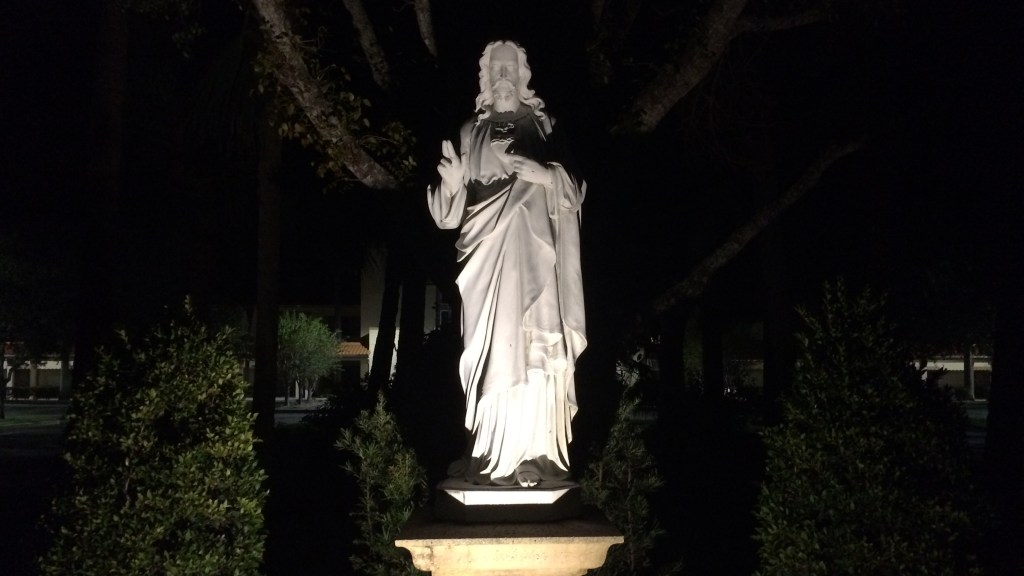
Photo: Statue of Sacred Heart of Jesus on the grounds of St Peter Catholic Church in Jupiter, FL
Moloney, S.D.B., Francis J. The Gospel of John in Sacra Pagina. Edited by Daniel J. Harrington, S.J. Collegeville, MN: Liturgical Press, 1998.

Link to today’s Mass readings for Friday, January 5, 2018:
http://usccb.org/bible/readings/010518.cfm

“What Are You Looking For?”

After hearing John the Baptist point out Jesus as the Lamb of God, Andrew and another disciple of John seem to understand the meaning of what John means, follow Jesus as he walks by them. Jesus senses they are behind him. He stops, faces them, and asks, “What are you looking for?”
Their response to the question: “Rabbi” (which translated means Teacher) “where are you staying?” (Jn 1:38) is odd. Unless we understand that, in fact, the two disciples of John did not grasp the full relevance of John calling Jesus the Lamb of God. They related to Jesus, from the context of what they knew, their default position, as a rabbi, a teacher. Most rabbis of the time would have a place where they would gather their disciples and teach them. Another thought is that they did not want to come right out and say, “Hey, Jesus, are you the Messiah?”, there was some doubt, so they went with rabbi.
Jesus said: “Come and you will see” (Jn 1:39). Andrew and the disciple then spent the day with Jesus and that made all the difference. If Andrew had any doubt before, it was now gone. We do not know what he experienced with Jesus in their time together, but the first thing that Andrew does is go to tell Simon his brother that he had found the Messiah, the Anointed, the Christ! There was no hesitation. He wanted to share what he had seen, most likely as we hear time and again in the Gospels, Andrew experienced some or all of these examples: the blind saw, the deaf heard, the lame walked, the possessed were exorcised, sins were forgiven, and Jesus taught with authority.
May we place our self in this scene of the Gospel today and follow the finger of John the Baptist who points over to this man walking by us at a pretty good clip. As we turn to follow, the brightness of the morning sun catches our eyes. We squint, look down, and lose him for a moment, but take a few steps to keep pace. We hear the crunch of the stone and sand under our sandals and as we look up again, Jesus has turned to face us. He is smiling, his eyes are inviting as is his question: “What are you looking for?” 
Stay with the scene. How do you answer, and what happens next?

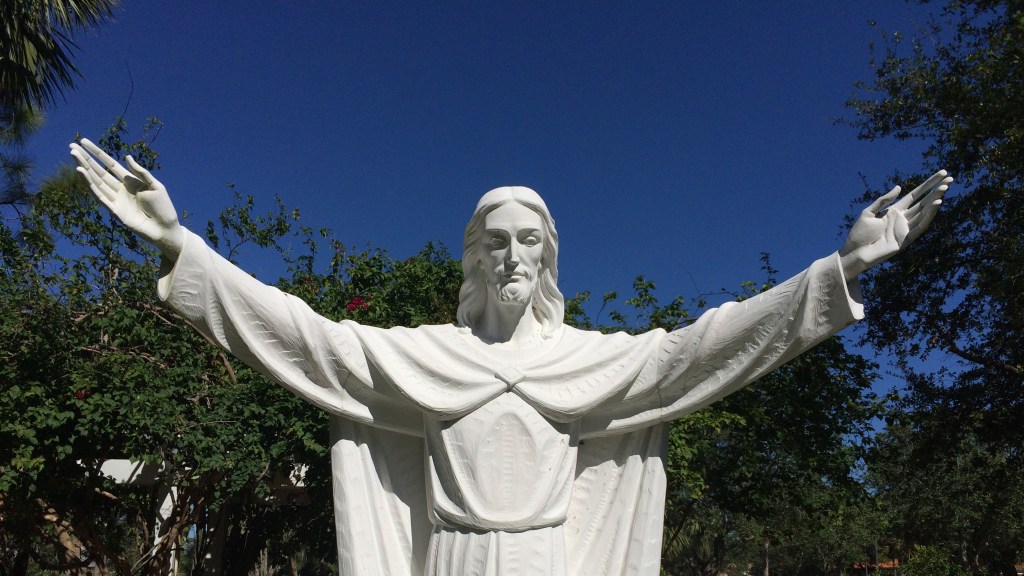
Photo: Statue of Jesus at Rosary Garden, St Peter Catholic Church, Jupiter, FL

Link for today’s Mass reading from Thursday, January 4, 2018:

http://usccb.org/bible/readings/010418.cfm


Lamb of God

John the Baptist saw Jesus coming toward him and said, “Behold, the Lamb of God, who takes away the sin of the world” (Jn 1:29).
The only one who can take away sins is God. The unblemished lamb is the animal that is sacrificed at the Passover meal, commemorating when the angel of death passed over the Hebrews whose doorposts were marked with the blood of the lamb. The next day they were freed from their slavery under pharaoh, and the exodus event began culminating in their passing through the Red Sea to freedom.
The Son of God became the Lamb of God, became a human being. He experienced laughter, pain, suffering, love, tears, and temptation, but did not sin. The Son of God became human so that what he assumed in the human condition, he could redeem. As the lamb of God, Jesus approached John for baptism, he took upon himself the sin of the world and submitted his divinity to his human condition and was willing to be baptized as a foreshadowing of his crucifixion on the cross.
The act of the Incarnation, becoming fully human while remaining fully divine, was the premiere act of mercy, in that Jesus entered the chaos and woundedness of our lives. He did so for each and every one of us, to be one with us, to understand and experience our struggles, our temptations, and to lead us to freedom from our sin, our turning away from his Father who only wants the best for us, who loves us so much he is willing to let us reject him.
Alone we cannot be redeemed, we cannot be fully healed or restored to who we have been created to be. Jesus is more than a model to follow or a teacher to guide, he became one with us in our humanity so in saying yes to his invitation to relationship we can become one with him in his divinity. This is the gift we have received again this Christmas, access to the divine power of the Love of God the Father, and of the Son, and of the Holy Spirit.
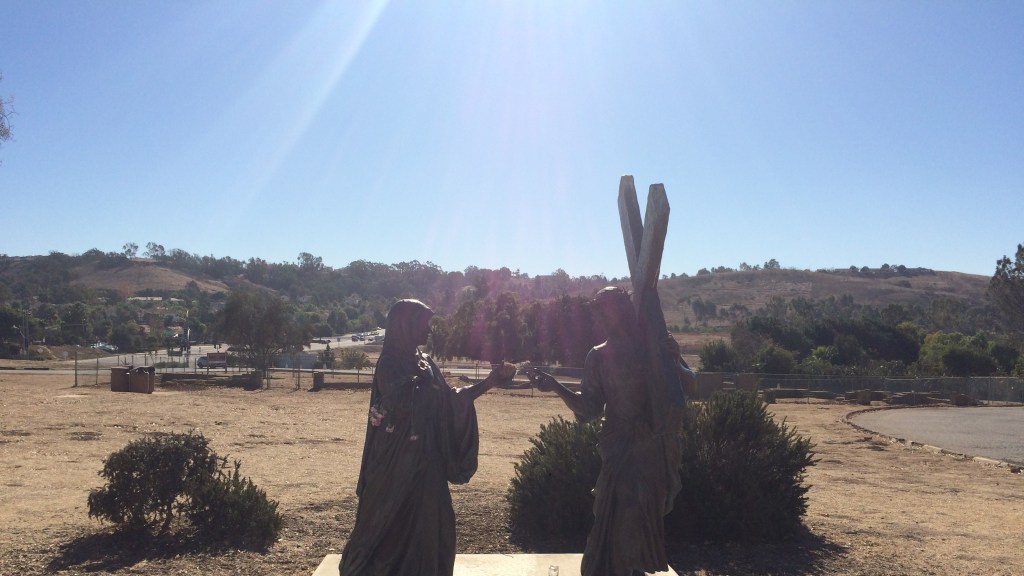
Jesus holds his hand out to each one of us today. May we grasp his hand, and as our fingers touch his palm may we feel the wound there, embrace the remembrance of the nail that pierced his flesh, the pain that he endured, so we could have this very moment with him. Even in our brokenness, anxiety, confusion, fear, and sin, may we resist pulling away. May we feel the warmth of his hand grip ours. Let your gaze be drawn up to see his face, his smile, his forgiveness, his love.
“Behold, the Lamb of God, who takes away the sins of the world.” 

Photo: Statue of Mary and Jesus on the front grounds of Mission San Luis Rey de Francia, Oceanside, CA

Link for the Mass readings for Wednesday, January 3, 2018:

http://www.usccb.org/bible/readings/010318.cfm


Who are you?

“Who are you” (Jn 1:19)? John did not claim or pretend to be something that he was not. He was clear who he was, he was clear of his place in serving God. He was preparing the way of the Lord, for Jesus. The question also arose about who Jesus was. It was a question that arose often during the early development of the Church’s Christology and still arises today. The readings of the Christmas Season, that we are still celebrating liturgically, in fact all of the four Gospels, address the question of who Jesus is.
The various heresies in the Church surrounded this question. From the Annunciation we recognize that at his conception in the womb of Mary Jesus remained fully God and became fully human. He did not become the Christ at his baptism as the heresy of Adoptionism would propose. Nor was Jesus a powerful created being as the priest Arius would propose in the third century. We counter the heresy of Arianism every Sunday when we recite in the Nicene Creed: “God from God, Light from Light, true God from true God, begotten not made, consubstantial with the Father; through him all things were made.”
Arianism taught that Jesus was a created being, the highest of beings made by God, but created non the less. The Church teaches that Jesus is begotten not made. He was, is, and always will be God, the Second Person of the Trinity. He is consubstantial, homoousios, meaning of one and the same substance as God the Father.
Adoptionism and Arianism are but two of the early heresies that arose, of which Arianism gained more of a following. Arianism stills pops up today in practice as it did then because of the unwillingness to acknowledge that the divine could become human, could or would enter into our human condition. This goes back to our starting question with John. “Who are you?” We might want to answer that question ourselves. We are human beings created in the image and likeness of God, we are physical beings with a rational soul. Do we like John accept who we are or do we reject our humanity, trying to put our self in the place of God to determine our own destiny alone? Do we pretend we are something other than we are, do we put on masks?
As we continue to celebrate this Christmas Season and the new year that has just begun, may embrace who we have been created to be, this gift of the unique a special person God made us to be, with a particular vocation and part to play in building up the reign of God. We will come to know our purpose and find meaning in our life as we each day follow the lead of Mary and John and align our human will with the will of God. This means recognizing we need his help in all the decisions we are to make this day, the smallest to the biggest. Let us make some time to meditate on the Nicene Creed to understand the foundation of what we believe, understanding who Jesus is, and who we are. Let us pray for a heart and mind that is open to following his will.

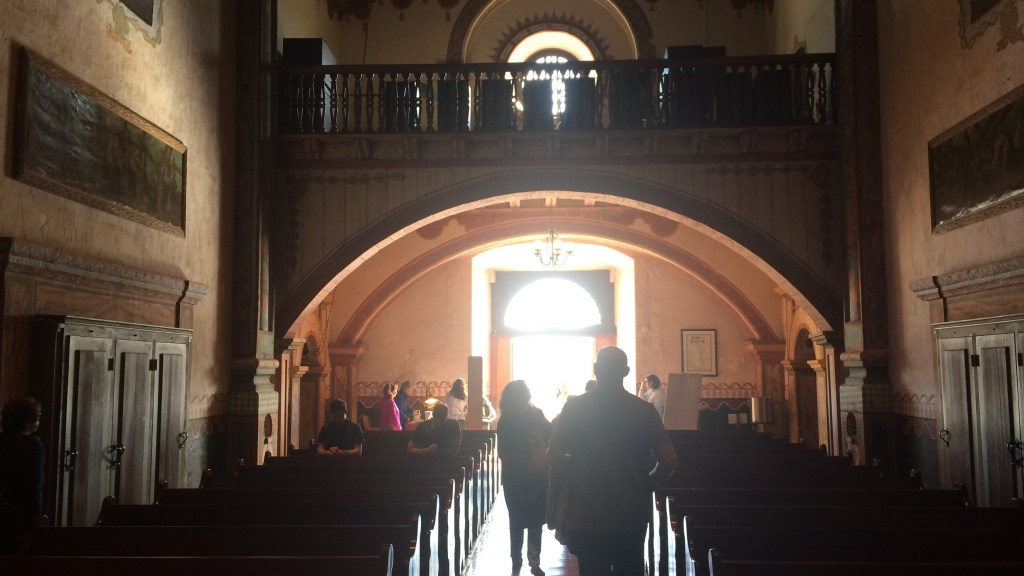
Photo: Sanctuary of Mission San Luis Rey in Oceanside, CA

Link for today’s Mass readings for Tuesday, January 2, 2018:

http://www.usccb.org/bible/readings/010218.cfm


This year, a little more like Mary – Ponder

Mary offers us a wonderful gift on this New Year’s Day. “Mary kept all these things,
reflecting on them in her heart” (Lk 2:19). Gabriel shares with Mary that she will conceive a child through the power of the Holy Spirit, her relative Elizabeth, who is past child bearing years, is six months pregnant, when Mary and Elizabeth meet John leaps in the womb of Elizabeth, the shepherds convey the message they received from the angels that Mary’s baby is the long awaited Messiah, Magi came from the East bearing gifts, Simeon and Anna offer prophetic confirmation that Jesus is the Messiah.
Indeed these are matters to ponder, not to just take at face value and move on with the day. The Church at her best has followed the model of Mary’s reflection, pondering, and meditating on what these words mean and has come to call this day the Solemnity of the Blessed Virgin Mary, the Mother of God. This title says more about Jesus than it does about Mary. We can only come to the same conclusion as the Church Fathers did during the council of Ephesus in 431 AD if we too, take the time to prayerfully reflect on them and immerse ourselves in the depth of what they convey:
Mary is the Mother of God, in Greek – Theotokos – the God bearer. The full divinity of the Son of God was present at the conception of Jesus in the ovum of Mary. He would remain fully divine as the second Person of the Trinity, as he developed fully human in the womb of Mary, and was born of Mary. This is the Mystery of the hypostatic union, in which Jesus is one divine person subsisting in two natures the human and divine.
Theological insights such as Mary being the Mother of God are easily missed or worse dismissed if we conform ourselves to the present age of instant gratification, instant access, surfing the internet, taking in sound bytes from Facebook, Twitter, and Instagram and amassing information overload. All of these technological avenues can be wonderful if we stop, slow down, and as Mary did, ponder what they offer.
If we still read books, do we do so with pencil and highlighter in hand, take notes and go back to those points underlined, highlighted, and or noted and ponder the insights we have received? Or do we just have a moment of pause and say hmm, interesting, and then move on to the next factoid?
May today be a day to take a few deep breathes, to slow down, and commit to ponder, to return to the same thought or insight through the day. It could be a word, a phrase, or a short statement that we write down and return to often. The phrase could be as simple as a paraphrase from today’s reading: Mary pondered on these things in her heart. We can reflect on where God has been calling us to stop and take a deeper look at our lives. It could be one word: Theotokos. We can ponder the meaning and relevance of what Mary being the God bearer means to our life today this first day of the New Year.
If we seek to live a life of joy and fulfillment in 2018, we need to slow down and reflect on life, on what is important, what has value, and where we are putting our time and effort and how we are aligning ourselves with God’s will to actualize our potential. Otherwise we may just float along indecisively, or stagnantly with indifference or cynicism, merely reacting to situations that arise, or worse plodding along bored and listless. Taking time to risk, to embrace and immerse ourselves in a life of thoughtful study, prayer, worship, and service, we may be better positioned to be engaged in living our lives with meaning and purpose, able to act decisively with clarity, and experience more fully what we are here for, being salt and light to the world.
May 2018 be a wonderful new year of meaning, joy, and fulfillment. May God be with us to bless and guide us along the way, and may we make time each day to spend with him in the silence of our hearts and so like Mary be better able to bear God to one another in our corner of the world. Happy New Year! Peace and all God’s good.

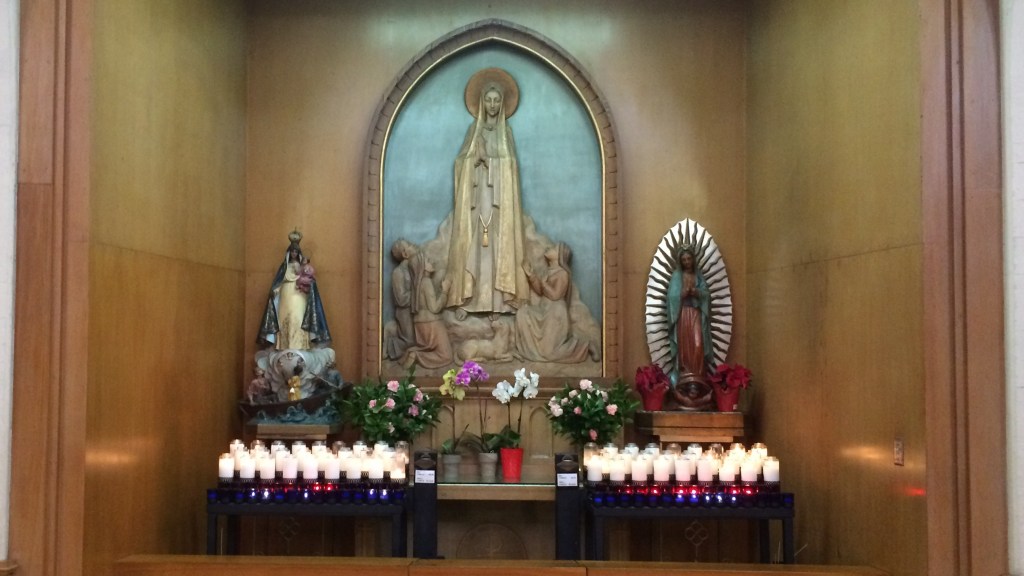
Photo: Marian side chapel, St Augustine Parish, Culver City, CA

Link for today’s reading for January 1, 2018:

http://www.usccb.org/bible/readings/010118.cfm

Trust in Family, Trust in God

What we have been reading in parts the last few days, we read in full today. Luke gives us the account of the faithfulness of Mary and Joseph. They followed the prescripts of the law by bringing Jesus to the Temple to have him consecrated to the Lord. We read of the prophecy of Simeon that Jesus is the promised hope of Israel and the light to the Gentiles, and also that he will lead to, “the fall and rise of many in Israel, and to be a sign that will be contradicted – and you yourself a sword will pierce – so that the thoughts of many hearts may be revealed” (Lk 2:34-35). The prophetess Anna gives thanks to God and shares how the long awaited redemption of Israel has come in the presence of this child. The scene closes with Joseph, Mary, and Jesus heading back home.

That is a lot for Mary and Joseph to take in. I am sure they pondered Simeon’s prophecy and talked about it on their way home to Nazareth. Though they did not fully comprehend all they were presented with, what the Holy Family, whose feast we celebrate today, model for us is that they are open to the process. They continue what they started, they are faithful to God’s leading, and they ultimately place their trust in God.

We are invited to do the same. The family is called to be the domestic Church. It is the place where we learn our faith, where we learn about God, learn to pray, to worship, to serve, and to trust in God. This is especially true in a fallen world. The Gospel is not a fairy tale. In the midst of the joy of new birth, and a birth that will bring about the redemption of Israel, there is the gift of myrrh, an oil used to anoint the bodies of the dead, and there are Simeon’s haunting words above. In the midst of the words of wonder about this child being the prince of peace is the reality that he will die a brutal death.

This is also true with family life which is not perfect. There are the joys of new birth, as well as the promise of new life unfulfilled. There are celebrations as well as growing pains. There are temptations that wound, and temptations resisted that strengthen, there are conflicts as well as reconciliation, and there are times of many struggles, trials, and even death, but there is joy in sacrificing for another, being willing to love one another, and being present for one another through it all.

What is present as a constant in the journey of family is having trust in one another as well as an anchor and trust placed in God. Because of the wonderful gift of diversity, that anchor may not be present in each member of the family, and some who espouse an unwillingness to proclaim a belief in God may actually be closer than the faithful! But no matter how rocky or bumpy the waters, God is present with us to keep us steady.

May the Christmas Season be a time of renewal in our commitment to our family. Even if we may be in the midst of dealing with deep struggles, pain, or loss, we can begin again by coming to the manger. Offer our hand to the baby Jesus and feel his gentle grip grasp our finger. May we feel his gentleness, love, and peace fill our being. May we look deep into his little brown eyes and so see the face of God looking back at us with the assurance that we are not alone, and trust that he is present with us and our families.


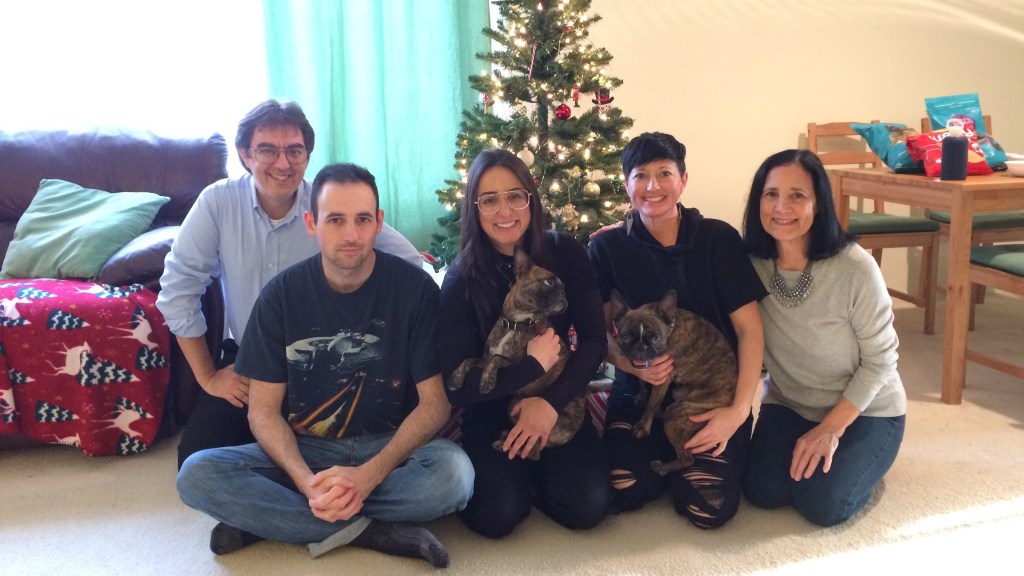
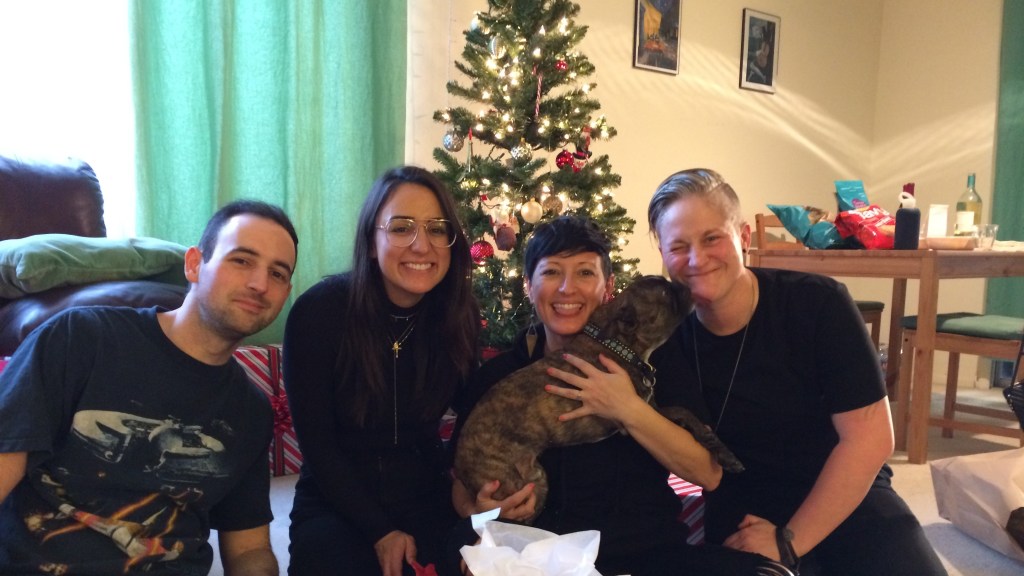
Photo: Christmas Morning Jack’s apartment

Link for today’s Mass readings for Sunday, December 31, 2017:

http://usccb.org/bible/readings/123117.cfm

Spreading the Kingdom of God, with Simplicity

We have no evidence that the vocation of Anna, Simeon, the Magi, or the shepherds changed in any way after their encounter with the baby Jesus. What did happen in each of their lives was the same as Anna today; they told the story of their encounter. They, like Anna, must have shared what they experienced with anyone who would listen.
At the end of today’s account from Luke, Joseph, Mary and Jesus “returned to Galilee,
to their own town of Nazareth. The child grew and became strong, filled with wisdom;
and the favor of God was upon him” (Lk 2:39-40). No ticker tape parade, no giving the key to the city, and no gala ball, they just returned to Nazareth.
These examples express a pattern of how God works, how the kingdom of God is, like a mustard seed, like seed that is sown, or like yeast. It starts small, quietly, and simply. God works through the everyday events of our lives, often unseen. We so often look for the mighty, majestic, and grandiose. We often believe we need to do great things, and often do nothing. St Mother Teresa directs us to do, what she learned from the Little Flower, St Therese of Lisieux, little things with great love.
As the Christmas Season continues, but life has already or has begun to shift; families and friends have come and gone or are readying to go, vacation days are coming to an end, let us continue to soak up the time we have that is available to enjoy one another, appreciate the gift we have been given to be with one another, and to make every effort to keep in touch, because our life is fragile and we will not be aware when it will be our time to go home to God.
As the Holy Family begins their return to Nazareth, and we begin to return to our normal course of daily living, may we be open to the quiet and gentle ways of how God is working in our lives. As seeds planted germinate and sprout, as yeast begins to cause the dough to rise, as we commit to support and care for one another, to be aware and reach out to those in need, to be open to expressing our need for help and allowing others to assist us, we can start to see God working in our lives. Let us be willing to recognize the simplicity of divinity operating within the midst of our humanity. God is inviting us to be transformed in this new year, to kindle in us the fire of his love. Let us watch, pray, and cooperate with his will to renew the face earth.

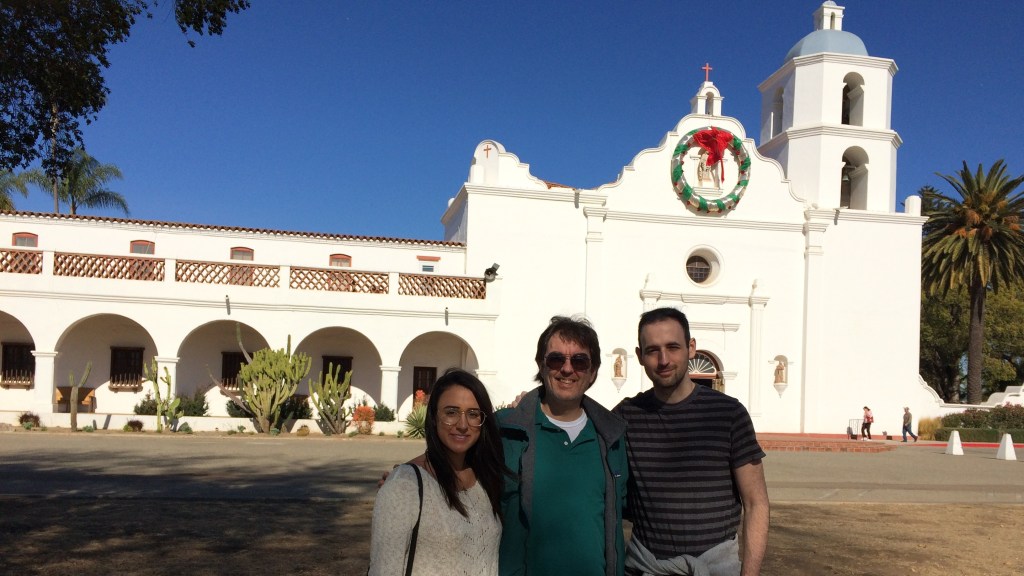
Photo: Mission San Luis Rey, Oceanside, CA

Link for today’s Mass readings for Saturday, December 30, 2017:

http://usccb.org/bible/readings/123017.cfm

Radiate Christmas Joy!

“Lord, now let your servant go in peace; your word has been fulfilled: my own eyes have seen the salvation which you prepared in the sight of every people, a light to reveal you to the nations and the glory of your people Israel” (Lk 2:29-32).

As Simeon receives Jesus to be consecrated to the Lord, he recognizes through the gift of the Holy Spirit that this child, was the one he and Israel had been waiting for, he is the Messiah, the Christ. He has come to fulfill the Law and the Prophets as well as be a light to the Gentiles, to the Nations.

These verses, called the Canticle of Simeon, from Luke are recited each night by those of us who pray the Divine Office or the Liturgy of the Hours. They are prayed during Compline or Night Prayer, the last prayers before going to sleep. May we too see that this celebration of the birth of Jesus we have been engaging in this week is our savior too, our fulfillment and our light also.

May we like Simeon receive this child in our arms from Mary and Joseph. May we too see the salvation that is offered us, the invitation given to us. May we not run from the light of his truth, but may we embrace it so as to be transformed. Let us glory in the joy of knowing that Jesus came to share his love, mercy, and grace, with us. He is the promise of healing that we all need to realize and actualize in our lives.

That is the key, Jesus invites us but does not impose. This Christmas can be just another day in a cycle of days that passes with no change, or we can immerse ourselves in this Octave of Christmas so to take seriously the fact that Jesus is who he said he was, who the Apostles claimed that he was, who the Church still announces that he is today, Jesus the Christ the Son of the Living God. Spend some time holding the baby savior today.

As you hold him look into his face, see his smile, the glint in his eye, and allow that exchange to melt away any sin of pride, lust, greed, envy, sloth, gluttony, prejudice, and wrathful tendencies. May we feel the warmth of his love radiate up from the depths of our soul. May we be filled with his joy, so that as we gaze on another today we may share that same smile we have received and so radiate the love of Christ with those we encounter today.


Photo: Christmas morning!

Link for today’s Mass readings for Friday, December 29, 2017:

http://www.usccb.org/bible/readings/122917.cfm

A Choice Today: Fear or Joy?

The magi come from the East seeking the new born king. They follow the natural sign of the star, and they are led into Jerusalem. They lose or turn away from the star and seek instead the ruler, Herod, to help them to find the child. But after meeting with Herod they again see the star and come to Jesus, do him homage, and share their gifts. Warned in a dream not to return to Herod with the location of the new born infant, they instead depart for their home another way. The magi had encountered the new born king and would share it with joy. A sign that the good news of Jesus is for all the nations, all the world.

King Herod, as in the time of Moses with the Pharaoh, has a different reaction: Fear. Herod fears losing his title, power, prestige. “When Herod realized that he had been deceived by the magi, he became furious. He ordered the massacre of all the boys in Bethlehem and its vicinity two years old and under, in accordance with the time he had ascertained from the magi” (Mt 2:16). Often when we are led by fear, we react with violence.

Two very different reactions to the birth of Christ. The joy of the birth of Jesus that can lead to new life and a new beginning moving from our self centered, defensive posture of living or a doubling down of ego and disregard for the dignity of others. This Christmas Season how do we respond to the birth of Christ? Do we accept the invitation to let go of the fear and darkness within us or do we grasp and cling to it?

May we choose with the magi and Joseph to follow the leading of God and so experience the joy of the freedom from self and the freedom for excellence and pursue our vocation to live a life to the full that respects the dignity and value of others. As Pope Francis pointed out on this feast day of the Holy Innocents last year: “Christian joy does not arise on the fringes of reality, by ignoring it or acting as if it did not exist. Christian joy is born from a call – the same call that Saint Joseph received – to embrace and protect human life, especially that of the holy innocents of our own day. Christmas is a time that challenges us to protect life, to help it be born and grow.”

Life is a precious gift at all stages, yet life is fragile and vulnerable. May we be newly inspired to protect human dignity from the moment of conception until natural death. Enjoy your family, tell those you care about that you love them, and listen and respond to the cry of the innocent, the cry of the poor.


Photo: Oceanside, CA

LETTER OF HIS HOLINESS POPE FRANCIS TO BISHOPS ON THE FEAST OF THE HOLY INNOCENTS December 28, 2016:

http://w2.vatican.va/content/francesco/en/letters/2016/documents/papa-francesco_20161228_santi-innocenti.html

Link for today’s reading for Thursday, December 28, 2017:

http://usccb.org/bible/readings/122817.cfm

Cure for post Christmas blues – the Octave of Christmas!

Jesus Christ is born for us. Jesus Christ dies for us. Jesus Christ conquers death and rises again for us. Because of our place in time, December 27, 2017 AD – Anno Domini, In the year of our Lord, we are capable of experiencing the Paschal Mystery of Jesus: his life, suffering, death, Resurrection, and Ascension into Heaven. Does this new fact, this new reality in human history make a real difference in our lives?
Christmas did not end two days ago. We are still in the Octave of Christmas. The Church celebrates two octaves in the Church liturgical calendars, Christmas and Easter. These eight days are celebrated as such to impress on the solemnity of the event of remembrance. From the vigil celebration of Christmas on December 25 to January 1, the Solemnity of Mary the Mother of God, we celebrate the significant event of the Incarnation, the Son of God becoming one with us in human history. The Masses that are celebrated within the Octave of Christmas as well as the readings of Evening Prayer  in the Liturgy of the Hours, reflect the celebration of Christmas Day each day for the eight days. It is like having a week long birthday party.
But if we are solely focused on gifts, the returning of gifts, and celebration apart from the celebration of Jesus’ birth, if we are removed from the liturgical cycle and rhythm of the Church, it is easy to fall into the post Christmas blues. We hear Christmas music coming through many radio channels for weeks before Christmas, but at some point on Christmas Day and definitely the following day, they stop. This is when the music of Christmas ought to begin!
If you are slipping into the Christmas blues, maybe look at the possibility of going to a daily Mass or two. If you are not up to that or if it is not feasible, read the daily readings of the Mass. I post them at the end of this reflection each day, or you can go to usccb.org and click on the calendar to the right. You can read the readings yourself or click on the tab to hear the audio version, and they also have video homilies available for each day.
May we not succumb to the post Christmas blues, but rejoice in the Gospel, the Good News, that Jesus changed human history and we are a part of that human history of transformation. In today’s Gospel reading from John, Mary Magdalene shared that Jesus was no longer in the tomb. Peter and James ran to see, John arrived first, and then Peter. Peter went in and saw an empty tomb except for the burial clothes. When John entered after Peter, “he saw and believed” (Jn 20:8).
Do we see? Do we believe? John came to realize and embrace the gift of the Paschal Mystery: Jesus has been born for us, he suffered, died, rose again and conquered death for us. His, Mary’s and Peter’s lives were transformed and ours can be too. This is something to celebrate, not just two days ago, or just today, but for eight days, for all days! “O Come let us adore him, O come let us adore him, O Come let us adore him, Christ the Lord!”

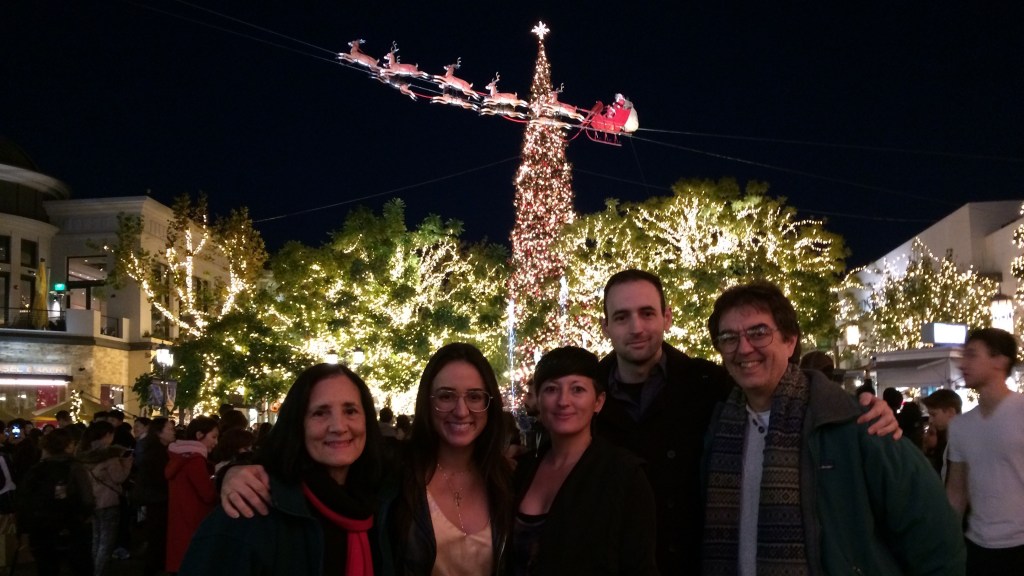
Photo: Christmas Eve at the Grove, Los Angeles, CA.

Link for today’s reading for Wednesday, December 27, 2017:

http://usccb.org/bible/readings/122717.cfm